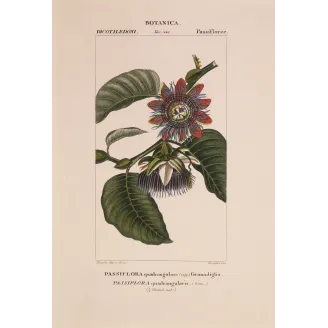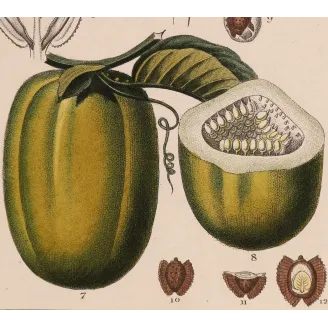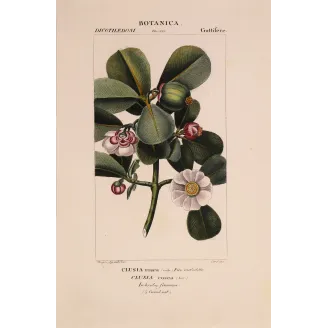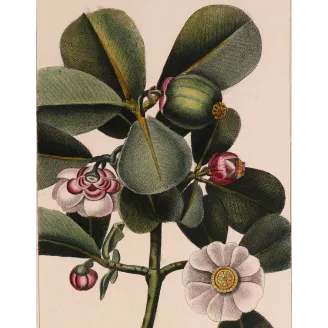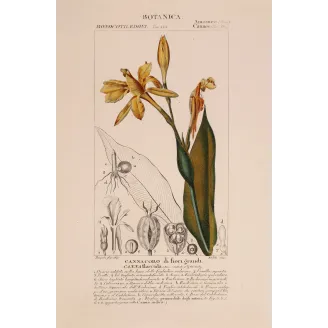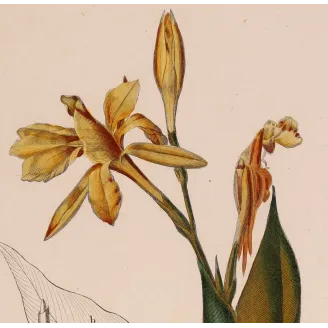
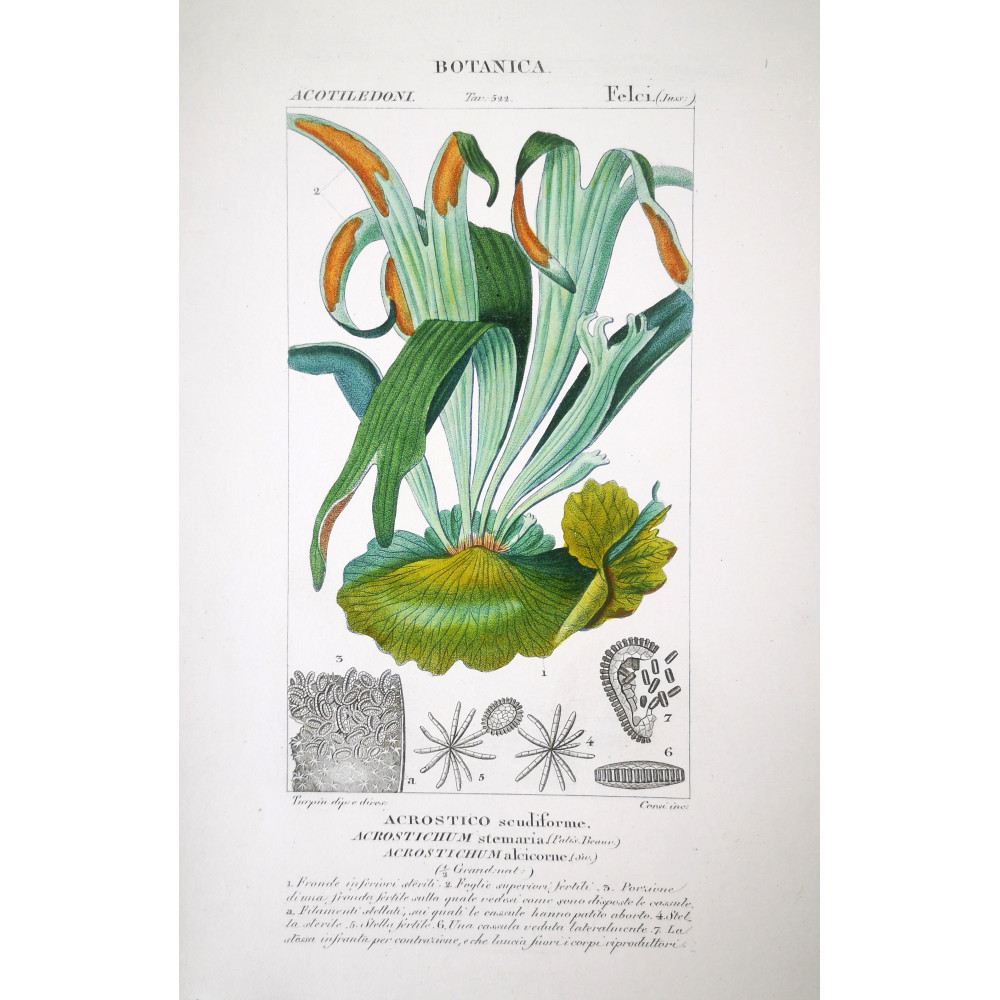
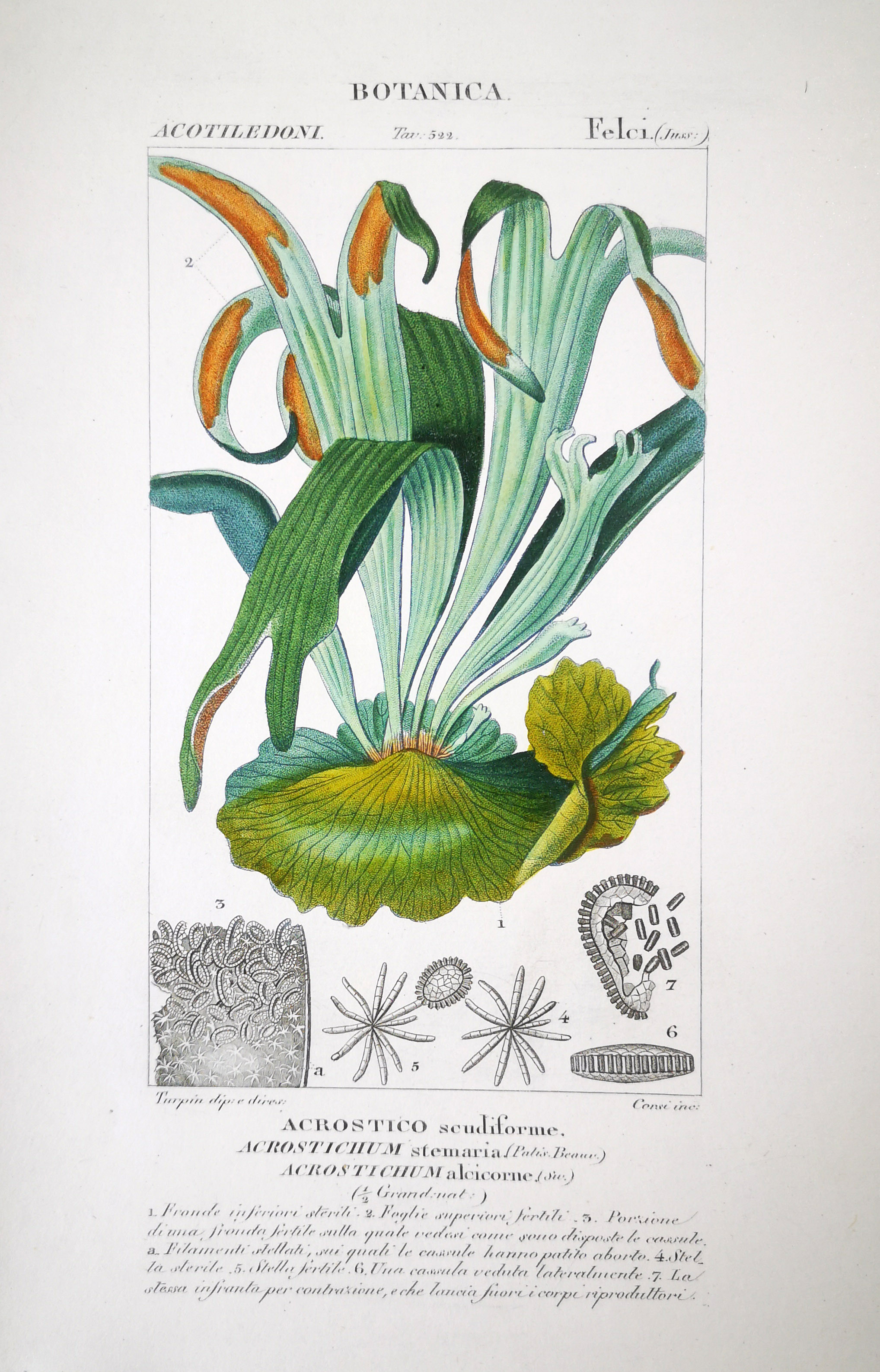
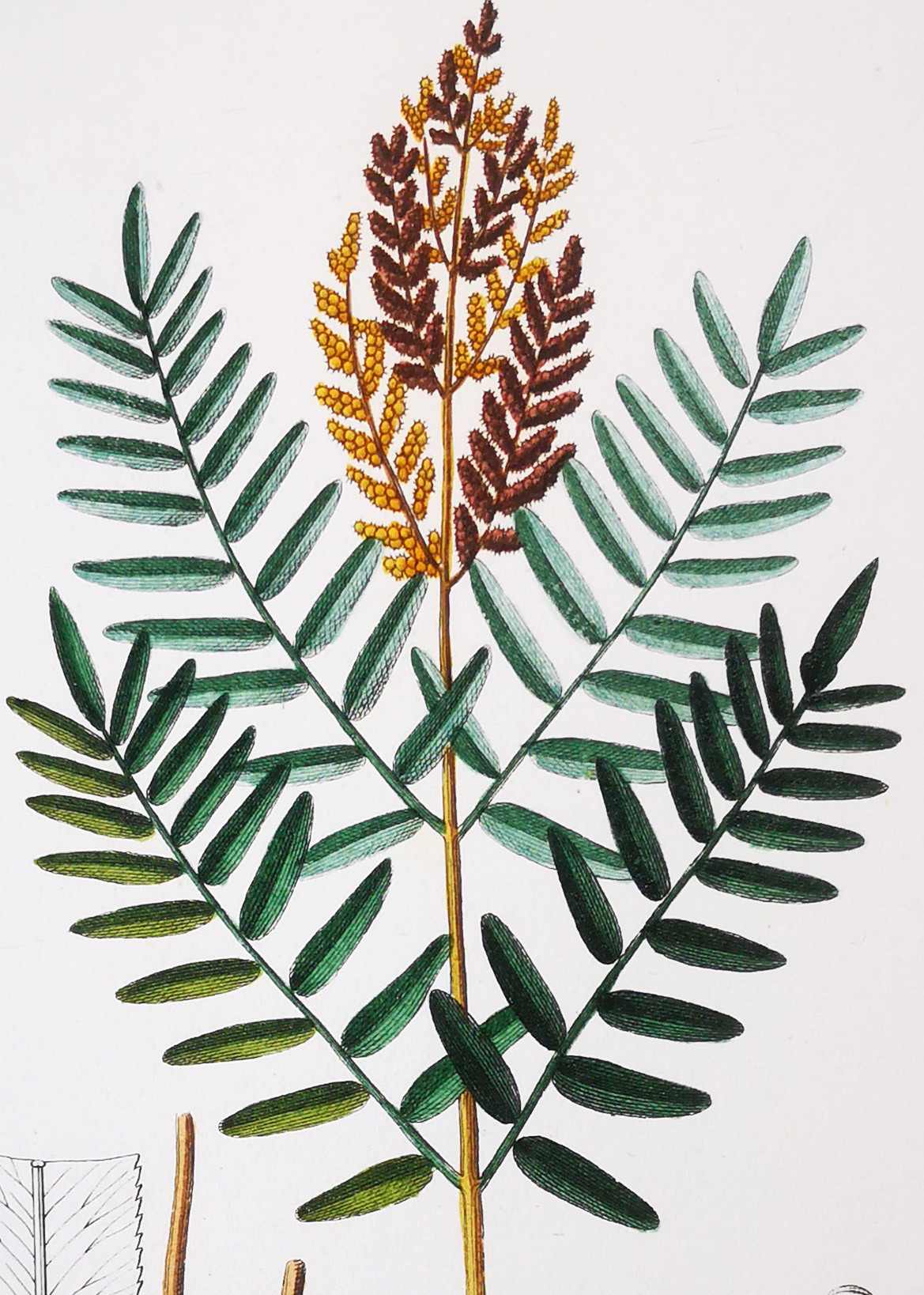
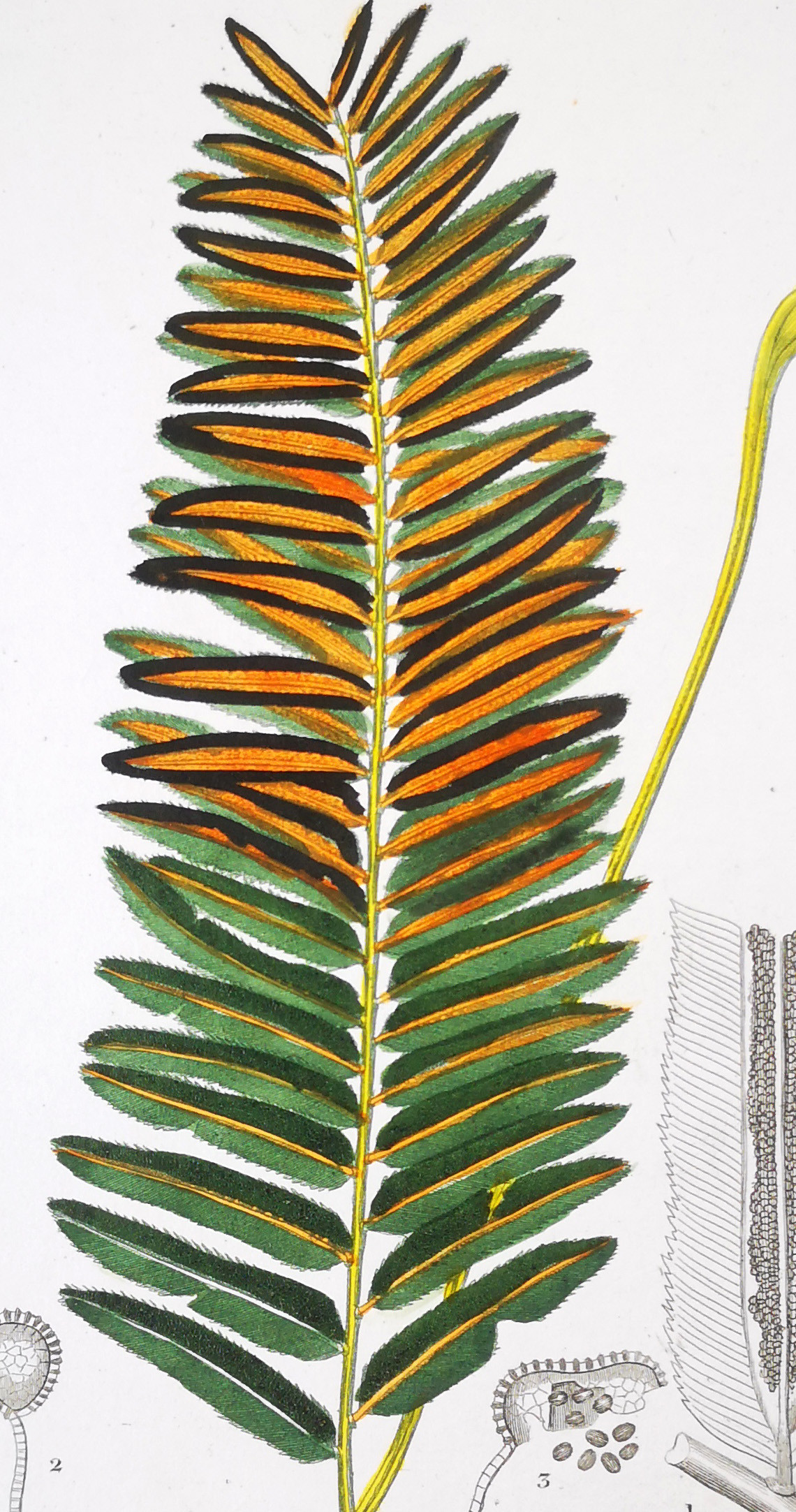
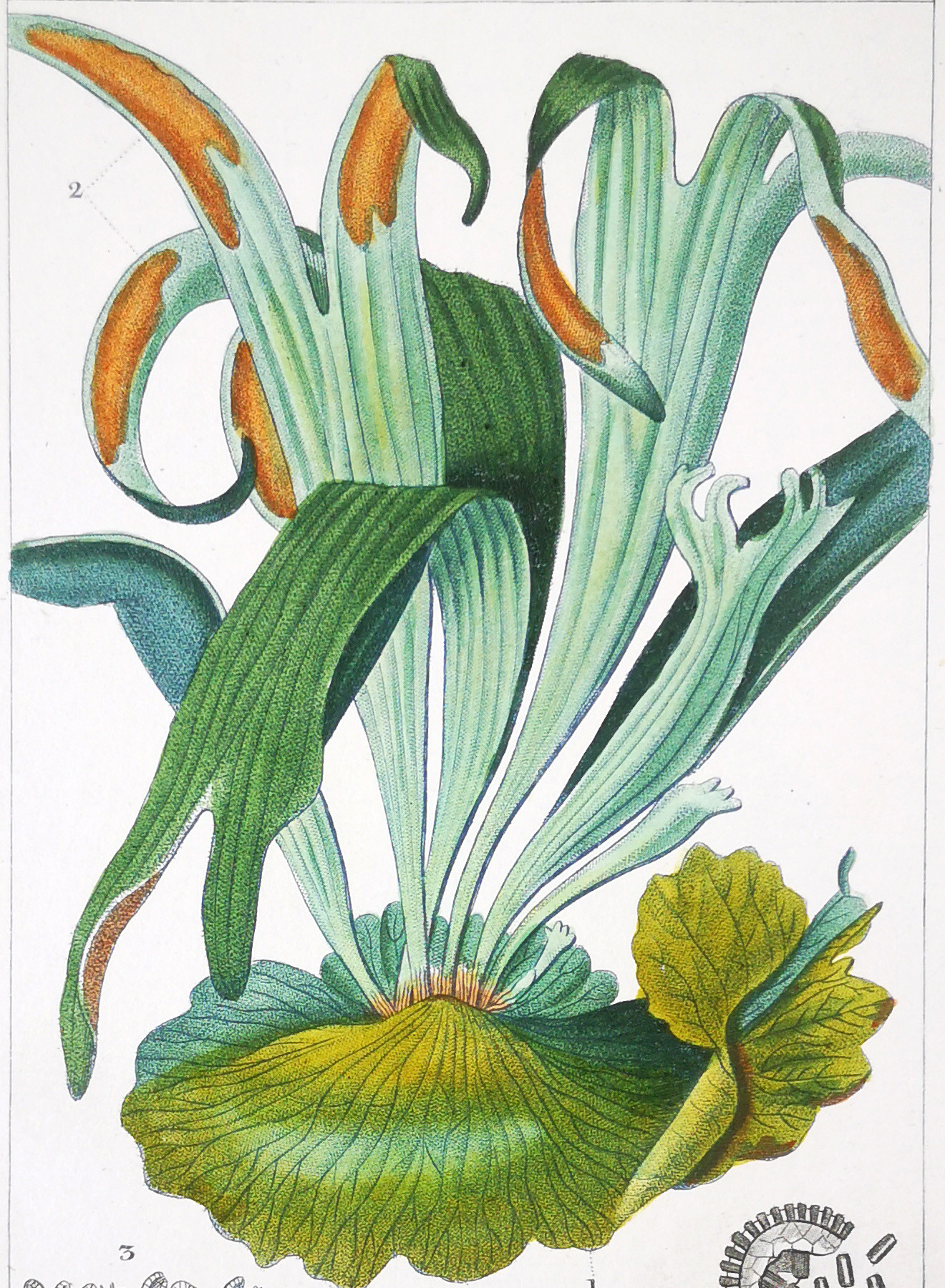
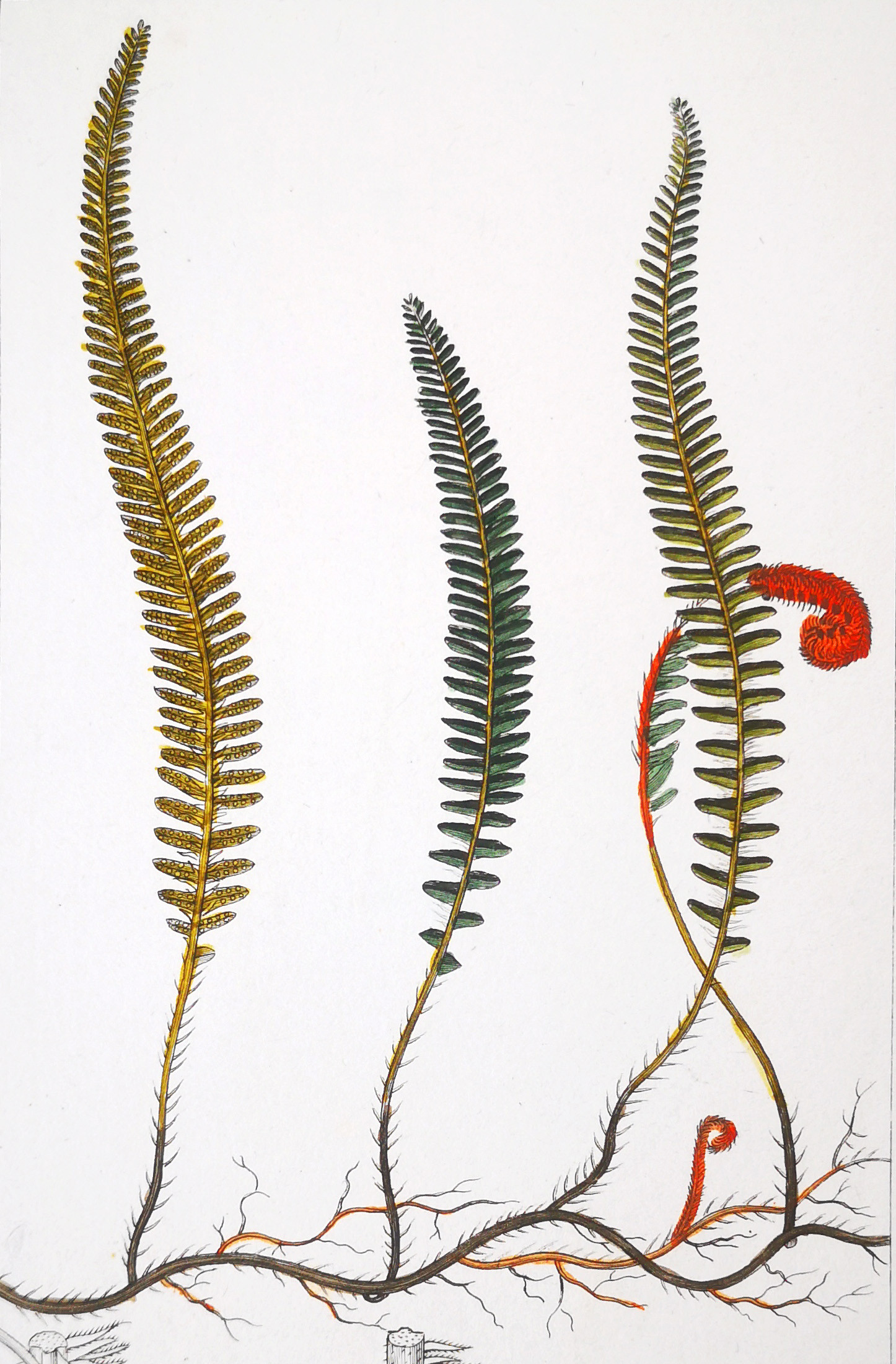
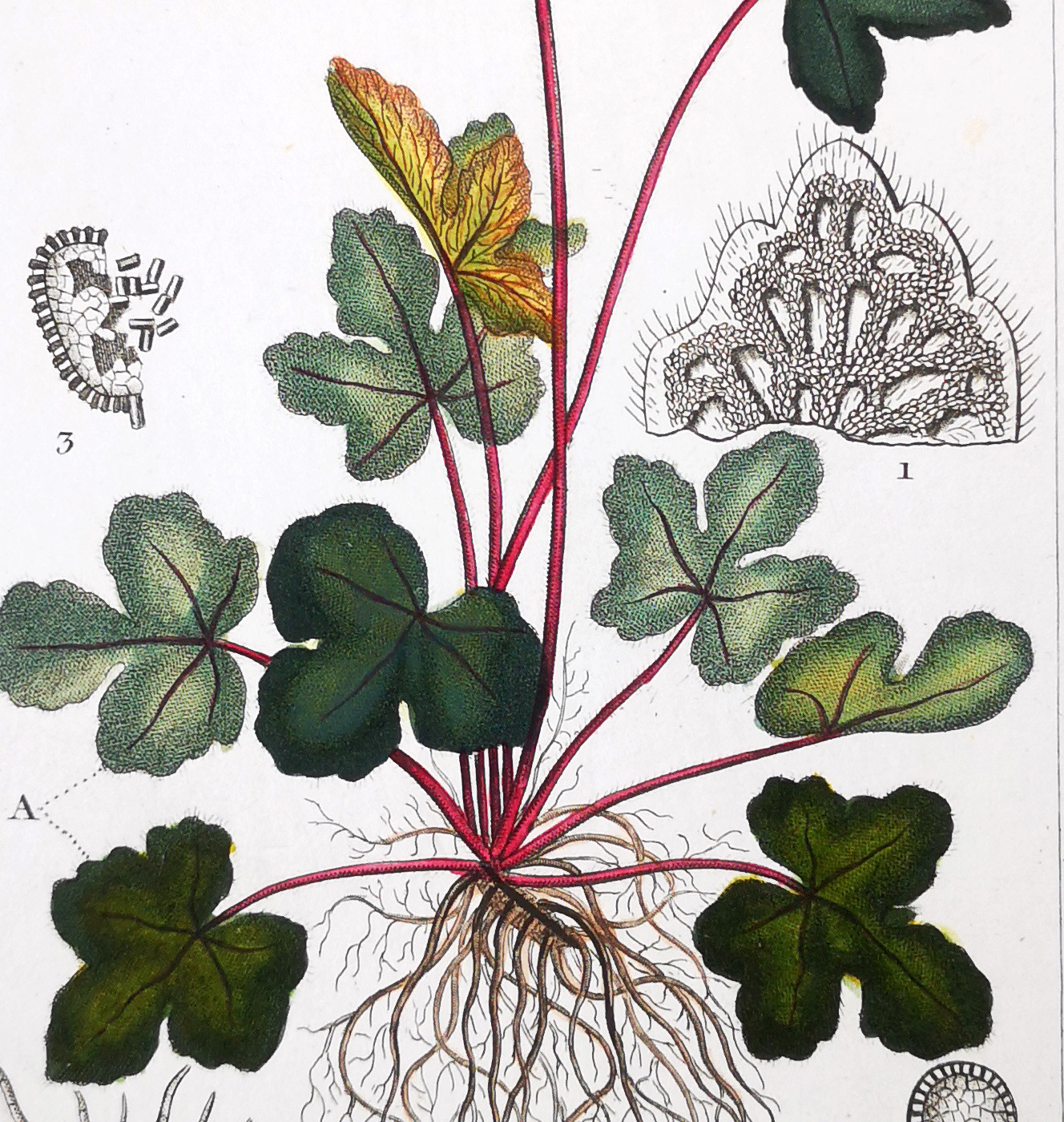
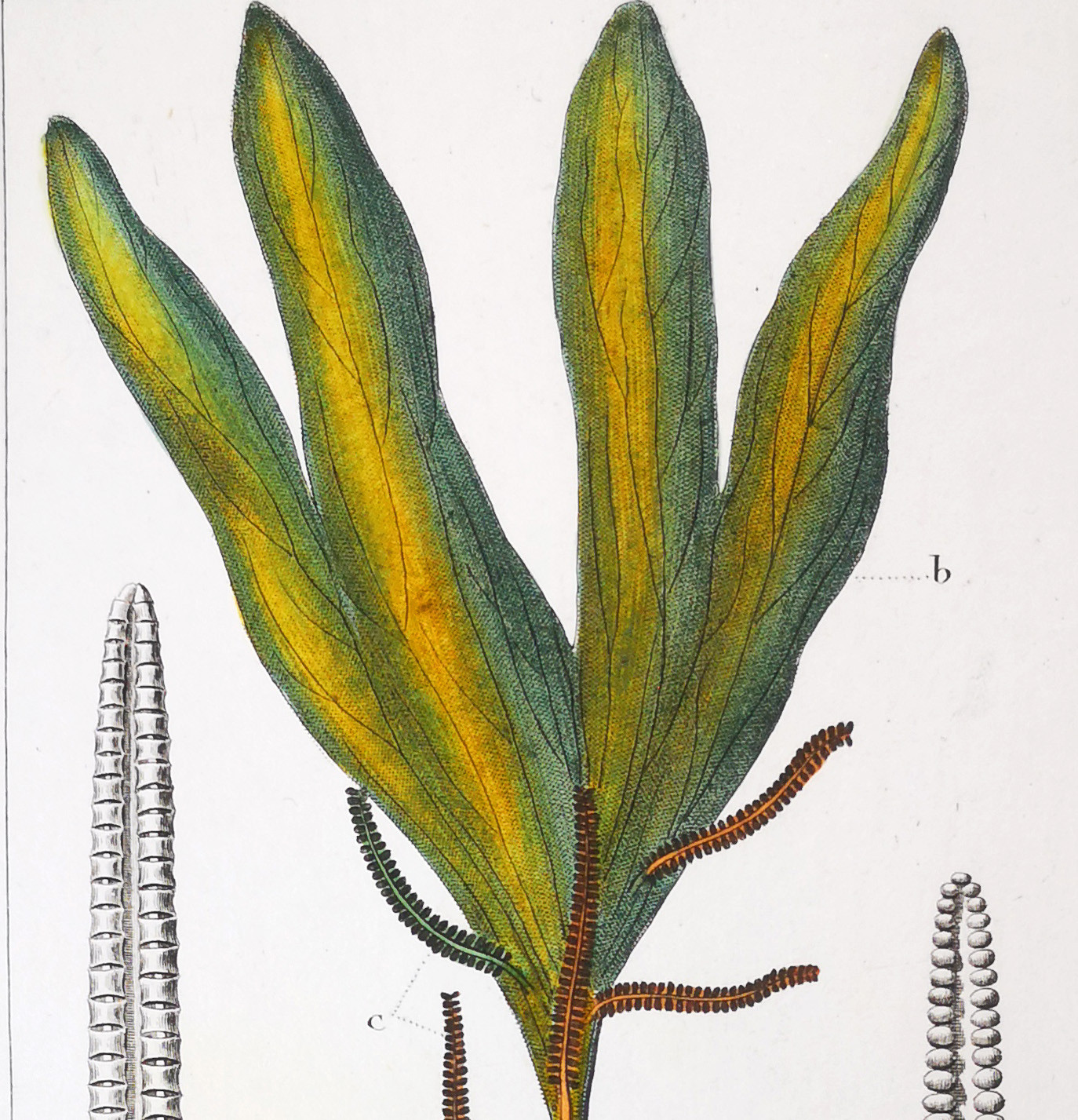
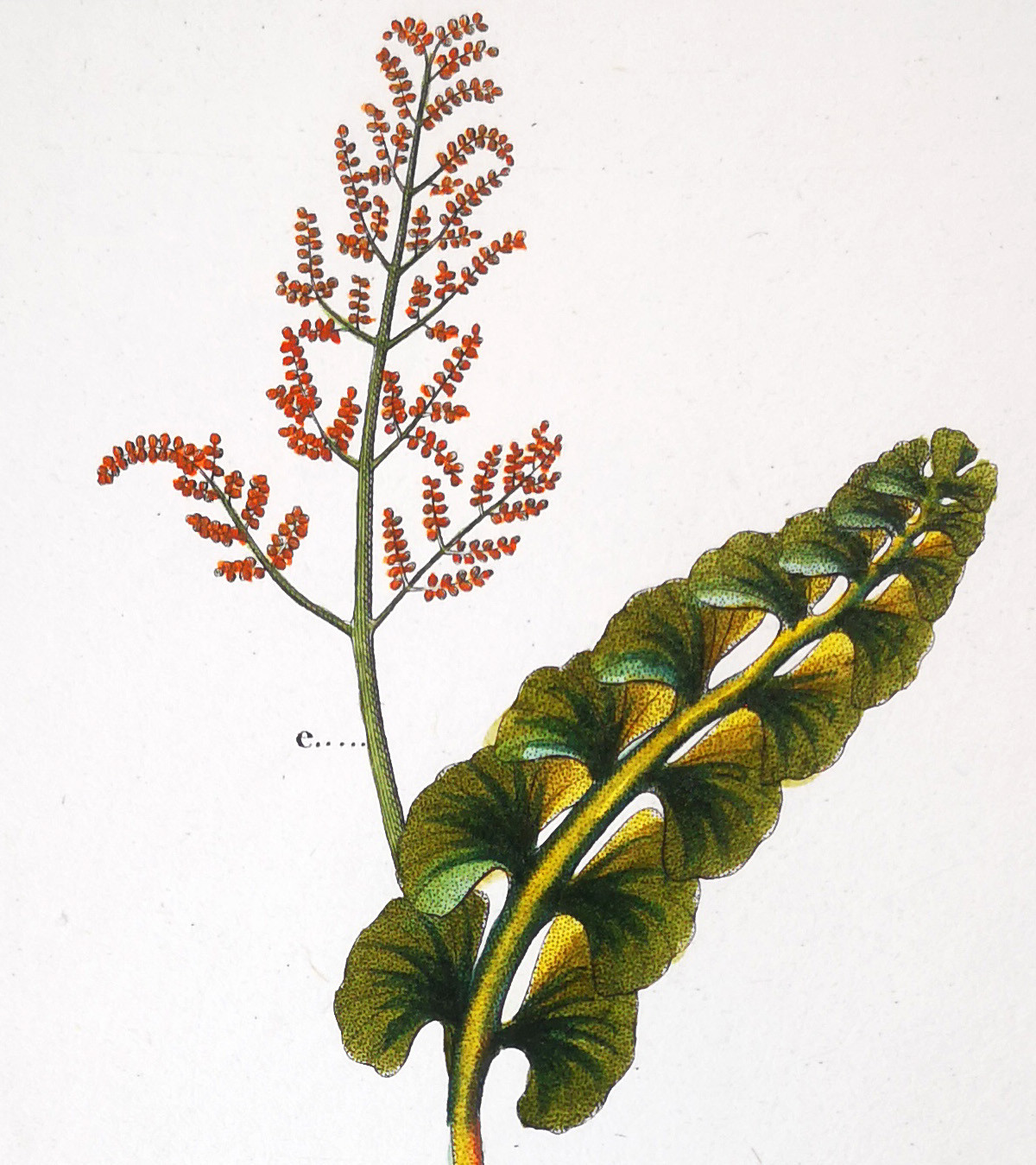
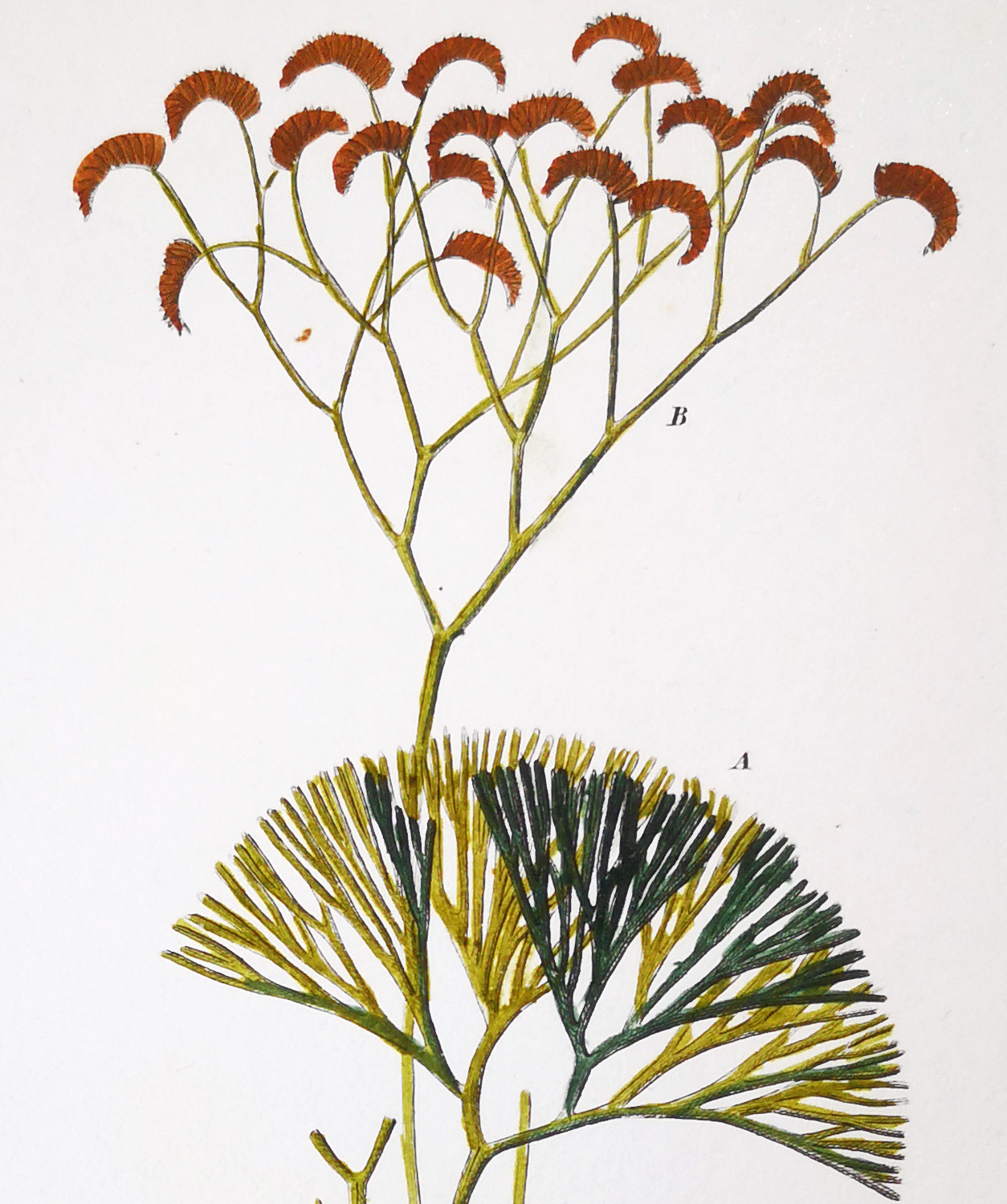
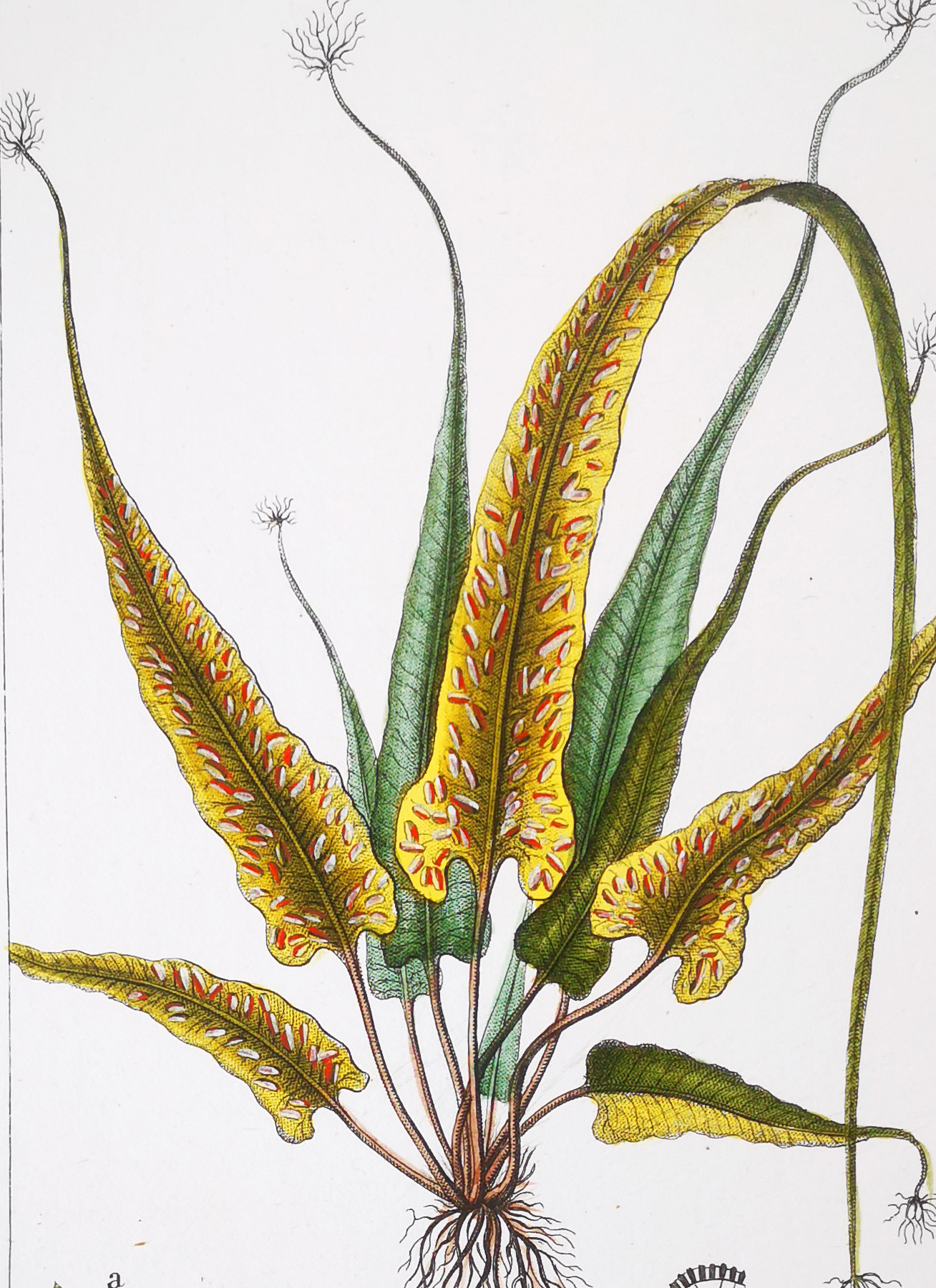
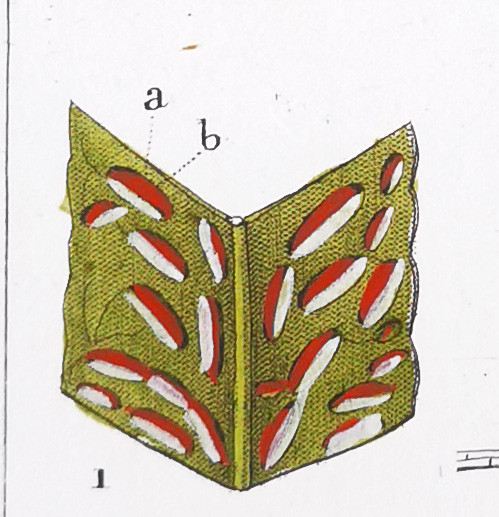
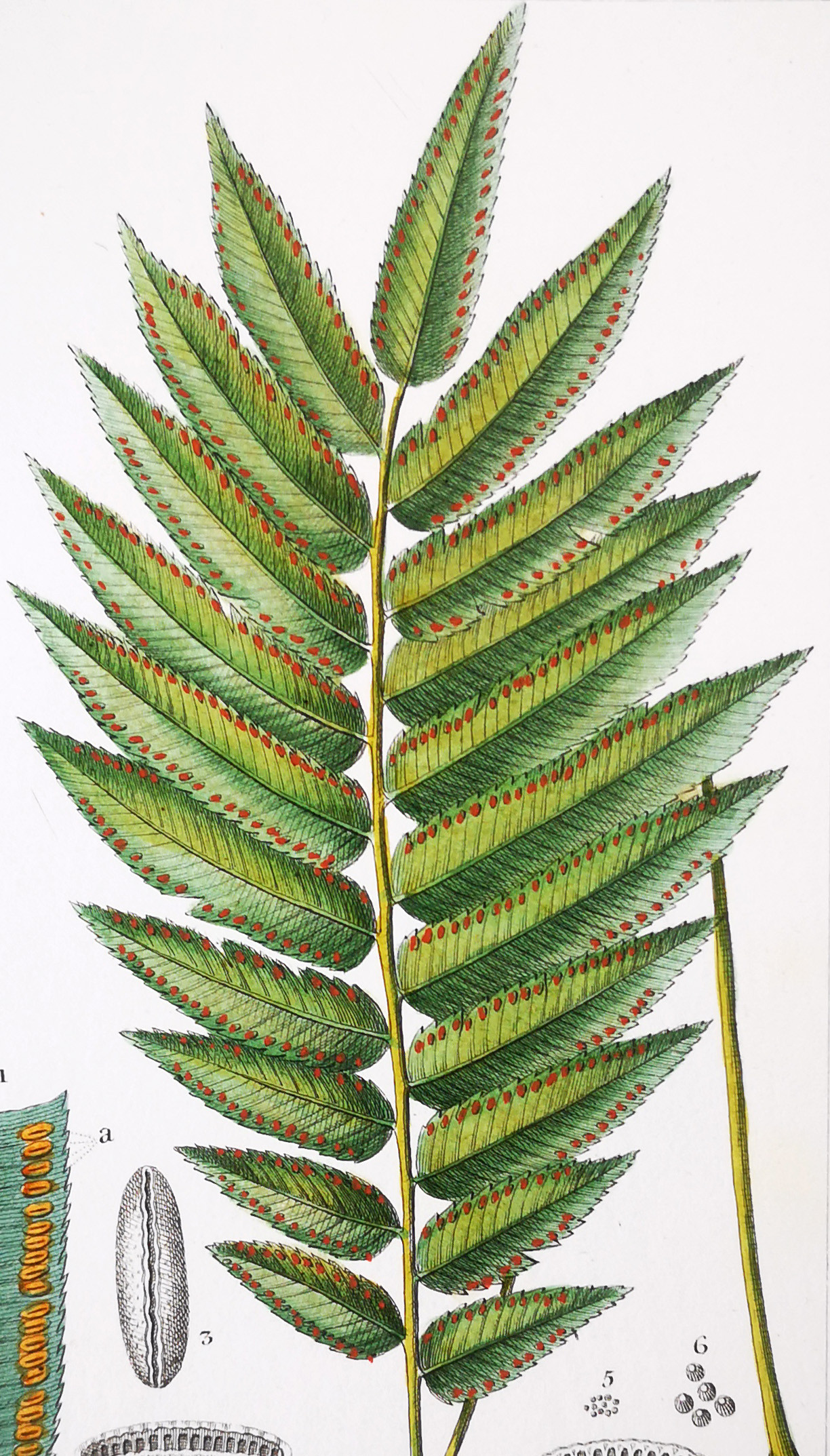
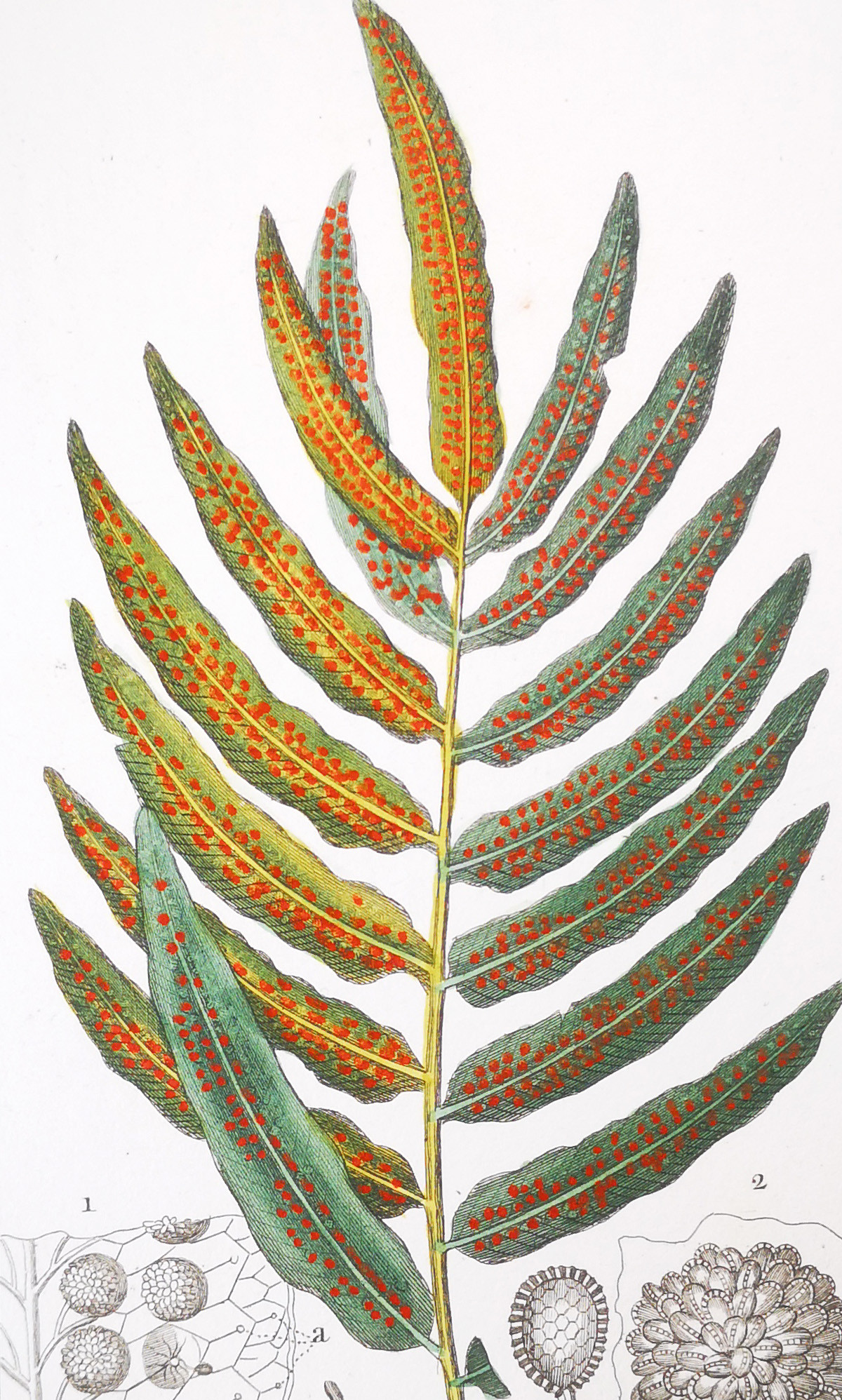

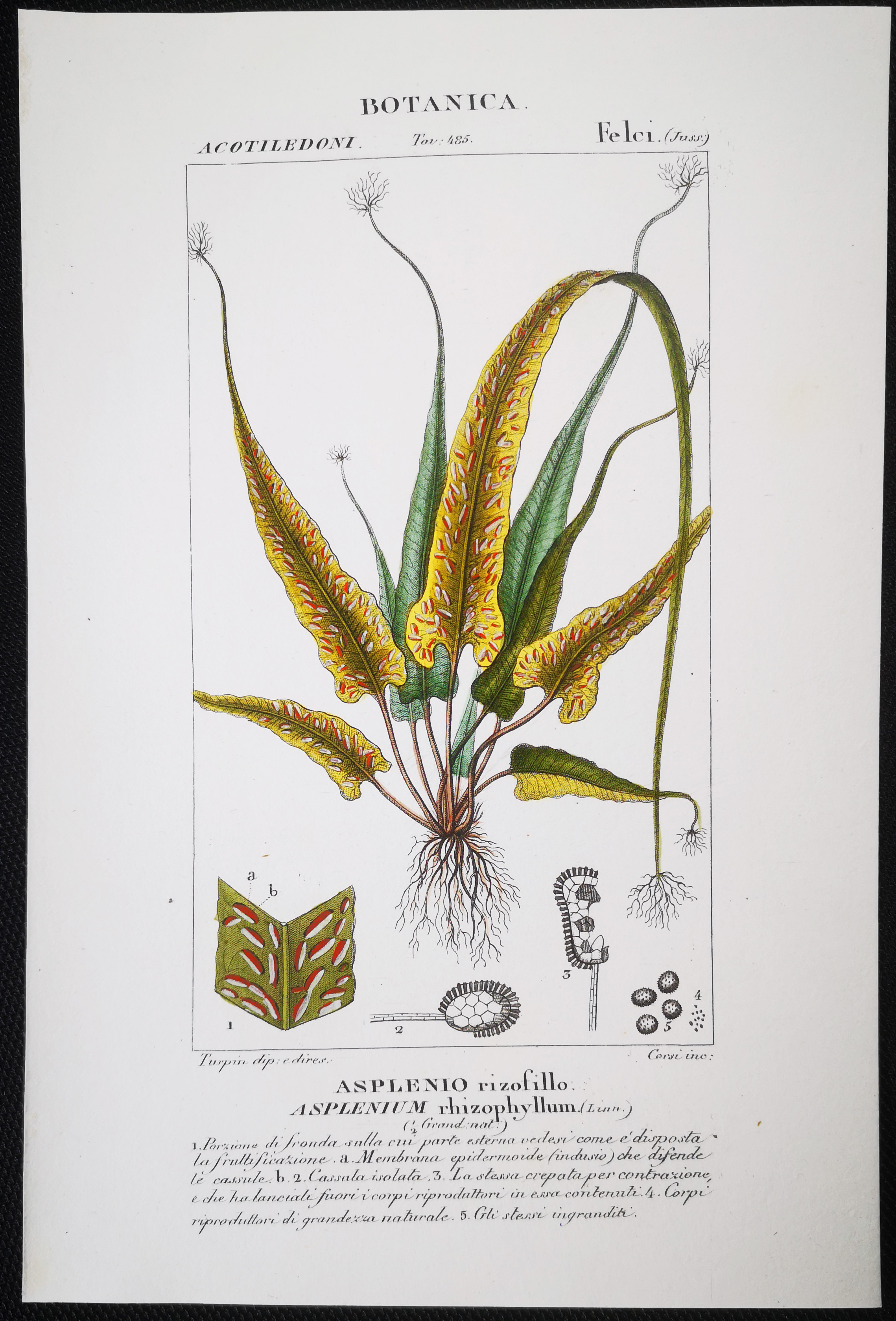
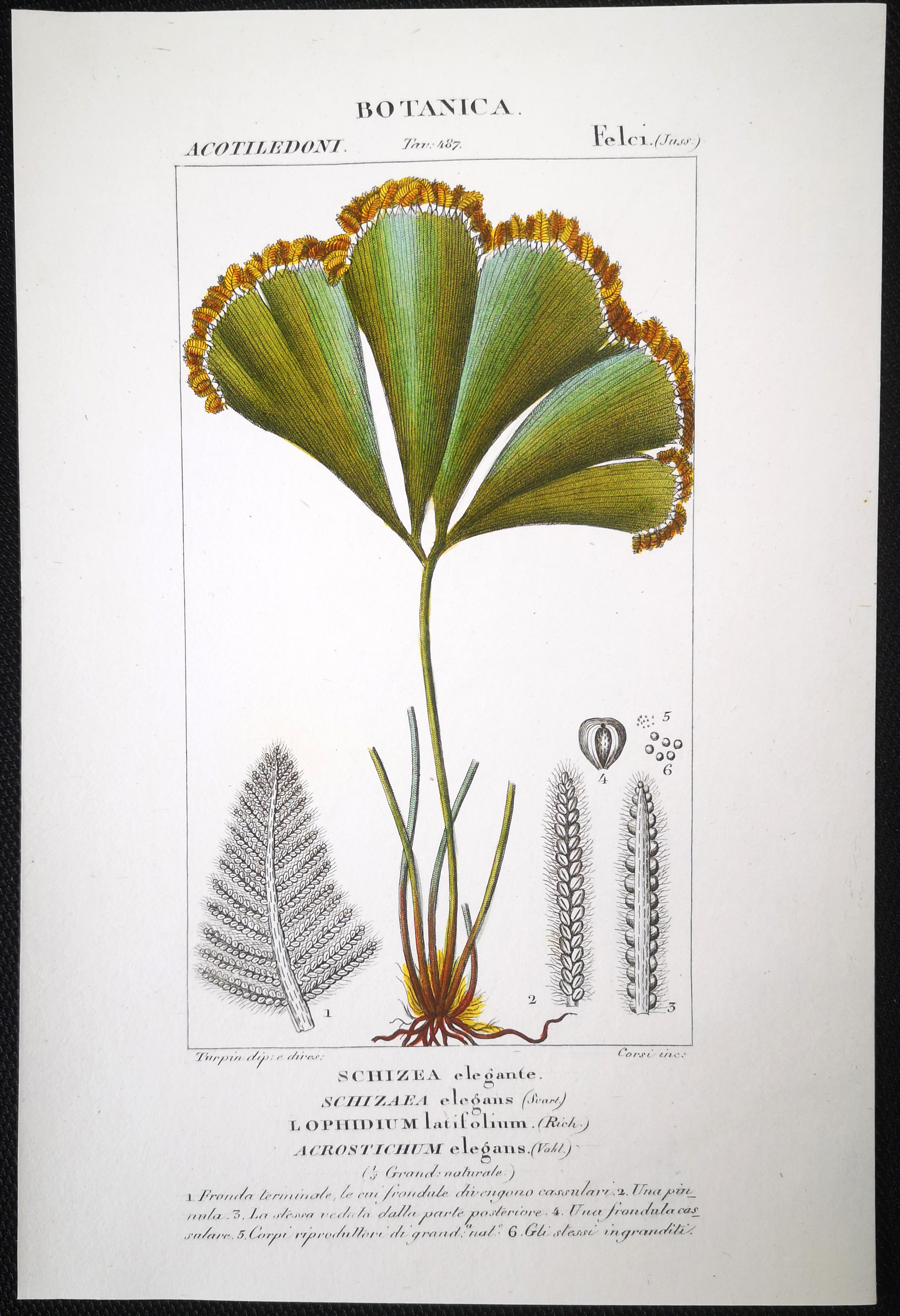
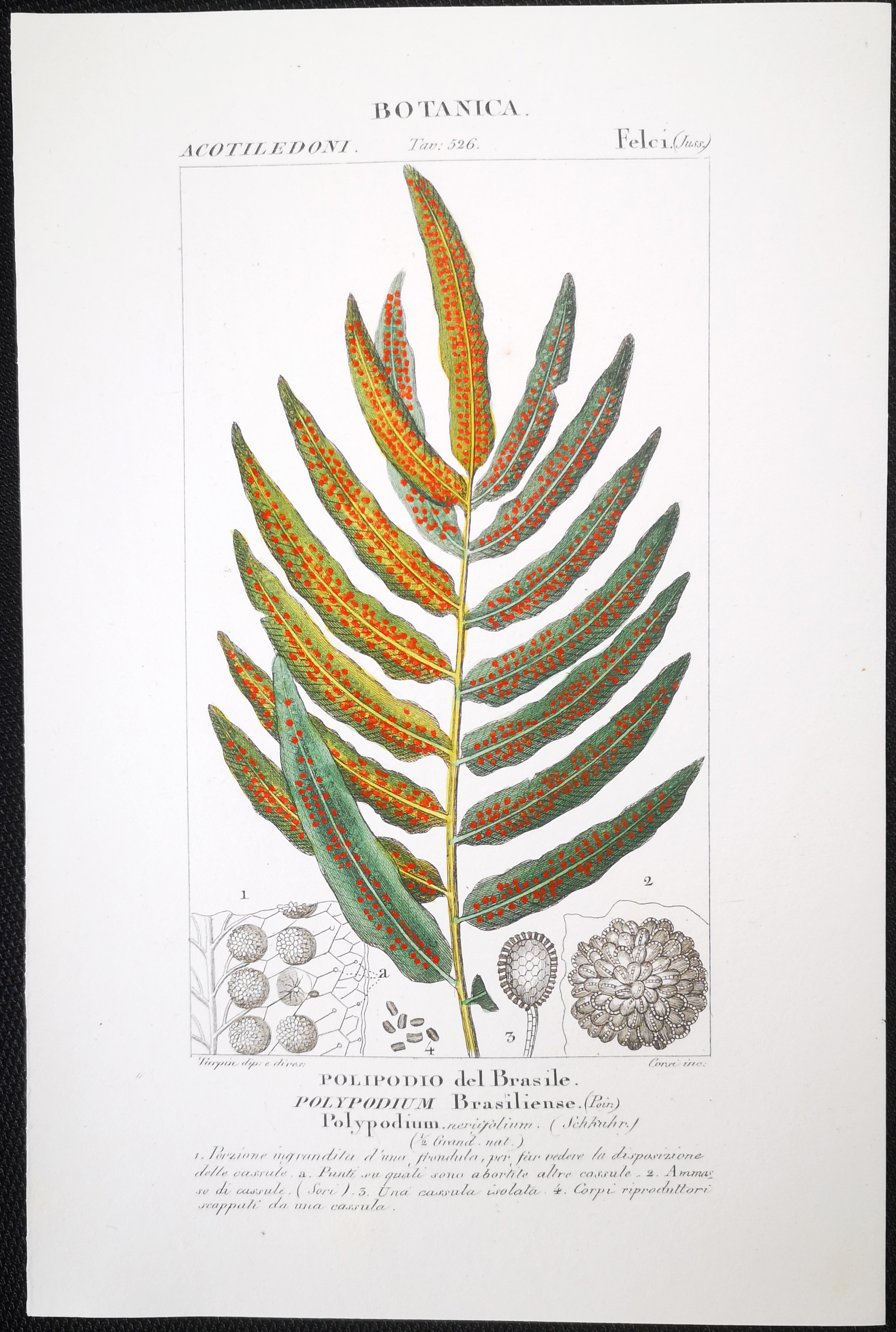
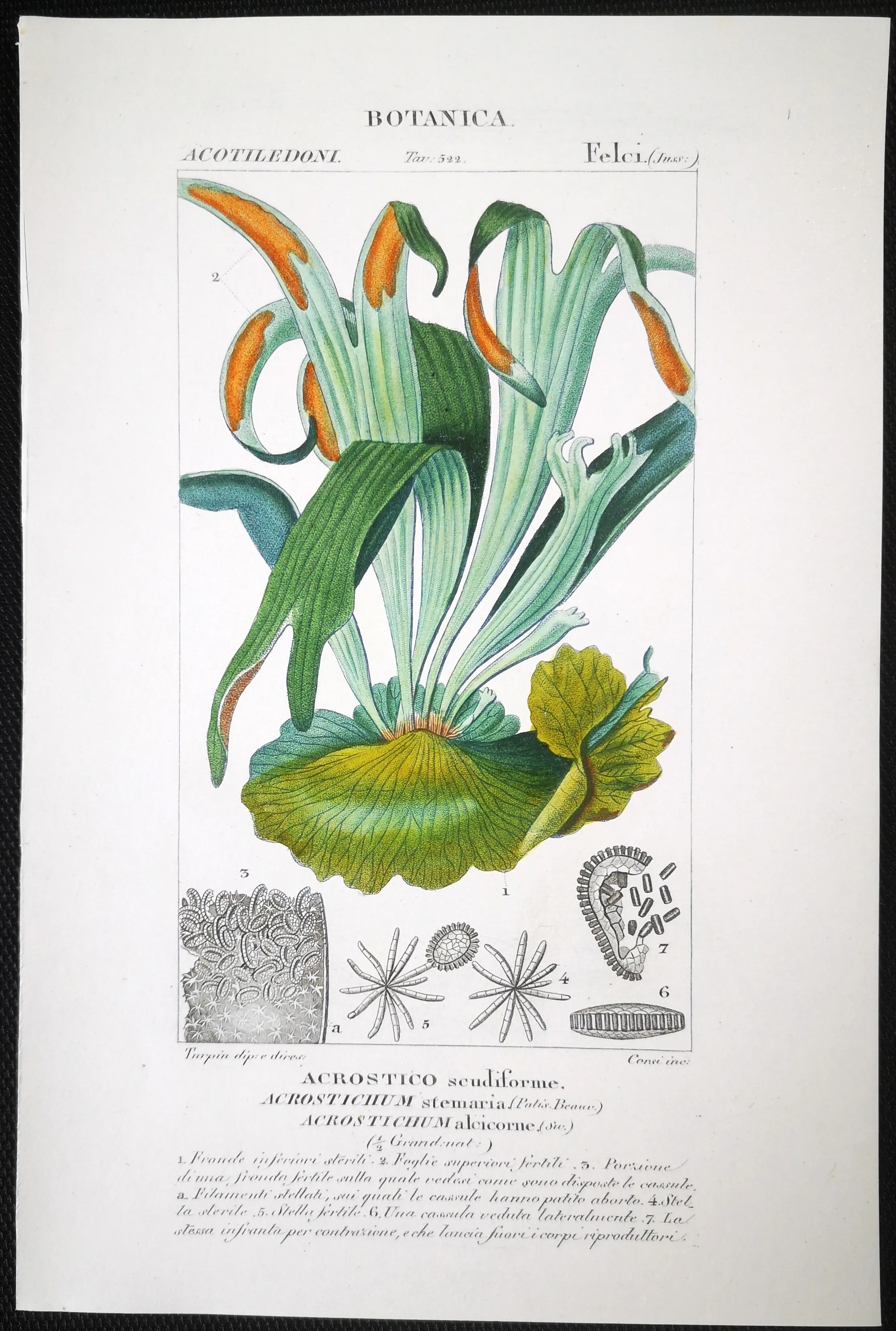
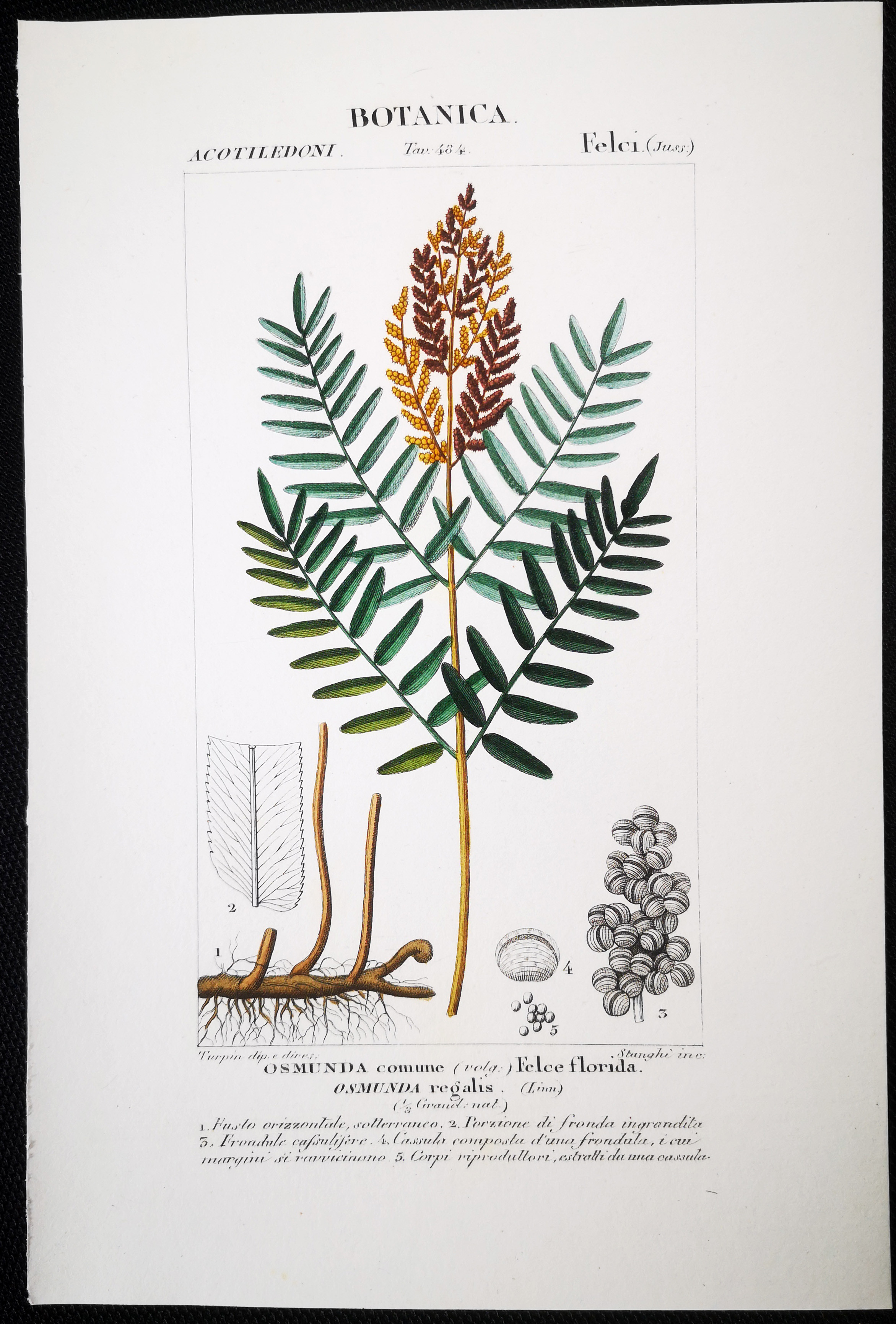
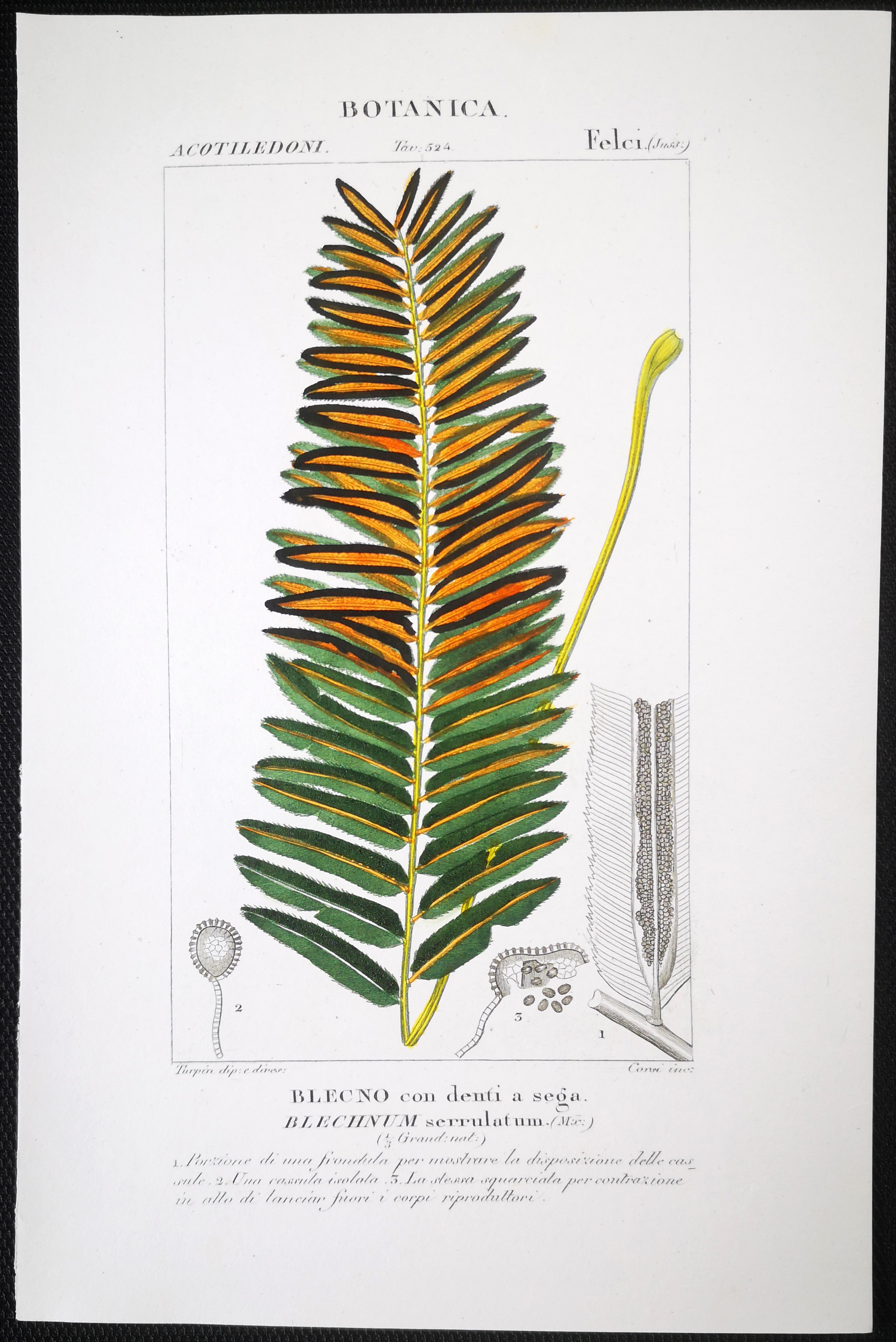
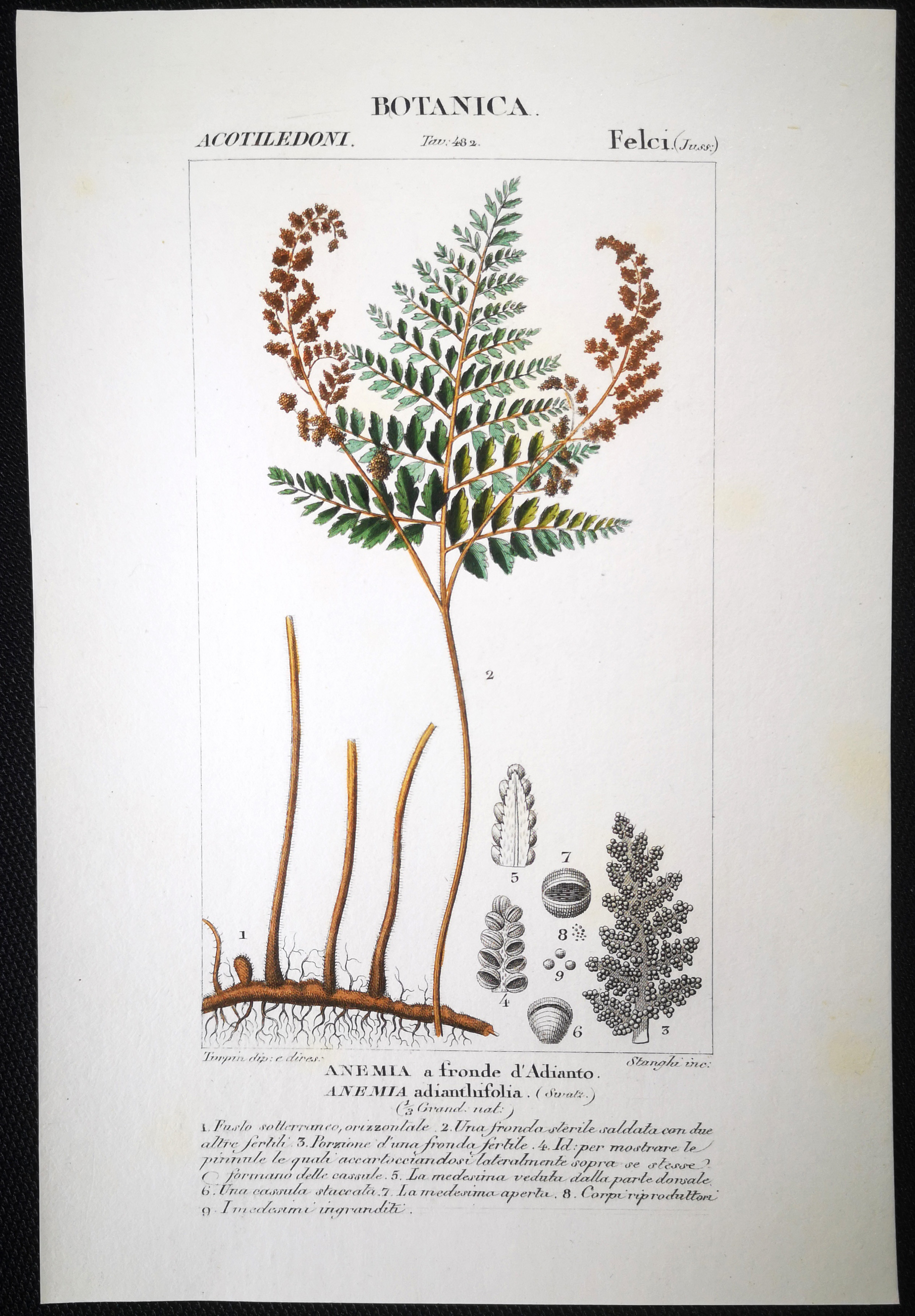
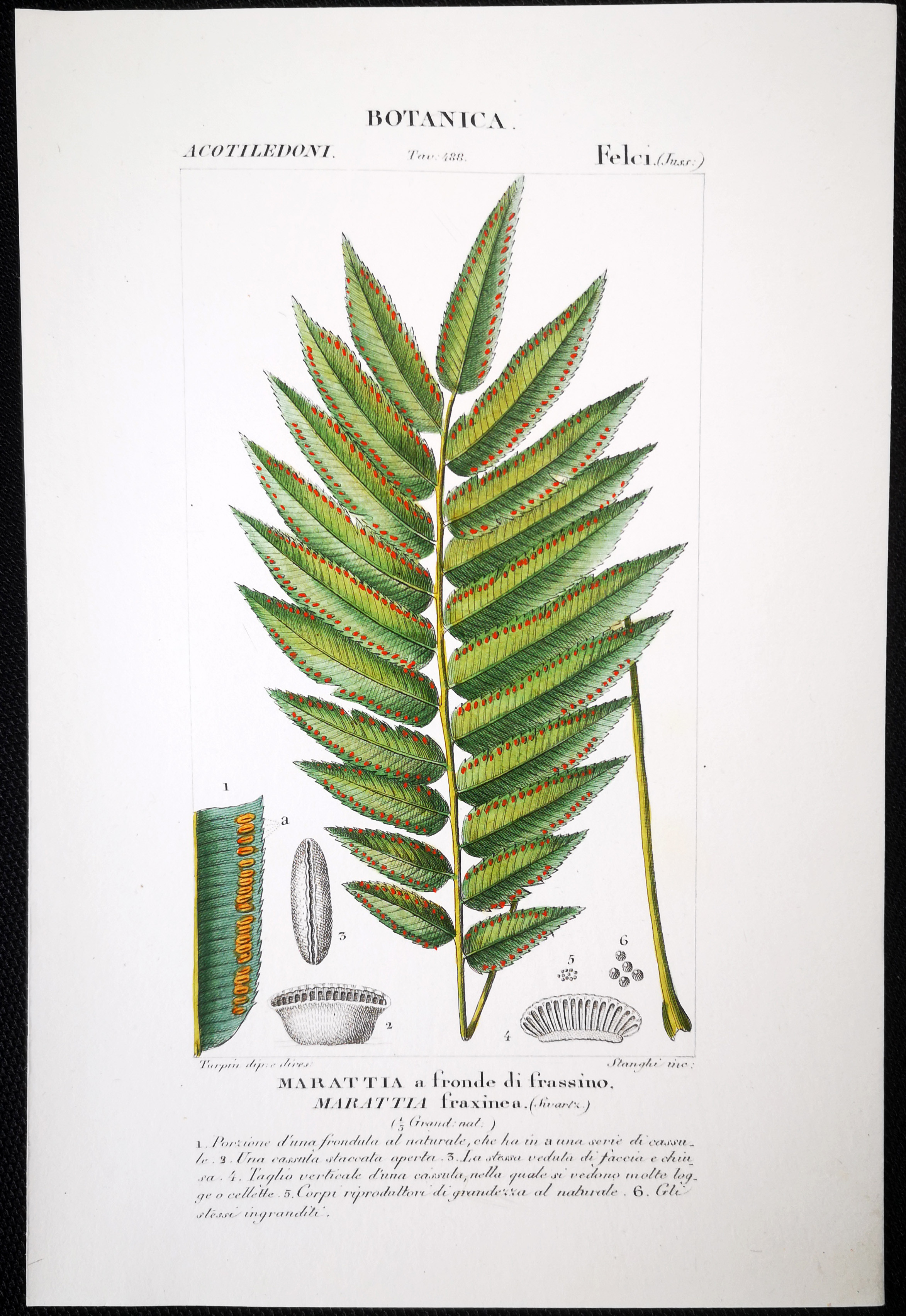
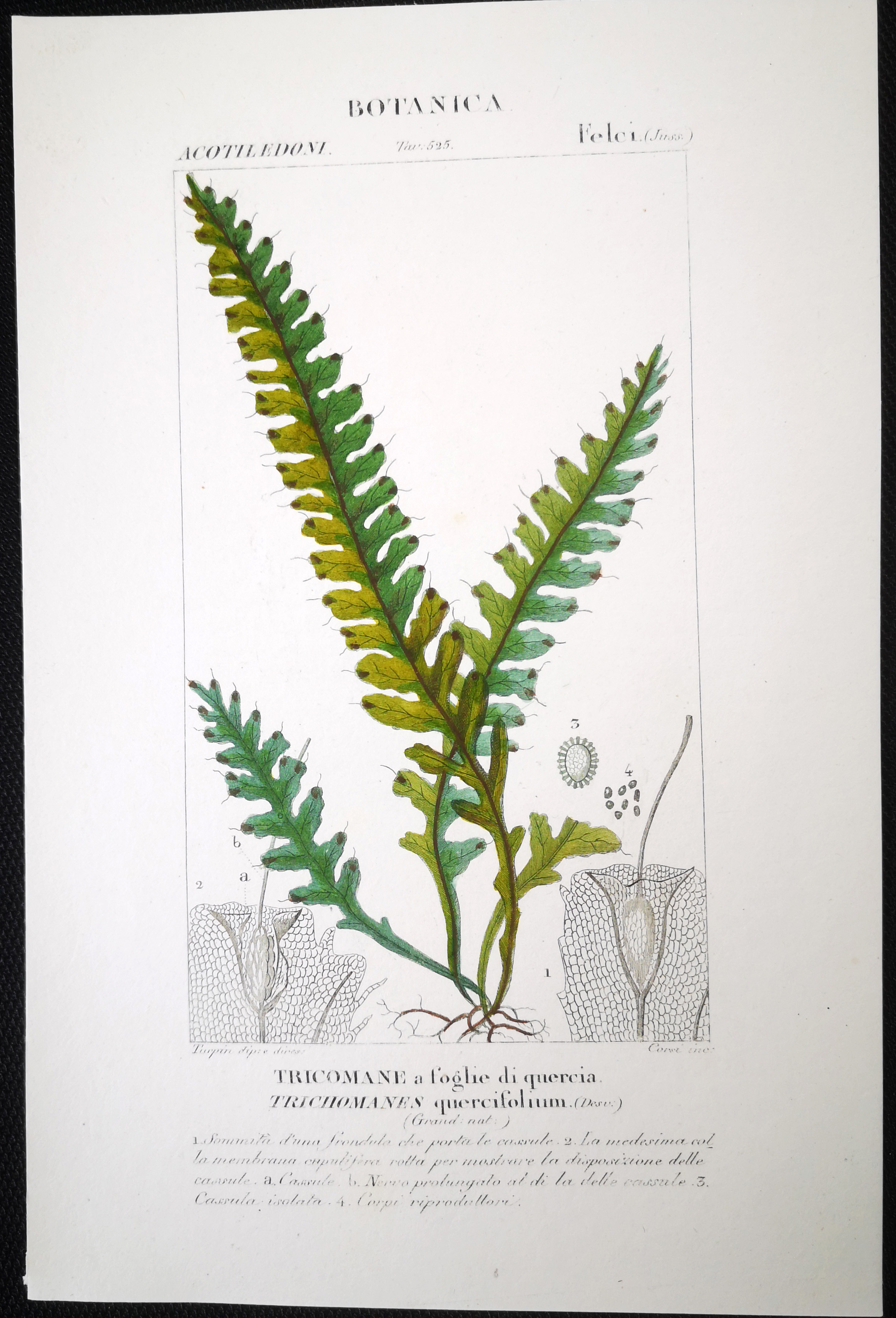
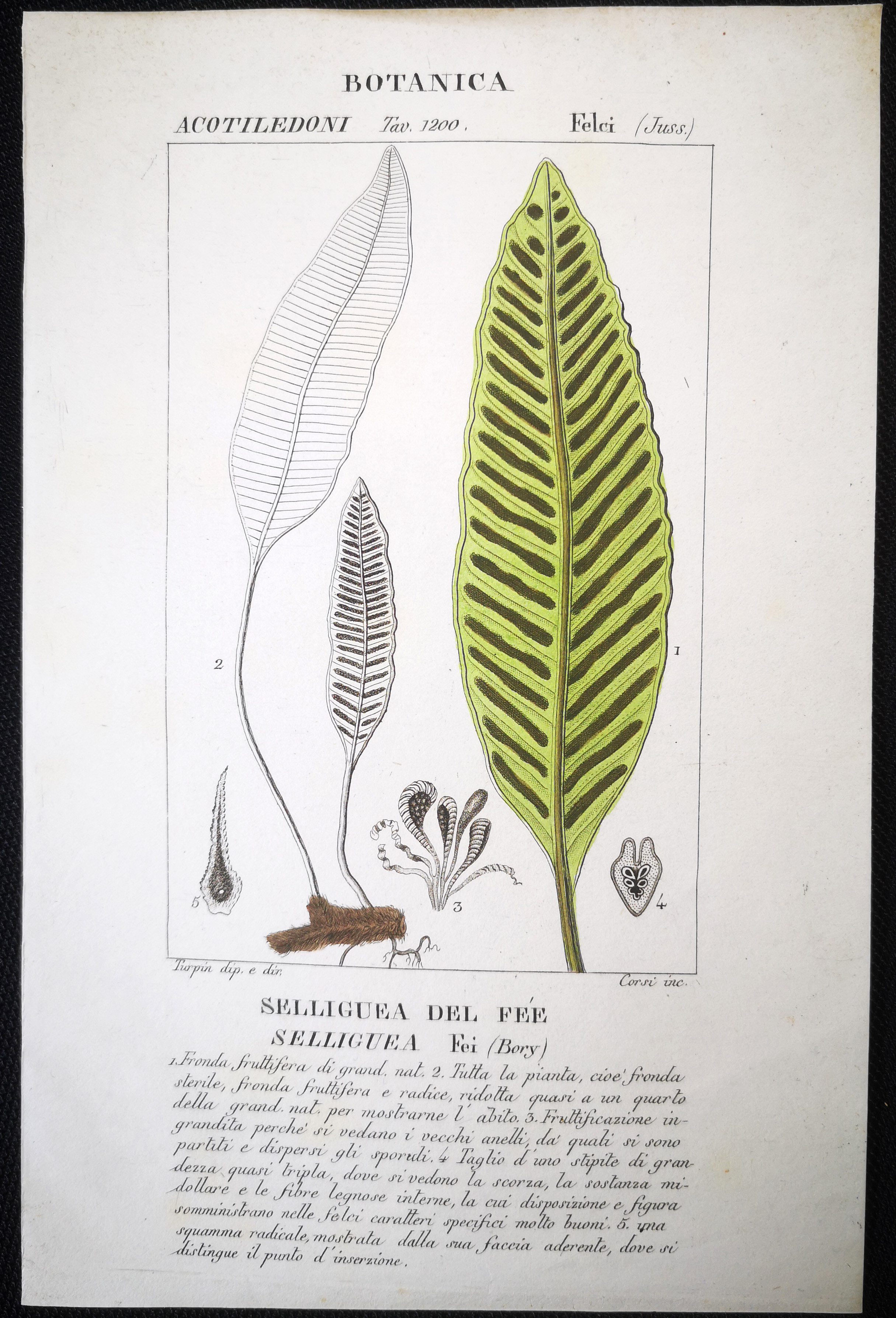
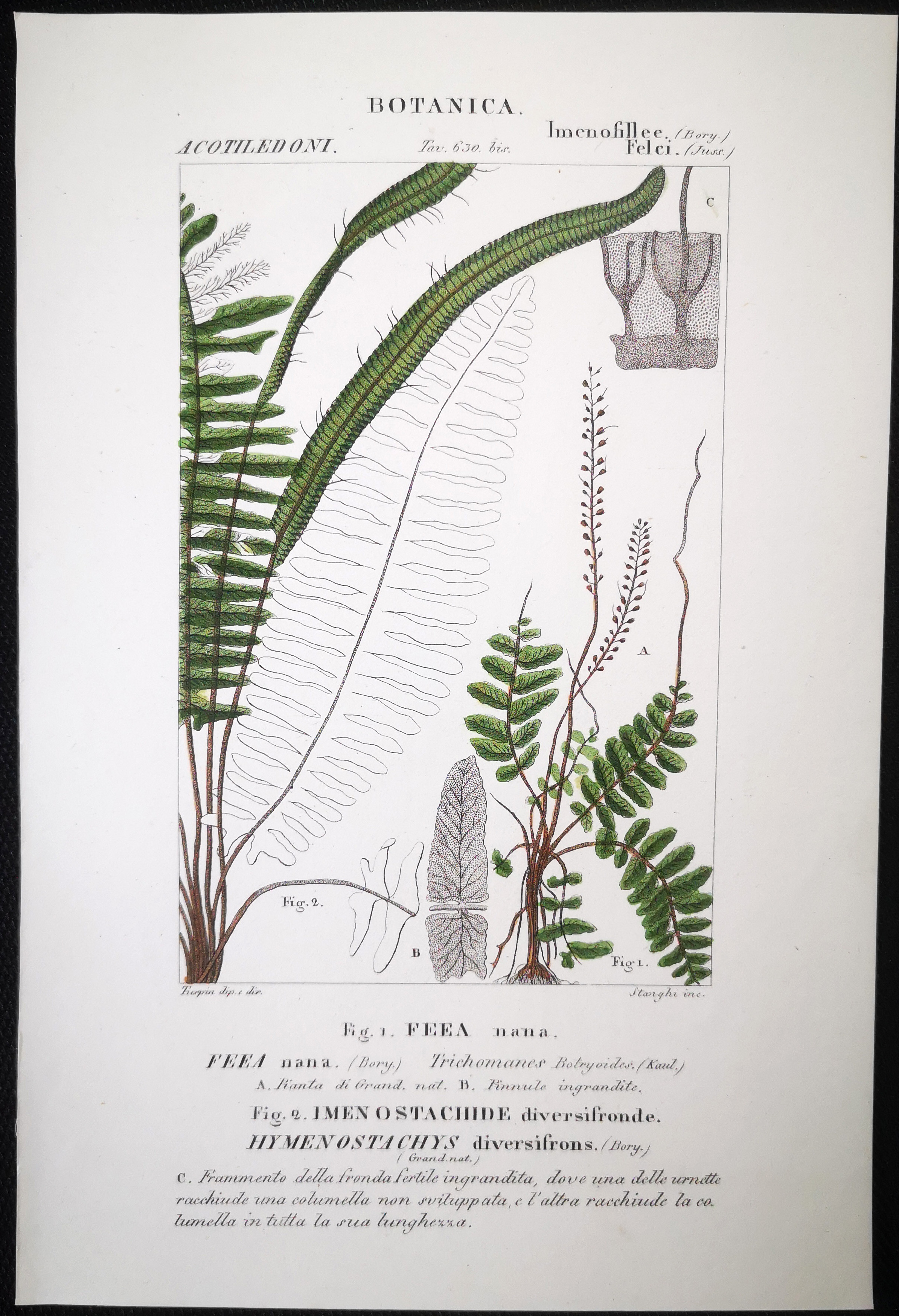
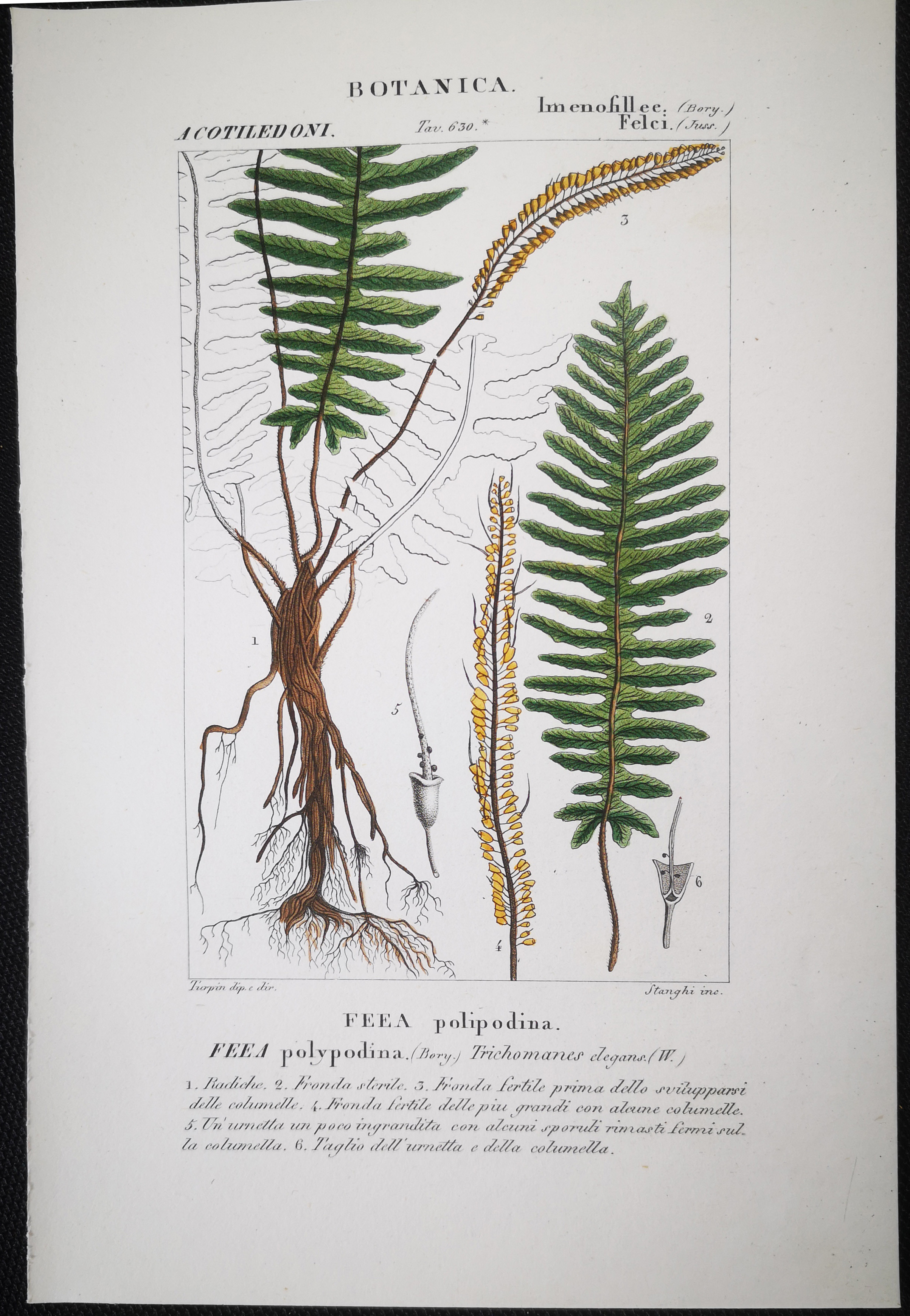
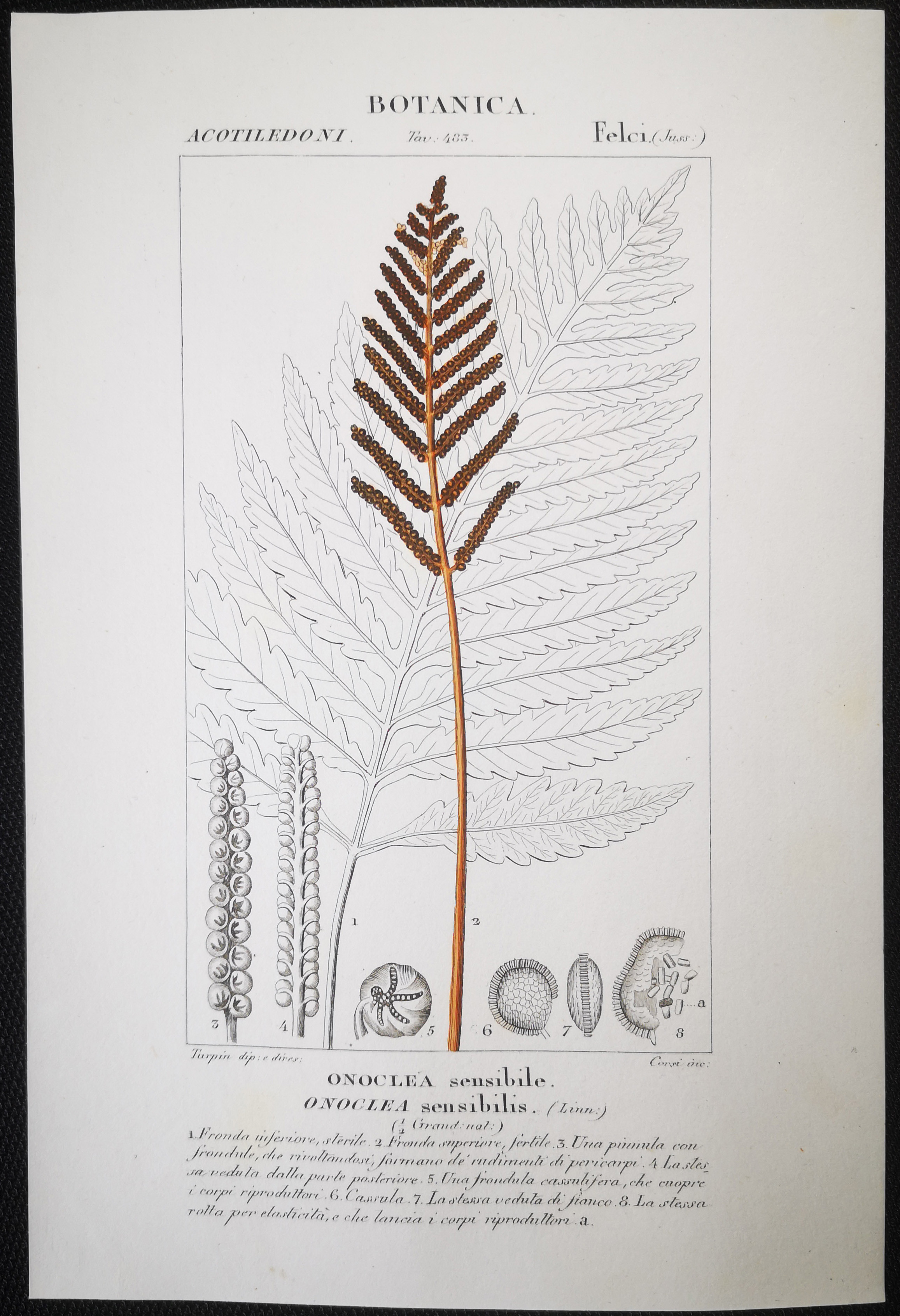
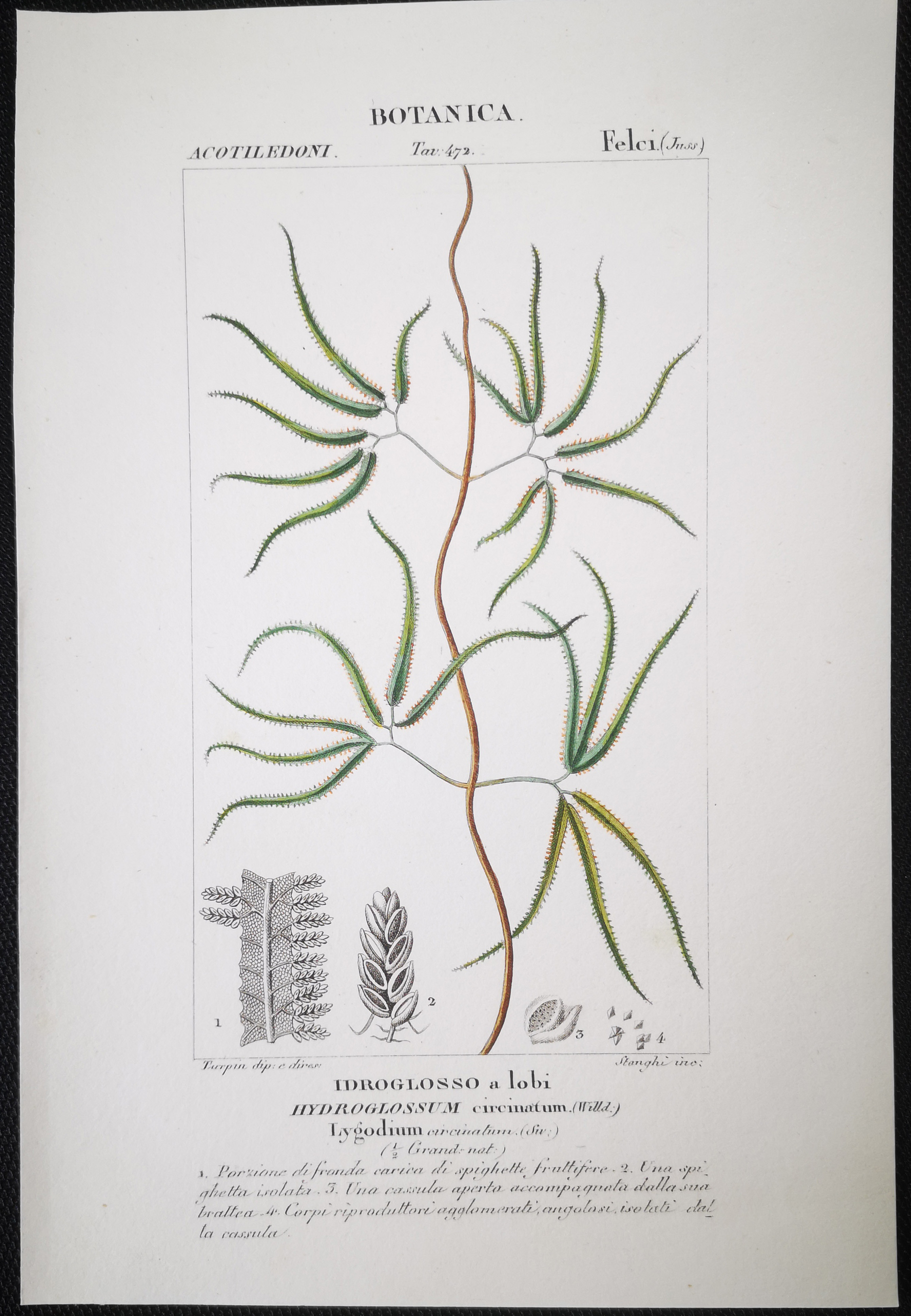
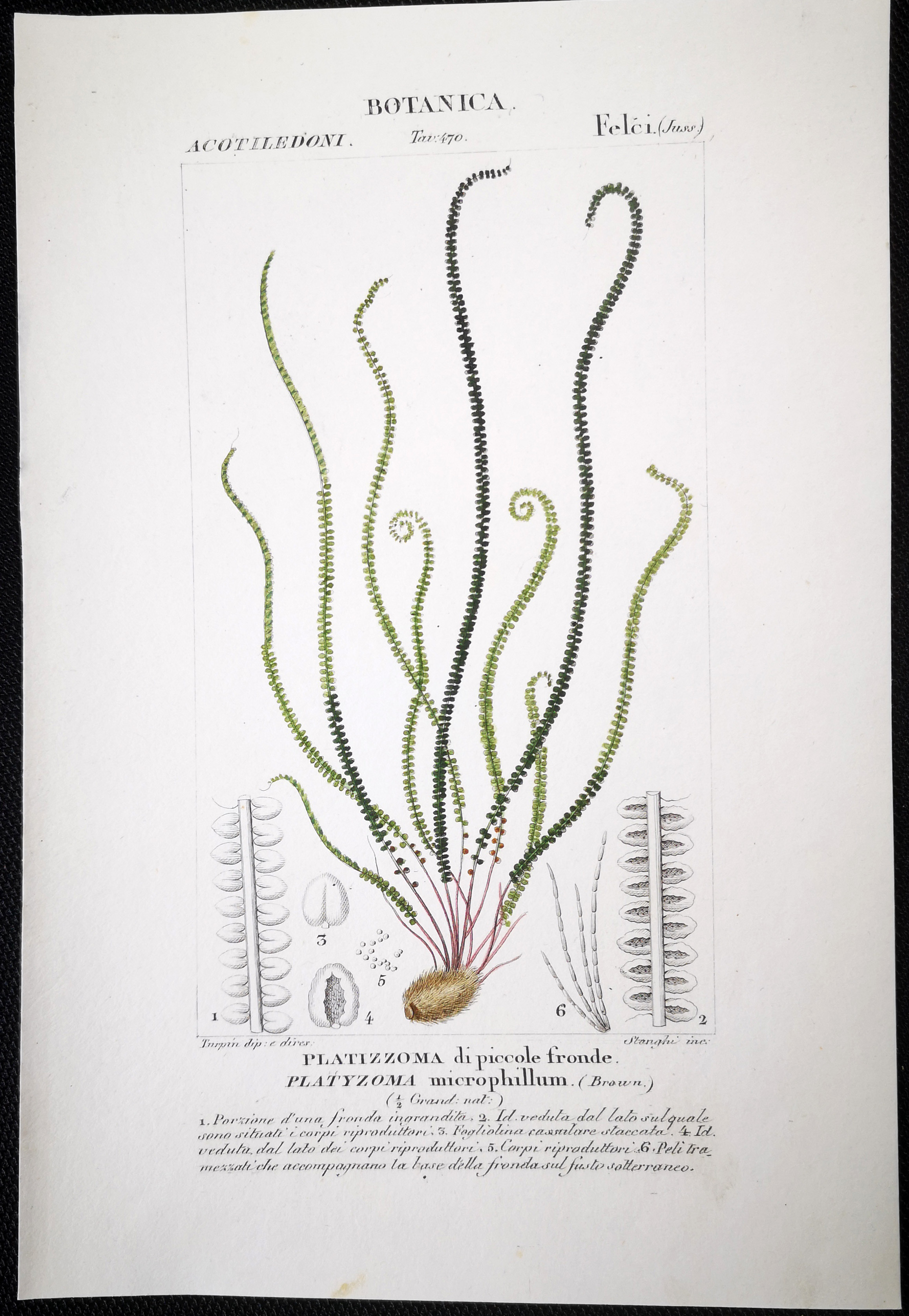
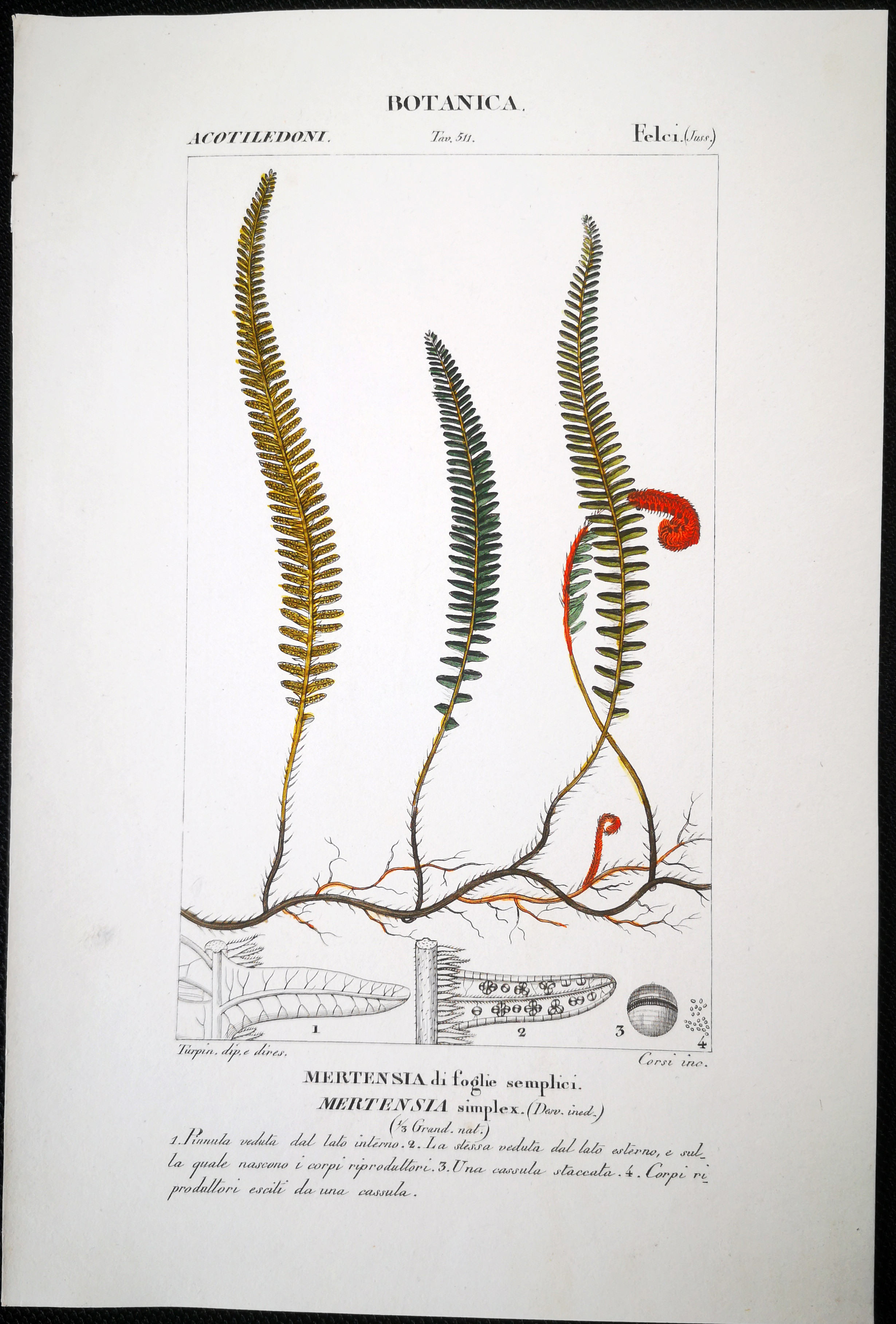
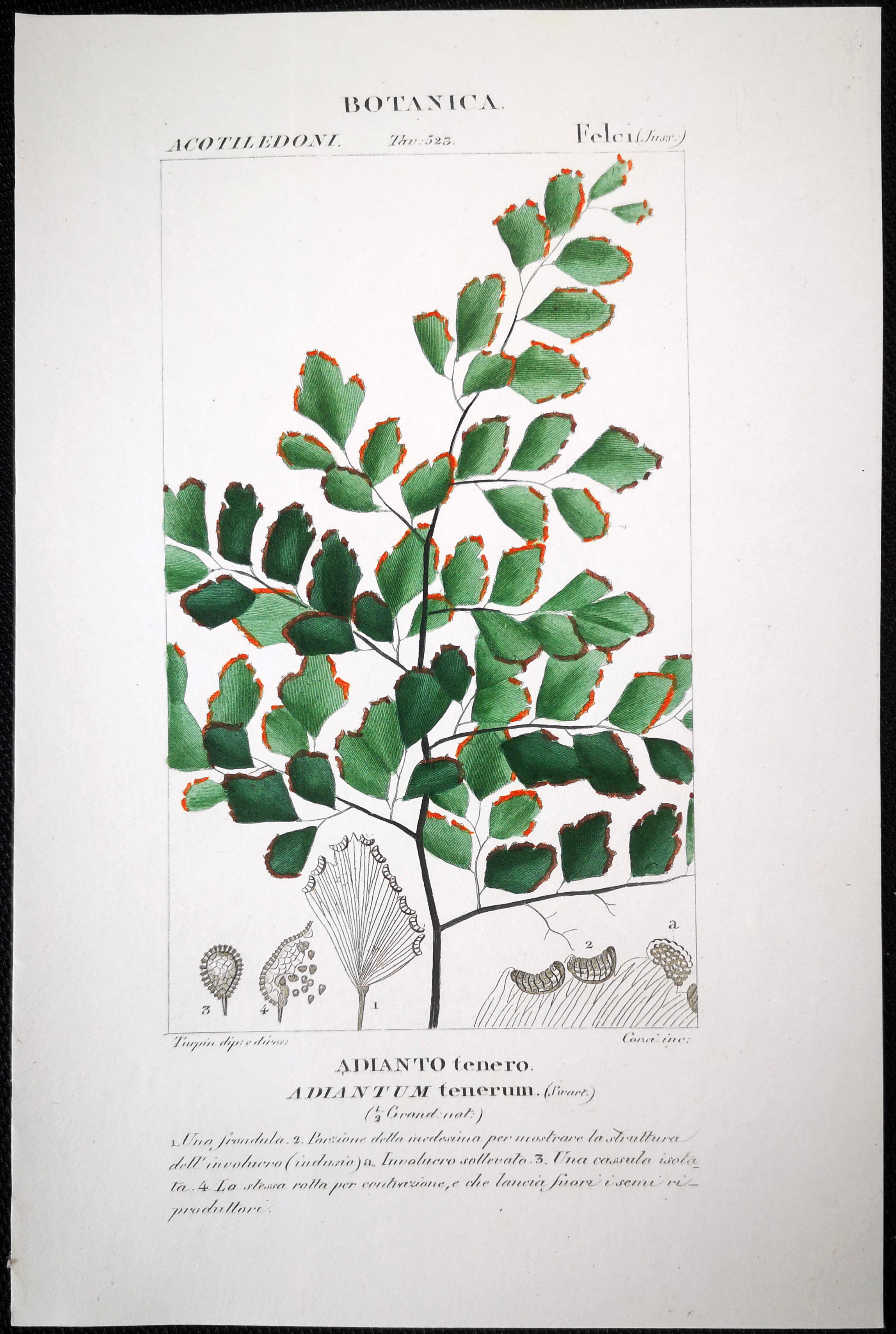
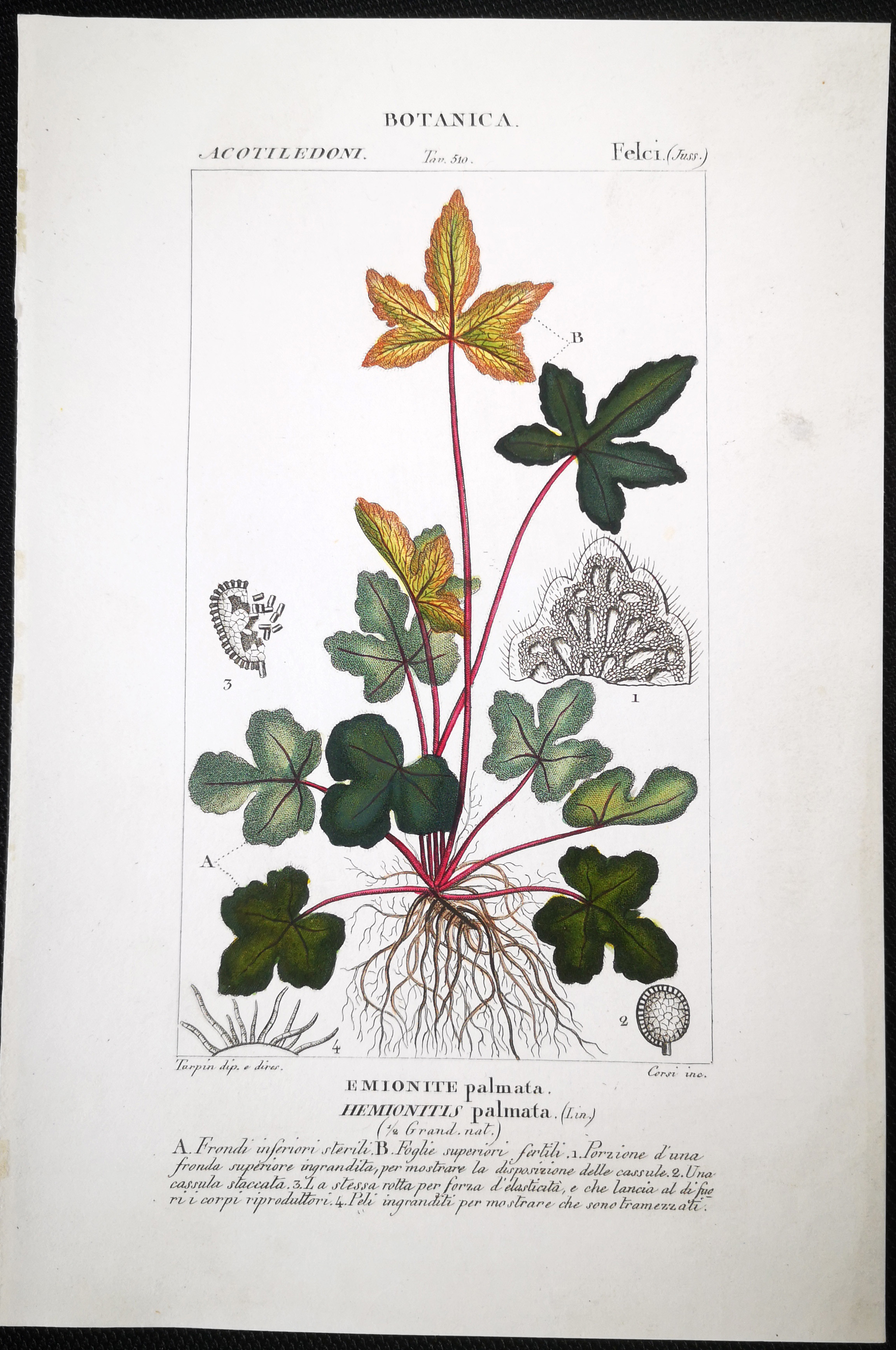
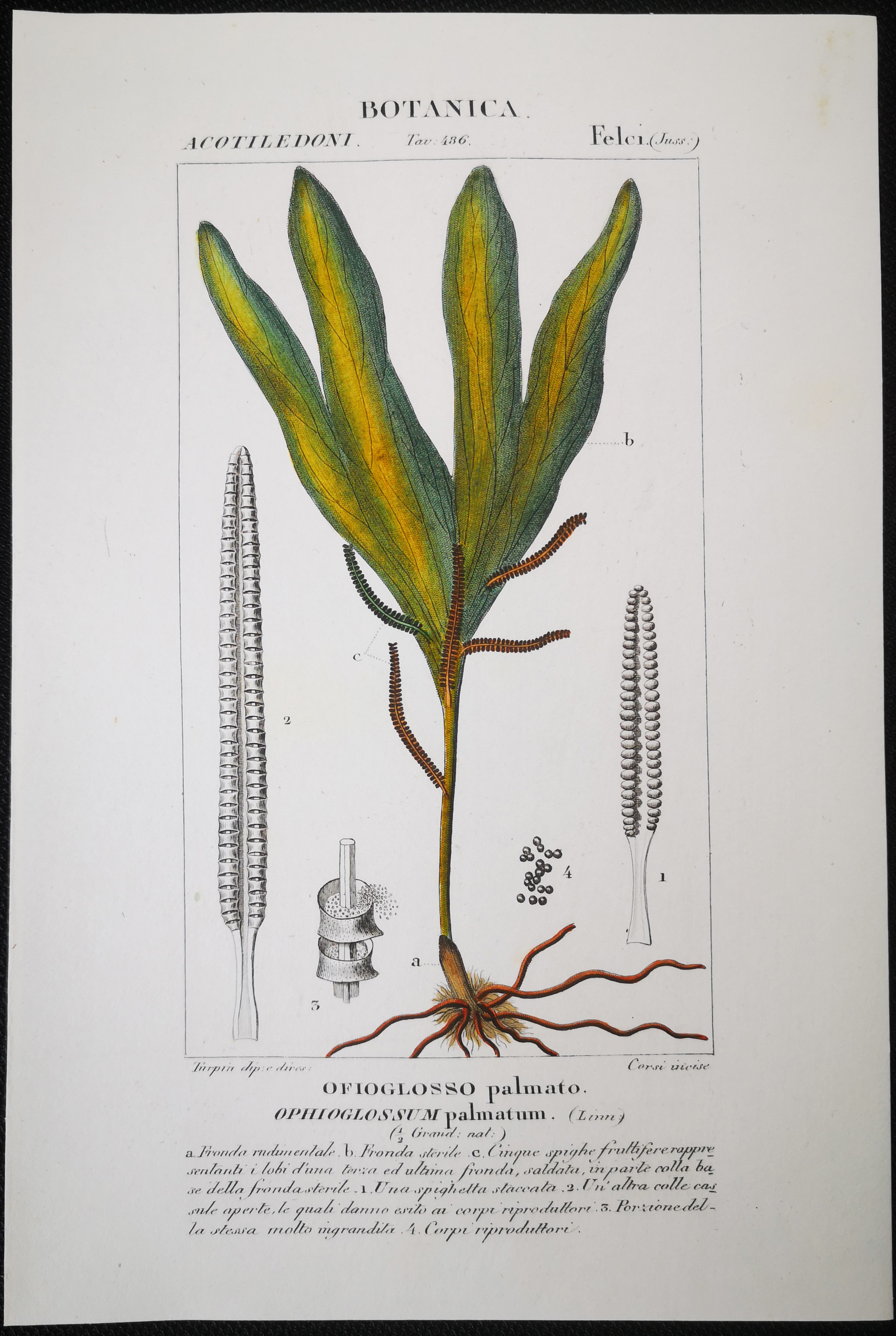
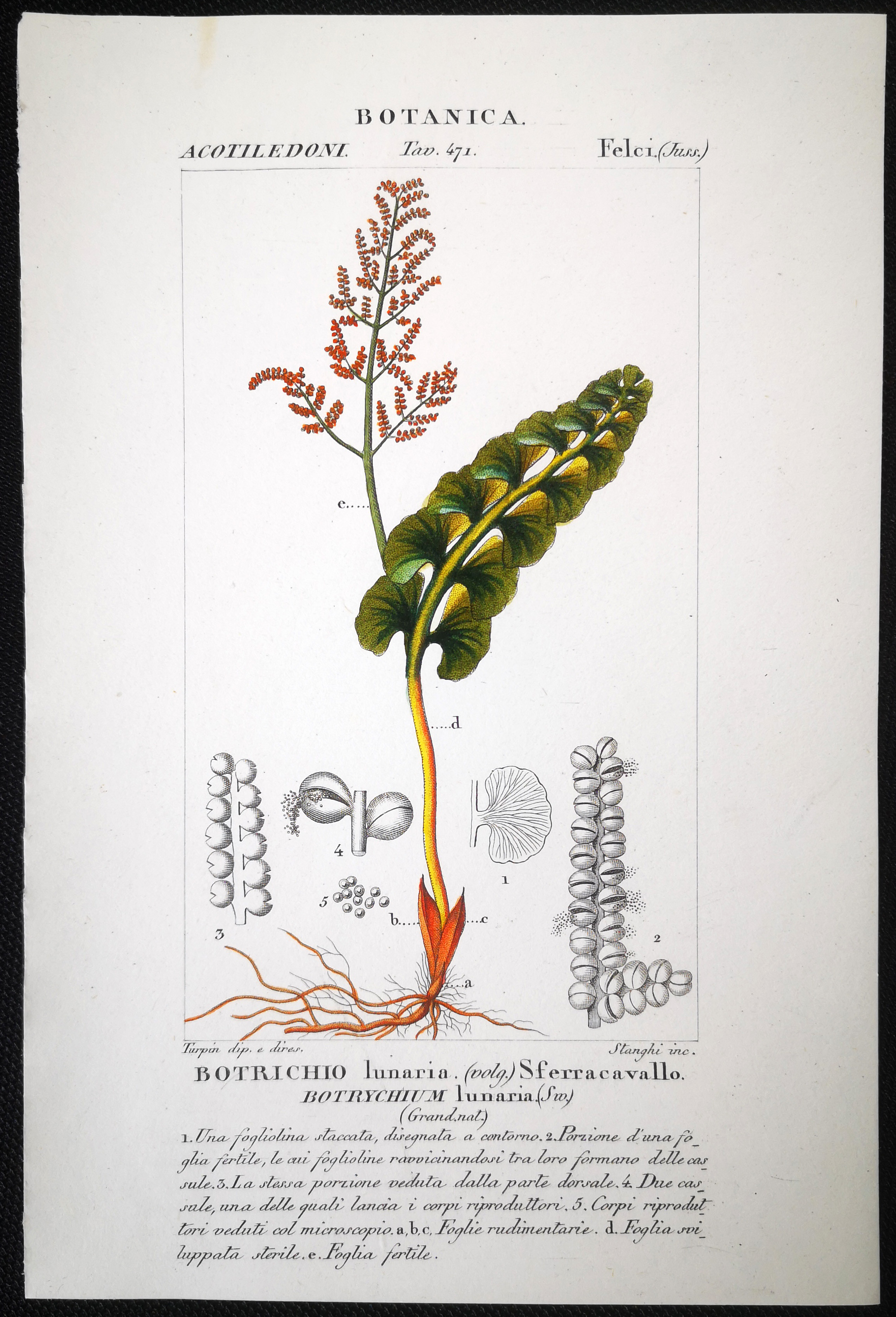
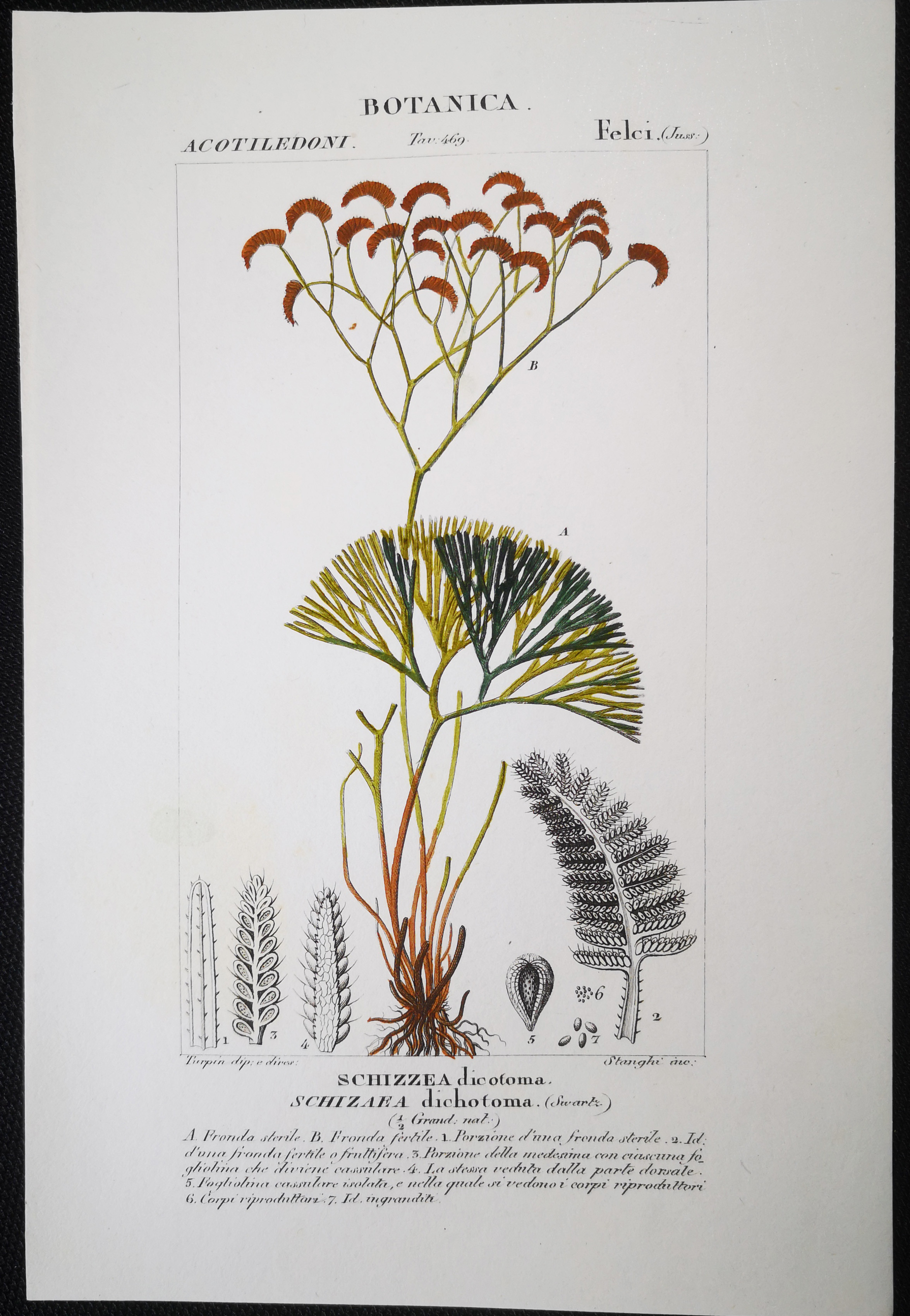
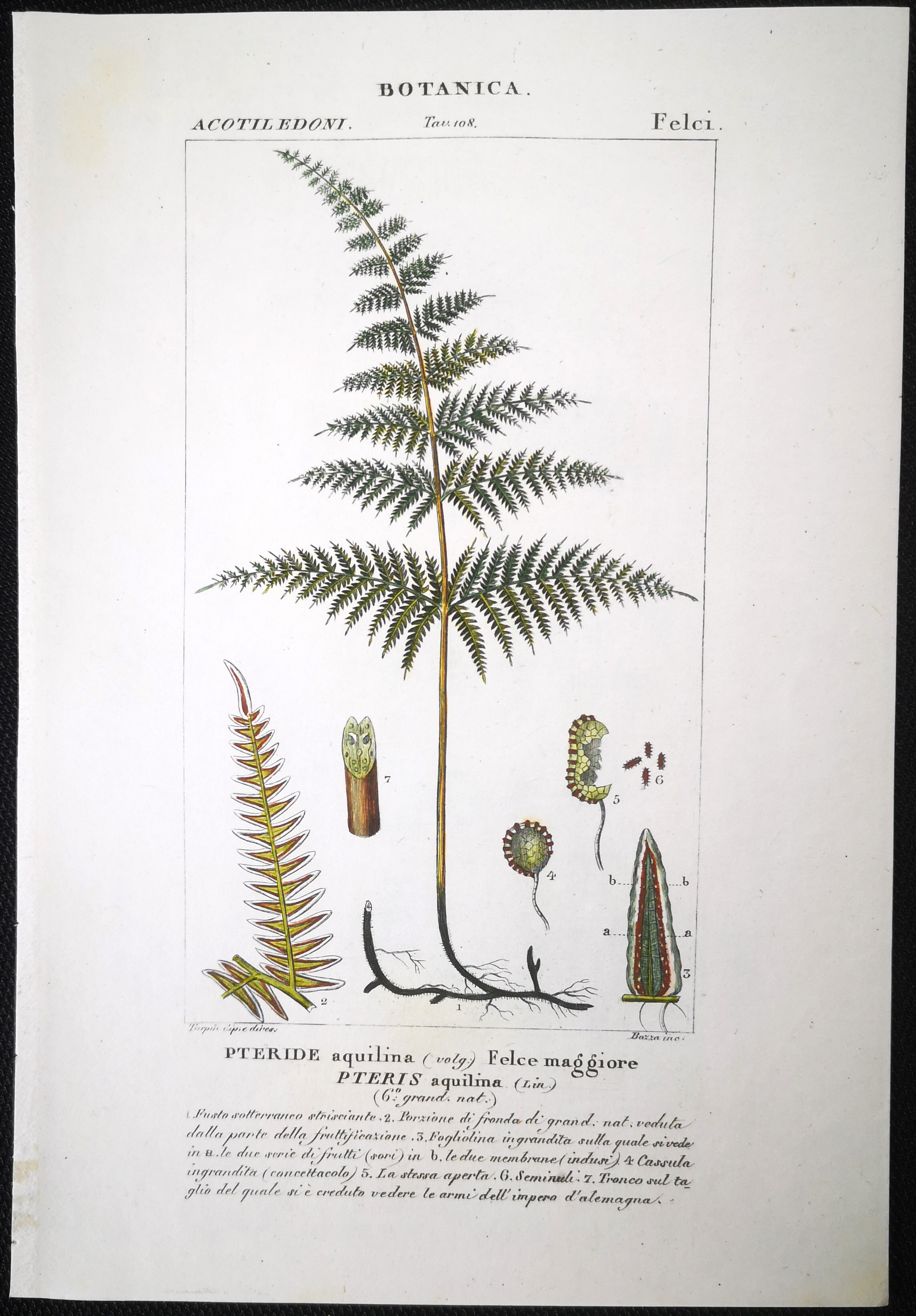
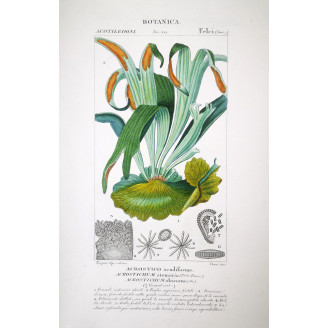
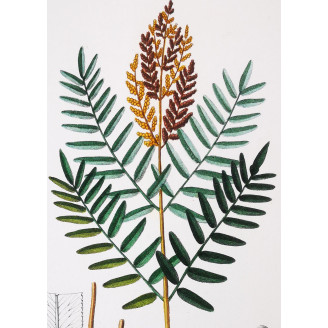
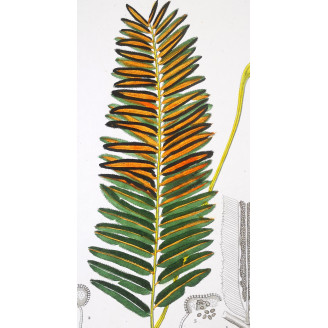
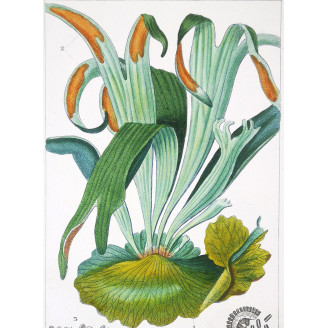
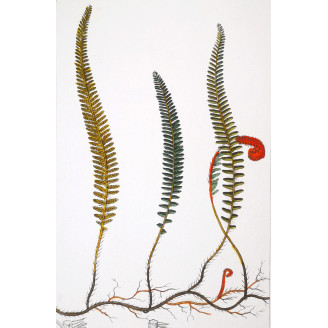
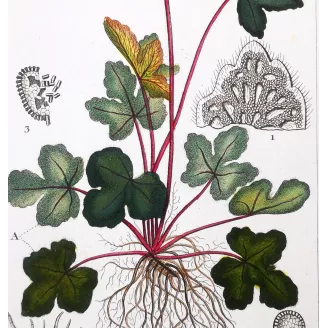
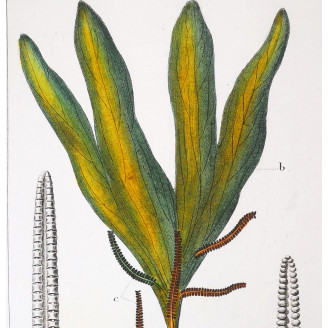
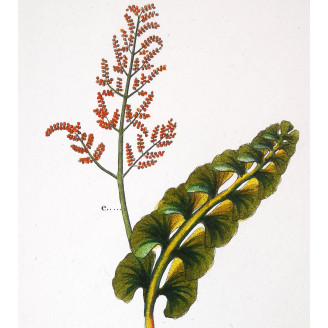
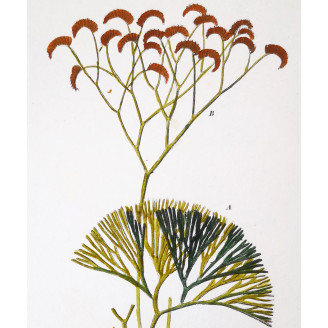
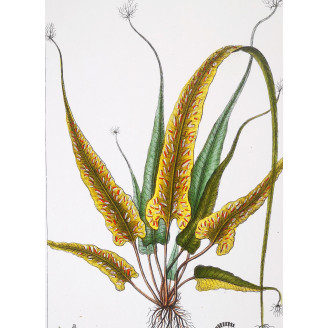
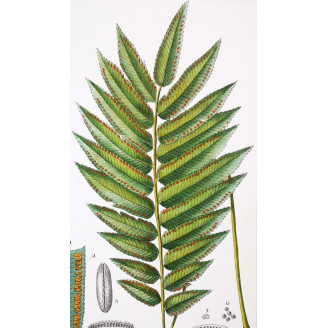
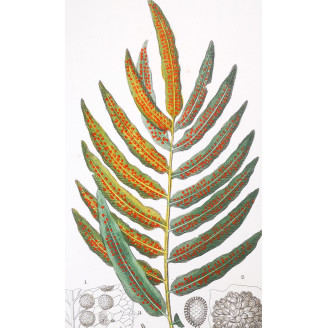
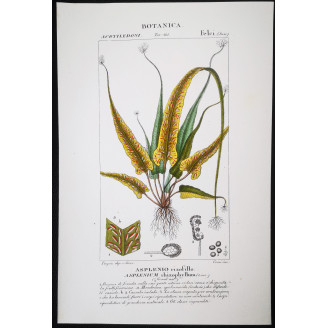
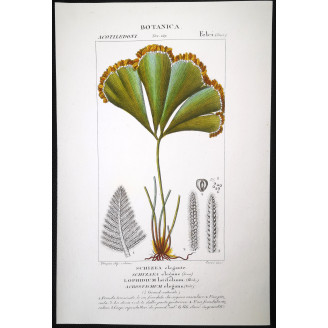
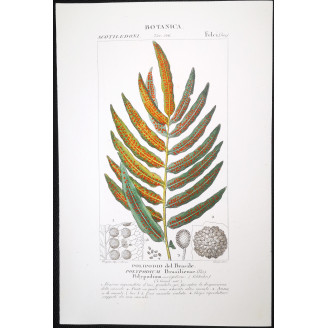
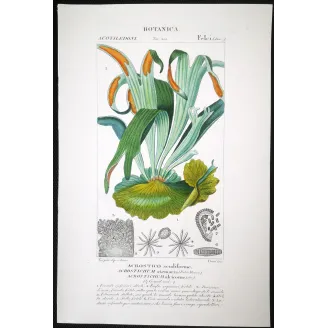
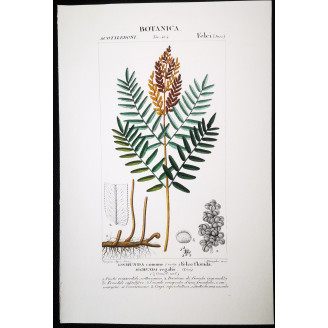
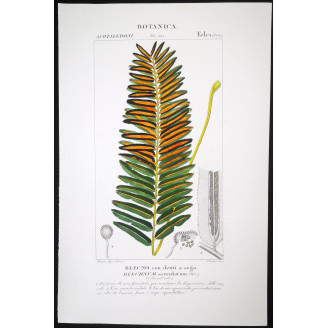
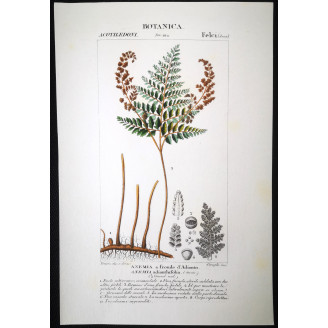
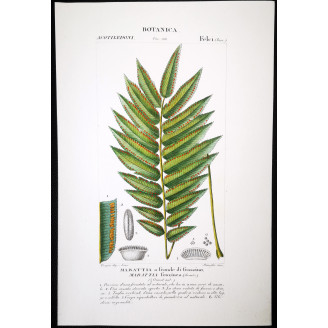
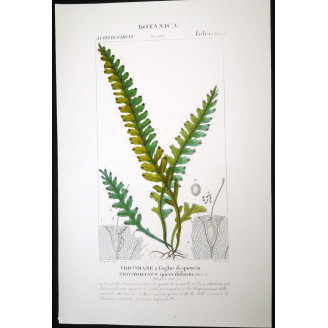
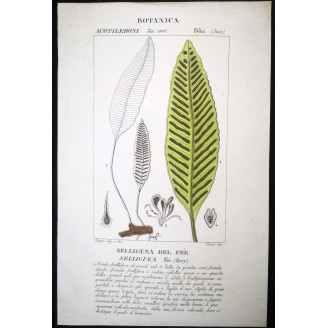
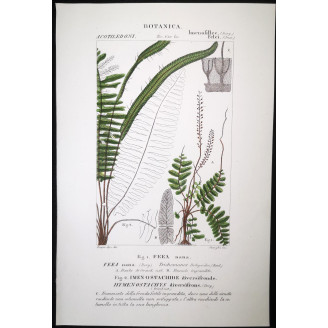
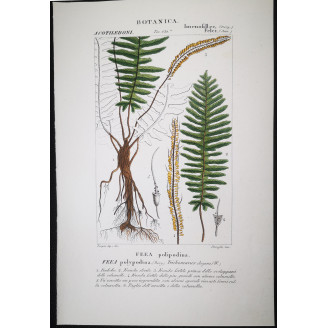
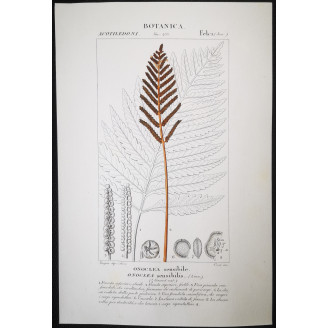
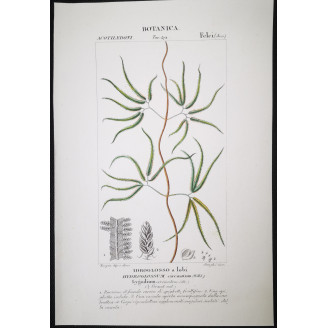
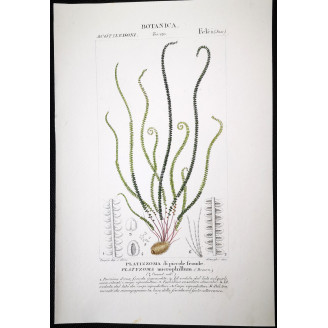
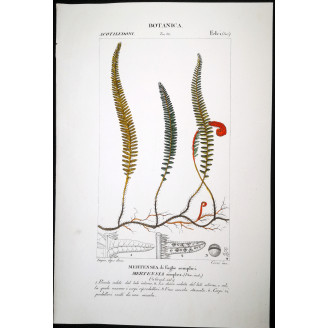
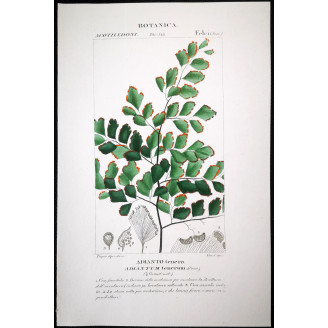
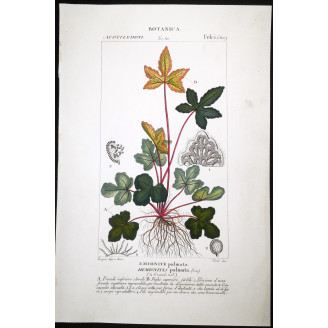
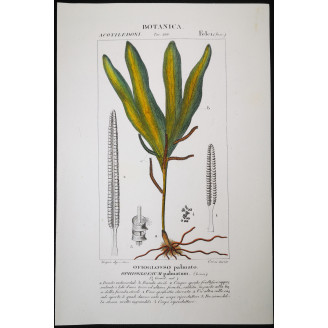
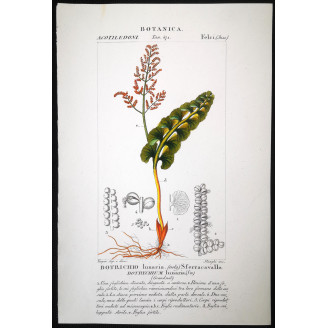
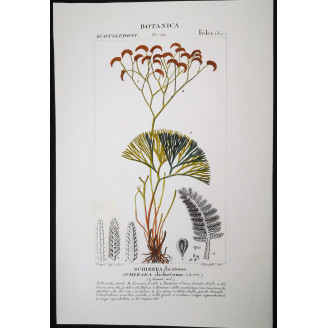
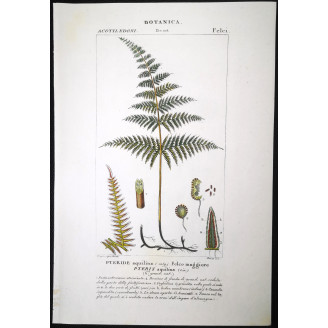
A complete set of 22 original hand-colored lithographs of ferns by Turpin, from the Dizionario di Scienze Naturali (c. 1830).
 Delivery policy
Your print will be carefully prepared and shipped worldwide via trusted couriers (UPS or similar).
 Authentic antique prints
Original engravings from the 17th–19th century.
This exceptional ensemble comprises twenty-two original hand-colored engravings dedicated exclusively to ferns, issued in the early nineteenth century for the Italian edition of the Dizionario di Scienze Naturali. Preserved in uniform format (approx. 22 × 14 cm) and consistent condition, the group forms a coherent botanical chapter devoted to Acotyledons — a vegetal world defined by fronds, spores, and architectural rhythm.
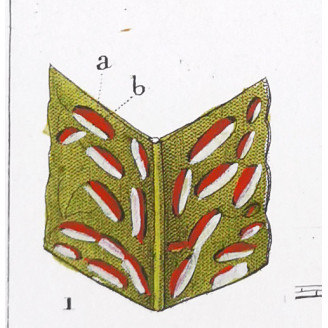
Rather than a decorative assortment assembled later, this set retains its scientific unity. Each plate combines disciplined copper engraving with delicate contemporary hand-coloring, and many incorporate magnified reproductive structures and sectional studies. Together, the engravings function as a structured visual taxonomy — not simply a collection, but a preserved botanical corpus.
Complete thematic groups from early nineteenth-century natural history works are increasingly rare. Over time, individual sheets are dispersed and sold separately. The survival of twenty-two matching fern engravings — identical format, same botanical section, harmonious palette — offers collectors a rare opportunity to preserve scientific intention intact.
As a unified ensemble, the plates carry greater intellectual and aesthetic coherence than any individual sheet could provide. Their integrity is central to their historical, botanical, and decorative value.
Ferns occupied a distinctive position in early nineteenth-century botanical science. Neither flowering plants nor simple mosses, they revealed a reproductive system based on spores and complex fertile structures, challenging traditional classification and inspiring intense systematic study. This series reflects that intellectual moment, when morphology and taxonomy converged in disciplined visual form.
Among the species included is Osmunda regalis, the Royal Fern, long admired in European herbals and cultivated in aristocratic gardens. Pteris aquilina, the widespread Bracken Fern, holds deep associations with rural European folklore. The enigmatic Botrychium lunaria, or Moonwort, was once linked to medieval superstition and alchemical lore. Adiantum tenerum, the delicate Maidenhair Fern, later became emblematic of the Victorian fern craze, a decorative and collecting phenomenon that shaped nineteenth-century interiors. Acrostichum aureum, native to tropical mangrove environments, reflects the expanding geographic horizons of colonial botany, while Ophioglossum palmatum represents one of the most evolutionarily intriguing fern genera studied in the period.
The complete list of species included in this set is as follows:
Installed as a structured grid in a study, library, or corridor, the twenty-two sheets create a refined botanical wall — serene yet intellectually vibrant. Uniform framing in walnut, natural oak, or understated black enhances their scientific elegance while preserving the delicacy of the early nineteenth-century paper. Displayed together, they offer museum-like coherence rarely achievable with dispersed examples.
These engravings originate from the Italian edition of the Dizionario di Scienze Naturali, one of the most ambitious scientific publishing enterprises of the early nineteenth century. This corpus forms part of the distinguished Sacchetti Collection, reflecting the refined collecting culture that preserved such works as both instruments of knowledge and objects of prestige.
Discover the story behind these rare prints in our blog: “Not Just Another Print” — a tribute to the noble origins and hidden artistry of the Dizionario di Scienze Naturali.
To learn more about Pierre Jean François Turpin and his contribution to botanical illustration, see: Pierre Jean François Turpin – Botanical Precision and Artistic Legacy.
Specific References
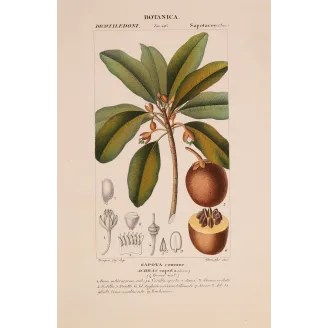
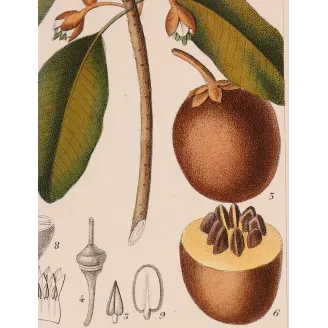
A warm-toned botanical engraving of *Achras sapota*, featuring its rounded fruit and large green leaves with exquisite texture
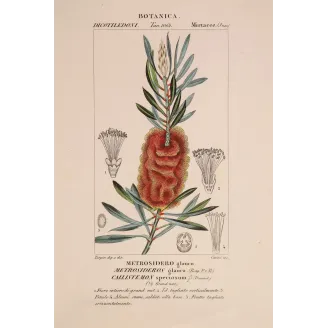
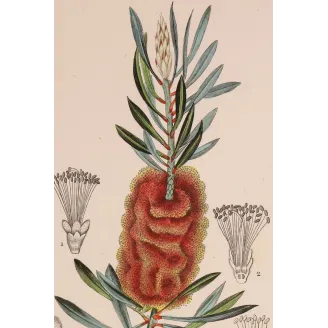
Stunning antique print of the red-flowering Callistemon, also known as bottlebrush.
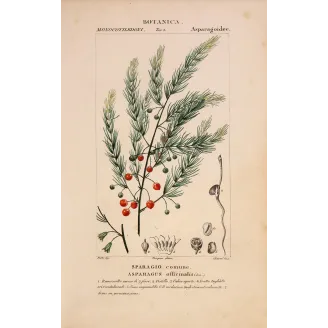
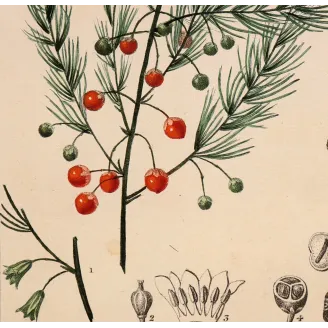
Botanical print of Asparagus officinalis by Turpin, featuring vivid orange berries.
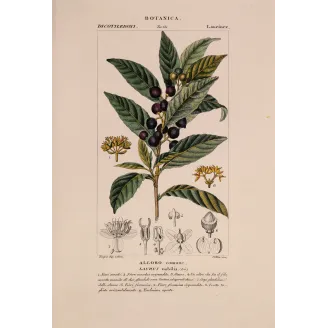
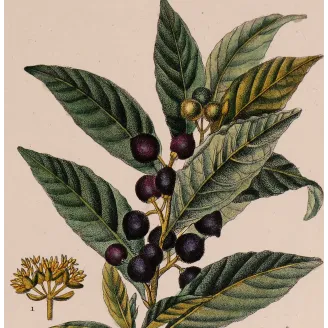
Graceful composition of bay laurel with fruits, blossoms, and internal flower structure.
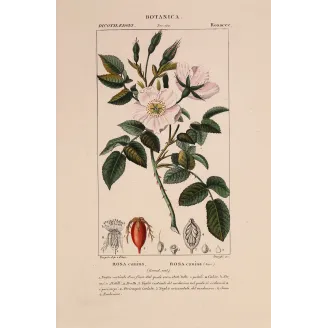
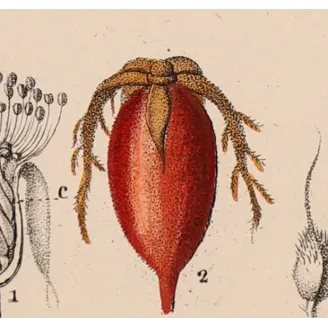
Delicate dog rose flower with soft pink petals and fine botanical details.
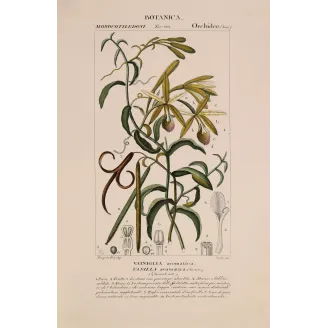
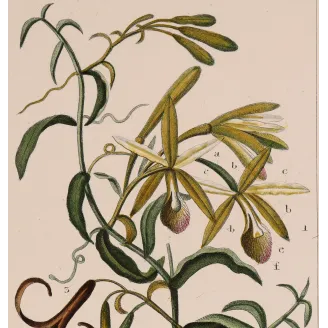
Delicate orchid illustration showing flower, pod and internal anatomy of vanilla.
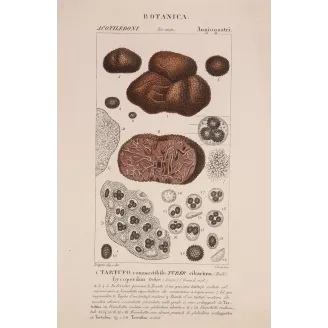
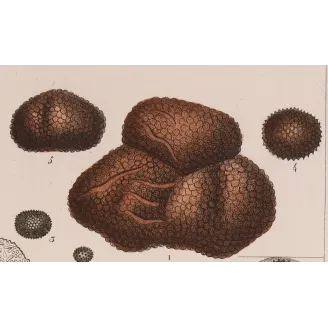
Unusual and fascinating botanical study of truffle morphology, rich in scientific detail.
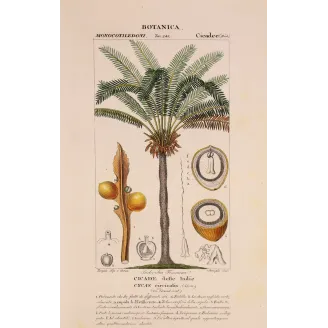
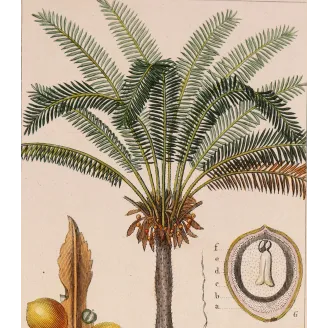
A detailed antique plate of Cycas circinalis, the Indian Sago Palm, showing the female specimen and fruit anatomy.
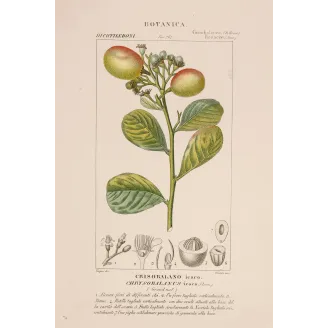
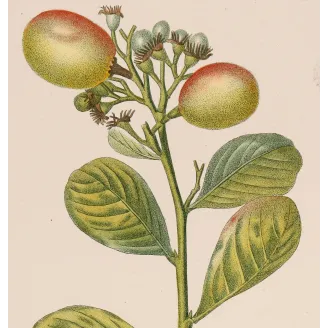
Elegant hand-colored botanical engraving of *Chrysobalanus icaco*, showing the round fruits and smooth glossy leaves in rich natural hues.
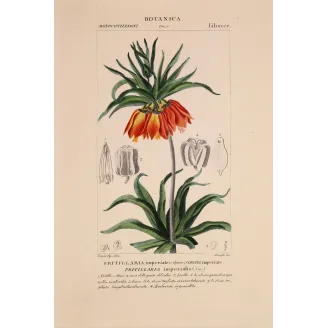
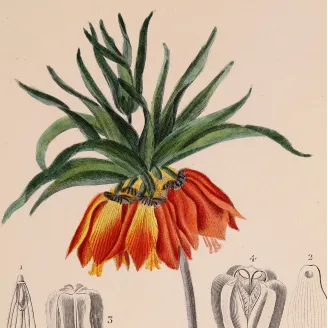
Striking antique print of Fritillaria imperialis with bright orange crown flowers.
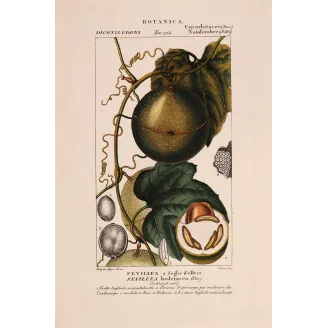
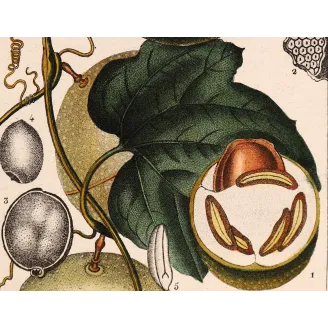
A coordinated pair of engravings depicting *Fevillea hederacea*, with intricate tendrils and elegant fruit structure, hand-colored with precision.
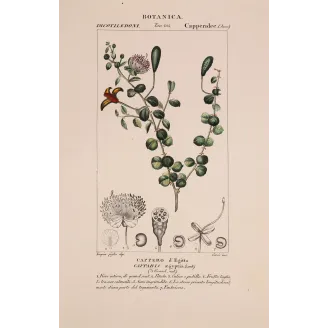
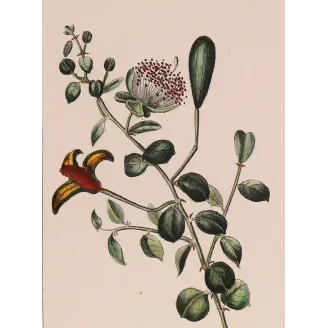
Vibrant caper plant illustration with both flowers and fruiting structures.
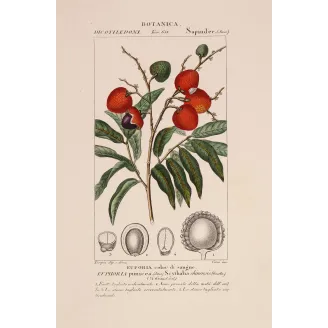
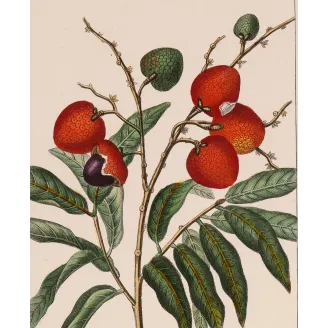
A striking hand-colored engraving of *Euphoria punicea*, displaying vivid red fruits and lush foliage in a refined 19th-century botanical composition.
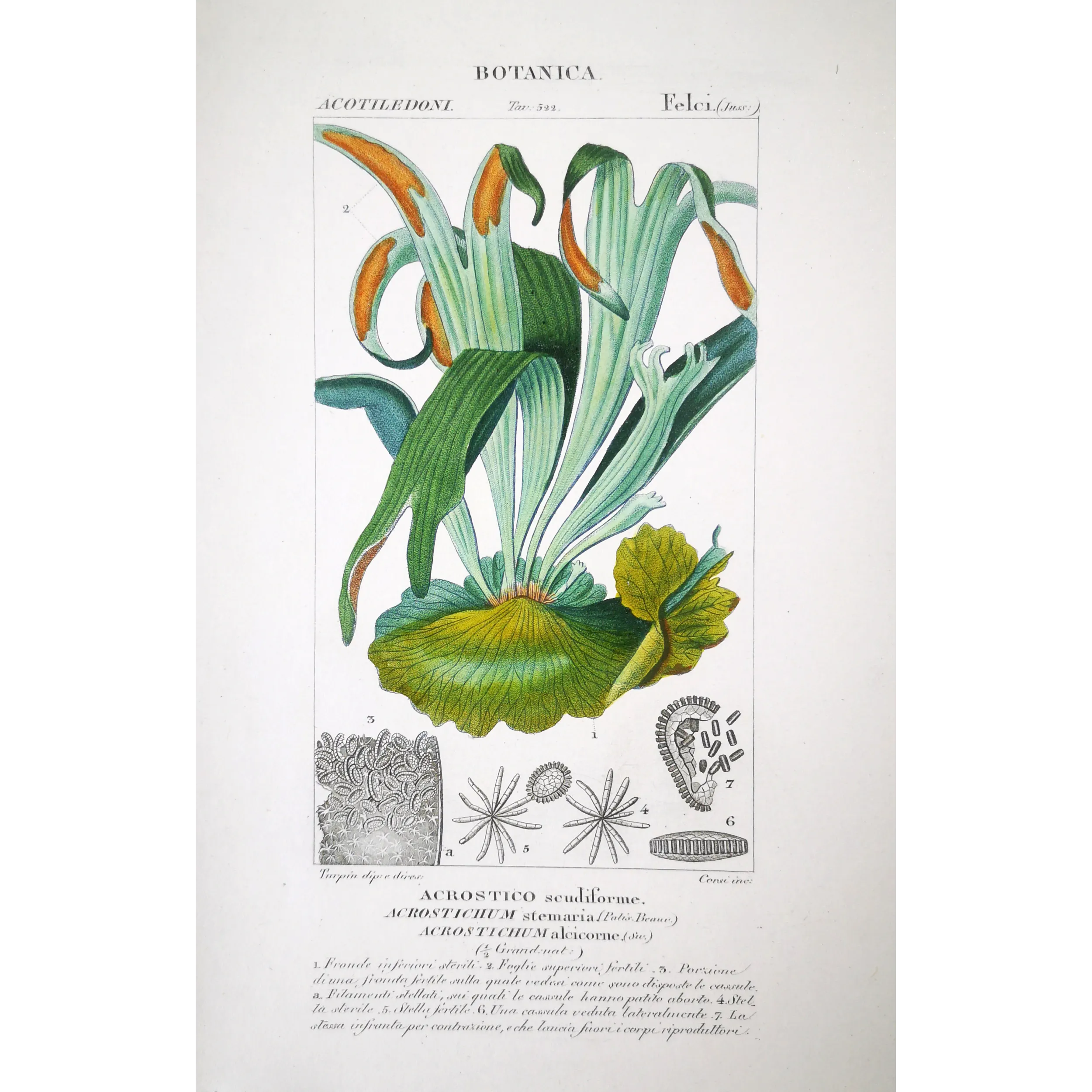
A complete set of 22 original hand-colored lithographs of ferns by Turpin, from the Dizionario di Scienze Naturali (c. 1830).