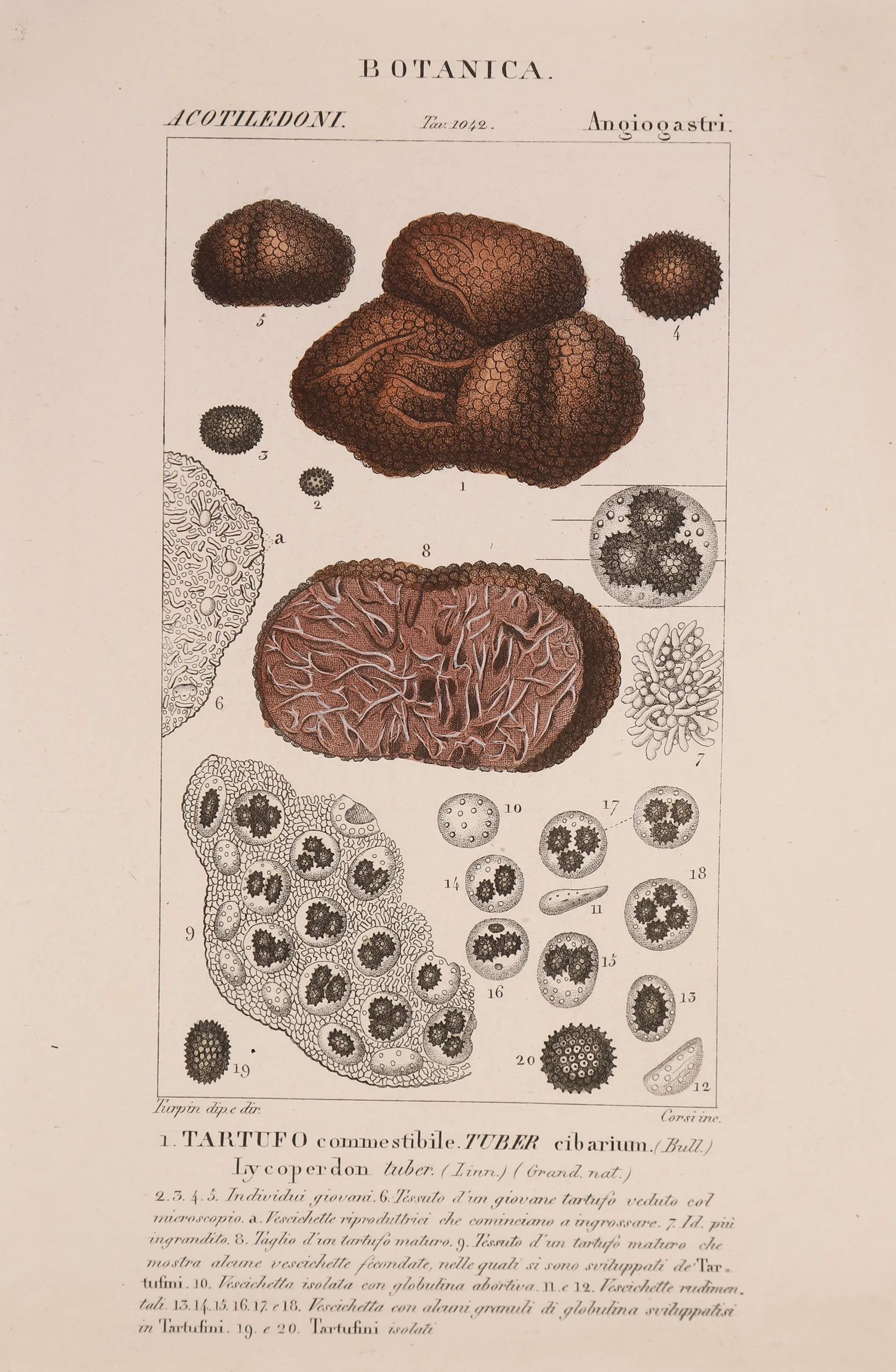

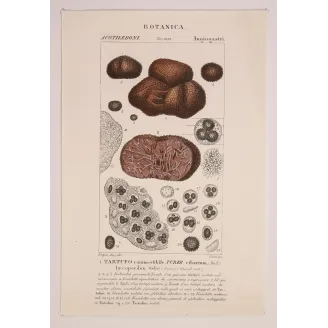
Unusual and fascinating botanical study of truffle morphology, rich in scientific detail.
 Delivery policy
Your print will be carefully prepared and shipped worldwide via trusted couriers (UPS or similar).
 Authentic antique prints
Original engravings from the 17th–19th century.
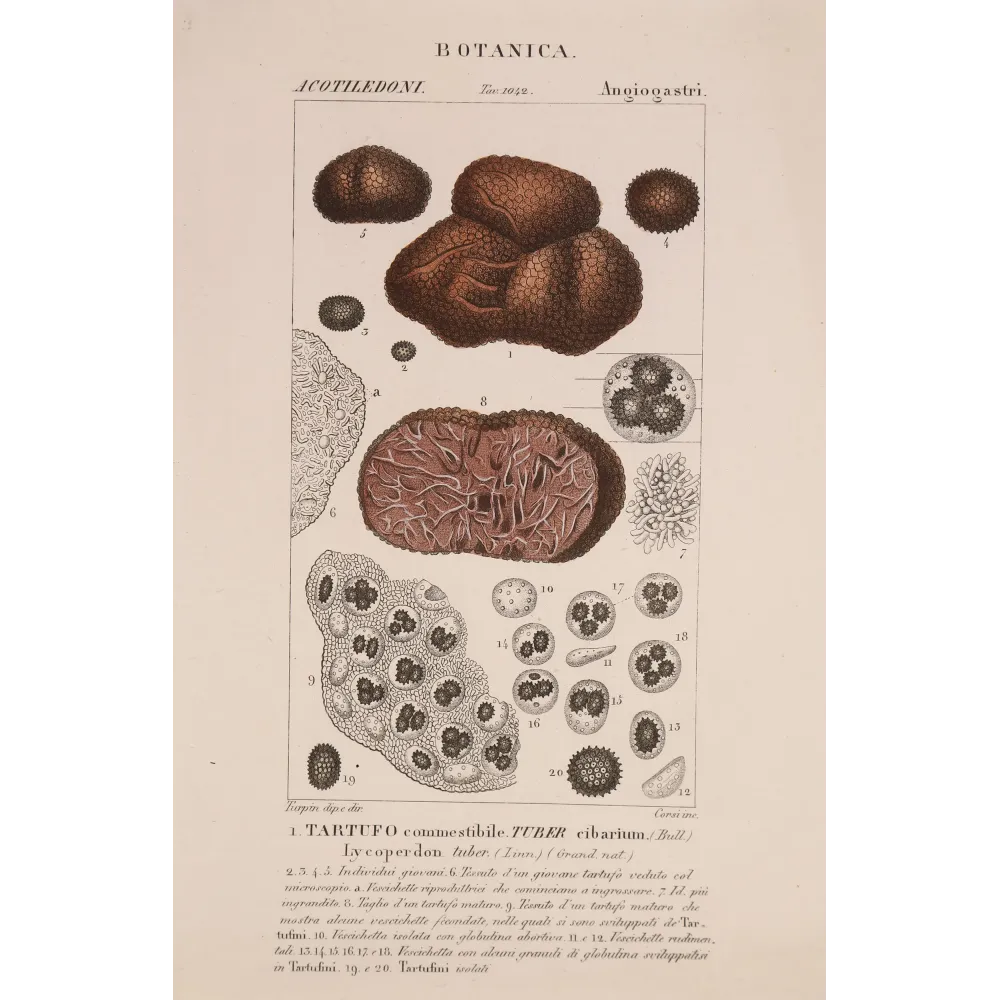
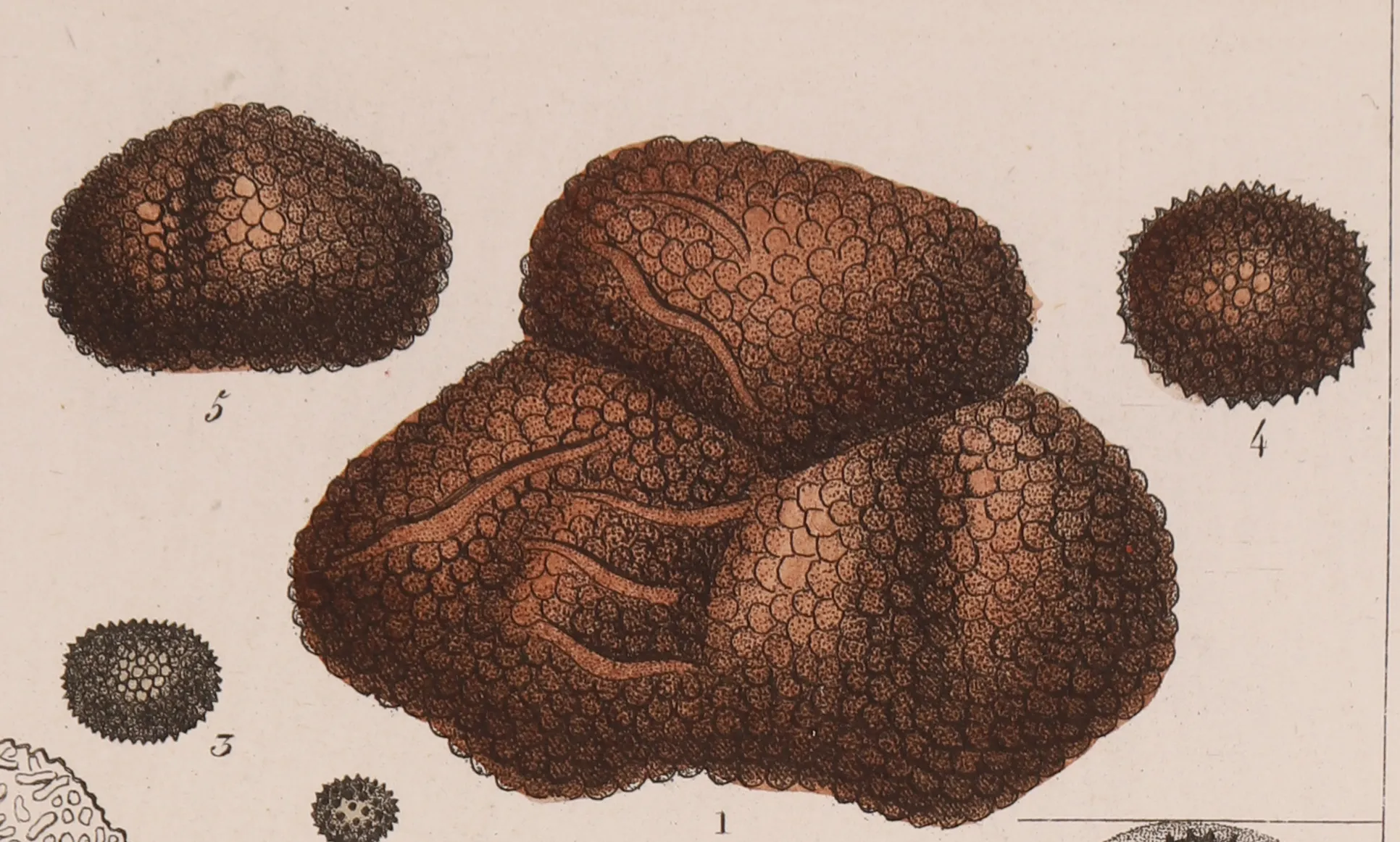
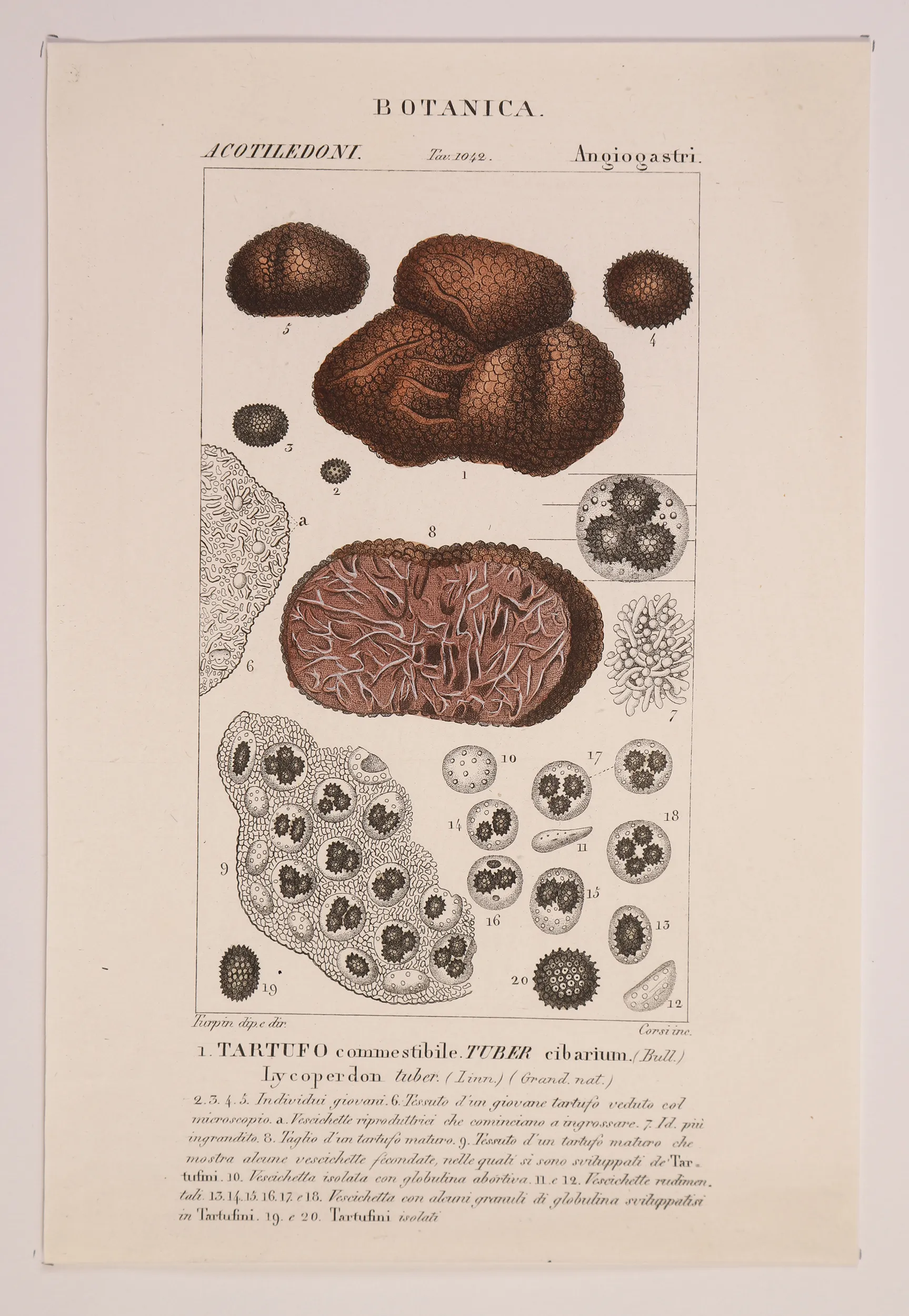
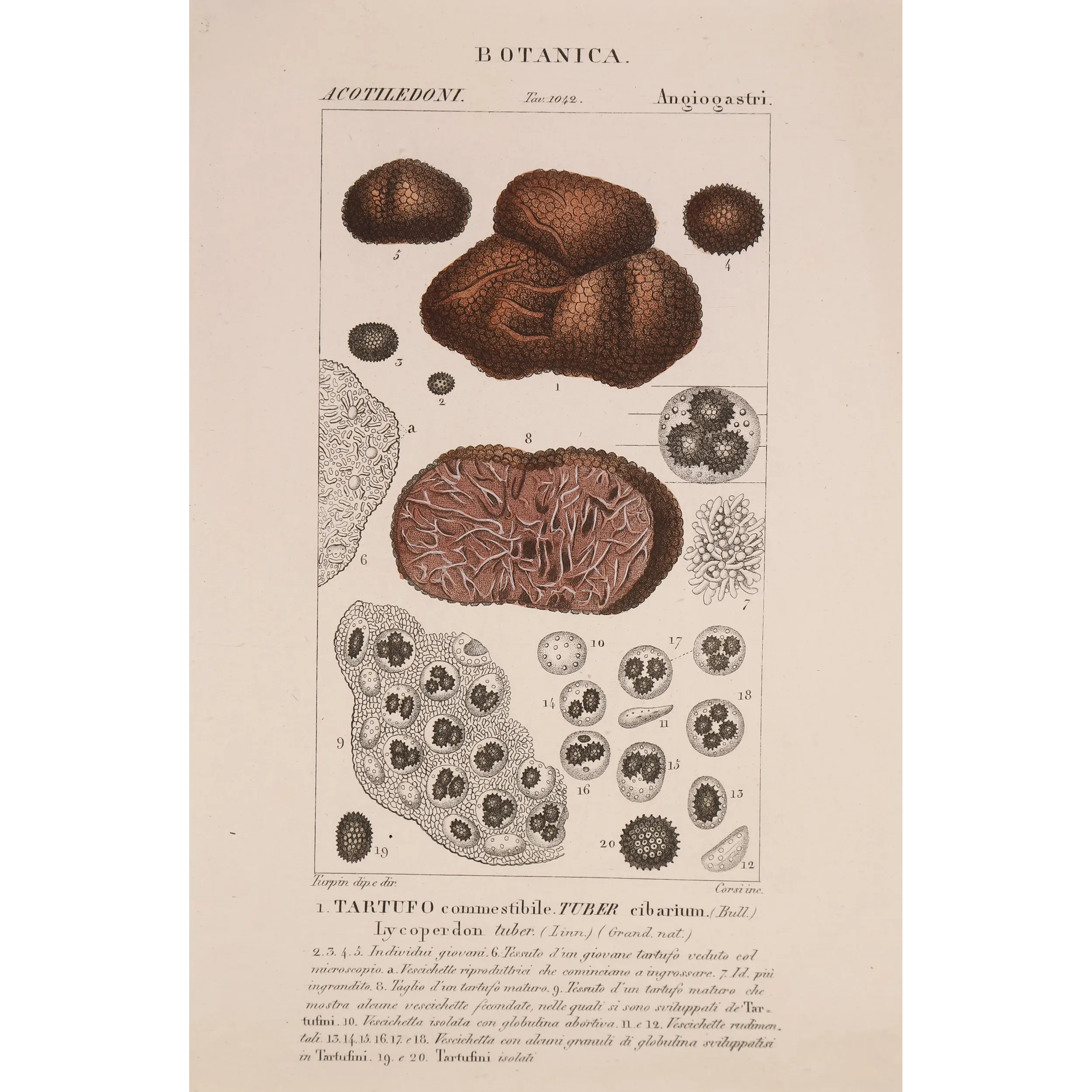
This remarkable engraving presents the edible truffle, Tuber cibarium, illustrated with analytical precision and compositional restraint. The plate combines whole specimens, sectional views and microscopic enlargements, offering a systematic study of one of the most enigmatic organisms in natural history.
Unlike flowering plants, the truffle develops underground, concealed from sight and dependent on complex ecological relationships. Turpin renders both its rugged exterior and its intricate internal structure with careful tonal modulation, transforming a subterranean fungus into an object of visual and scientific clarity.
The plate belongs to the Italian edition of the Dizionario di Scienze Naturali (Florence, Battelli press), a monumental encyclopedic undertaking of the early nineteenth century dedicated to cataloguing the natural world through disciplined observation and refined engraving.
— • —
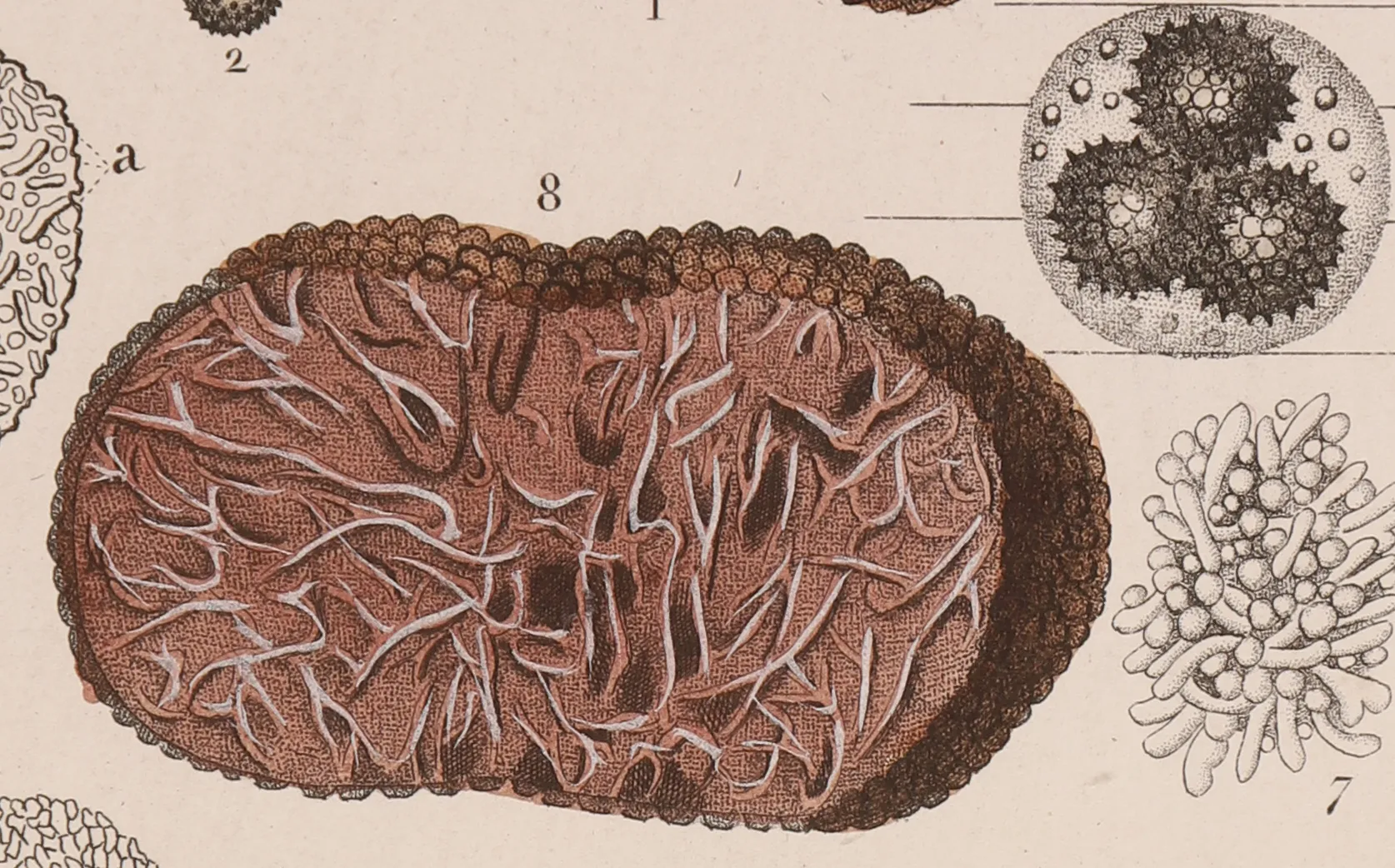
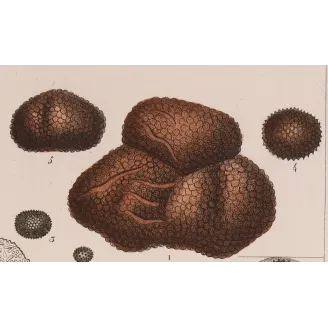
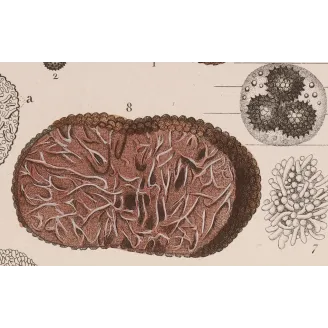
The composition is structured in two principal registers. The upper portion presents whole truffles in varying forms, their textured surfaces articulated through dense stippling and subtle gradation. The lower section introduces a dramatic cross-section, revealing the marbled interior — a labyrinthine network of pale veins against deep brown flesh.
Surrounding analytical figures magnify spores and developmental stages, arranged with measured spacing that preserves visual equilibrium. The restrained earthy palette — umber, sienna and muted cream — enhances the organic depth of the subject while maintaining scientific sobriety.
Tuber cibarium, historically used to designate the edible truffle, refers to one of the most prized subterranean fungi in European gastronomy. Belonging to the genus Tuber, these mycorrhizal organisms form symbiotic relationships with tree roots and develop entirely below ground, which long made their reproductive mechanisms a subject of scientific debate. By the early nineteenth century, naturalists were beginning to clarify the internal structure of truffles through microscopic study, examining spores and tissue formation — processes meticulously illustrated in this plate. Beyond its culinary prestige, the truffle fascinated Enlightenment scholars as an organism that challenged conventional plant classification, occupying a liminal space between botany and emerging mycology. Its inclusion in encyclopedic works such as the Dizionario di Scienze Naturali reflects both gastronomic significance and scientific curiosity.
This plate forms part of the historic Dizionario di Scienze Naturali, once preserved within a noble library and today housed in the Sacchetti Collection. Each engraving embodies a period when scientific investigation was supported by exceptional artisanal skill — from the precision of the engraved copperplate line to the carefully applied hand-colouring executed sheet by sheet.
Such works were conceived not as decorative ephemera, but as authoritative visual documents of knowledge. To explore the broader story of these rare prints and their refined provenance, we invite you to read our editorial feature “Not Just Another Print”.
The engraving is in excellent antique condition. The sheet presents clean margins and a clear impression. The paper is smooth early nineteenth-century wove paper (non-laid). No watermark has been observed. The hand-colouring remains balanced and well preserved. The engraved credit “Turpin dis.” is present, confirming the original drawing by Pierre Jean François Turpin.
For further context on Pierre Jean François Turpin and his contribution to nineteenth-century botanical science, see our editorial feature:
Pierre Jean François Turpin – The Botanical Illustrator of Natural Harmony
Specific References
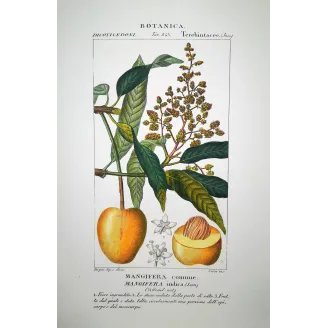
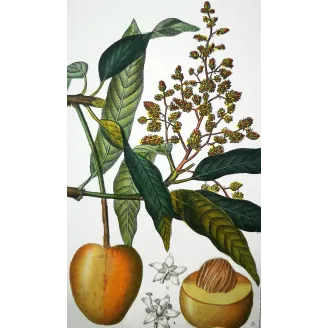
Vibrant hand-colored depiction of *Mangifera indica*, the mango tree, highlighting its lush leaves, golden fruit, and floral details.
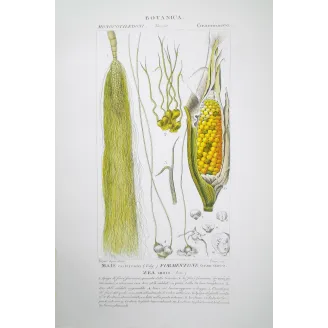
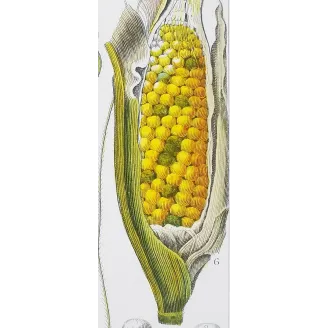
Double plate of cultivated maize (Zea mays) from Turpins botanical series.
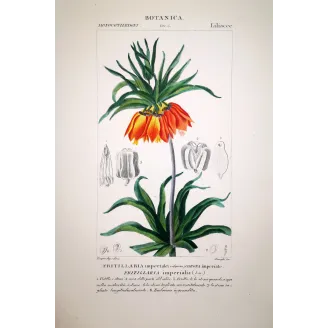
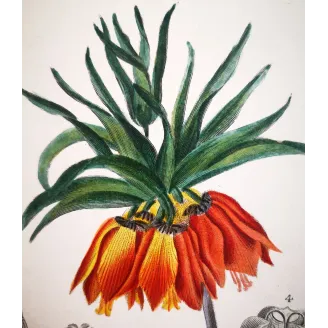
Striking antique print of Fritillaria imperialis with bright orange crown flowers.
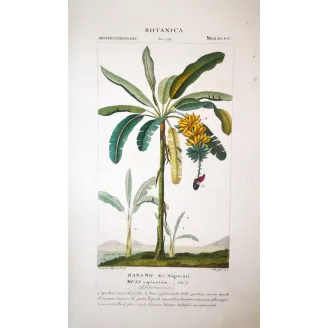
Antique botanical illustrations of the banana tree and its floral anatomy by Turpin.
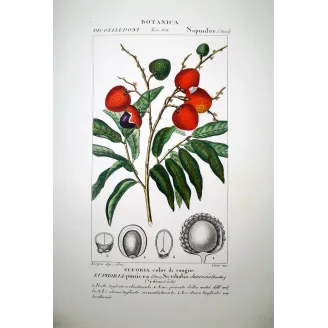
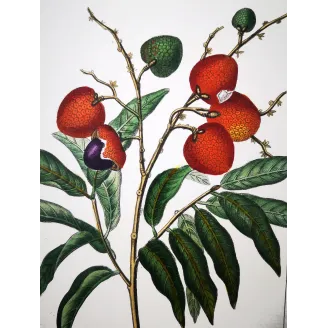
A striking hand-colored engraving of *Euphoria punicea*, displaying vivid red fruits and lush foliage in a refined 19th-century botanical composition.
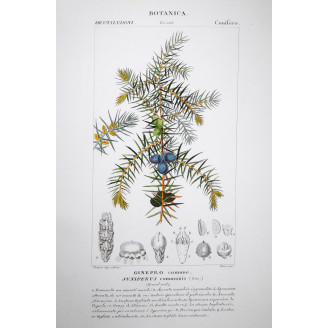
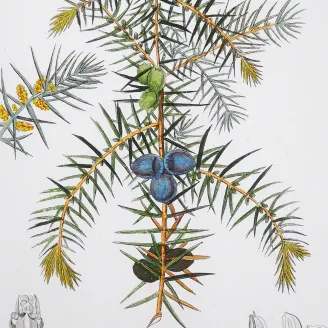
Elegant hand-colored plate of the juniper plant with berries and cone structure.
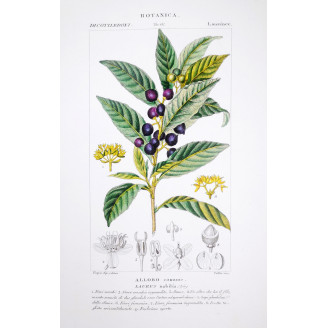
Graceful composition of bay laurel with fruits, blossoms, and internal flower structure.
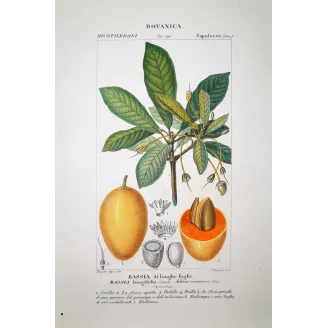
A rare depiction of *Bassia longifolia*, showing its elongated leaves and fruit sections in precise scientific detail and soft hand-colored tones.
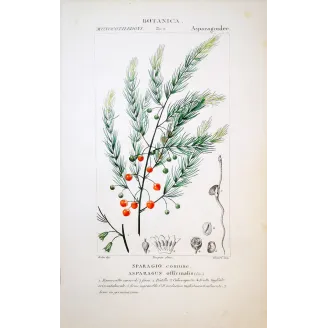
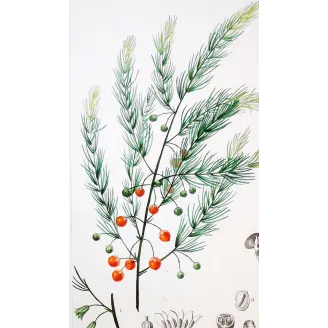
Botanical print of Asparagus officinalis by Turpin, featuring vivid orange berries.
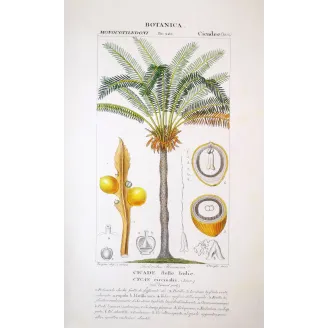
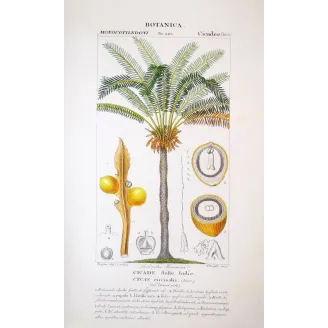
A detailed antique plate of Cycas circinalis, the Indian Sago Palm, showing the female specimen and fruit anatomy.
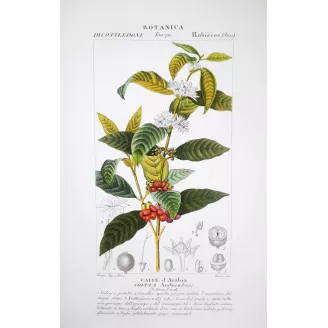
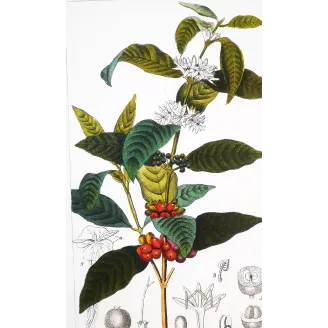
Botanical plate of Coffea arabica with vivid red berries and detailed floral structure.
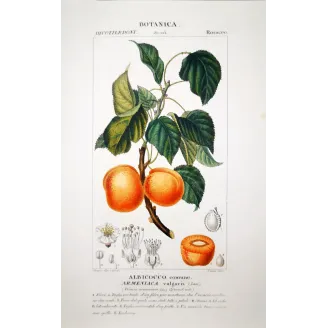
Original 19th-century botanical engraving of the common apricot, showing its velvety orange fruits and lush green leaves, rendered with great naturalistic balance.
Unusual and fascinating botanical study of truffle morphology, rich in scientific detail.