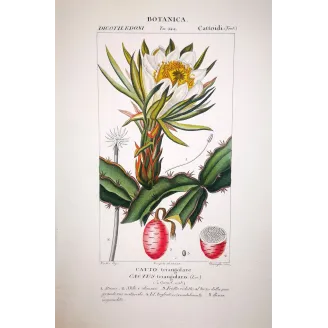
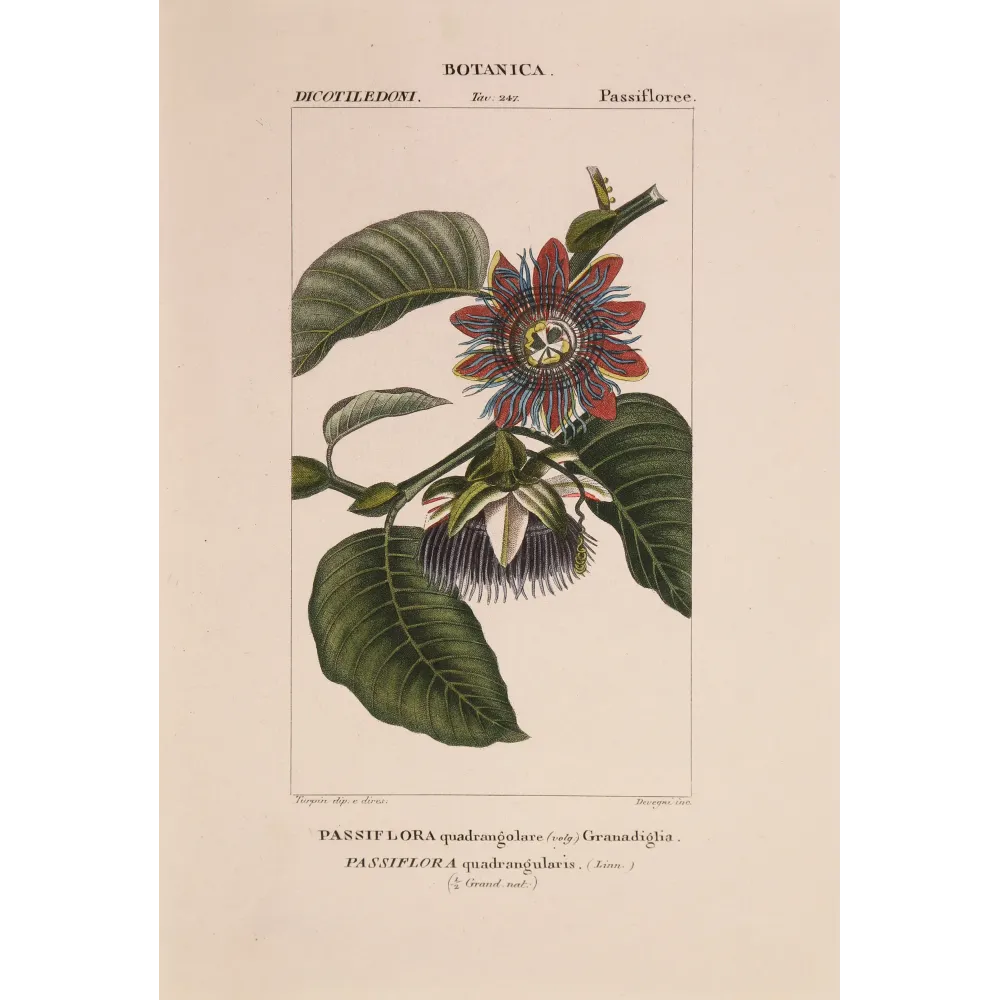
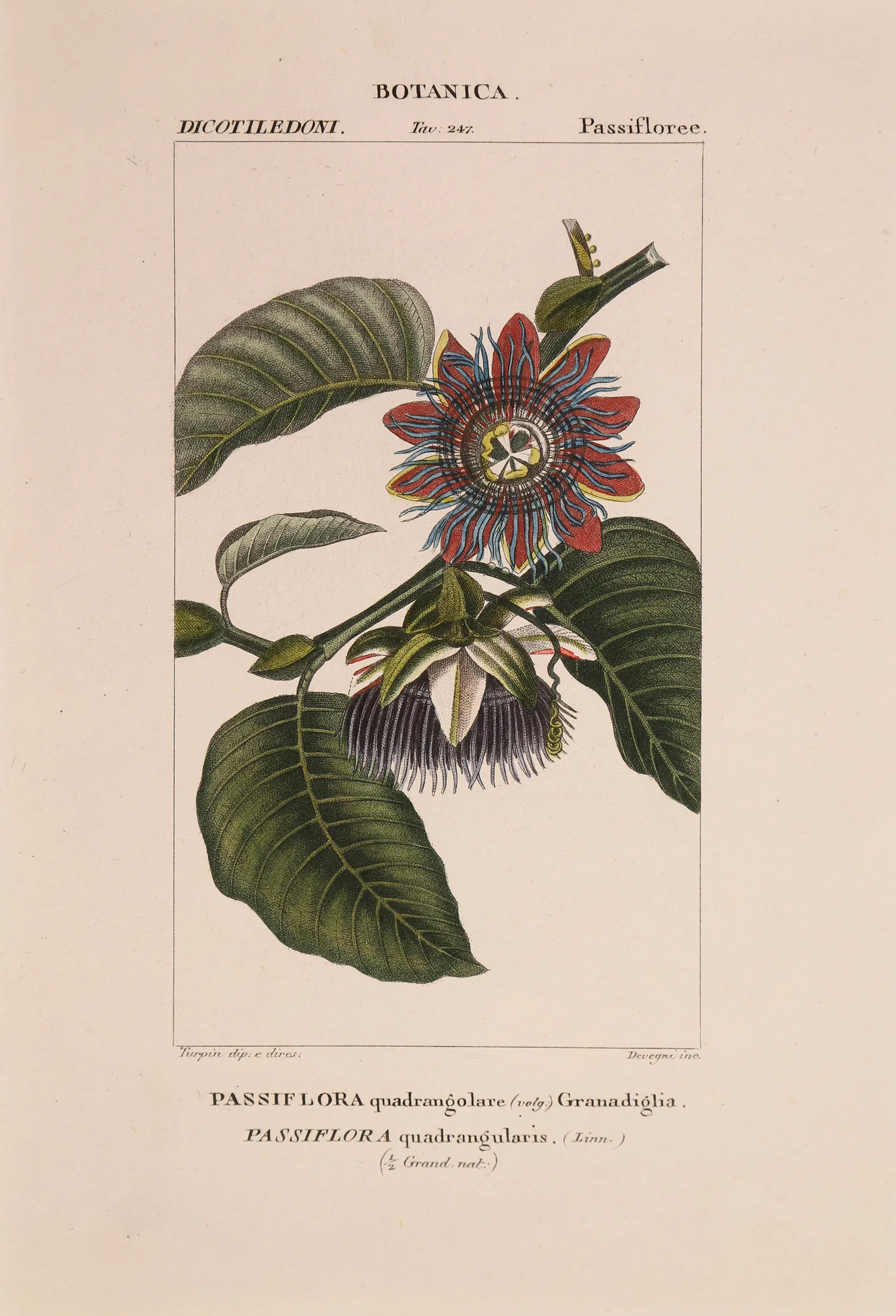
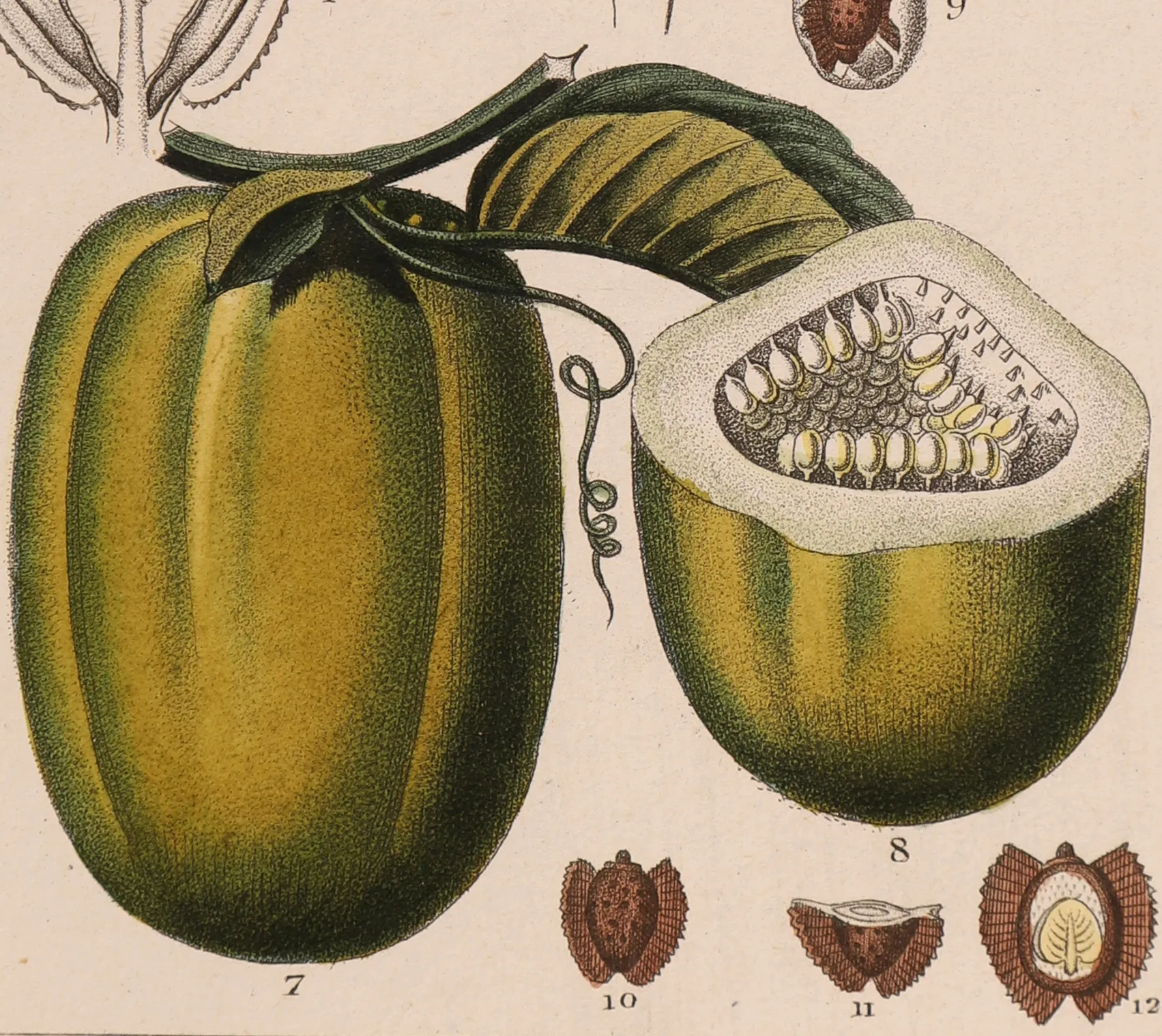
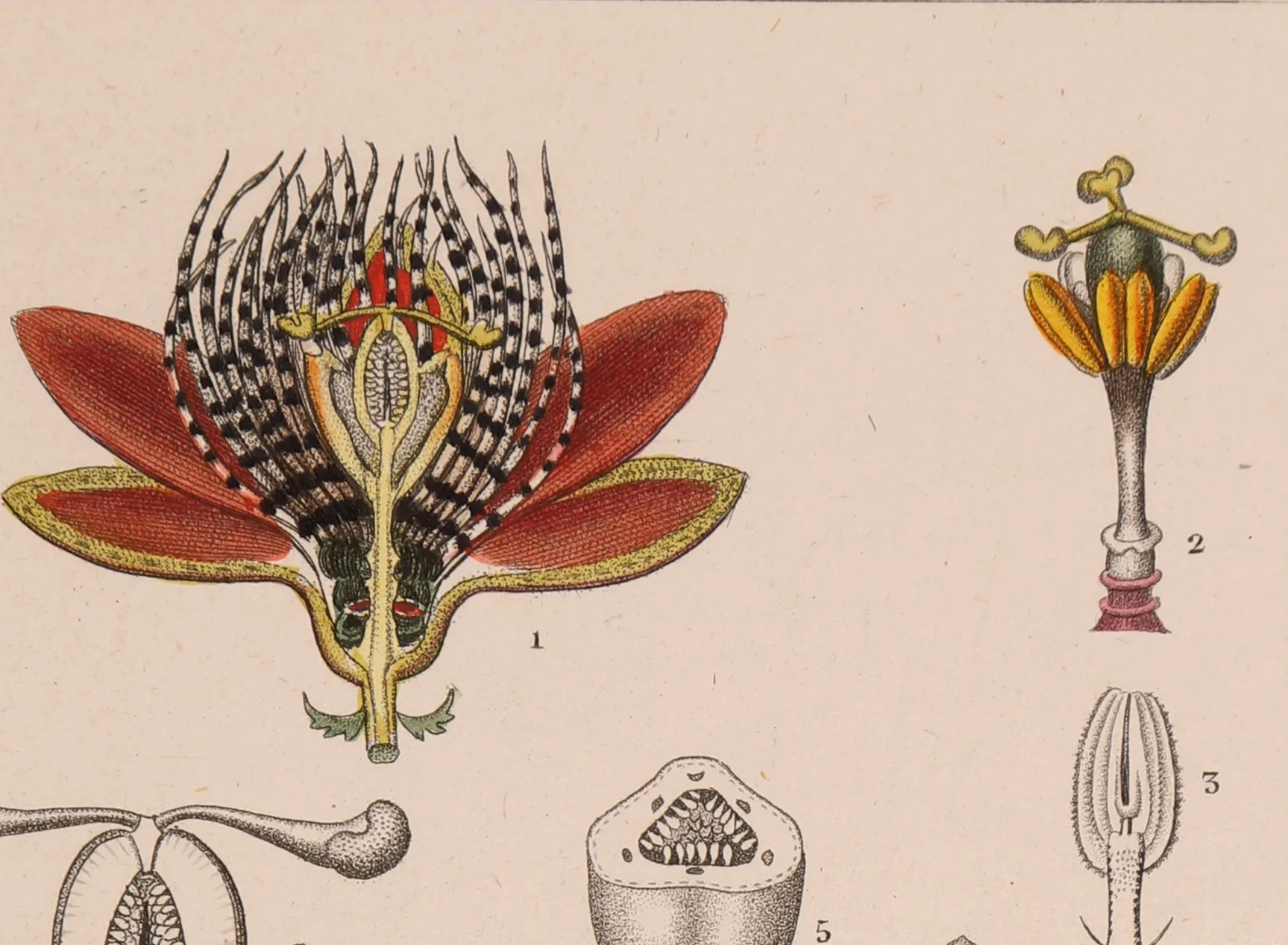
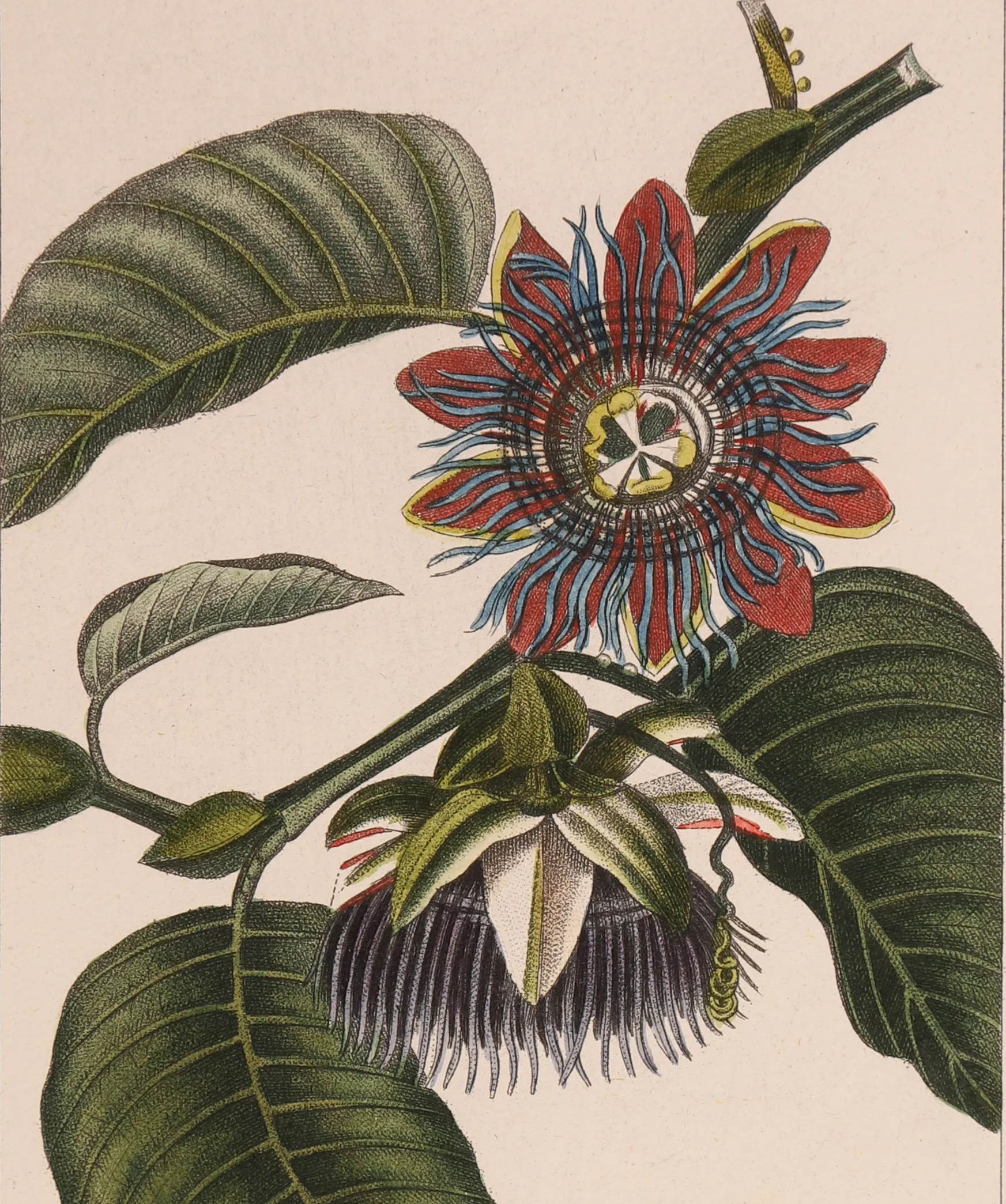

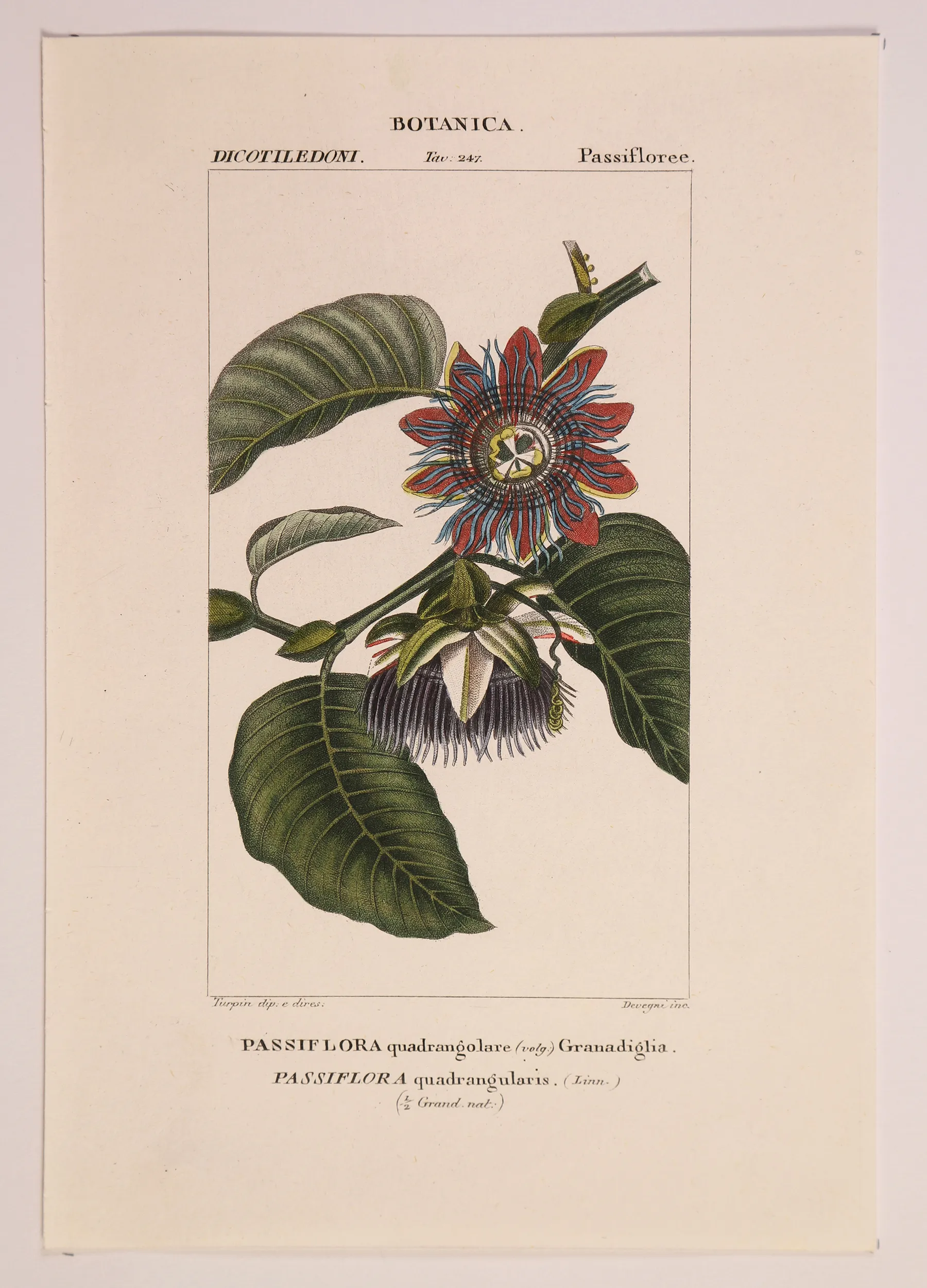
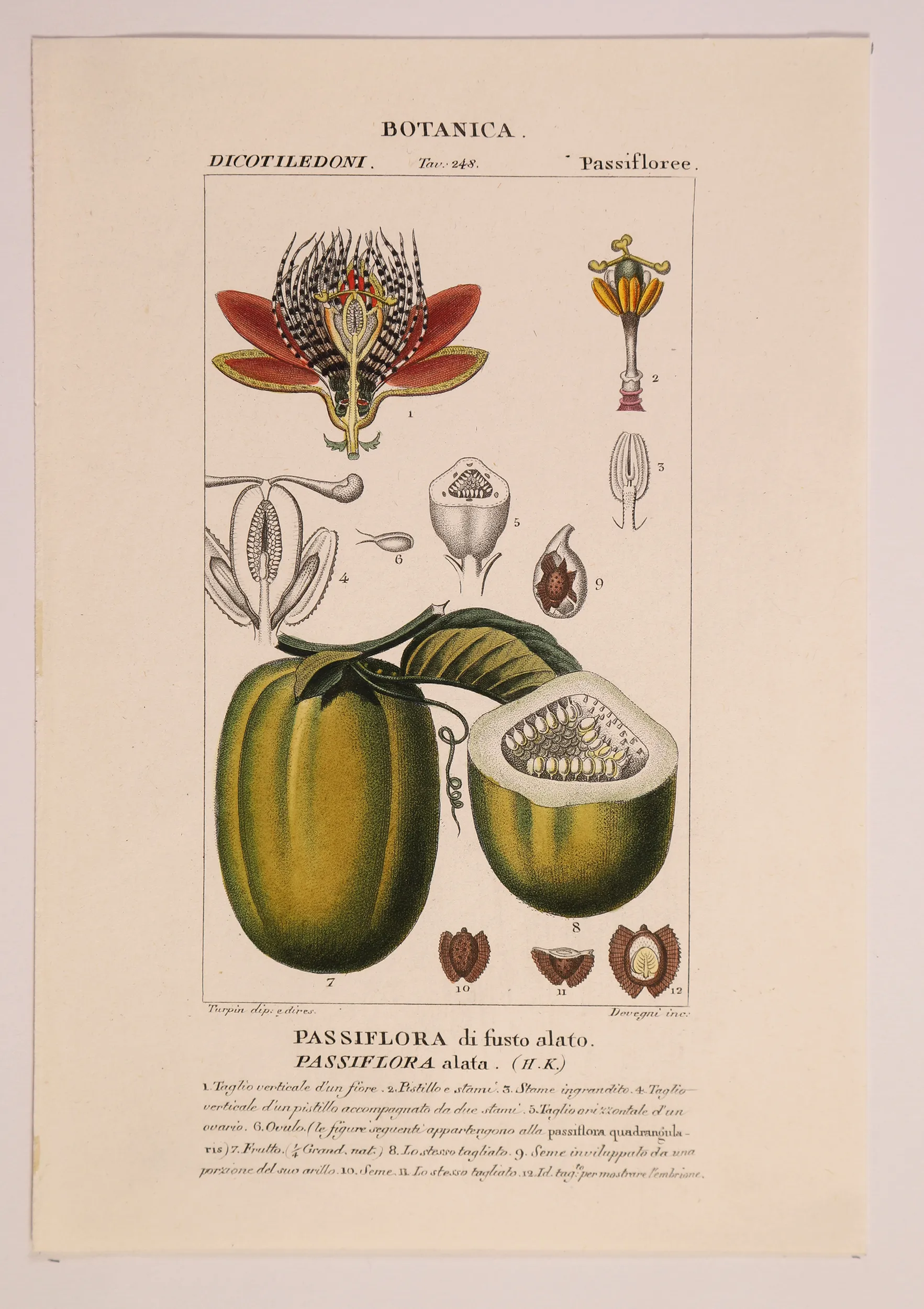
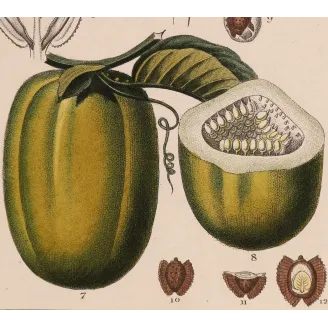
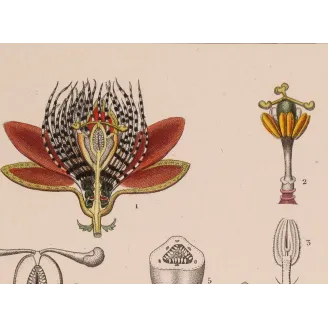
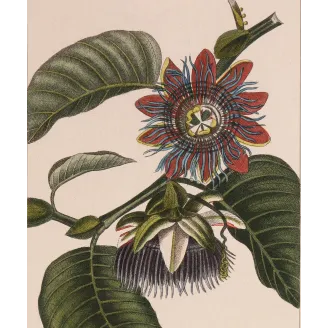
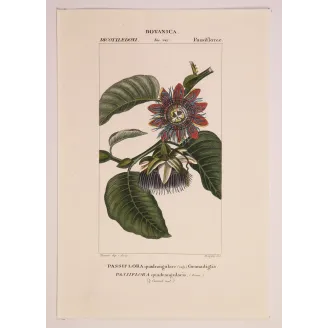
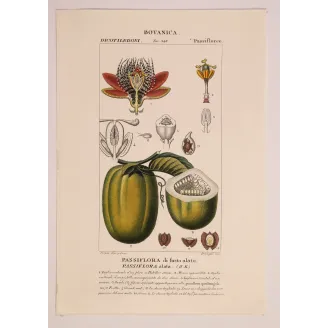
Double plate of the exotic Passiflora alata, engraved by Turpin.
 Delivery policy
Your print will be carefully prepared and shipped worldwide via trusted couriers (UPS or similar).
 Authentic antique prints
Original engravings from the 17th–19th century.
This exceptional micro-bundle brings together two original hand-colored engravings dedicated to Passiflora, the passionflower — a plant celebrated in Europe for its extraordinary floral architecture and its symbolic resonance. One plate presents a richly colored bloom with broad foliage, capturing the plant’s dramatic ornamental presence; the companion sheet focuses on fruit, sectional views, and reproductive anatomy, offering a complete scientific study in a single coherent pair.
Turpin’s approach is both disciplined and visually generous. The radiating filaments, central crown, and layered floral structure are rendered with precise line and confident color, while the second plate translates the same subject into analytical clarity — documenting the fruit’s interior, seed arrangement, and developmental stages with measured spacing and calm restraint.
Both engravings belong to the Italian edition of the Dizionario di Scienze Naturali (Florence, Battelli press), a monumental early nineteenth-century encyclopedic undertaking devoted to cataloguing the natural world through refined copperplate engraving and careful observation.
— • —
The first plate is composed around a single focal event: the passionflower’s architectural bloom. The chromatic contrast between deep greens and saturated reds and blues produces immediate visual presence, while the circular rhythm of the filaments creates a sense of controlled movement. The composition feels almost emblematic — a botanical mandala rendered as natural history.
The companion plate shifts into analytical register: fruit rendered with sculptural volume, a clean sectional cut revealing seeds in ordered cavities, and smaller anatomical figures arranged with disciplined spacing. Displayed together, the pair creates a refined dialogue between ornament and method — the sensation of the flower and the intelligence of structure.
Passiflora entered European botanical imagination as both a horticultural marvel and a scientific challenge. Its complex floral anatomy — with layered coronas, prominent reproductive organs, and unusual symmetry — made it a central subject for early modern classification and illustration. In the eighteenth and nineteenth centuries, the passionflower also acquired cultural resonance through symbolic interpretations of its structure, while the fruit-bearing species expanded interest in its cultivated value. Its inclusion in encyclopedic works such as the Dizionario di Scienze Naturali reflects the period’s fascination with plants that united exotic origin, ornamental spectacle, and anatomical complexity.
These plates form part of the historic Dizionario di Scienze Naturali, once preserved within a noble library and today housed in the Sacchetti Collection. Each engraving embodies a period when scientific discovery and artisanal craftsmanship converged — from the precision of the engraved copperplate line to the carefully applied hand-colouring executed sheet by sheet.
Such works were conceived as authoritative visual documents of knowledge. To explore the broader story of these rare prints and their refined provenance, we invite you to read our editorial feature “Not Just Another Print”.
Both engravings are in exceptionally well-preserved antique condition. The sheets present clean margins and crisp, well-defined impressions. The original early nineteenth-century smooth wove paper remains stable and fresh in appearance. No watermark has been observed. The hand-colouring is balanced and vivid, with excellent tonal stability across both plates.
For further context on Pierre Jean François Turpin and his contribution to nineteenth-century botanical science, see our editorial feature:
Pierre Jean François Turpin – The Botanical Illustrator of Natural Harmony
Specific References
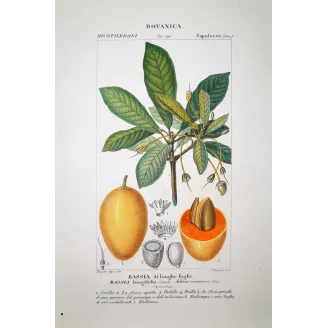
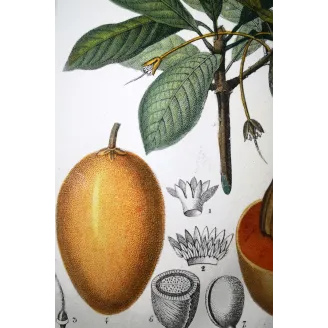
A rare depiction of *Bassia longifolia*, showing its elongated leaves and fruit sections in precise scientific detail and soft hand-colored tones.
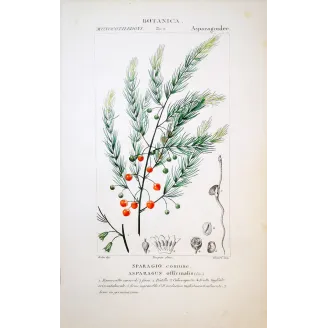
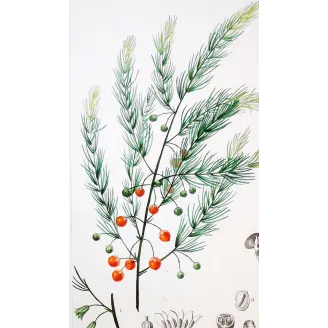
Botanical print of Asparagus officinalis by Turpin, featuring vivid orange berries.
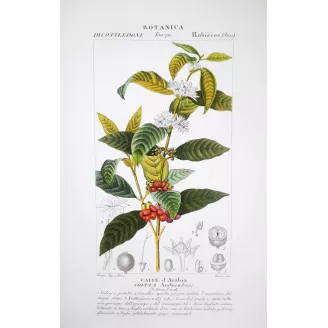
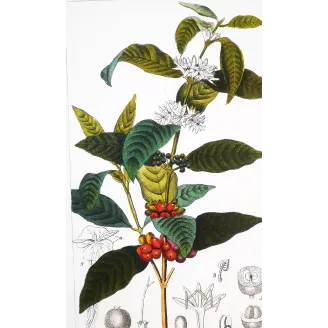
Botanical plate of Coffea arabica with vivid red berries and detailed floral structure.
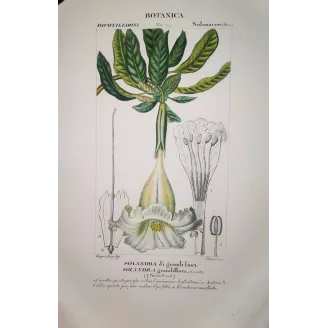
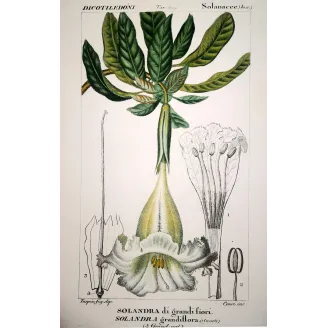
Beautiful antique flower print of Solandra, with large trumpet-shaped bloom.
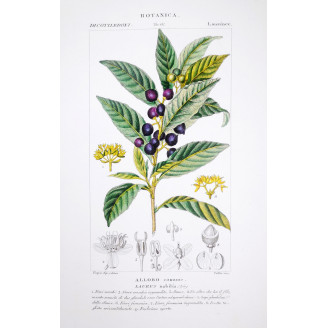
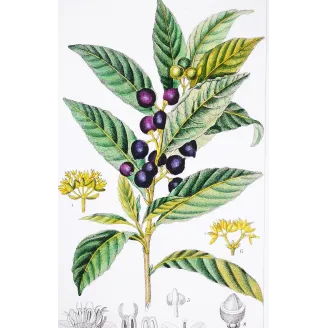
Graceful composition of bay laurel with fruits, blossoms, and internal flower structure.
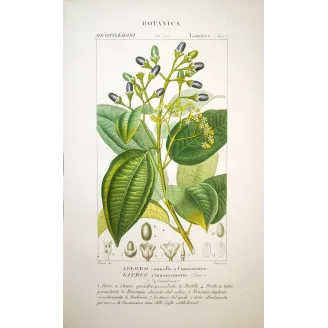
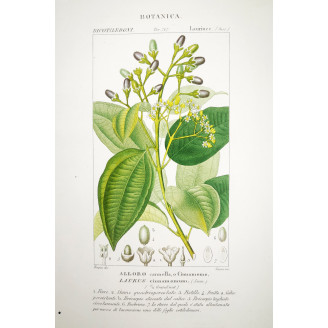
Finely detailed print of Laurus cinnamomum by Turpin, from the Dizionario di Scienze Naturali.
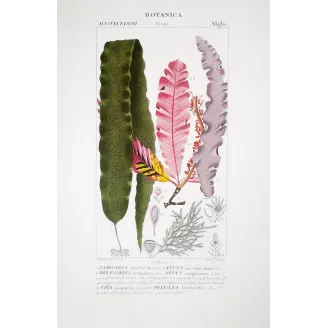
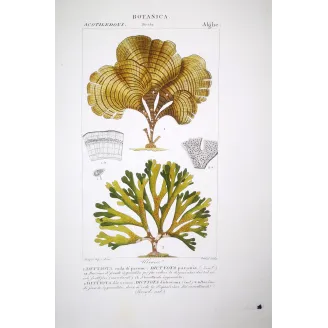
A unique lot of 7 hand-colored antique prints depicting various species of algae, illustrated by Turpin and Prêtre.
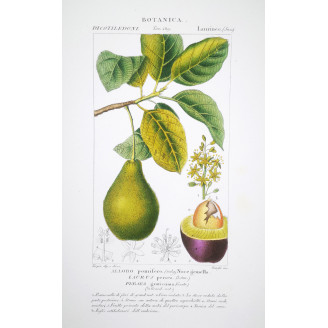
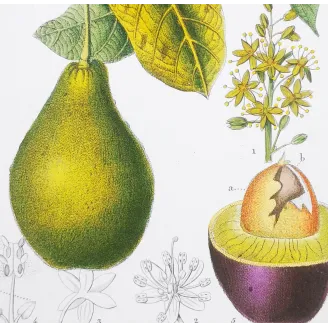
Botanical plate of avocado with whole fruit, seed, and internal anatomy.
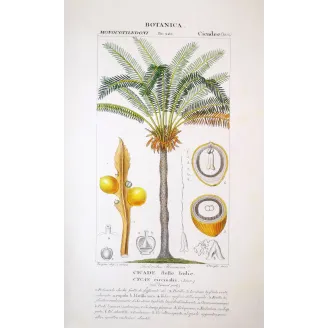
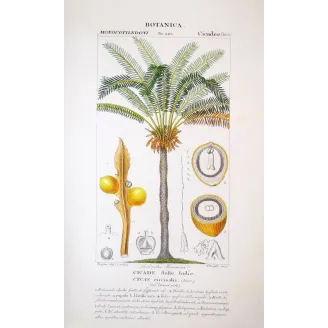
A detailed antique plate of Cycas circinalis, the Indian Sago Palm, showing the female specimen and fruit anatomy.
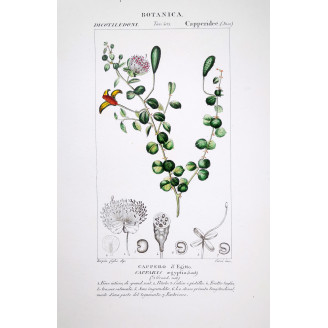
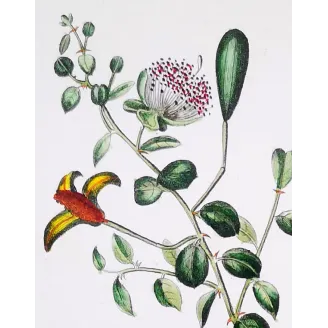
Vibrant caper plant illustration with both flowers and fruiting structures.
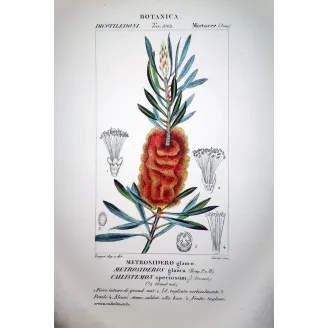
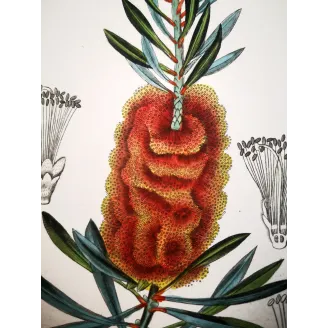
Stunning antique print of the red-flowering Callistemon, also known as bottlebrush.
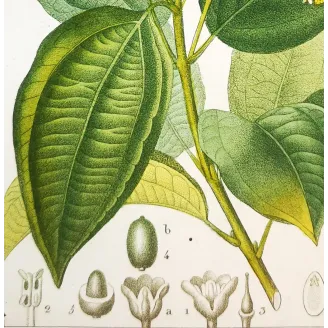
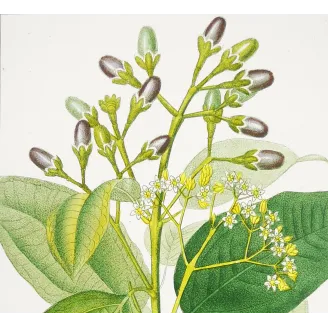
Elegant illustration of Laurus cinnamomum, showing leaves, flowers and seeds.
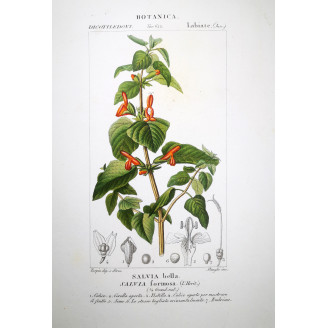
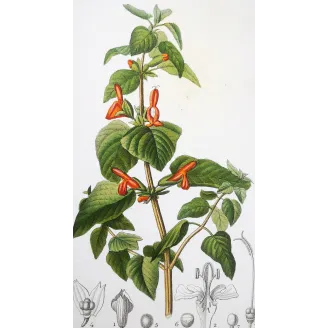
Vivid botanical plate of Salvia formosa, with striking red-orange tubular flowers.
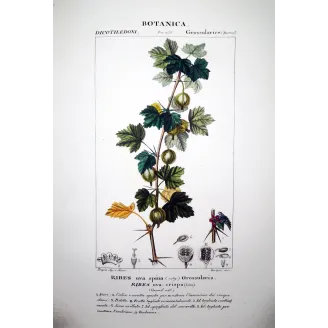
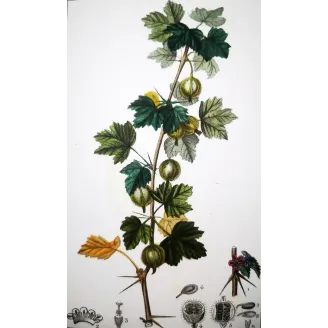
A charming depiction of *Ribes uva-crispa*, the gooseberry plant, detailed with its spiny stems and translucent green fruits.
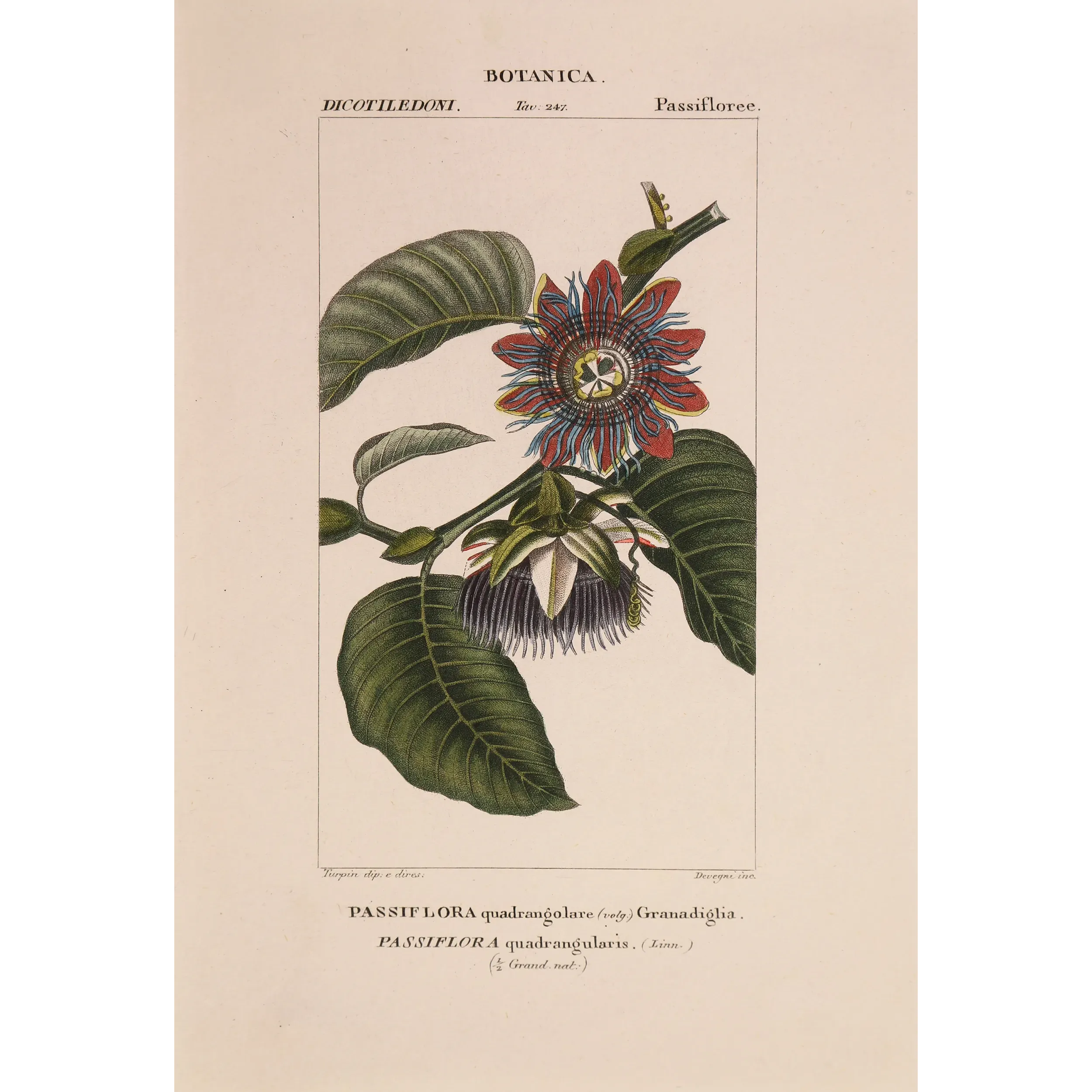
Double plate of the exotic Passiflora alata, engraved by Turpin.