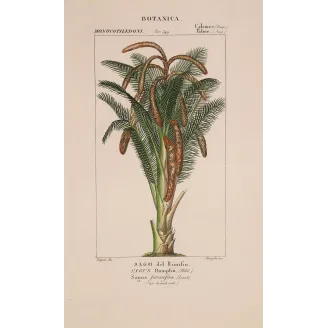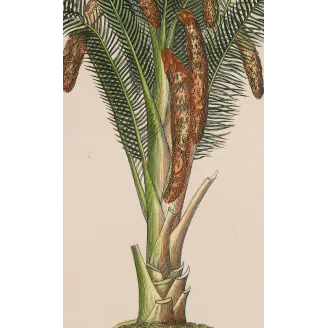
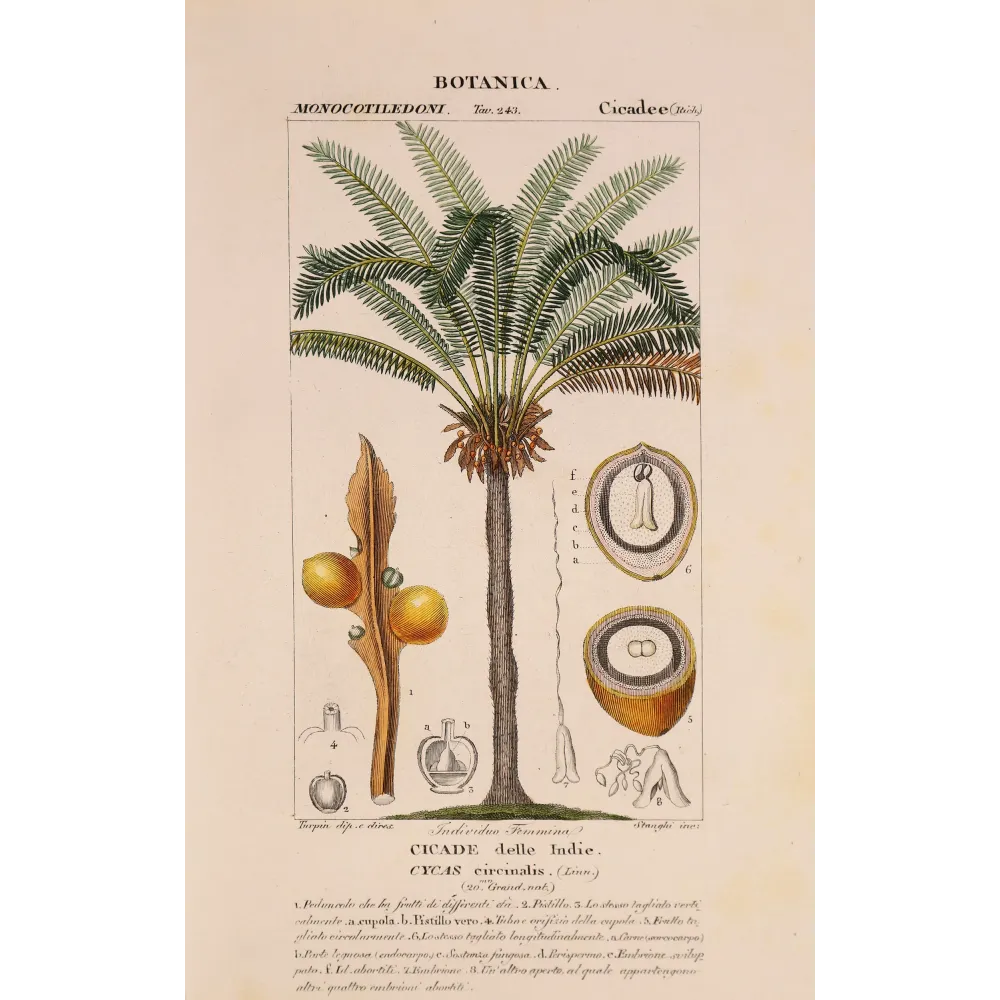
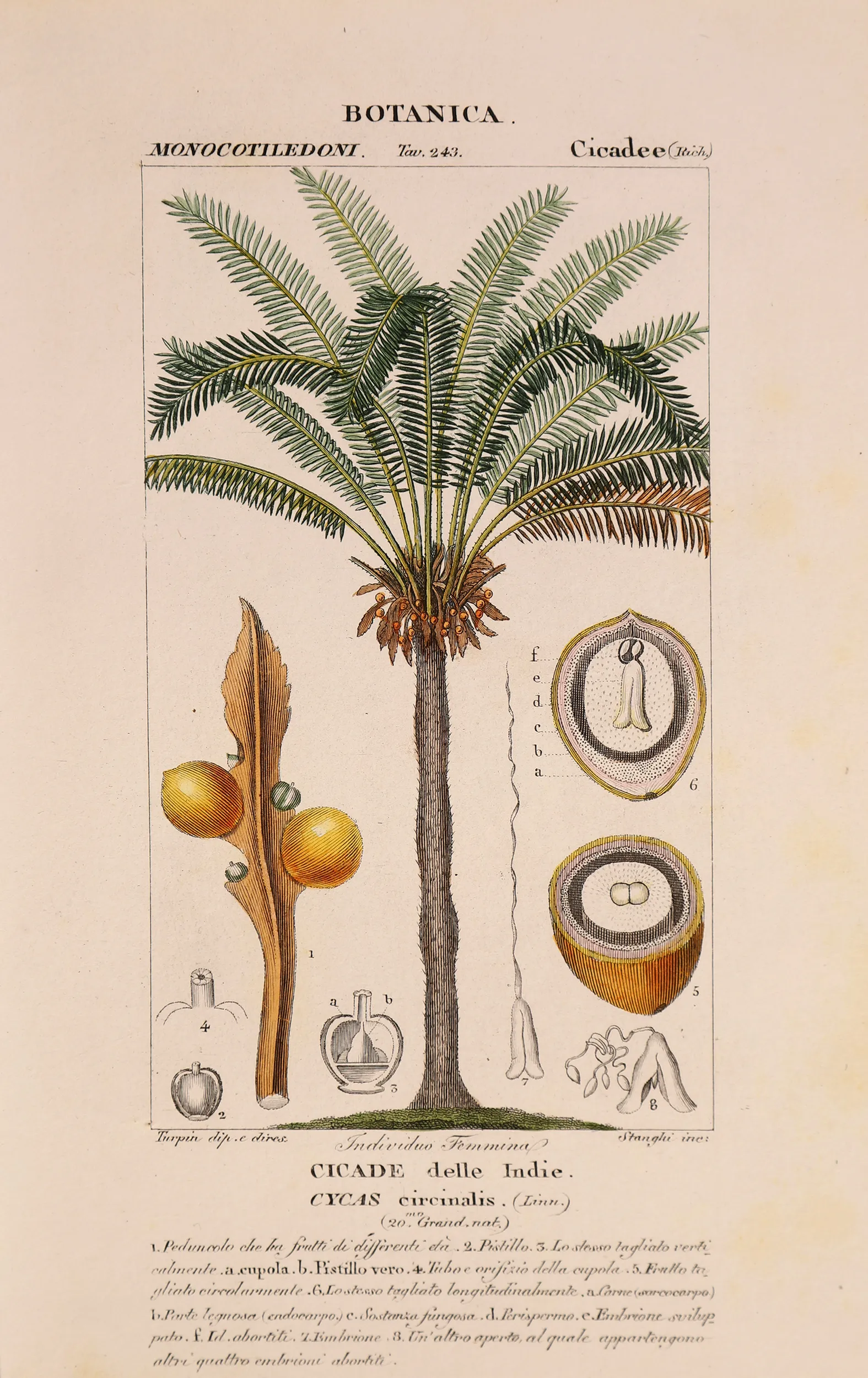
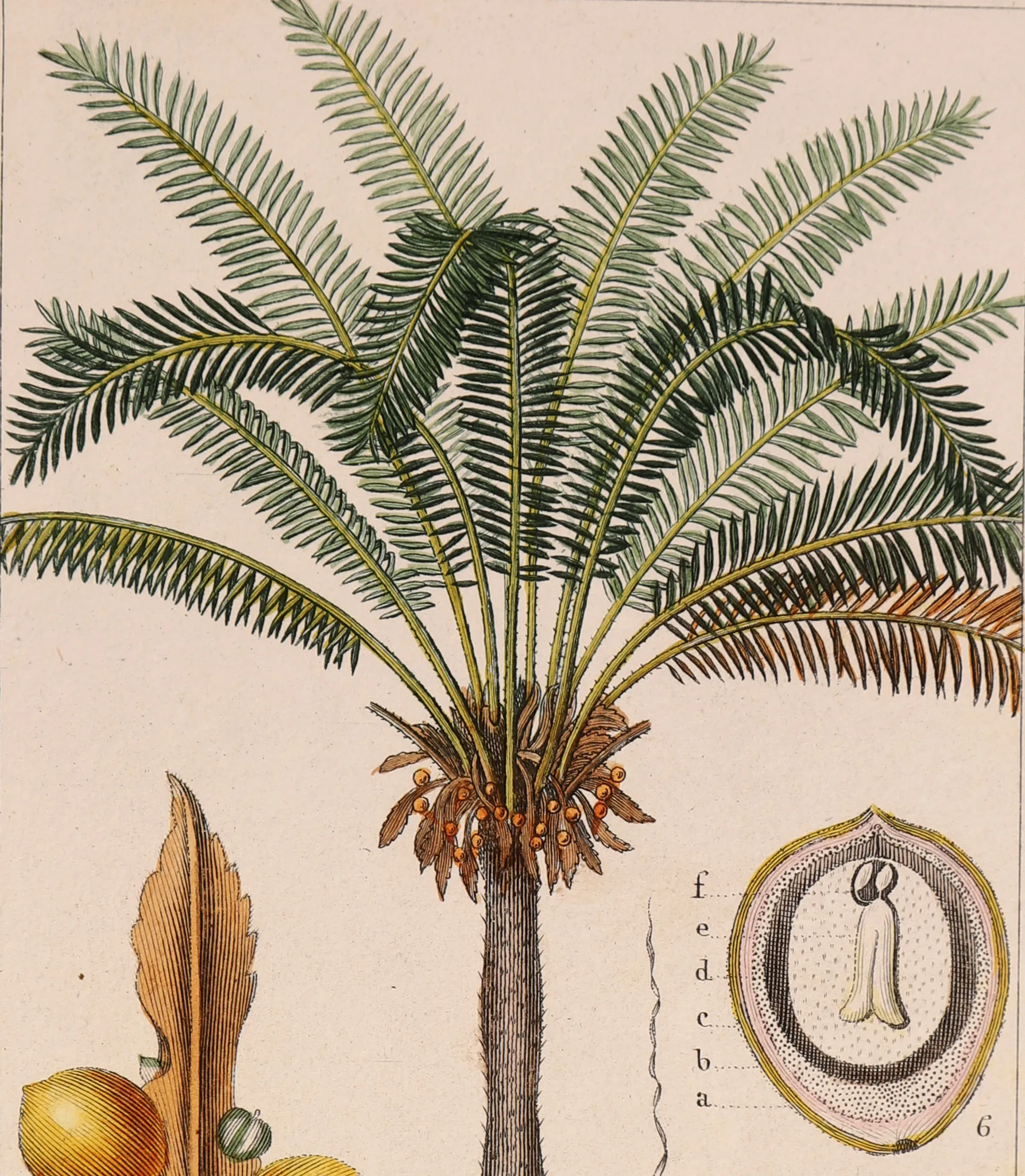

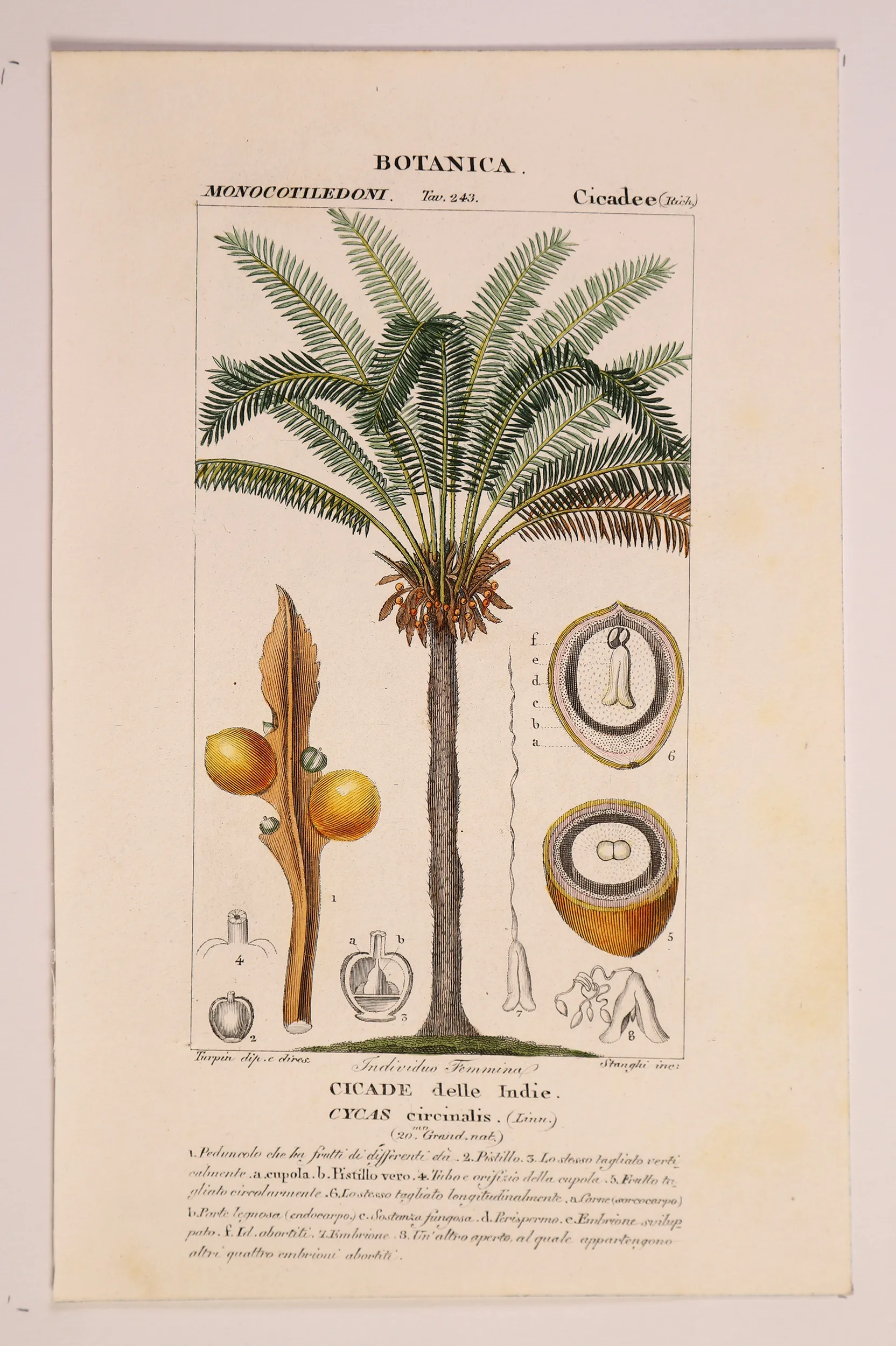
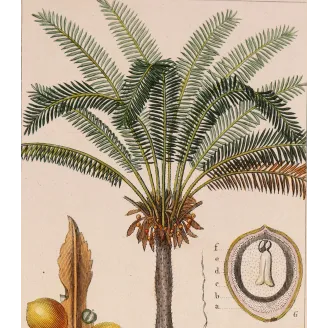
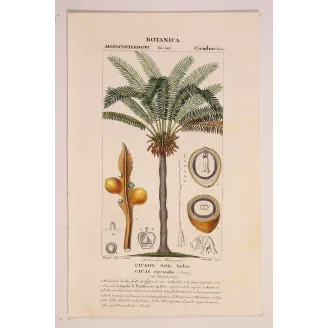
A detailed antique plate of Cycas circinalis, the Indian Sago Palm, showing the female specimen and fruit anatomy.
 Delivery policy
Your print will be carefully prepared and shipped worldwide via trusted couriers (UPS or similar).
 Authentic antique prints
Original engravings from the 17th–19th century.
This original engraving presents the female specimen of Cycas circinalis, historically identified as the “Cicade delle Indie.” Unlike the male plate, this composition focuses on the fruiting structures, combining the full arboreal figure with detailed sectional studies of seeds and reproductive organs. The result is not merely decorative, but taxonomically informative — a disciplined botanical document.
Turpin renders the tall, slender trunk crowned by radiating fronds with architectural restraint, while the large golden seeds and sectional diagrams introduce a striking visual counterpoint. The analytical figures are arranged with measured spacing, reinforcing clarity rather than ornament.
The plate belongs to the Italian edition of the Dizionario di Scienze Naturali (Florence, Battelli press), a monumental early nineteenth-century encyclopedic enterprise dedicated to the systematic classification of the natural world through refined engraving and careful observation.
— • —
The composition is vertically anchored by the central trunk, establishing compositional stability. The crown of finely articulated fronds spreads outward in controlled symmetry, while the fruit cluster introduces luminous yellow and amber tones that animate the otherwise restrained green palette.
The sectional studies at right and lower register create a dialogue between organism and structure, balancing monumentality with analytical precision. The generous margins preserve visual calm, making the sheet particularly suitable for refined interior display.
Cycas circinalis belongs to one of the most ancient surviving plant lineages. Cycads are dioecious, meaning male and female reproductive structures occur on separate plants — a feature that fascinated early nineteenth-century botanists seeking to clarify plant sexuality and classification. The female specimen, bearing large exposed seeds rather than enclosed fruits, challenged contemporary taxonomic systems and stimulated deeper morphological study. Its inclusion in encyclopedic works such as the Dizionario di Scienze Naturali reflects a period when botanical science was refining its understanding of reproductive structures and global plant diversity.
Curatorial Note. This plate represents the female specimen of Cycas circinalis. A companion engraving within the same publication presents the corresponding male plant. Viewed together, the two sheets form a complete scientific study of the species’ dioecious reproductive system, documenting both pollen-bearing and seed-bearing structures with remarkable clarity. The related male specimen can be viewed here: Cycas circinalis – Male specimen.
This plate forms part of the historic Dizionario di Scienze Naturali, once preserved within a noble library and today housed in the Sacchetti Collection. Each engraving embodies a period when scientific investigation was supported by exceptional artisanal skill — from the precision of the engraved copperplate line to the carefully applied hand-colouring executed sheet by sheet.
Such works were conceived not as decorative ephemera, but as authoritative visual documents of knowledge. To explore the broader story of these rare prints and their refined provenance, we invite you to read our editorial feature “Not Just Another Print”.
The engraving is in Like Brand New (LBN) antique condition. The sheet retains clean, well-preserved margins and a sharp, clearly defined impression. The original smooth early nineteenth-century wove paper remains stable and fresh in appearance. No watermark has been observed. The hand-colouring is balanced and vivid, with excellent chromatic preservation.
For further context on Pierre Jean François Turpin and his contribution to nineteenth-century botanical science, see our editorial feature:
Pierre Jean François Turpin – The Botanical Illustrator of Natural Harmony
Specific References
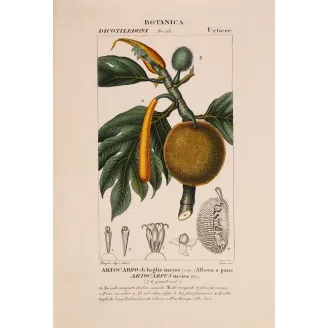
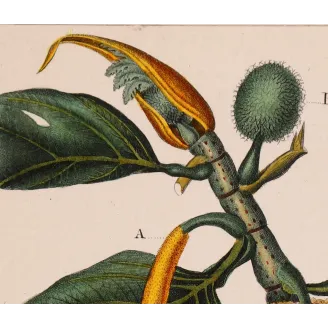
An extraordinary 19th-century engraving of *Artocarpus incisa*, the breadfruit tree, showcasing its bold leaves and unique fruit texture.
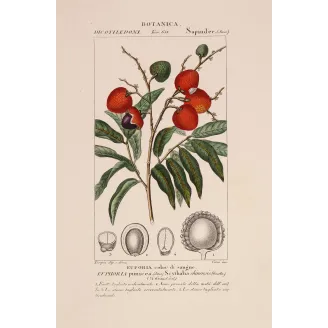
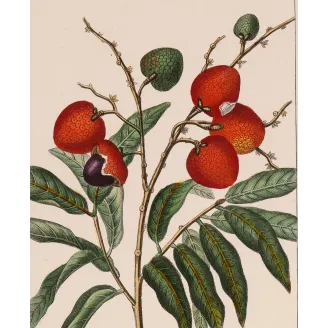
A striking hand-colored engraving of *Euphoria punicea*, displaying vivid red fruits and lush foliage in a refined 19th-century botanical composition.
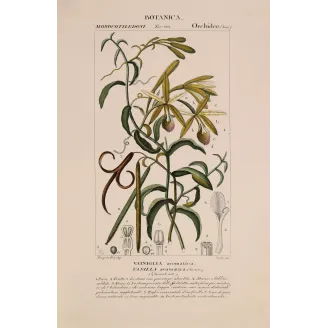
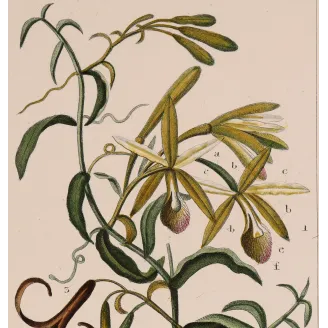
Delicate orchid illustration showing flower, pod and internal anatomy of vanilla.
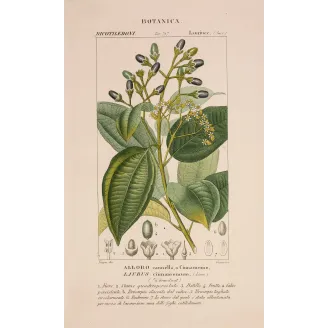
Finely detailed print of Laurus cinnamomum by Turpin, from the Dizionario di Scienze Naturali.
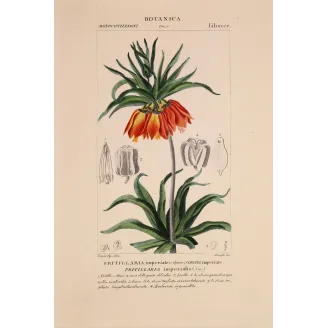
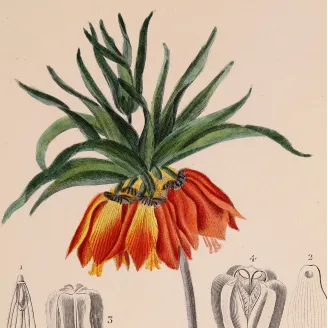
Striking antique print of Fritillaria imperialis with bright orange crown flowers.
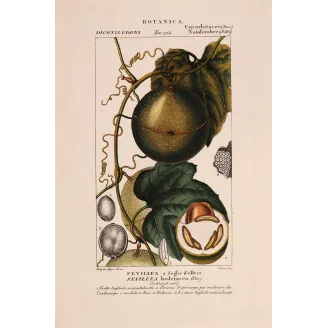
A coordinated pair of engravings depicting *Fevillea hederacea*, with intricate tendrils and elegant fruit structure, hand-colored with precision.
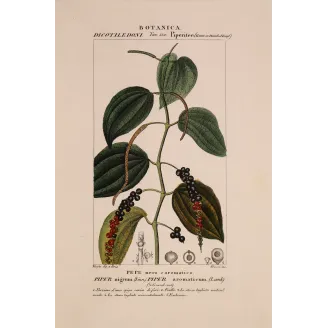
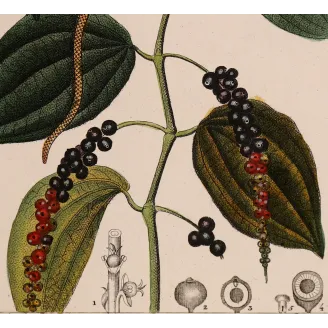
Detailed depiction of the black pepper vine with fruiting spikes and leaves.
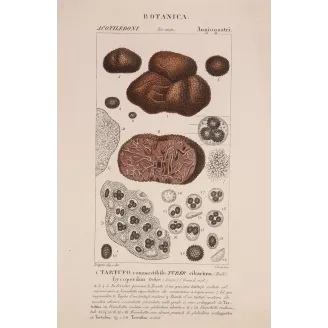
Unusual and fascinating botanical study of truffle morphology, rich in scientific detail.
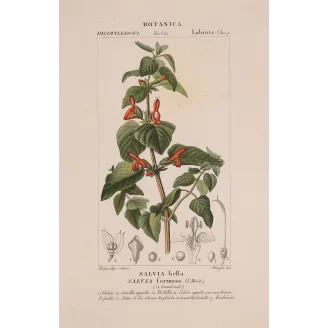
Vivid botanical plate of Salvia formosa, with striking red-orange tubular flowers.
Delicate and detailed illustration of the tea plant, with floral and seed elements beautifully depicted.
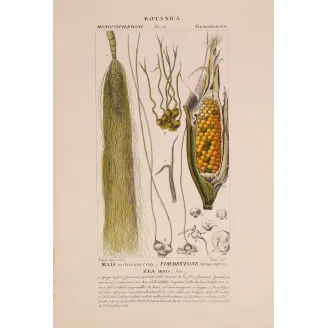
Double plate of cultivated maize (Zea mays) from Turpins botanical series.
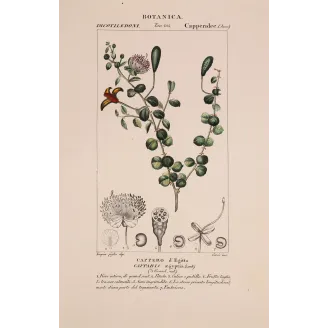
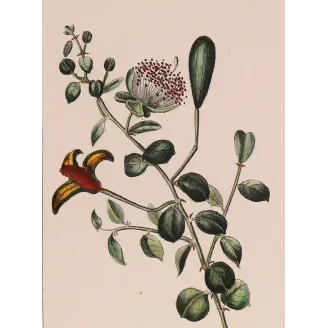
Vibrant caper plant illustration with both flowers and fruiting structures.
A pair of plates dedicated to the sago palm tree and its structural details.
Elegant illustration of Laurus cinnamomum, showing leaves, flowers and seeds.
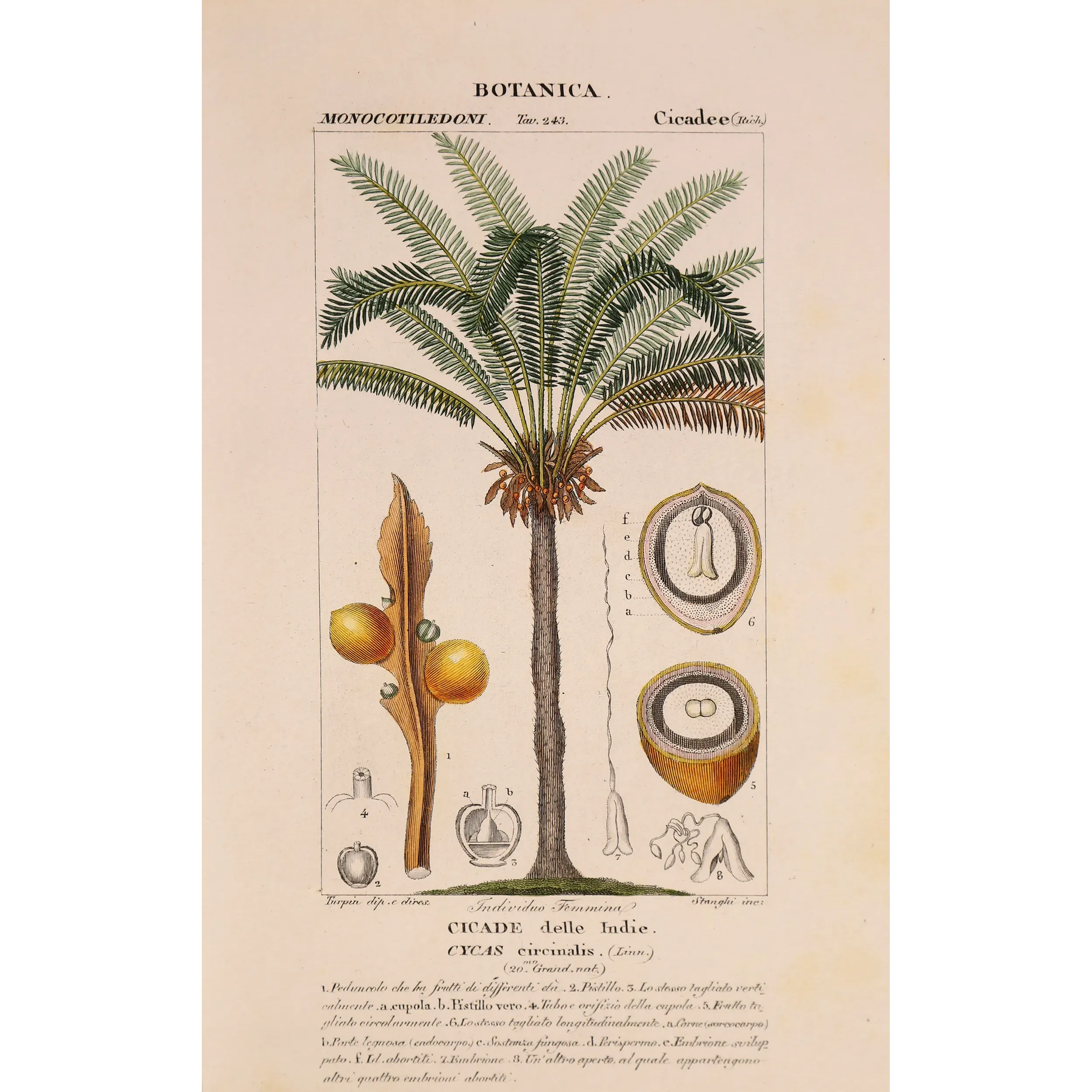
A detailed antique plate of Cycas circinalis, the Indian Sago Palm, showing the female specimen and fruit anatomy.