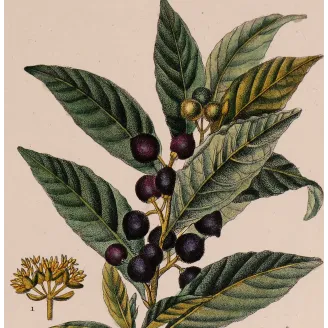
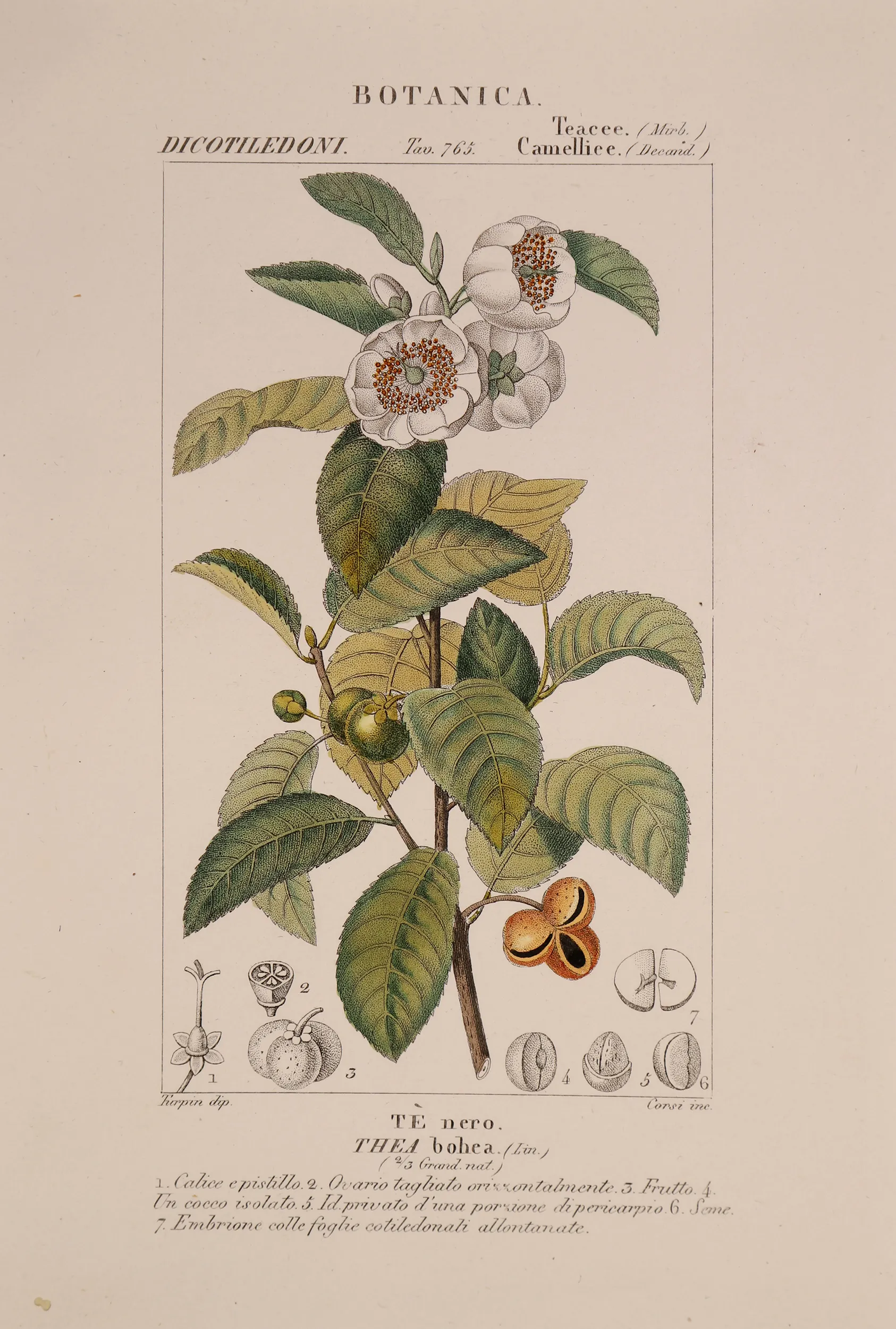
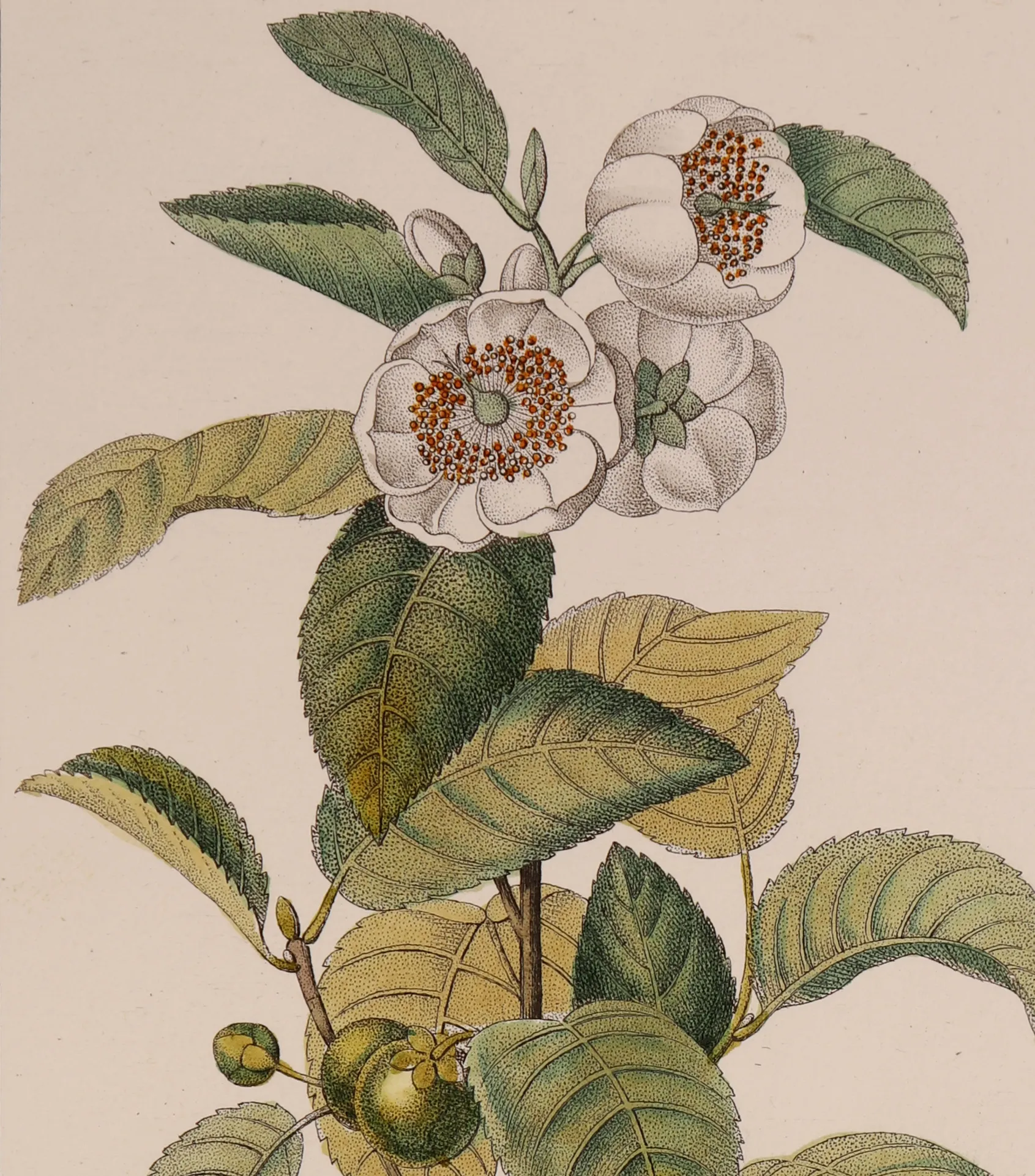
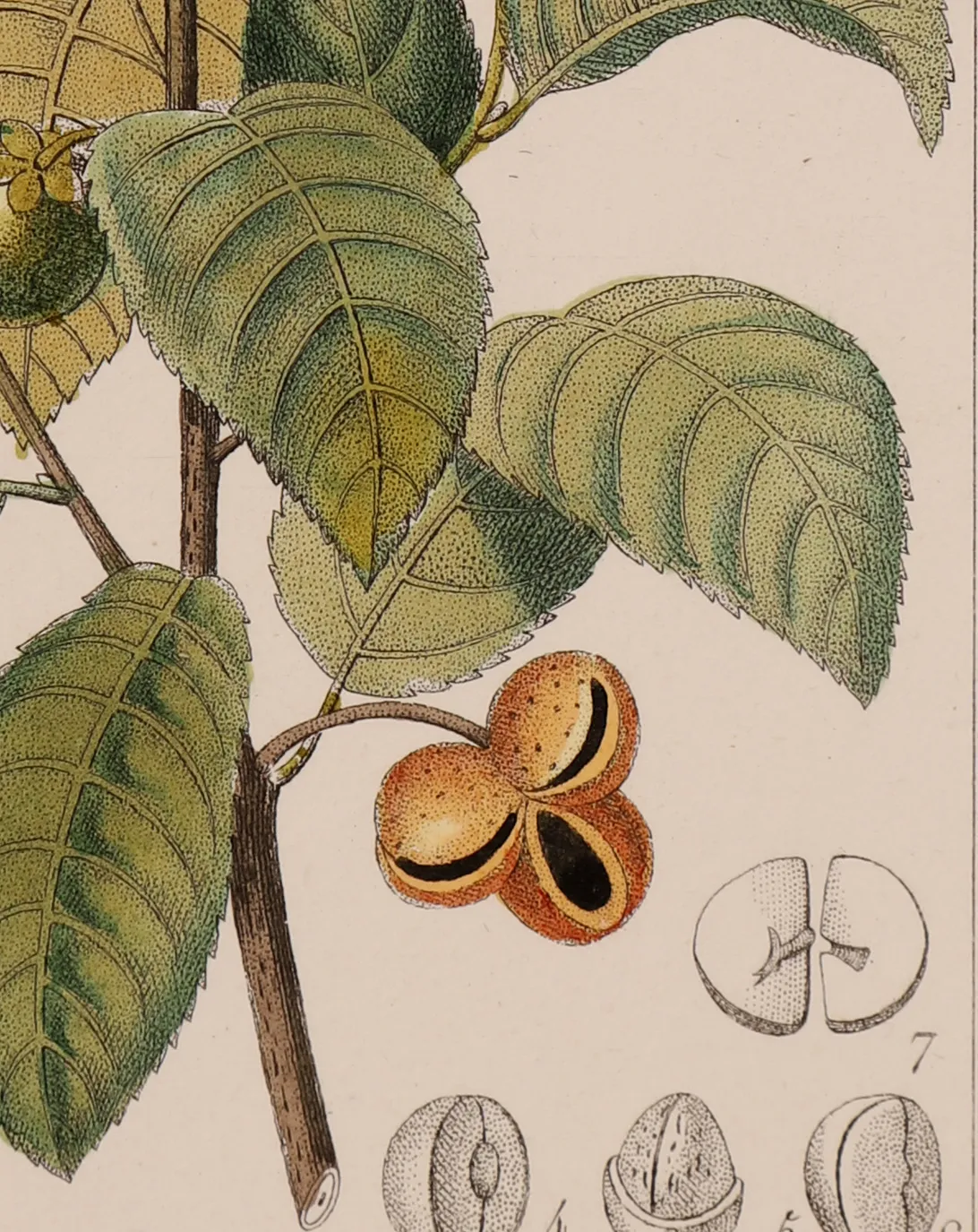

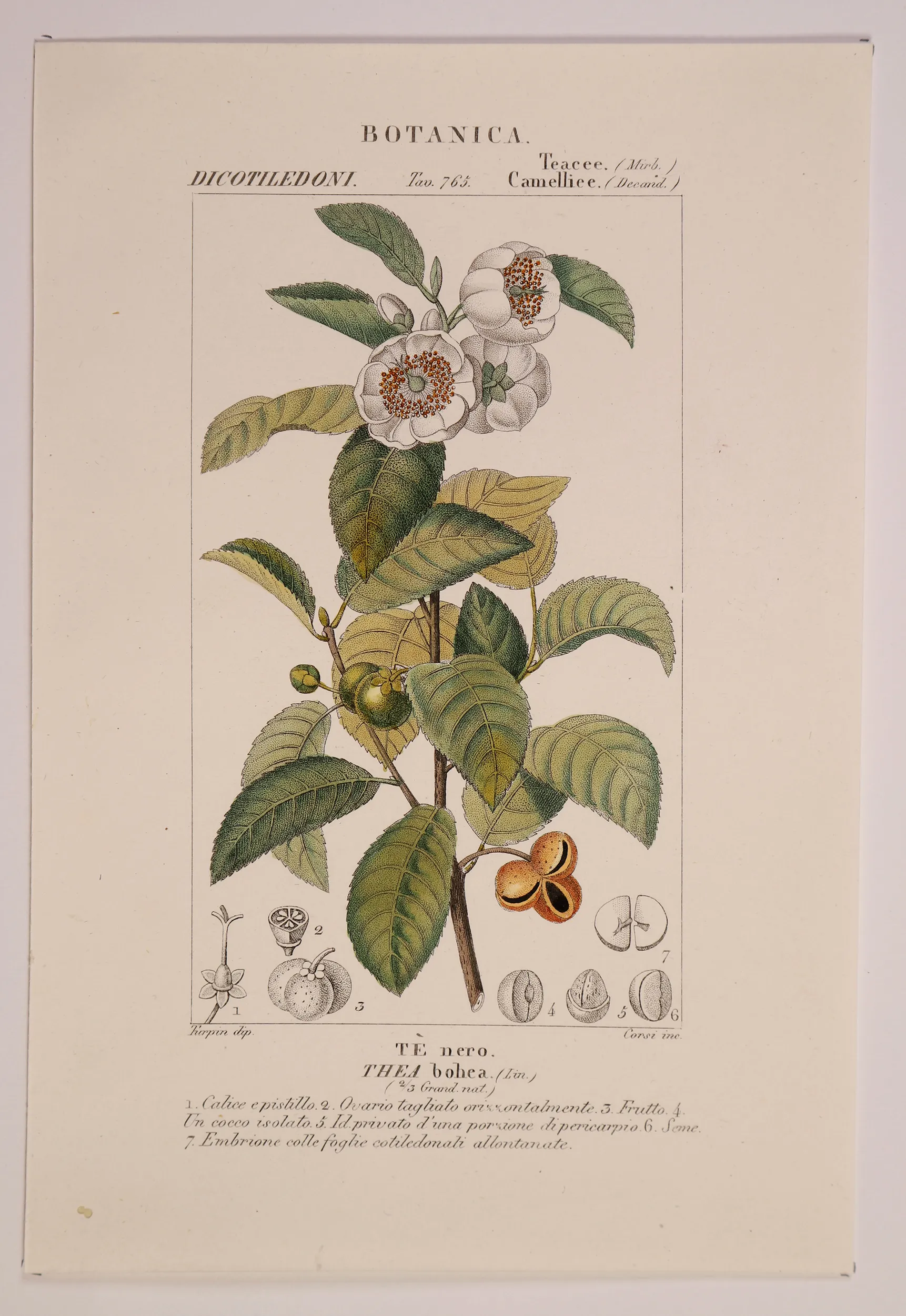
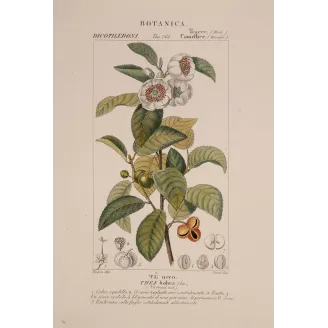
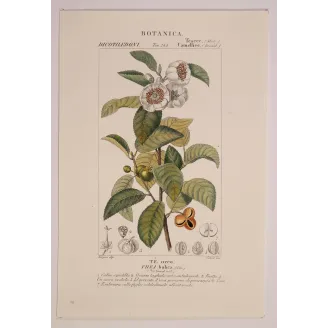
Delicate and detailed illustration of the tea plant, with floral and seed elements beautifully depicted.
 Delivery policy
Your print will be carefully prepared and shipped worldwide via trusted couriers (UPS or similar).
 Authentic antique prints
Original engravings from the 17th–19th century.
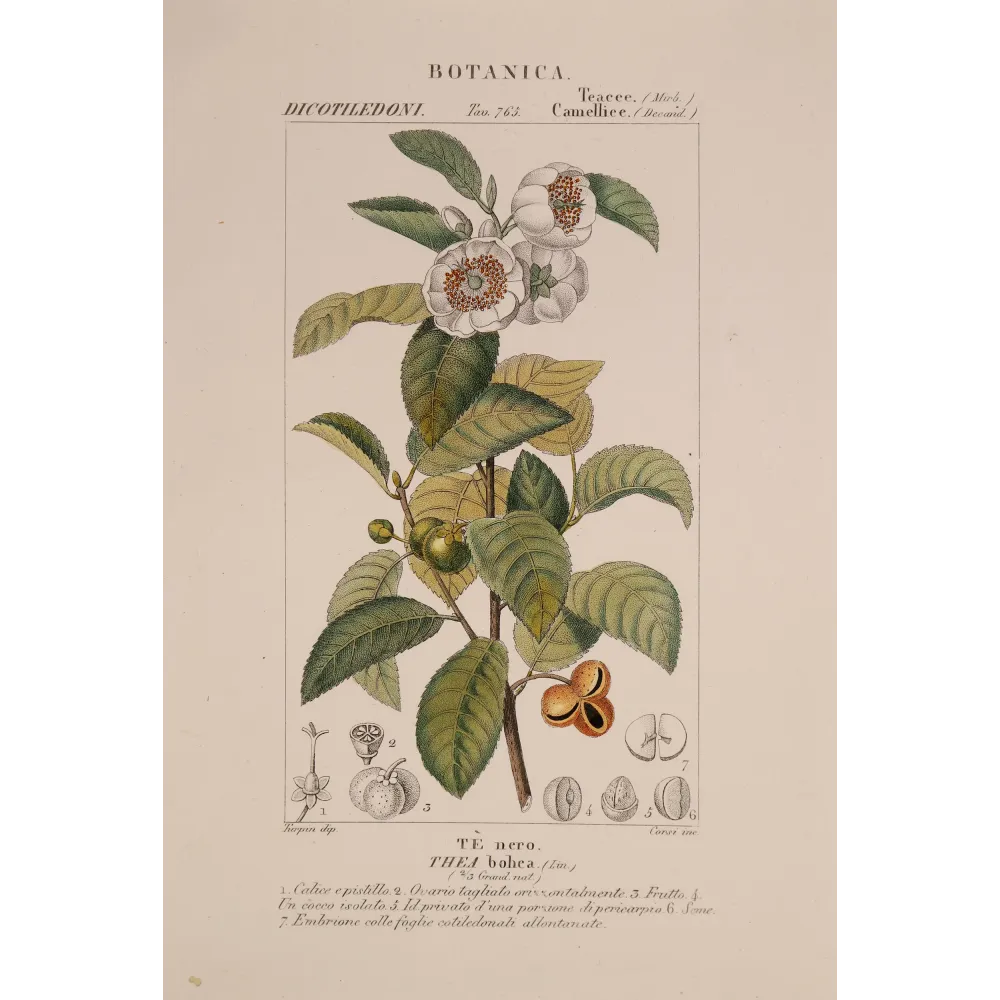
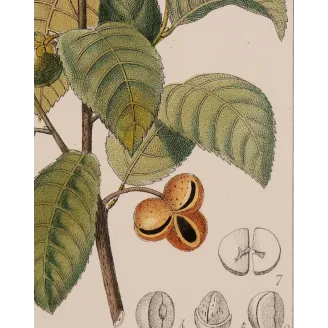
This refined botanical engraving depicts Thea bohea (now classified as Camellia sinensis), the tea plant that shaped centuries of trade, ritual and cultural exchange. The specimen is presented with characteristic clarity: flowering branches, mature foliage, fruit capsules and analytical studies coexist within a disciplined vertical composition typical of early nineteenth-century scientific illustration.
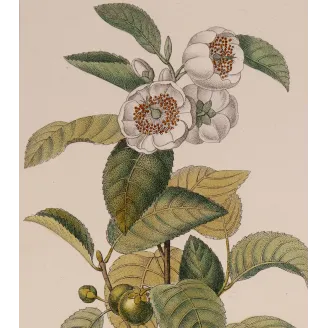
Turpin’s treatment privileges structural intelligibility. The glossy serrated leaves are articulated with precise venation, while the white blossoms — delicately opened — reveal the golden staminal cluster at their core. The controlled hand-colouring enhances botanical legibility without overwhelming the engraved line.
This plate forms part of the Italian edition of the Dizionario di Scienze Naturali (Florence, Battelli press), a monumental encyclopedic project that sought to catalogue the natural world with both intellectual rigor and visual refinement.
— • —
The composition unfolds along a central axis, creating vertical equilibrium. The foliage radiates outward in alternating rhythm, forming a subtle visual architecture that stabilizes the sheet. The blossoms occupy the upper register, drawing the eye upward, while the analytical figures at the base provide anatomical clarity without disturbing the harmony of the whole.
Chromatically, the plate is restrained yet luminous: olive and deep green leaves contrast with the pale petals and warm ochre stamens, while the fruit capsule introduces a muted golden accent. The result is both scientifically precise and visually composed — a hallmark of Turpin’s contribution to botanical art.
Camellia sinensis, historically referred to as Thea bohea, is the evergreen plant from which all traditional tea varieties — green, black, oolong and white — are derived. Native to East Asia, it became one of the most consequential botanical species in global history, driving maritime trade networks, diplomatic tensions, and colonial economies from the seventeenth century onward. By the early nineteenth century, when this engraving was produced, tea had already transformed European social life, giving rise to new rituals of hospitality and refinement. Its inclusion in encyclopedic works such as the Dizionario di Scienze Naturali reflects not only botanical interest but recognition of its immense cultural, economic and geopolitical significance. The plant thus stands at the intersection of science, commerce and ceremony — a living emblem of global interconnectedness.
This plate forms part of the historic Dizionario di Scienze Naturali, a monumental early nineteenth-century encyclopedic enterprise once preserved within a noble library and today housed in the Sacchetti Collection. Each engraving reflects a period in which scientific ambition was matched by exceptional artisanal execution — from the precision of the engraved copperplate line to the luminous hand-colouring applied individually to every sheet.
The result is not merely documentary illustration, but a refined synthesis of scholarship and craftsmanship. To discover the full story behind these rare prints and their noble provenance, we invite you to read our editorial feature “Not Just Another Print”.
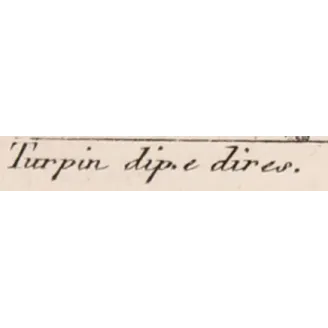
The engraving is in excellent antique condition. The sheet presents clean margins and a clear, well-inked impression. The paper is smooth early nineteenth-century wove paper (non-laid). No watermark has been observed. The original hand-colouring remains fresh and evenly preserved. The engraved credit “Turpin dis.” is present, confirming the original drawing by Pierre Jean François Turpin.
For further context on Pierre Jean François Turpin and his contribution to nineteenth-century botanical science, see our editorial feature:
Pierre Jean François Turpin – The Botanical Illustrator of Natural Harmony
Specific References
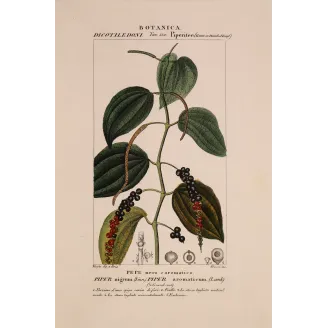
Detailed depiction of the black pepper vine with fruiting spikes and leaves.
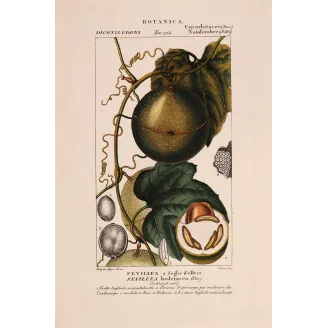
A coordinated pair of engravings depicting *Fevillea hederacea*, with intricate tendrils and elegant fruit structure, hand-colored with precision.
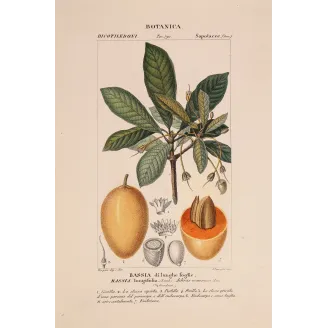
A rare depiction of *Bassia longifolia*, showing its elongated leaves and fruit sections in precise scientific detail and soft hand-colored tones.
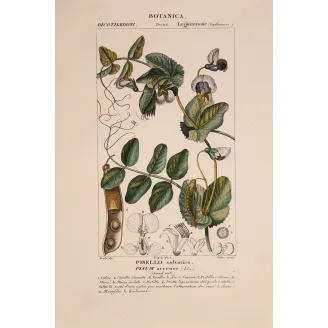
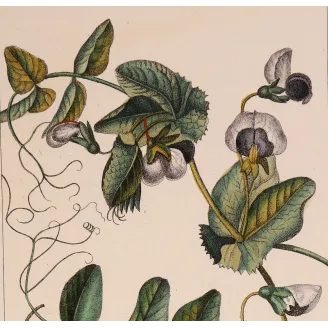
Colorful botanical illustration of Pisum arvense, wild pea, engraved by Turpin.
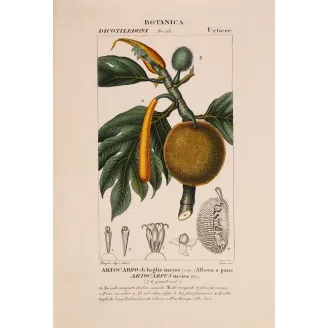
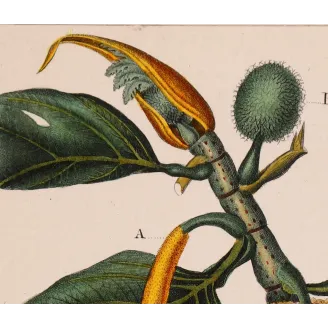
An extraordinary 19th-century engraving of *Artocarpus incisa*, the breadfruit tree, showcasing its bold leaves and unique fruit texture.
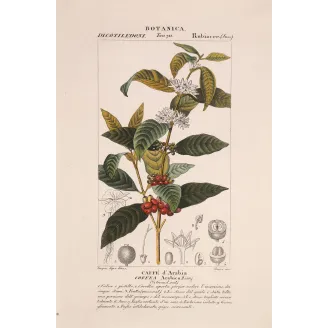
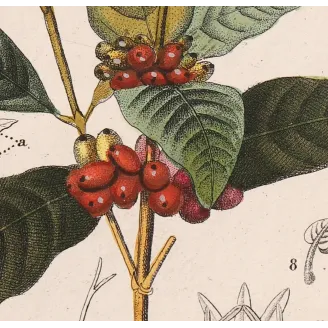
Botanical plate of Coffea arabica with vivid red berries and detailed floral structure.
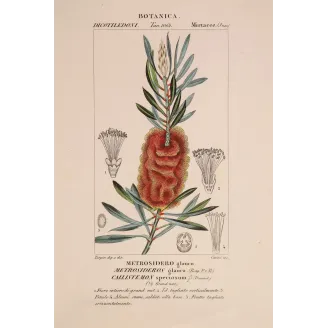
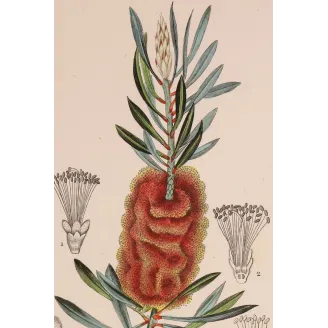
Stunning antique print of the red-flowering Callistemon, also known as bottlebrush.
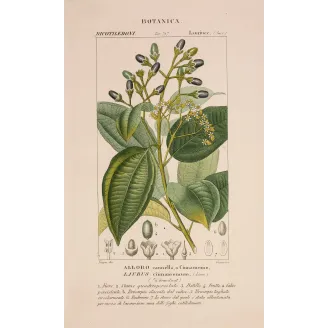
Finely detailed print of Laurus cinnamomum by Turpin, from the Dizionario di Scienze Naturali.
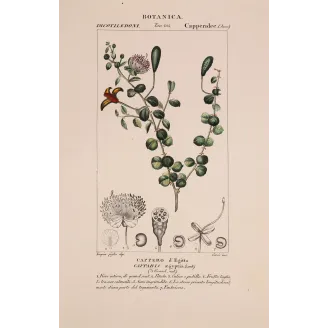
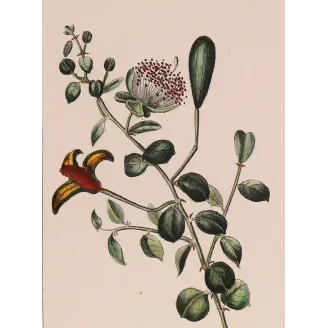
Vibrant caper plant illustration with both flowers and fruiting structures.
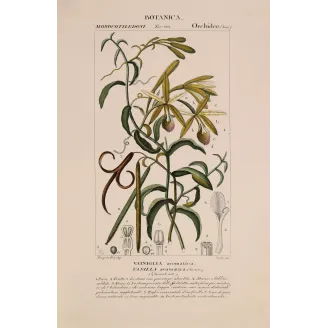
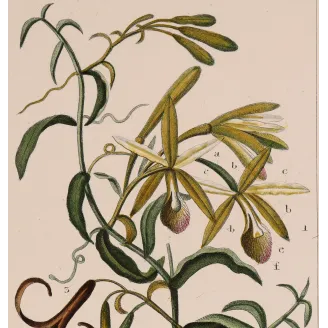
Delicate orchid illustration showing flower, pod and internal anatomy of vanilla.
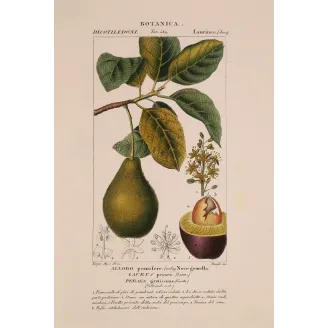
Botanical plate of avocado with whole fruit, seed, and internal anatomy.
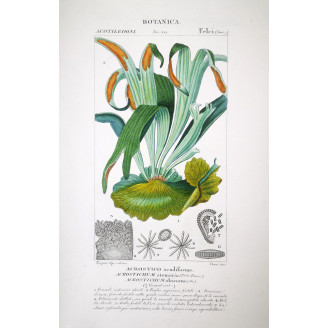
A complete set of 22 original hand-colored lithographs of ferns by Turpin, from the Dizionario di Scienze Naturali (c. 1830).
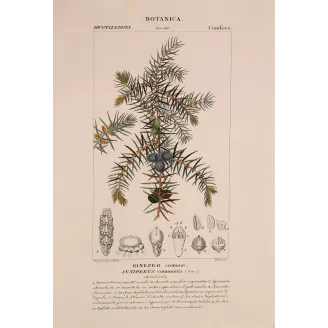
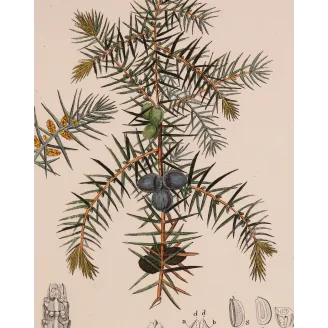
Elegant hand-colored plate of the juniper plant with berries and cone structure.
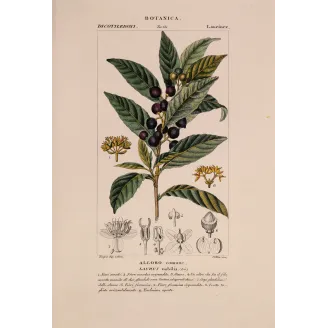
Graceful composition of bay laurel with fruits, blossoms, and internal flower structure.
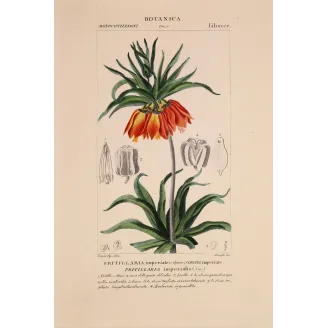
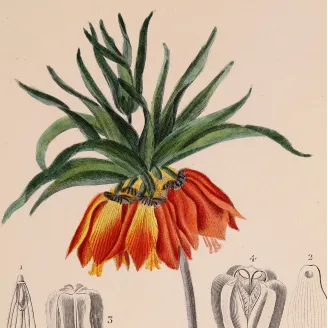
Striking antique print of Fritillaria imperialis with bright orange crown flowers.
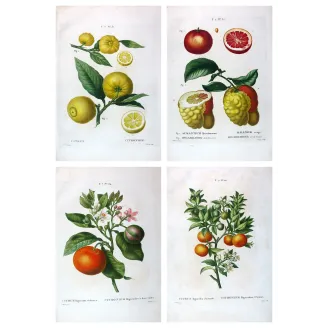
A coherent ensemble of eight original orange and bigarade engravings by Pancrace Bessa, reflecting the cultivated discipline of French orangeries in the Napoleonic era. Botanical precision and architectural composure unite in a refined citrus portfolio preserved as a complete series.
Vibrant caper plant illustration with both flowers and fruiting structures.
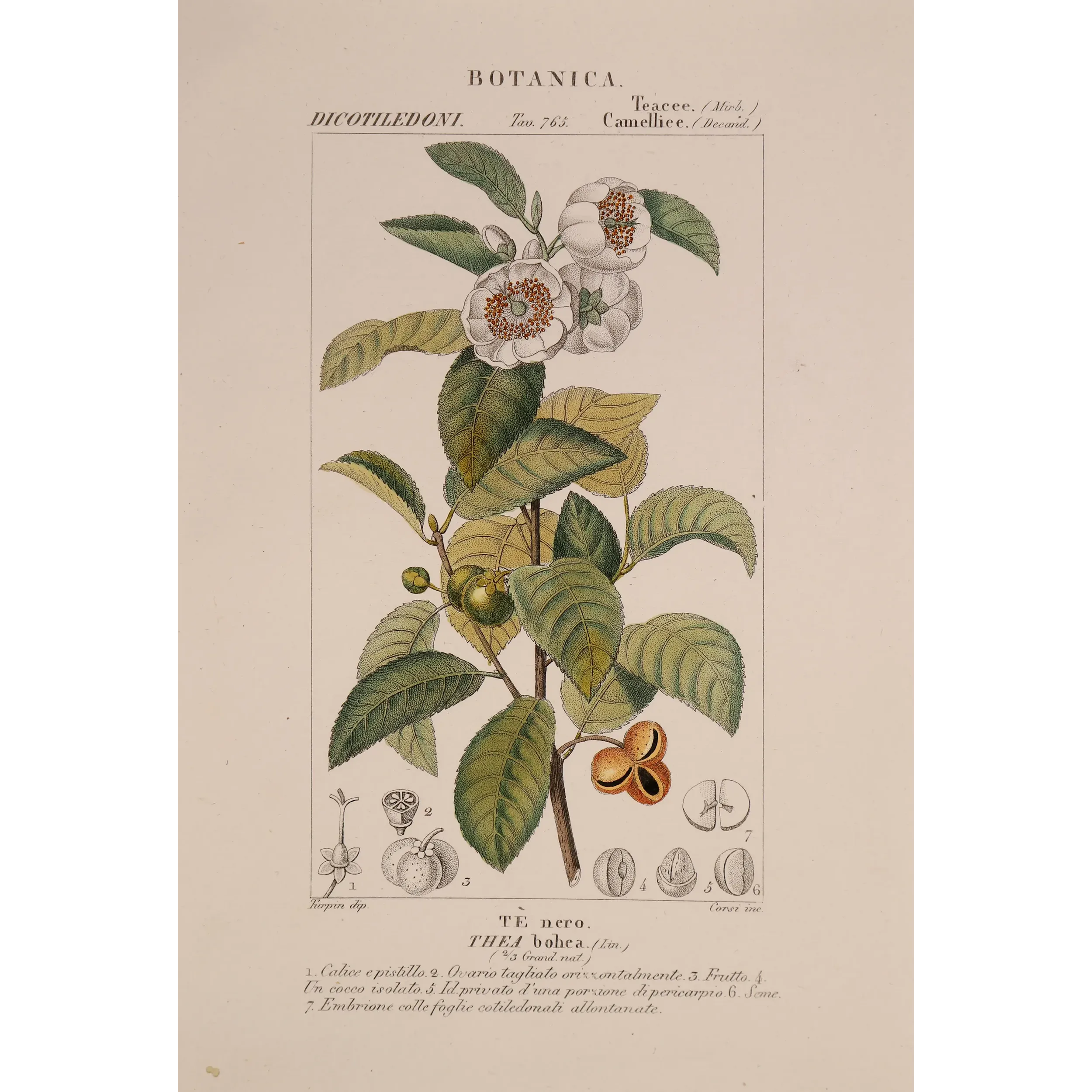
Delicate and detailed illustration of the tea plant, with floral and seed elements beautifully depicted.