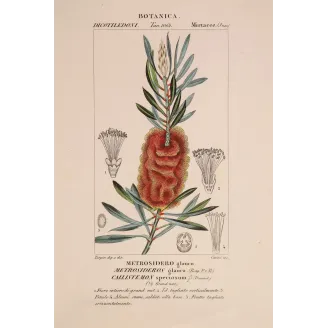
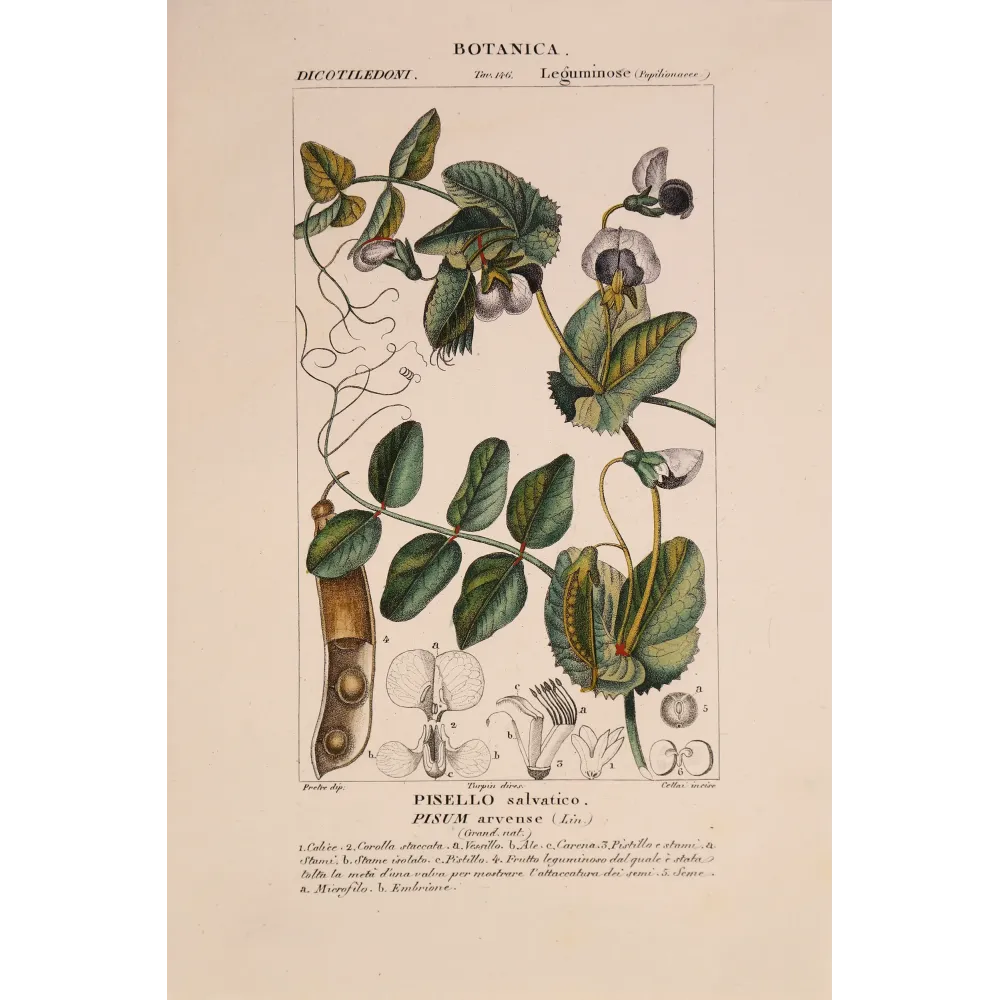
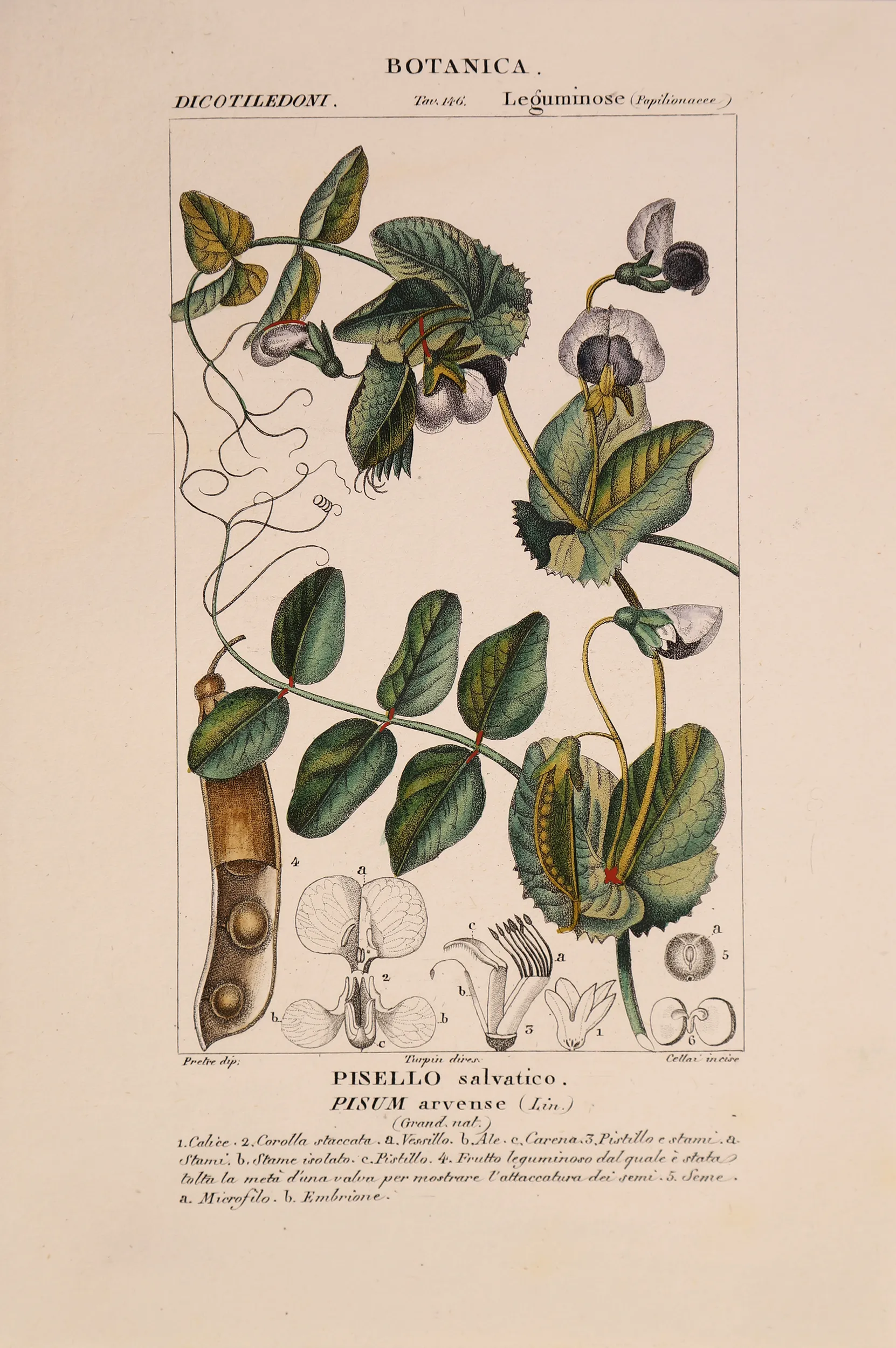

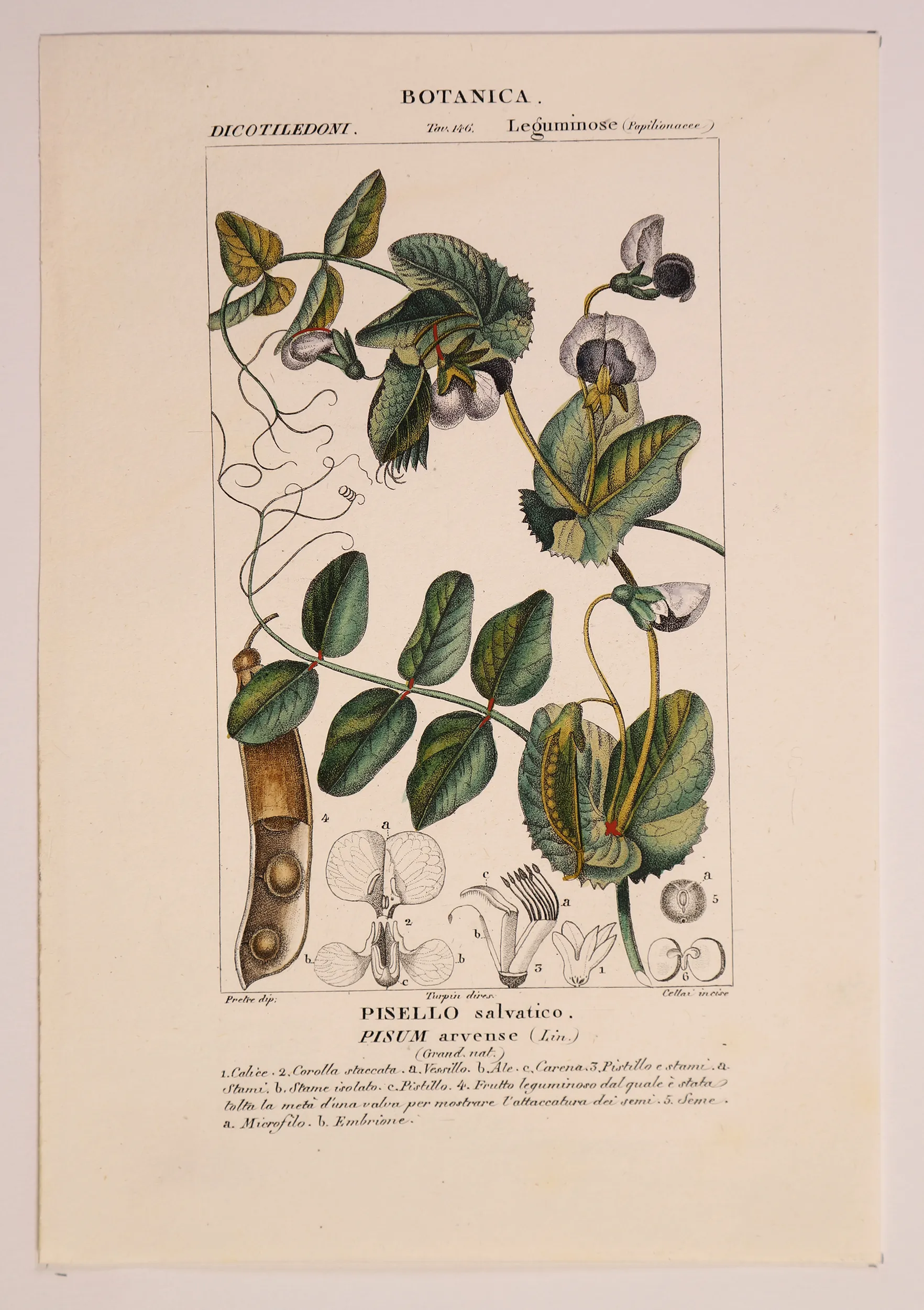
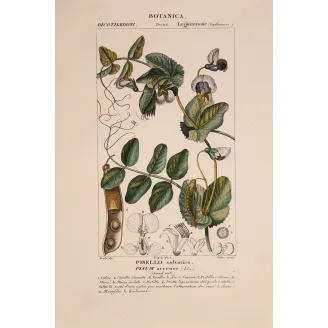
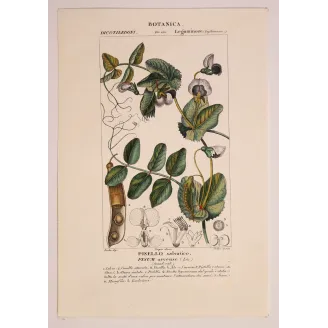
Colorful botanical illustration of Pisum arvense, wild pea, engraved by Turpin.
 Delivery policy
Your print will be carefully prepared and shipped worldwide via trusted couriers (UPS or similar).
 Authentic antique prints
Original engravings from the 17th–19th century.
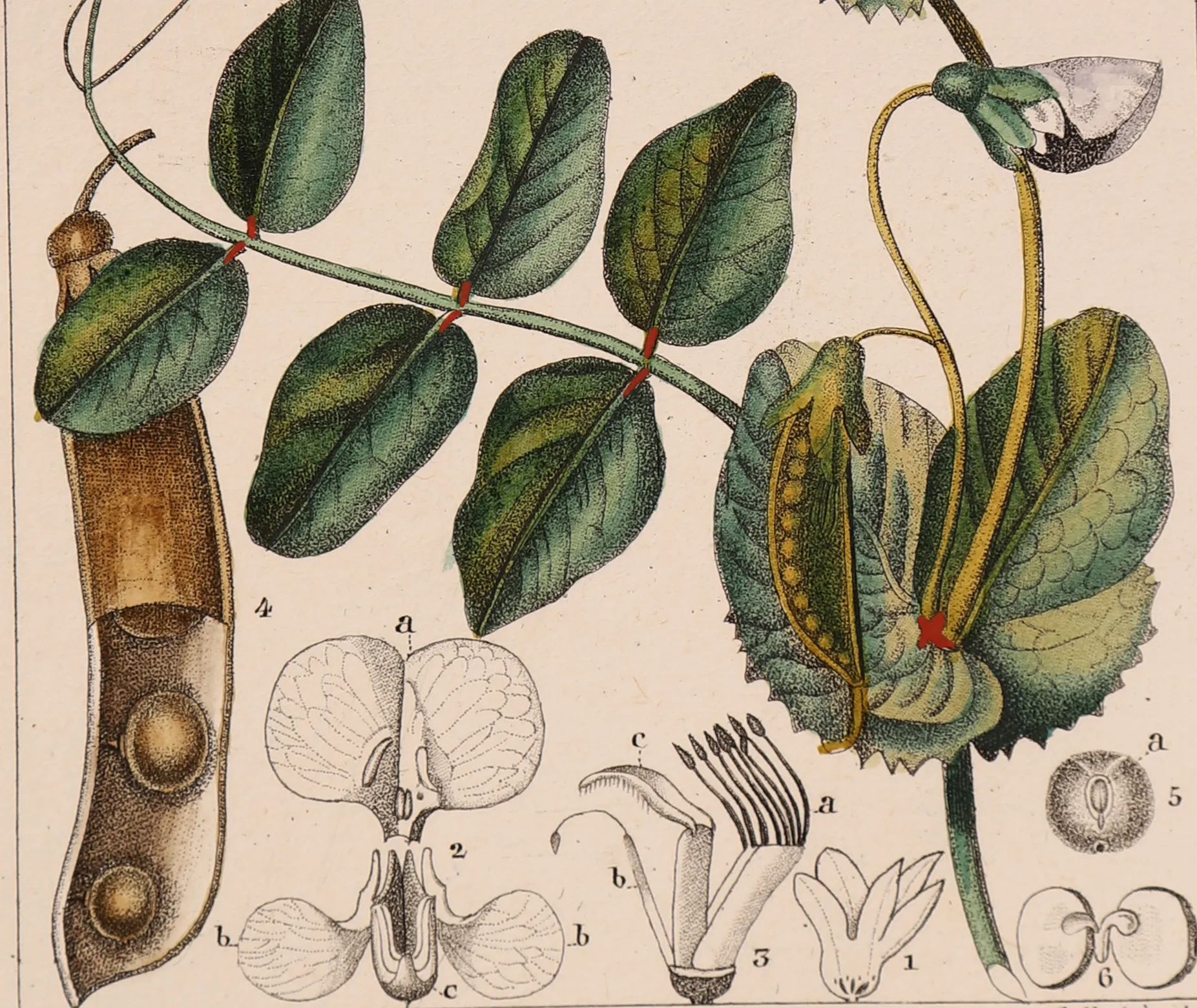
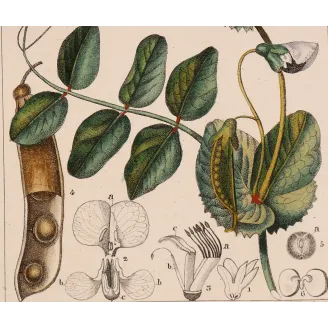
This finely composed engraving presents Pisum arvense, the wild or field pea, illustrated with structural clarity and measured botanical precision. The plate combines a climbing vegetative stem with flowers, pods, and analytical dissections, offering a systematic representation of one of the foundational leguminous crops of European agriculture.
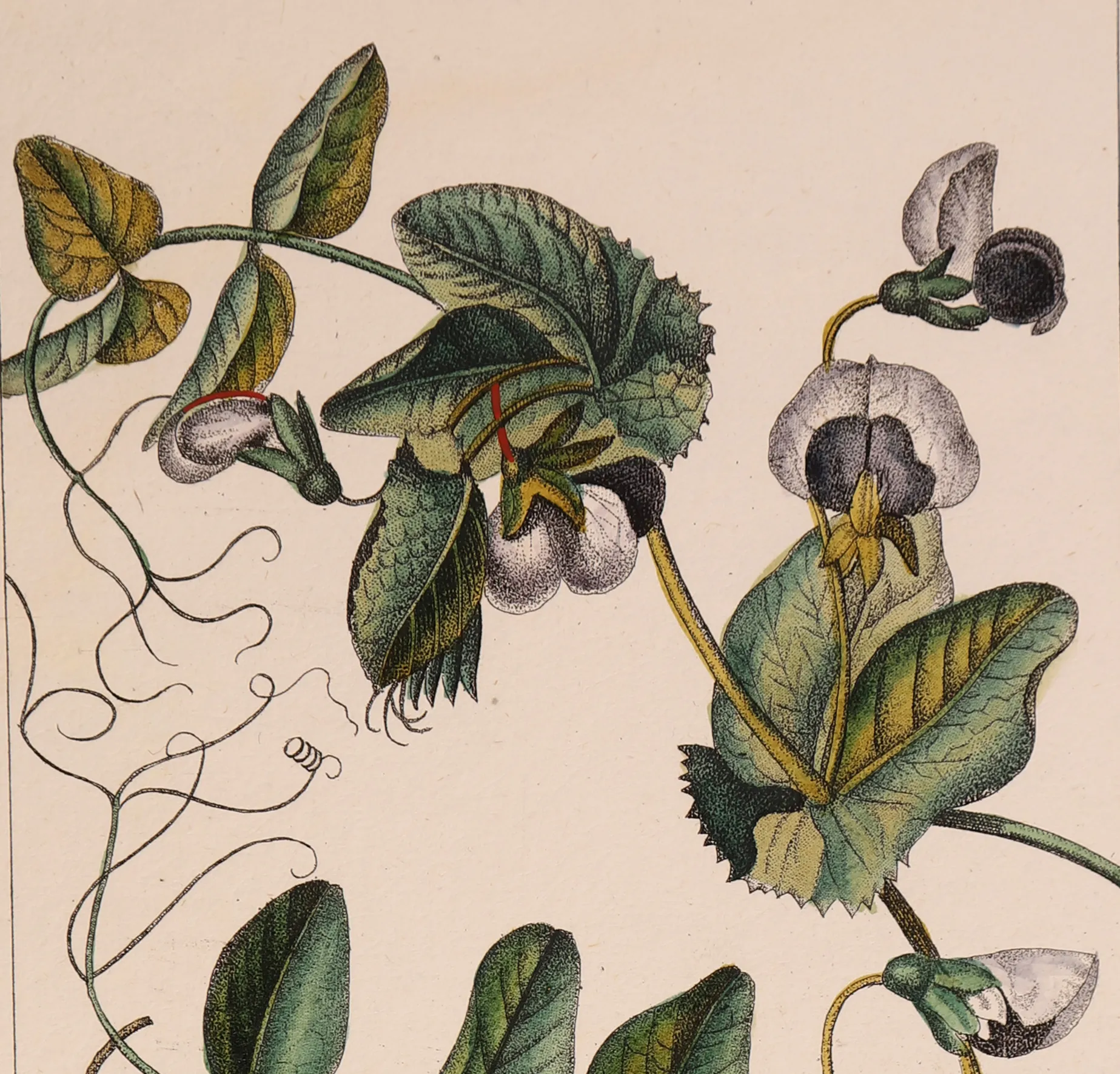
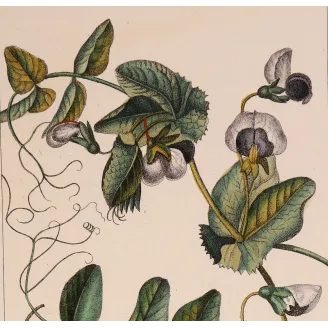
Turpin renders the climbing tendrils with fluid line, creating dynamic movement across the vertical field. The papilionaceous flowers — with their characteristic banner, wings, and keel — are articulated with tonal delicacy, while the mature pod and sectional details reinforce the scientific balance of the composition.
The engraving belongs to the Italian edition of the Dizionario di Scienze Naturali (Florence, Battelli press), an early nineteenth-century encyclopedic enterprise devoted to documenting both cultivated and wild plant species through refined copperplate engraving.
— • —
The composition unfolds diagonally, guided by the natural climbing habit of the plant. Soft green tonal transitions across the leaves create depth and subtle modeling, while the violet-white blossoms introduce restrained chromatic contrast. The lower analytical figures are arranged with disciplined spacing, preserving visual equilibrium and scientific legibility.
Unlike more monumental botanical subjects, this plate achieves elegance through proportion and restraint. It is particularly well suited for interiors that favor cultivated understatement and botanical intimacy over dramatic display.
Pisum arvense belongs to the legume family (Fabaceae), a group of plants central to agricultural development due to their nutritional value and their role in soil enrichment through nitrogen fixation. Long before the formal articulation of genetic theory, peas were widely cultivated and observed for their morphological traits. In early nineteenth-century botany, legumes represented both agricultural utility and structural complexity, particularly in the study of papilionaceous floral architecture. The inclusion of this species in the Dizionario di Scienze Naturali reflects the Enlightenment commitment to documenting not only exotic flora, but also the foundational crops sustaining European rural economies.
This plate forms part of the historic Dizionario di Scienze Naturali, once preserved within a noble library and today housed in the Sacchetti Collection. Each engraving embodies a period when agricultural science and artisanal engraving intersected — from the precision of the copperplate line to the carefully applied hand-colouring executed sheet by sheet.
Such works were conceived as authoritative visual documents of knowledge. To explore the broader story of these rare prints and their refined provenance, we invite you to read our editorial feature “Not Just Another Print”.
The engraving is in Like Brand New antique condition. The sheet presents clean margins and a crisp, well-defined impression. The original early nineteenth-century smooth wove paper remains stable and well preserved. No watermark has been observed. The hand-colouring is balanced and fresh, with excellent chromatic stability.
For further context on Pierre Jean François Turpin and his contribution to nineteenth-century botanical science, see our editorial feature:
Pierre Jean François Turpin – The Botanical Illustrator of Natural Harmony
Specific References
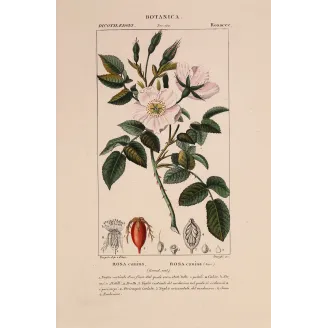
Delicate dog rose flower with soft pink petals and fine botanical details.
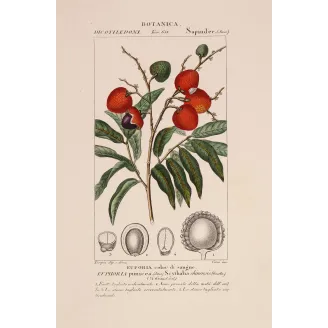
A striking hand-colored engraving of *Euphoria punicea*, displaying vivid red fruits and lush foliage in a refined 19th-century botanical composition.
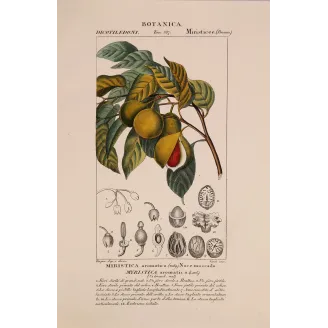
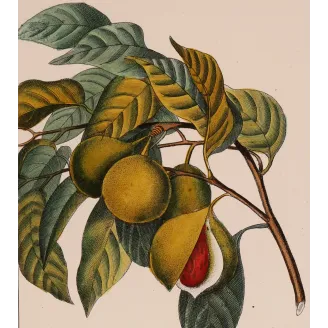
Striking botanical print of nutmeg fruit with cutaway sections and seed structure.
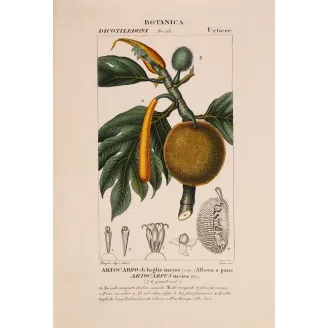
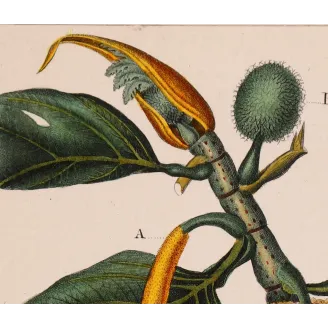
An extraordinary 19th-century engraving of *Artocarpus incisa*, the breadfruit tree, showcasing its bold leaves and unique fruit texture.
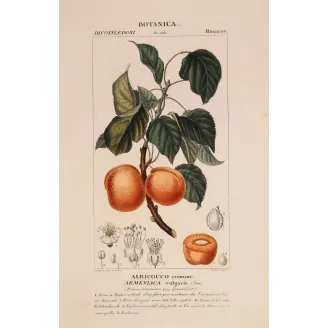
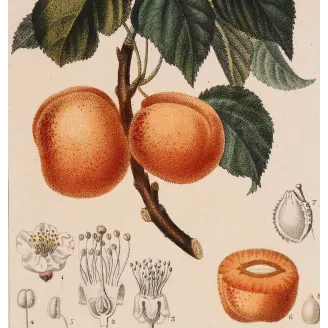
Original 19th-century botanical engraving of the common apricot, showing its velvety orange fruits and lush green leaves, rendered with great naturalistic balance.
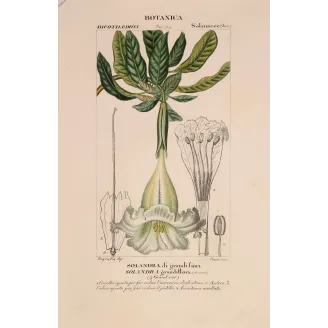
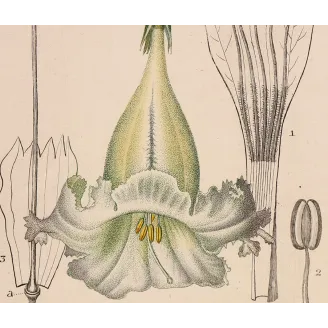
Beautiful antique flower print of Solandra, with large trumpet-shaped bloom.
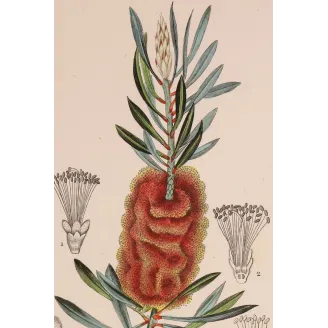
Stunning antique print of the red-flowering Callistemon, also known as bottlebrush.
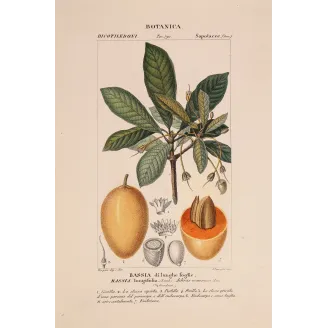
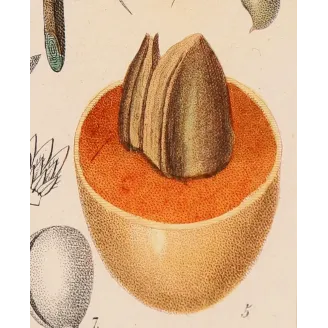
A rare depiction of *Bassia longifolia*, showing its elongated leaves and fruit sections in precise scientific detail and soft hand-colored tones.
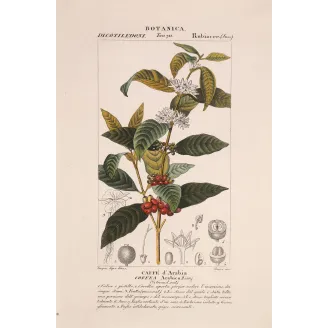
Botanical plate of Coffea arabica with vivid red berries and detailed floral structure.
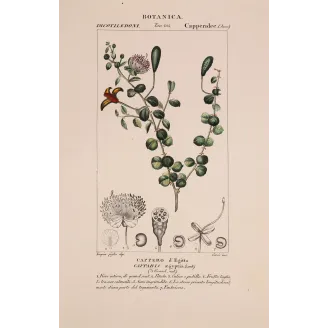
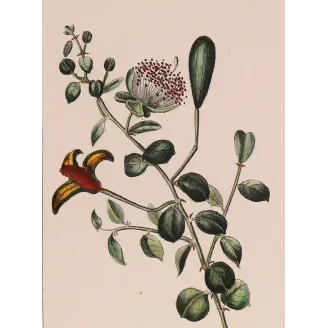
Vibrant caper plant illustration with both flowers and fruiting structures.
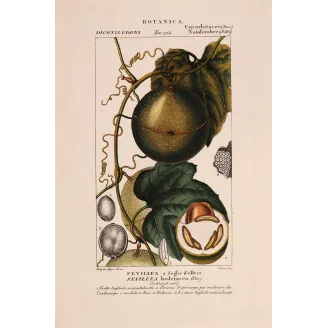
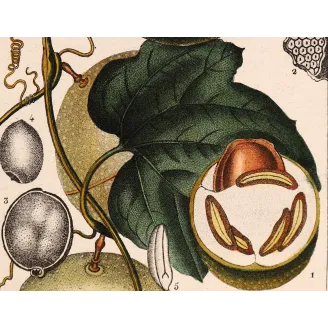
A coordinated pair of engravings depicting *Fevillea hederacea*, with intricate tendrils and elegant fruit structure, hand-colored with precision.
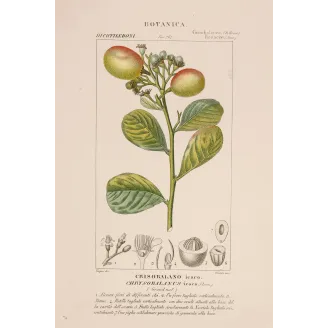
Elegant hand-colored botanical engraving of *Chrysobalanus icaco*, showing the round fruits and smooth glossy leaves in rich natural hues.
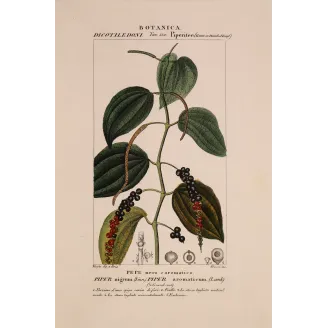
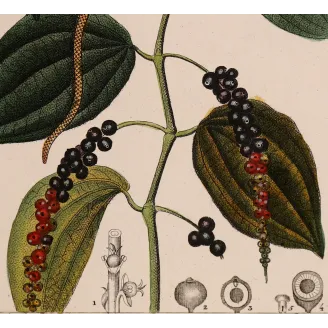
Detailed depiction of the black pepper vine with fruiting spikes and leaves.
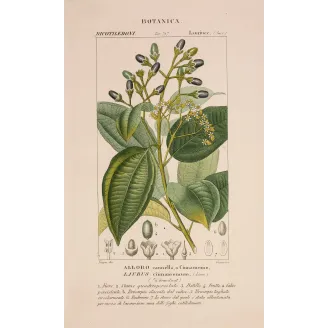
Finely detailed print of Laurus cinnamomum by Turpin, from the Dizionario di Scienze Naturali.
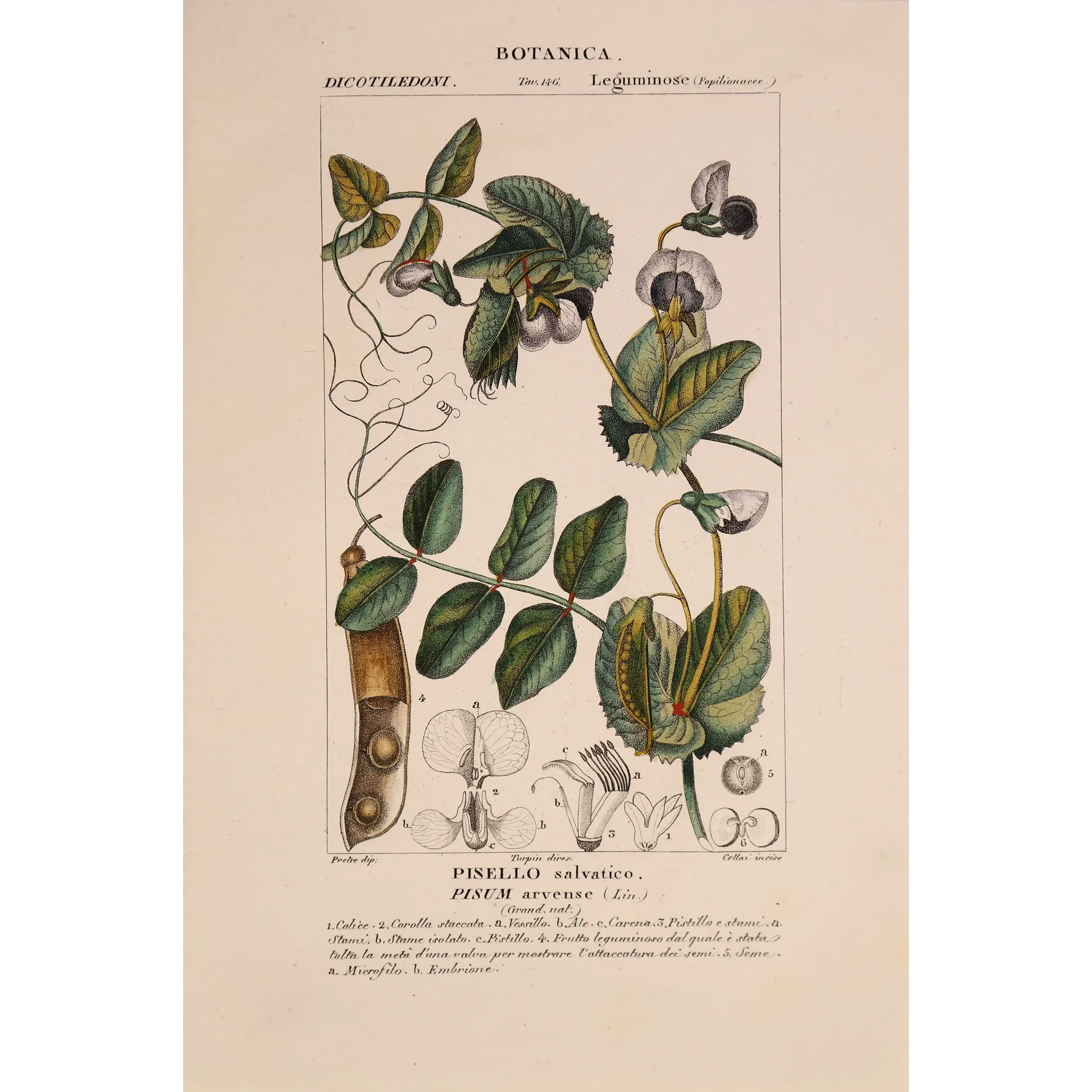
Colorful botanical illustration of Pisum arvense, wild pea, engraved by Turpin.