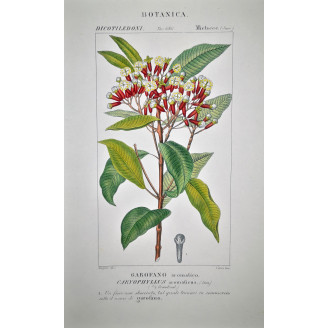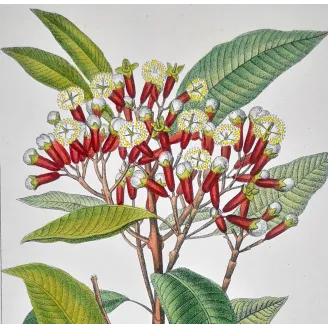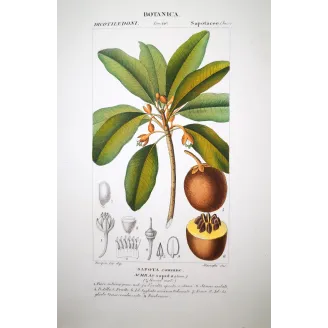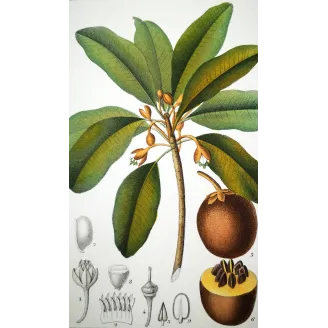
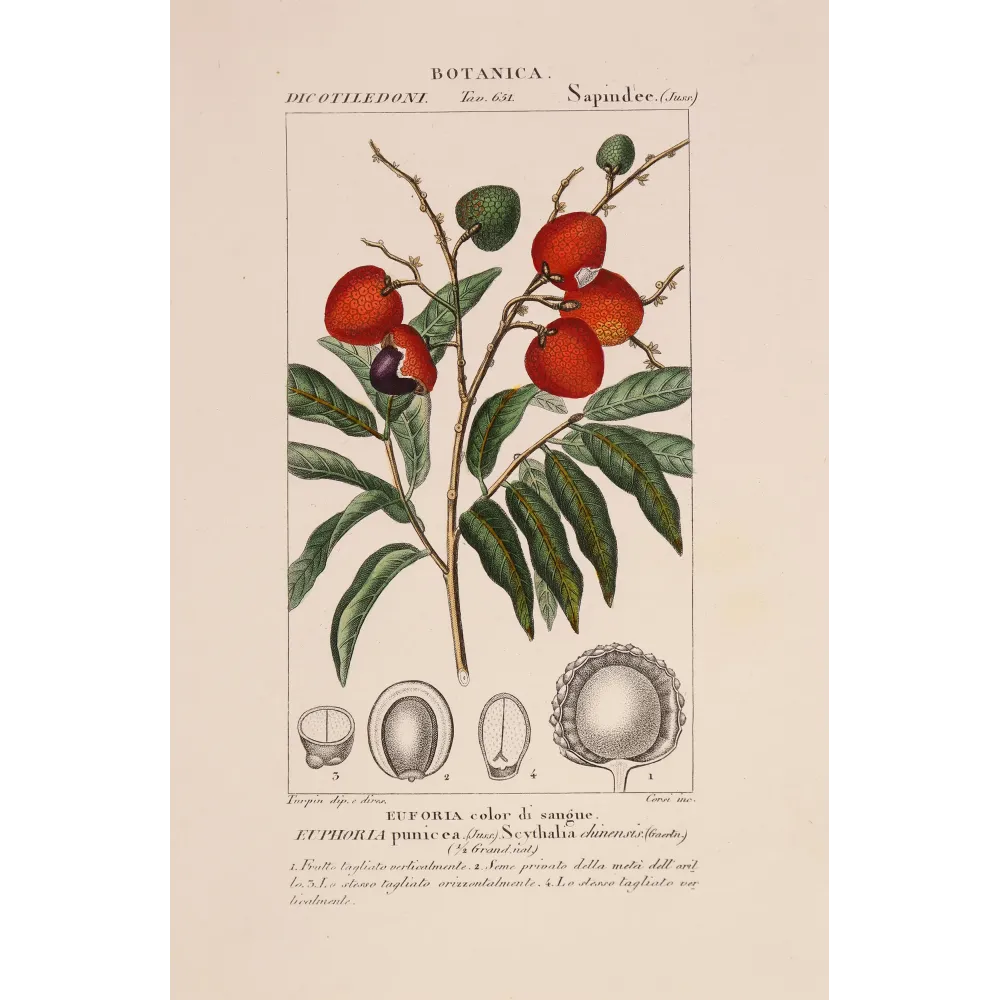
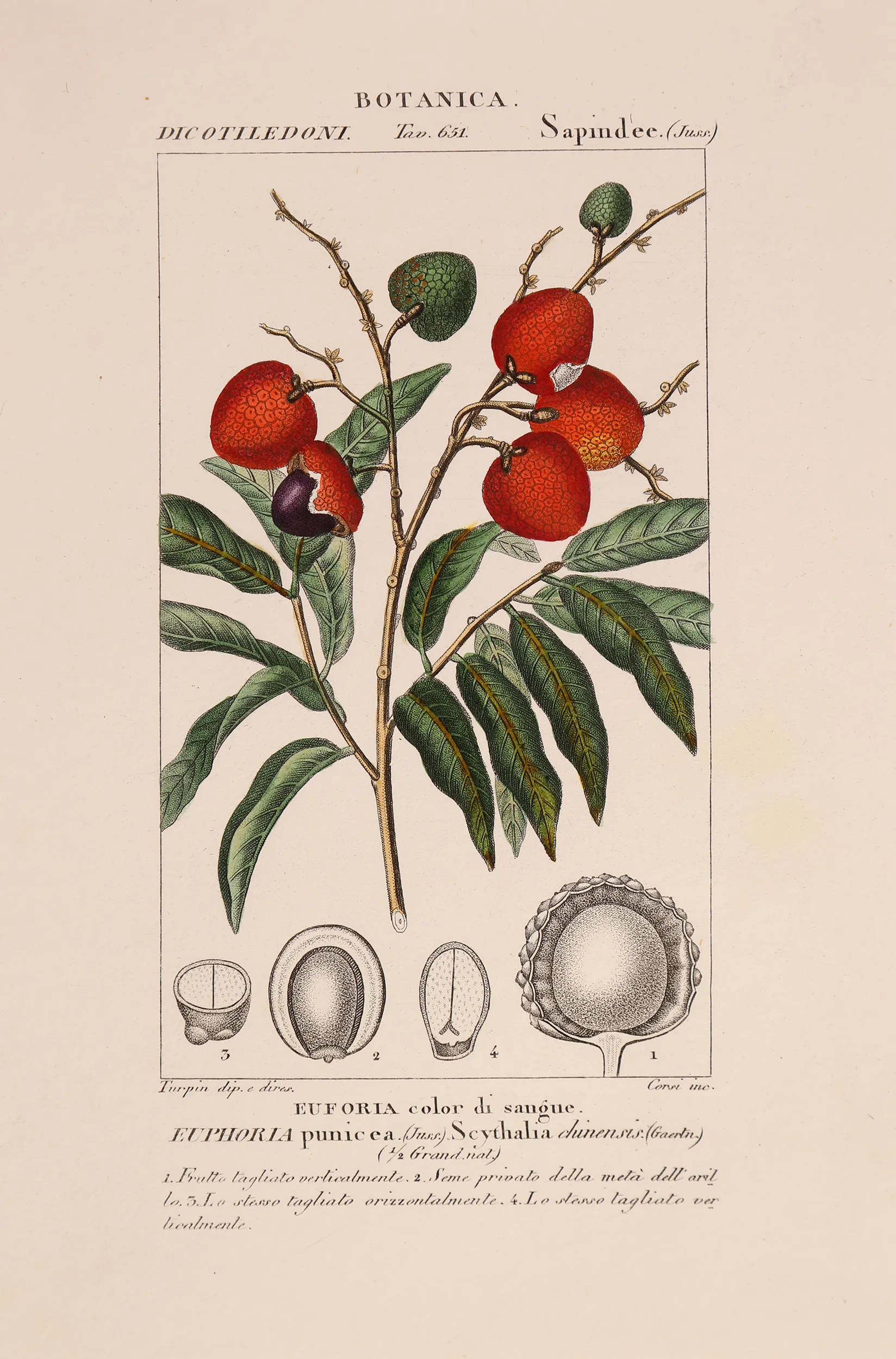

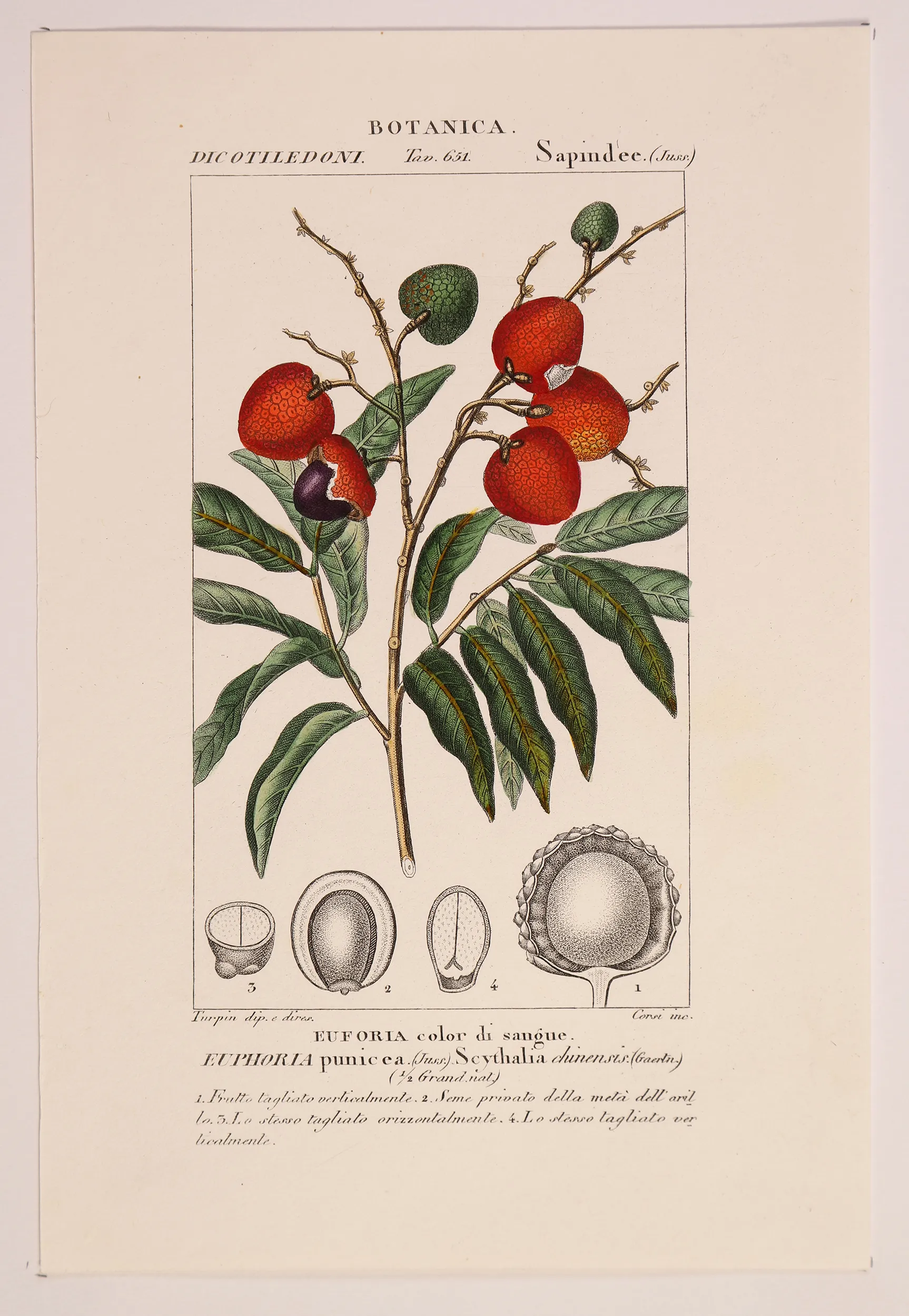
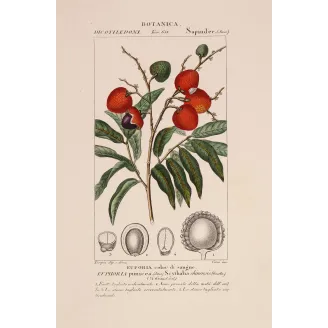
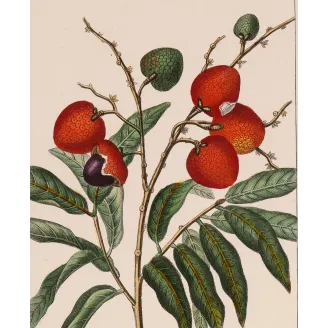
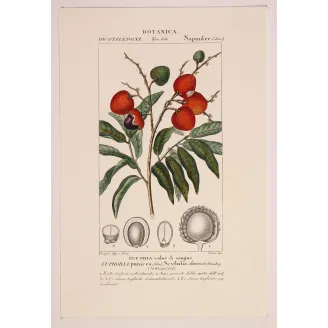
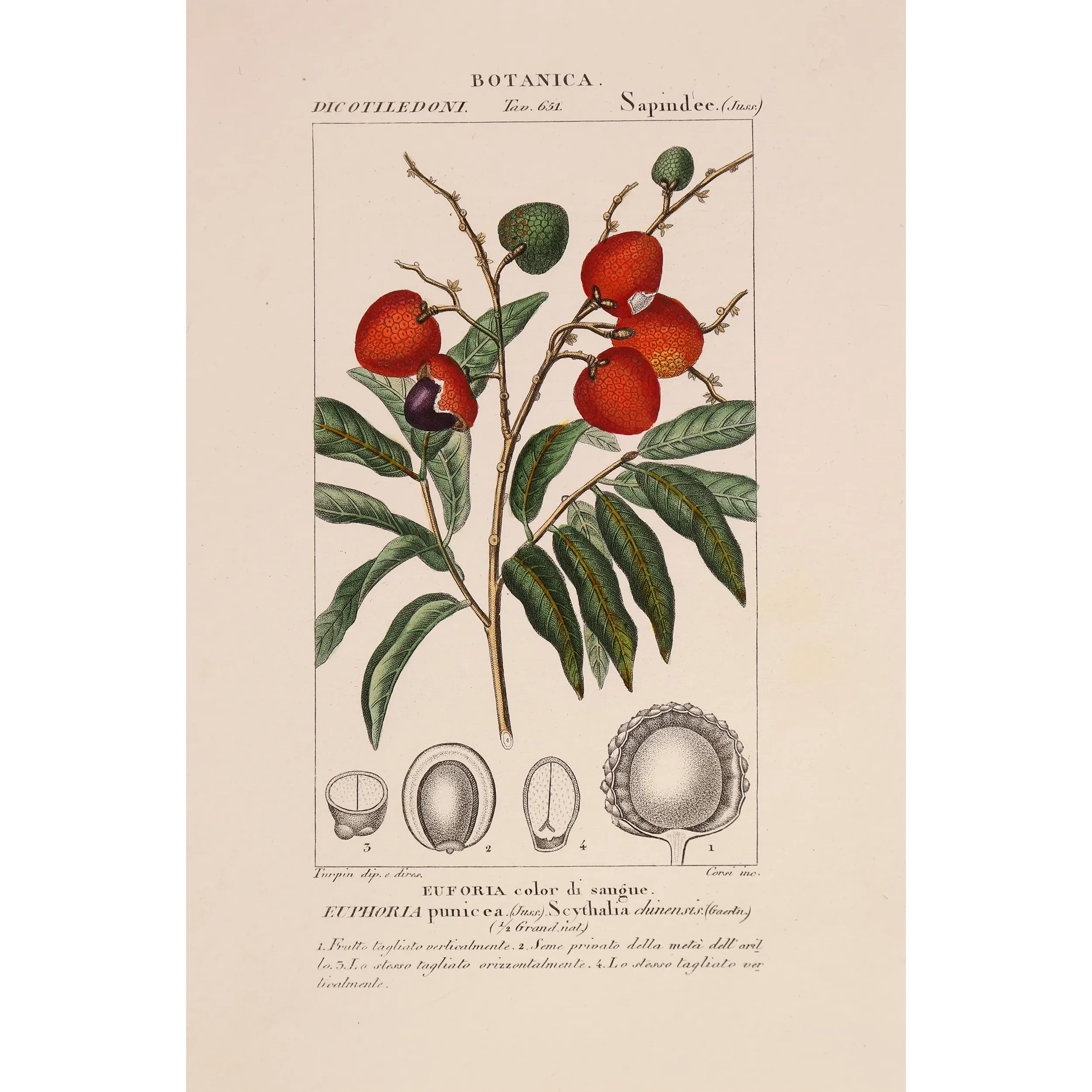
A striking hand-colored engraving of *Euphoria punicea*, displaying vivid red fruits and lush foliage in a refined 19th-century botanical composition.
 Delivery policy
Your print will be carefully prepared and shipped worldwide via trusted couriers (UPS or similar).
 Authentic antique prints
Original engravings from the 17th–19th century.
This original hand-colored engraving depicts Euphoria punicea (now known as Litchi chinensis), commonly called lychee. The plate presents a fruiting branch with multiple stages of ripeness, accompanied by sectional and anatomical studies that complete the botanical documentation.
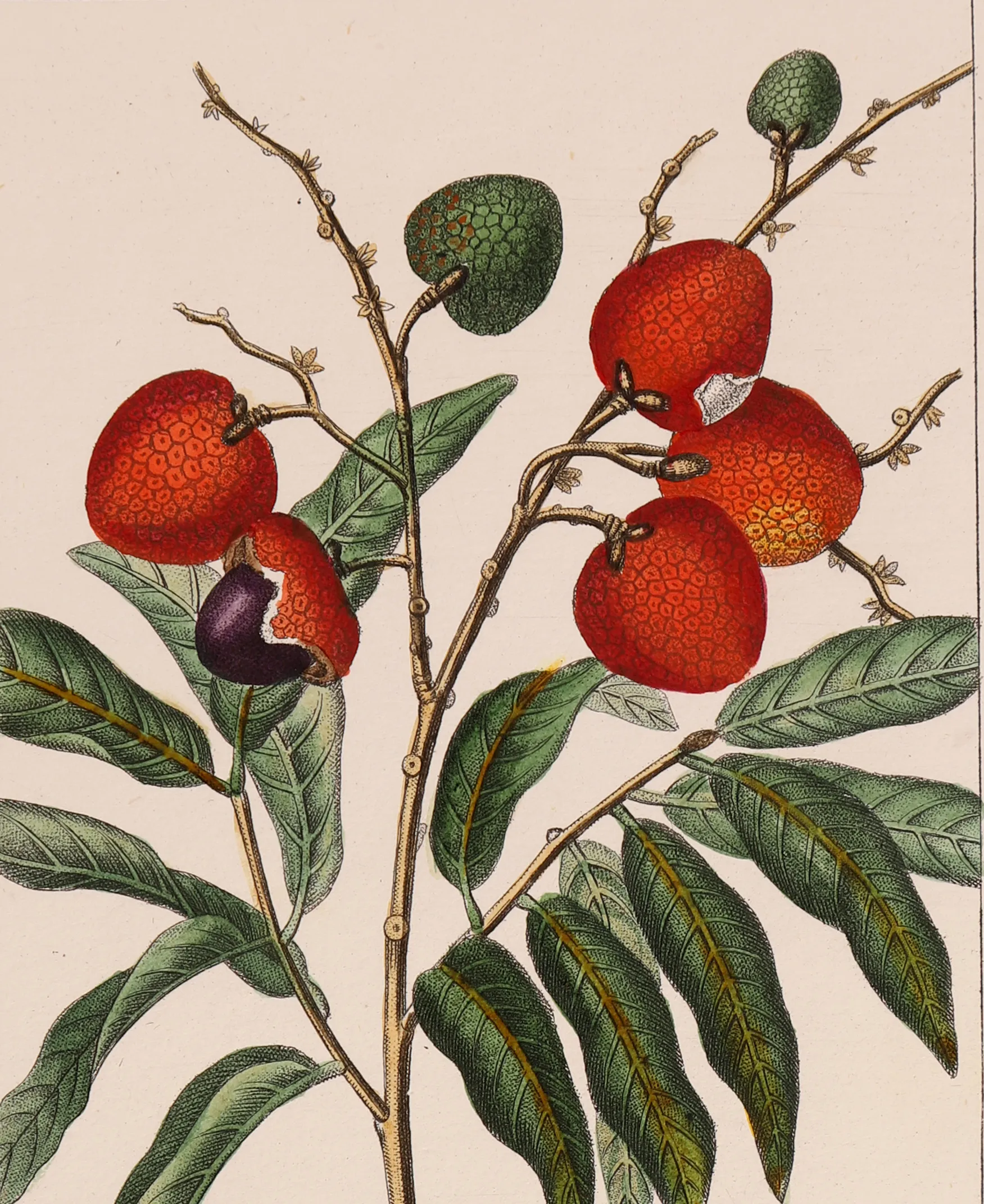
The vibrant crimson fruits, textured with minute polygonal patterning, immediately command visual attention. Their saturated red tones contrast dramatically with the cool, elongated green leaves, while the branching structure introduces a dynamic, slightly angular rhythm to the composition.
The engraving belongs to the Italian edition of the Dizionario di Scienze Naturali (Florence, Battelli press), one of the most ambitious early nineteenth-century encyclopedic publications devoted to systematic natural history.
— • —
The composition is built around chromatic contrast. The intense red of the mature fruit creates a luminous focal point, softened by subtle stippling that conveys the lychee’s distinctive textured rind. The open fruit reveals translucent pale flesh and a dark central seed, introducing tonal variation and visual depth.
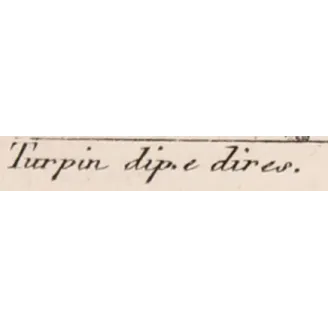
Turpin’s precision ensures that the image remains scientifically legible while retaining decorative vitality. The balance between botanical discipline and chromatic drama makes this plate particularly striking within the fruits of the global age.
Litchi chinensis is native to southern China, where it has been cultivated for more than two millennia. Historically regarded as a luxury fruit within imperial courts, the lychee became associated with refinement and exclusivity.
By the eighteenth and nineteenth centuries, European naturalists and merchants developed growing fascination with Chinese horticulture. The lychee entered botanical literature not only as a species to classify, but as an object of curiosity tied to distant taste cultures and luxury exchange. In Turpin’s visual language, it represents the allure of East Asia within an expanding global scientific framework.
This plate forms part of the historic Dizionario di Scienze Naturali, once preserved within a noble library and today housed in the Sacchetti Collection. Each engraving reflects a period when scientific inquiry was inseparable from artisanal refinement — from the engraved copperplate line to the individually applied hand-colouring.
To explore the refined provenance of these works, we invite you to read our editorial feature “Not Just Another Print”.
The engraving is preserved in excellent antique condition. The sheet presents clean margins and a crisp, well-defined impression. The original early nineteenth-century smooth wove paper remains stable and evenly toned. No watermark has been observed. The hand-colouring remains vivid, particularly in the saturated red fruits and the layered green foliage.
For further context on Pierre Jean François Turpin and his contribution to nineteenth-century botanical science, see our editorial feature:
Pierre Jean François Turpin – The Botanical Illustrator of Natural Harmony
Specific References
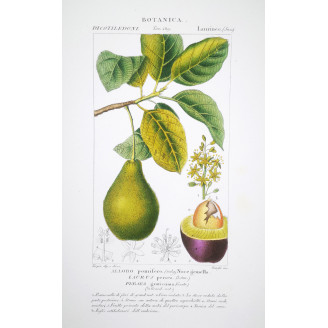
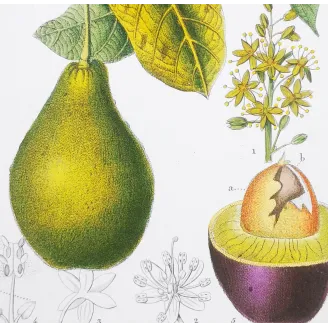
Botanical plate of avocado with whole fruit, seed, and internal anatomy.
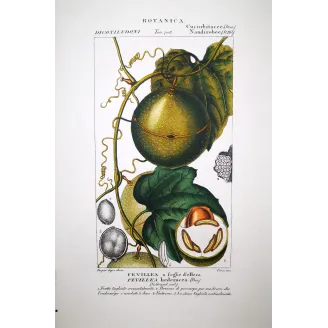
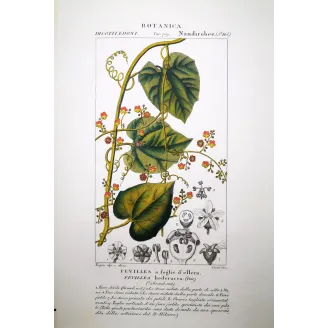
A coordinated pair of engravings depicting *Fevillea hederacea*, with intricate tendrils and elegant fruit structure, hand-colored with precision.
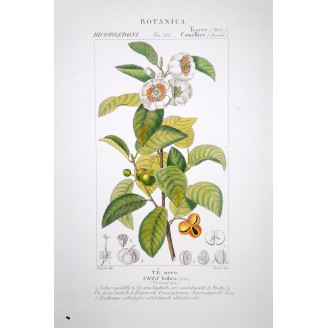
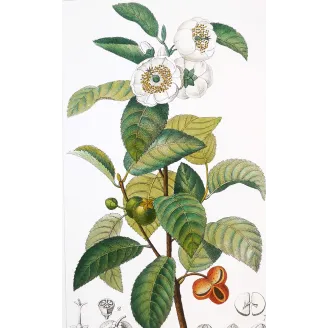
Delicate and detailed illustration of the tea plant, with floral and seed elements beautifully depicted.
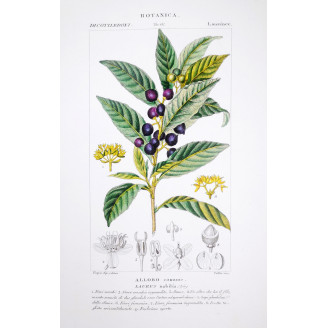
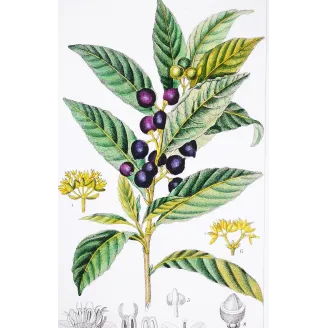
Graceful composition of bay laurel with fruits, blossoms, and internal flower structure.
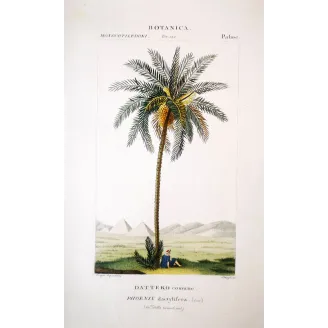
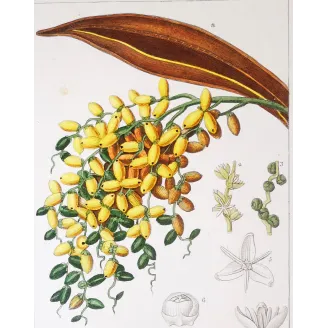
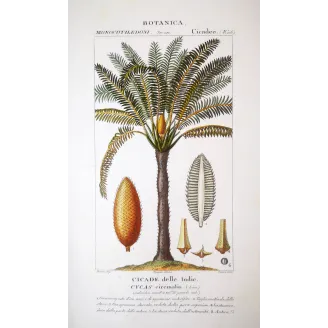
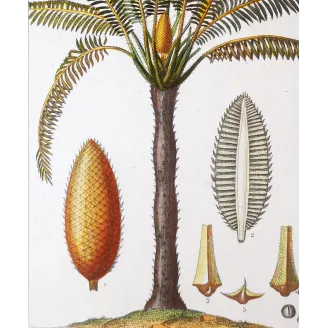
Detailed antique illustrations of the date palm tree and its floral and fruit anatomy.
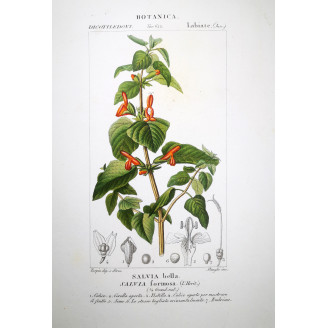
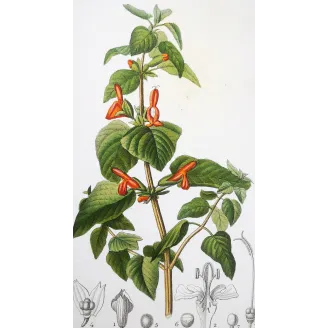
Vivid botanical plate of Salvia formosa, with striking red-orange tubular flowers.
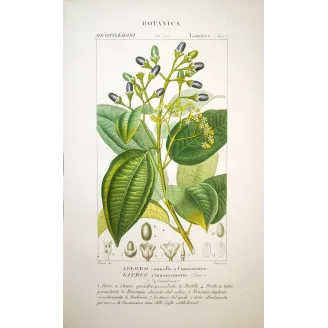
Finely detailed print of Laurus cinnamomum by Turpin, from the Dizionario di Scienze Naturali.
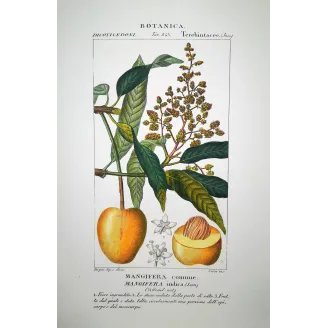
Vibrant hand-colored depiction of *Mangifera indica*, the mango tree, highlighting its lush leaves, golden fruit, and floral details.
A warm-toned botanical engraving of *Achras sapota*, featuring its rounded fruit and large green leaves with exquisite texture.
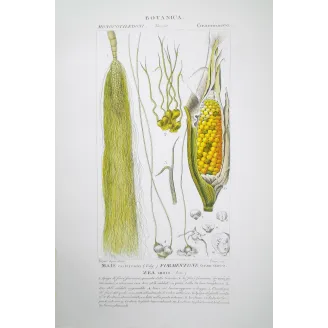
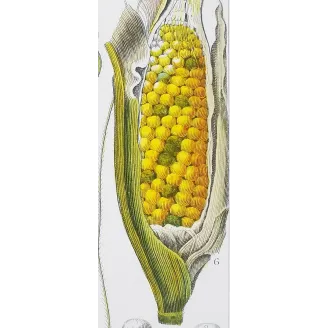
Double plate of cultivated maize (Zea mays) from Turpins botanical series.
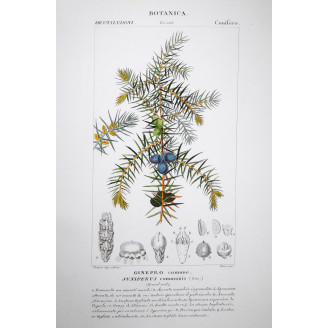
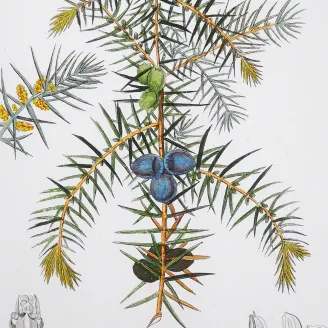
Elegant hand-colored plate of the juniper plant with berries and cone structure.
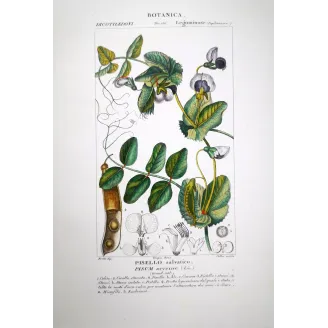
Colorful botanical illustration of Pisum arvense, wild pea, engraved by Turpin.
A striking hand-colored engraving of *Euphoria punicea*, displaying vivid red fruits and lush foliage in a refined 19th-century botanical composition.