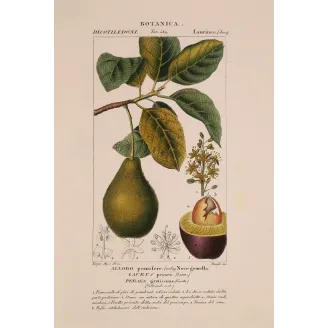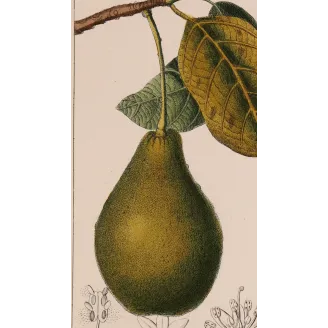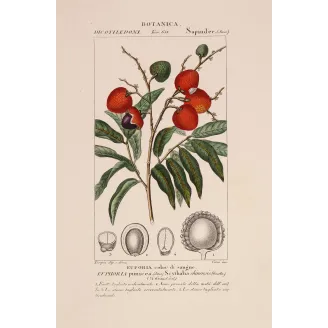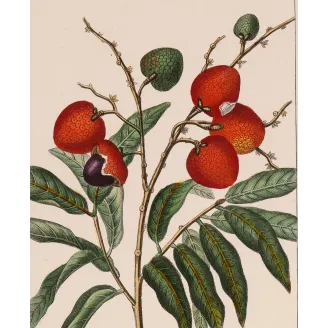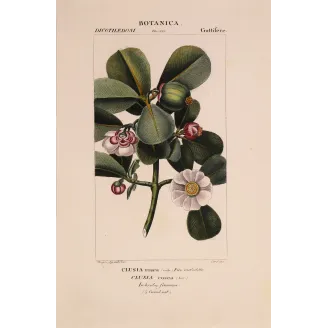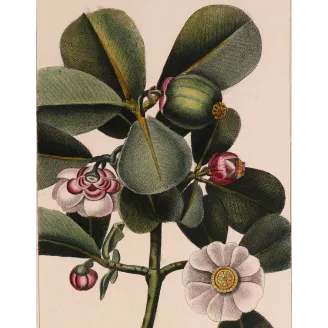
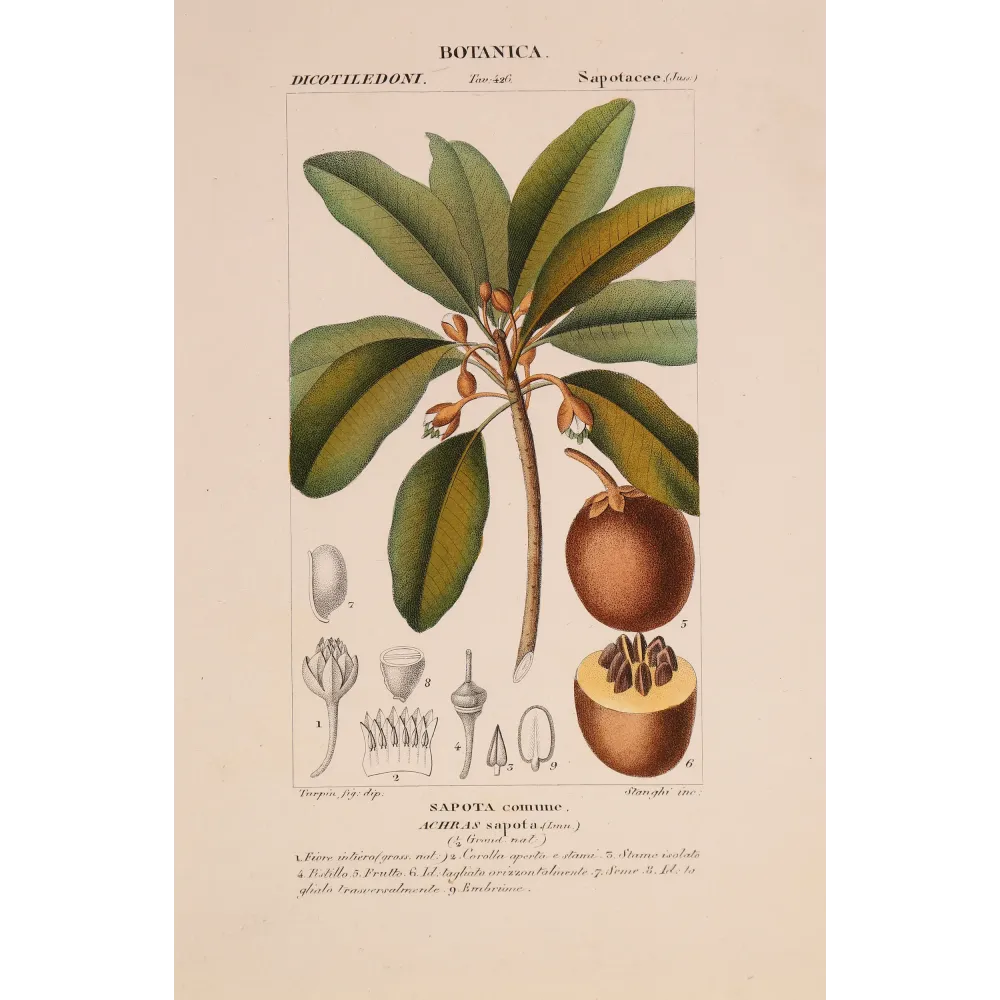
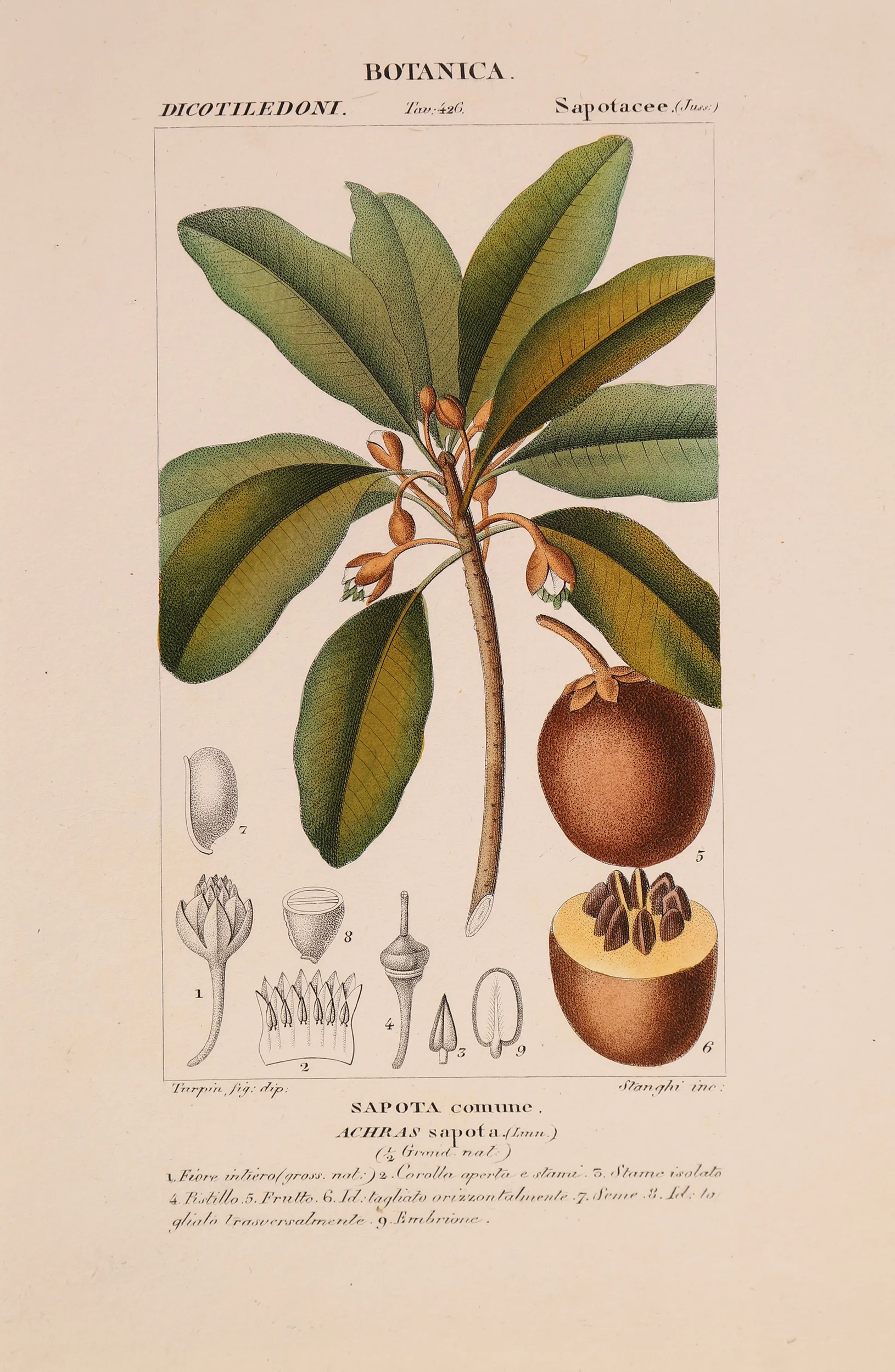

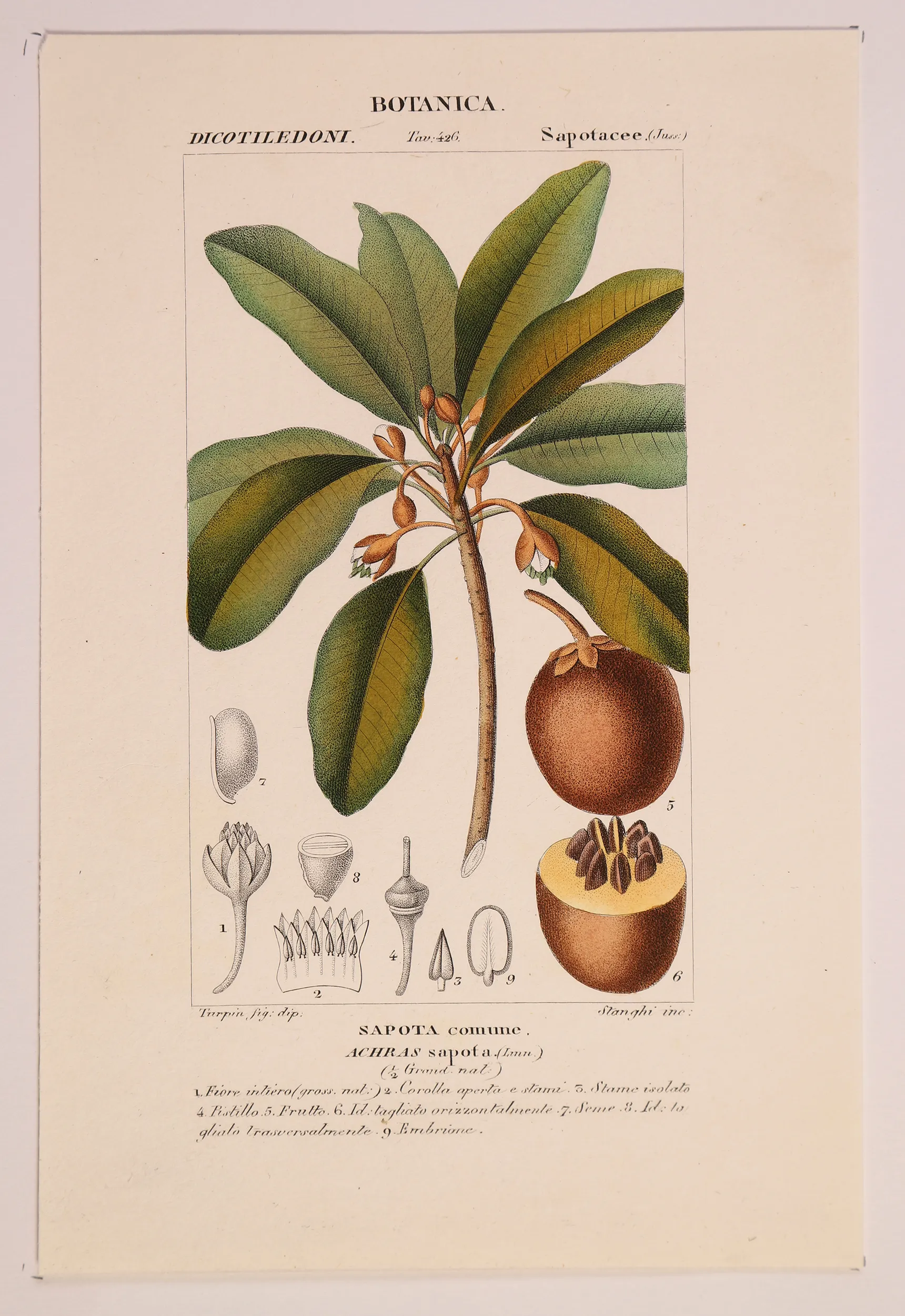
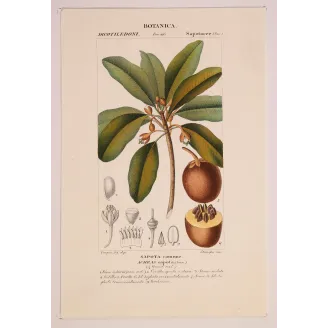
A warm-toned botanical engraving of *Achras sapota*, featuring its rounded fruit and large green leaves with exquisite texture
 Delivery policy
Your print will be carefully prepared and shipped worldwide via trusted couriers (UPS or similar).
 Authentic antique prints
Original engravings from the 17th–19th century.
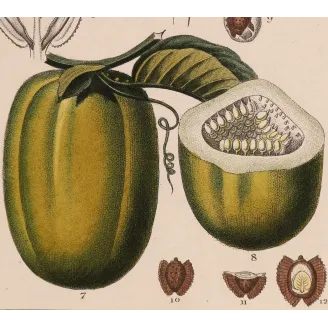
This original hand-colored engraving depicts Achras sapota (now known as Manilkara zapota), commonly called sapota or sapodilla. The plate combines a fruiting branch with botanical details of flower, seed, and sectional anatomy, offering a complete and disciplined representation of this tropical species.
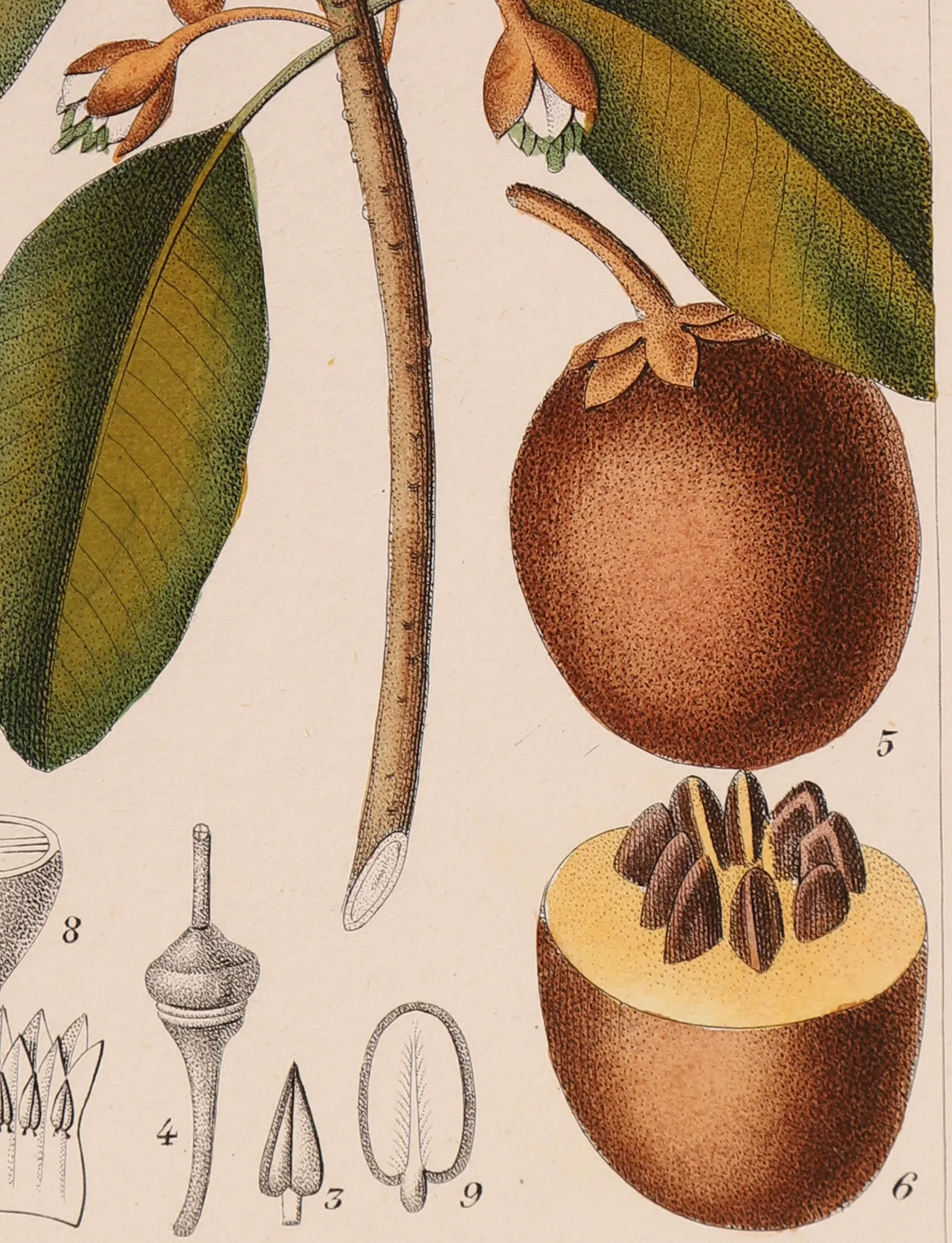
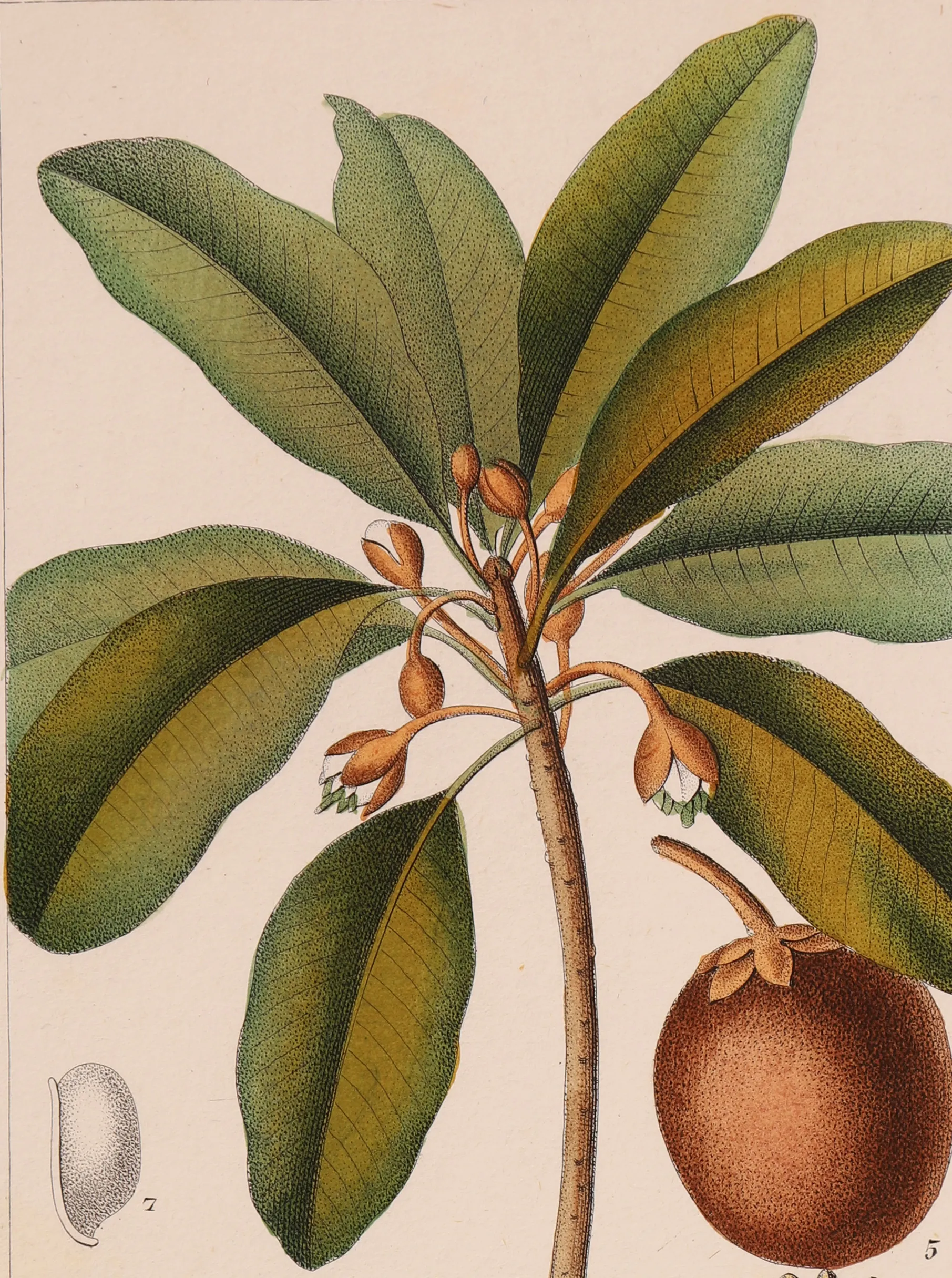
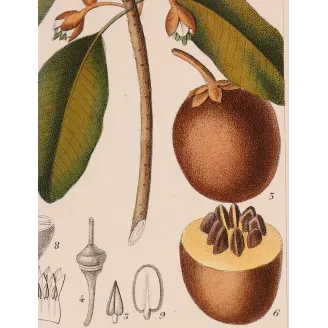
The composition centers on the round, russet-toned fruit, whose textured surface contrasts with the smooth, elongated leaves. The warm brown gradations of the mature fruit balance the cooler greens of the foliage, while the cut section below reveals the pale flesh and dark, polished seeds arranged in measured symmetry.
The engraving belongs to the Italian edition of the Dizionario di Scienze Naturali (Florence, Battelli press), one of the most ambitious early nineteenth-century encyclopedic publications devoted to systematic natural history.
— • —
The plate is structured vertically, from the elegant arc of the branch to the grounded solidity of the fruit. Turpin’s line remains precise and controlled, allowing the foliage to retain softness without losing structural clarity. The stippled shading of the fruit’s surface creates a tactile presence, subtly emphasizing volume.
The sectional study below introduces anatomical depth: the creamy interior and glossy seeds form a visual counterpoint to the exterior’s earthy restraint. The result is a composition that balances scientific rigor with decorative warmth.
Achras sapota is native to Central America and was widely cultivated throughout the Caribbean and tropical regions during the colonial period. Valued for its exceptionally sweet flesh, the fruit became part of plantation agriculture and long-distance trade networks connecting the Americas and Europe.
In early nineteenth-century botanical literature, species such as sapota illustrate a transitional moment in classification and nomenclature. The scientific name used in this engraving reflects evolving taxonomic systems, reminding us that natural history was — and remains — a discipline in motion. Within Turpin’s broader corpus, the sapota stands among the “fruits of the global age,” documenting not only taste and cultivation, but the intellectual reorganization of the tropical world.
This plate forms part of the historic Dizionario di Scienze Naturali, once preserved within a noble library and today housed in the Sacchetti Collection. Each engraving embodies a period when scientific inquiry relied upon exceptional craftsmanship — from the engraved copperplate line to the individually applied hand-colouring.
To explore the refined provenance of these works, we invite you to read our editorial feature “Not Just Another Print”.
The engraving is preserved in excellent antique condition. The sheet presents clean margins and a well-defined impression. The original early nineteenth-century smooth wove paper remains stable and evenly toned. No watermark has been observed. The hand-colouring retains depth, particularly in the warm russet fruit and the layered green foliage.
For further context on Pierre Jean François Turpin and his contribution to nineteenth-century botanical science, see our editorial feature:
Pierre Jean François Turpin – The Botanical Illustrator of Natural Harmony
Specific References
Botanical plate of avocado with whole fruit, seed, and internal anatomy.
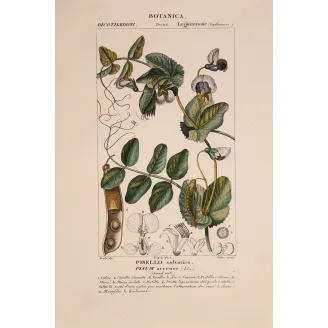
Colorful botanical illustration of Pisum arvense, wild pea, engraved by Turpin.
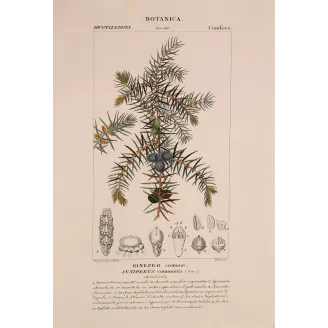
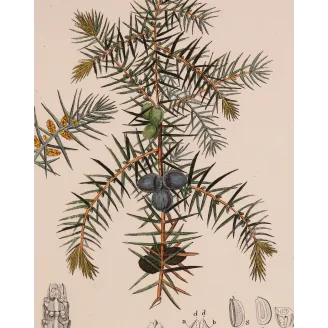
Elegant hand-colored plate of the juniper plant with berries and cone structure.
A striking hand-colored engraving of *Euphoria punicea*, displaying vivid red fruits and lush foliage in a refined 19th-century botanical composition.
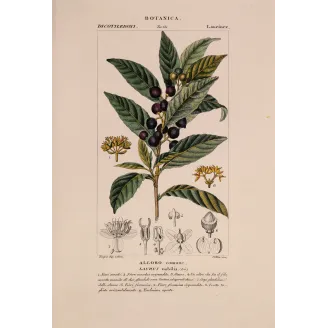
Graceful composition of bay laurel with fruits, blossoms, and internal flower structure.
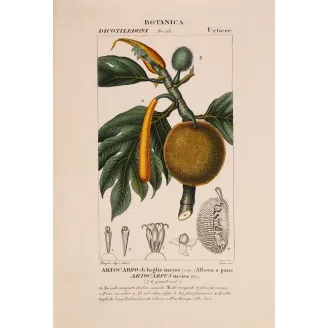
An extraordinary 19th-century engraving of *Artocarpus incisa*, the breadfruit tree, showcasing its bold leaves and unique fruit texture.
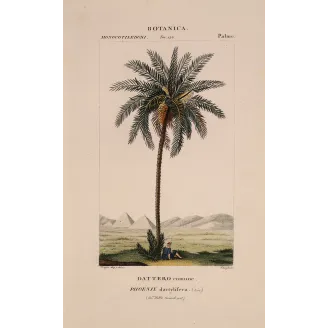
Detailed antique illustrations of the date palm tree and its floral and fruit anatomy.
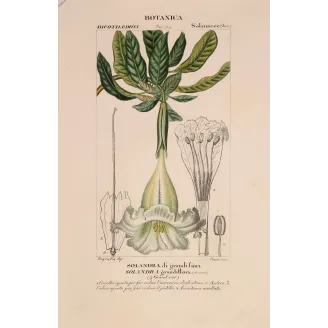
Beautiful antique flower print of Solandra, with large trumpet-shaped bloom.
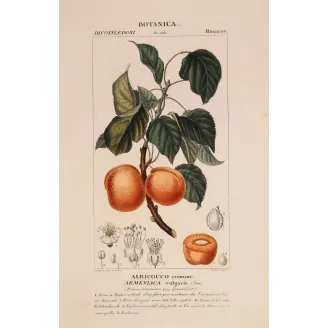
Original 19th-century botanical engraving of the common apricot, showing its velvety orange fruits and lush green leaves, rendered with great naturalistic balance.
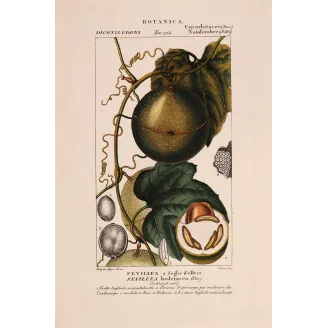
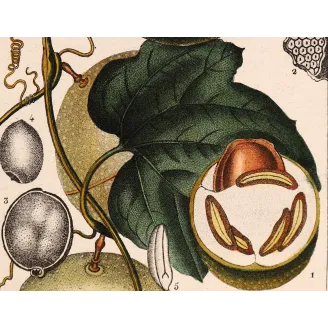
A coordinated pair of engravings depicting *Fevillea hederacea*, with intricate tendrils and elegant fruit structure, hand-colored with precision.
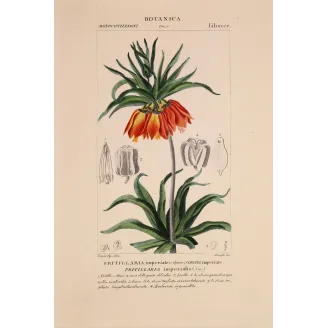
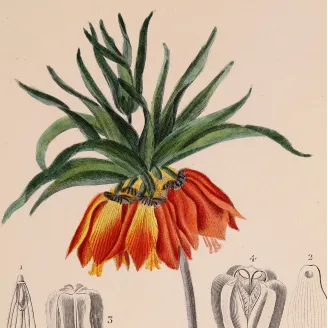
Striking antique print of Fritillaria imperialis with bright orange crown flowers.
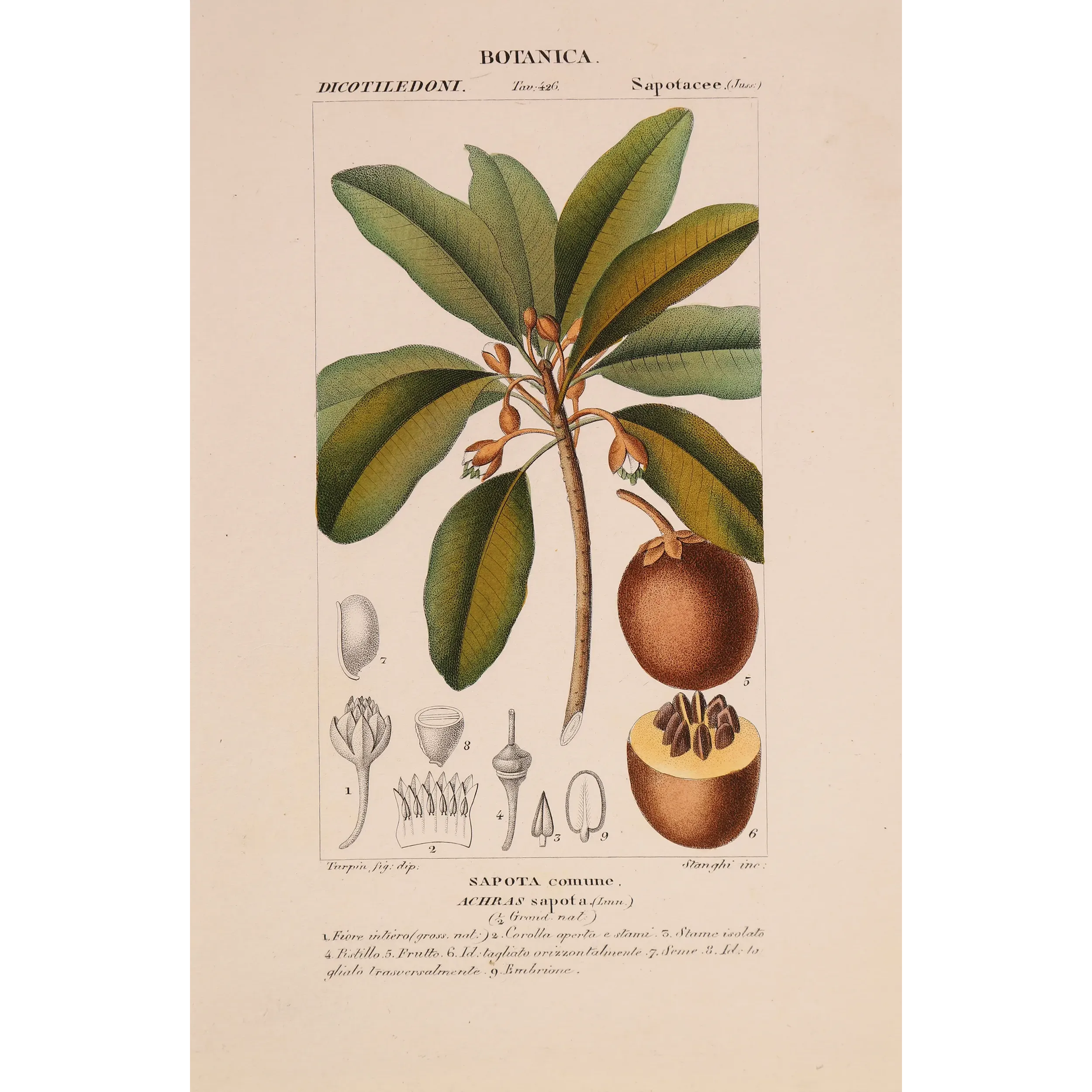
A warm-toned botanical engraving of *Achras sapota*, featuring its rounded fruit and large green leaves with exquisite texture