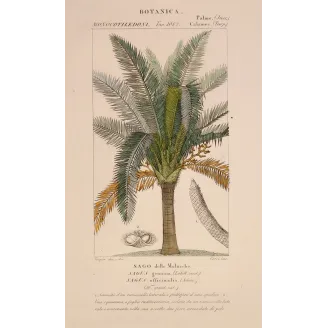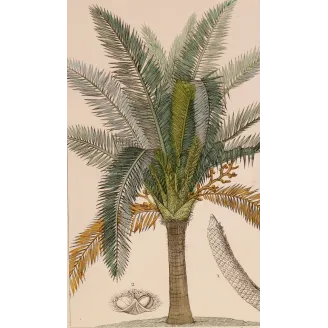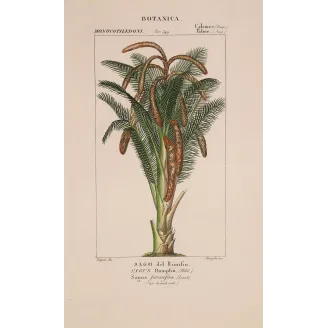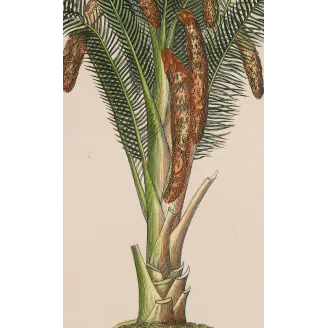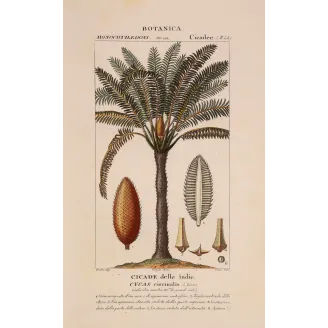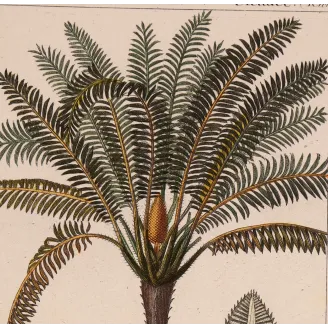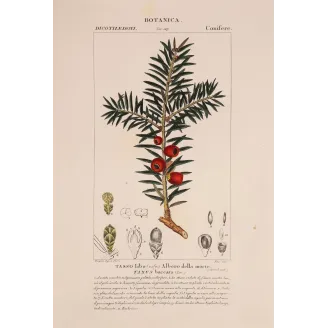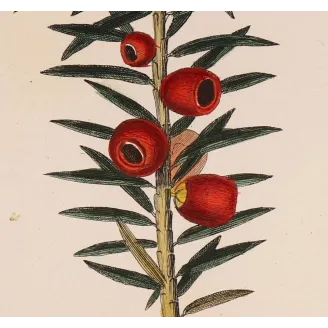
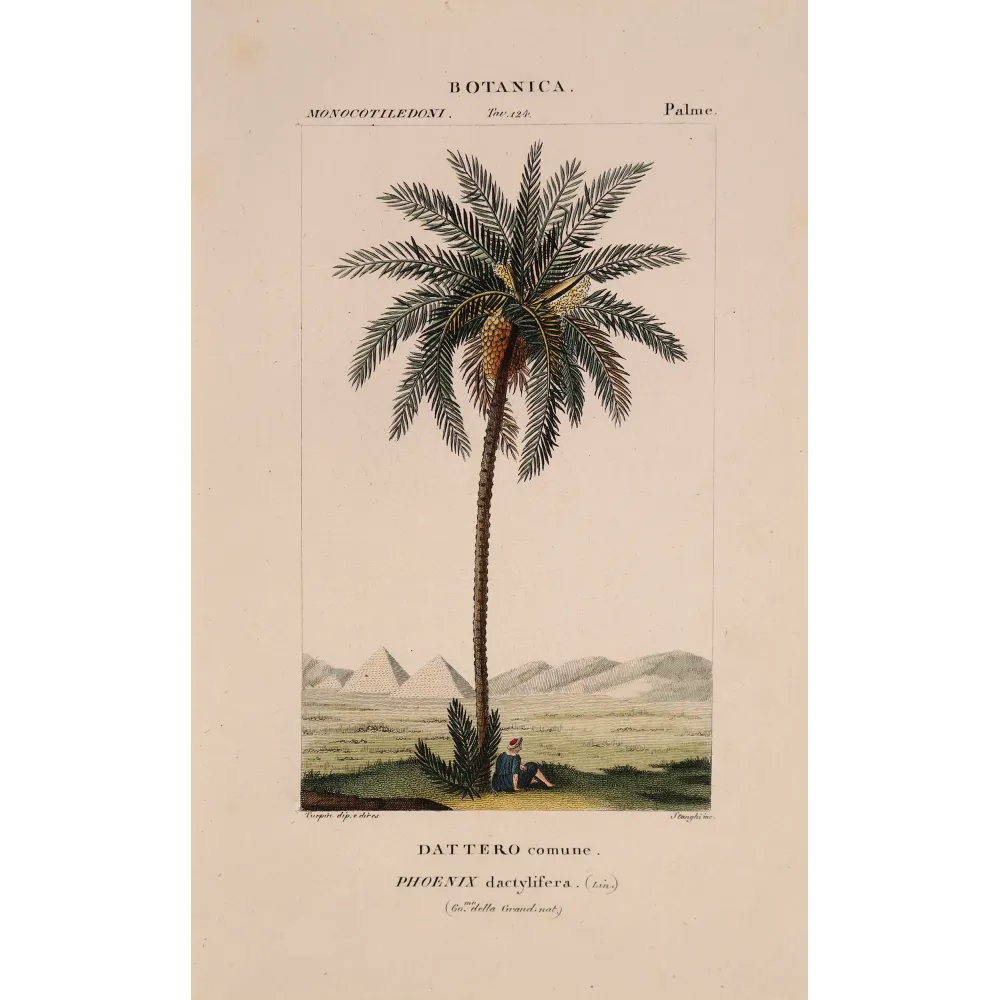
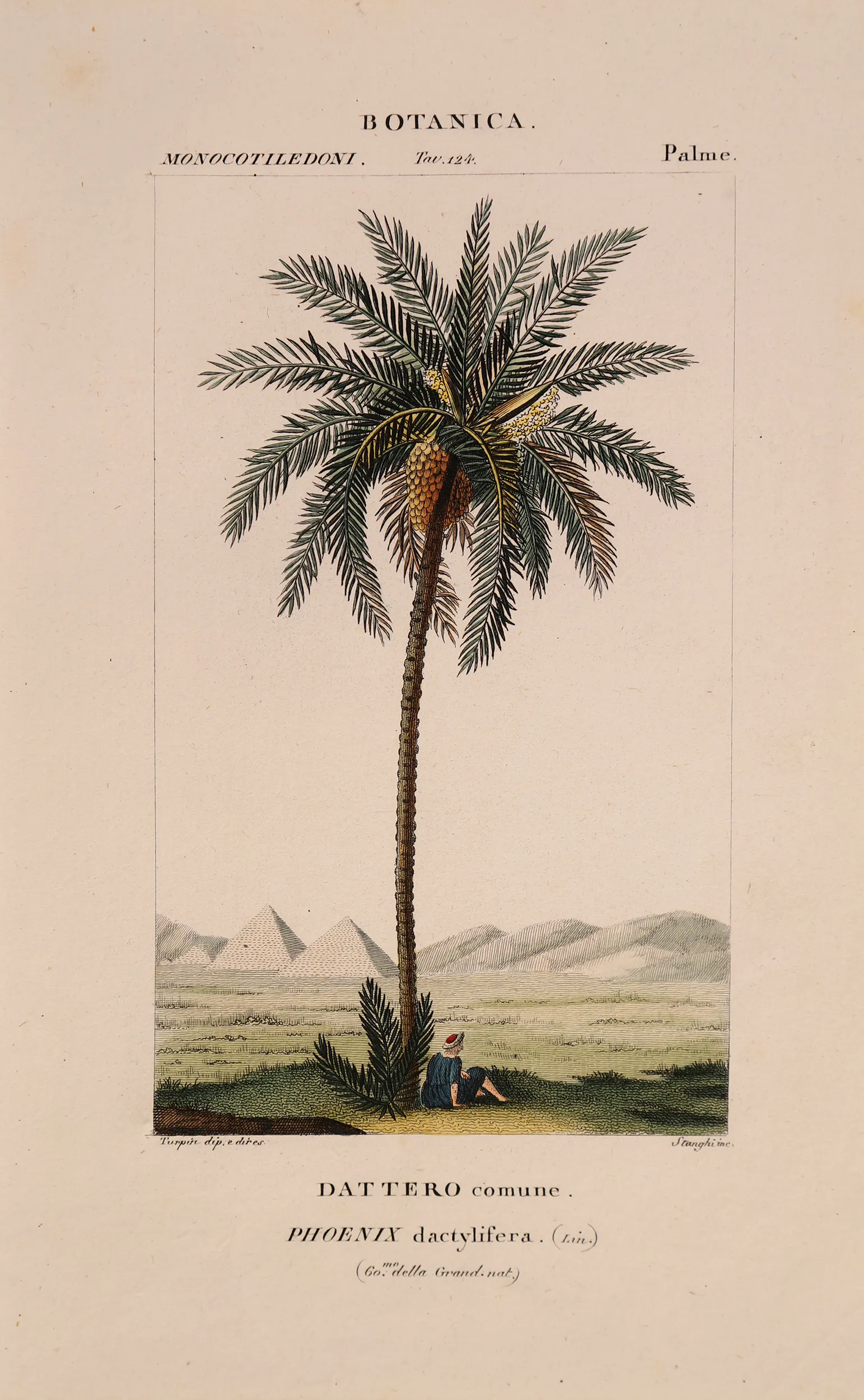
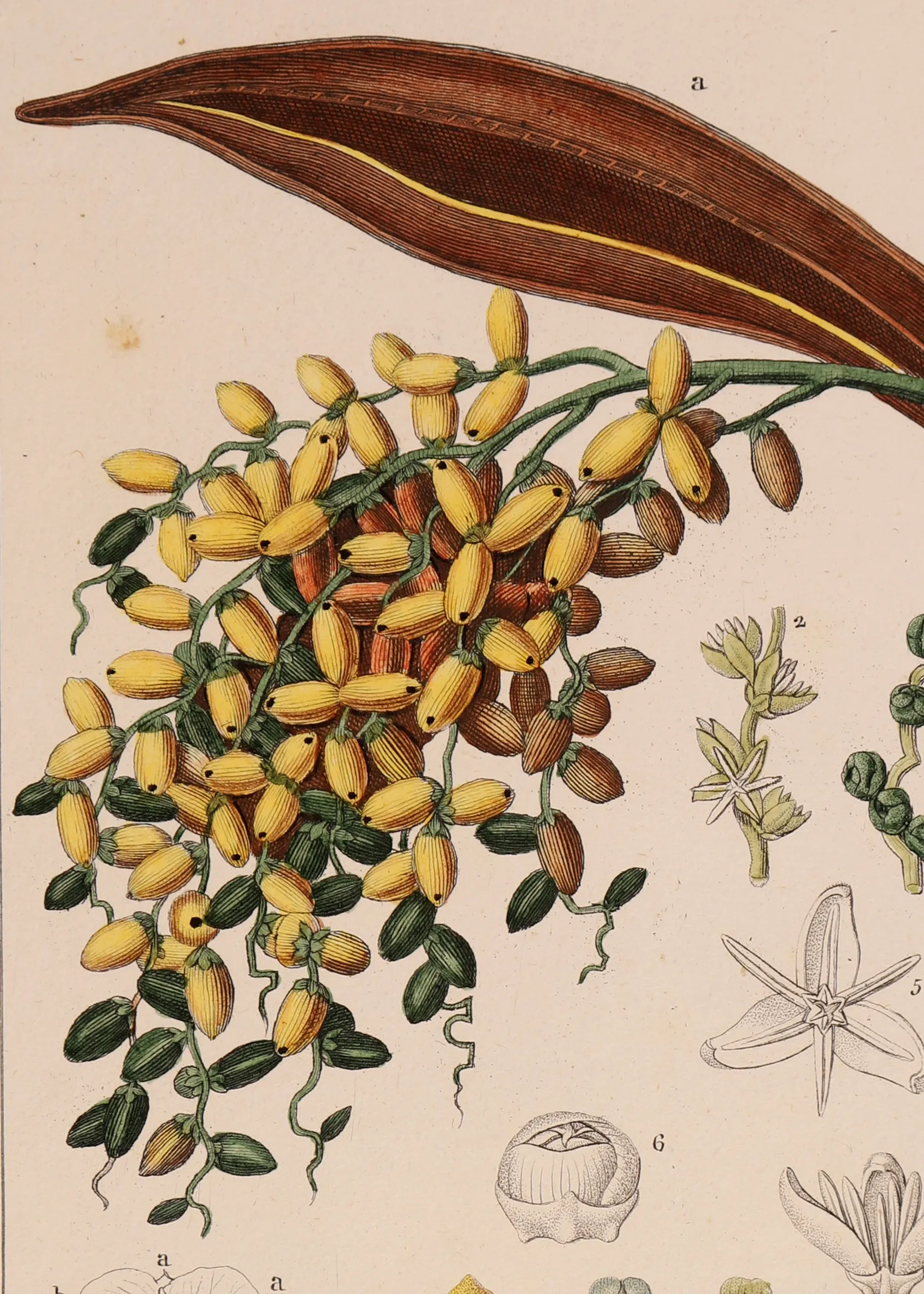
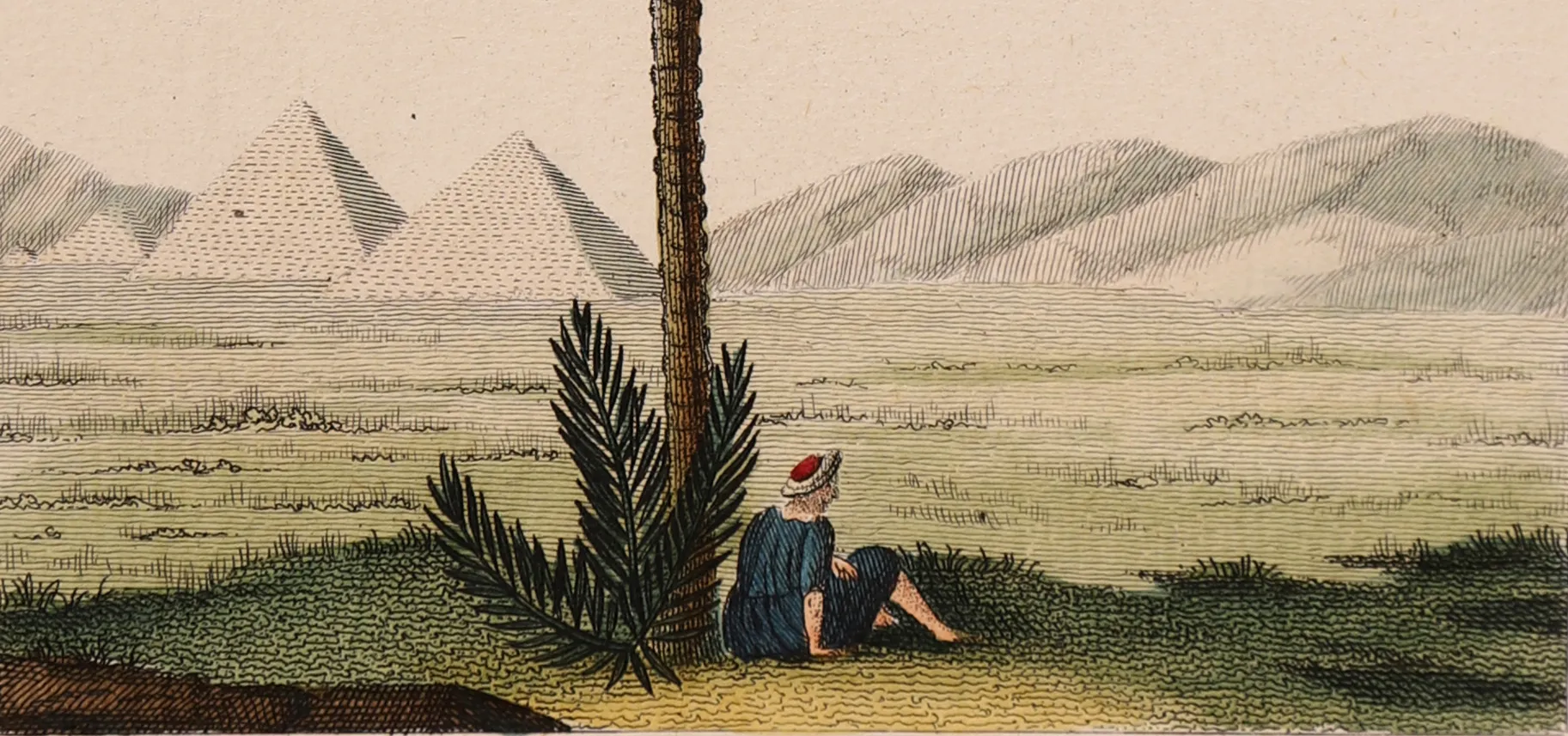
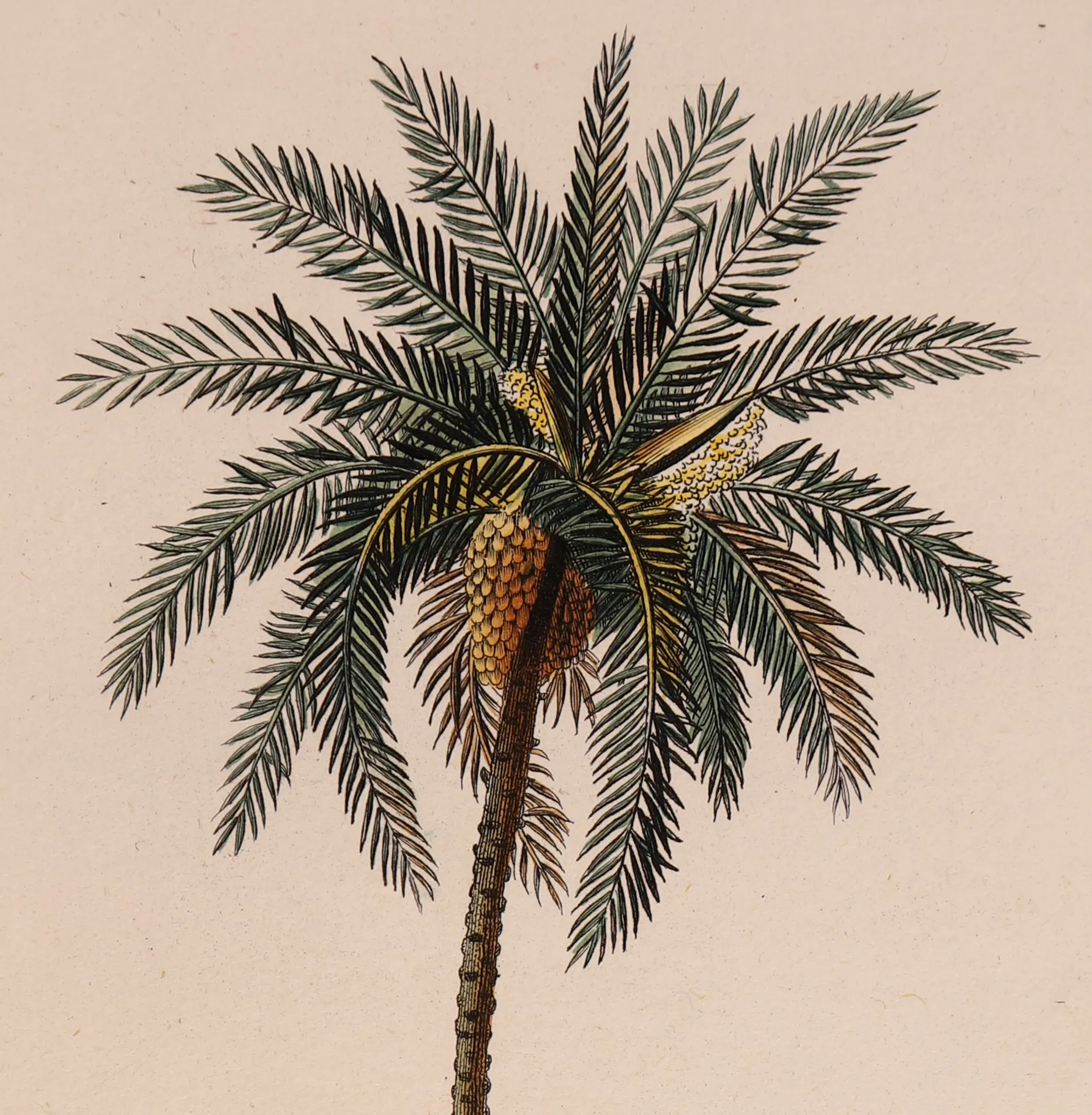

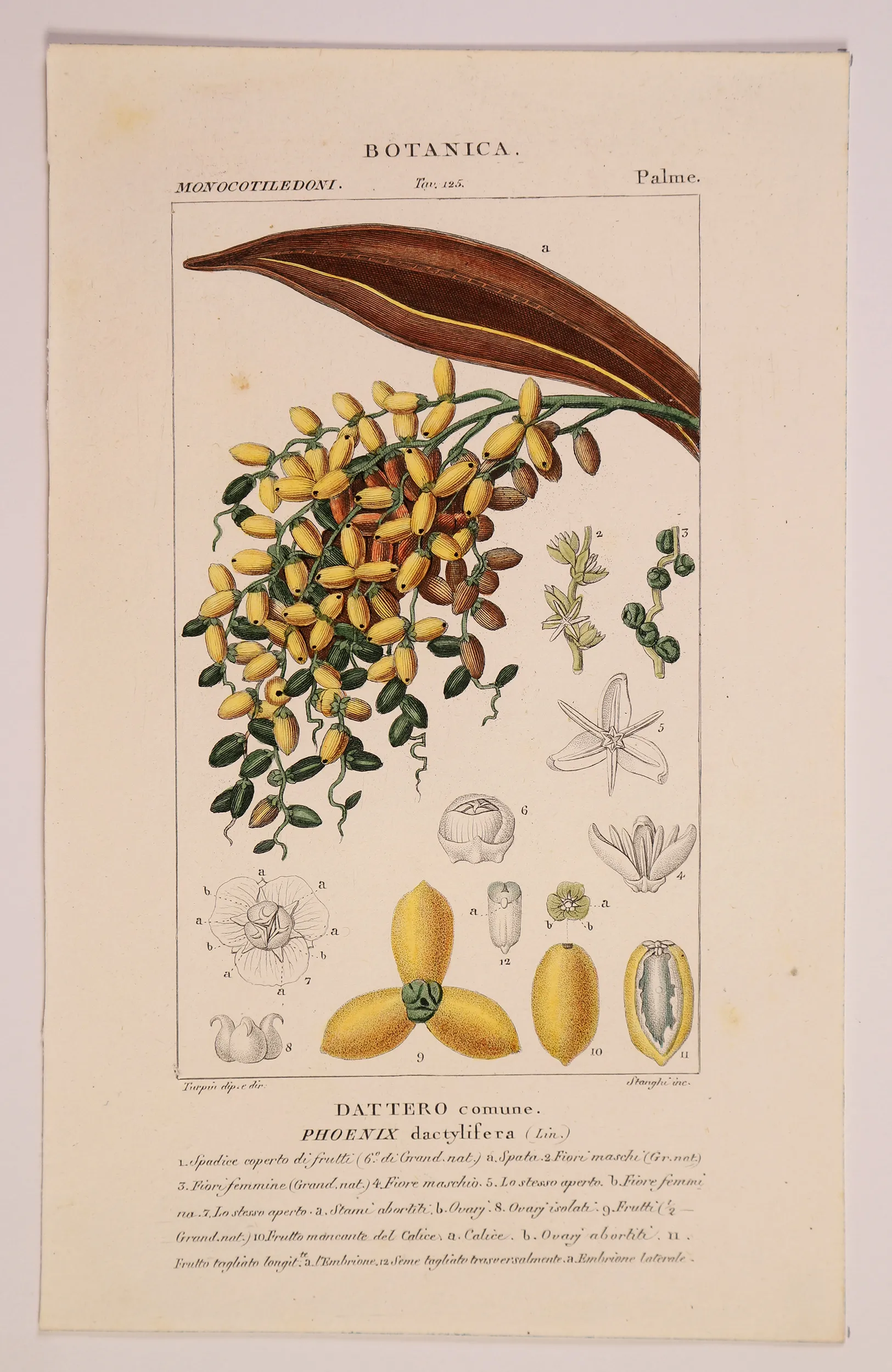
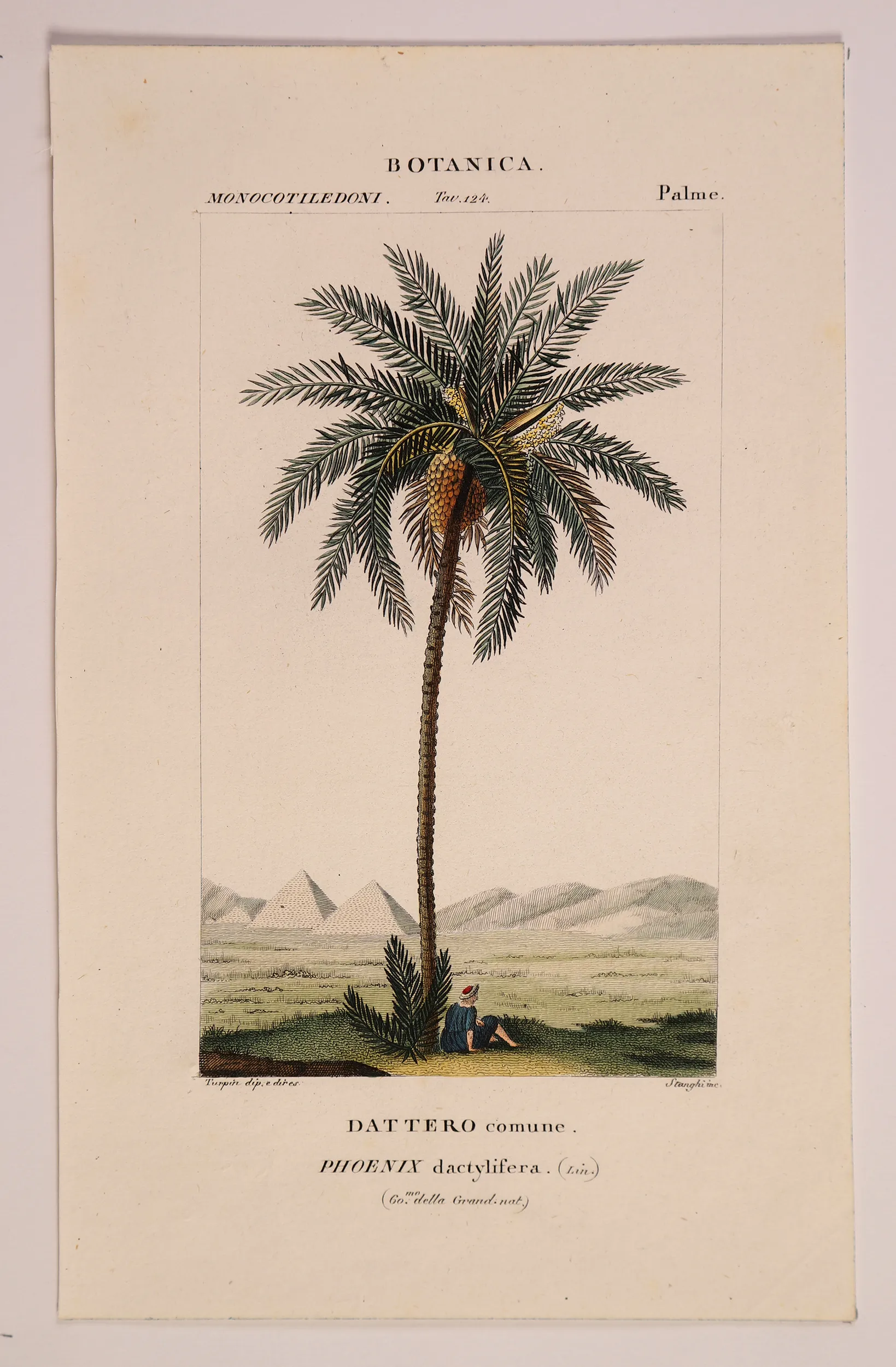
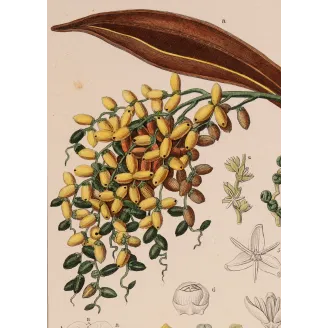
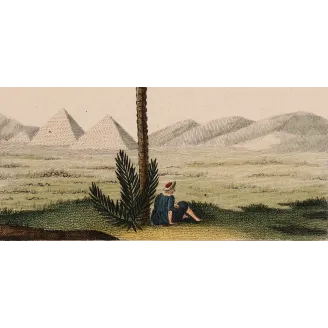
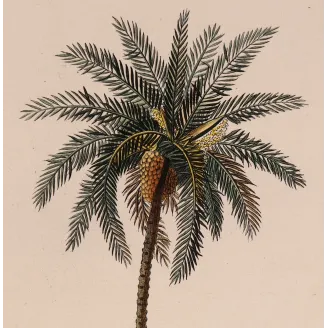
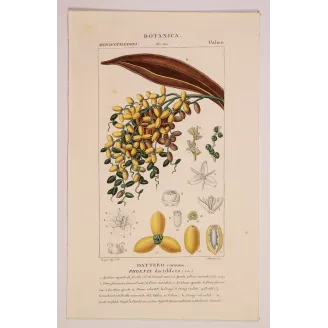
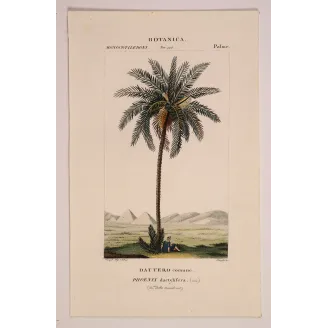
Detailed antique illustrations of the date palm tree and its floral and fruit anatomy.
 Delivery policy
Your print will be carefully prepared and shipped worldwide via trusted couriers (UPS or similar).
 Authentic antique prints
Original engravings from the 17th–19th century.
This refined micro-bundle brings together two original hand-colored engravings dedicated to the date palm, Phoenix dactylifera—an enduring emblem of oasis life, cultivation, and long-distance exchange. One plate presents the tree in a wide, atmospheric landscape; the other offers a precise scientific study of its reproductive structures and fruit. Together, they read as a complete “portrait”: monumental presence and botanical intelligence in perfect balance.
In this condition, the pair feels exceptionally fresh and display-ready—a rare opportunity to own a coherent, museum-like set where narrative scenery and analytical detail reinforce each other. The result is not simply “two prints,” but a single, unified object: a small chapter of 19th-century natural history, preserved as a unique ensemble.
This pairing stands out for its compositional contrast. The landscape plate is airy and architectural: a tall, slender trunk rising into a crown of finely articulated fronds, set against a calm horizon that gives the subject scale and dignity. The companion study plate is more intimate and luminous, with golden fruits and clean sectional diagrams arranged like an atlas—precise, readable, and visually rhythmic. Hung together, they create a refined dialogue between place and structure, ideal for interiors that favor quiet sophistication over decorative excess.
The date palm is one of the most culturally charged cultivated plants on earth. For millennia, it has been associated with oasis agriculture and the engineering of life in arid climates; it also appears repeatedly in the visual and textual traditions of the Mediterranean and the Near East. In the 19th century, European natural history treated Phoenix dactylifera not merely as an exotic curiosity, but as a pillar of human geography: a plant tied to settlement, trade routes, and the circulation of goods and knowledge.
This bundle includes:
Discover the story behind these rare prints in our blog: “Not Just Another Print” — a tribute to the noble origins and hidden artistry of the Dizionario di Scienze Naturali (Sacchetti Collection).
Further reading: Pierre Jean François Turpin — The Botanical Illustrator of Natural Harmony
Specific References
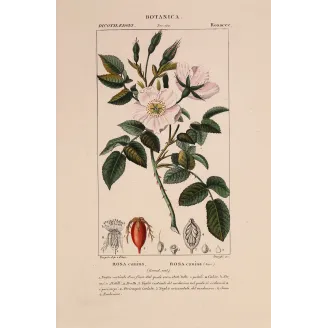
Delicate dog rose flower with soft pink petals and fine botanical details.
A complete set of 22 original hand-colored lithographs of ferns by Turpin, from the Dizionario di Scienze Naturali (c. 1830).
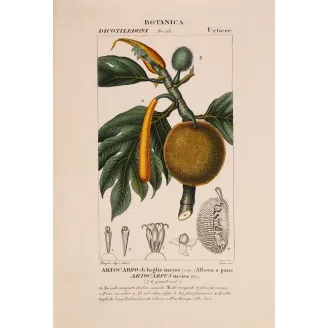
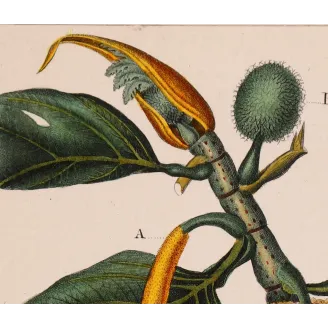
An extraordinary 19th-century engraving of *Artocarpus incisa*, the breadfruit tree, showcasing its bold leaves and unique fruit texture.
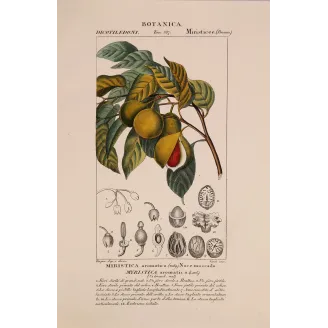
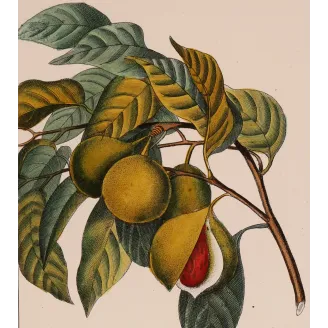
Striking botanical print of nutmeg fruit with cutaway sections and seed structure.
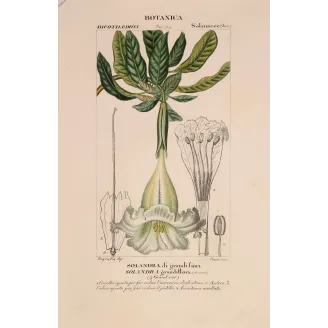
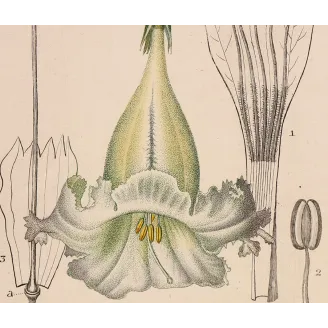
Beautiful antique flower print of Solandra, with large trumpet-shaped bloom.
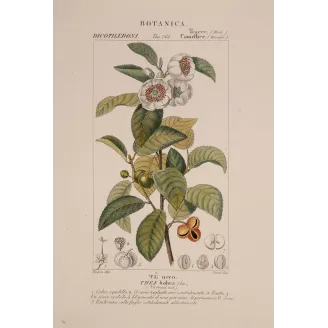
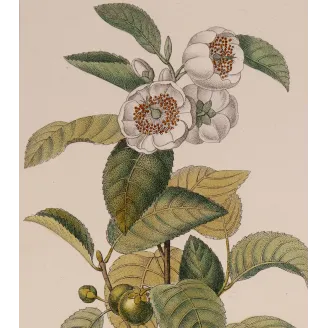
Delicate and detailed illustration of the tea plant, with floral and seed elements beautifully depicted.
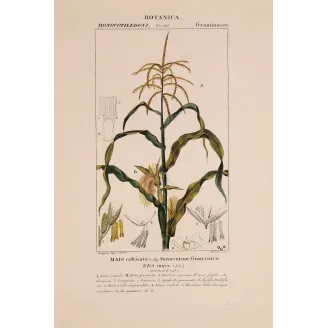
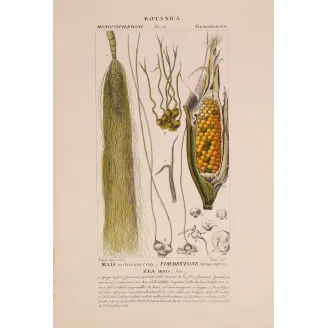
Double plate of cultivated maize (Zea mays) from Turpins botanical series.
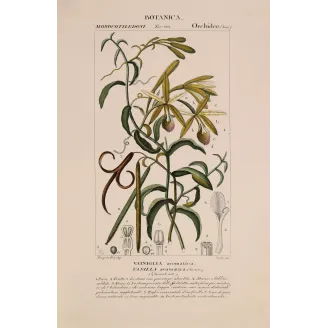
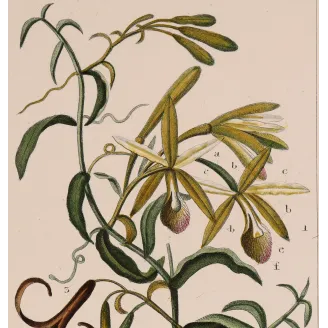
Delicate orchid illustration showing flower, pod and internal anatomy of vanilla.
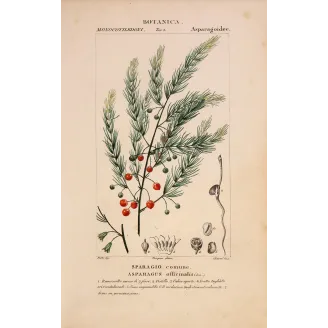
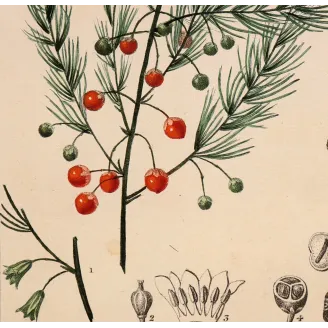
Botanical print of Asparagus officinalis by Turpin, featuring vivid orange berries.
A pair of plates dedicated to the sago palm tree and its structural details.
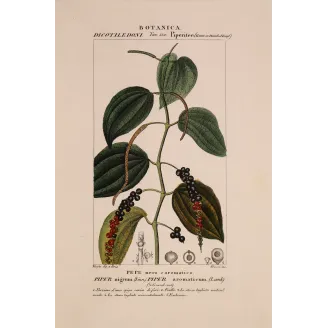
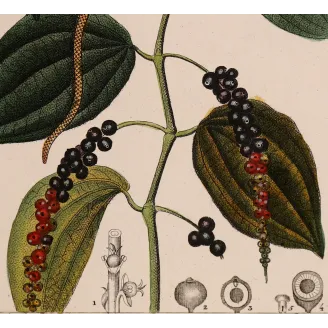
Detailed depiction of the black pepper vine with fruiting spikes and leaves.
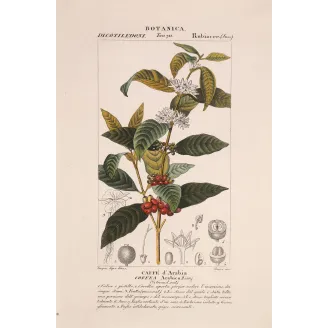
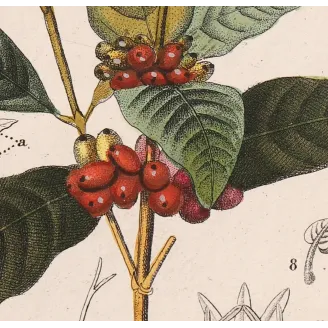
Botanical plate of Coffea arabica with vivid red berries and detailed floral structure.
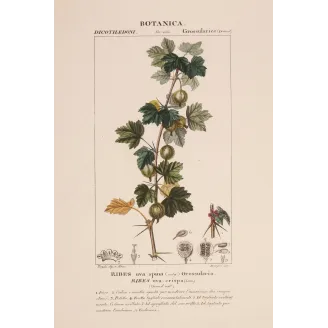
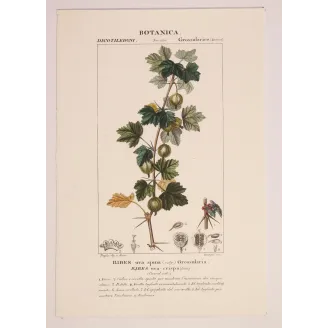
A charming depiction of *Ribes uva-crispa*, the gooseberry plant, detailed with its spiny stems and translucent green fruits.
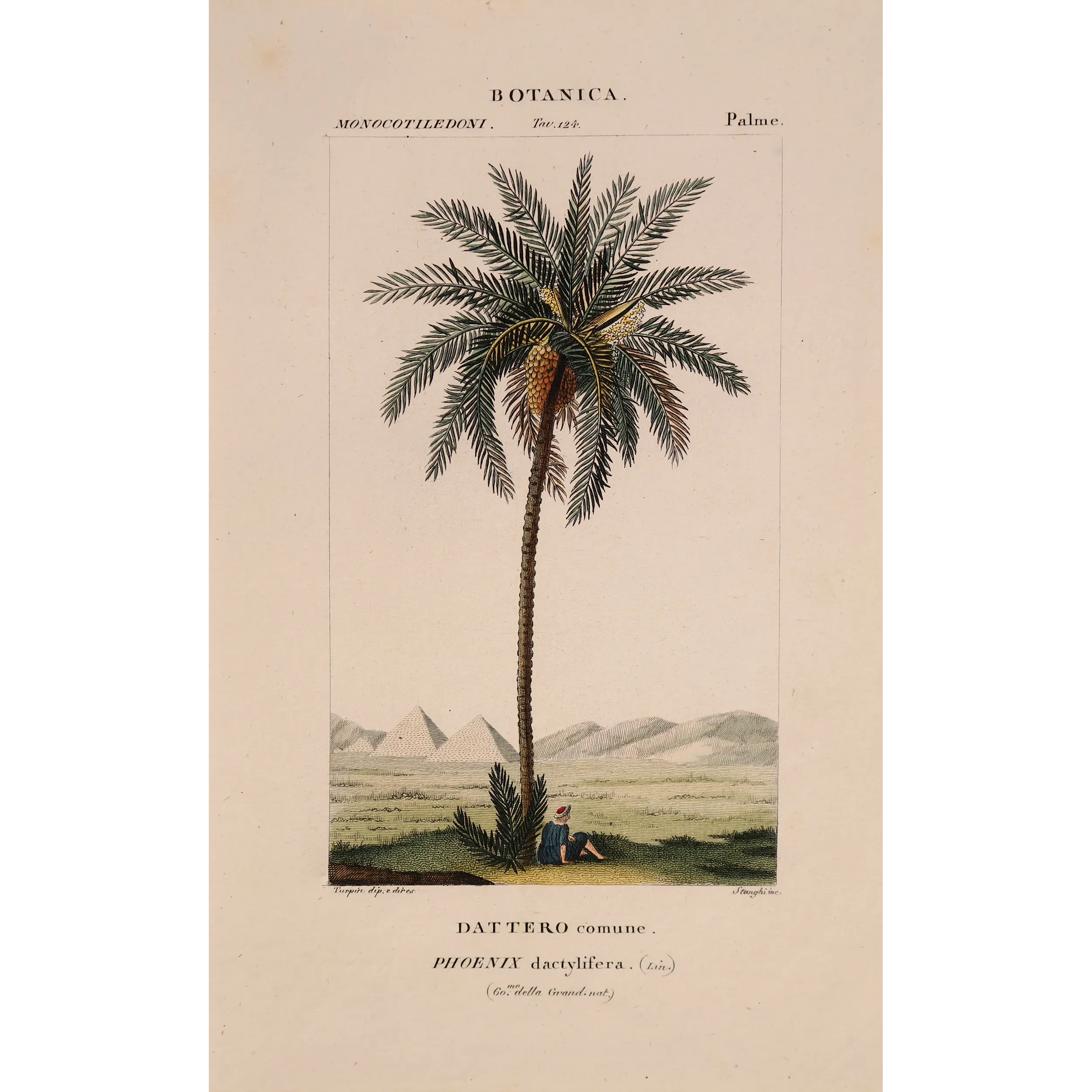
Detailed antique illustrations of the date palm tree and its floral and fruit anatomy.