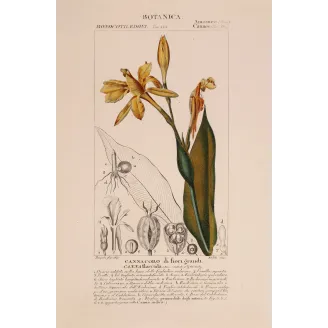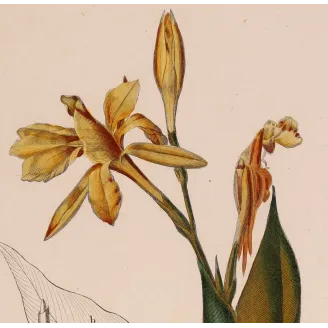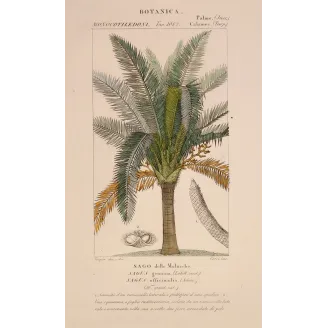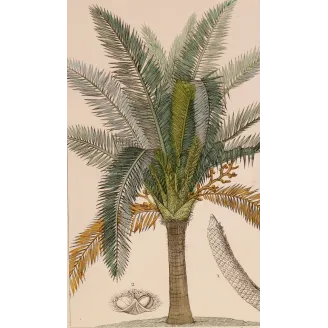
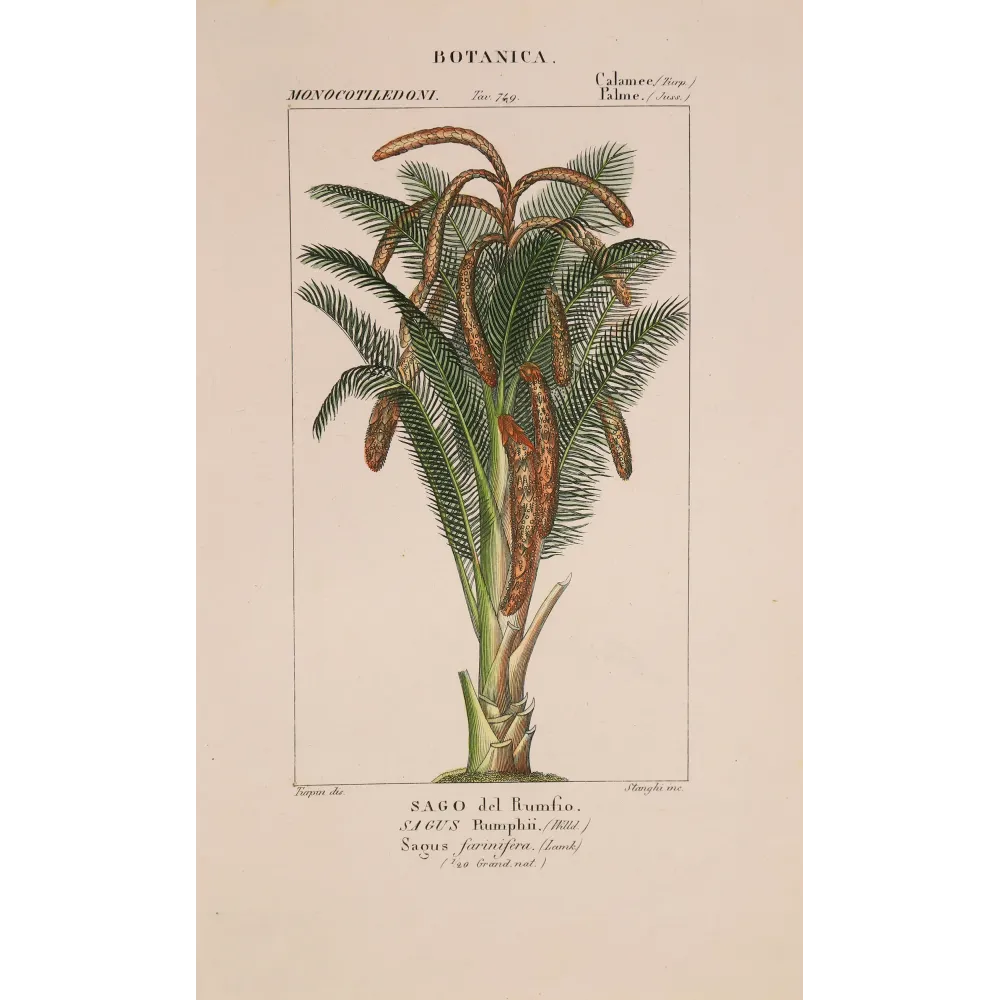
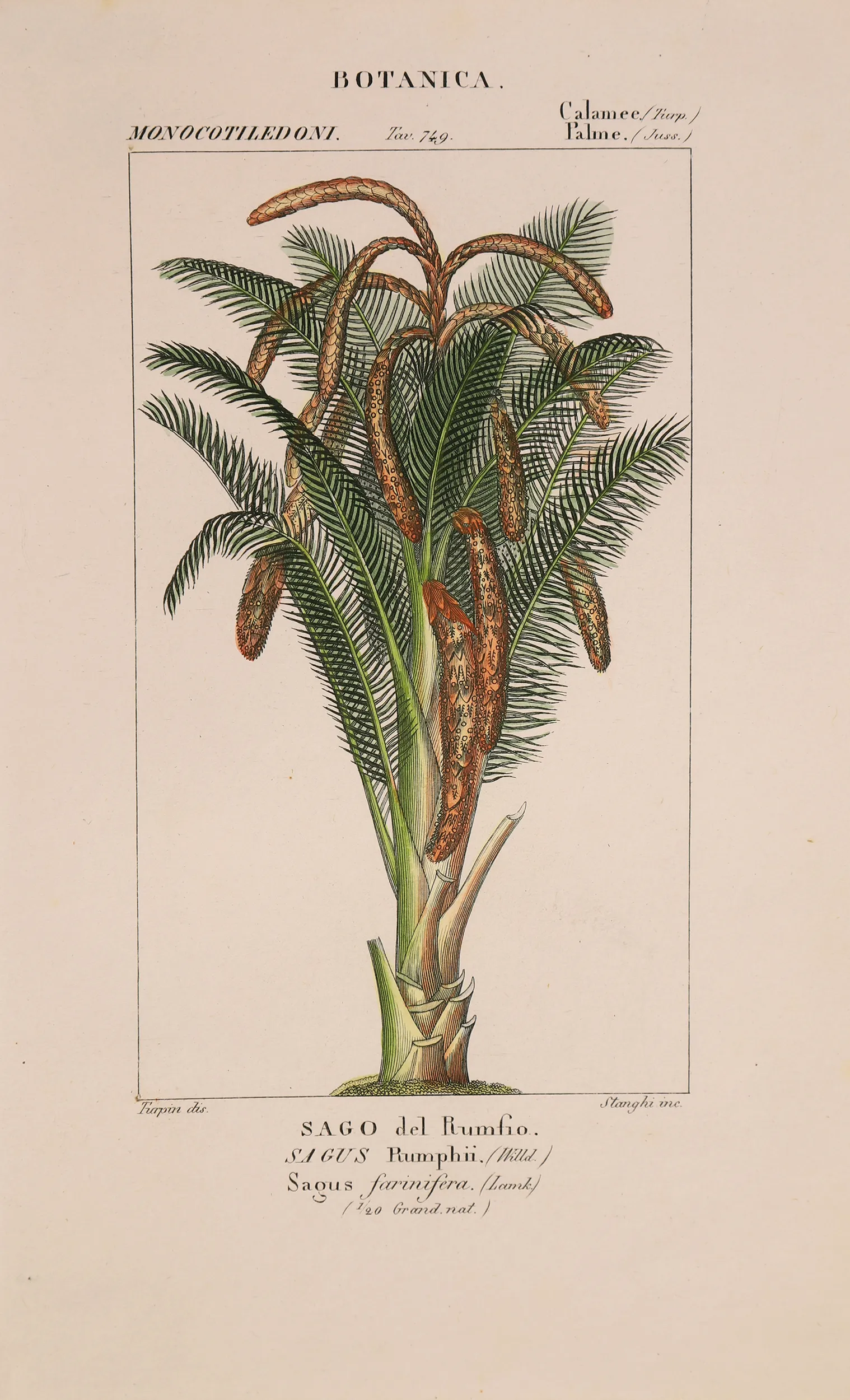
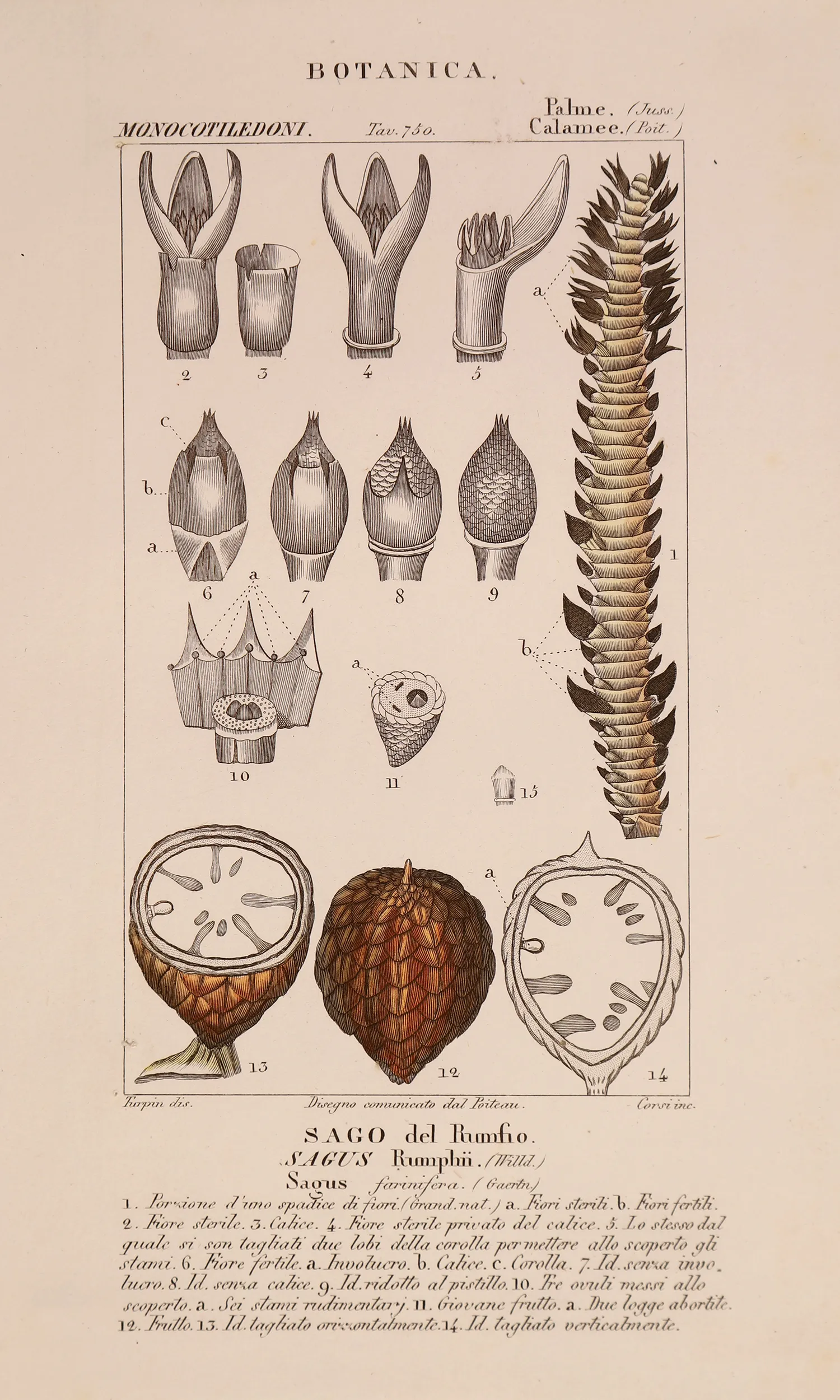

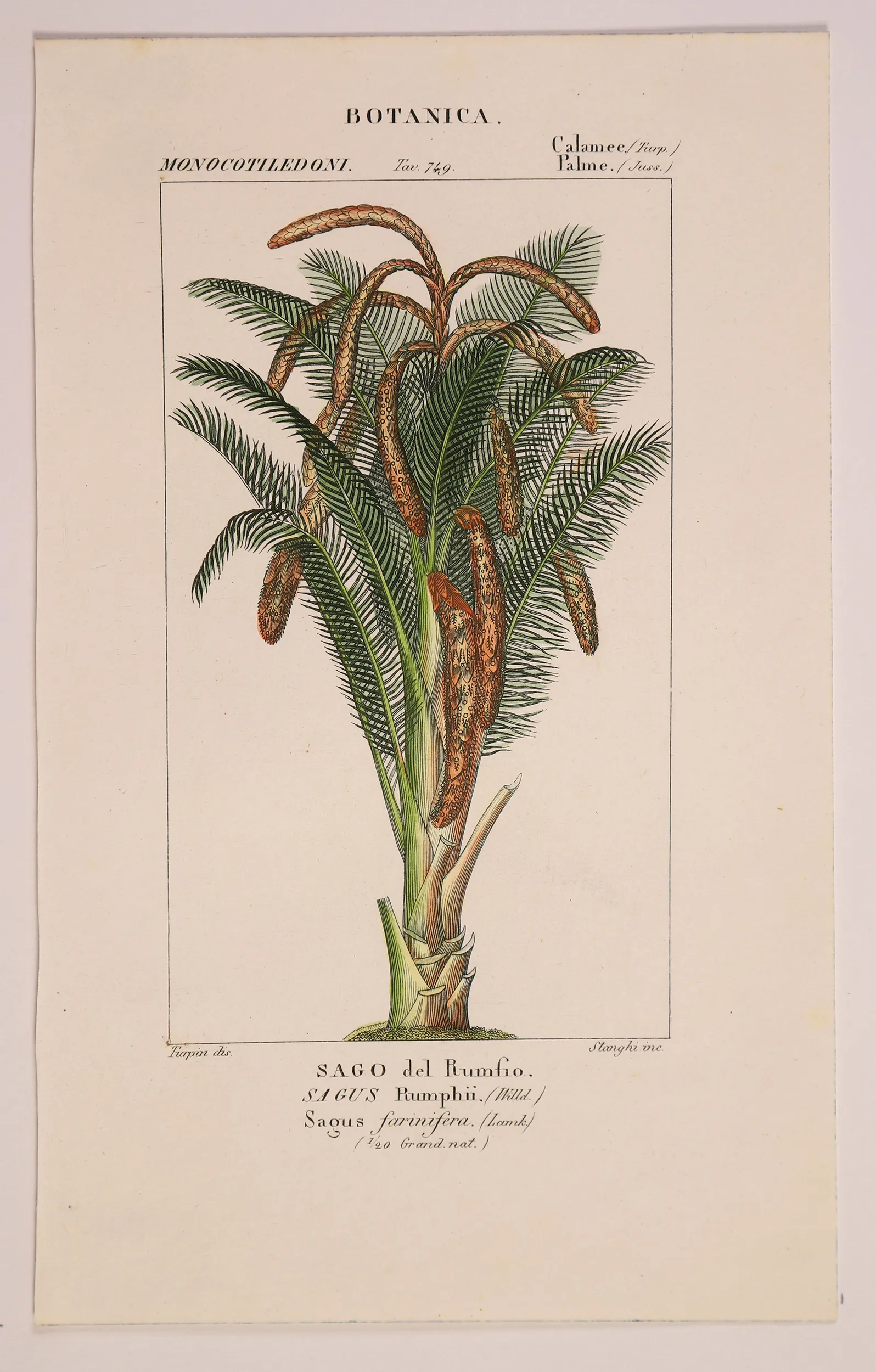
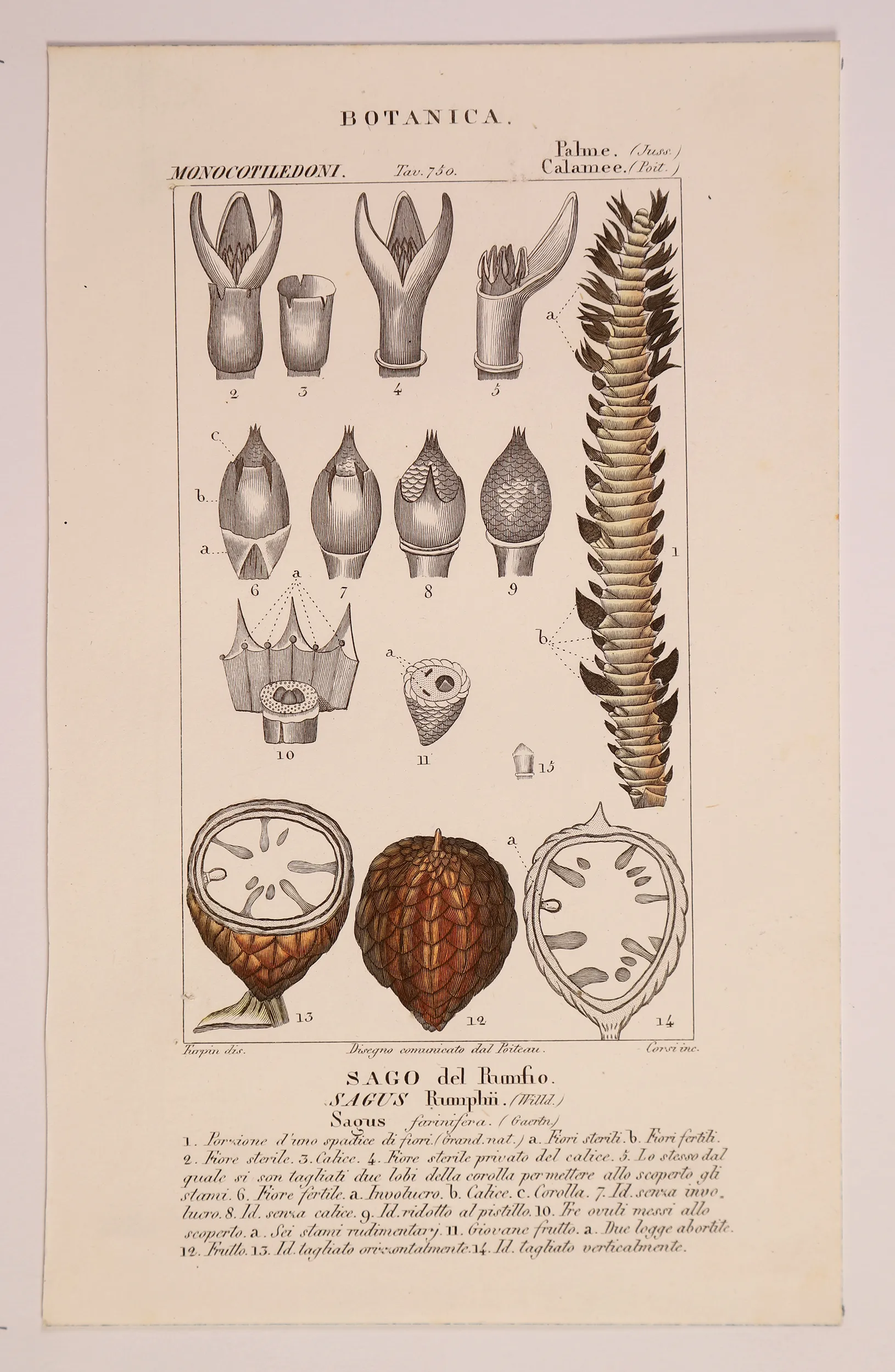
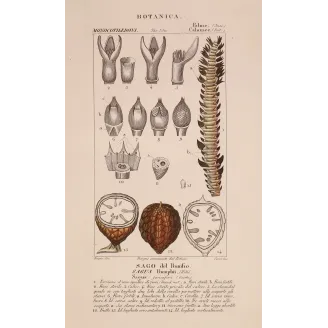
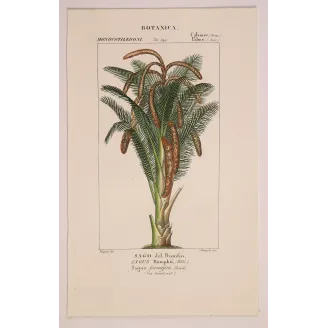
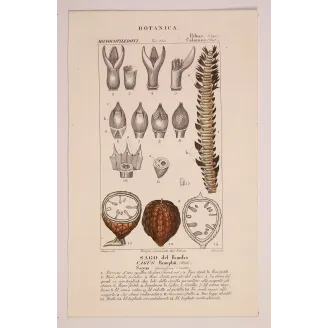
A pair of plates dedicated to the sago palm tree and its structural details.
 Delivery policy
Your print will be carefully prepared and shipped worldwide via trusted couriers (UPS or similar).
 Authentic antique prints
Original engravings from the 17th–19th century.
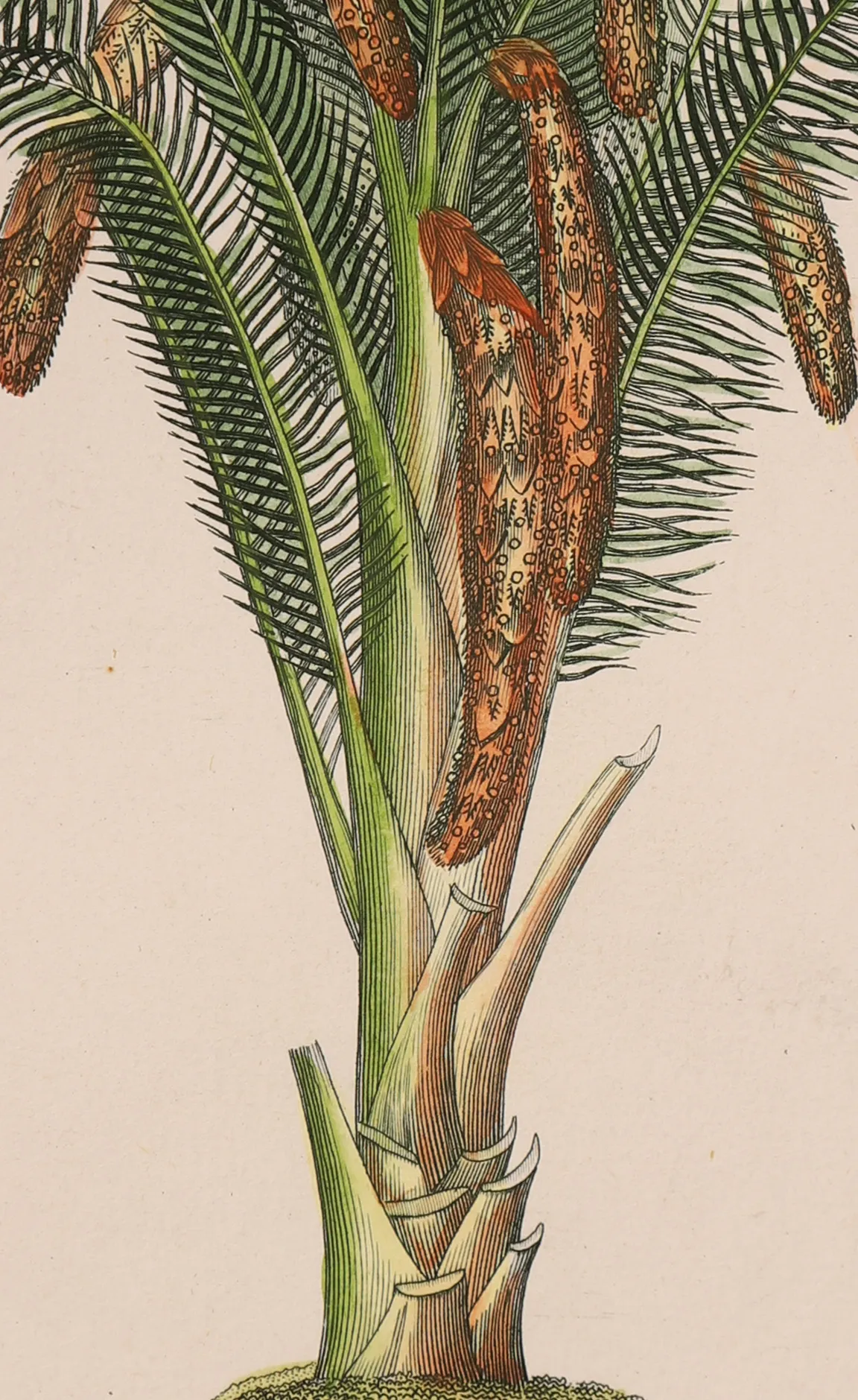
This elegant micro-bundle brings together two original hand-colored engravings dedicated to the sago palm—identified on the plates as Sagus rumphii / Sagus farinifera. One engraving presents the plant as a complete botanical “presence,” with arching, rhythmic fronds and warm, amber-toned inflorescences; the companion plate offers a precise scientific suite of structures—cones, sections, and anatomical details—transforming the subject into a fully legible study. Together, they read as a single coherent object: ornamental grandeur paired with Enlightened botanical method.
In this condition, the pair feels exceptionally fresh and display-ready. The contrast between the living architecture of the palm and the analytical clarity of the dissections creates a museum-like dialogue—perfect for collectors who appreciate natural history not as decoration, but as a cultivated form of knowledge, preserved on paper.
Visually, this micro-bundle is striking for its quiet theatricality. The main plate has a tall, centered silhouette and a refined balance of negative space, allowing the fronds to “breathe” while maintaining architectural authority. The hand-coloring is particularly appealing: deep, intelligent greens against honeyed ochres and copper-golds in the reproductive structures—tones that read as both botanical and decorative. The companion plate is more graphic and sculptural, with forms arranged like an atlas: a disciplined rhythm of sections and cones, culminating in a richly colored, pinecone-like body that anchors the composition. Hung together, they create a sophisticated diptych suited to a study, library wall, or interior that favors measured elegance over overt ornament.
In early nineteenth-century natural history, palms were more than exotic curiosities: they were economic plants, tied to food systems, trade routes, and colonial-era encyclopedias of useful species. The sago palm—associated with the production of sago starch—was discussed as a material of subsistence and commerce, linking botanical classification to everyday life: nourishment, storage, transport, and exchange. Turpin’s plates capture precisely this dual status: the plant as a monumental organism in the landscape of the imagination, and as a working botanical subject, dissected into intelligible parts for study and reference.
This bundle includes:
Discover the story behind these rare prints in our blog: “Not Just Another Print” — a tribute to the noble origins and hidden artistry of the Dizionario di Scienze Naturali (Sacchetti Collection).
Further reading: Pierre Jean François Turpin — The Botanical Illustrator of Natural Harmony
Specific References
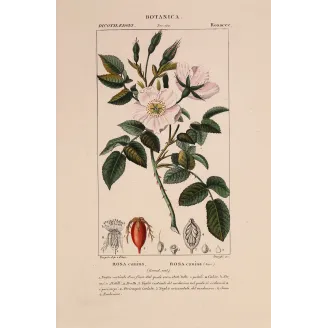
Delicate dog rose flower with soft pink petals and fine botanical details.
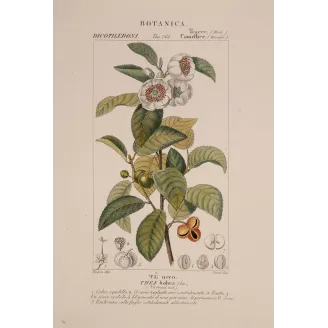
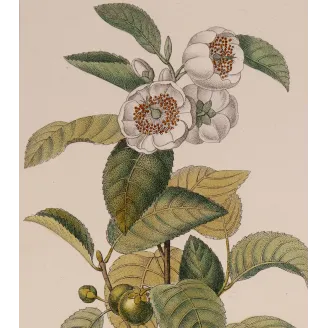
Delicate and detailed illustration of the tea plant, with floral and seed elements beautifully depicted.
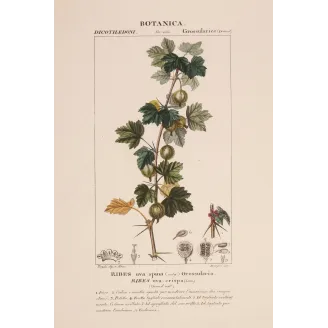
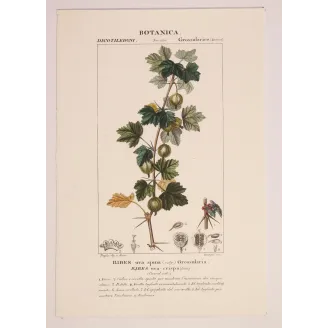
A charming depiction of *Ribes uva-crispa*, the gooseberry plant, detailed with its spiny stems and translucent green fruits.
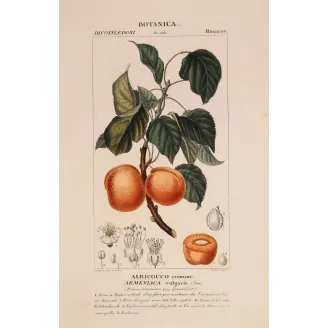
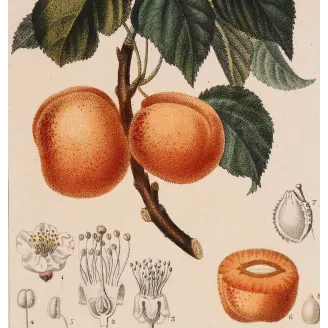
Original 19th-century botanical engraving of the common apricot, showing its velvety orange fruits and lush green leaves, rendered with great naturalistic balance.
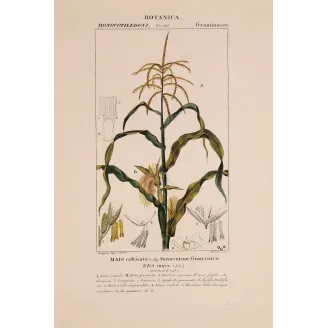
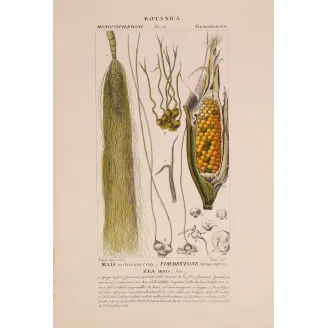
Double plate of cultivated maize (Zea mays) from Turpins botanical series.
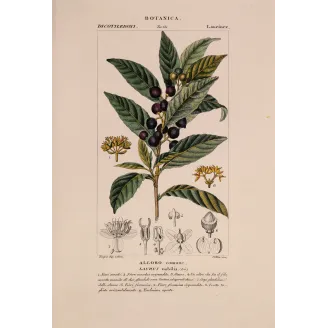
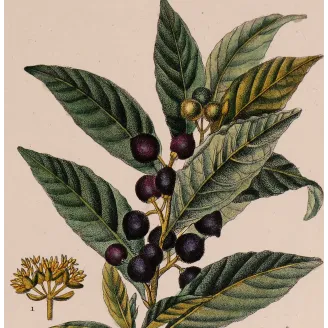
Graceful composition of bay laurel with fruits, blossoms, and internal flower structure.
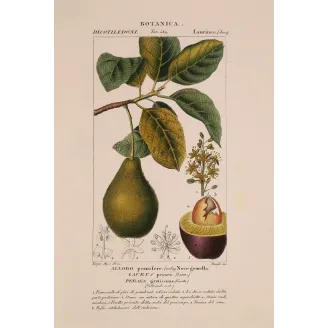
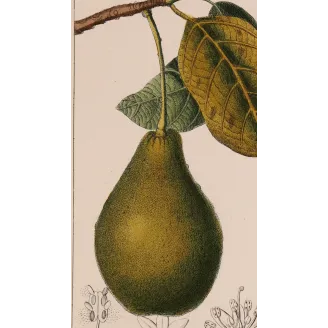
Botanical plate of avocado with whole fruit, seed, and internal anatomy.
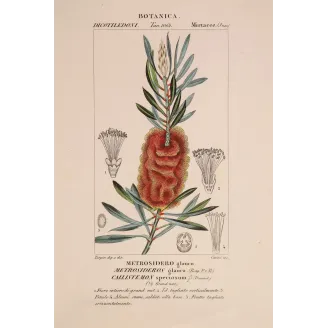
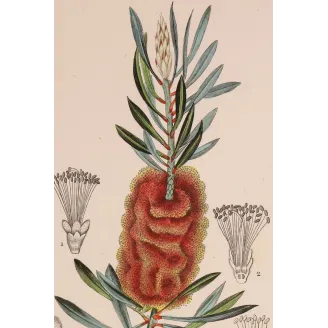
Stunning antique print of the red-flowering Callistemon, also known as bottlebrush.
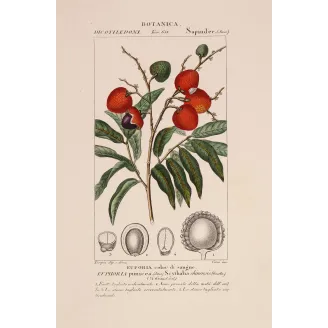
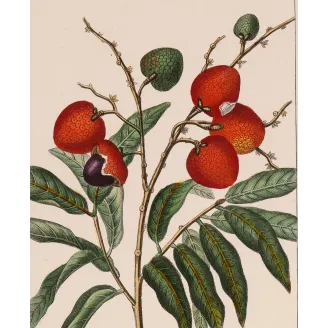
A striking hand-colored engraving of *Euphoria punicea*, displaying vivid red fruits and lush foliage in a refined 19th-century botanical composition.
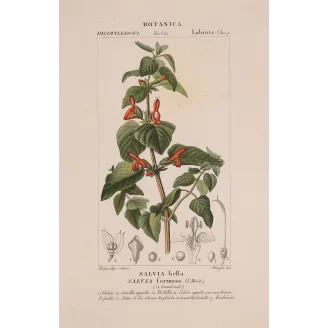
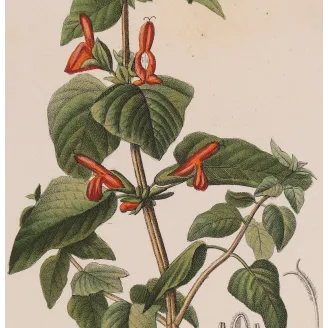
Vivid botanical plate of Salvia formosa, with striking red-orange tubular flowers.
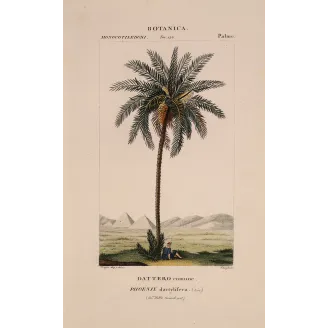
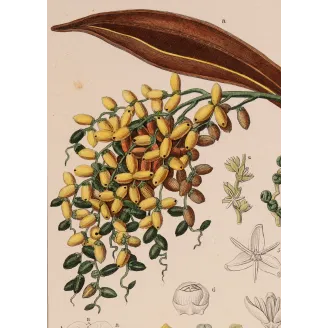
Detailed antique illustrations of the date palm tree and its floral and fruit anatomy.
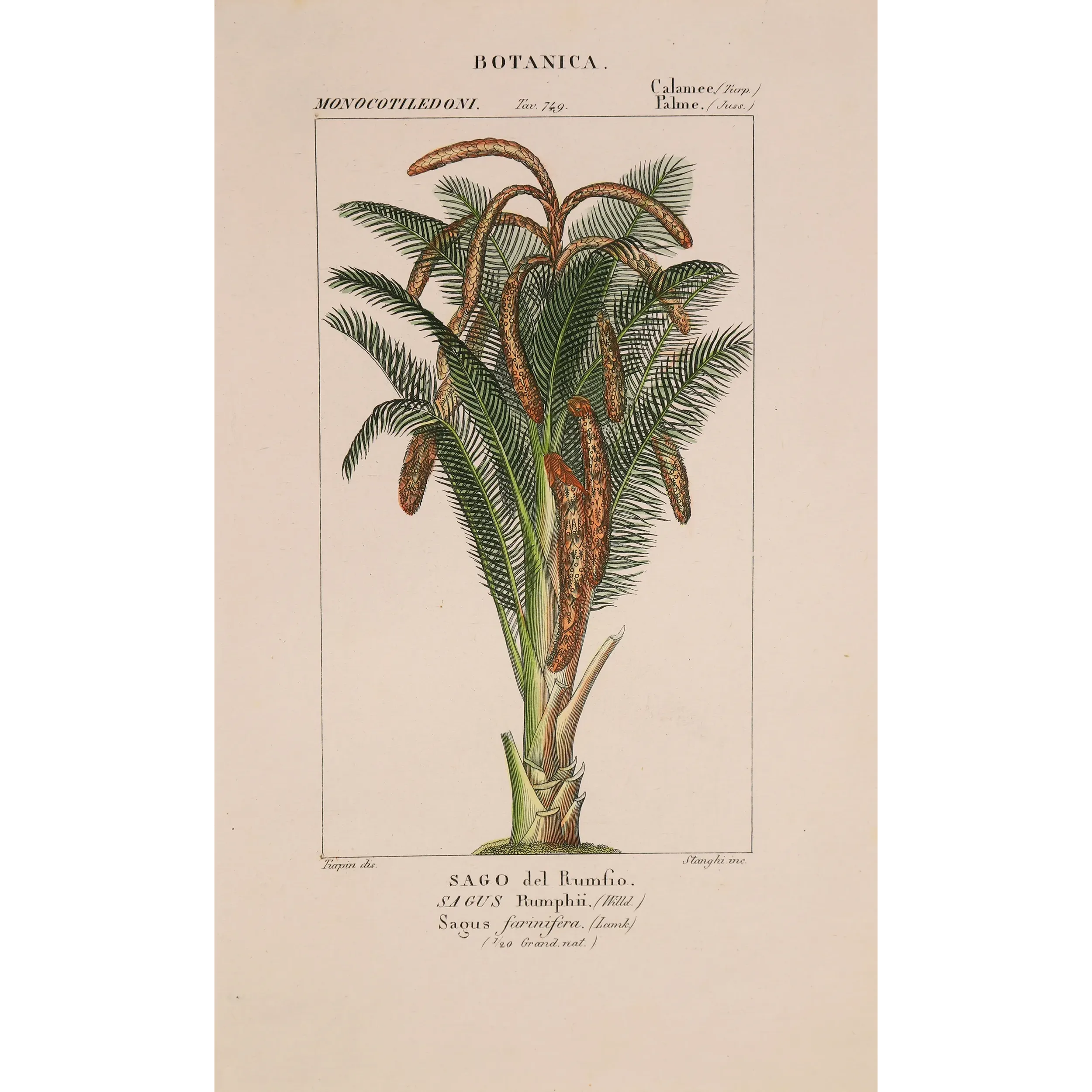
A pair of plates dedicated to the sago palm tree and its structural details.