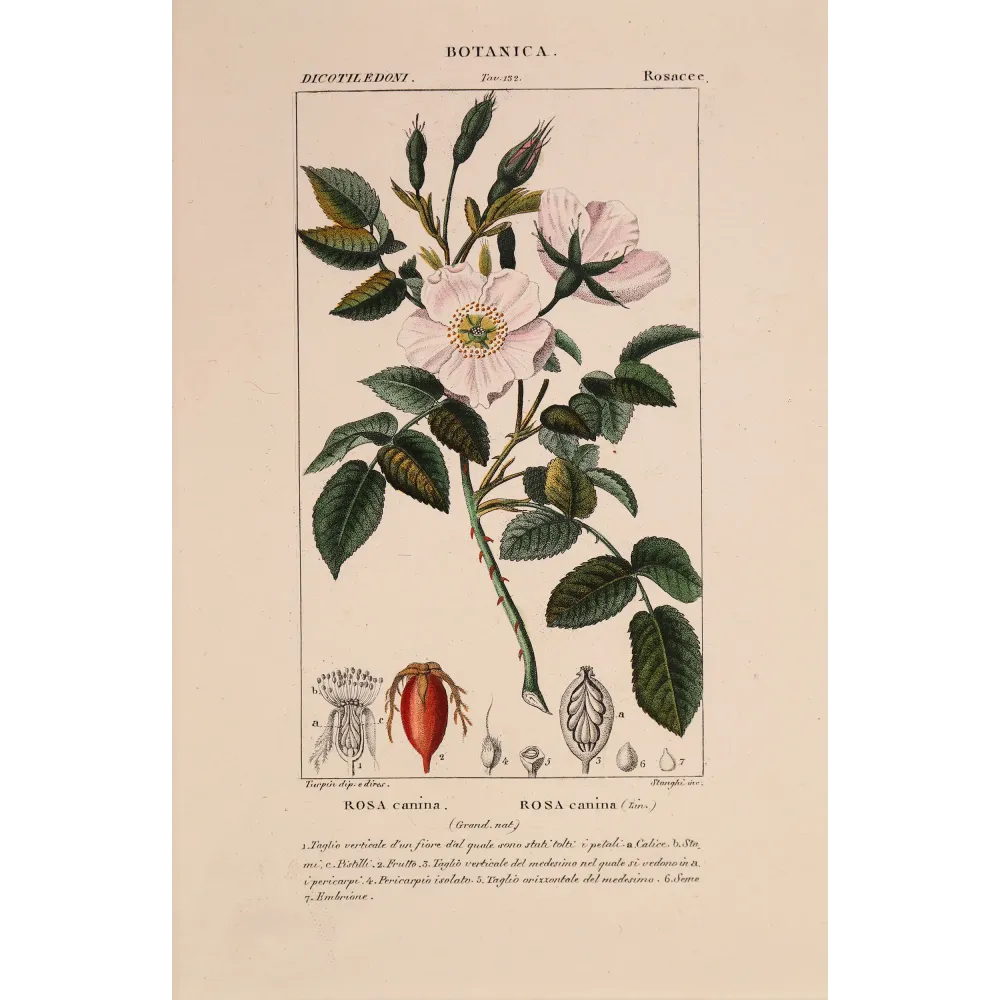
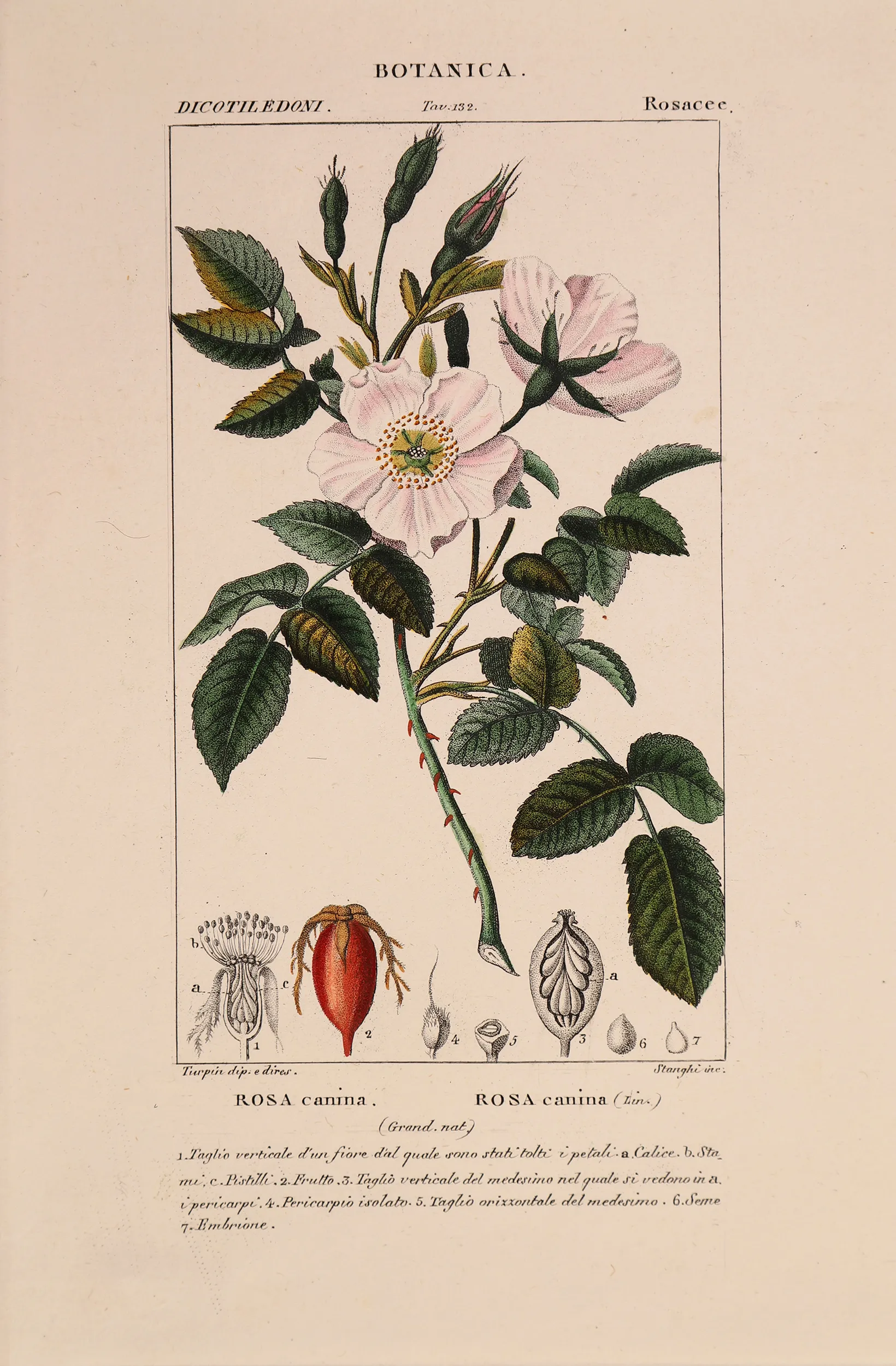
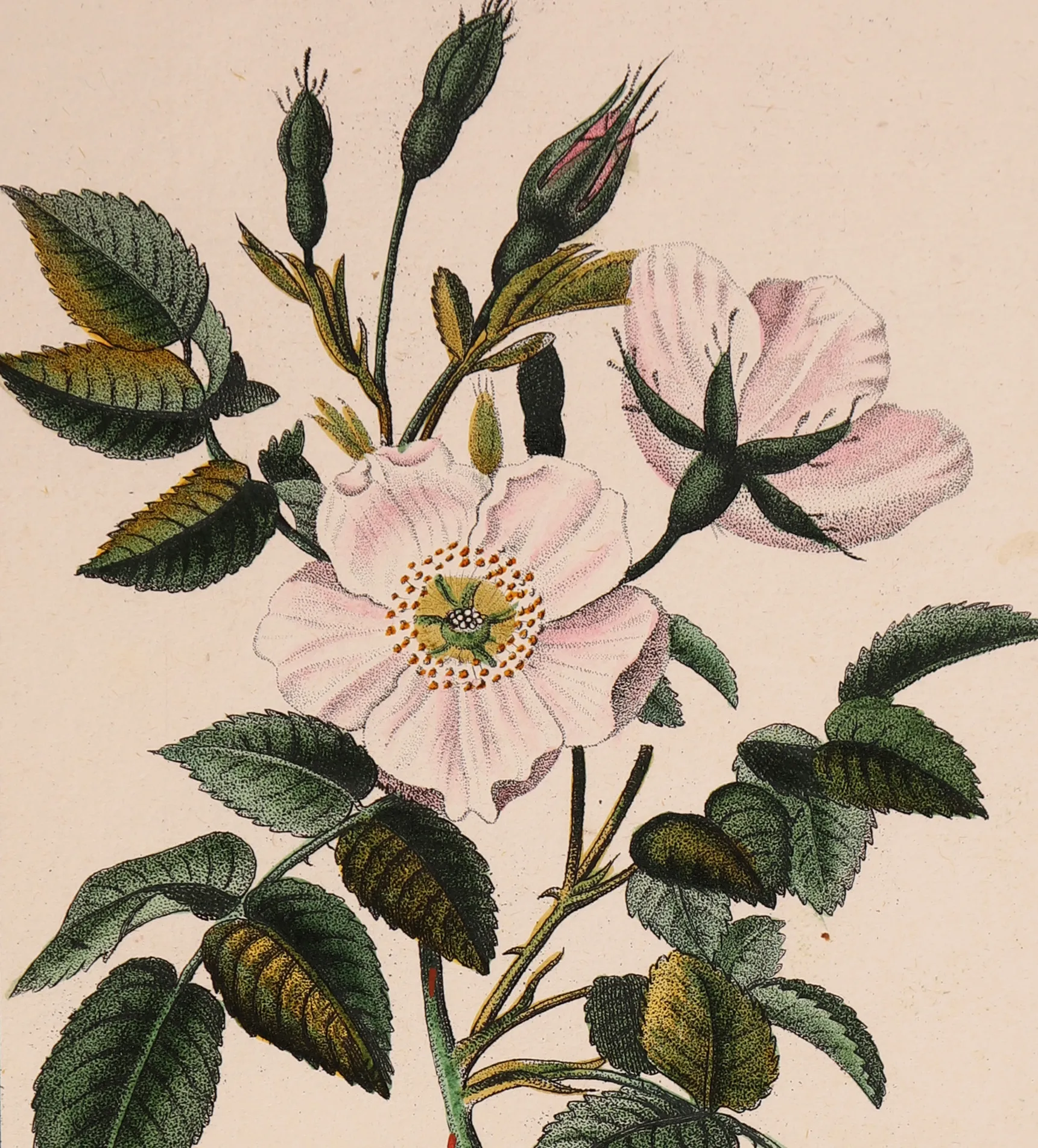

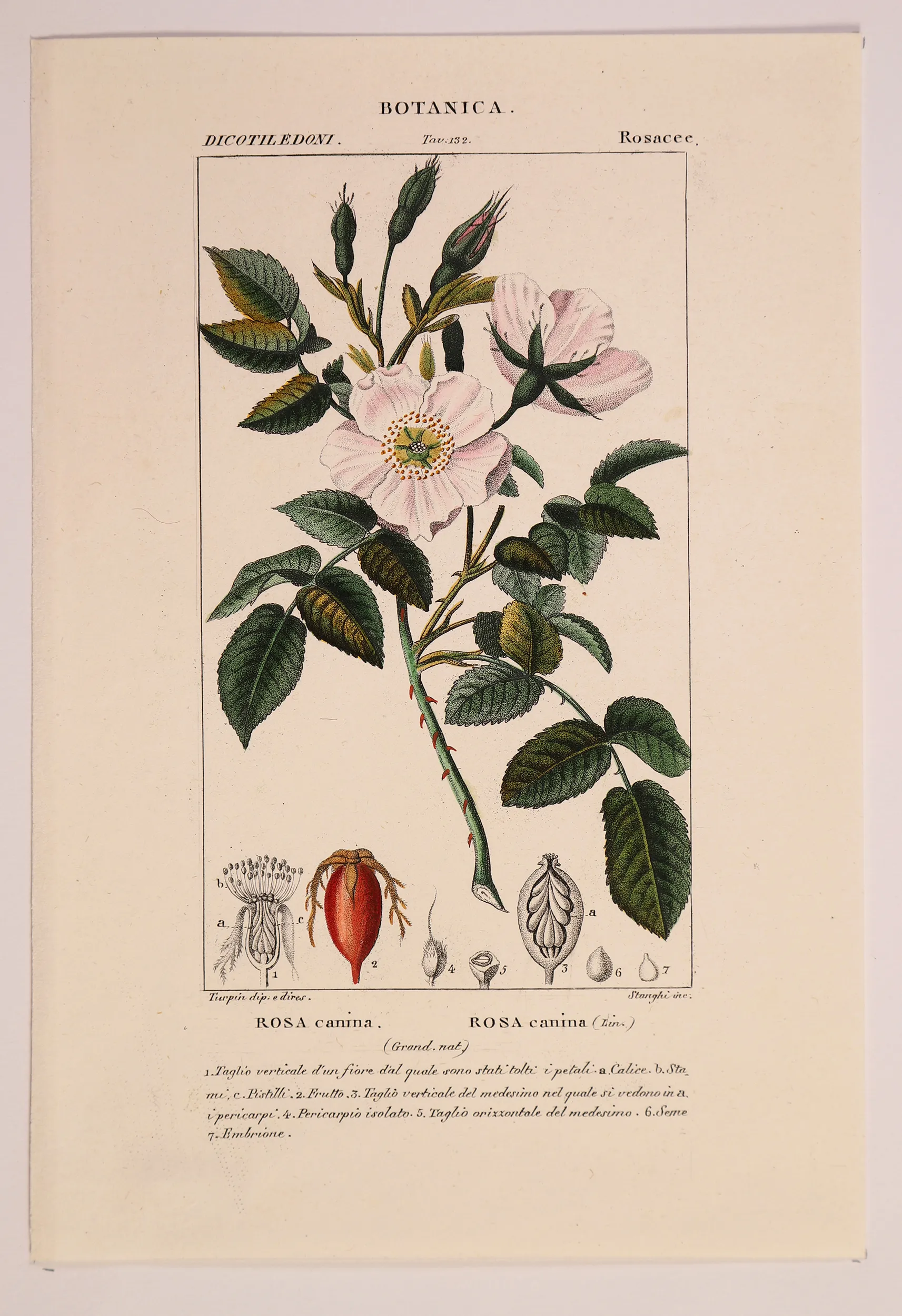
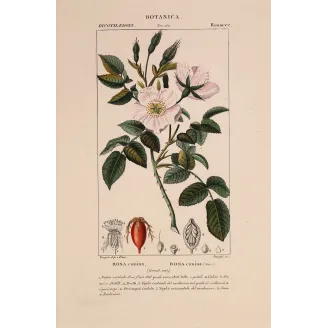
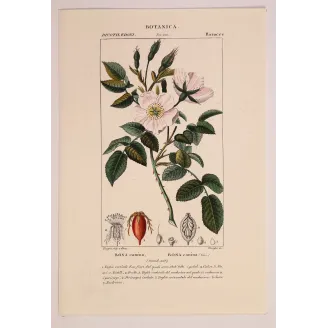
Delicate dog rose flower with soft pink petals and fine botanical details.
 Delivery policy
Your print will be carefully prepared and shipped worldwide via trusted couriers (UPS or similar).
 Authentic antique prints
Original engravings from the 17th–19th century.
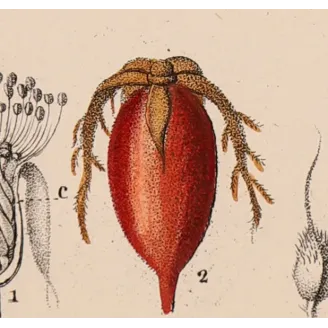
This refined engraving presents Rosa canina, the wild dog rose, illustrated with compositional elegance and analytical precision. The plate combines a flowering branch with buds, fruit, and detailed dissections of floral and reproductive structures, offering a complete botanical study of one of Europe’s most enduring native roses.
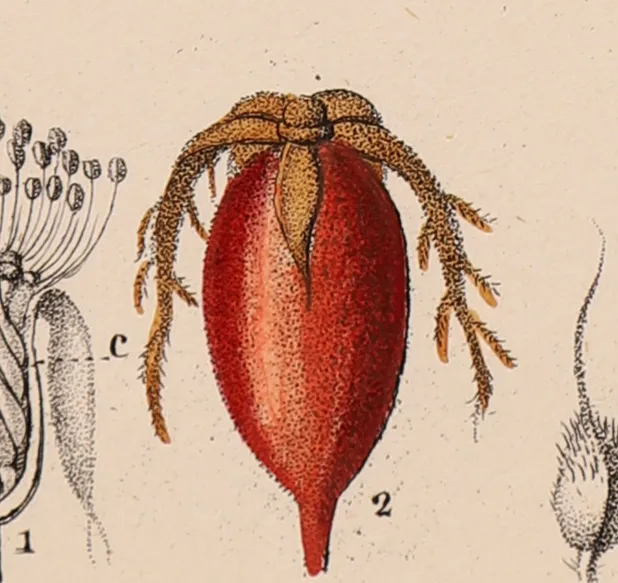
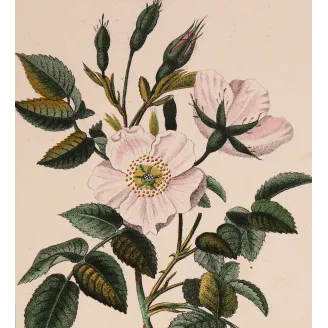
Turpin renders the soft pink petals with delicate tonal gradation, allowing the luminous central stamens to anchor the composition. The serrated leaves, articulated through subtle shading, create depth without heaviness, while the rose hip introduces a warm chromatic counterpoint in the lower register.
The engraving belongs to the Italian edition of the Dizionario di Scienze Naturali (Florence, Battelli press), an early nineteenth-century encyclopedic enterprise devoted to documenting both ornamental and wild species through disciplined copperplate engraving.
— • —
The composition unfolds vertically, guided by the natural curvature of the stem. The open blossom forms the visual center, its pale petals softly radiating around a golden core. The unopened buds introduce tension and anticipation, while the mature hip provides structural weight at the base.
The restrained palette — muted greens, soft pinks, and warm reds — enhances the sense of botanical refinement. Displayed independently, the plate achieves a balance between scientific sobriety and decorative grace, making it particularly suited to refined domestic interiors.
Rosa canina is native across Europe and has long occupied both botanical and cultural landscapes. Beyond its ornamental value, the species was historically associated with medicinal uses, particularly through its vitamin-rich rose hips. In early nineteenth-century natural history, roses were studied not only for aesthetic appeal but also for their complex floral anatomy and classification challenges within the Rosaceae family. The inclusion of the wild rose in the Dizionario di Scienze Naturali reflects the Enlightenment commitment to documenting native flora with the same rigor reserved for exotic species.
This plate forms part of the historic Dizionario di Scienze Naturali, once preserved within a noble library and today housed in the Sacchetti Collection. Each engraving embodies a period when scientific investigation and artistic craftsmanship were inseparable — from the precision of the copperplate line to the careful hand-colouring executed sheet by sheet.
Such works were conceived as authoritative visual documents of knowledge. To explore the broader story of these rare prints and their refined provenance, we invite you to read our editorial feature “Not Just Another Print”.
The engraving is in excellent antique condition. The sheet presents clean margins and a sharp, well-defined impression. The original early nineteenth-century smooth wove paper remains stable and well preserved. No watermark has been observed. The hand-colouring retains balanced tonal clarity with well-preserved chromatic depth.
For further context on Pierre Jean François Turpin and his contribution to nineteenth-century botanical science, see our editorial feature:
Pierre Jean François Turpin – The Botanical Illustrator of Natural Harmony

Specific References
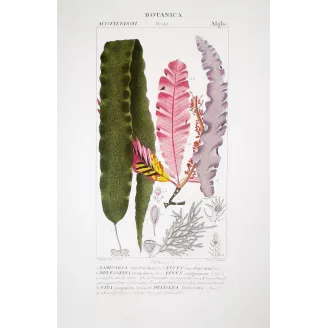
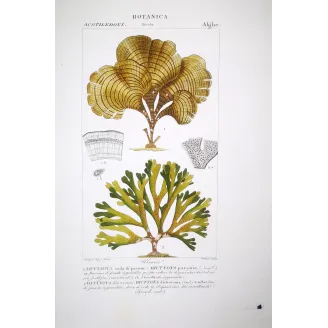
A unique lot of 7 hand-colored antique prints depicting various species of algae, illustrated by Turpin and Prêtre.
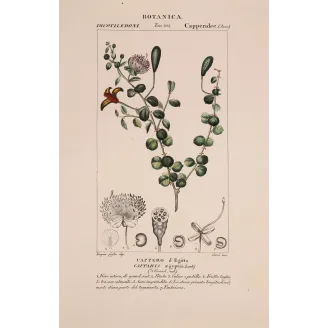
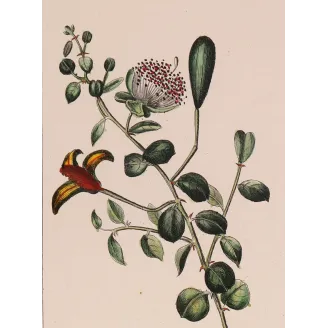
Vibrant caper plant illustration with both flowers and fruiting structures.
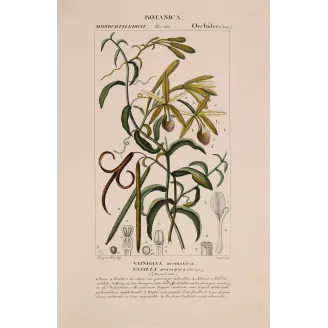
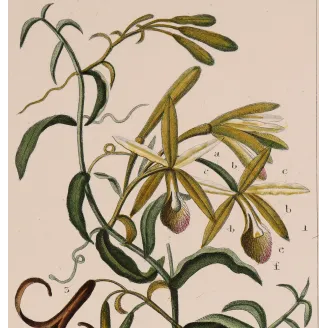
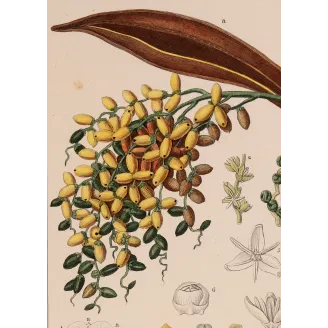
Delicate orchid illustration showing flower, pod and internal anatomy of vanilla.
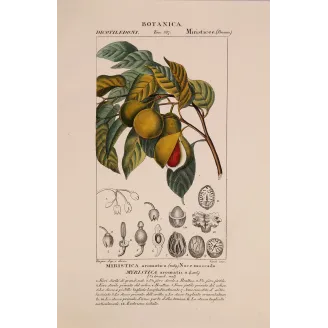
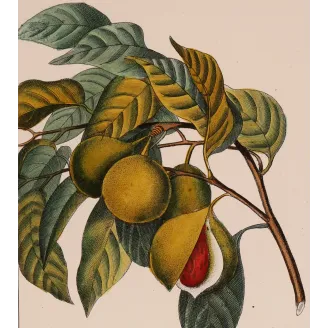
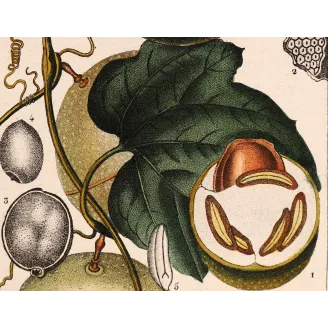
Striking botanical print of nutmeg fruit with cutaway sections and seed structure.
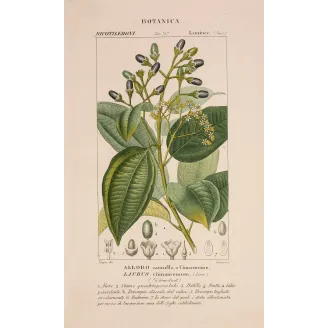
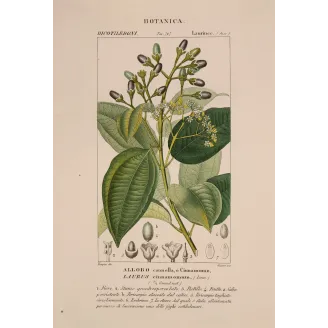
Finely detailed print of Laurus cinnamomum by Turpin, from the Dizionario di Scienze Naturali.
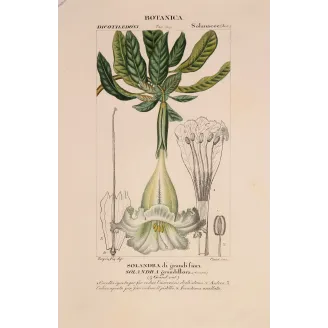
Beautiful antique flower print of Solandra, with large trumpet-shaped bloom.
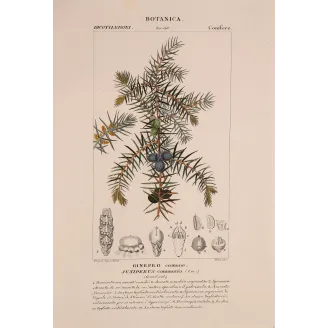
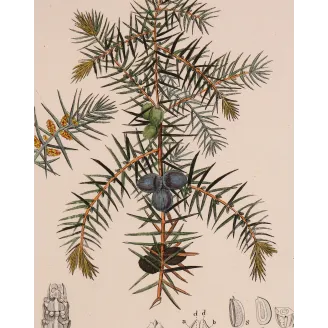
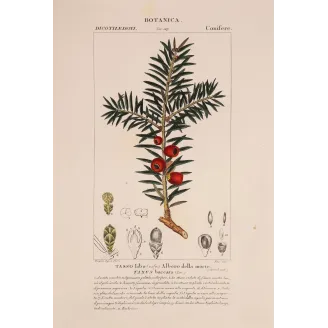
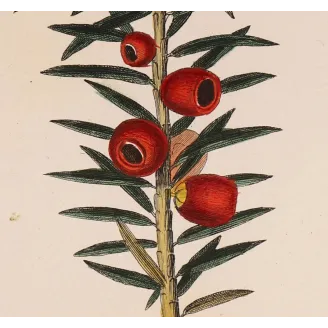
Elegant hand-colored plate of the juniper plant with berries and cone structure.
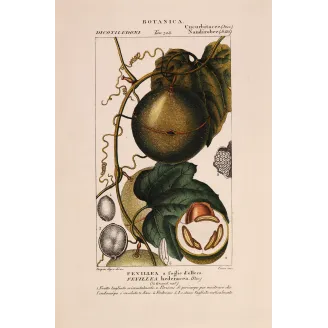
A coordinated pair of engravings depicting *Fevillea hederacea*, with intricate tendrils and elegant fruit structure, hand-colored with precision.
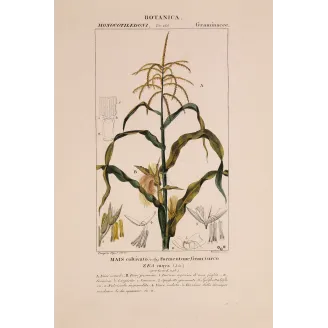
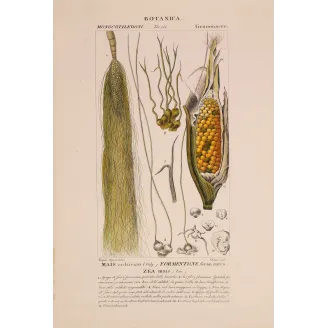
Double plate of cultivated maize (Zea mays) from Turpins botanical series.
Elegant illustration of Laurus cinnamomum, showing leaves, flowers and seeds.
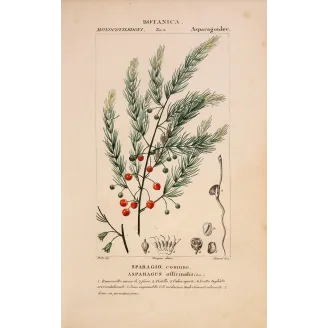
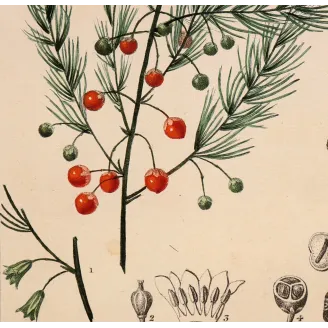
Botanical print of Asparagus officinalis by Turpin, featuring vivid orange berries.
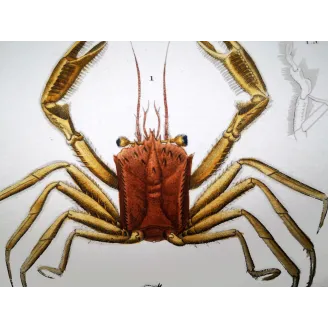
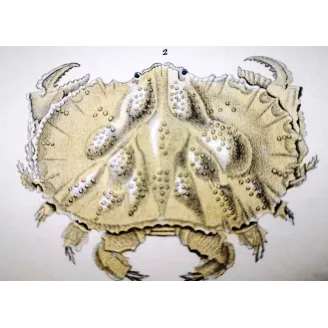
Refined 19th-century engraving of *Omola frontespinosa*, a rare crab with slender claws and delicate yellow-orange tones.
Fine 19th-century engraving of *Calappa tuberculata*, a beautifully armored crab with ornate textures and yellow tones.
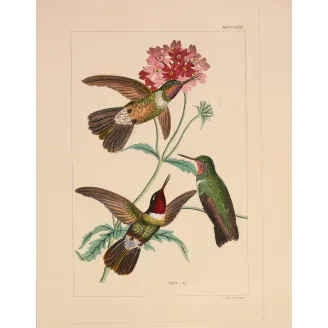
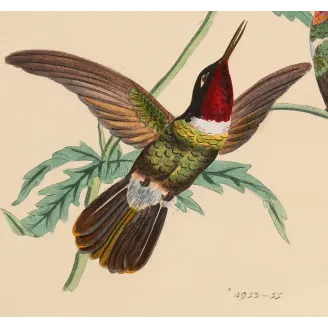
Original nineteenth-century hand-colored engraving by Ludwig Reichenbach, depicting three hummingbirds among pink blossoms. A rare later plate from the Trochilinarum Enumeratio corpus, not fully documented in the principal published index.
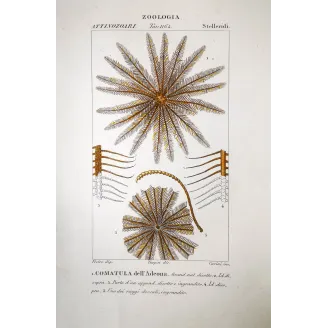
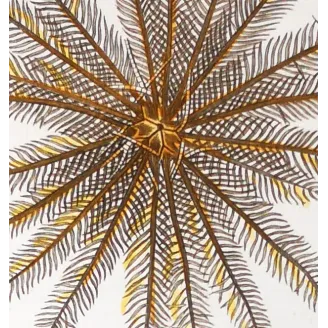
Rare 19th-century print of the feather star Comatula of the Adeona, with anatomical details.
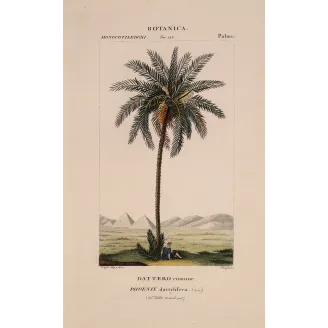
Detailed antique illustrations of the date palm tree and its floral and fruit anatomy.
Fine botanical engraving showing delicate redcurrant clusters and bright green leaves.
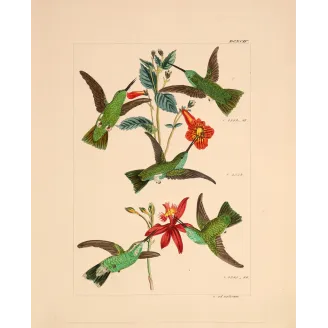
An exceptional original hand-colored engraving from Ludwig Reichenbach's Trochilinarum Enumeratio, depicting five brilliant hummingbirds feeding among scarlet tropical flowers. Featuring Esmeralda, Euchloris and Maculicollis, this dynamic nineteenth-century composition beautifully combines botanical richness with the elegance of Victorian ornithological illustration.
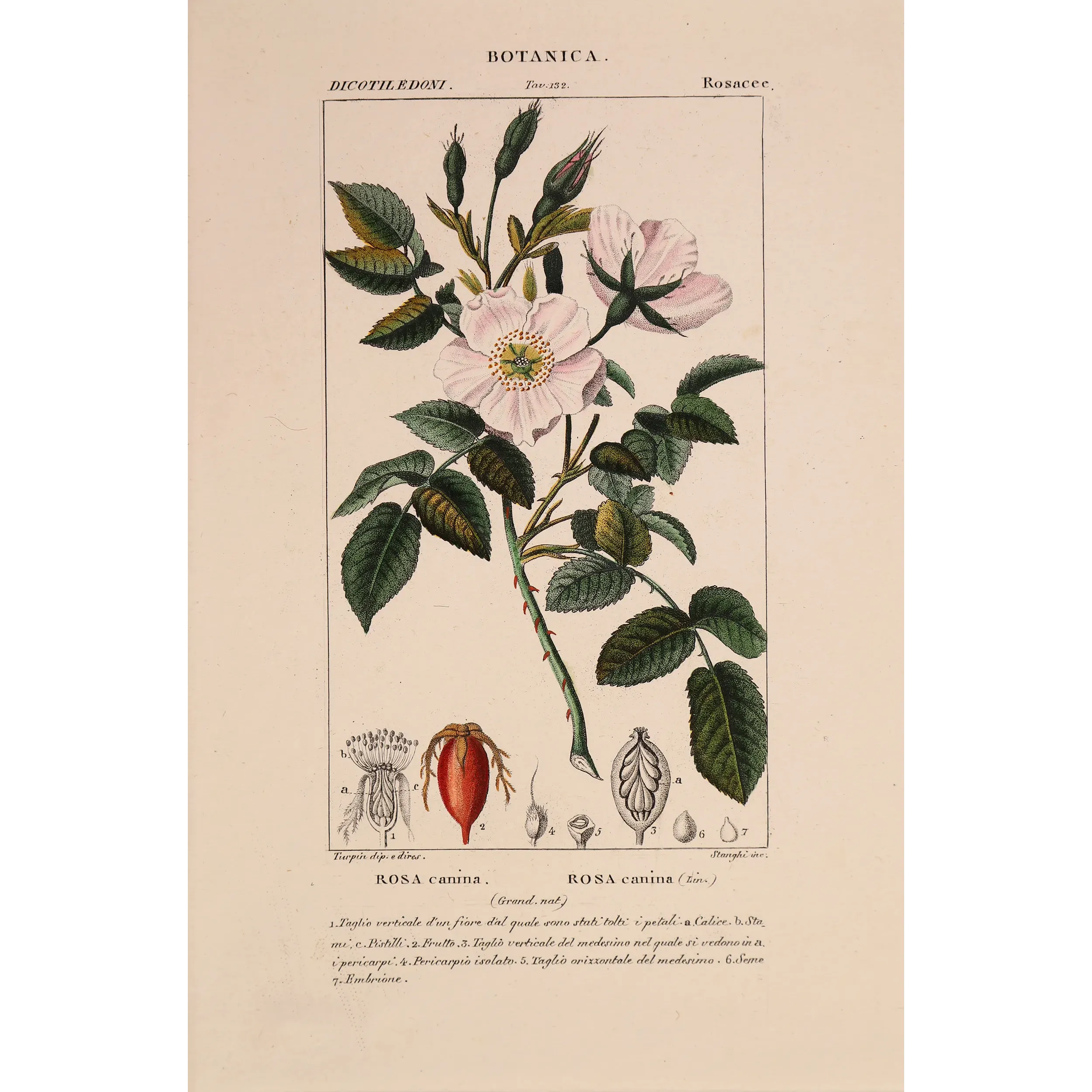
Delicate dog rose flower with soft pink petals and fine botanical details.