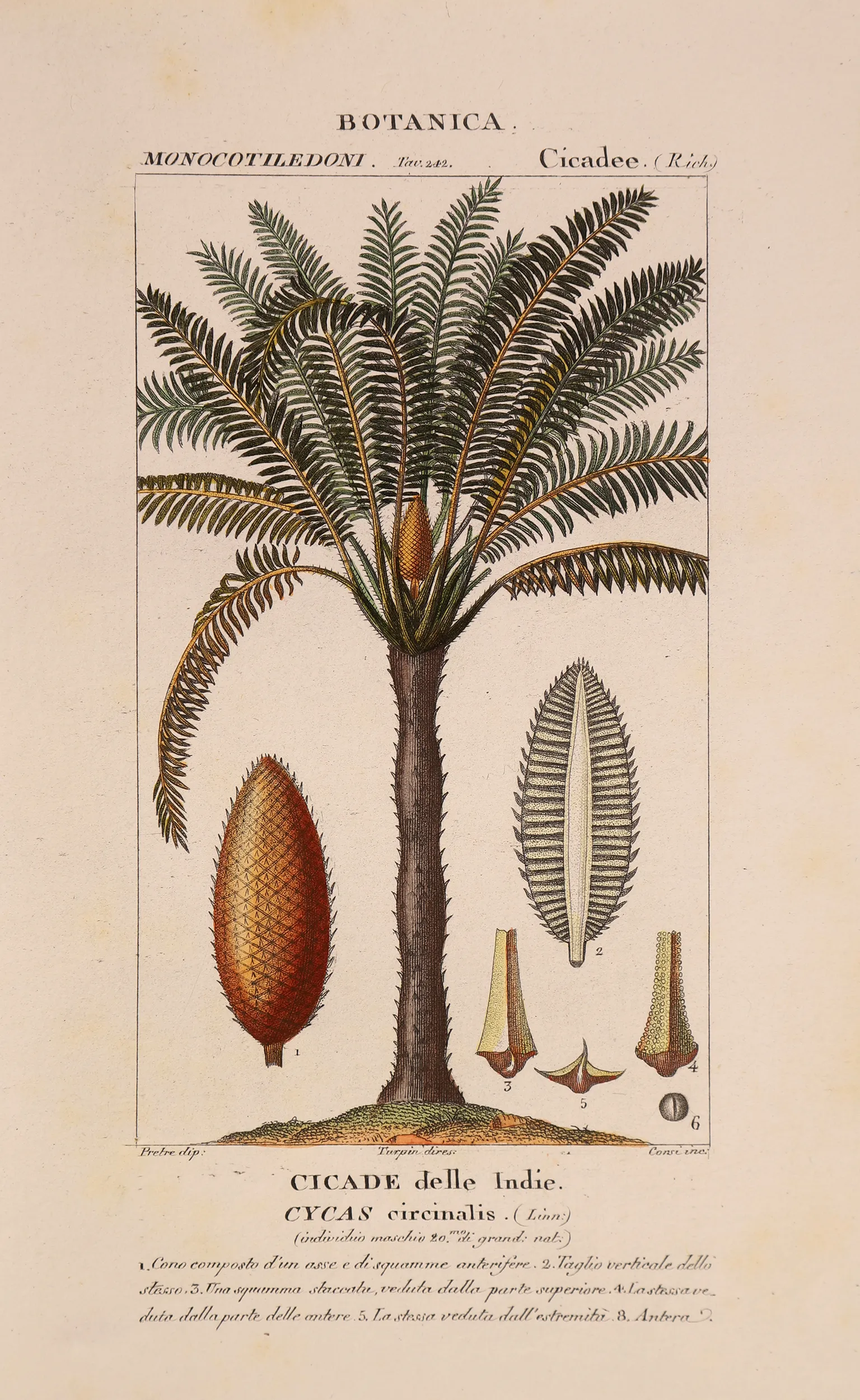
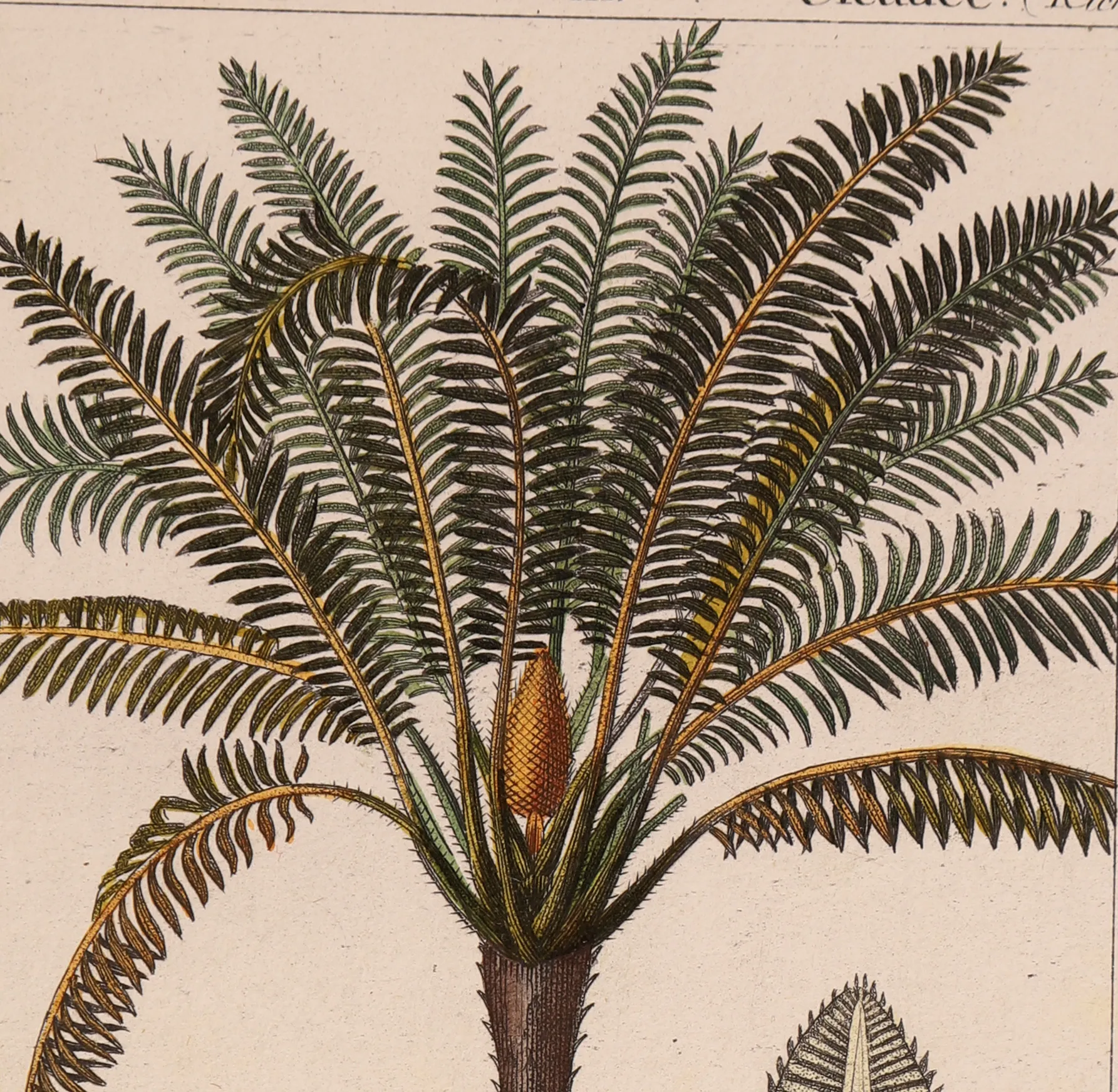
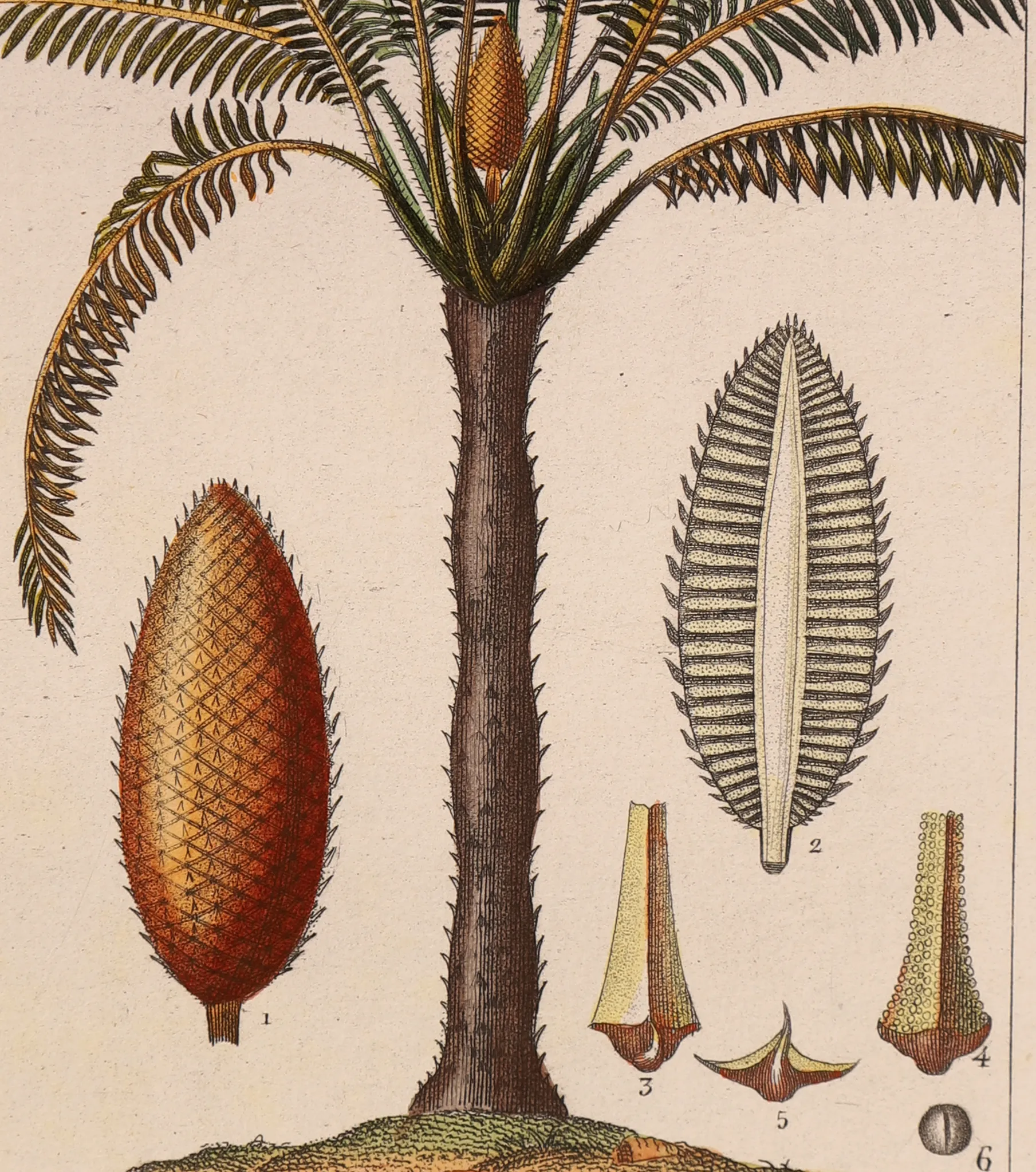

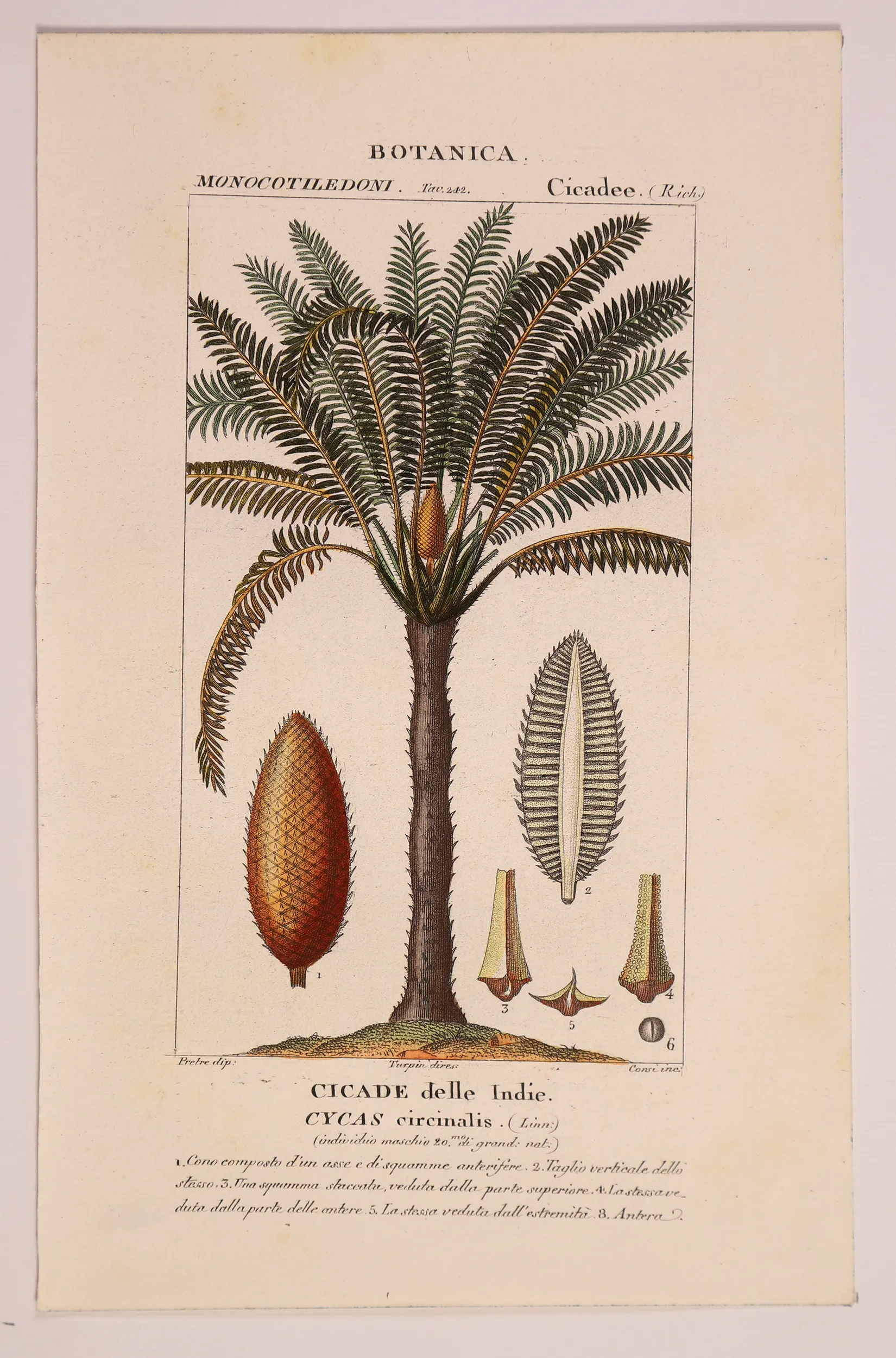
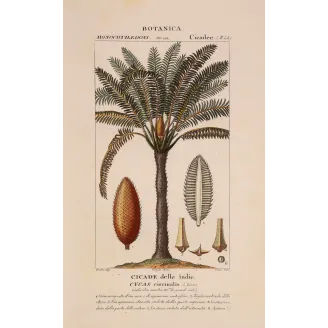
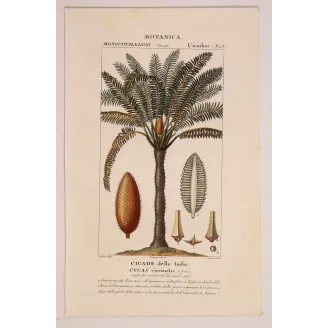
Beautiful palm-like depiction of the Cycas circinalis, the queen sago.
 Delivery policy
Your print will be carefully prepared and shipped worldwide via trusted couriers (UPS or similar).
 Authentic antique prints
Original engravings from the 17th–19th century.
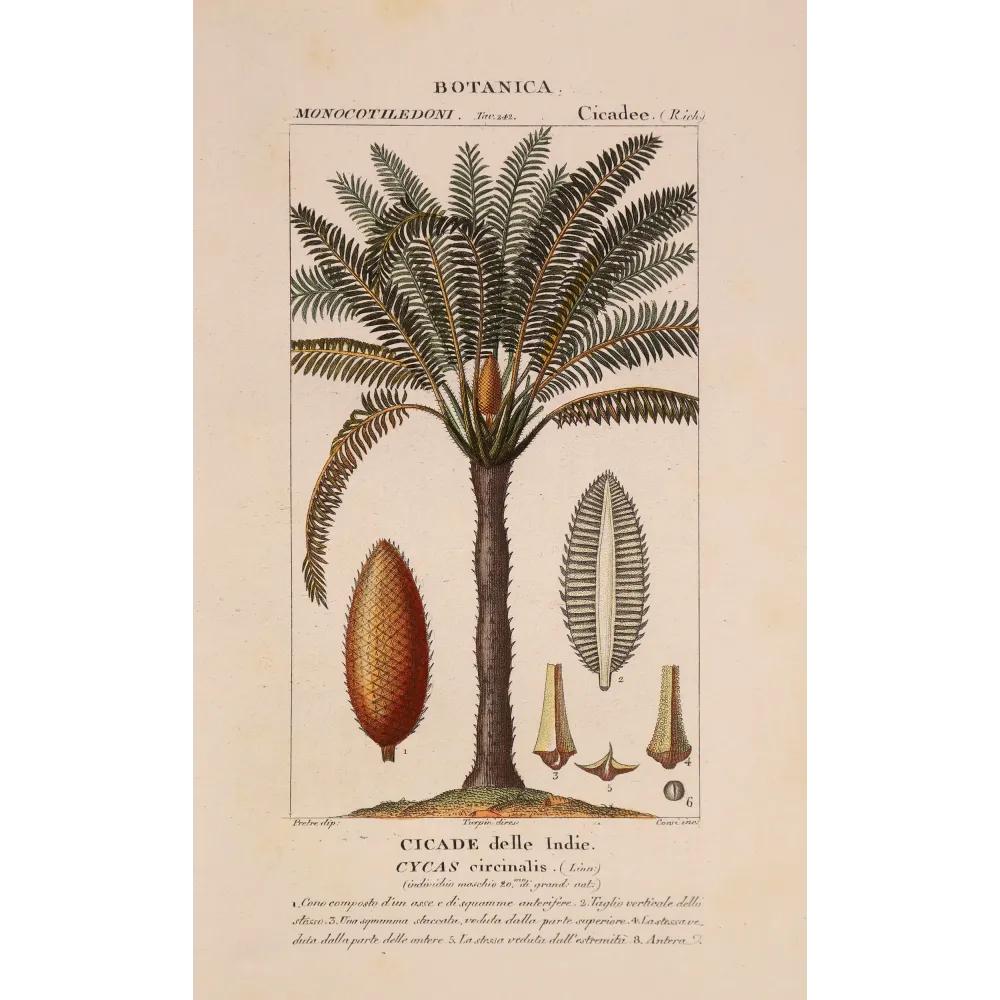
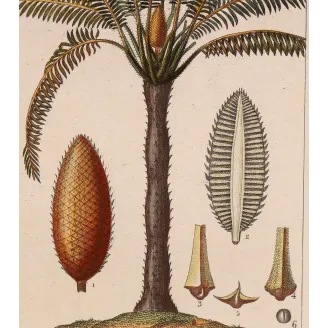
This remarkable engraving presents Cycas circinalis, historically referred to as the “Cicade delle Indie,” illustrated with structural clarity and compositional balance. The plate combines a complete arboreal figure with analytical details of cone and reproductive structures, offering a systematic study of one of the most ancient plant lineages on earth.
Neither true palm nor fern, the cycad long puzzled early botanists. Turpin renders both its architectural silhouette and its internal structures with measured precision, transforming a tropical species into an object of disciplined scientific observation. The central cone, rendered in warm copper tones, contrasts elegantly with the radiating fronds, creating a refined visual hierarchy.
The plate belongs to the Italian edition of the Dizionario di Scienze Naturali (Florence, Battelli press), a monumental encyclopedic undertaking of the early nineteenth century dedicated to cataloguing the natural world through disciplined observation and refined engraving.
— • —
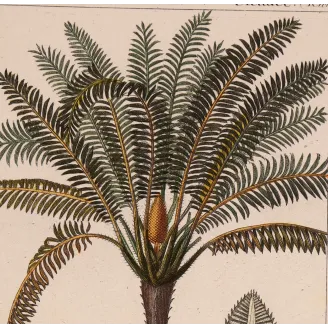
The composition is vertically structured around a central trunk rising into a symmetrical crown of finely articulated fronds. The radial expansion of the foliage establishes visual equilibrium, while the luminous central cone anchors the composition with warm tonal depth.
Supplementary analytical figures are arranged with measured spacing, preserving clarity without overcrowding the field. The restrained palette — deep greens, umber browns and copper-gold highlights — enhances the sense of botanical gravity while maintaining scientific sobriety.
Cycas circinalis, native to the Indian subcontinent, belongs to a lineage often described as “living fossils.” Long before evolutionary theory was formally articulated, such plants were perceived as remnants of an earlier botanical world. In nineteenth-century natural history, cycads symbolized both global exploration and morphological inquiry, challenging classification systems that struggled to position them between palms and ferns. Their inclusion in encyclopedic works such as the Dizionario di Scienze Naturali reflects the period’s expanding scientific geography and its fascination with structurally ambiguous organisms.
Curatorial Note. This engraving represents the male specimen of Cycas circinalis. A companion plate within the same publication illustrates the corresponding female plant bearing seeds. Viewed together, the two sheets form a complete scientific study of the species’ dioecious reproductive system. The related female specimen can be consulted here: Cycas circinalis – Female specimen.
This plate forms part of the historic Dizionario di Scienze Naturali, once preserved within a noble library and today housed in the Sacchetti Collection. Each engraving embodies a period when scientific investigation was supported by exceptional artisanal skill — from the precision of the engraved copperplate line to the carefully applied hand-colouring executed sheet by sheet.
Such works were conceived not as decorative ephemera, but as authoritative visual documents of knowledge. To explore the broader story of these rare prints and their refined provenance, we invite you to read our editorial feature “Not Just Another Print”.
The engraving is in Like Brand New (LBN) antique condition. The sheet presents clean, well-preserved margins and a sharp, well-defined impression. The paper is original early nineteenth-century smooth wove paper. No watermark has been observed. The hand-colouring remains balanced, fresh and evenly preserved, with excellent chromatic stability.
For further context on Pierre Jean François Turpin and his contribution to nineteenth-century botanical science, see our editorial feature:
Pierre Jean François Turpin – The Botanical Illustrator of Natural Harmony
Specific References
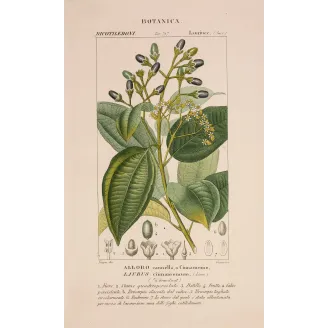
Finely detailed print of Laurus cinnamomum by Turpin, from the Dizionario di Scienze Naturali.
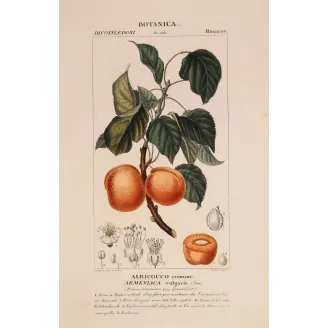
Original 19th-century botanical engraving of the common apricot, showing its velvety orange fruits and lush green leaves, rendered with great naturalistic balance.
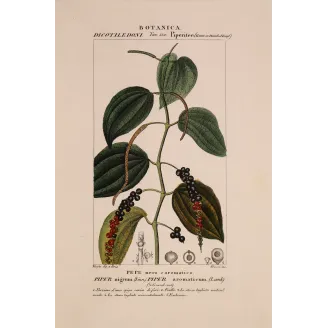
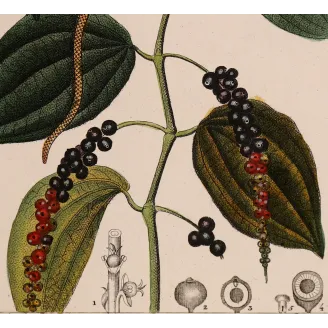
Detailed depiction of the black pepper vine with fruiting spikes and leaves.
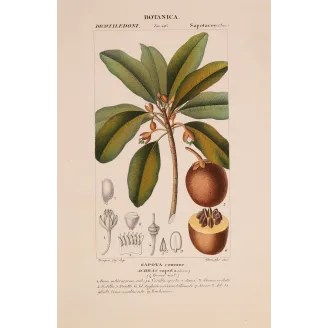
A warm-toned botanical engraving of *Achras sapota*, featuring its rounded fruit and large green leaves with exquisite texture
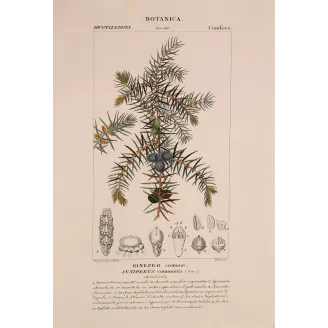
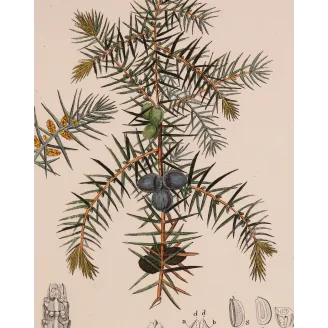
Elegant hand-colored plate of the juniper plant with berries and cone structure.
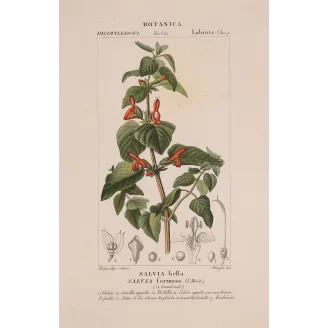
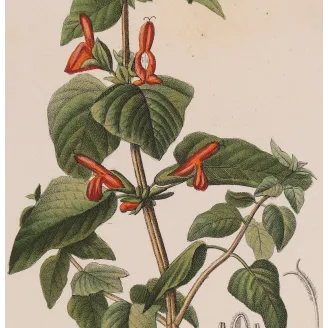
Vivid botanical plate of Salvia formosa, with striking red-orange tubular flowers.
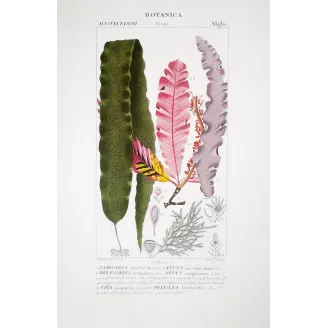
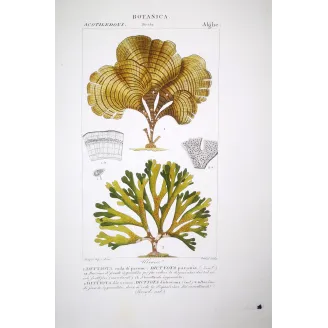
A unique lot of 7 hand-colored antique prints depicting various species of algae, illustrated by Turpin and Prêtre.
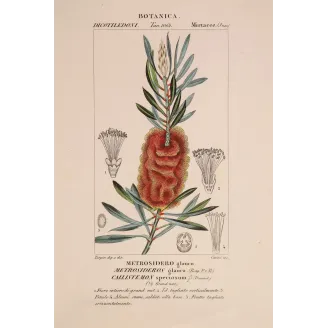
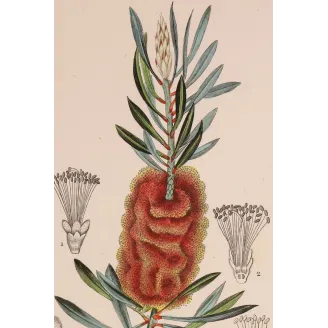
Stunning antique print of the red-flowering Callistemon, also known as bottlebrush.
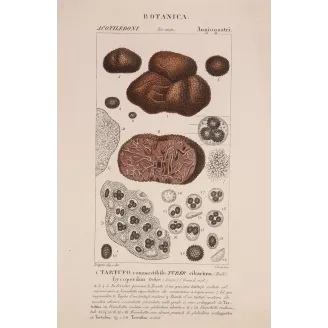
Unusual and fascinating botanical study of truffle morphology, rich in scientific detail.
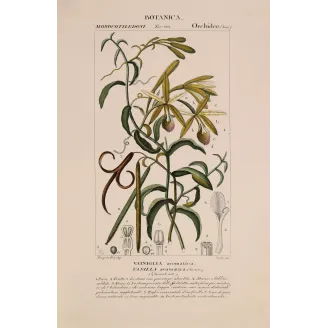
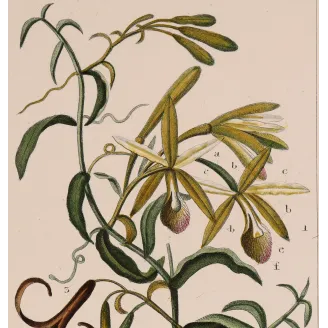
Delicate orchid illustration showing flower, pod and internal anatomy of vanilla.
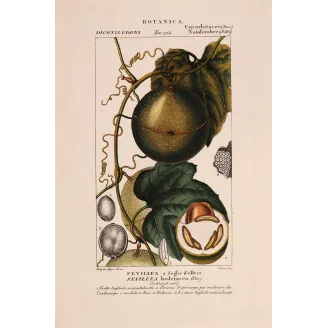
A coordinated pair of engravings depicting *Fevillea hederacea*, with intricate tendrils and elegant fruit structure, hand-colored with precision.
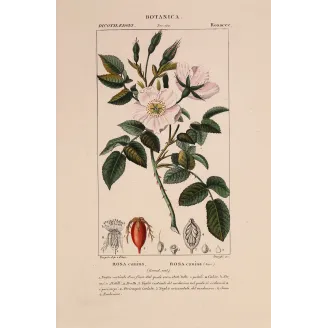
Delicate dog rose flower with soft pink petals and fine botanical details.
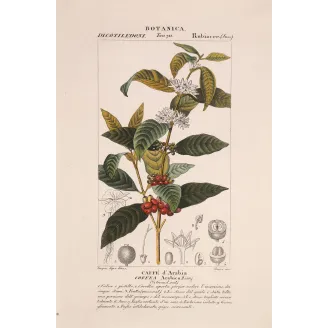
Botanical plate of Coffea arabica with vivid red berries and detailed floral structure.
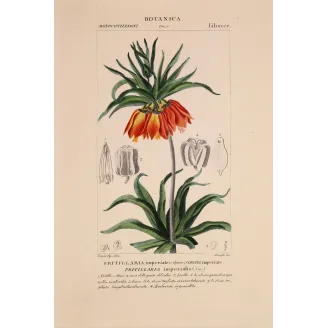
Striking antique print of Fritillaria imperialis with bright orange crown flowers.
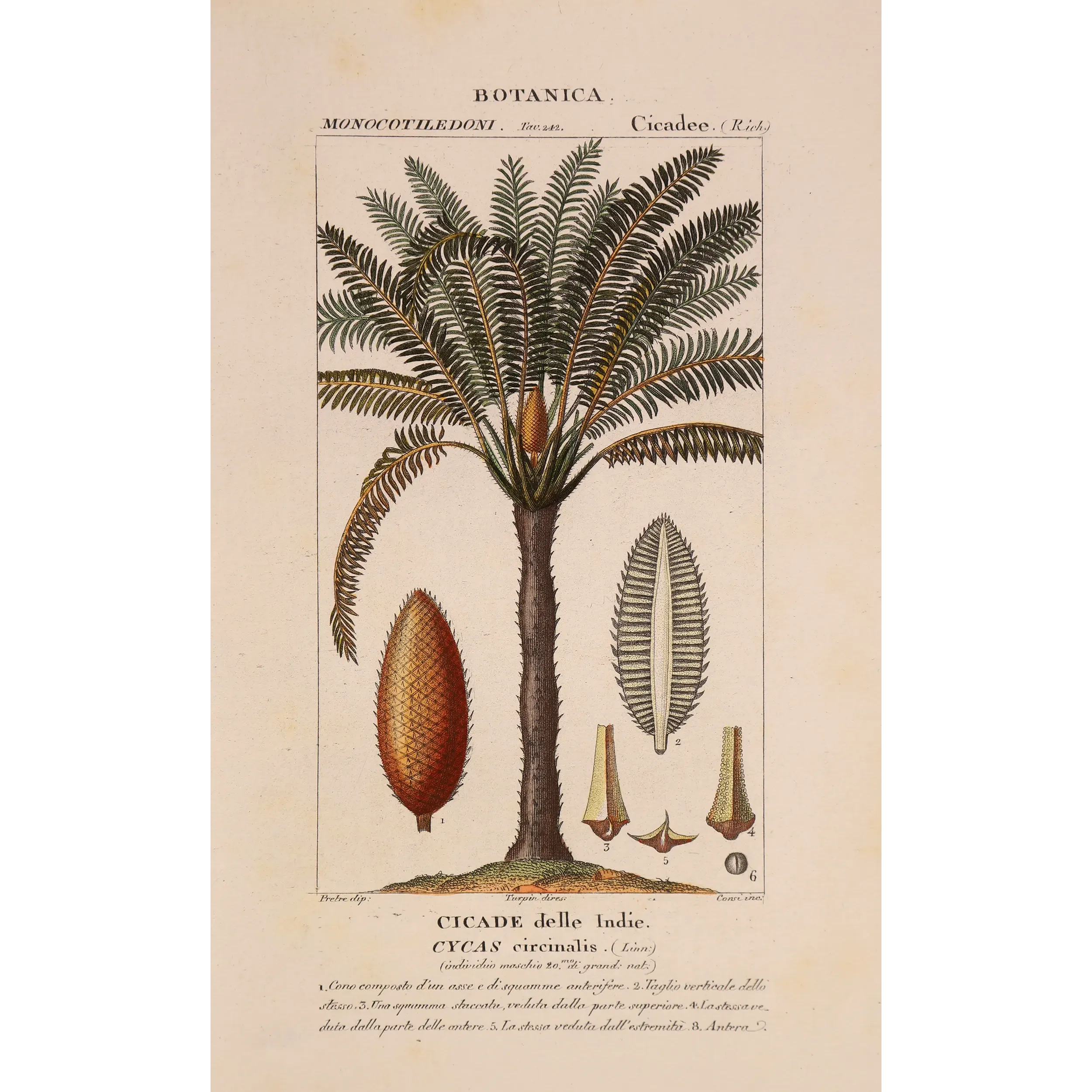
Beautiful palm-like depiction of the Cycas circinalis, the queen sago.