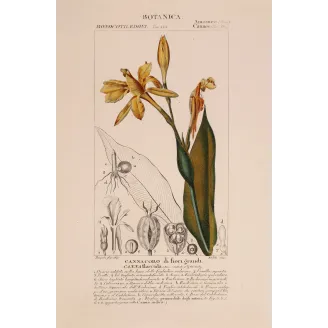
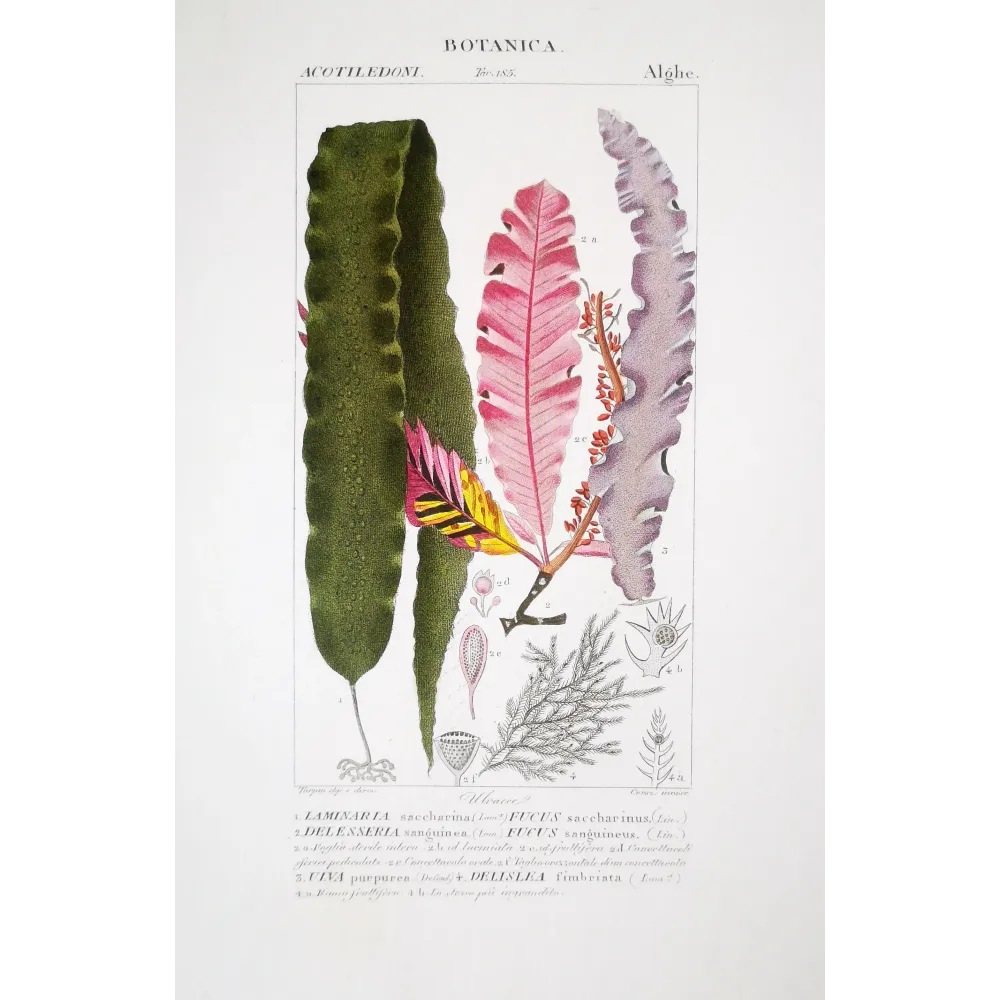
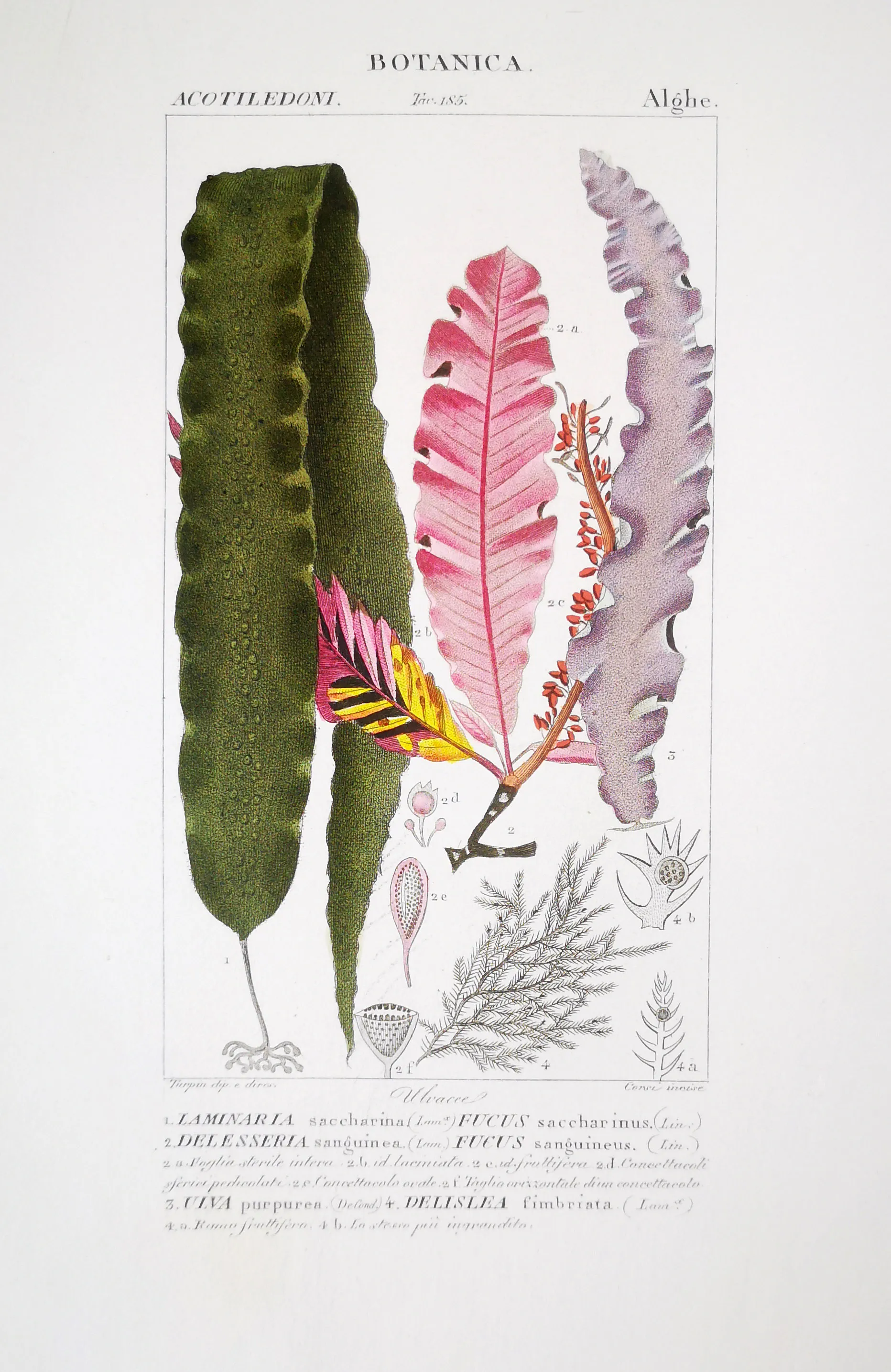
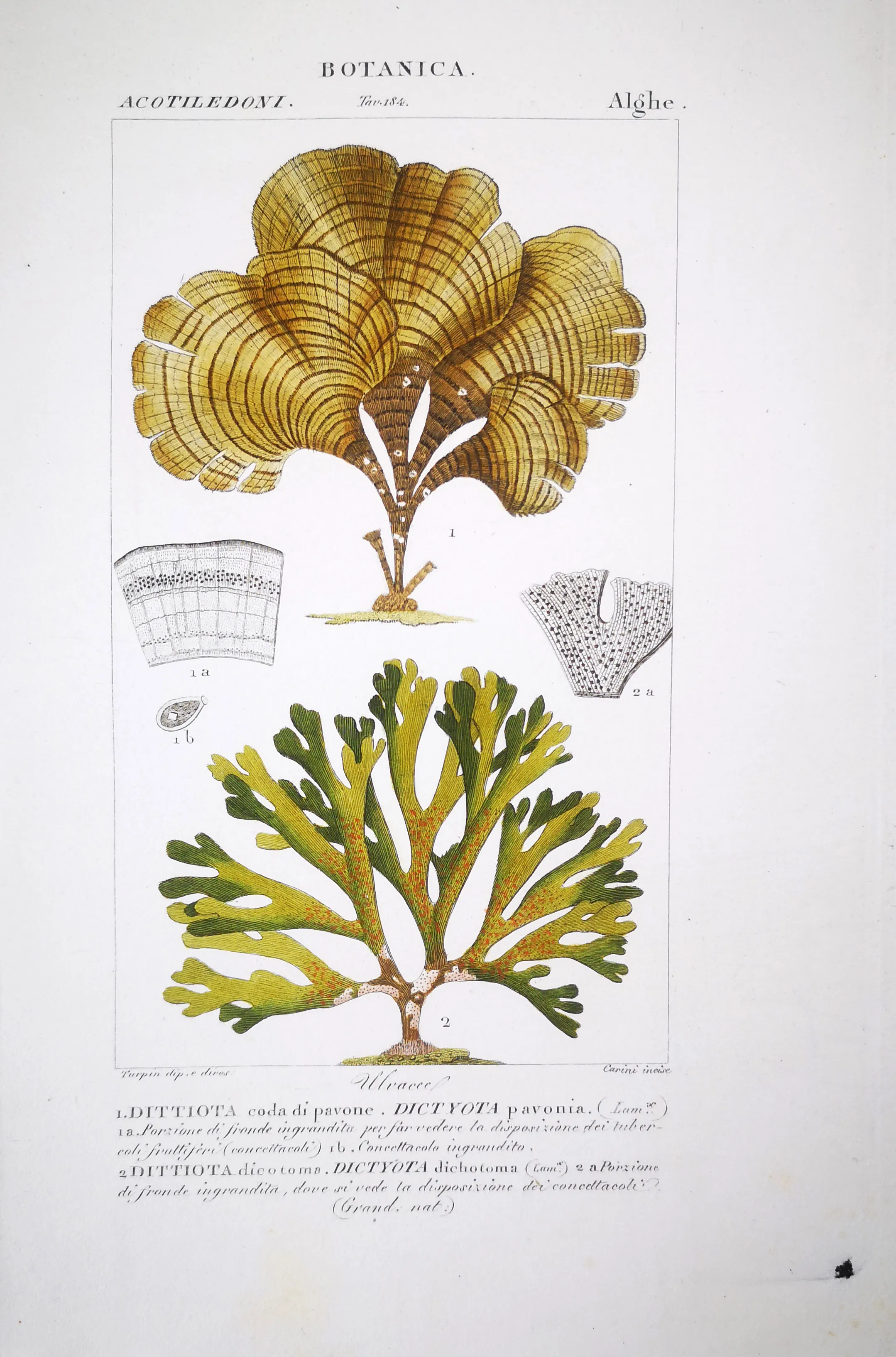
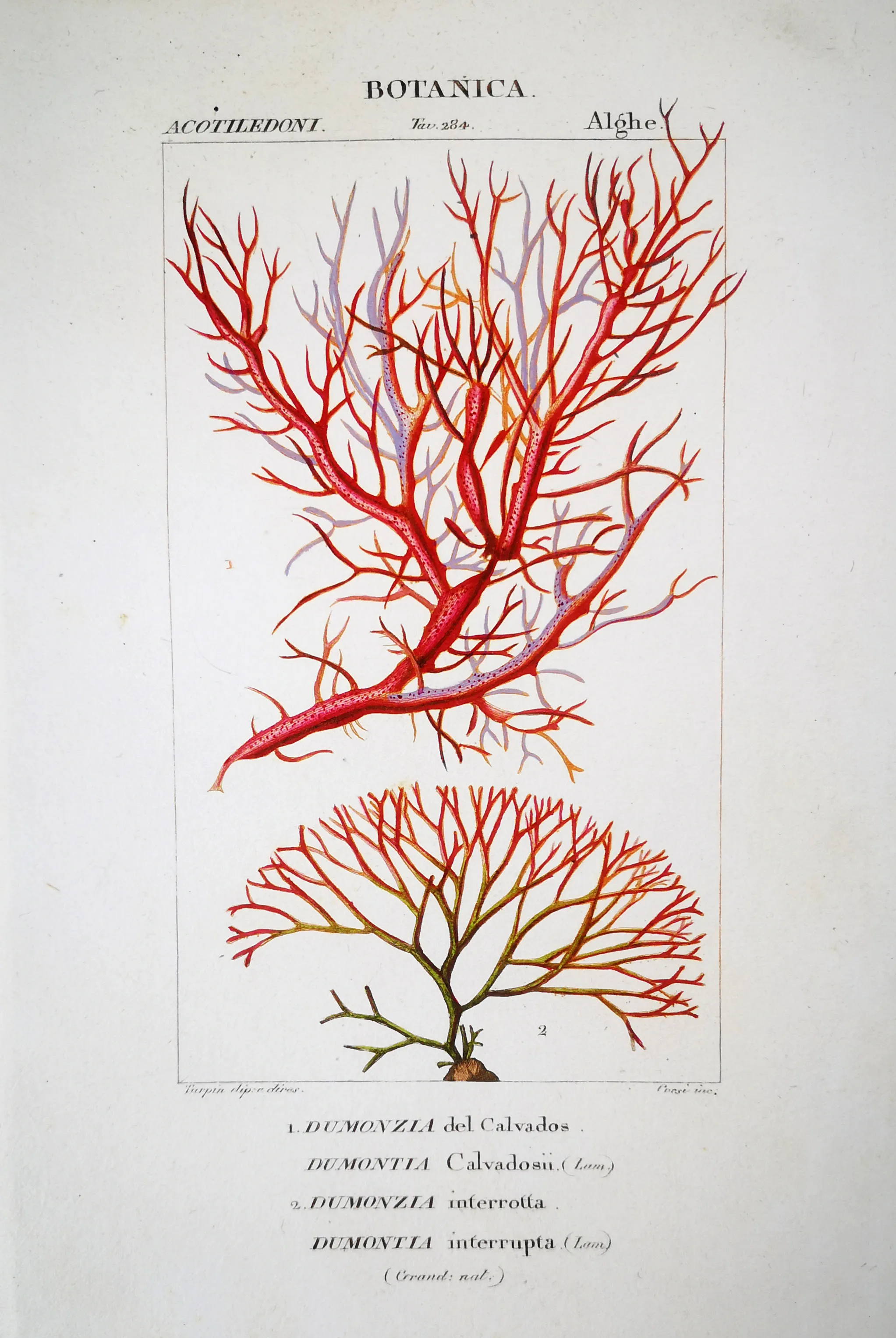
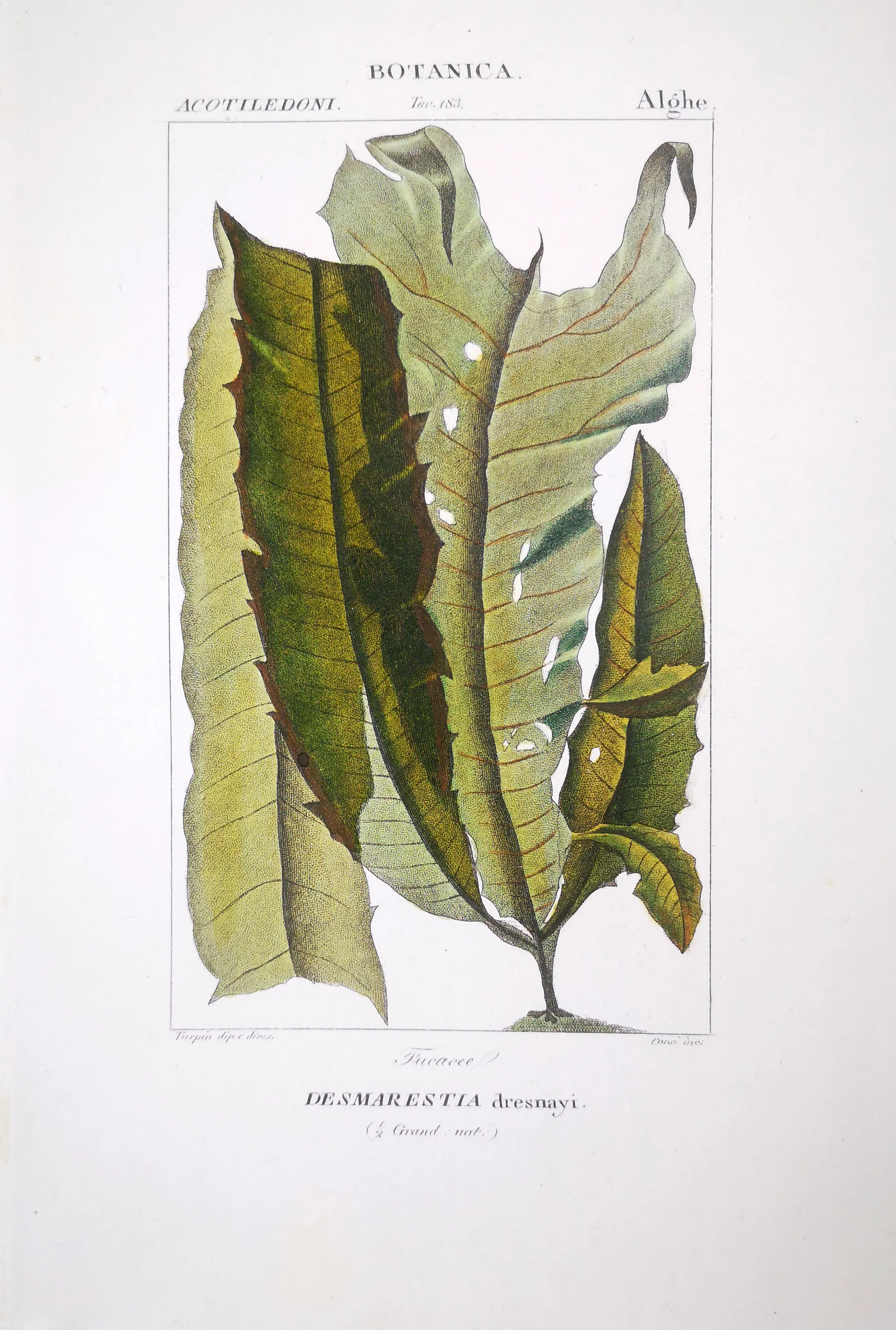
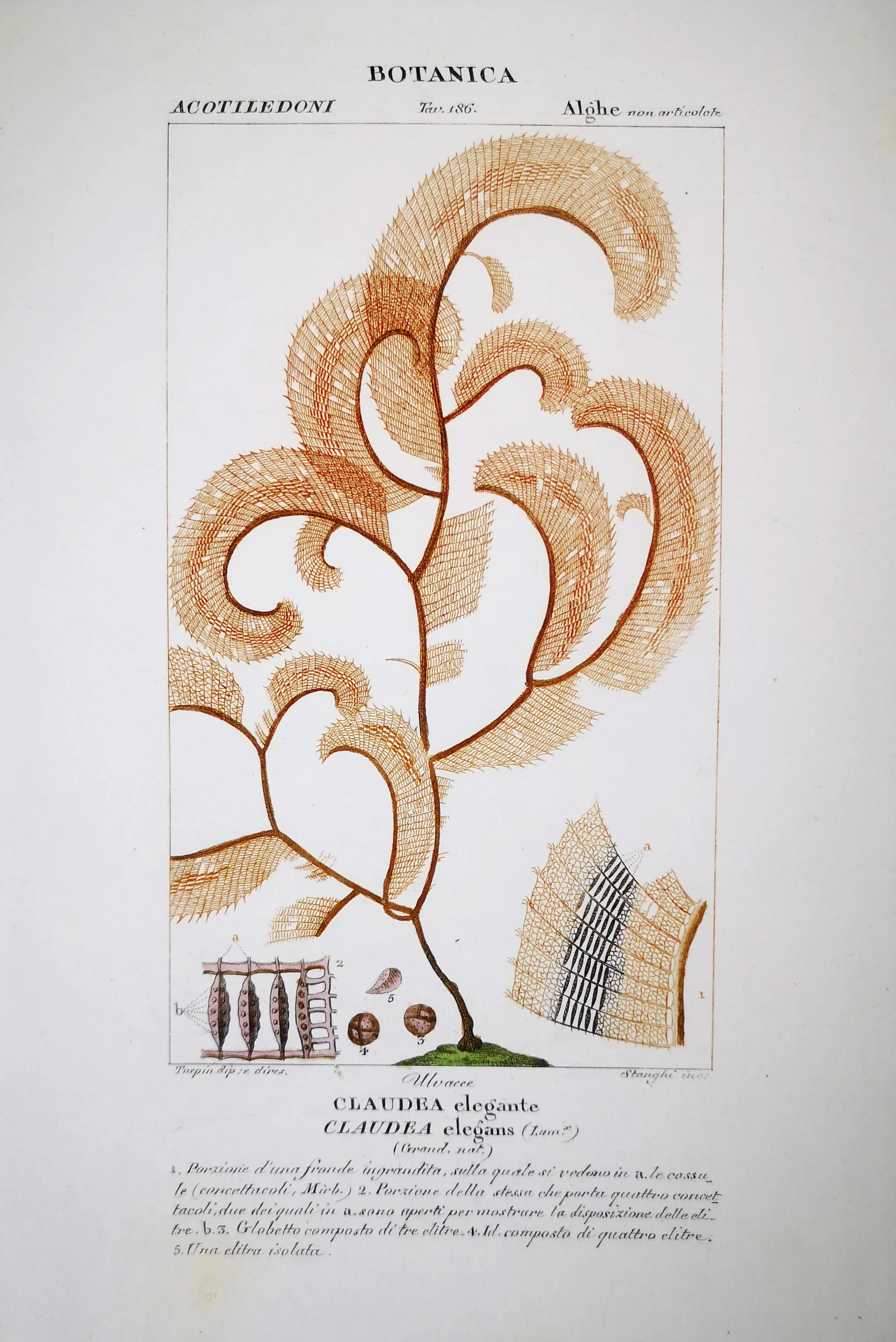
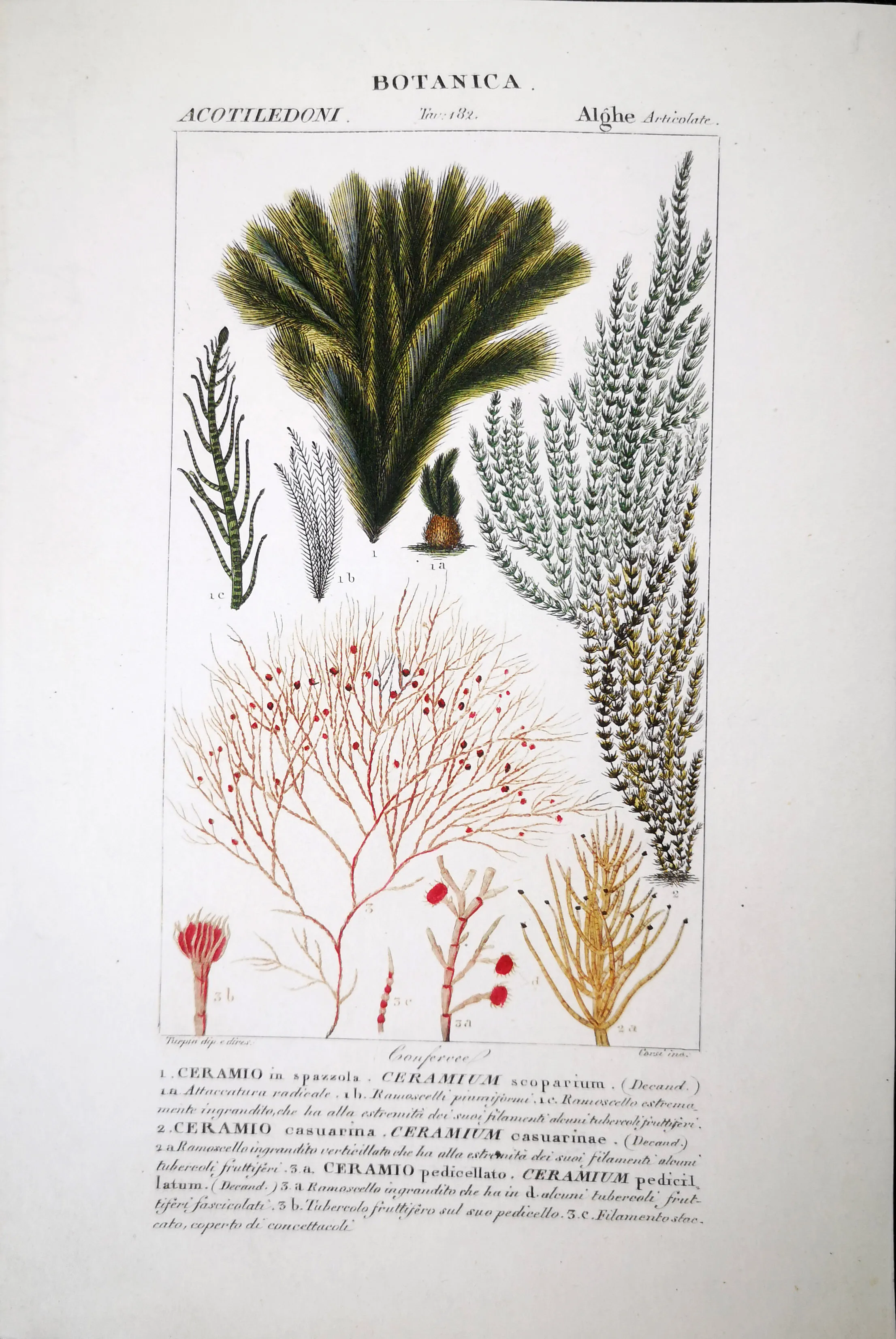
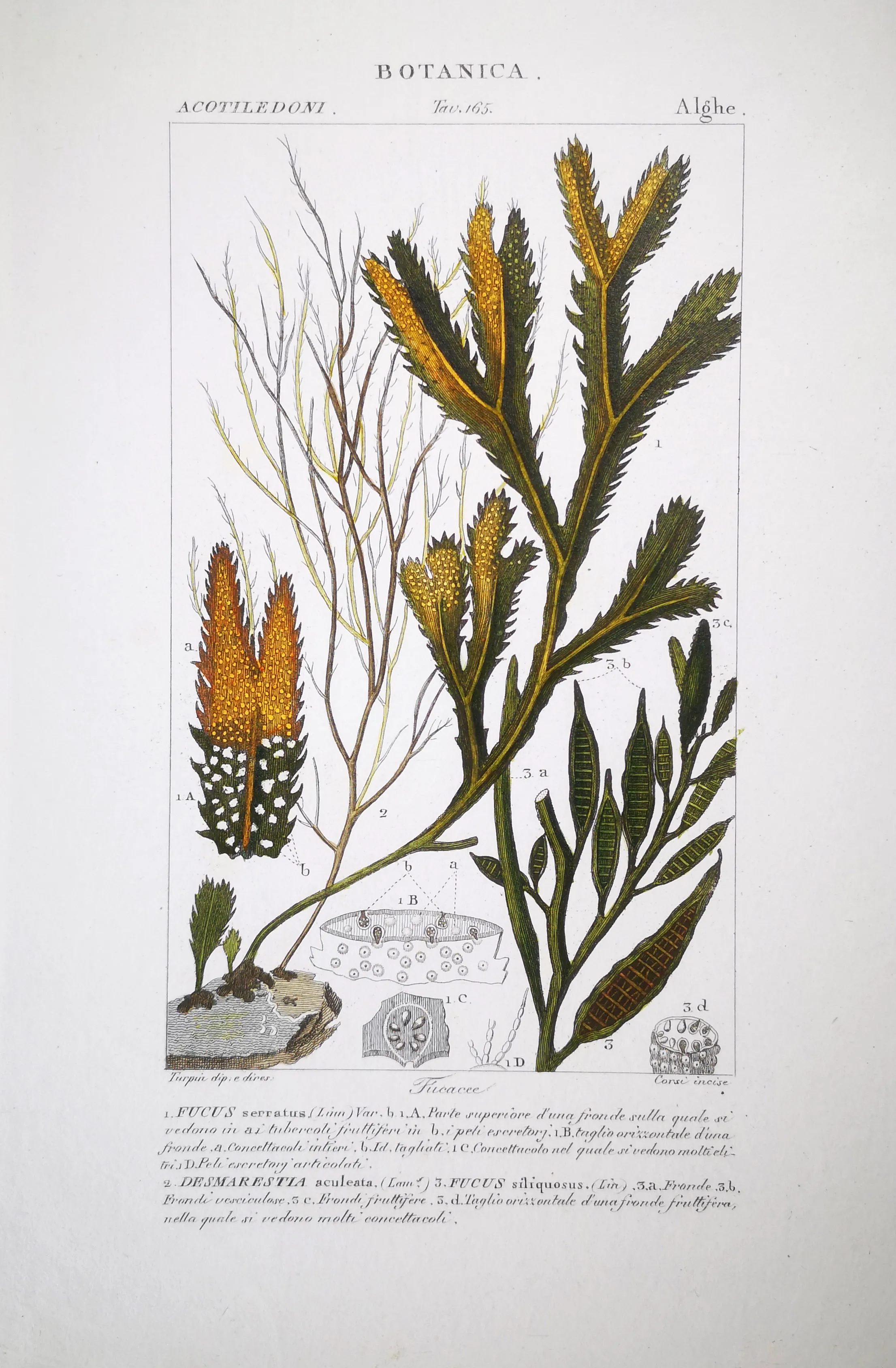
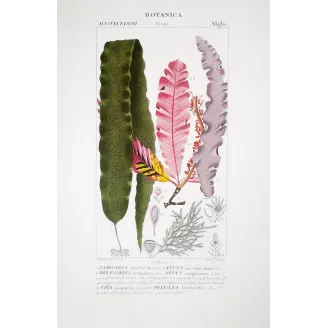
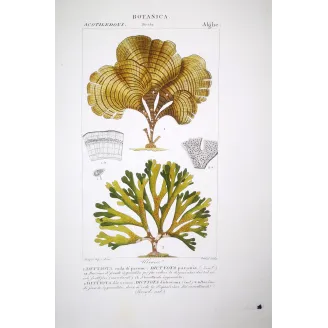
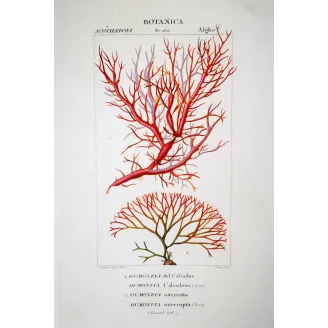
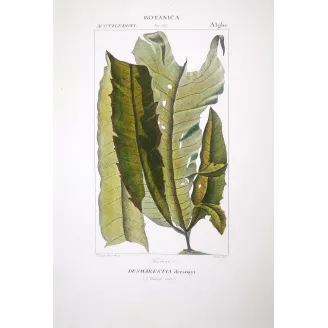
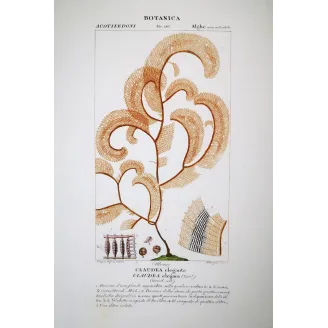
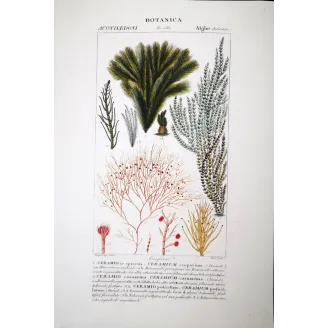
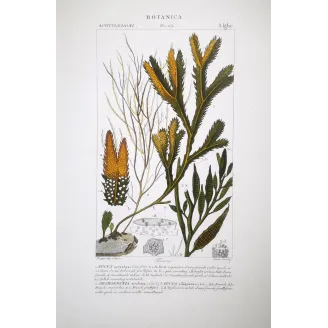
A unique lot of 7 hand-colored antique prints depicting various species of algae, illustrated by Turpin and Prêtre.
 Delivery policy
Your print will be carefully prepared and shipped worldwide via trusted couriers (UPS or similar).
 Authentic antique prints
Original engravings from the 17th–19th century.
This refined ensemble gathers seven original hand-coloured plates dedicated to marine botany, illustrated by Pierre Jean François Turpin for the Italian edition of the Dizionario di Scienze Naturali, published in Florence in the 1820s.
Preserved in uniform format (approx. 22 × 14 cm) and surviving together in remarkably consistent Like Brand New condition (LBN), these sheets form a coherent scientific chapter at a pivotal moment in the history of marine botany — when phycology was emerging as an autonomous discipline within natural science.
In the early nineteenth century, marine algae were objects of sustained intellectual inquiry rather than marginal curiosities. Coastal exploration, developments in marine chemistry, and the refinement of Linnaean taxonomy transformed sea vegetation into a field of European scientific and cultural relevance. These plates belong to that decisive period of classification and exchange.
Subjects represented include Laminaria saccharina, Fucus saccharinus, Fucus serratus, Delesseria sanguinea, Dumontia species, Dictyota pavonia, Dictyota dichotoma, Desmarestia dresnayi, Cladostephus elegans, and Ceramium species.
Laminaria and Fucus were central to early studies of iodine extraction and marine chemistry, linking coastal vegetation to medical and industrial advancement. The red algae Delesseria and Ceramium captivated naturalists for their vascular delicacy and ornamental translucence, while Dictyota pavonia exemplified the geometric order found in marine morphology — a feature admired for both taxonomic clarity and visual elegance.
Among the species represented, Laminaria saccharina — historically known as “sugar kelp” — occupies a particularly enduring position. Beyond its scientific relevance, this large brown alga has long been associated with coastal subsistence traditions and has re-emerged in contemporary Nordic cuisine as a refined marine ingredient. Its presence within the set therefore bridges scientific inquiry, coastal culture, and evolving culinary practice — reinforcing the broader cultural dimension of marine botany in the nineteenth century.
Taken together, these seven sheets document a moment when marine flora became both scientific subject and cultural object — studied, debated, engraved, and circulated across European intellectual networks through the authoritative medium of illustration.
While conceived as instruments of scientific transmission, these plates possess an aesthetic authority extending beyond documentation. The branching architectures of kelp and fucoids introduce structural gravitas, counterbalanced by the translucent refinement of red algae. The ensemble unfolds as a study in equilibrium — density and transparency, vertical thrust and radial dispersion.
Turpin’s hand-colouring operates within a restrained marine palette: olive greens, warm ochres, muted coral tonalities, and subtle umber inflections. These chromatic decisions are compositional as much as descriptive, guiding the eye across each sheet with deliberate cadence.
Seen together, the seven plates articulate a rhythm that feels at once organic and architectural. Their visual language anticipates forms later admired in modern abstraction, yet remains firmly anchored in the disciplined clarity of nineteenth-century natural history.
Each plate is preserved in Like Brand New condition (LBN), meaning exceptionally well-kept impressions with fresh original hand-colouring and only minimal, natural signs of age consistent with early nineteenth-century paper. The sheets remain clean, structurally sound, and visually balanced. No significant foxing, staining, or restoration has been observed. The remarkable uniformity of condition across the seven plates reinforces the integrity of the ensemble as a coherent historical subset.
These plates form part of the distinguished Sacchetti Collection, preserving a noble Florentine corpus of early nineteenth-century natural history illustration.
For further insight into Turpin’s contribution to botanical science, see: Pierre Jean François Turpin — The Botanical Illustrator of Natural Harmony .
Specific References
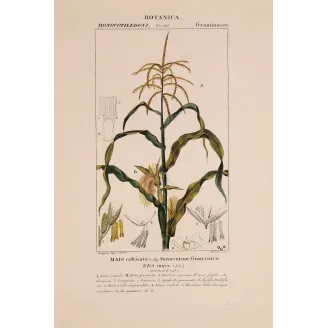
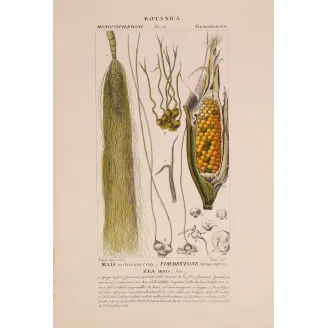
Double plate of cultivated maize (Zea mays) from Turpins botanical series.
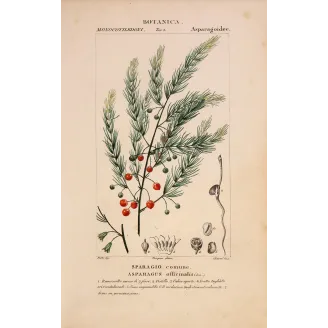
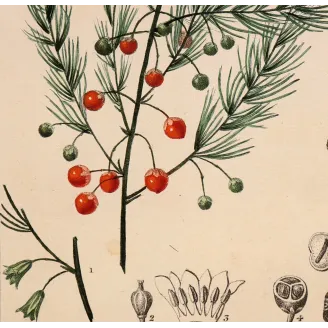
Botanical print of Asparagus officinalis by Turpin, featuring vivid orange berries.
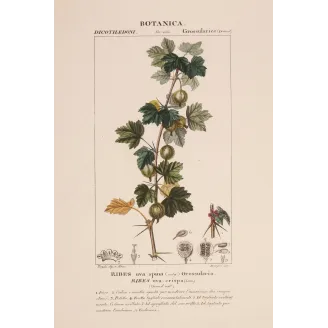
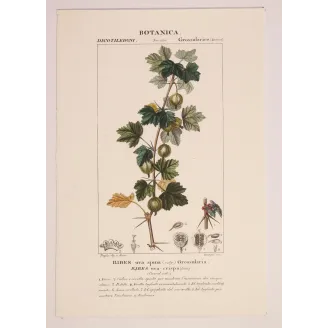
A charming depiction of *Ribes uva-crispa*, the gooseberry plant, detailed with its spiny stems and translucent green fruits.
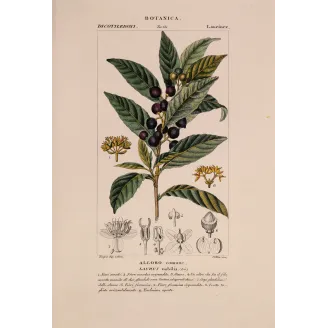
Graceful composition of bay laurel with fruits, blossoms, and internal flower structure.
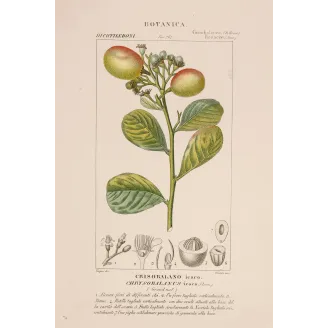
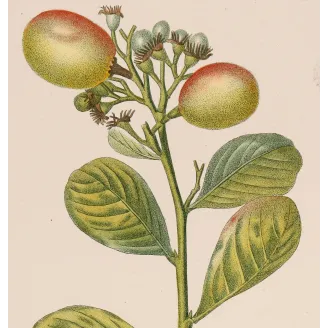
Elegant hand-colored botanical engraving of *Chrysobalanus icaco*, showing the round fruits and smooth glossy leaves in rich natural hues.
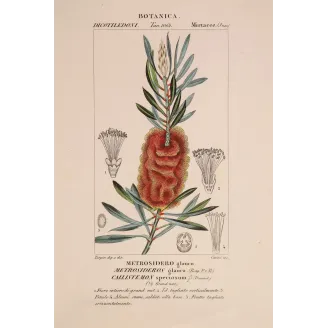
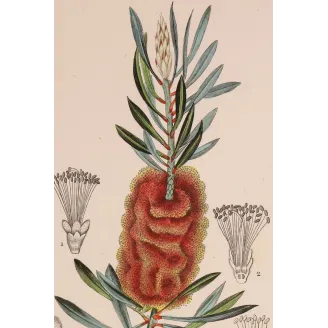
Stunning antique print of the red-flowering Callistemon, also known as bottlebrush.
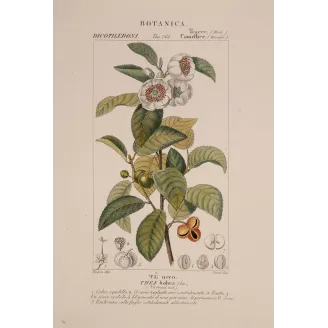
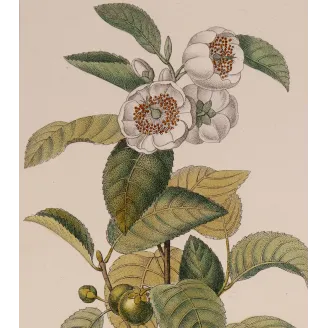
Delicate and detailed illustration of the tea plant, with floral and seed elements beautifully depicted.
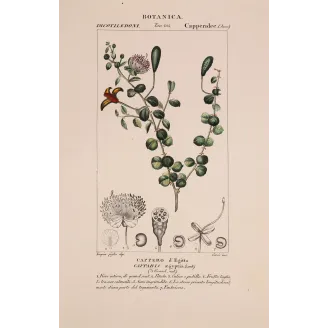
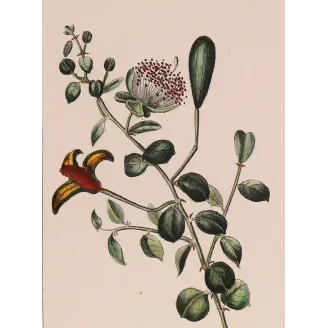
Vibrant caper plant illustration with both flowers and fruiting structures.
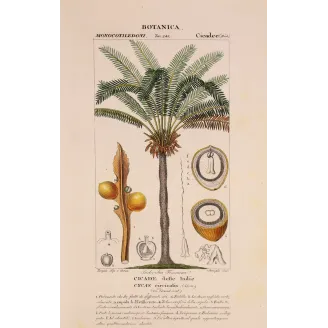
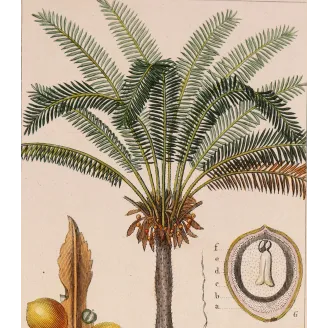
A detailed antique plate of Cycas circinalis, the Indian Sago Palm, showing the female specimen and fruit anatomy.
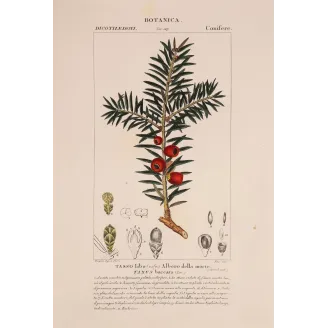
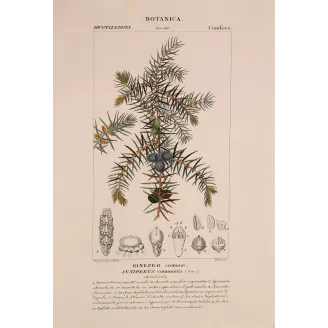
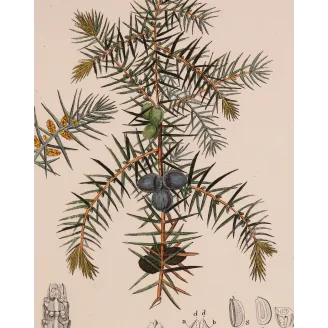
Elegant hand-colored plate of the juniper plant with berries and cone structure.
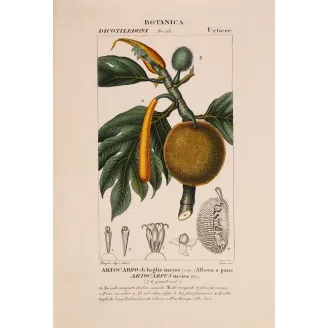
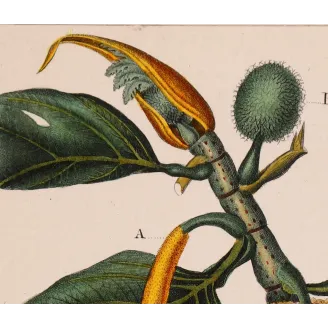
An extraordinary 19th-century engraving of *Artocarpus incisa*, the breadfruit tree, showcasing its bold leaves and unique fruit texture.
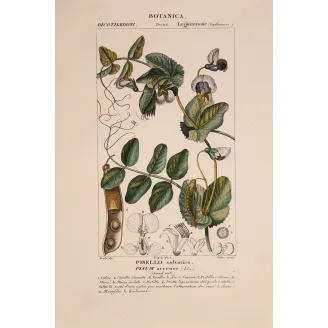
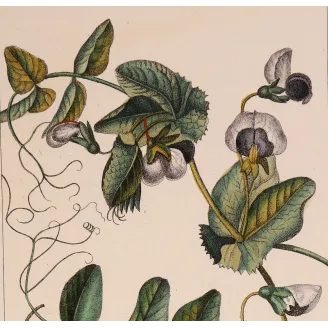
Colorful botanical illustration of Pisum arvense, wild pea, engraved by Turpin.
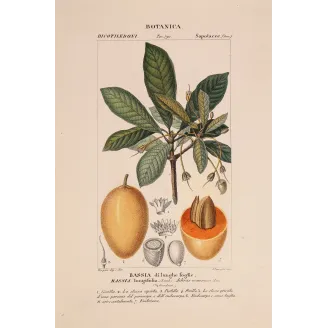
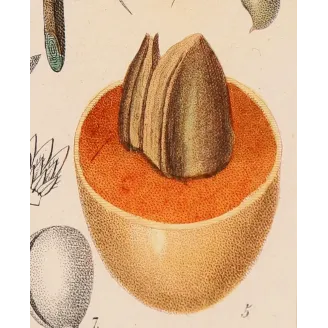
A rare depiction of *Bassia longifolia*, showing its elongated leaves and fruit sections in precise scientific detail and soft hand-colored tones.
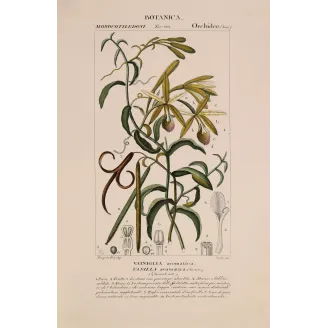
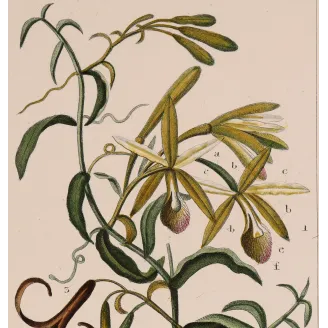
Delicate orchid illustration showing flower, pod and internal anatomy of vanilla.
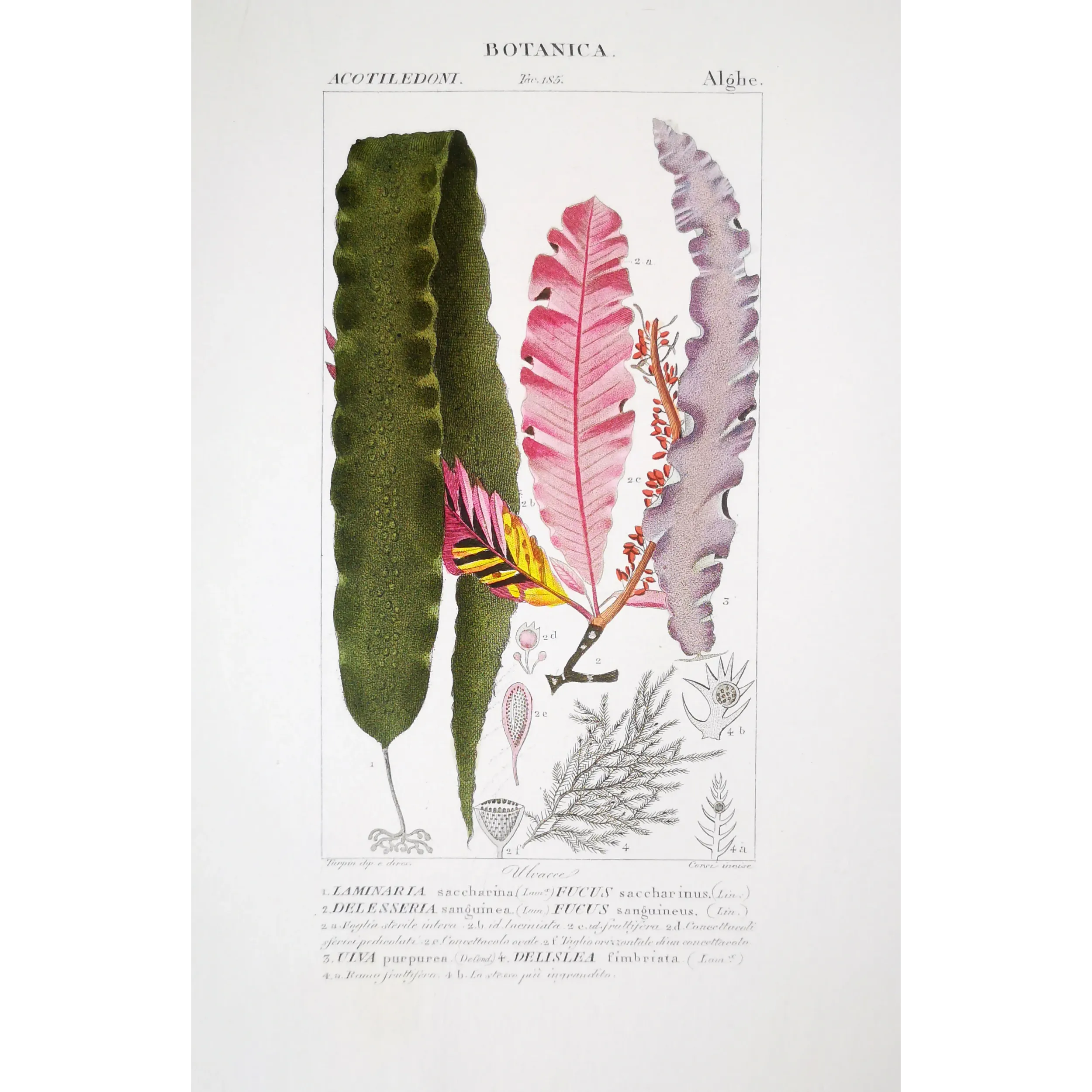
A unique lot of 7 hand-colored antique prints depicting various species of algae, illustrated by Turpin and Prêtre.