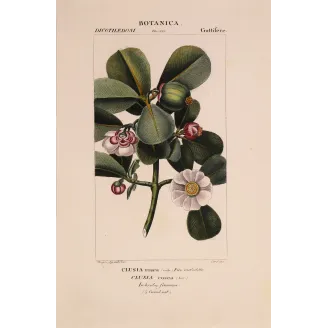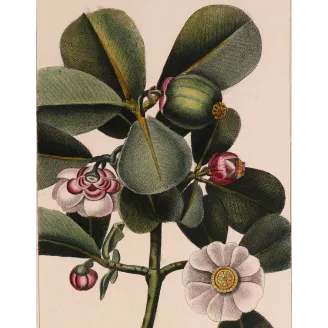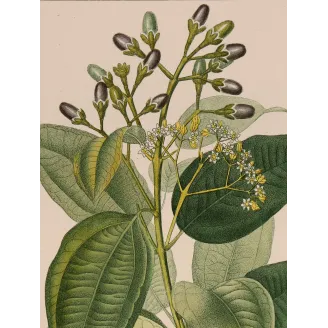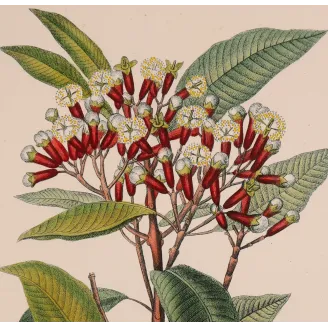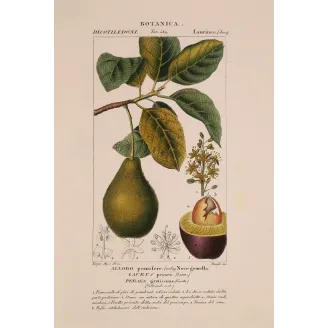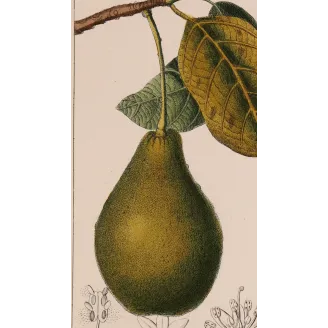
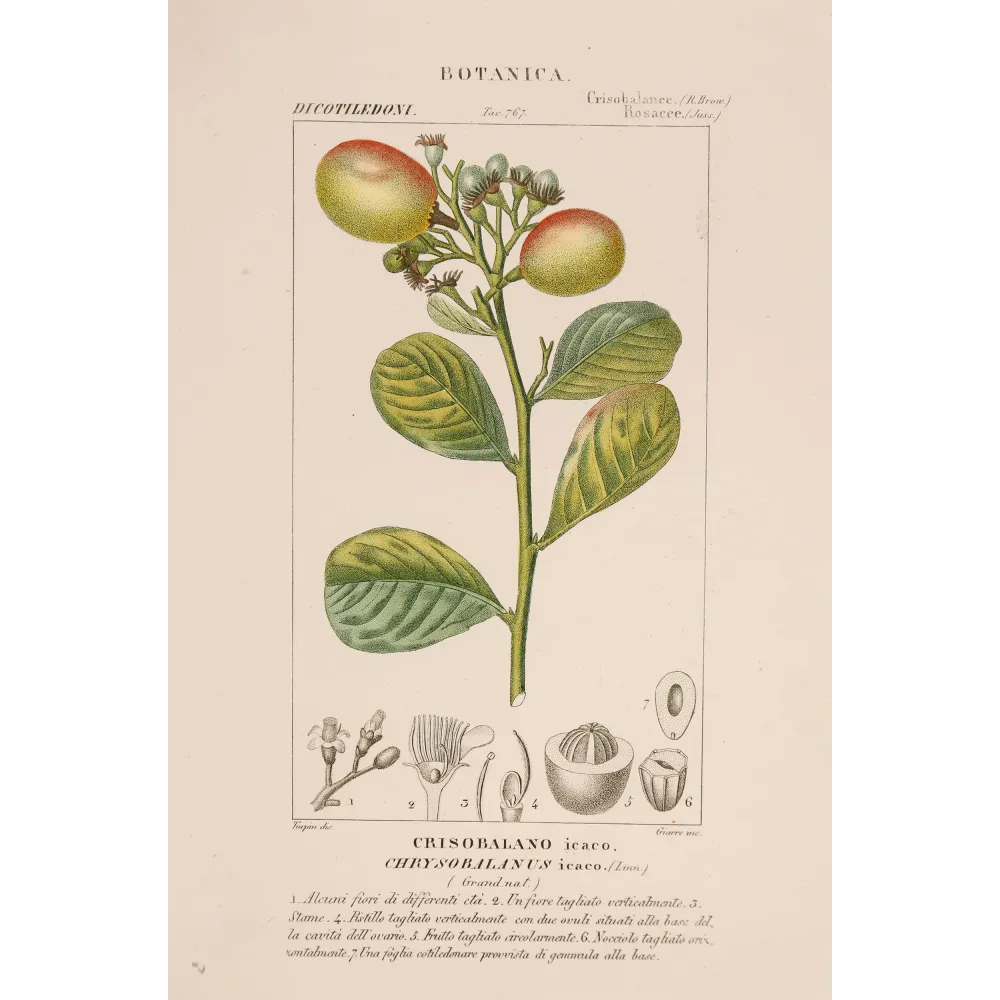
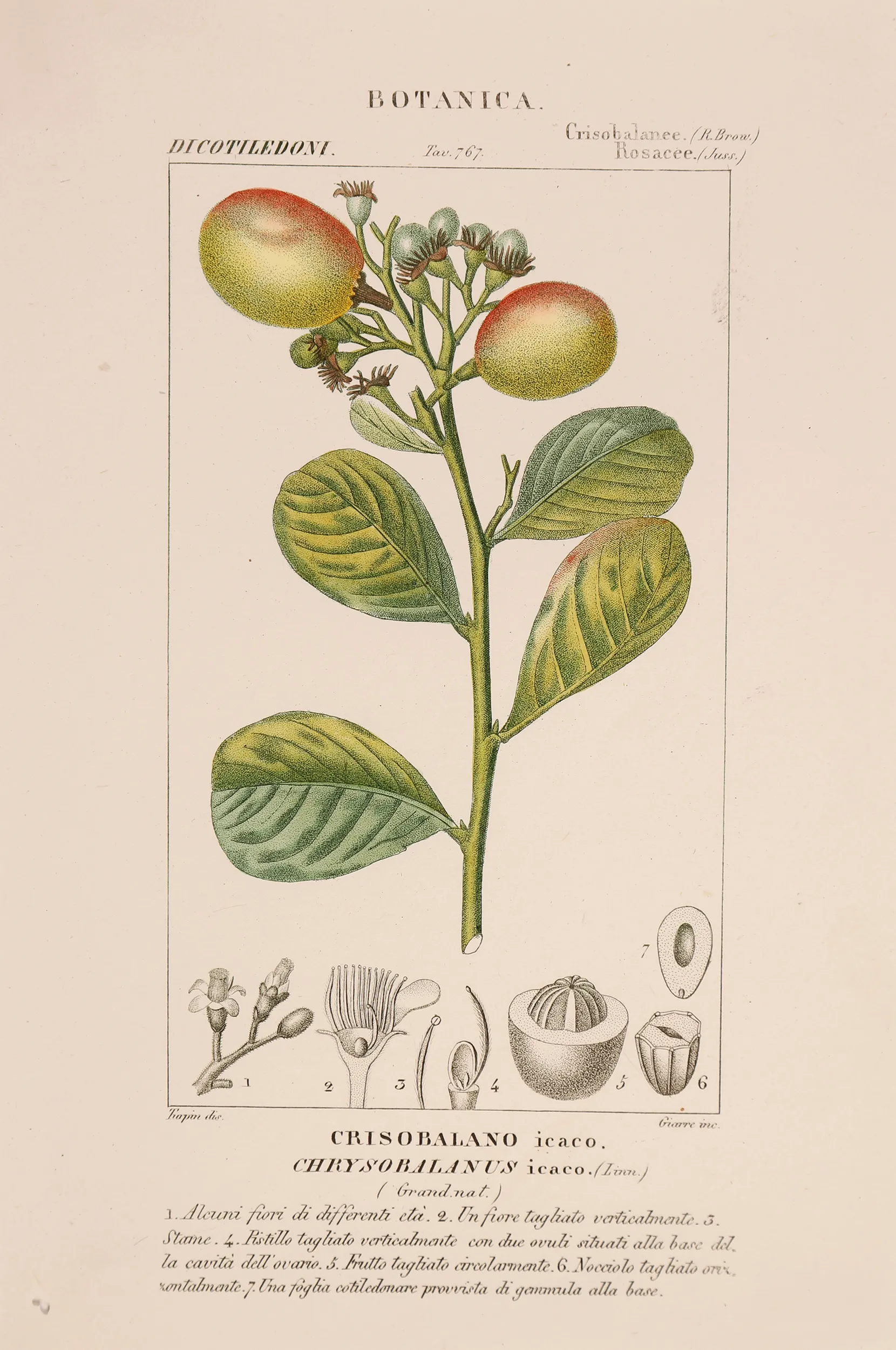
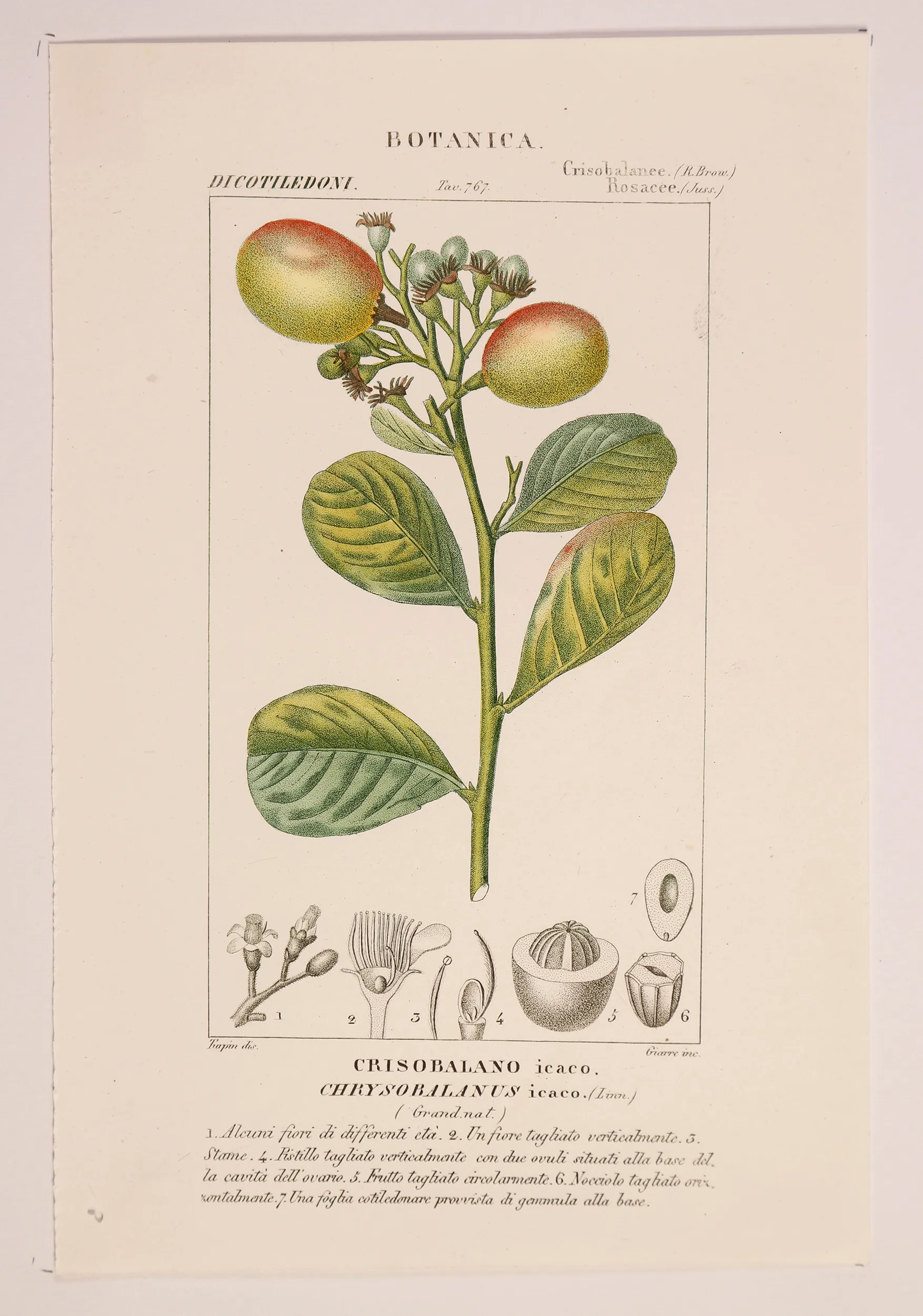
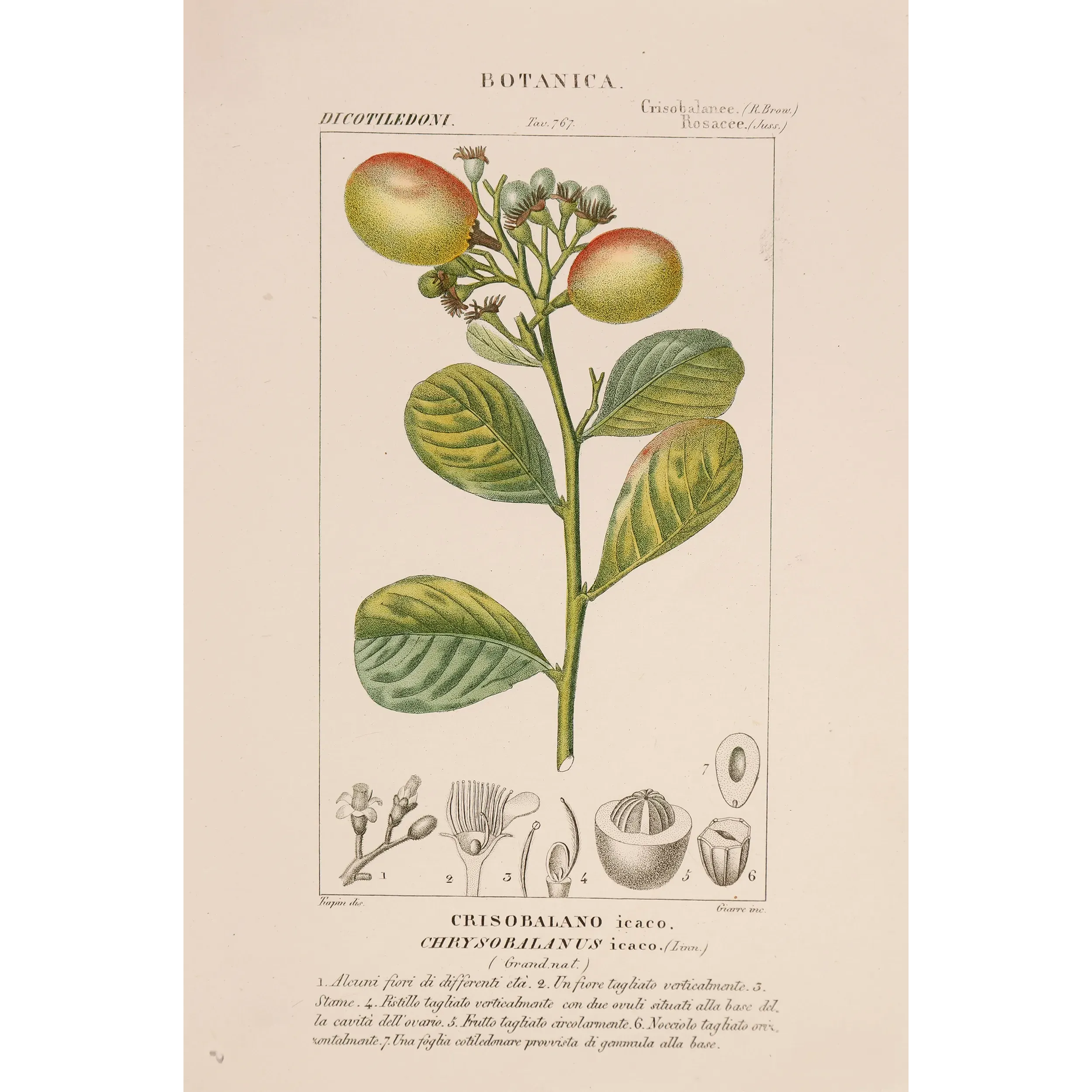
Elegant hand-colored botanical engraving of *Chrysobalanus icaco*, showing the round fruits and smooth glossy leaves in rich natural hues.
 Delivery policy
Your print will be carefully prepared and shipped worldwide via trusted couriers (UPS or similar).
 Authentic antique prints
Original engravings from the 17th–19th century.
This original hand-colored engraving depicts Chrysobalanus icaco, commonly known as cocoplum. The plate presents a fruiting branch with mature and developing fruits, accompanied by detailed botanical studies of flower and seed structure.
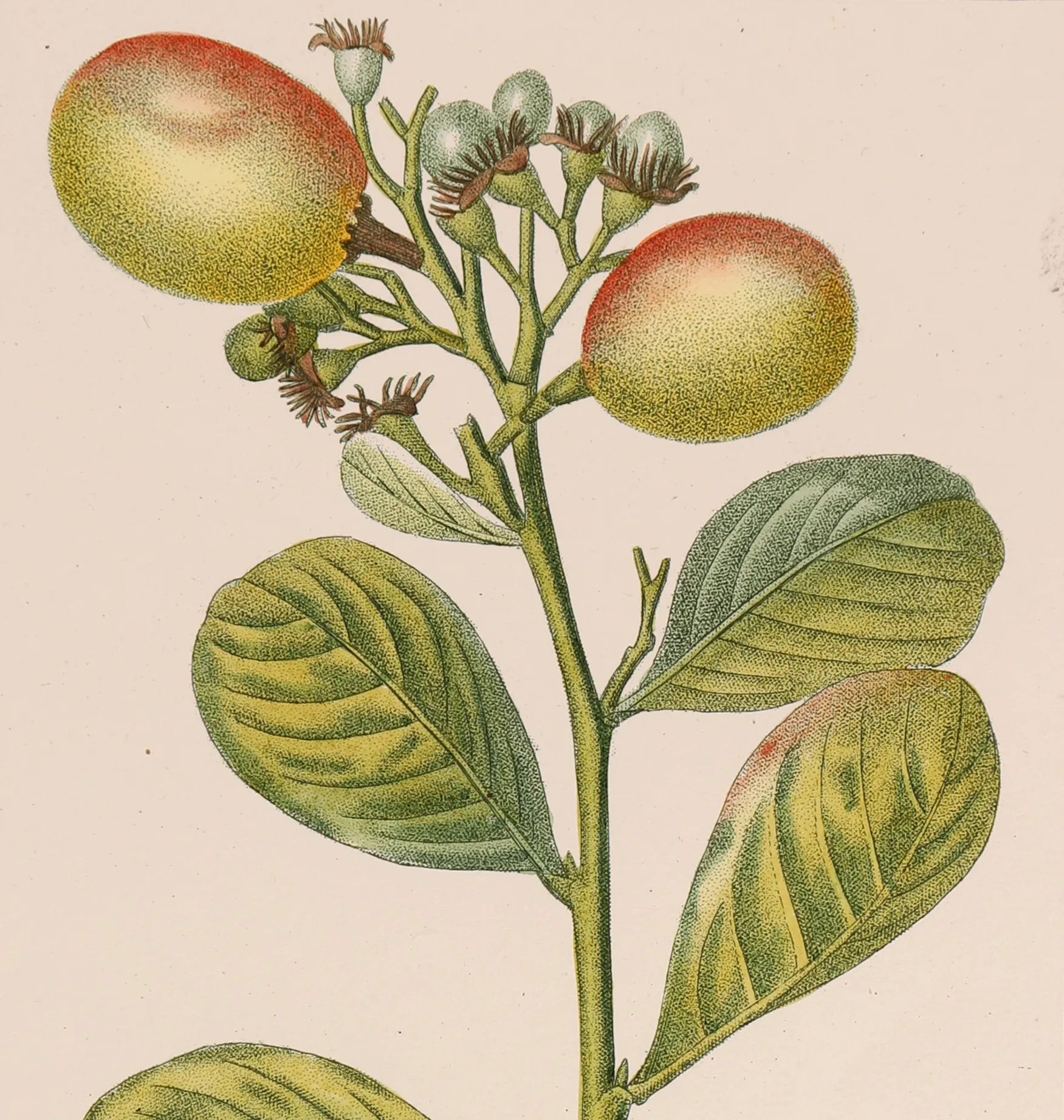
The two rounded fruits, softly transitioning from green to warm coral blush, provide chromatic balance within the composition. Their smooth surfaces contrast with the thick, leathery leaves, whose pronounced venation is rendered with careful tonal modulation.
The engraving belongs to the Italian edition of the Dizionario di Scienze Naturali (Florence, Battelli press), a monumental early nineteenth-century encyclopedic work dedicated to systematic natural history.
— • —
The composition is restrained and vertically composed, allowing the fruit to hover lightly above the supporting foliage. Unlike more saturated tropical subjects, the cocoplum’s palette remains subtle — olive greens, soft yellows, and muted red highlights — creating an atmosphere of calm botanical clarity.
The botanical diagrams below introduce structural depth, revealing floral anatomy and sectional views of the fruit. Turpin’s linework remains disciplined and clean, preserving both decorative harmony and scientific precision.
Chrysobalanus icaco is native to coastal regions of the Caribbean and tropical Americas. The plant is particularly notable for its resilience: it thrives in sandy soils and tolerates saline conditions, forming part of the ecological fabric of tropical shorelines.
In early nineteenth-century botanical literature, such species documented not only edible fruits but also the environmental adaptations of tropical flora. Within Turpin’s broader corpus of “fruits of the global age,” the cocoplum represents botanical endurance — a plant shaped as much by coastal winds and salt air as by cultivation.
This plate forms part of the historic Dizionario di Scienze Naturali, once preserved within a noble library and today housed in the Sacchetti Collection. Each engraving embodies a period when scientific inquiry and artisanal execution were inseparable — from the engraved copperplate matrix to the individually applied hand-colouring.
To explore the refined provenance of these works, we invite you to read our editorial feature “Not Just Another Print”.
The engraving is preserved in excellent antique condition. The sheet presents clean margins and a sharp, well-defined impression. The original early nineteenth-century smooth wove paper remains stable and evenly toned. No watermark has been observed. The hand-colouring retains clarity, particularly in the delicate tonal transitions of the fruit and the layered foliage.
For further context on Pierre Jean François Turpin and his contribution to nineteenth-century botanical science, see our editorial feature:
Pierre Jean François Turpin – The Botanical Illustrator of Natural Harmony
Specific References
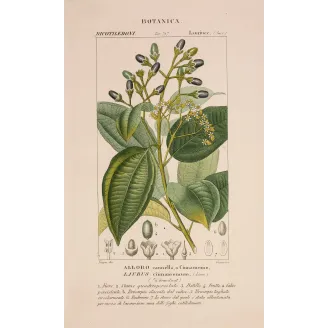
Graceful composition of bay laurel with fruits, blossoms, and internal flower structure.
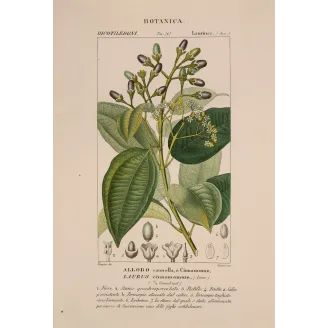
Finely detailed print of Laurus cinnamomum by Turpin, from the Dizionario di Scienze Naturali.
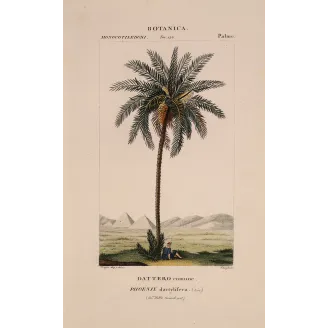
Detailed antique illustrations of the date palm tree and its floral and fruit anatomy.
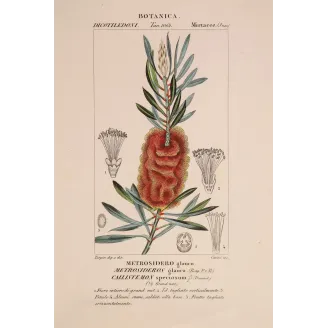
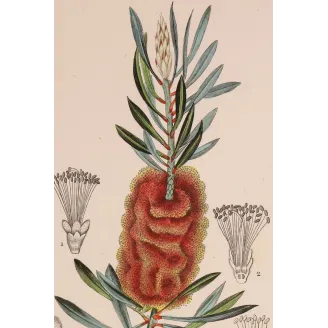
Stunning antique print of the red-flowering Callistemon, also known as bottlebrush.
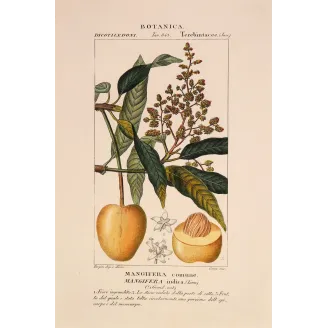
Vibrant hand-colored depiction of *Mangifera indica*, the mango tree, highlighting its lush leaves, golden fruit, and floral details.
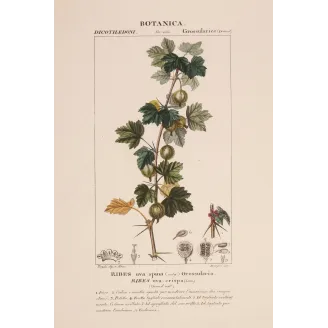
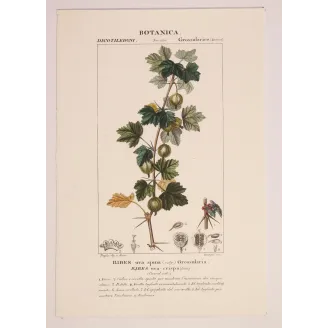
A charming depiction of *Ribes uva-crispa*, the gooseberry plant, detailed with its spiny stems and translucent green fruits.
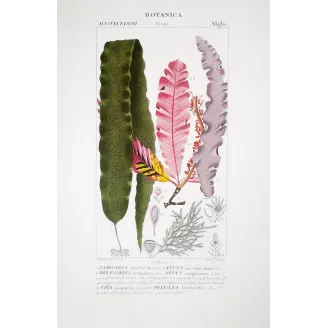
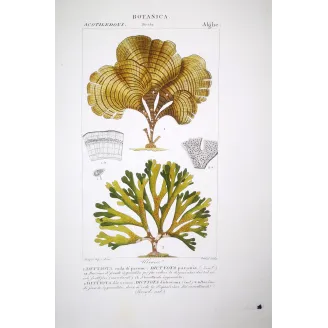
A unique lot of 7 hand-colored antique prints depicting various species of algae, illustrated by Turpin and Prêtre.
Elegant illustration of Laurus cinnamomum, showing leaves, flowers and seeds.
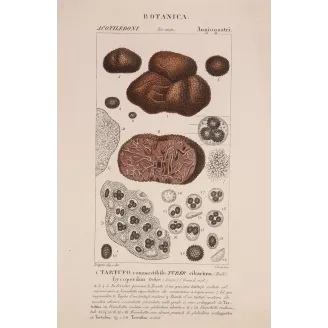
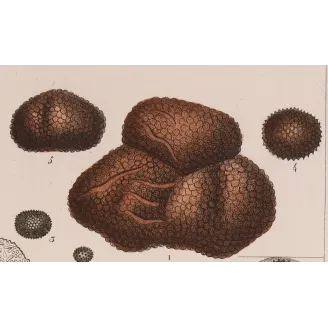
Unusual and fascinating botanical study of truffle morphology, rich in scientific detail.
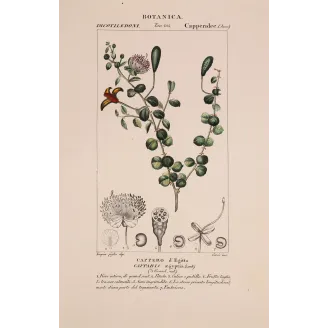
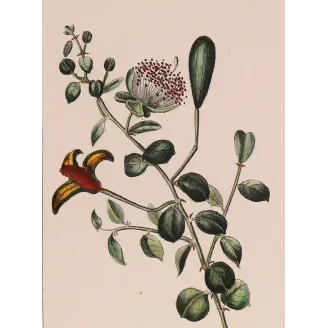
Vibrant caper plant illustration with both flowers and fruiting structures.
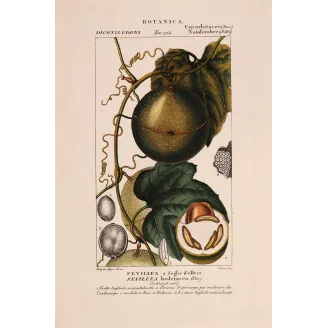
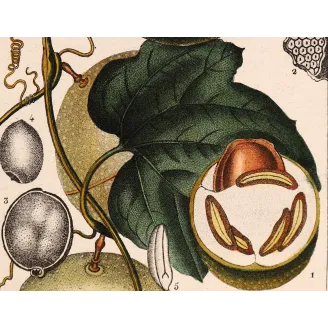
A coordinated pair of engravings depicting *Fevillea hederacea*, with intricate tendrils and elegant fruit structure, hand-colored with precision.
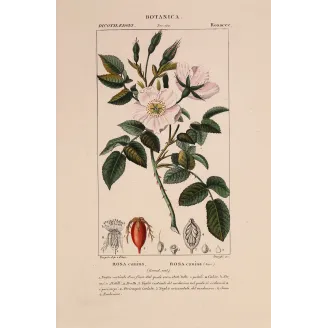
Delicate dog rose flower with soft pink petals and fine botanical details.
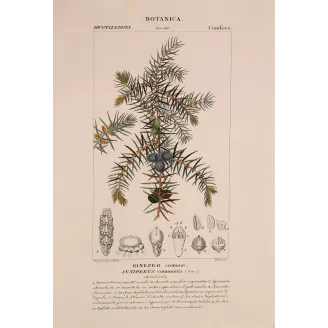
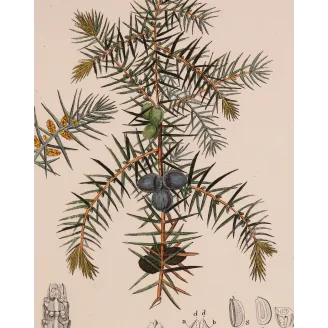
Elegant hand-colored plate of the juniper plant with berries and cone structure.
Botanical plate of avocado with whole fruit, seed, and internal anatomy.
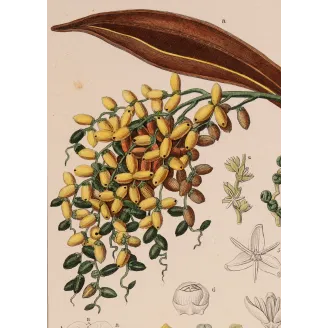
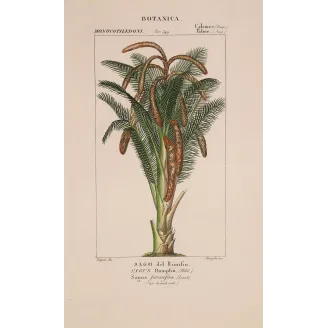
A pair of plates dedicated to the sago palm tree and its structural details.
Elegant hand-colored botanical engraving of *Chrysobalanus icaco*, showing the round fruits and smooth glossy leaves in rich natural hues.