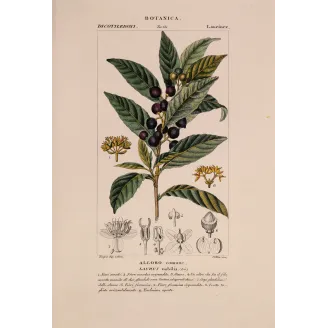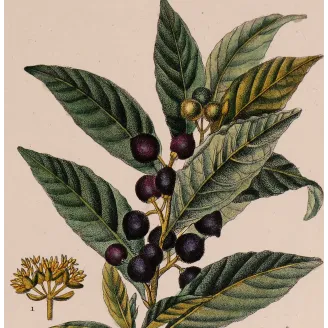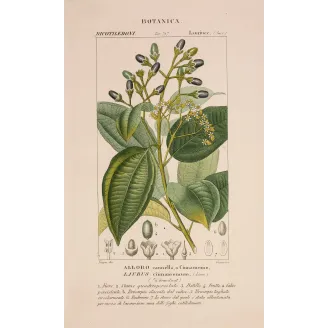
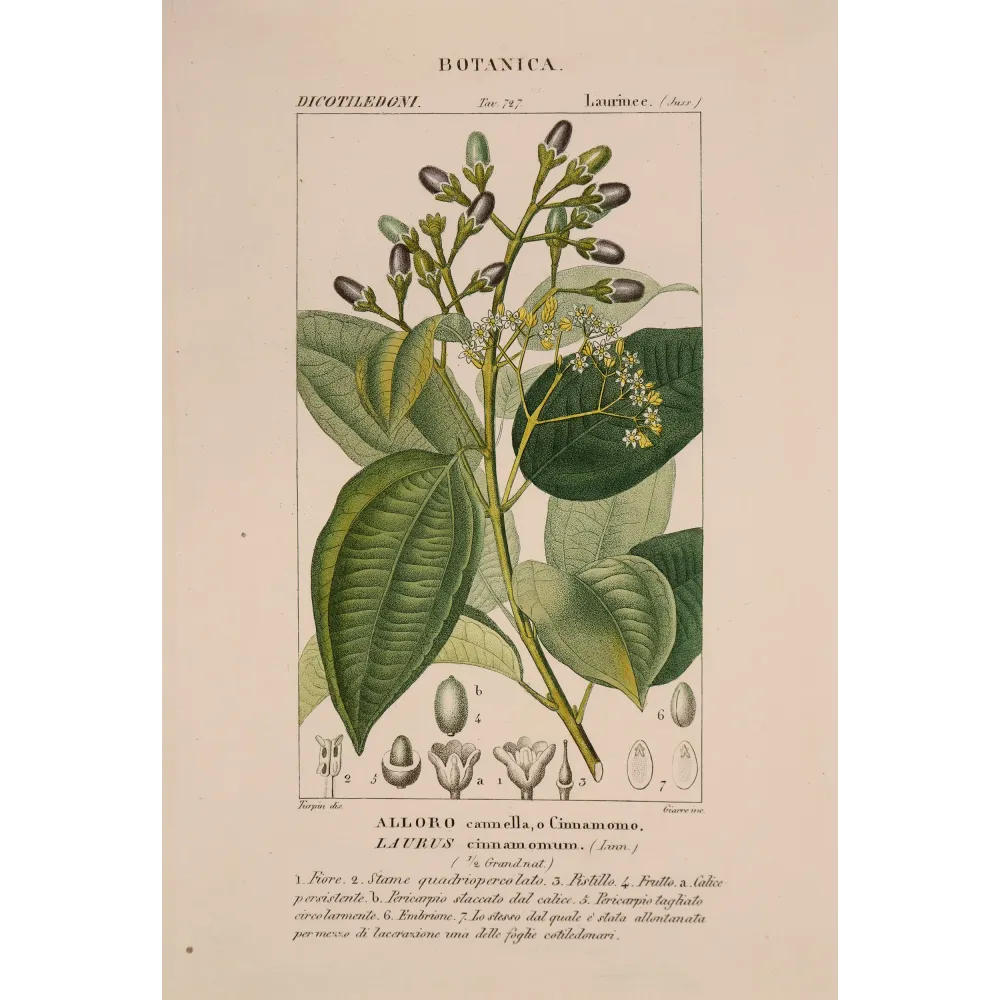
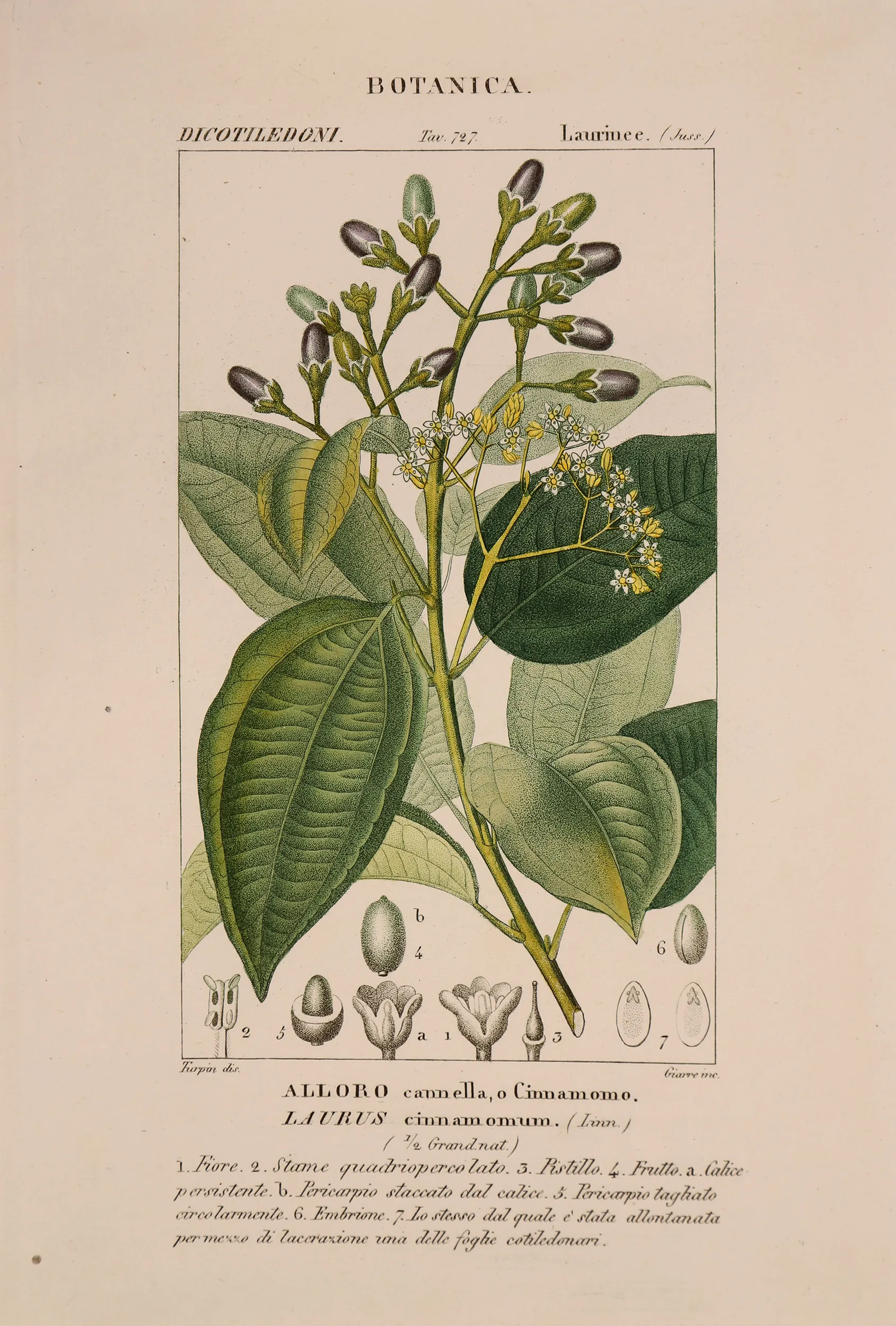
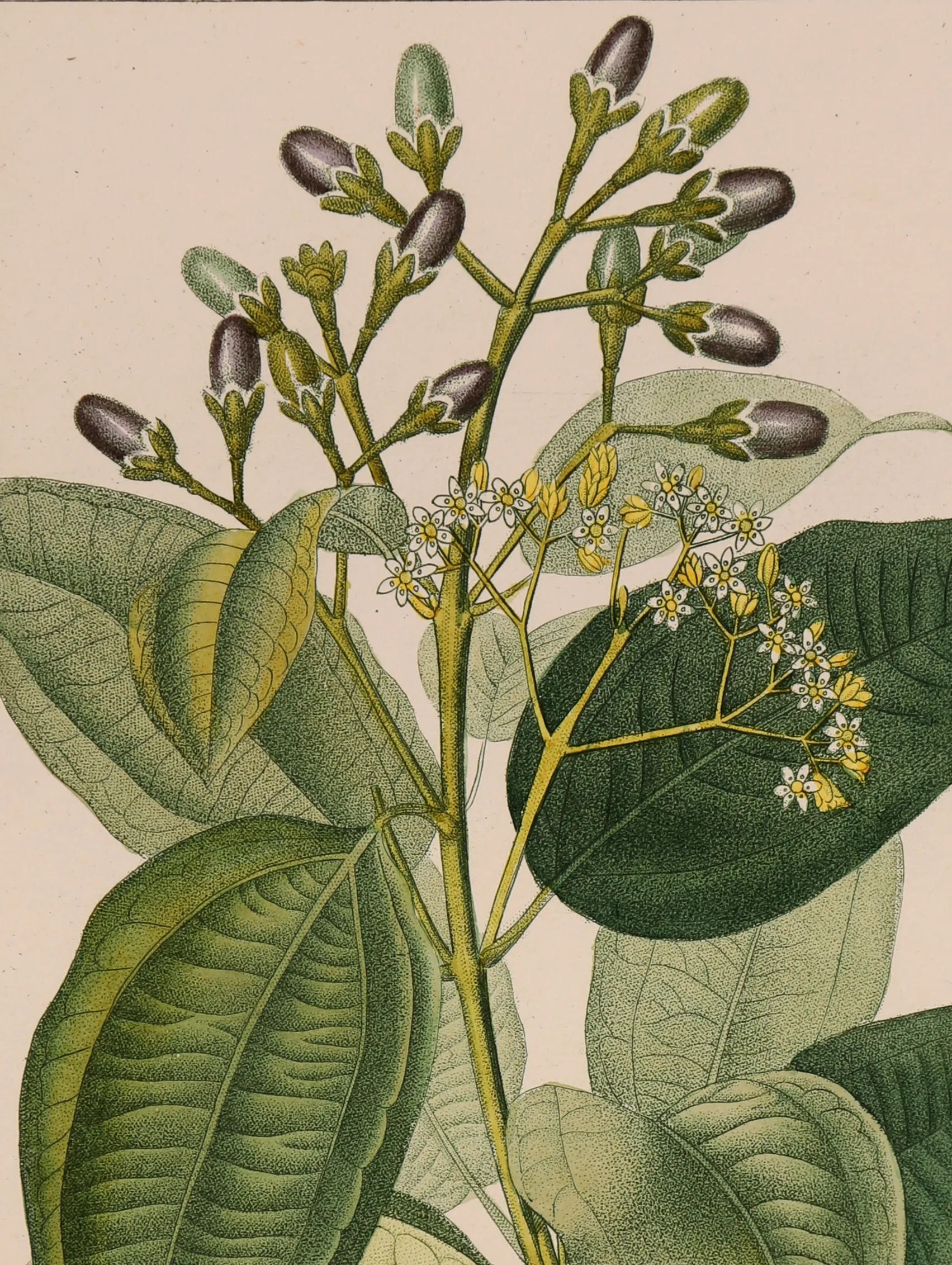

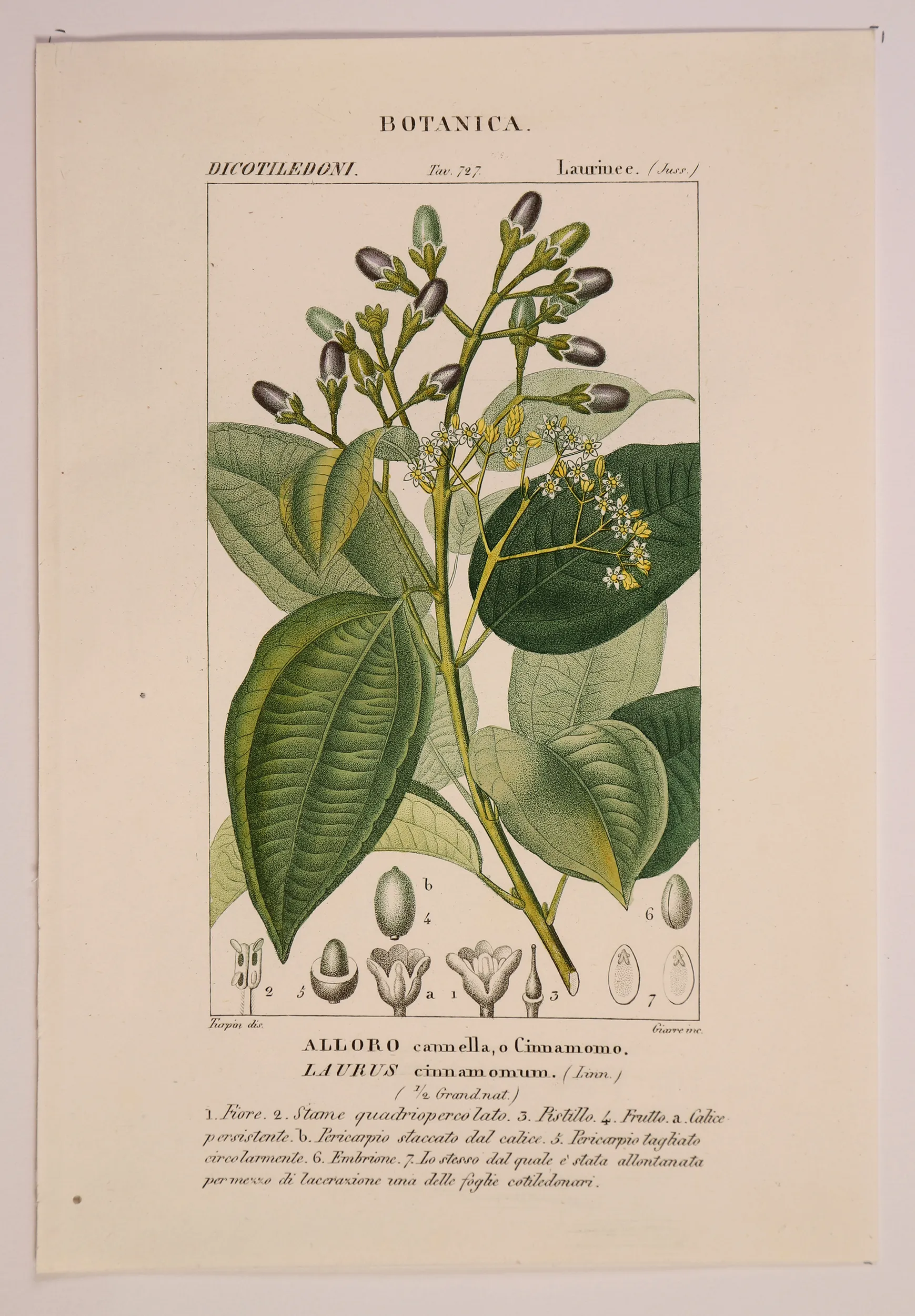
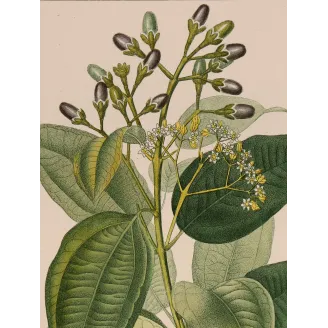
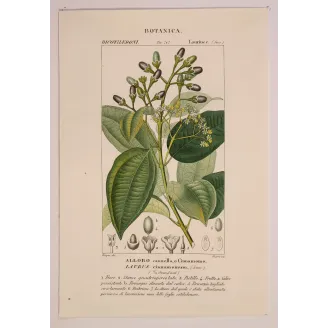
Elegant illustration of Laurus cinnamomum, showing leaves, flowers and seeds.
 Delivery policy
Your print will be carefully prepared and shipped worldwide via trusted couriers (UPS or similar).
 Authentic antique prints
Original engravings from the 17th–19th century.
This refined early nineteenth-century engraving depicts Laurus cinnamomum, historically associated with cinnamon and aromatic laurel species. The composition presents the plant in a poised vertical arrangement, combining broad, luminous foliage with delicate flowering clusters and developing fruit.
The plate belongs to the Italian edition of the Dizionario di Scienze Naturali, printed in Florence by the Battelli press. As with the finest productions of this monumental work, the engraving balances scientific precision with an understated decorative harmony, characteristic of Pierre Jean François Turpin’s botanical vision.
Far from a mere ornamental representation, this sheet reflects the Enlightenment ambition to catalogue economically and culturally significant plants within a rigorous visual system.
— • —
The composition is structured around a central stem that gently divides the sheet, allowing the large ovate leaves to unfold with measured rhythm. The tonal gradations of green — ranging from deep emerald to pale olive — create a subtle interplay of depth and translucency. The small clusters of pale blossoms introduce visual delicacy, counterbalanced by the darker developing fruit at the upper nodes.
Below the principal figure, analytical studies of floral and fruit structures reinforce the scientific register without disturbing the overall harmony. The plate reads simultaneously as botanical documentation and as a refined decorative object suitable for libraries, studies, and elegant interiors.
Laurus cinnamomum, historically linked to cinnamon-producing species within the Lauraceae family, occupies a significant place in the history of global trade. Aromatic barks and leaves from related species were transported across Mediterranean and Asian trade networks for centuries, becoming commodities of luxury and medicinal reputation. By the early nineteenth century, naturalists sought to stabilise their classification within emerging botanical systems. The present engraving reflects this effort, presenting the plant with clarity of structure while acknowledging its economic and cultural resonance. What appears as a graceful botanical specimen is, in fact, a quiet witness to centuries of exchange between continents.
This plate forms part of the historic Dizionario di Scienze Naturali, once preserved within a noble library and now included in the Sacchetti Collection. Each engraving embodies the exceptional artisanal standards of early nineteenth-century scientific publishing, where precise copperplate line and luminous hand-colouring were executed with remarkable discipline.
To explore the broader cultural and artistic context of these prints, we invite you to read our editorial feature “Not Just Another Print”.
The engraving is in exceptional antique condition, remarkably close to “like brand new.” The sheet presents clean margins and a crisp, well-inked impression. The paper is smooth early nineteenth-century wove paper (non-laid). No watermark has been observed. The original hand-colouring remains fresh and evenly preserved. The engraved credit “Turpin dis.” is present, confirming the original drawing by Pierre Jean François Turpin.
For further context on Pierre Jean François Turpin and his refined botanical approach, see our editorial feature:
Pierre Jean François Turpin – The Botanical Illustrator of Natural Harmony
Specific References
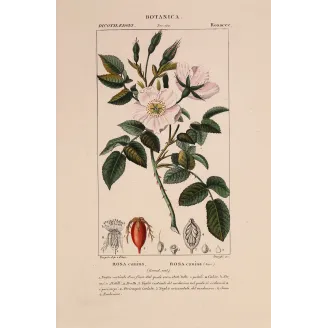
Delicate dog rose flower with soft pink petals and fine botanical details.
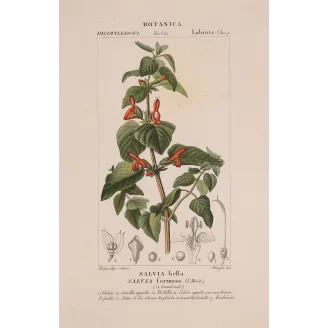
Vivid botanical plate of Salvia formosa, with striking red-orange tubular flowers.
Graceful composition of bay laurel with fruits, blossoms, and internal flower structure.
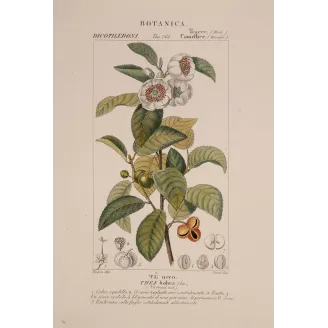
Delicate and detailed illustration of the tea plant, with floral and seed elements beautifully depicted.
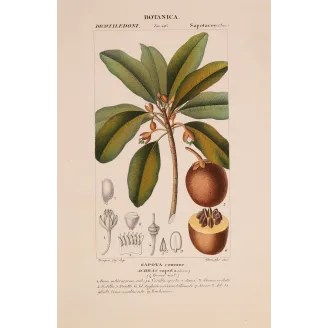
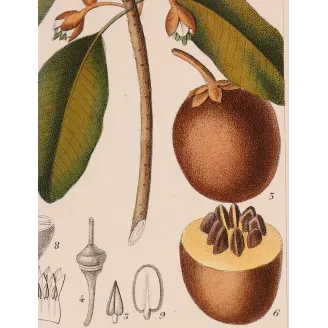
A warm-toned botanical engraving of *Achras sapota*, featuring its rounded fruit and large green leaves with exquisite texture
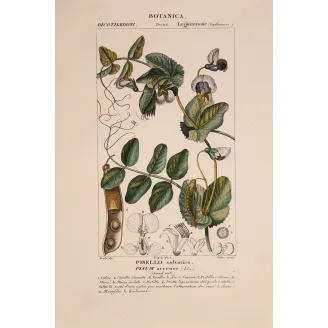
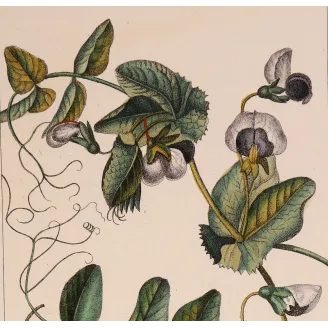
Colorful botanical illustration of Pisum arvense, wild pea, engraved by Turpin.
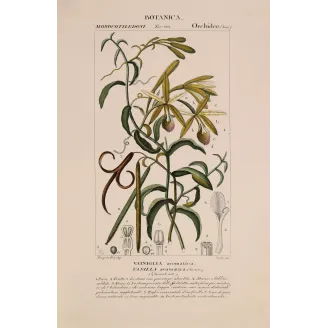
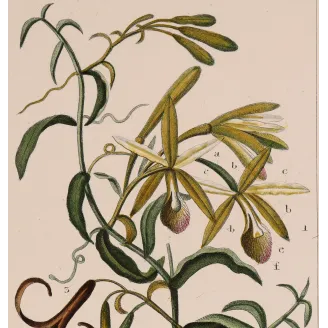
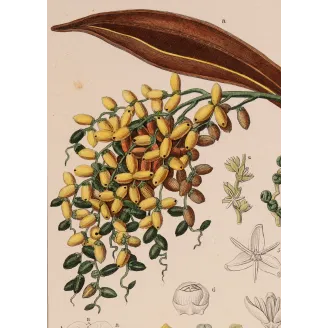
Delicate orchid illustration showing flower, pod and internal anatomy of vanilla.
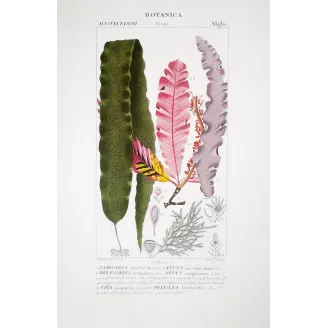
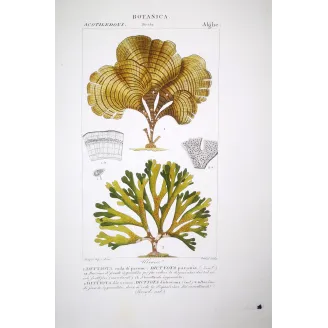
A unique lot of 7 hand-colored antique prints depicting various species of algae, illustrated by Turpin and Prêtre.
Finely detailed print of Laurus cinnamomum by Turpin, from the Dizionario di Scienze Naturali.
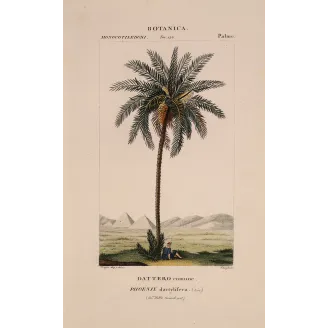
Detailed antique illustrations of the date palm tree and its floral and fruit anatomy.
A complete set of 22 original hand-colored lithographs of ferns by Turpin, from the Dizionario di Scienze Naturali (c. 1830).
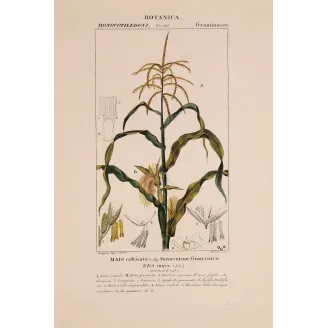
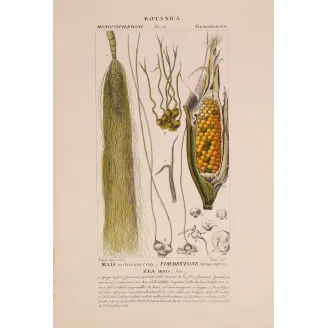
Double plate of cultivated maize (Zea mays) from Turpins botanical series.
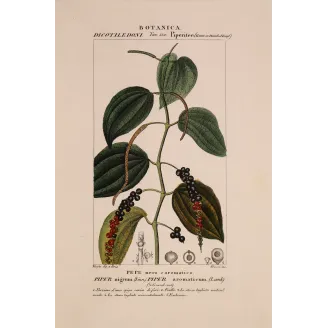
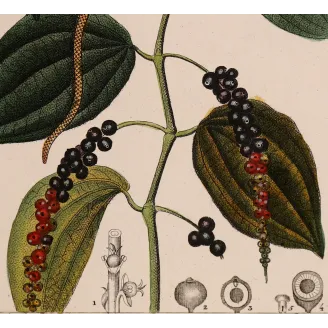
Detailed depiction of the black pepper vine with fruiting spikes and leaves.
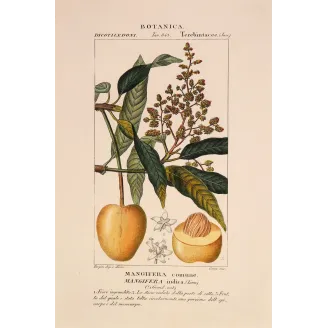
Vibrant hand-colored depiction of *Mangifera indica*, the mango tree, highlighting its lush leaves, golden fruit, and floral details.
A rare depiction of *Bassia longifolia*, showing its elongated leaves and fruit sections in precise scientific detail and soft hand-colored tones.
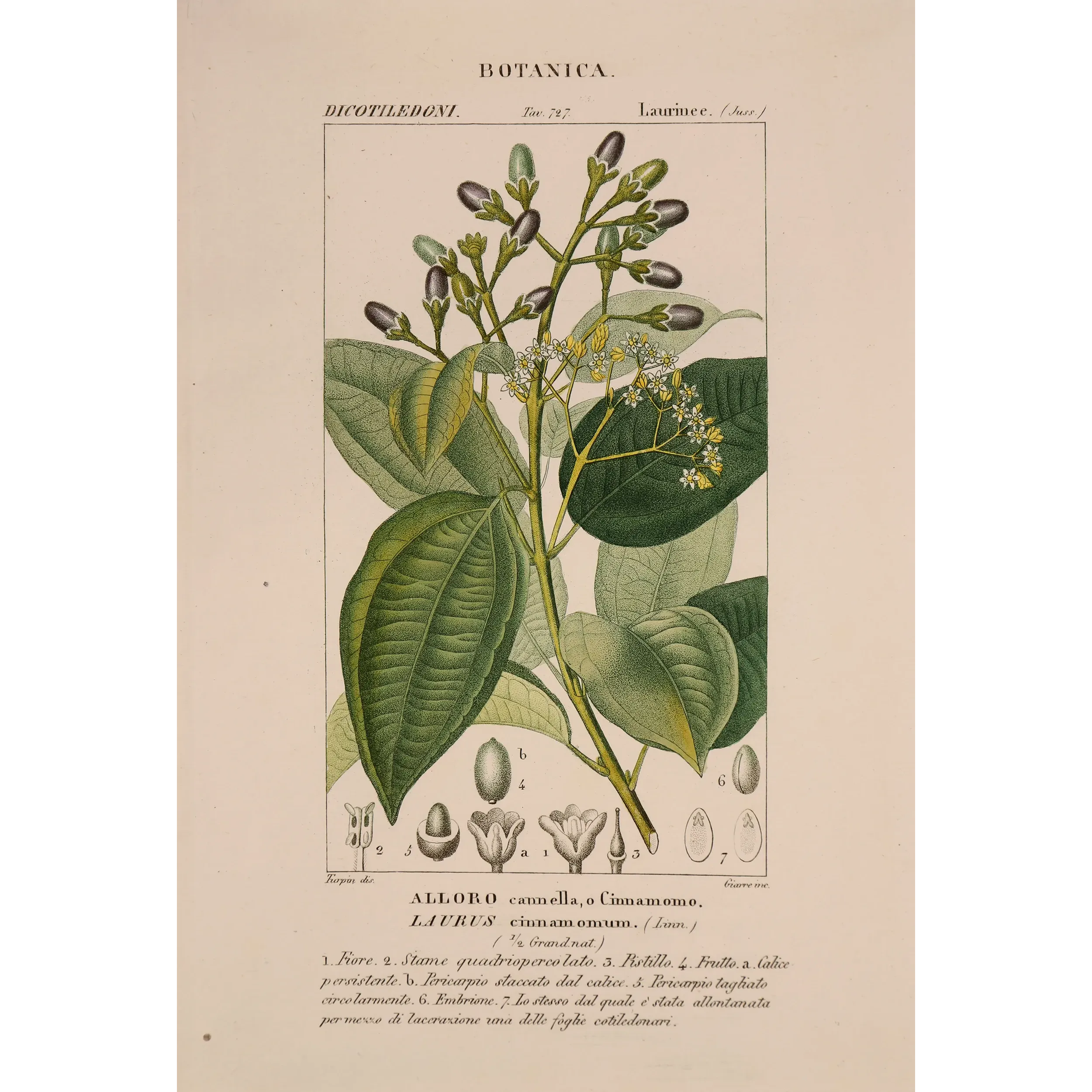
Elegant illustration of Laurus cinnamomum, showing leaves, flowers and seeds.