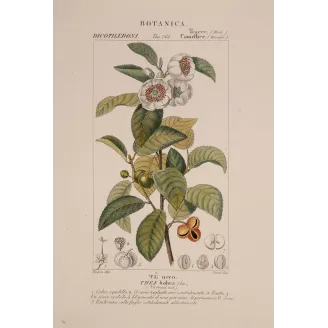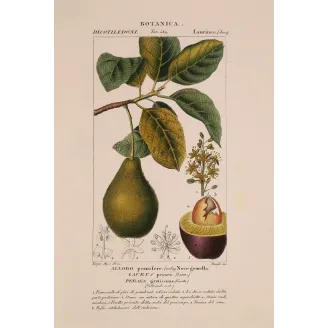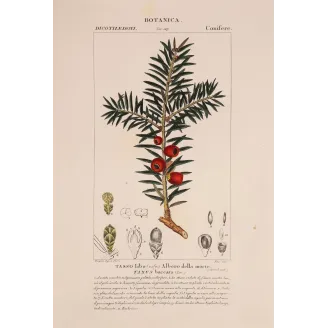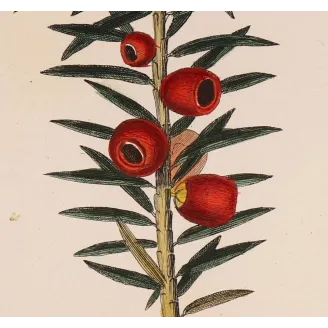
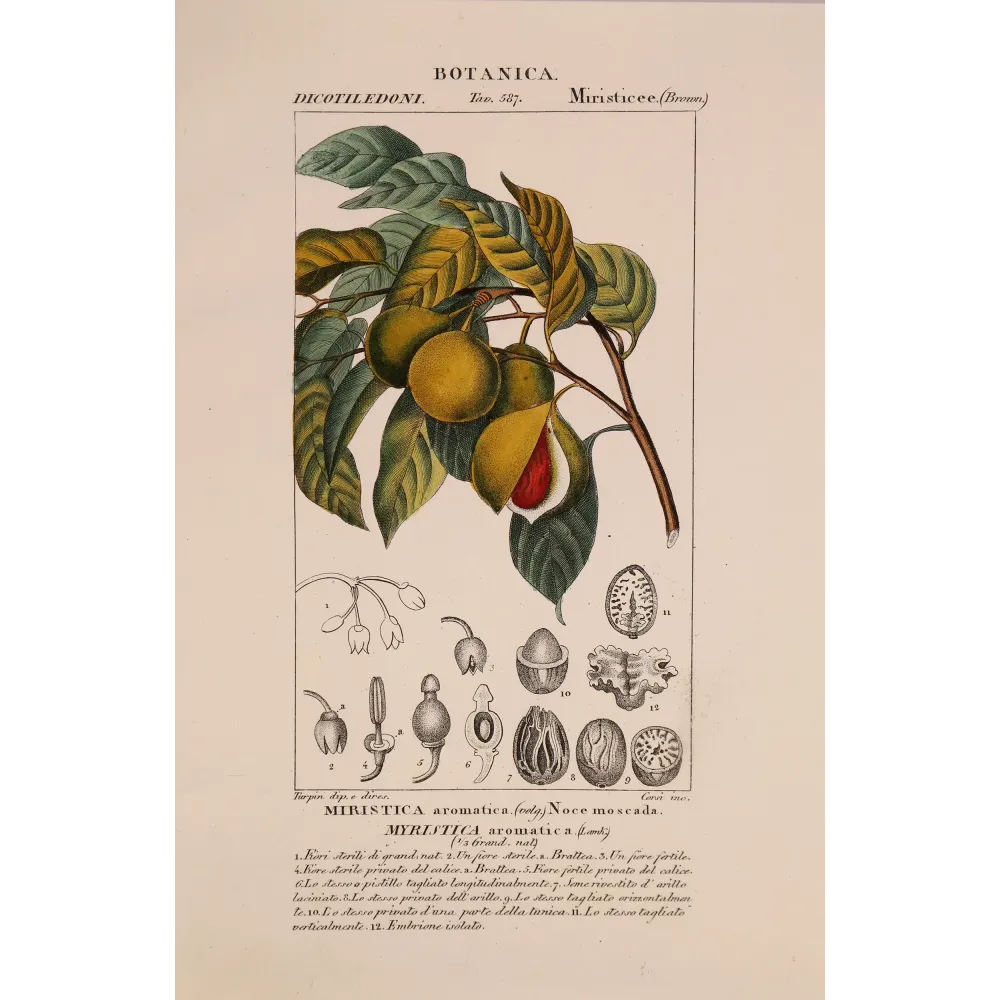
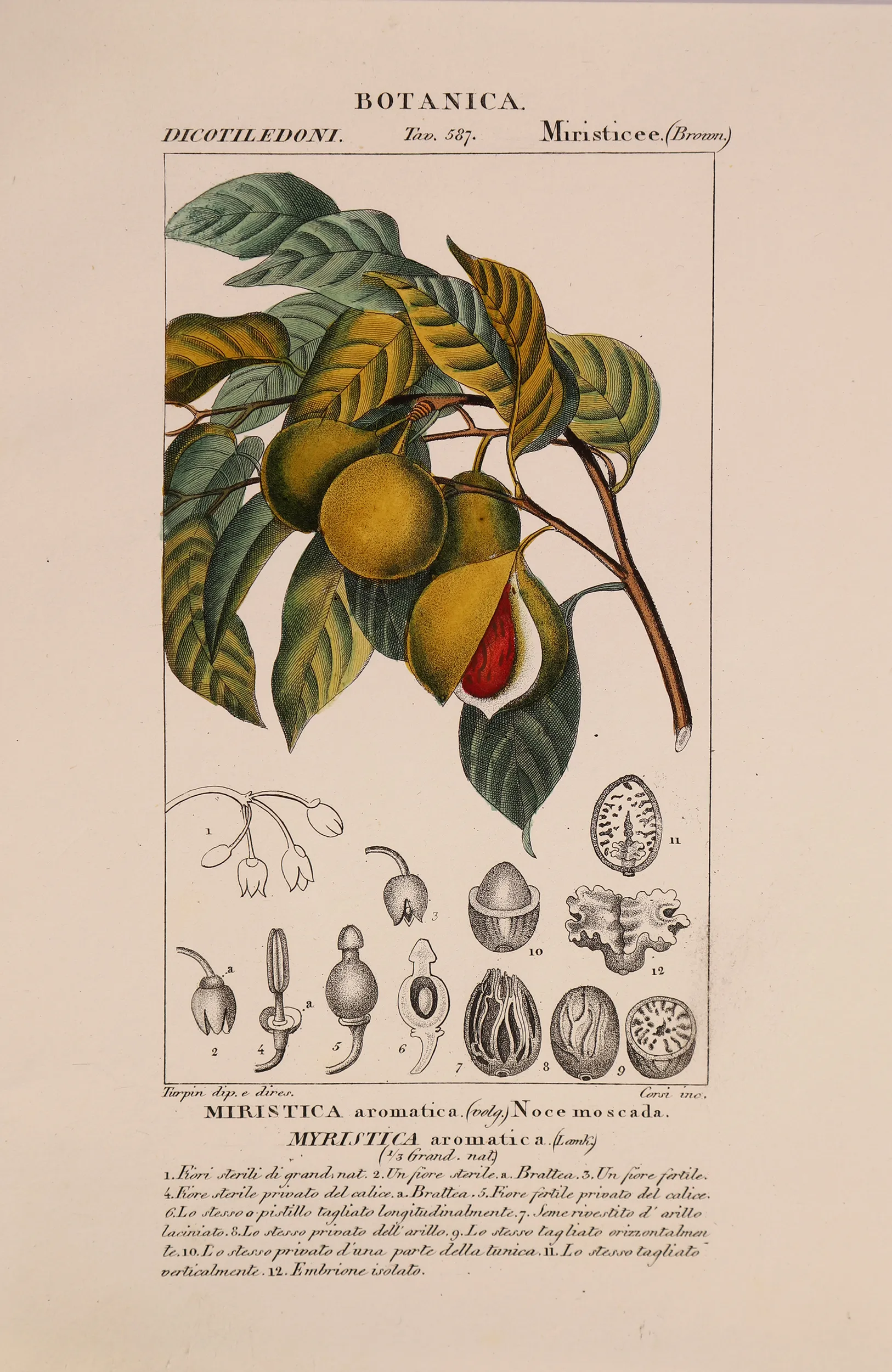

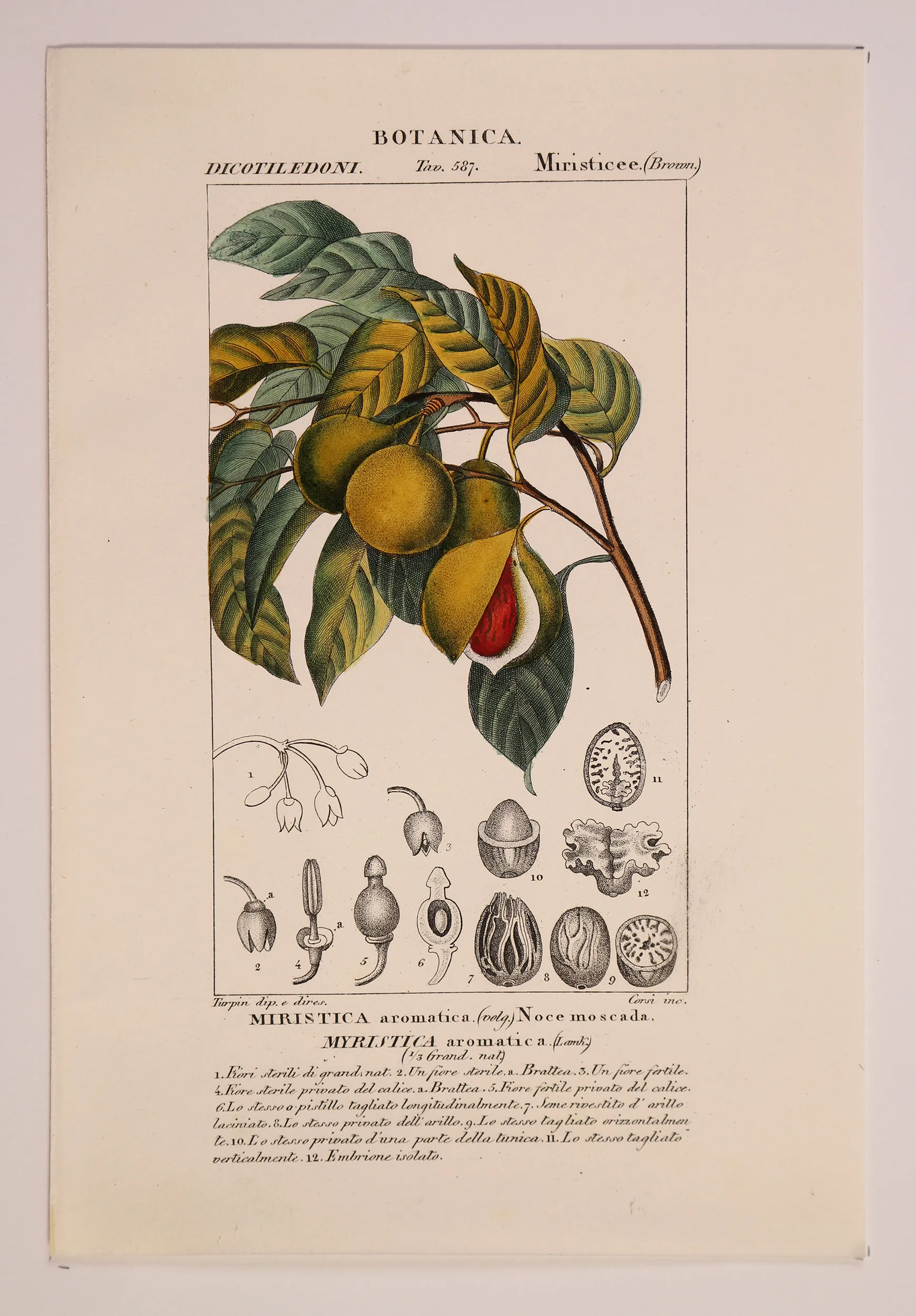
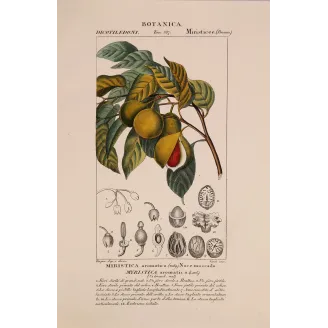
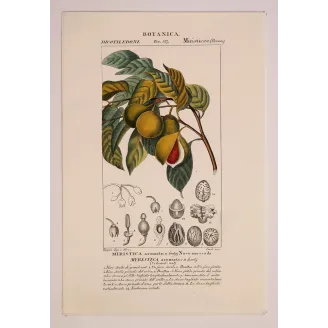
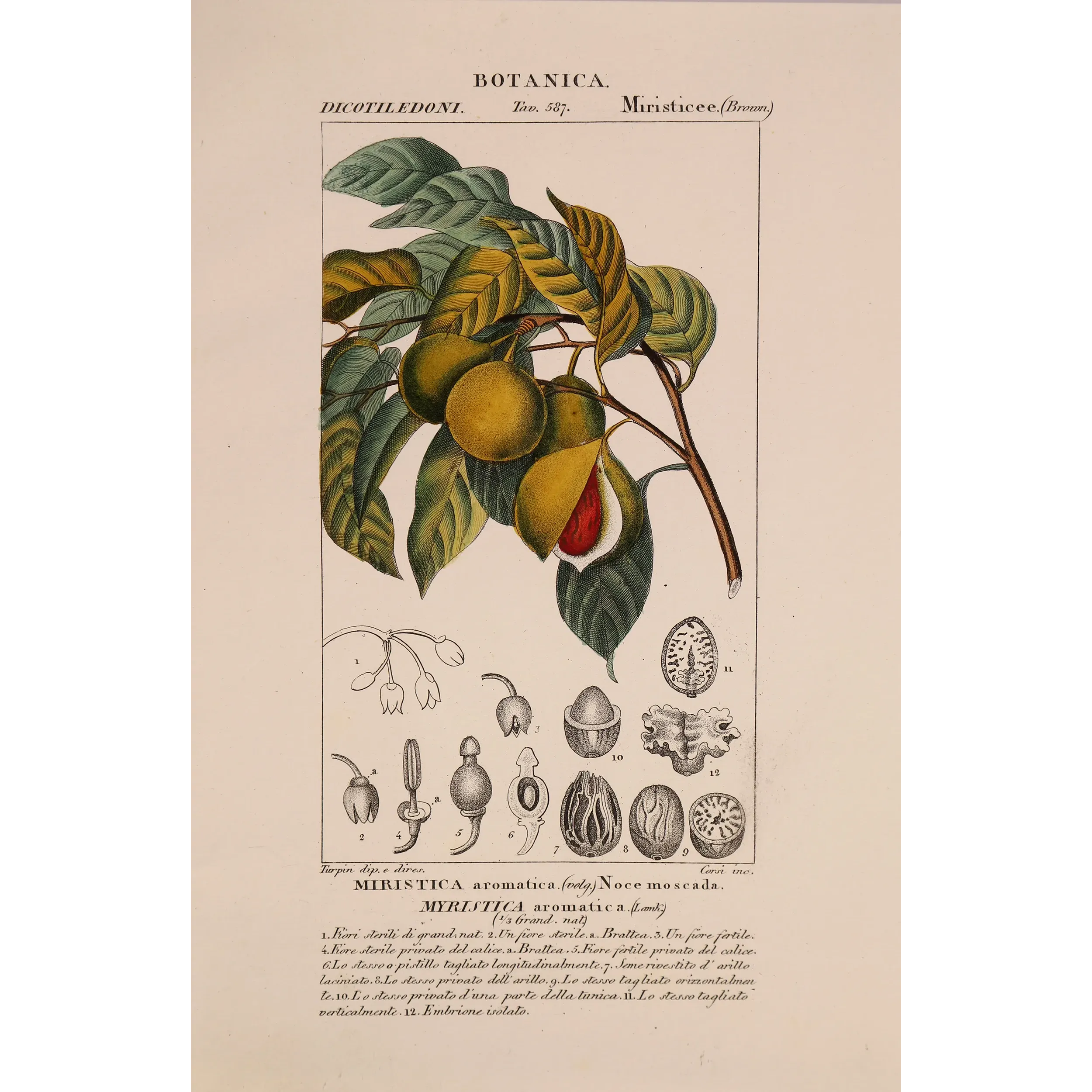
Striking botanical print of nutmeg fruit with cutaway sections and seed structure.
 Delivery policy
Your print will be carefully prepared and shipped worldwide via trusted couriers (UPS or similar).
 Authentic antique prints
Original engravings from the 17th–19th century.
This refined engraving depicts Myristica aromatica, the nutmeg tree, illustrated with botanical precision and chromatic richness. The composition presents mature foliage and fruit alongside detailed anatomical studies, offering a complete scientific representation of one of the most historically consequential spice plants.
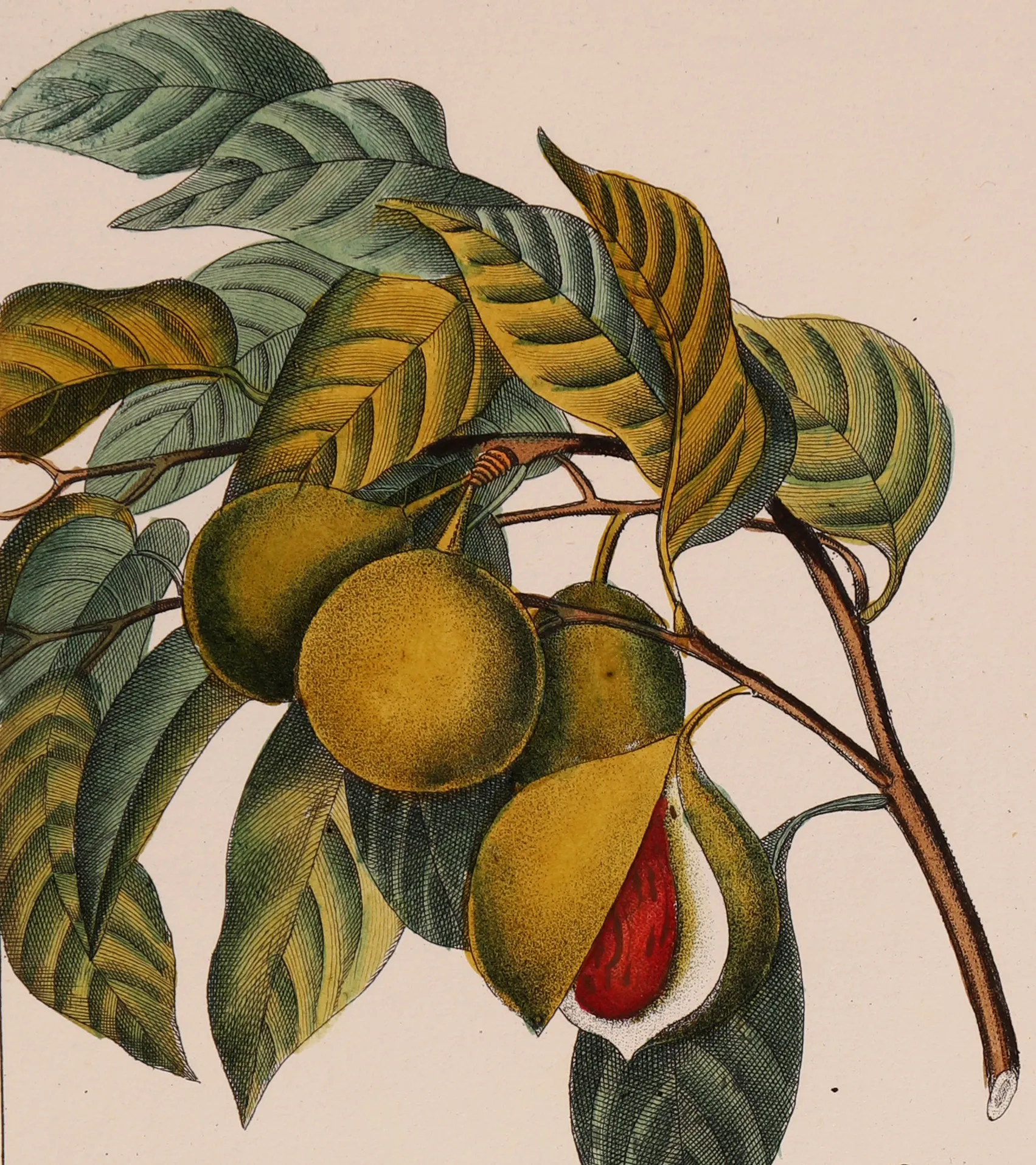
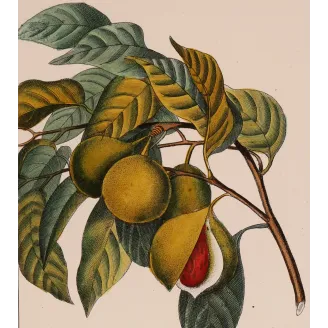
Turpin renders the spherical fruit in varying stages of development, including the characteristic split husk revealing the vivid red aril (mace) that surrounds the seed. The interplay of saturated yellow-green pericarp and deep crimson aril creates a striking visual contrast within an otherwise balanced palette of greens.
The plate forms part of the Italian edition of the Dizionario di Scienze Naturali (Florence, Battelli press), a monumental early nineteenth-century encyclopedic enterprise dedicated to documenting economically and scientifically significant species with disciplined engraving and careful hand-colouring.
— • —
The composition is anchored by a branching segment bearing clustered fruit, establishing visual density in the upper register. The large, oval leaves provide structural rhythm, while the open fruit introduces chromatic intensity and focal emphasis. The curved stem balances the mass of foliage, maintaining compositional equilibrium.
Below, analytical figures dissect the floral and reproductive structures with measured clarity. The red aril, rendered with controlled shading, adds dimensionality and underscores the botanical uniqueness of the species. The overall effect is both scientifically rigorous and visually compelling.
Myristica fragrans (historically referred to as Myristica aromatica) is native to the Banda Islands of Indonesia, historically known as the “Spice Islands.” From the sixteenth to the eighteenth century, nutmeg was among the most valuable commodities in global trade, shaping maritime routes, colonial conflicts and economic rivalries between European powers. The fruit yields two distinct spices: the seed (nutmeg) and the surrounding aril (mace), each highly prized in culinary and medicinal traditions. By the early nineteenth century, when this engraving was produced, botanical classification sought to integrate economically important tropical species into systematic taxonomic frameworks. The nutmeg tree thus stands at the intersection of botany, global commerce and geopolitical history — a plant whose scientific documentation reflects its extraordinary cultural and economic significance.
This plate forms part of the historic Dizionario di Scienze Naturali, once preserved within a noble library and today housed in the Sacchetti Collection. Each engraving reflects a period in which scientific scholarship was supported by exceptional artisanal execution — from the precision of the engraved copperplate line to the luminous hand-colouring applied individually to every sheet.
Such works were conceived not merely as decorative images, but as authoritative visual instruments of knowledge. To explore the broader story of these rare prints and their refined provenance, we invite you to read our editorial feature “Not Just Another Print”.
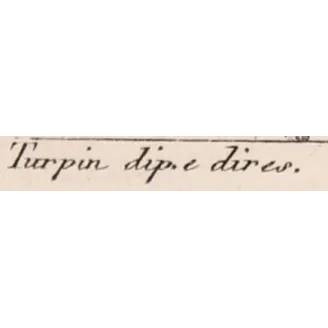
The engraving is in excellent antique condition. The sheet presents clean margins and a clear impression. The paper is smooth early nineteenth-century wove paper (non-laid). No watermark has been observed. The original hand-colouring remains vibrant and well preserved. The engraved credit “Turpin dis.” is present, confirming the original drawing by Pierre Jean François Turpin.
For further context on Pierre Jean François Turpin and his contribution to nineteenth-century botanical science, see our editorial feature:
Pierre Jean François Turpin – The Botanical Illustrator of Natural Harmony
Specific References
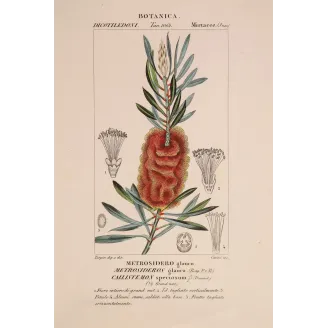
Stunning antique print of the red-flowering Callistemon, also known as bottlebrush.
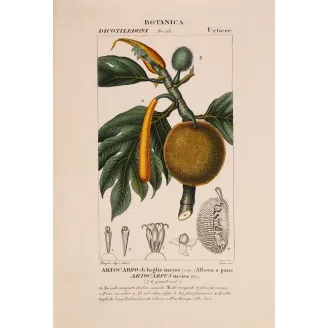
An extraordinary 19th-century engraving of *Artocarpus incisa*, the breadfruit tree, showcasing its bold leaves and unique fruit texture.
Delicate and detailed illustration of the tea plant, with floral and seed elements beautifully depicted.
Beautiful antique flower print of Solandra, with large trumpet-shaped bloom.
Botanical plate of avocado with whole fruit, seed, and internal anatomy.
Colorful botanical illustration of Pisum arvense, wild pea, engraved by Turpin.
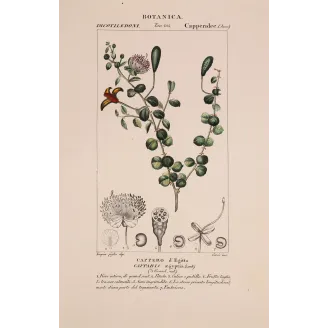
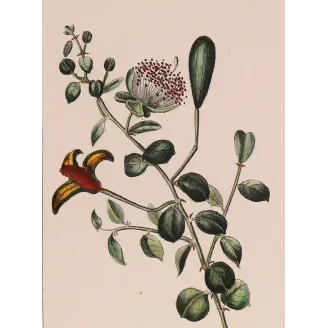
Vibrant caper plant illustration with both flowers and fruiting structures.
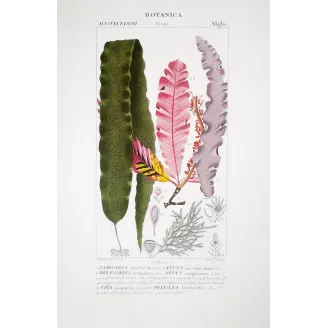
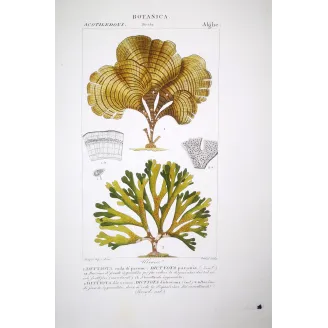
A unique lot of 7 hand-colored antique prints depicting various species of algae, illustrated by Turpin and Prêtre.
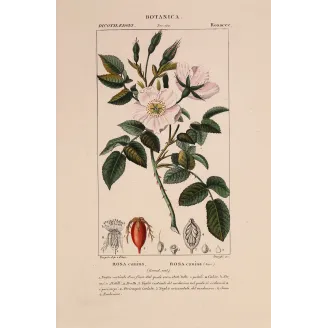
Delicate dog rose flower with soft pink petals and fine botanical details.
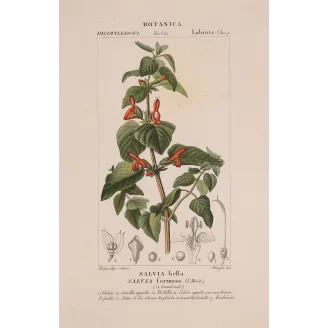
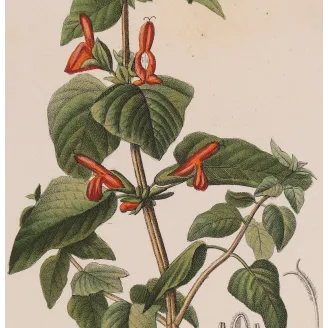
Vivid botanical plate of Salvia formosa, with striking red-orange tubular flowers.
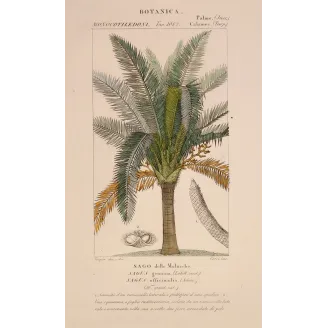
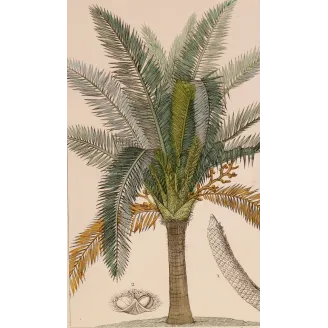
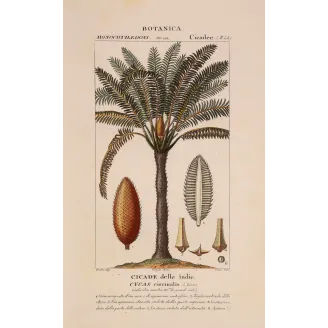
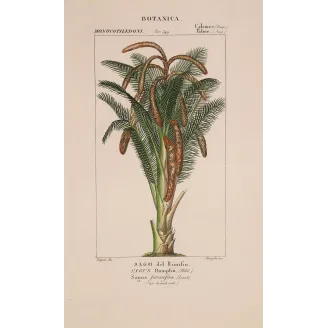
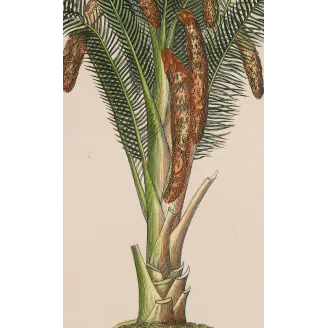
A pair of plates dedicated to the sago palm tree and its structural details.
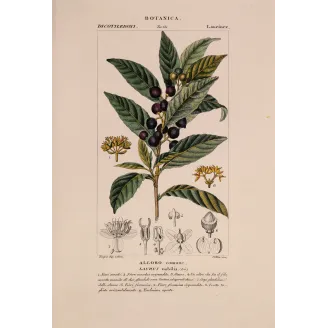
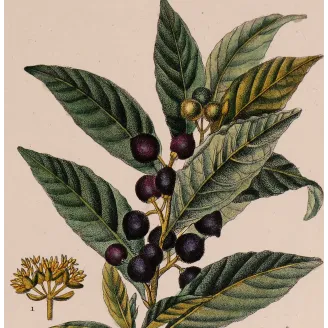
Graceful composition of bay laurel with fruits, blossoms, and internal flower structure.
Striking botanical print of nutmeg fruit with cutaway sections and seed structure.