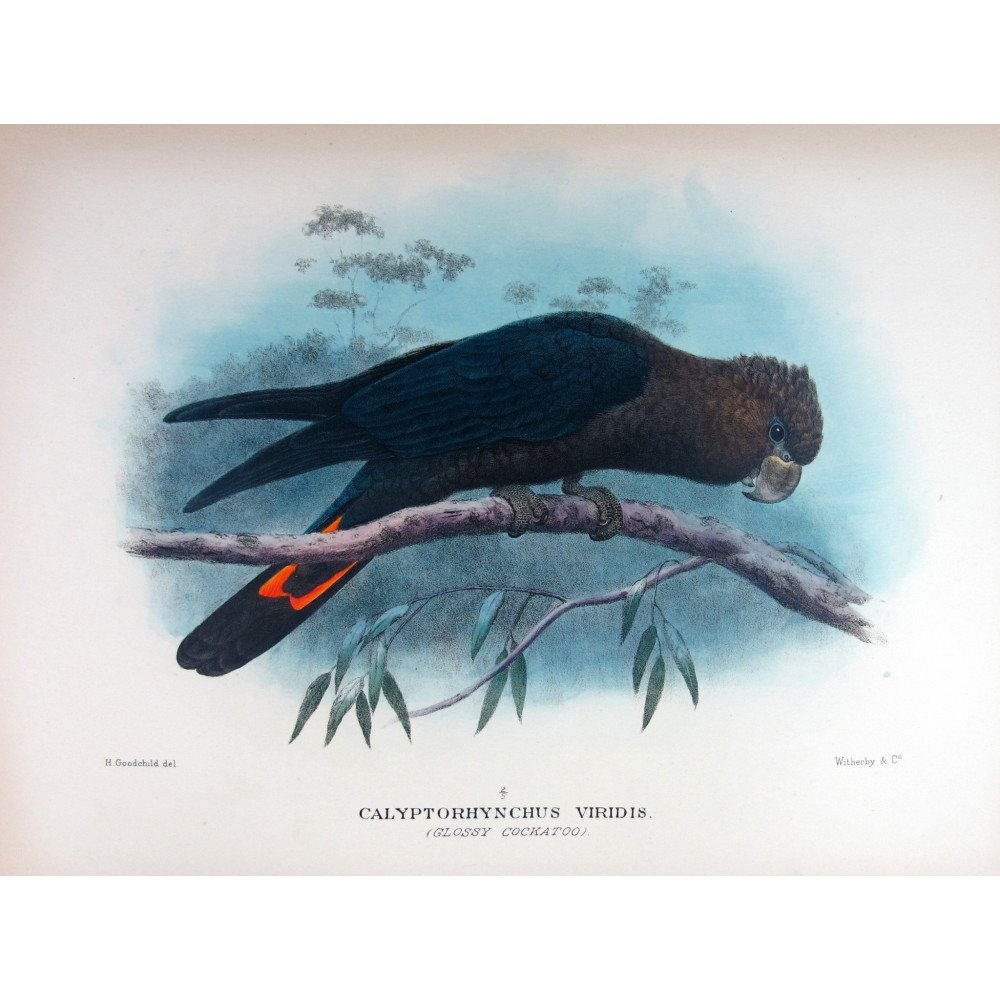
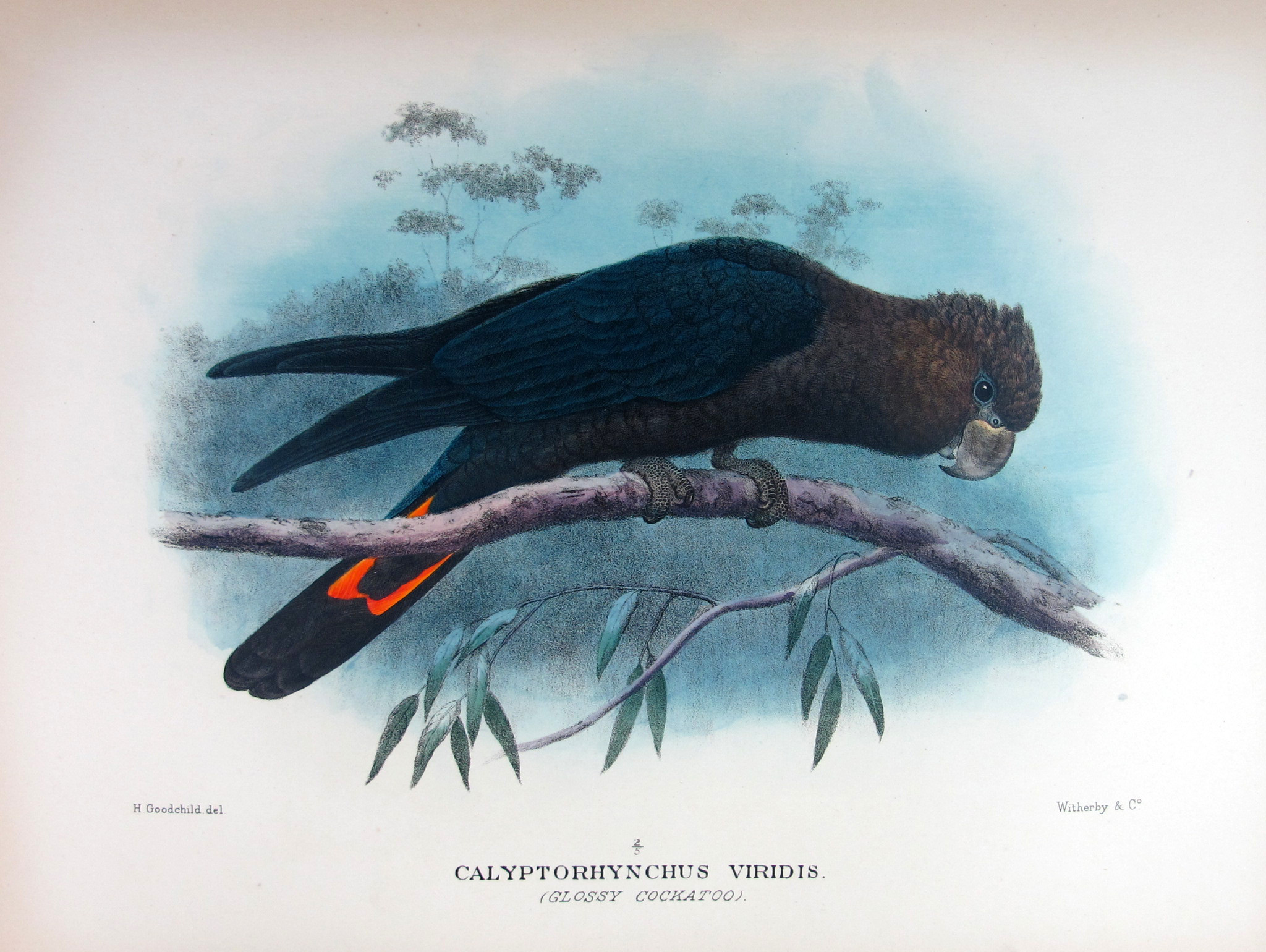

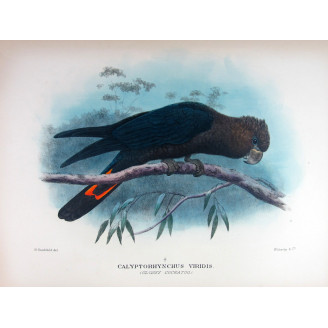
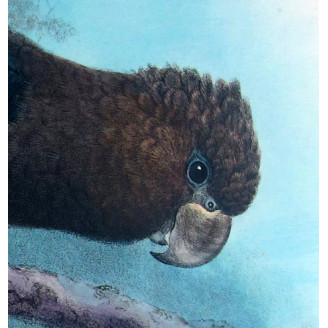
Glossy Cockatoo print by H. Goodchild, dark tones and rare presence on the plate
 Delivery policy
Your print will be carefully prepared and shipped worldwide via trusted couriers (UPS or similar).
 Authentic antique prints
Original engravings from the 17th–19th century.
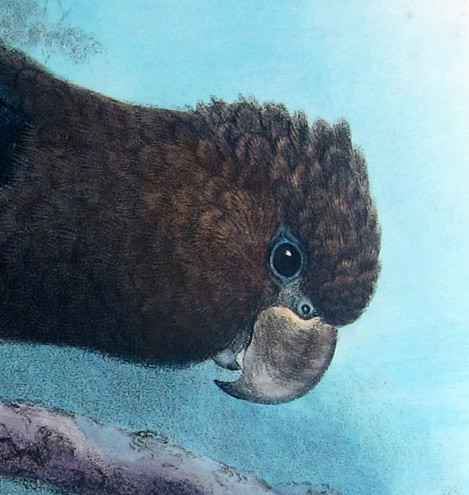
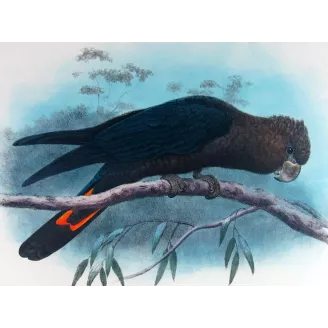
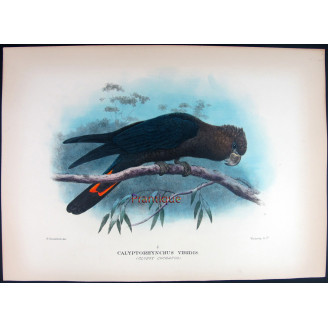
This original early twentieth-century hand-colored lithograph depicts Calyptorhynchus viridis, the Glossy Cockatoo. The plate forms part of The Birds of Australia, Gregory M. Mathews’ landmark ornithological publication, illustrated here by H. Goodchild.
The bird is presented in a lowered, contemplative posture along a gently curving eucalyptus branch. Unlike the flamboyant lorikeets, this cockatoo embodies tonal restraint and structural mass, emphasizing sculptural presence over chromatic exuberance.
— • —
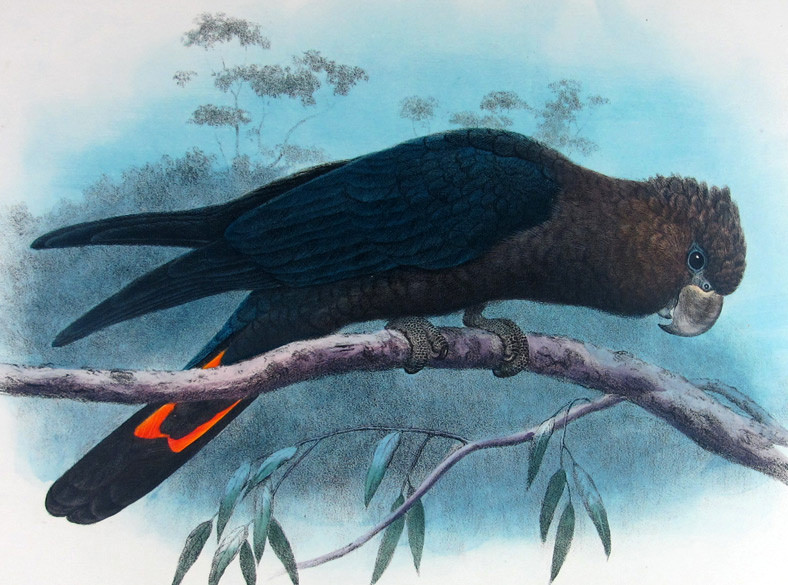
Goodchild renders the plumage through layered dark blues and warm umber-browns, subtly modulated to reveal feather structure without sacrificing depth. The softly iridescent quality of the wing surface is achieved through delicate tonal gradation rather than overt highlight.
The restrained palette is dramatically punctuated by the vivid orange-red tail patch — a controlled accent that draws the eye while preserving compositional harmony. The atmospheric blue-grey background enhances the bird’s silhouette, allowing its mass to emerge with quiet authority.
The Glossy Cockatoo is native to eastern Australia and is distinguished by its dark plumage and striking red tail panels. Unlike many larger cockatoos, it is relatively shy and specialized in feeding on the seeds of native she-oaks.
Its subdued elegance fascinated early twentieth-century ornithologists, who recognized in this species a refined alternative to the more flamboyant parrots of the Australian continent.
This lithograph originates from The Birds of Australia, Gregory M. Mathews’ ambitious early twentieth-century ornithological project. Conceived as a definitive scientific record, the publication brought together taxonomic precision and the refined artistry of leading wildlife illustrators. Discover the broader historical context in our editorial feature: Gregory M. Mathews and The Birds of Australia .
The illustration was executed by H. Goodchild, whose disciplined structural rendering and atmospheric tonal control are particularly evident in darker-plumaged species such as this cockatoo.
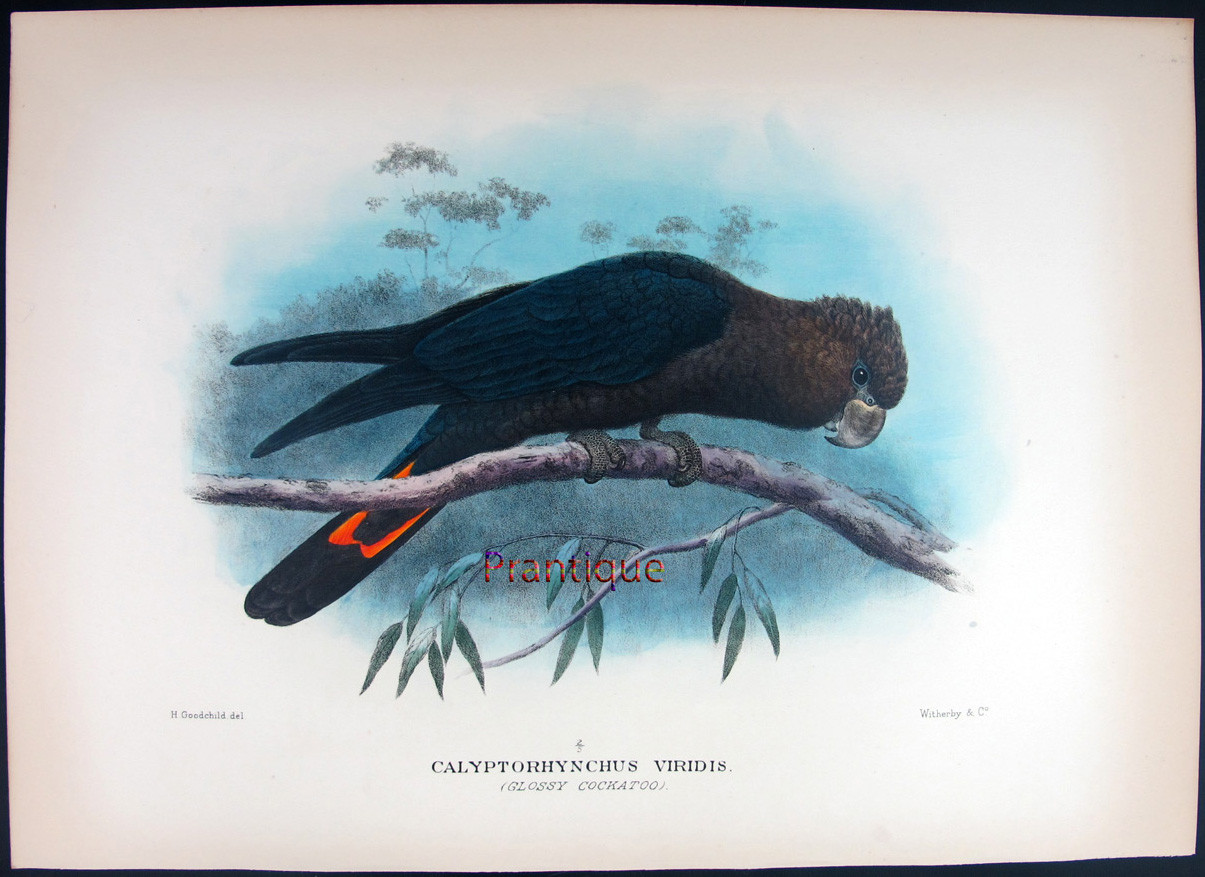
Very good antique condition. Fresh original hand-coloring with strong lithographic impression. Printed on fine early twentieth-century wove paper. Minor age toning slightly more visible along the outer margins, consistent with age.
For further insight into H. Goodchild’s contribution to Australian ornithological art: H. Goodchild – Shadows and Structure in Bird Art
Specific References
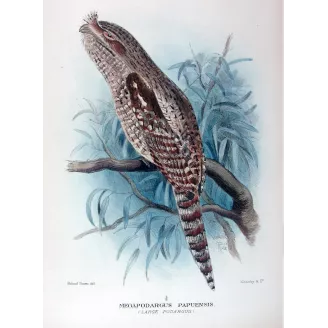
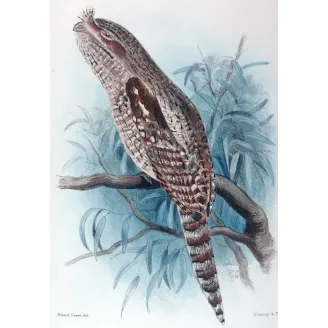
Original lithograph of the Large Podargus by Roland Green from Mathews' Birds of Australia.
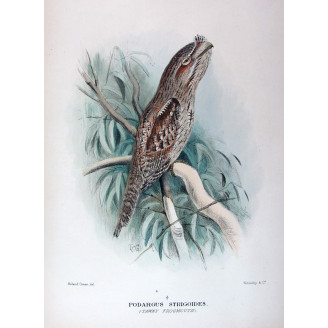
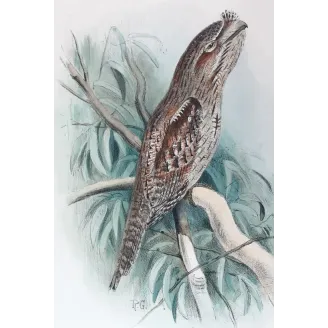
Original lithograph of the Tawny Frogmouth by Roland Green from Mathews' Birds of Australia.
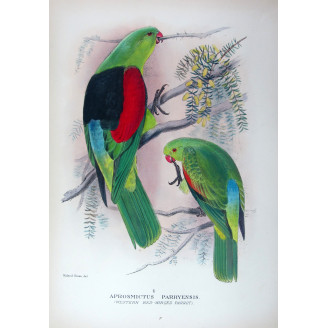
Antique lithograph of the Red-shouldered Grass Parrot by Roland Green.
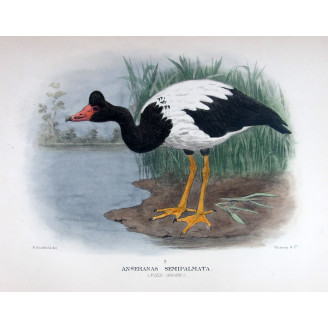
Original lithograph of the Pied Goose by H. Goodchild (Anseranas semipalmata).
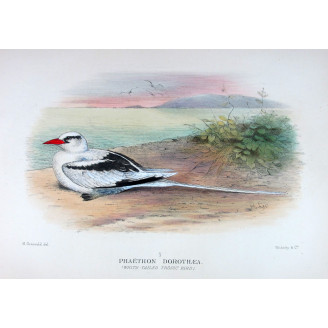
White-Tailed Tropic Bird (Phaëthon dorothea), original Mathews lithograph.
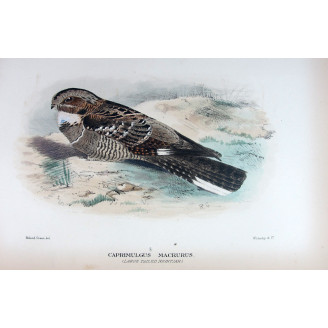
Original lithograph of the Large-tailed Nightjar by Roland Green from Mathews' Birds of Australia.
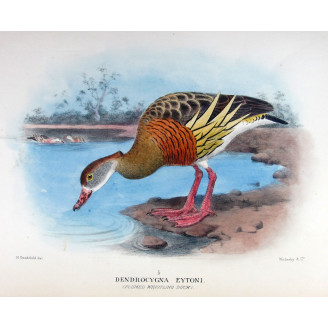
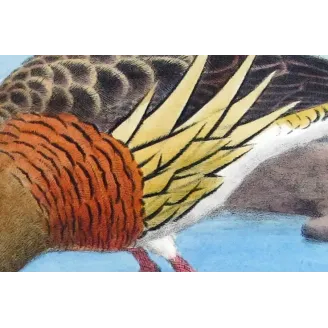
Original lithograph of the Plumed Whistling Duck by H. Goodchild (Dendrocygna eytoni).
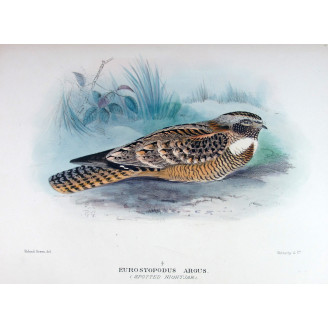
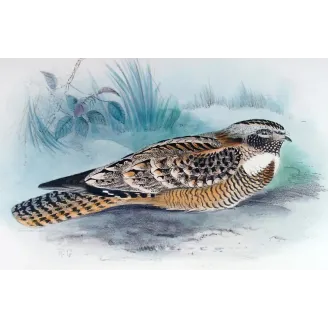
Original lithograph of the Spotted Nightjar by Roland Green from Mathews' Birds of Australia.
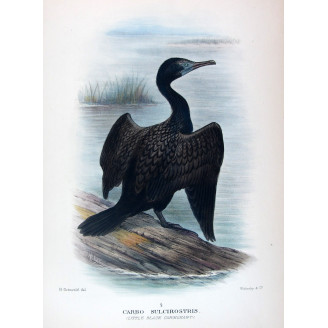
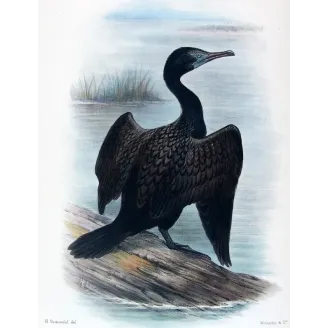
Little Black Cormorant (Carbo sulcirostris) – Original antique bird print by H. Grønvold
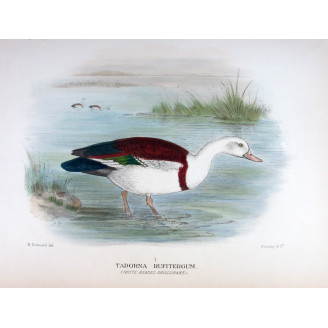
Original lithograph of the White-headed Sheldrake by Henrik Grønvold (Tadorna rufitergum).
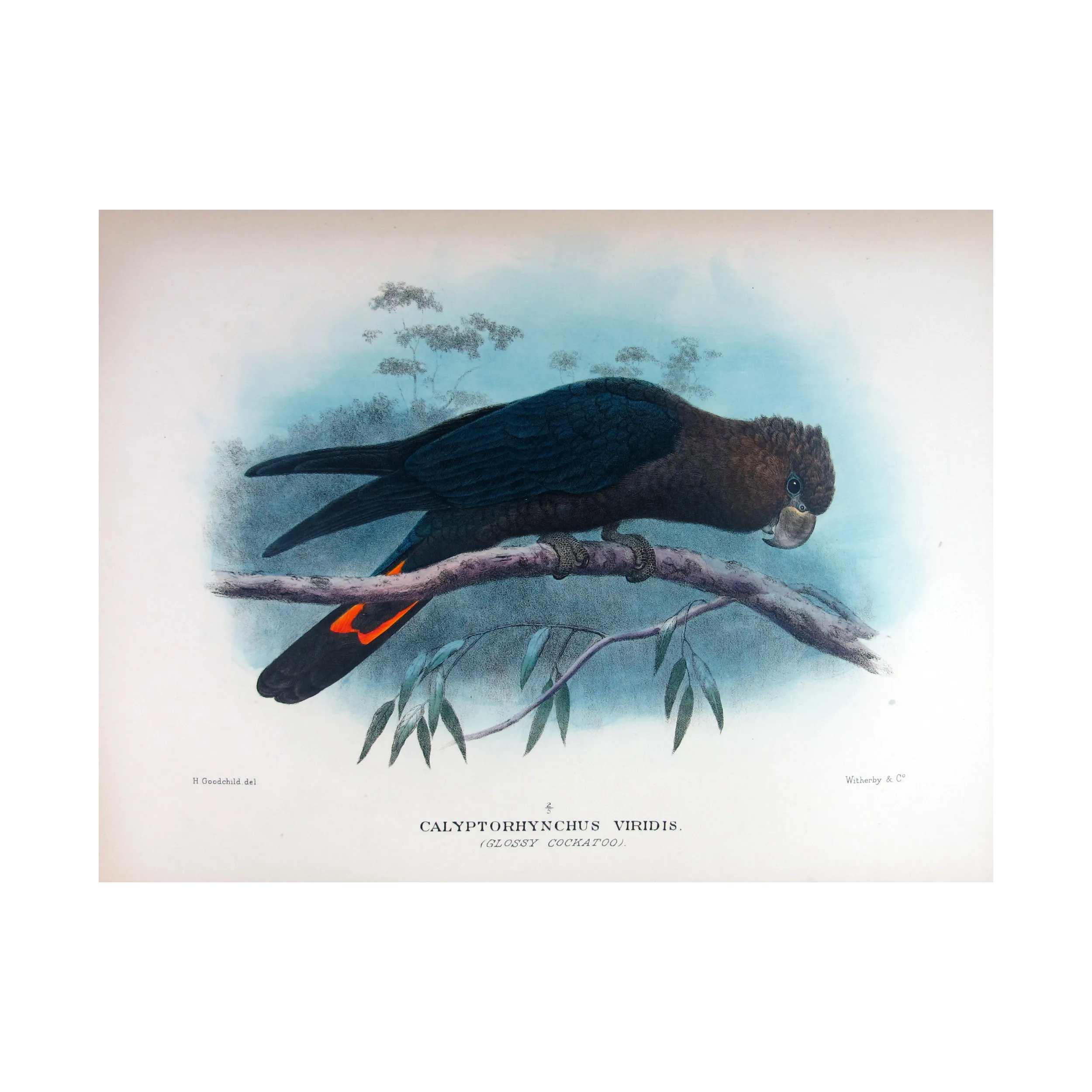
Glossy Cockatoo print by H. Goodchild, dark tones and rare presence on the plate