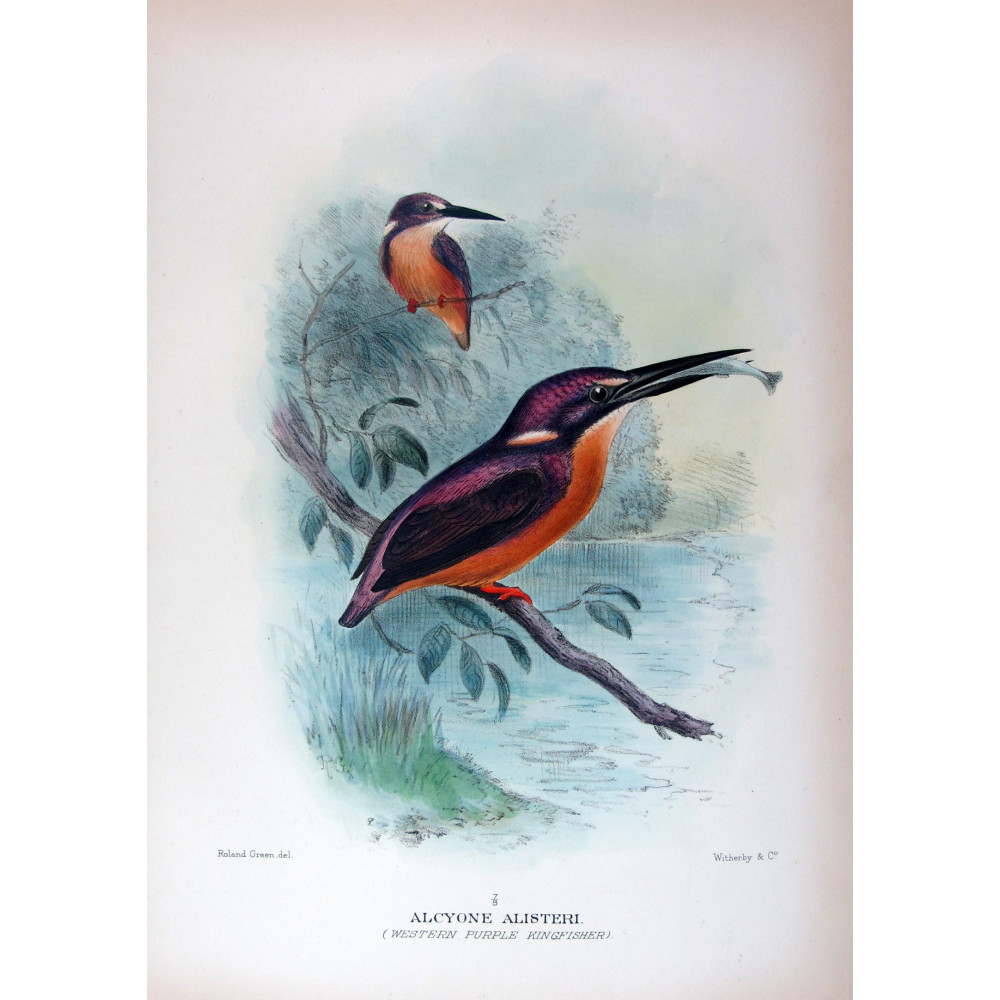
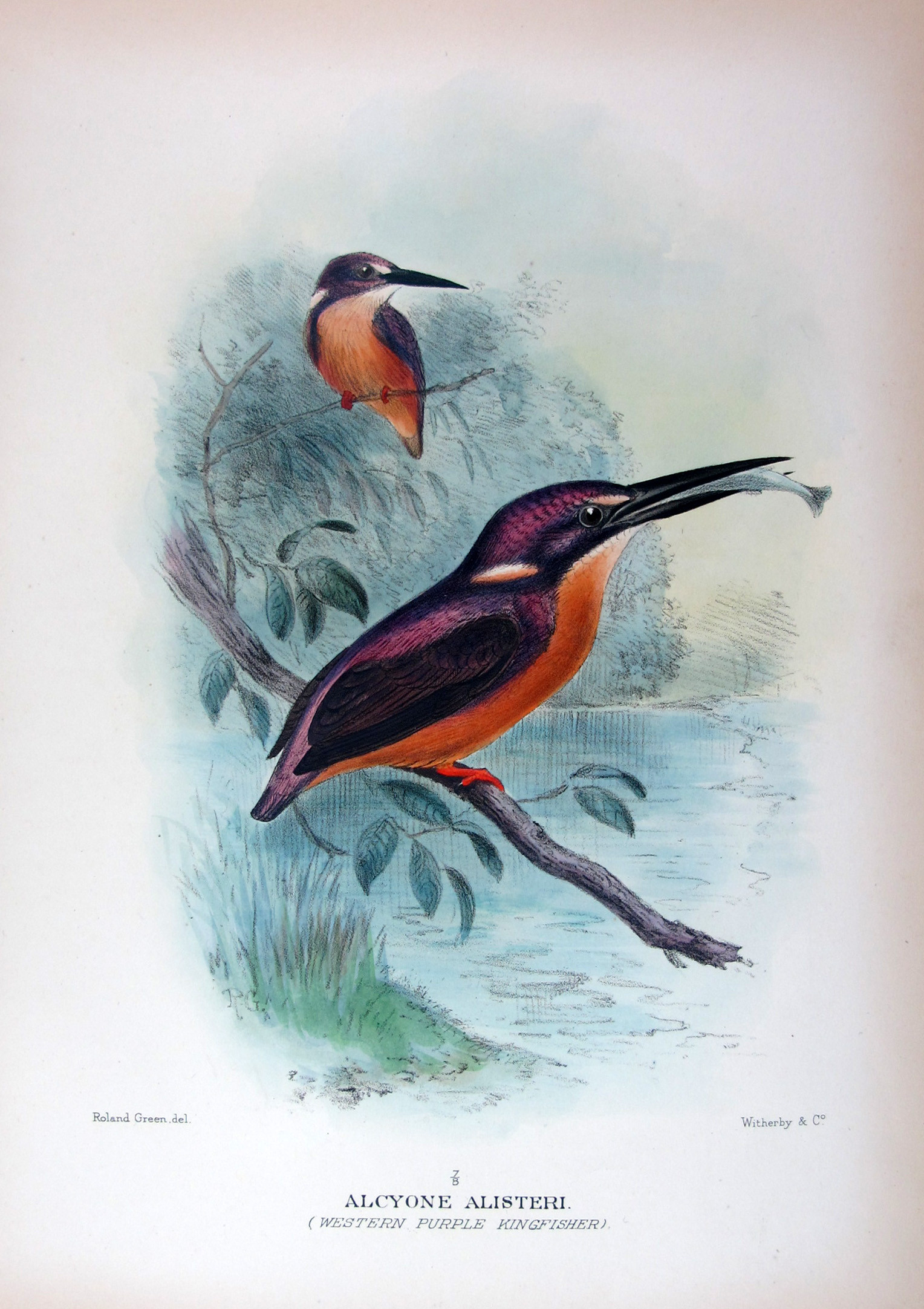
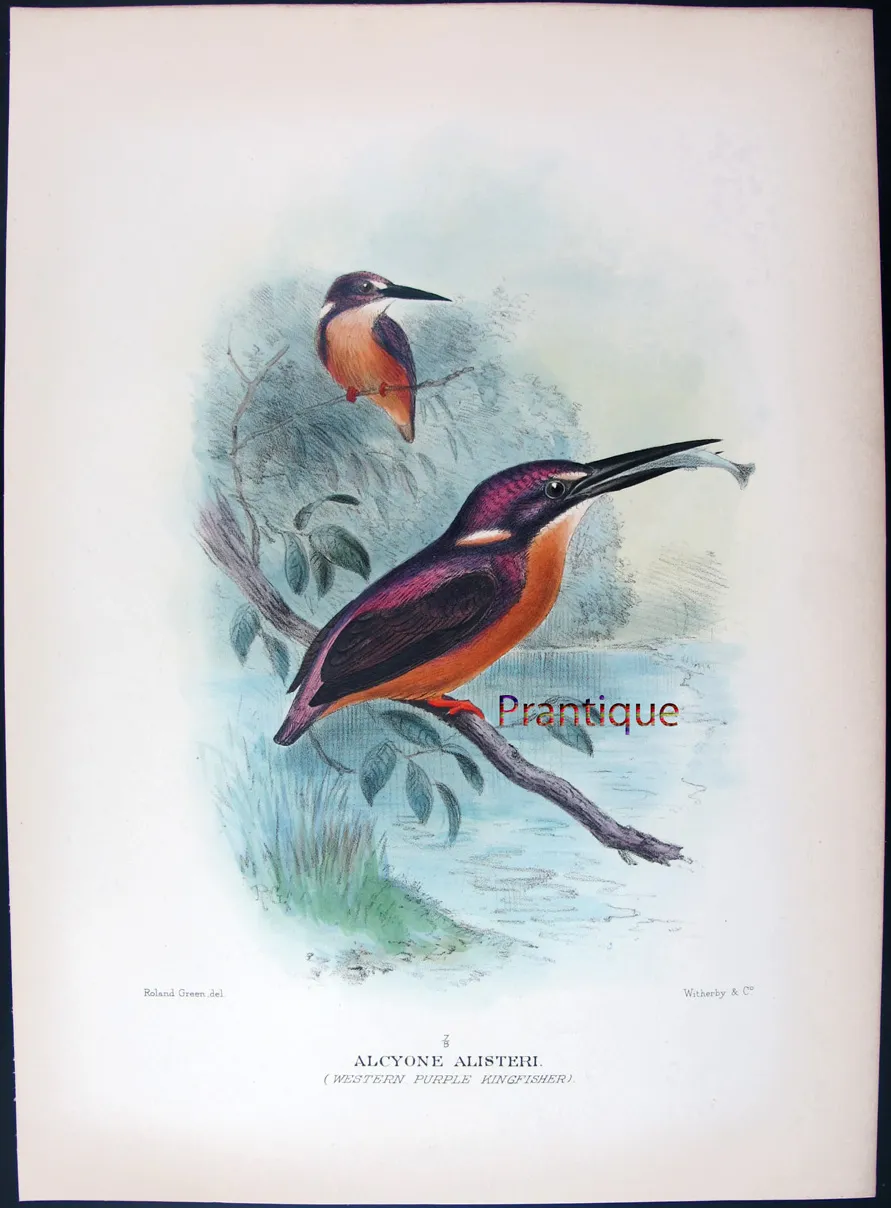

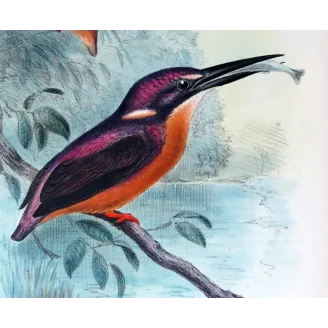
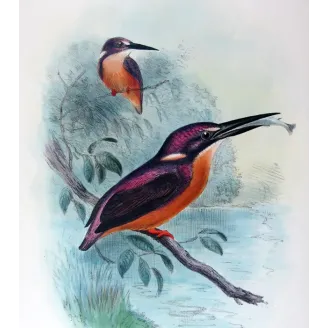
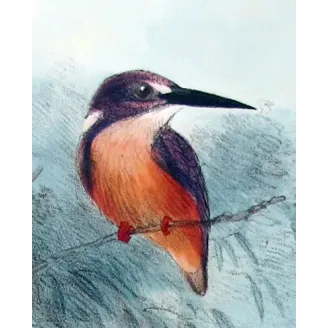
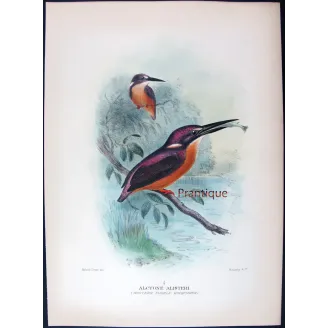
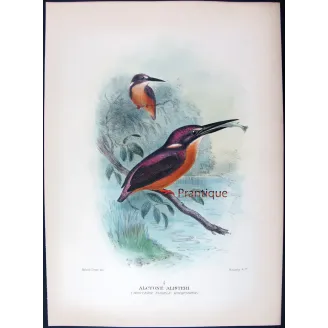
Original lithograph of the Western Purple Kingfisher (Alcyone alisteri) by Roland Green
 Delivery policy
Your print will be carefully prepared and shipped worldwide via trusted couriers (UPS or similar).
 Authentic antique prints
Original engravings from the 17th–19th century.
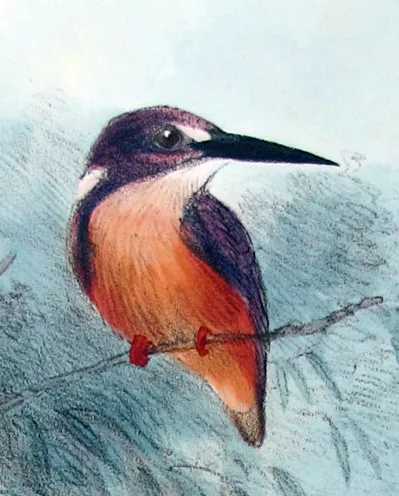
This original early twentieth-century hand-colored lithograph depicts Alcyone alisteri, the Western Purple Kingfisher. The plate forms part of Gregory M. Mathews’ monumental publication The Birds of Australia, illustrated by Roland Green and issued by Witherby & Co.
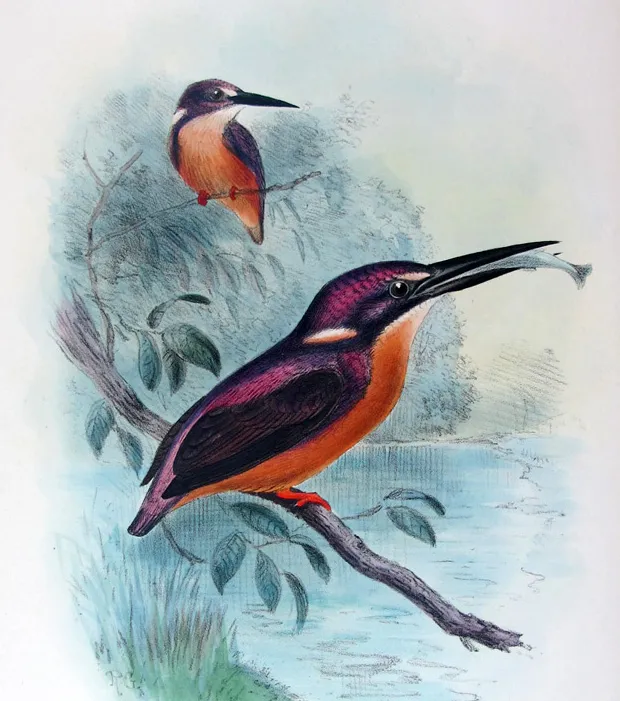
Rendered as a poised pair along a riverside branch, the composition captures the species’ saturated violet plumage and fiery orange underparts, heightened by the dramatic inclusion of a freshly caught fish held in the foreground bird’s beak.
— • —
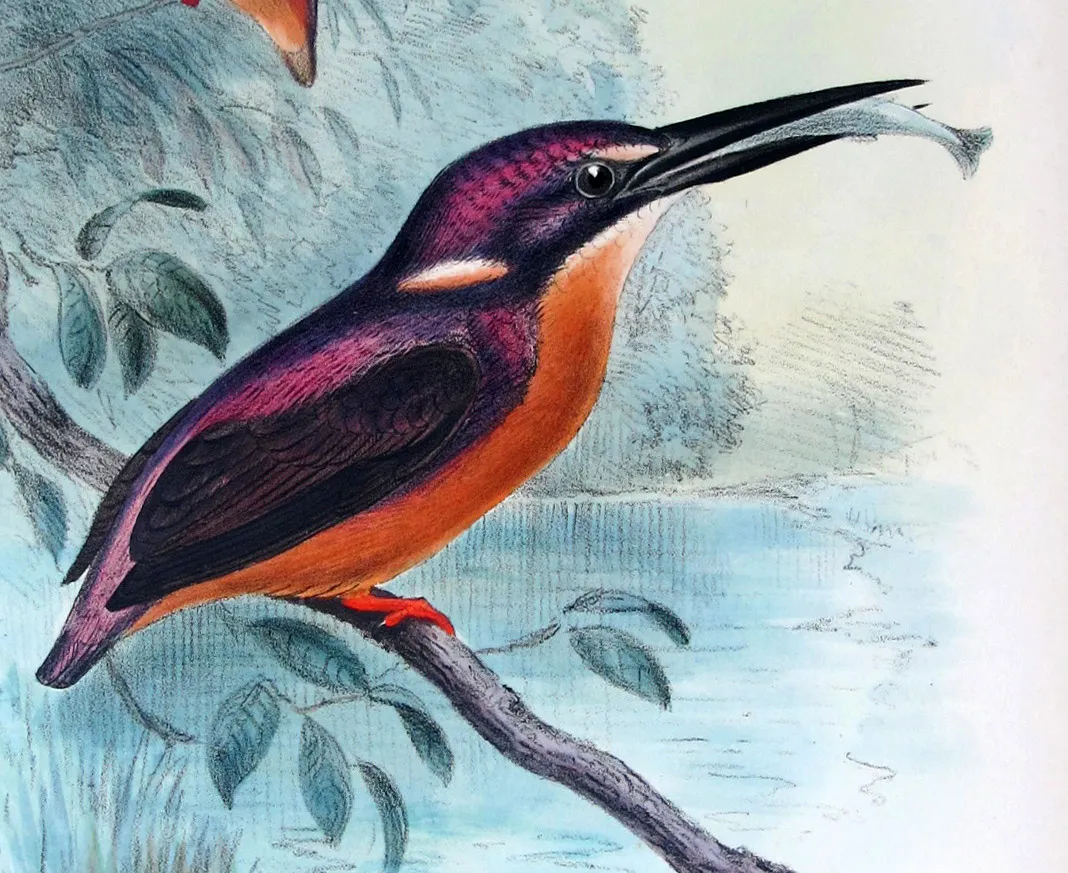
Roland Green structures the plate around a powerful diagonal axis. The primary figure dominates the lower register, its elongated bill extending forward with decisive clarity. The deep purple mantle transitions into rich burnt-orange underparts, producing a chromatic contrast that feels almost jewel-like in its intensity.
The secondary bird, placed higher and slightly withdrawn, introduces compositional balance and narrative layering. Behind them, the softly rendered riverbank and water surface create atmospheric depth without competing with the subjects. The pale blue background wash allows the violet plumage to resonate with exceptional brilliance.
The presence of the fish transforms the plate from static portraiture into living moment. It is this subtle drama—precision without theatrical excess—that gives the sheet its refined decorative authority.
The Western Purple Kingfisher inhabits riparian woodlands and watercourses in northern and western Australia. Like other kingfishers, it relies on sharp visual acuity and rapid strikes to capture small fish and aquatic prey.
Mathews’ inclusion of both birds and prey reflects scientific observation as well as compositional intent. The plate documents feeding behaviour while preserving the remarkable colour saturation that distinguishes this species within the kingfisher family.
This lithograph originates from The Birds of Australia, Gregory M. Mathews’ ambitious early twentieth-century ornithological enterprise. Conceived as a definitive scientific record, the work united rigorous taxonomy with the refined artistry of leading wildlife illustrators, producing one of the most authoritative visual catalogues of Australian birdlife. Explore the broader historical scope in our editorial feature: Gregory M. Mathews and The Birds of Australia .
Roland Green’s distinctive strength lies in his ability to animate posture and action without sacrificing anatomical clarity. In behavioural plates such as this one, his control of colour layering and feather articulation creates a sense of immediacy that elevates the composition beyond mere taxonomic illustration.
Very good antique condition. Fresh original hand-coloring with strong lithographic impression. Printed on fine early twentieth-century wove paper. Minor age toning consistent with age.
For further insight into Roland Green’s contribution to ornithological illustration: Roland Green – Dynamic Vision and Field-Born Precision in Bird Art
Specific References
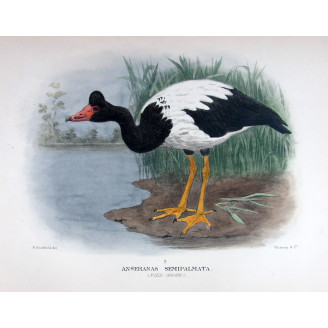
Original lithograph of the Pied Goose by H. Goodchild (Anseranas semipalmata).
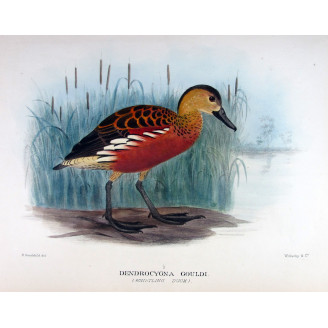
Original lithograph of the Whistling Duck by H. Goodchild (Dendrocygna gouldi).
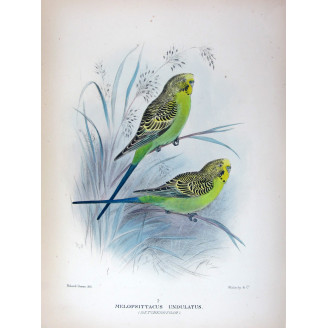
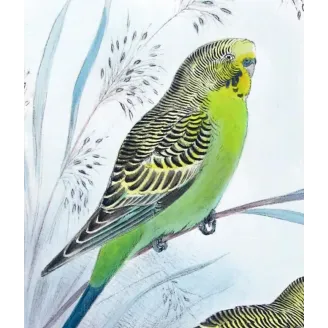
Original lithograph of the Budgerigar (Melopsittacus undulatus) by Roland Green.
Original lithograph of the Tawny Frogmouth by H. Grönvold from Mathews' Birds of Australia.
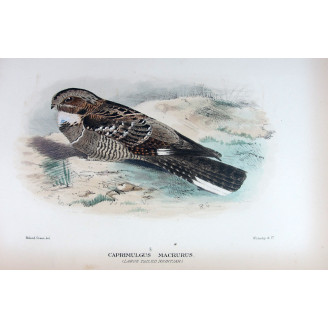
Original lithograph of the Large-tailed Nightjar by Roland Green from Mathews' Birds of Australia.
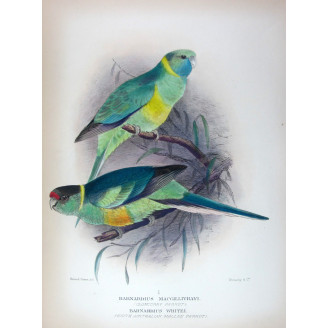
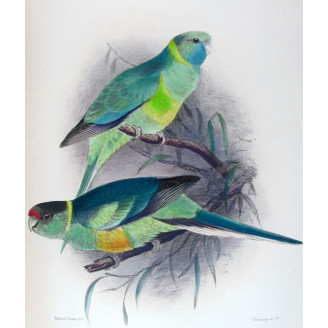
Antique lithograph of the Cloncurry Parrot & South Australian Mallee Parrot by Roland Green.
Antique lithograph of the Northern Yellow-banded Parrot & Dundas Yellow-collared Parrot by Roland Green.
Glossy Cockatoo print by H. Goodchild, dark tones and rare presence on the plate
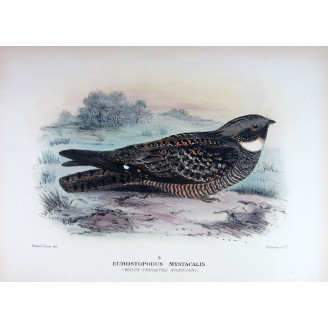
Original lithograph of the White-throated Nightjar by Roland Green from Mathews' Birds of Australia.
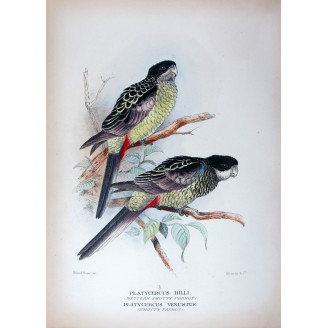
Antique lithograph of the Western Smutty Parrot & Smutty Parrot by Roland Green.
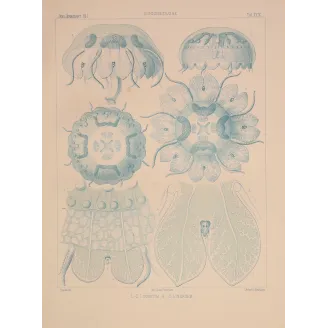
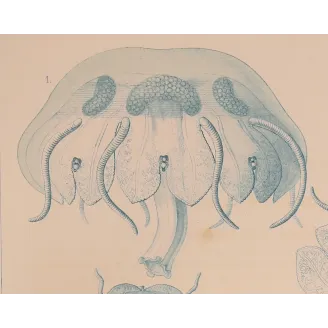
Original 1879 lithograph from Ernst Haeckel's Das System der Medusen, depicting Linantha and Linerges jellyfish in a refined pale-blue palette. A striking combination of scientific precision, marine symmetry and decorative elegance.
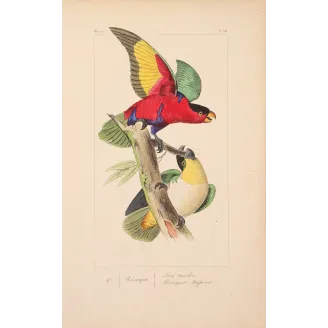
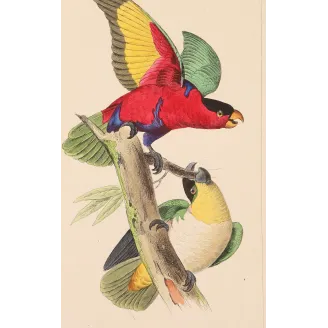
A highly dynamic 19th-century engraving depicting a tricolour lory in flight above a contrasting parakeet. The vivid interplay of red, yellow, green and blue creates a striking decorative composition with exceptional visual energy and presence.
Original 19th-century hummingbird engraving depicting Cuvier’s Sabrewing (*Campylopterus cuvierii*), published by Ludwig Reichenbach for *Trochilinarum Enumeratio*. A refined composition marked *ad naturam* — drawn from life — combining scientific observation with remarkable decorative elegance.
A charming depiction of *Ribes uva-crispa*, the gooseberry plant, detailed with its spiny stems and translucent green fruits.
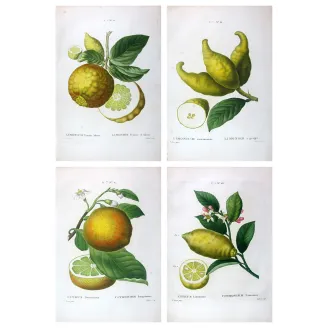
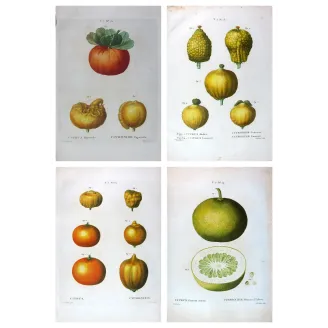
Nine original citrus engravings by Pancrace Bessa, uniting rare cedrats, sculptural lemons, and monumental Pomme d’Adam varieties into a coherent Napoleonic-era ensemble. Botanical study and refined color harmonize in a portfolio conceived to be read as a whole.
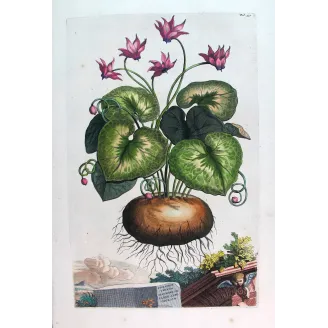
A rare 17th-century botanical engraving from Abraham Munting’s Nauwkeurige Beschryving der Aardgewassen - Phytographia Curiosa, depicting a cyclamen plant with exposed tuber, delicate pink flowers and richly patterned leaves. An expressive example of early botanical art combining scientific curiosity with striking decorative presence.
A complete set of 22 original hand-colored Engravings of ferns by Turpin, from the Dizionario di Scienze Naturali (c. 1830).
Original 1774 engraving by Jacob L'Admiral: Early Moth Stage among Willow Leaves.
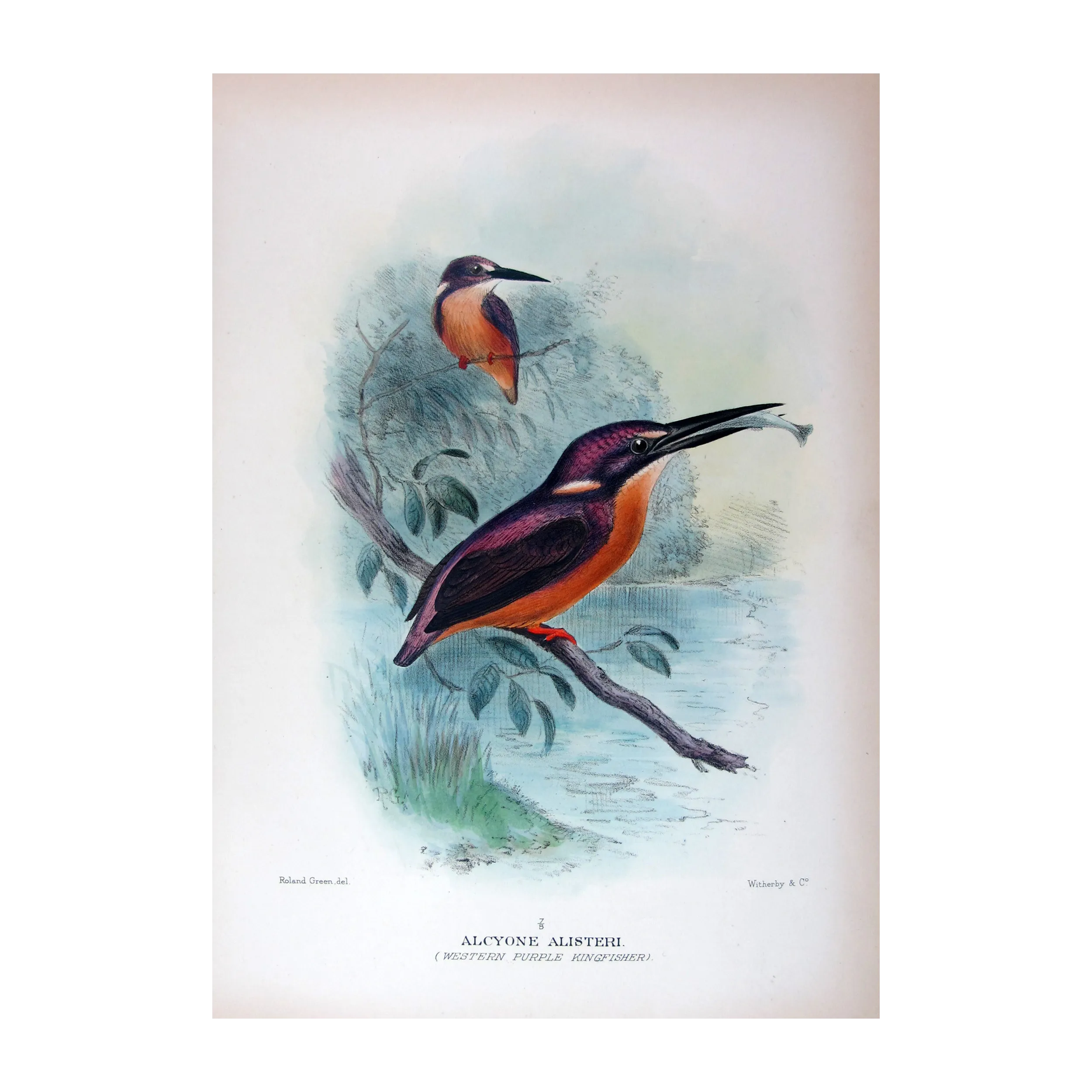
Original lithograph of the Western Purple Kingfisher (Alcyone alisteri) by Roland Green