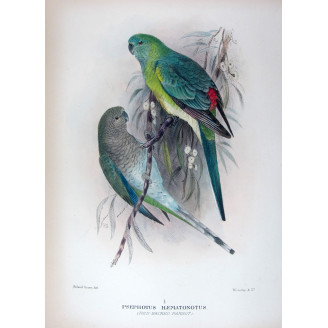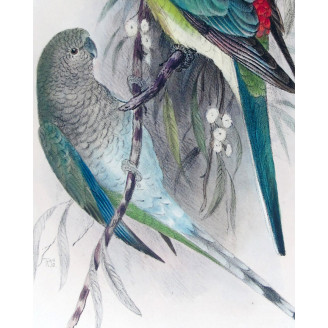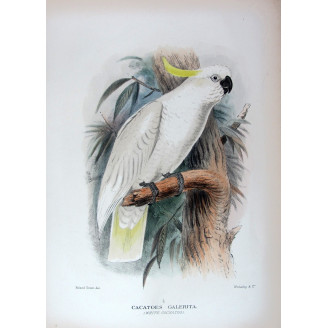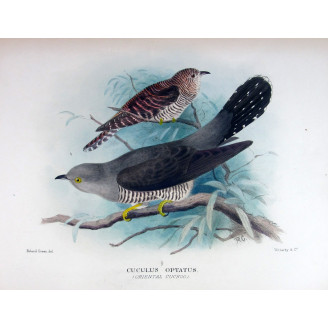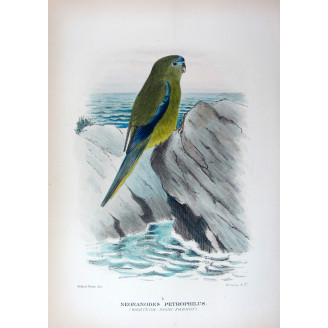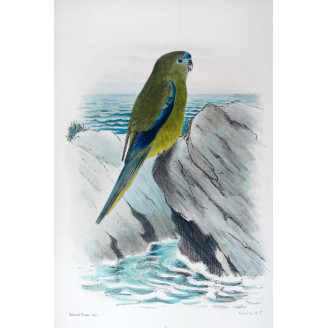
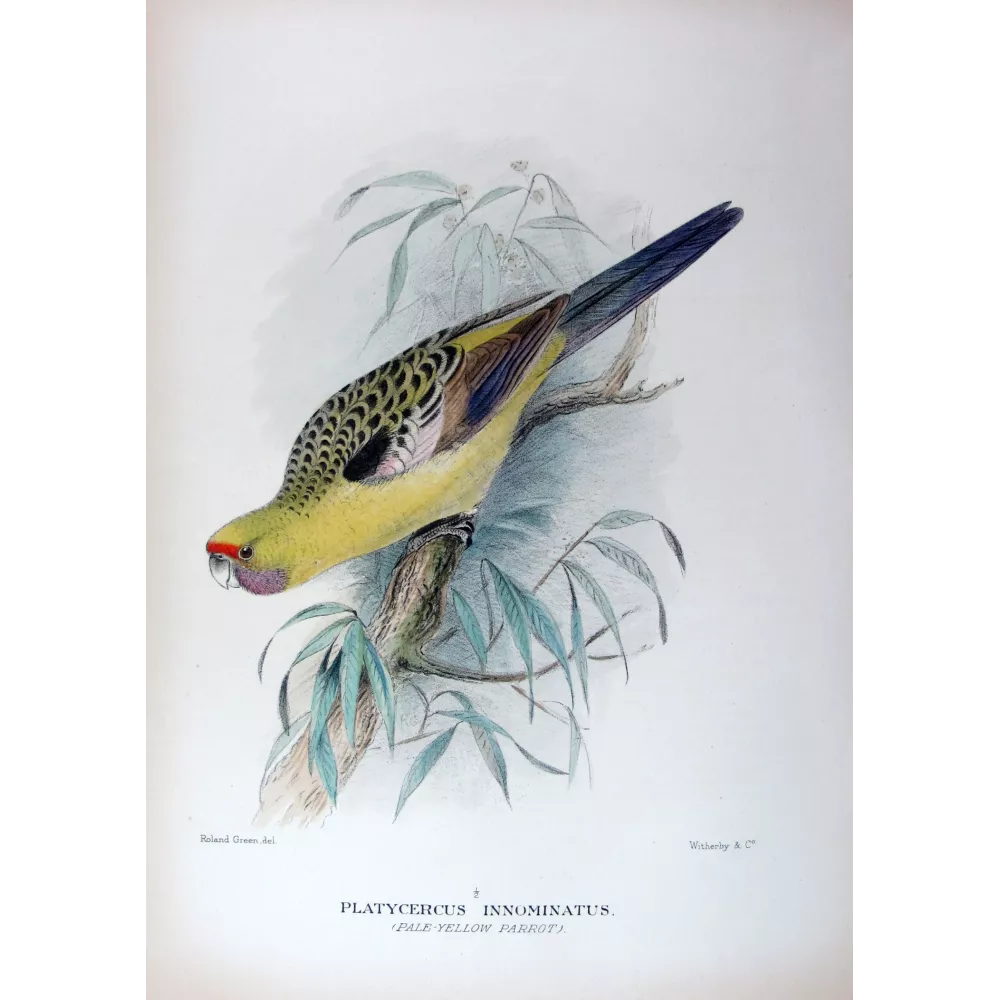

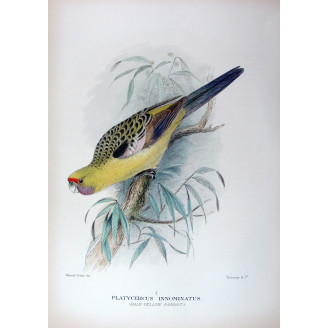
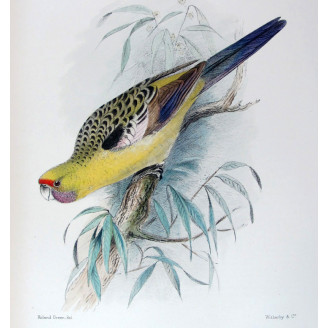
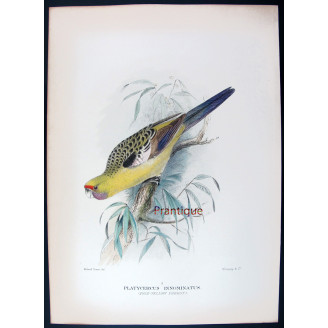
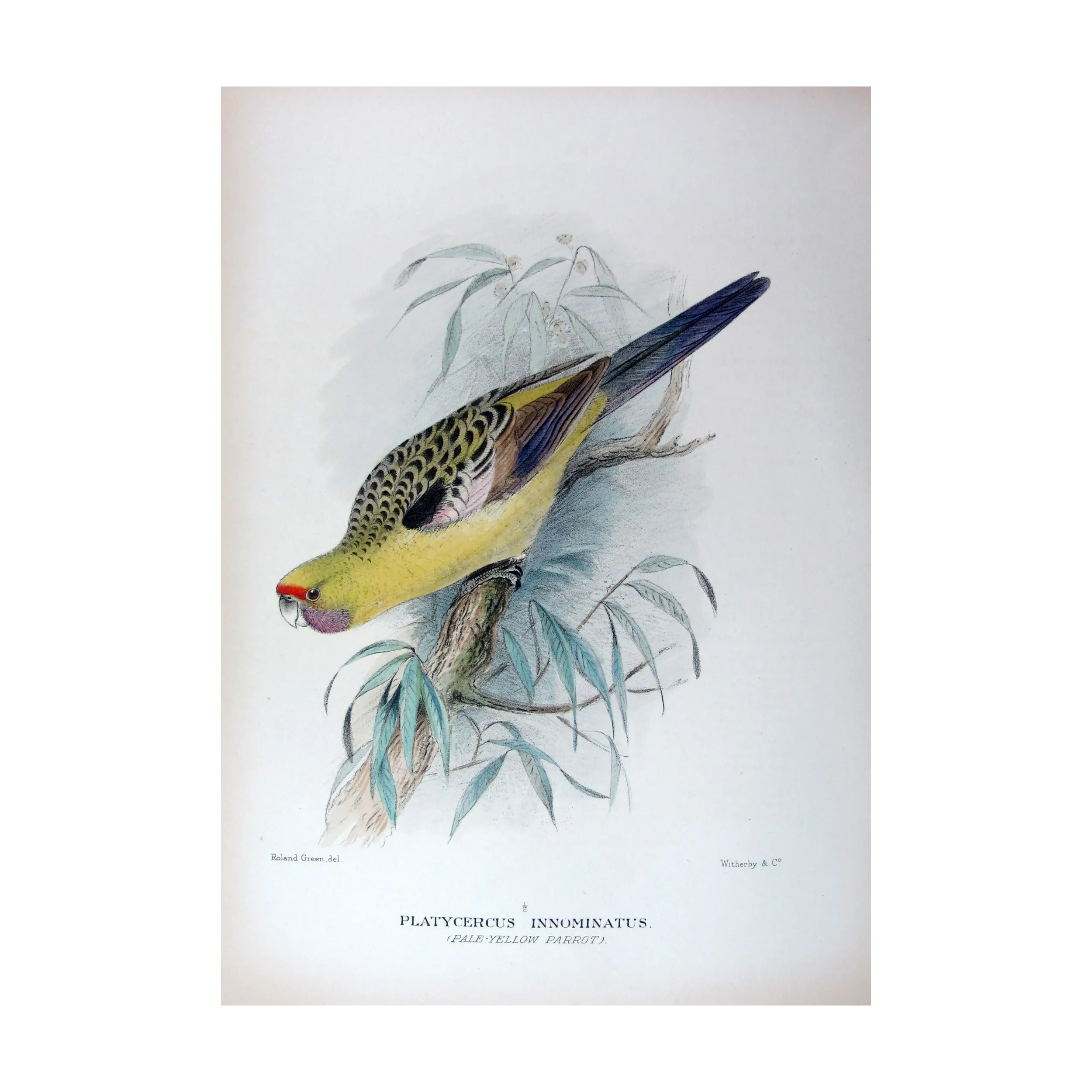
Antique lithograph of the Pale Yellow Parrot by Roland Green.
 Delivery policy
Your print will be carefully prepared and shipped worldwide via trusted couriers (UPS or similar).
 Authentic antique prints
Original engravings from the 17th–19th century.
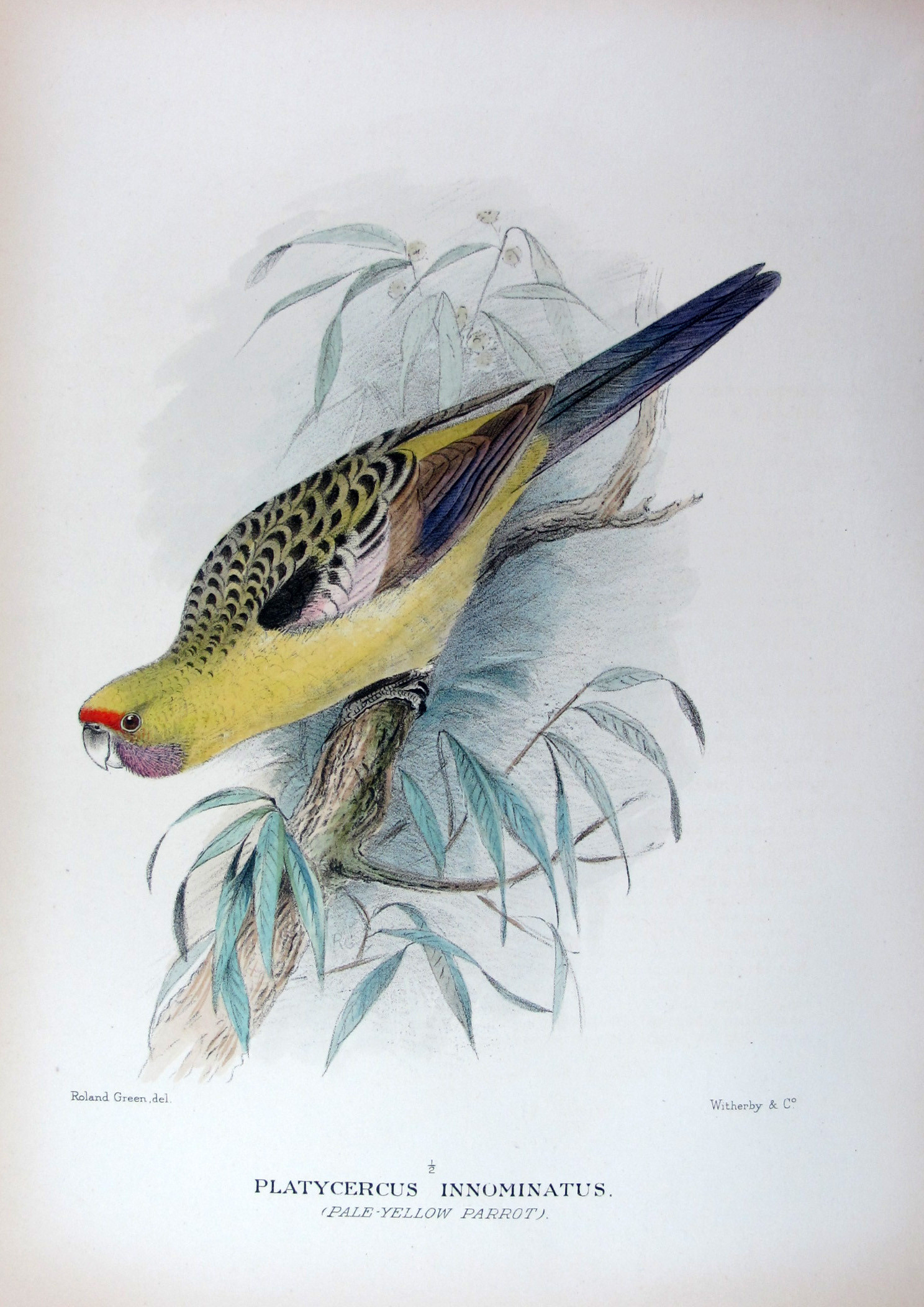
This original early twentieth-century hand-colored lithograph depicts a parrot titled on the plate as Platycercus inornatus, commonly associated with the Pale-headed Parrot (Platycercus adscitus). The sheet belongs to The Birds of Australia, Gregory M. Mathews’ monumental ornithological publication, illustrated here by Roland Green.
Shown in a poised, downward-leaning posture along a eucalyptus branch, the bird combines delicate colour with a striking graphic pattern across the wing coverts, creating an image that feels both refined and immediately legible.
— • —
Green constructs the plate around tonal subtlety and rhythmic detail. The body is rendered in soft yellow, gently shaded to suggest volume without losing luminosity. Against this calm ground, the wing shows a beautifully patterned field of dark scalloped markings—an ornamental lattice that introduces visual texture and depth.
Cool blue-grey foliage and the pale atmospheric wash behind the branch keep the composition airy and understated. Small accents of red around the face and the faint lilac wash near the cheek add warmth and character, while the elongated tail introduces a clean diagonal that stabilizes the entire design.
The Pale-headed Parrot is native to eastern Australia, favouring open woodland and forest edges. Its gentle yellow tones and refined facial colouring distinguish it within the broader parrot family, offering a quieter form of beauty than the more flamboyant tropical species.
For early twentieth-century ornithologists, parrots of the Platycercus group provided important taxonomic studies in regional variation and subtle morphological difference—precisely the kind of detail Mathews sought to document in his definitive survey.
This lithograph originates from The Birds of Australia, Gregory M. Mathews’ ambitious early twentieth-century ornithological enterprise. Designed as a definitive scientific record, the work united rigorous taxonomy with the refined artistry of leading wildlife illustrators, producing one of the most authoritative visual catalogues of Australian birdlife. Explore the broader historical scope in our editorial feature: Gregory M. Mathews and The Birds of Australia .
The plate was illustrated by Roland Green, whose field-driven precision and compositional discipline are especially evident in species where subtle tonal harmony must remain both accurate and decorative.
Very good antique condition. Fresh original hand-coloring with strong lithographic impression. Printed on fine early twentieth-century wove paper. Minor age toning slightly more visible along the outer margins, consistent with age.
For further insight into Roland Green’s contribution to ornithological illustration: Roland Green – Dynamic Vision and Field-Born Precision in Bird Art
Specific References
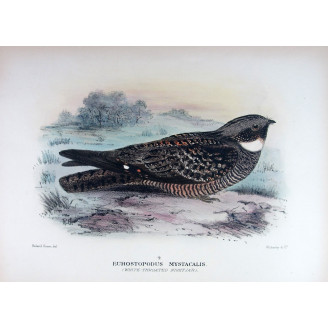
Original lithograph of the White-throated Nightjar by Roland Green from Mathews' Birds of Australia.
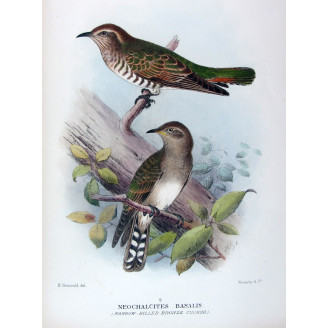
Narrow-billed Bronze Cuckoo (Neochalcites basalis) – Original lithograph by Henrik Grønvold.
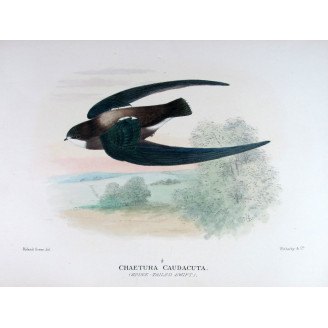
Spine-tailed Swift (Chaetura caudacuta) – Original lithograph by Roland Green
Original lithograph of the Plumed Podargus by H. Grönvold from Mathews' Birds of Australia.
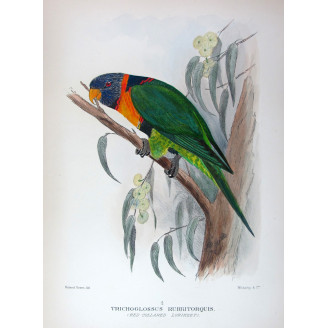
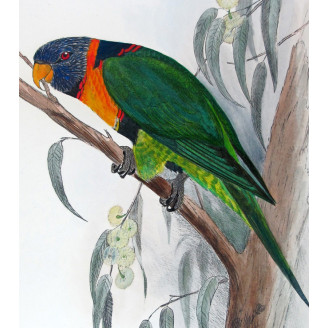
Colorful print of the Red-collared Lorikeet by Roland Green, original hand-color.
Original lithograph of the Tawny Frogmouth by H. Grönvold from Mathews' Birds of Australia.
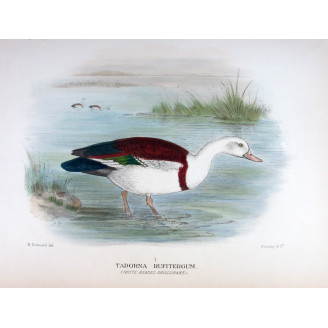
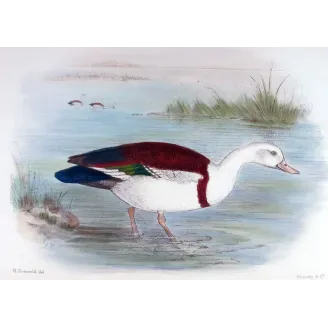
Original lithograph of the White-headed Sheldrake by Henrik Grønvold (Tadorna rufitergum).
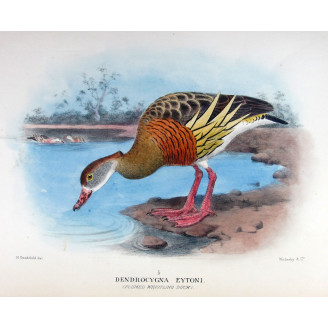
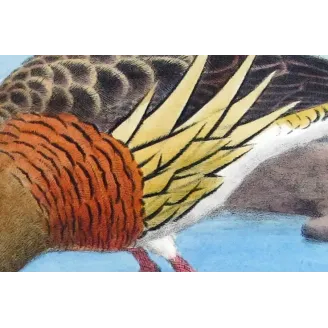
Original lithograph of the Plumed Whistling Duck by H. Goodchild (Dendrocygna eytoni).
Antique lithograph of the Sulphur-crested Cockatoo by Roland Green, hand-colored.
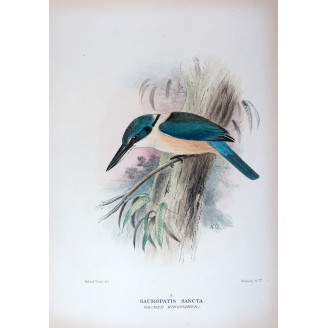
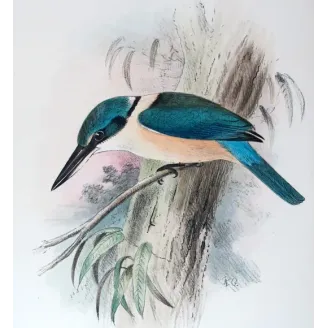
Original lithograph of the Sacred Kingfisher (Sauropatis sancta) by Roland Green
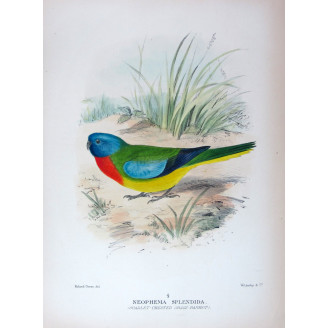
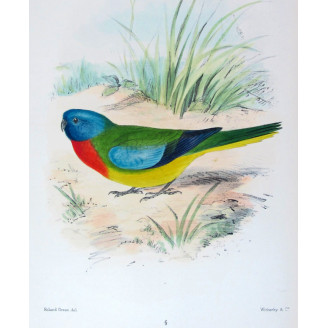
Antique lithograph of the Scarlet-chested Grass Parrot by Roland Green.
Antique lithograph of the Pale Yellow Parrot by Roland Green.