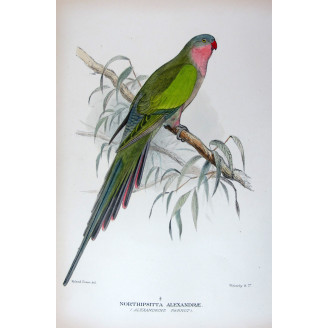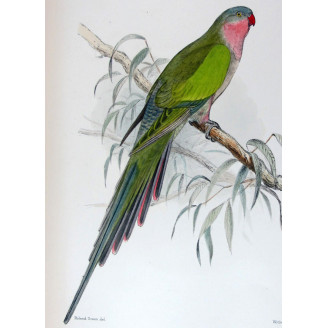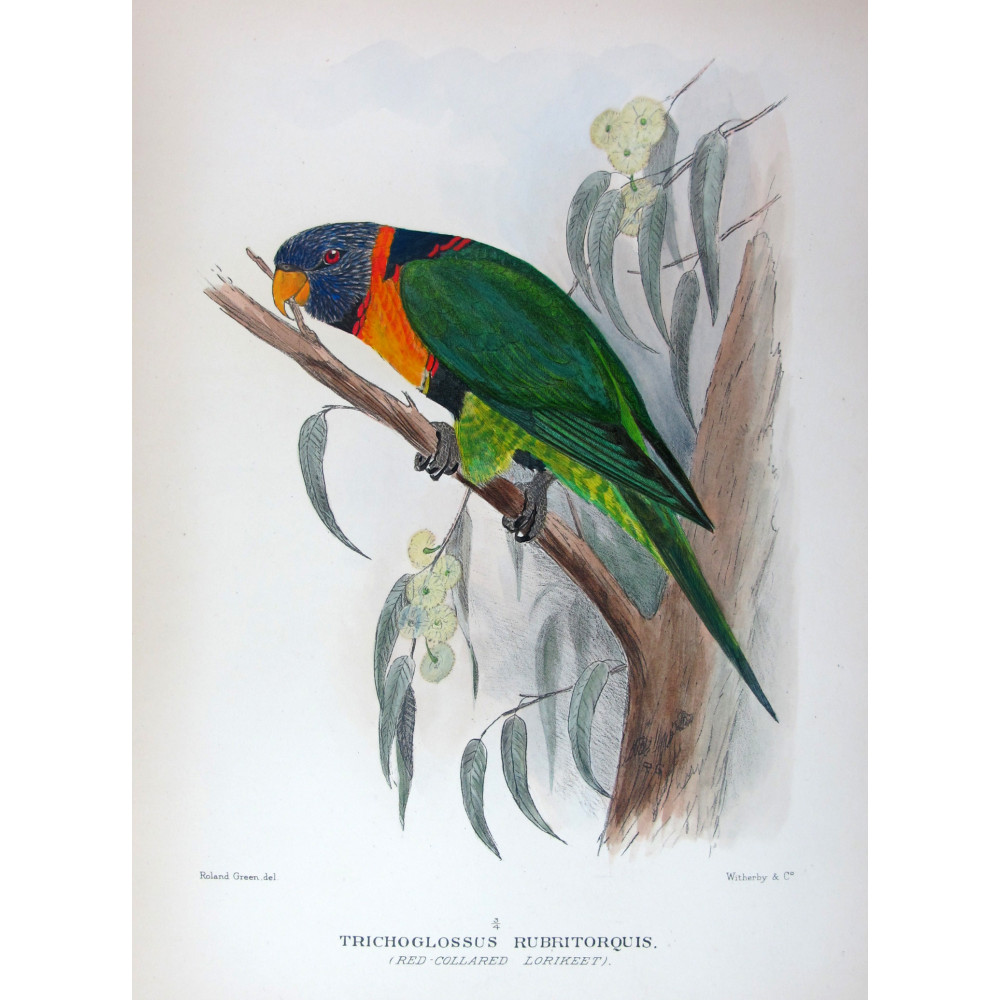
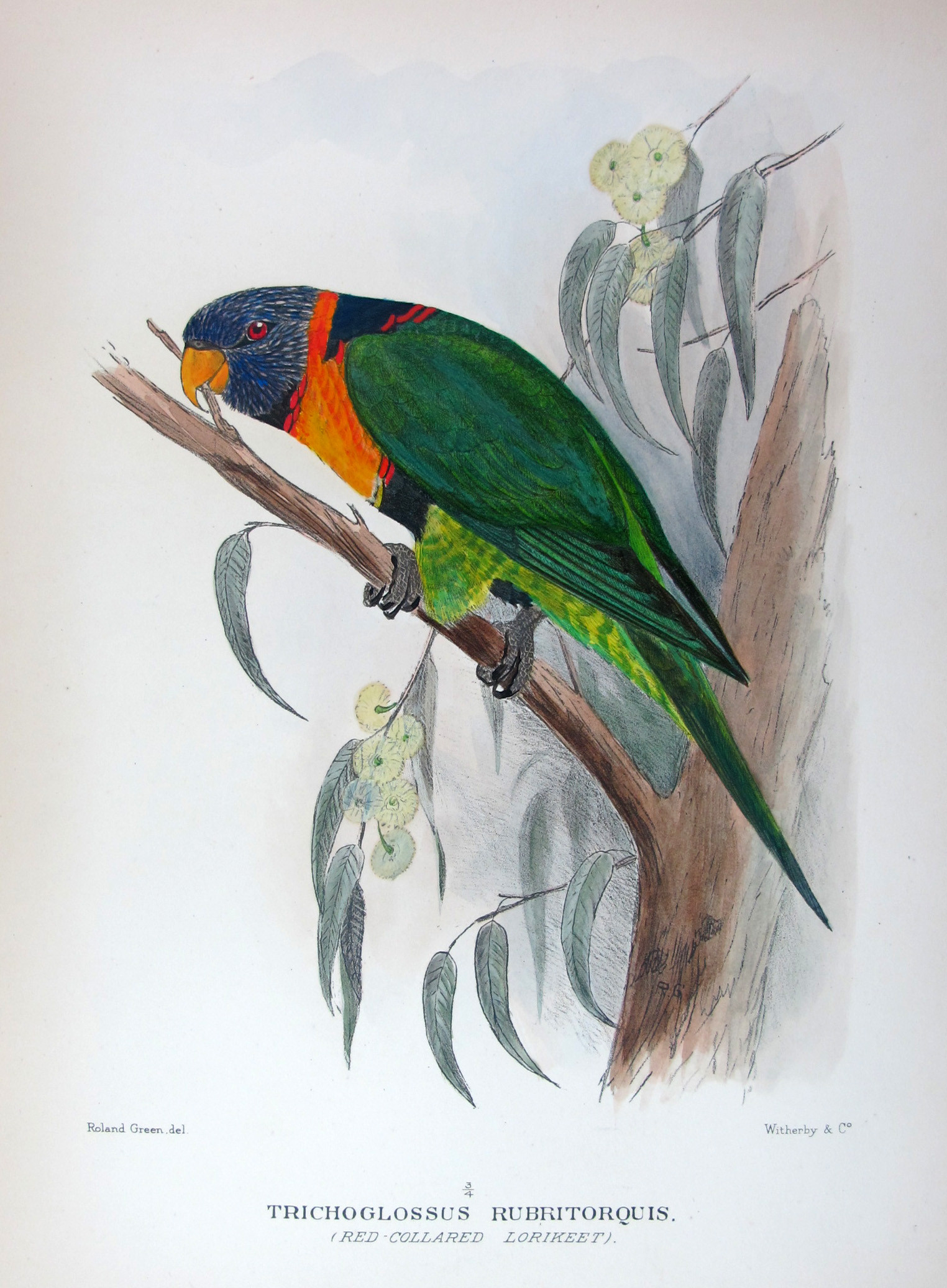
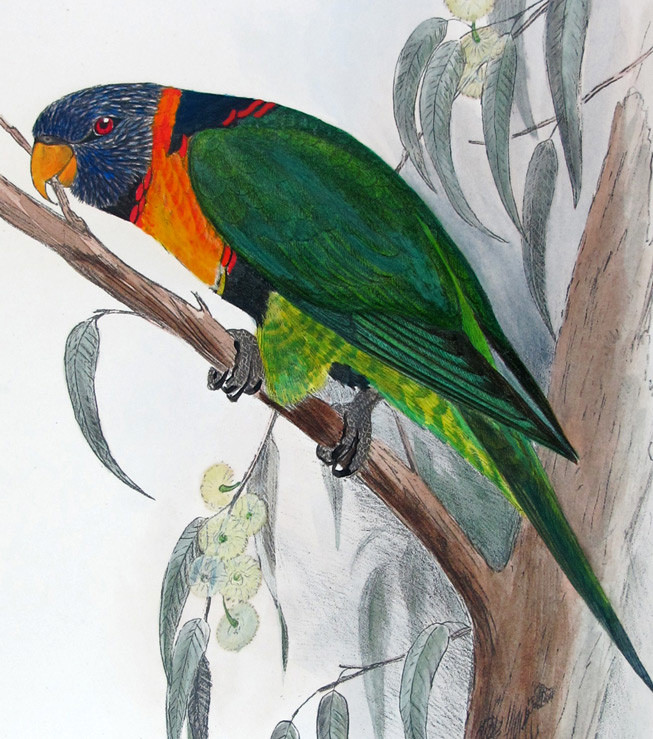
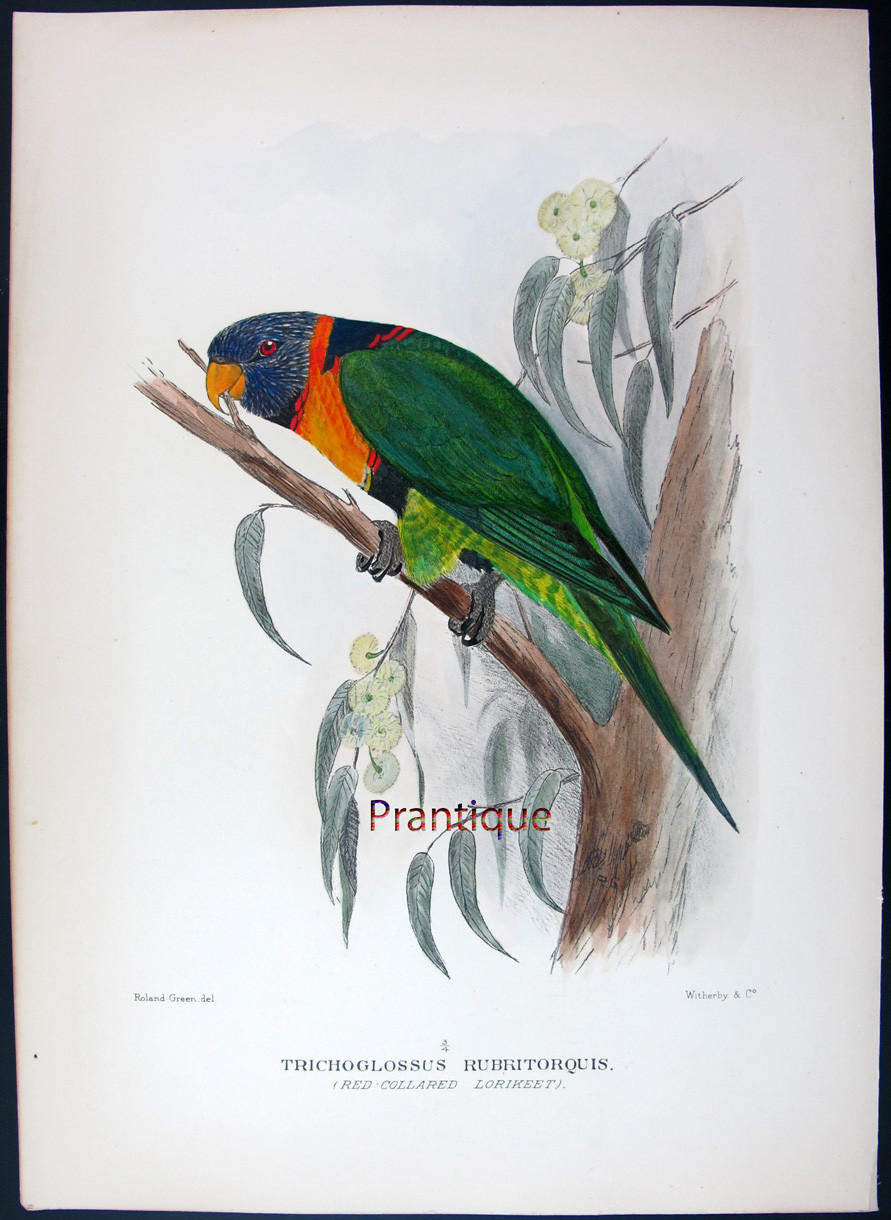
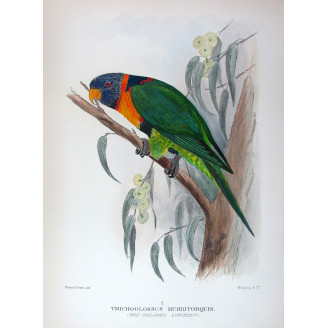
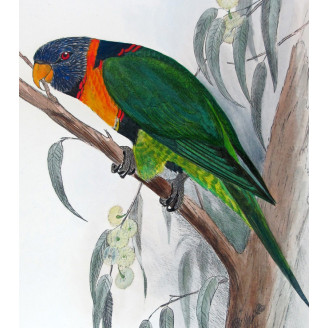
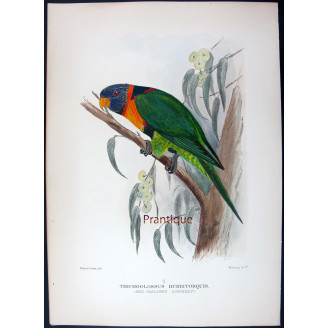
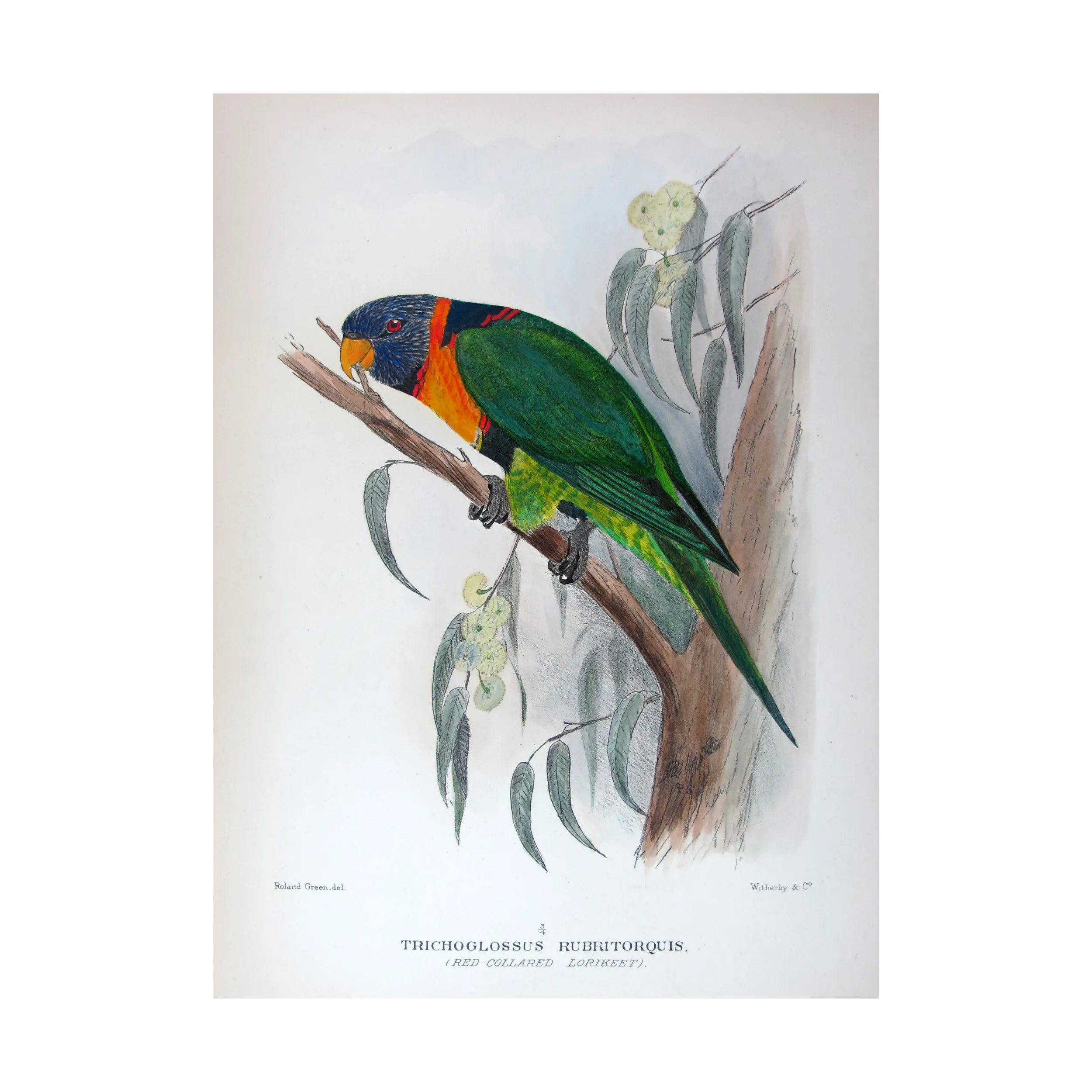
Colorful print of the Red-collared Lorikeet by Roland Green, original hand-color.
 Delivery policy
Your print will be carefully prepared and shipped worldwide via trusted couriers (UPS or similar).
 Authentic antique prints
Original engravings from the 17th–19th century.
This original early twentieth-century hand-colored lithograph depicts Trichoglossus rubritorquis, the Red-collared Lorikeet. The plate forms part of The Birds of Australia, the monumental ornithological publication authored by Gregory M. Mathews and illustrated here by Roland Green.
Perched along a eucalyptus branch, the lorikeet reveals a vivid orchestration of colour: deep emerald wings, luminous lime underparts, a sapphire-blue head and the unmistakable band of scarlet across the nape from which its name derives.
— • —
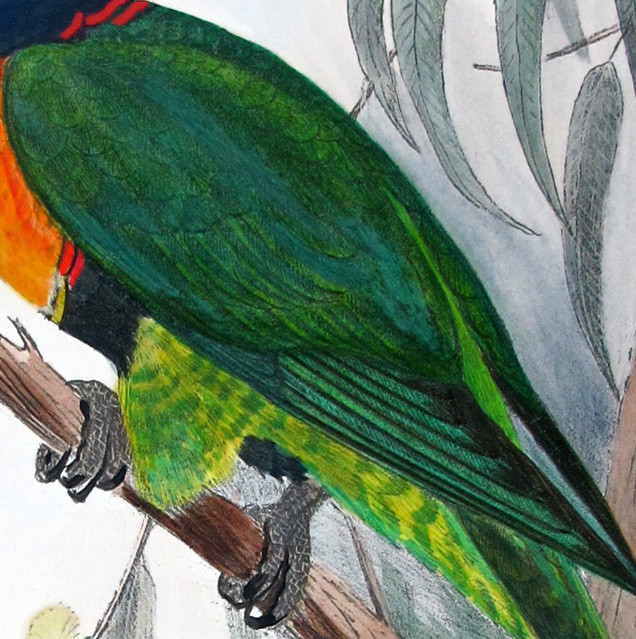
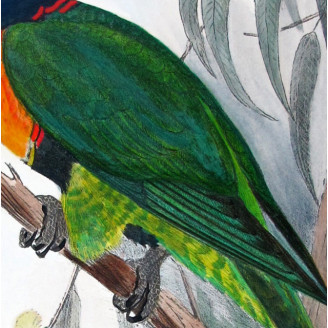
Green approaches the subject with controlled intensity. The saturated green of the mantle is layered with subtle tonal transitions, preserving feather structure without flattening the chromatic impact. The blue head is rendered with fine stippled modelling, while the red collar acts as a compositional fulcrum, drawing the eye toward the bird’s expressive gaze.
The muted eucalyptus foliage behind — executed in restrained grey-greens — creates atmospheric depth and prevents chromatic overload. The diagonal branch introduces dynamic tension, contrasting with the bird’s compact, poised posture. The result is a plate that balances ornamental brilliance with scientific precision.
Native to northern Australia, the Red-collared Lorikeet inhabits woodland and savannah regions rich in flowering trees. Like other lorikeets, it feeds primarily on nectar and pollen, its specialised brush-tipped tongue adapted to extract sustenance from blossoms.
During the early twentieth century, such vibrantly coloured parrots became emblematic of Australia’s avian diversity. Their striking plumage offered both scientific interest and aesthetic fascination, perfectly suited to Mathews’ ambition of producing a definitive visual record of the continent’s birdlife.
This lithograph originates from The Birds of Australia, Gregory M. Mathews’ ambitious ornithological project of the early twentieth century. Conceived as a rigorous scientific catalogue, the work combined detailed taxonomy with collaboration among leading wildlife artists of the period. Explore the historical scope of this enterprise in our editorial feature: Gregory M. Mathews and The Birds of Australia .
The plate was illustrated by Roland Green, renowned for translating field observation into finely balanced lithographic compositions that unite movement, structure and chromatic depth.
Very good antique condition. Fresh and vibrant original hand-coloring with strong lithographic impression. Printed on fine early twentieth-century wove paper. Minor age toning consistent with age.
For further insight into Roland Green’s contribution to ornithological illustration: Roland Green – Dynamic Vision and Field-Born Precision in Bird Art
Specific References
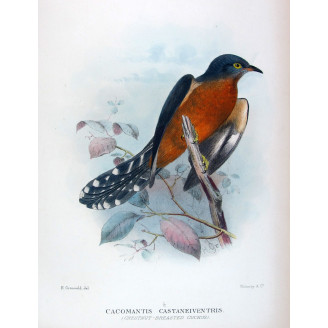
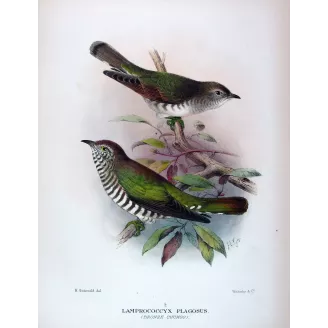
Chestnut-breasted Cuckoo & Queensland Pigeon illustrated by Henrik Grønvold.
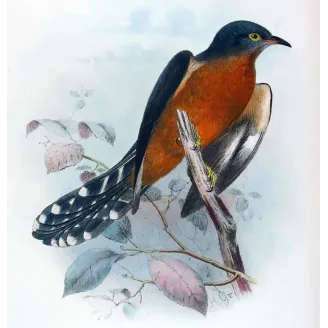
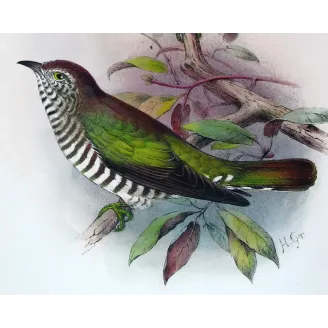
Chestnut-breasted Cuckoo (Cacomantis castaneiventris) – Original lithograph by Henrik Grønvold.
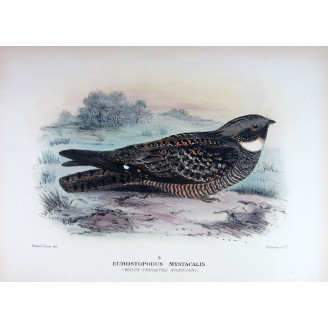
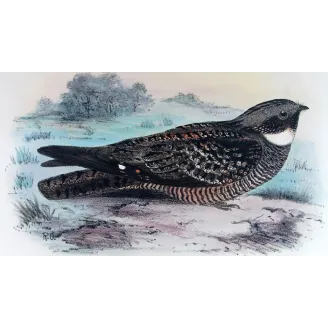
Original lithograph of the White-throated Nightjar by Roland Green from Mathews' Birds of Australia.
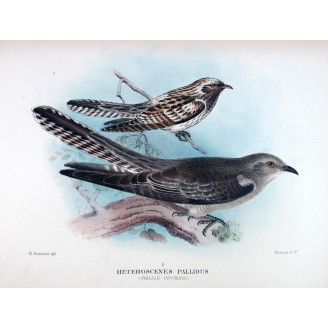
Pallid Cuckoo (Heteroscenes pallidus) – Original lithograph by Henrik Grønvold.
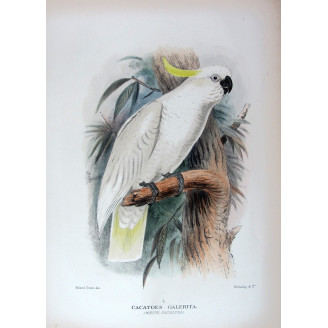
Antique lithograph of the Sulphur-crested Cockatoo by Roland Green, hand-colored.
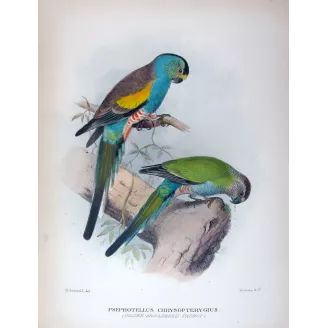
Original lithograph of the Golden-shouldered Parrot (Psephotellus chrysopterygus) by Henrik Grønvold.
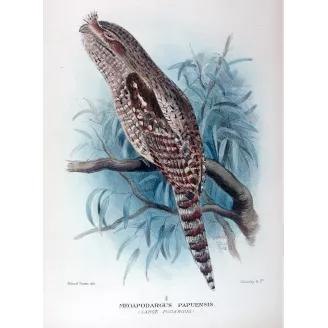
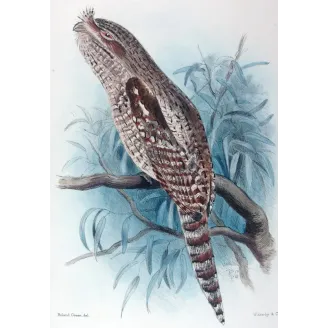
Original lithograph of the Large Podargus by Roland Green from Mathews' Birds of Australia.
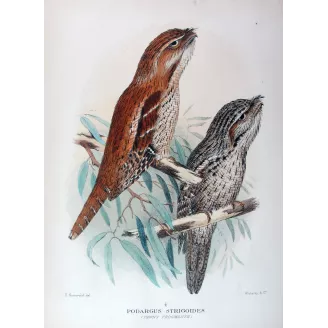
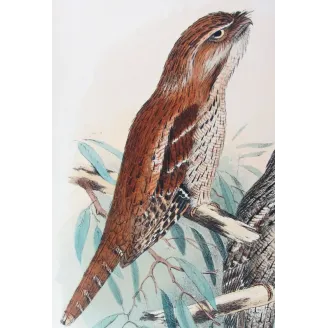
Original lithograph of the Tawny Frogmouth by H. Grönvold from Mathews' Birds of Australia.
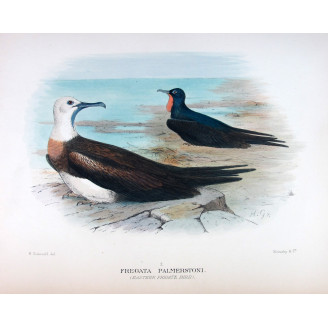
Eastern Frigate Bird from Mathews' Birds of Australia, drawn by Grönvold.
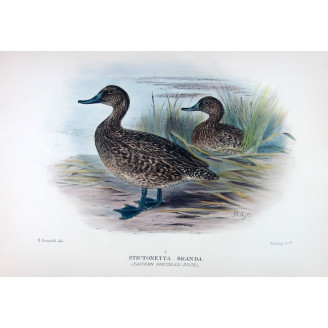
Eastern Freckled Duck (Stictonetta naevosa) – Original antique bird print by H. Grønvold.
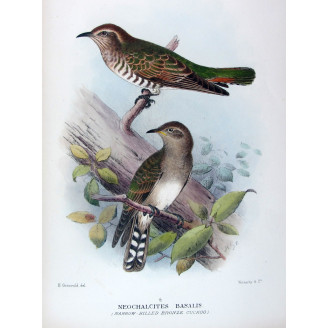
Narrow-billed Bronze Cuckoo (Neochalcites basalis) – Original lithograph by Henrik Grønvold.
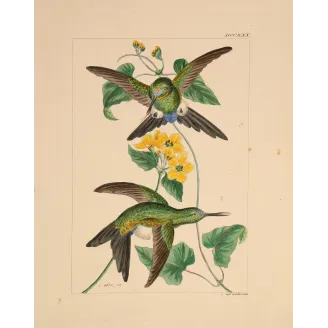
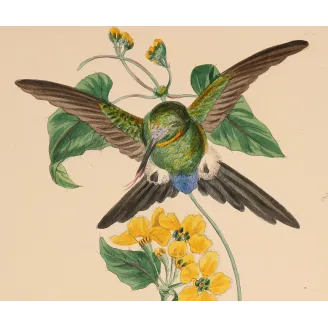
An original hand-colored engraving depicting Lucian's Puffleg (Eriocnemis luciani), one of the most distinctive high-Andean hummingbirds illustrated by Ludwig Reichenbach in Trochilinarum Enumeratio (c. 1855–1860). Drawn ad naturam ("from life"), the composition captures the remarkable white feather tufts that give pufflegs their name, together with brilliant emerald plumage and delicate yellow blossoms. Combining Victorian scientific precision with refined decorative elegance, this authentic nineteenth-century engraving remains both an important ornithological document and a striking work of natural history art.
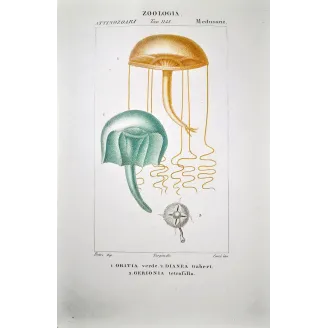
Trio of rare jellyfish types in soft tones, hand-colored lithograph by Prêtre.
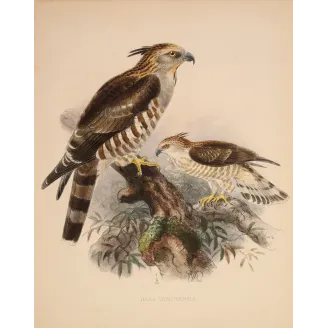
Original antique bird print depicting Baza ceylonensis (Ceylon Hawk-Eagle), illustrated by J.G. Keulemans for A History of the Birds of Ceylon. A striking Victorian ornithological lithograph featuring a refined pair of raptors with strong decorative presence.
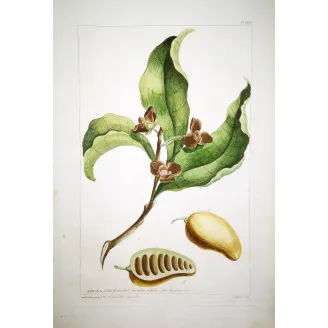
An original 18th-century hand-colored engraving depicting a Custard Apple (Annona sp.), from Philip Miller’s Figures of the Most Beautiful, Useful, and Uncommon Plants. Combining botanical precision with decorative clarity, the composition features both the plant and its distinctive fruit in sectional detail.
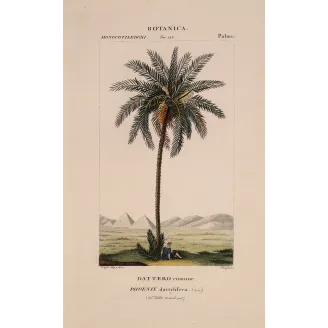
Detailed antique illustrations of the date palm tree and its floral and fruit anatomy.
Fine botanical engraving showing delicate redcurrant clusters and bright green leaves.
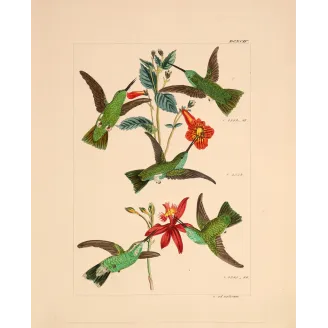
An exceptional original hand-colored engraving from Ludwig Reichenbach's Trochilinarum Enumeratio, depicting five brilliant hummingbirds feeding among scarlet tropical flowers. Featuring Esmeralda, Euchloris and Maculicollis, this dynamic nineteenth-century composition beautifully combines botanical richness with the elegance of Victorian ornithological illustration.
Colorful print of the Red-collared Lorikeet by Roland Green, original hand-color.