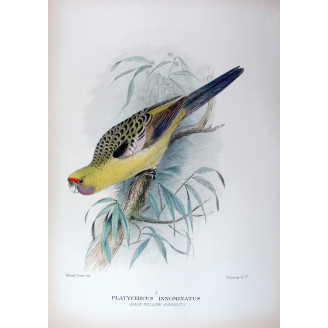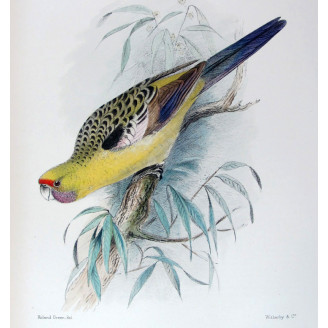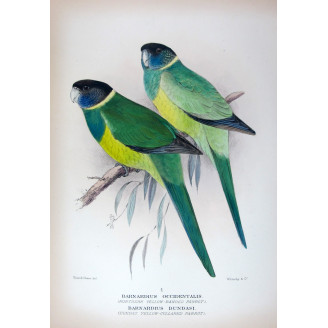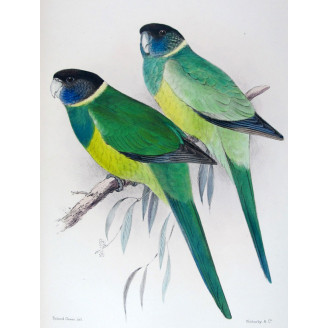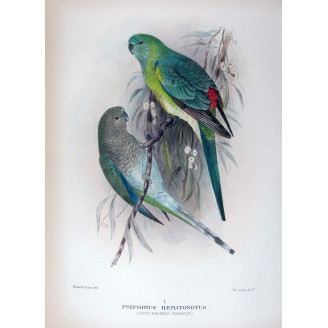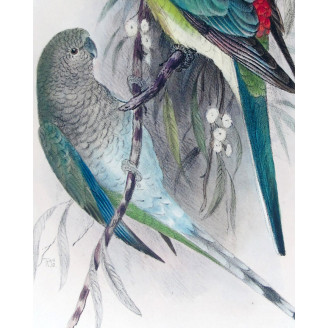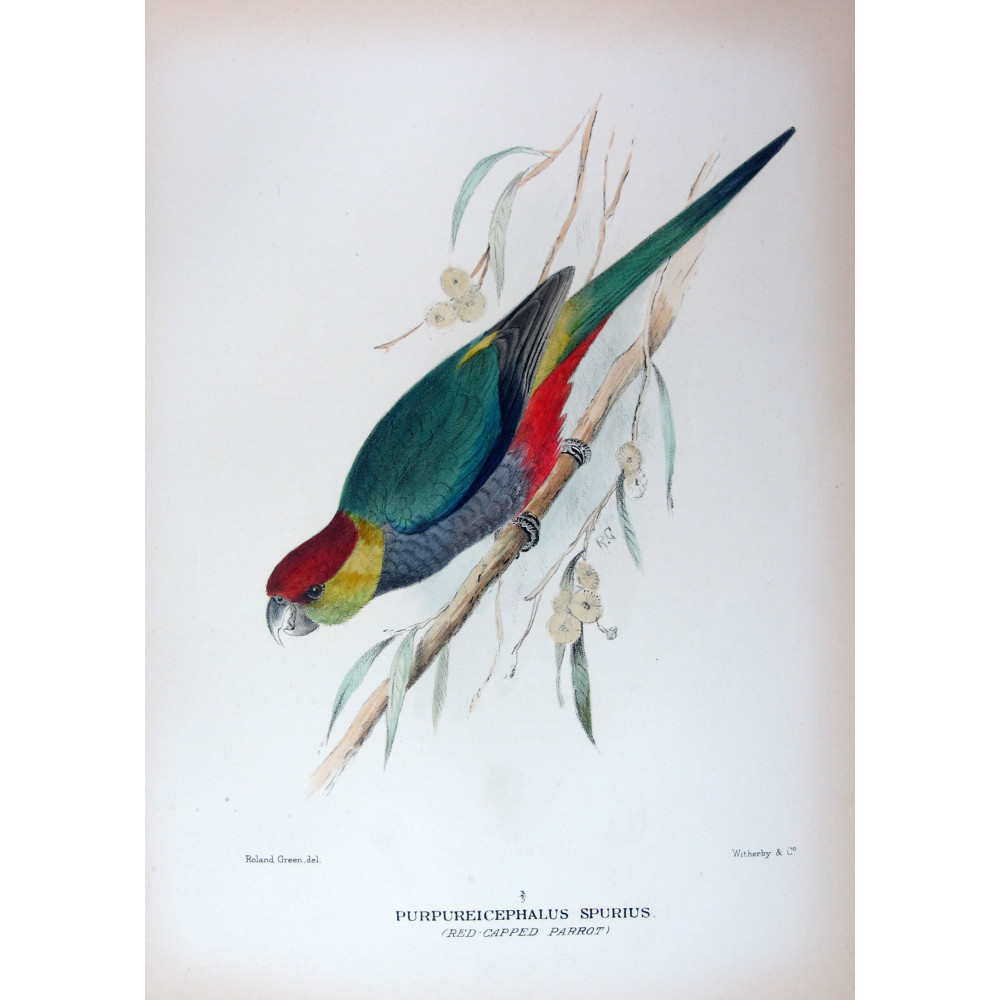
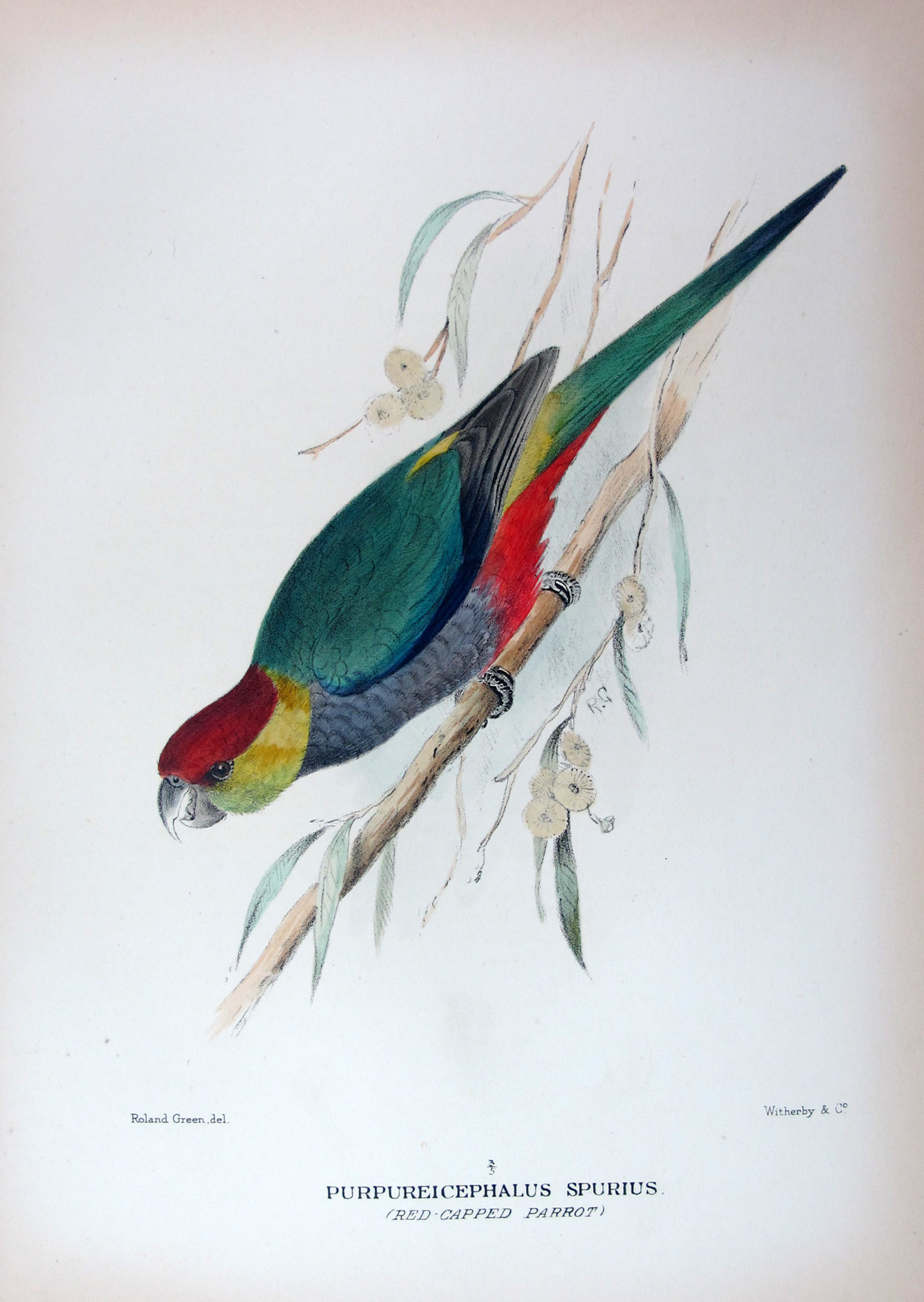
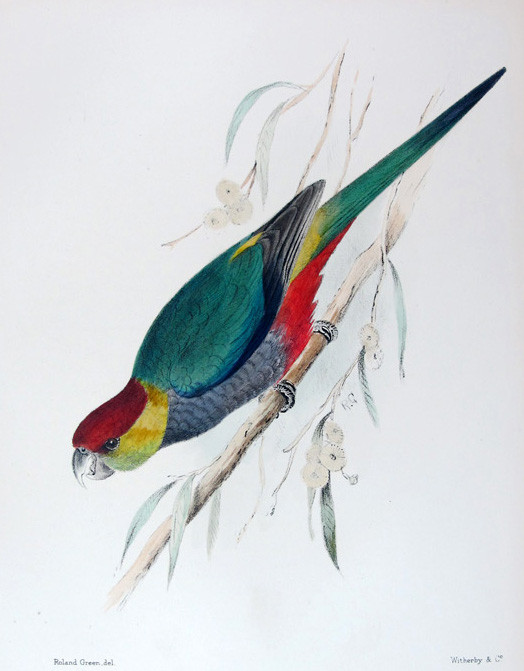
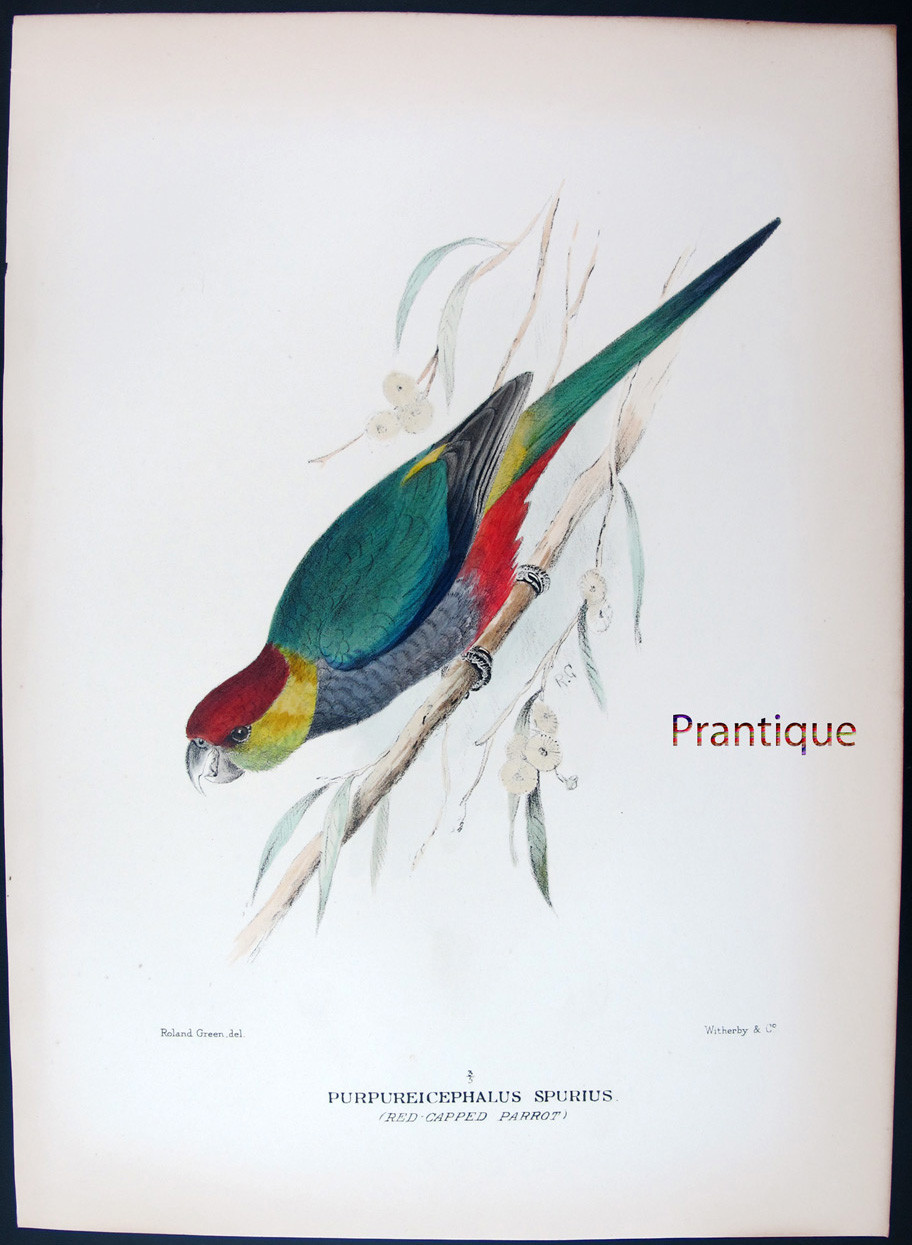
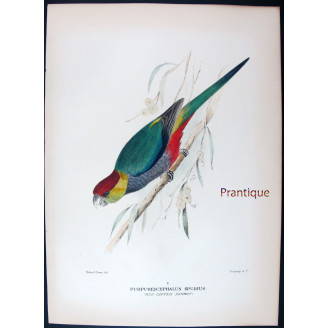
Antique lithograph of the Red-capped Parrot by Roland Green.
 Delivery policy
Your print will be carefully prepared and shipped worldwide via trusted couriers (UPS or similar).
 Authentic antique prints
Original engravings from the 17th–19th century.
This original early twentieth-century hand-colored lithograph depicts Purpureicephalus spurius, the Red-capped Parrot. The plate belongs to Gregory M. Mathews’ monumental publication The Birds of Australia, illustrated by Roland Green and issued by Witherby & Co.
Set along a sharply angled eucalyptus branch, the bird is rendered with a strong diagonal thrust that immediately energizes the sheet. The vivid scarlet crown acts as a visual signature, balanced by luminous greens and a warm yellow wash at the throat—an arrangement that feels both natural and intentionally composed.
— • —
This is one of the most graphically confident single-bird plates in the Mathews series. Roland Green uses the diagonal branch as a compositional spine: it guides the eye from the red cap down through the layered green mantle, across the darker wing structure, and into the long tapering tail, which completes the movement with elegant restraint.
The colour relationships are especially refined. Emerald and teal greens are deepened by subtle feather modelling, while the throat’s golden tone introduces warmth without breaking the overall harmony. Small botanical elements—eucalyptus leaves and pale seed clusters—add context and delicacy, enriching the atmosphere without crowding the subject.
The resulting impression is both decorative and modern: a crisp subject, ample negative space, and a palette that reads vividly even from across a room—ideal for display in contemporary interiors.
The Red-capped Parrot is a distinctive Australian species, instantly recognisable by its intense crimson crown and compact, athletic build. It is often associated with woodland habitats where eucalyptus provides both food sources and shelter.
In Mathews’ project, parrots held particular importance: their diversity, regional variation, and striking colouration offered an ideal subject through which scientific classification and visual splendour could converge on a single plate.
This lithograph originates from The Birds of Australia, Gregory M. Mathews’ ambitious early twentieth-century ornithological enterprise. Conceived as a definitive scientific record, the work united rigorous taxonomy with the refined artistry of leading wildlife illustrators, producing one of the most authoritative visual catalogues of Australian birdlife. Explore the broader historical scope in our editorial feature: Gregory M. Mathews and The Birds of Australia .
Roland Green’s plates are celebrated for their balance between clarity and atmosphere. Here, his decisive diagonal composition and controlled botanical detail produce a sheet that feels at once scientific and strikingly decorative.
Very good antique condition. Fresh original hand-coloring with strong lithographic impression. Printed on fine early twentieth-century wove paper. Minor age toning slightly more visible along the outer margins, consistent with age.
For further insight into Roland Green’s contribution to ornithological illustration: Roland Green – Dynamic Vision and Field-Born Precision in Bird Art
Specific References
Antique lithograph of the Sulphur-crested Cockatoo by Roland Green, hand-colored.
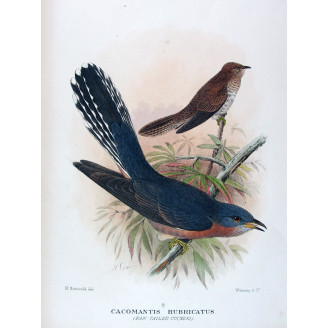
Fan-tailed Cuckoo (Cacomantis rubricatus) – Original lithograph by Henrik Grønvold.
Antique lithograph of the Northern Yellow-banded Parrot & Dundas Yellow-collared Parrot by Roland Green.
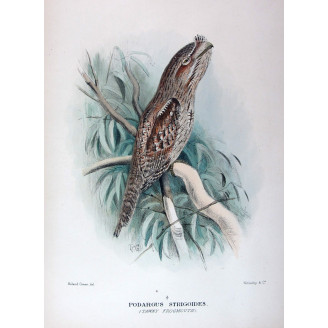
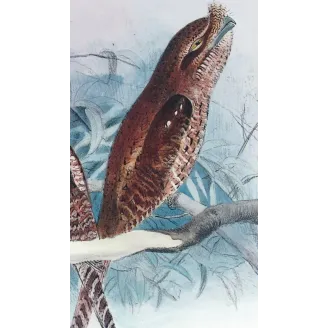
Original lithograph of the Tawny Frogmouth by Roland Green from Mathews' Birds of Australia.
Original lithograph of the Large Podargus by Roland Green from Mathews' Birds of Australia.
Eastern Frigate Bird from Mathews' Birds of Australia, drawn by Grönvold.
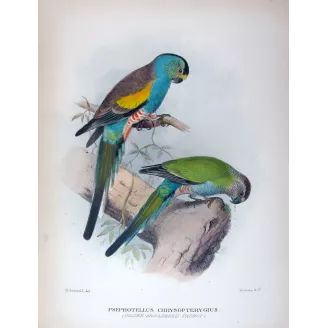
Original lithograph of the Golden-shouldered Parrot (Psephotellus chrysopterygus) by Henrik Grønvold.
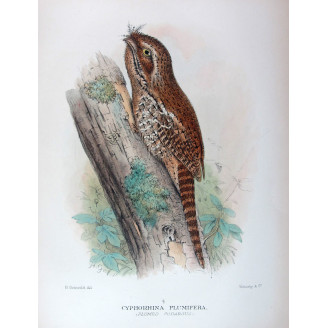
Original lithograph of the Plumed Podargus by H. Grönvold from Mathews' Birds of Australia.
Original lithograph of the Whistling Duck by H. Goodchild (Dendrocygna gouldi).
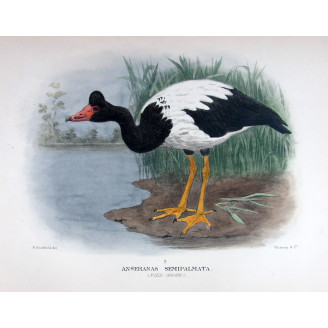
Original lithograph of the Pied Goose by H. Goodchild (Anseranas semipalmata).
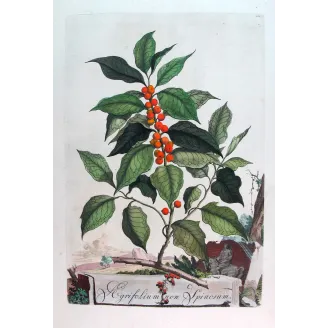
A refined 17th-century botanical engraving depicting non-spiny holly, notable for its elegant foliage and vivid berries. A balanced composition combining natural observation with early decorative botanical art.
19th-century hand-colored engraving of Water Pepper (Hydropiper), a graceful botanical with slender leaves and pink florets.
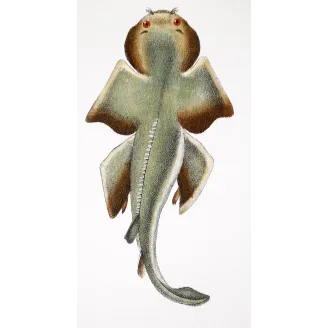
Graceful 19th-century engraving of the Angelshark by Pierre Antoine Prêtre, rich in soft tones and fine anatomical accuracy.
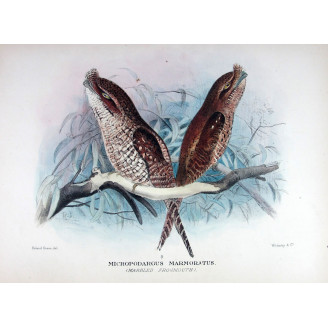
Original lithograph of the Marbled Frogmouth by Roland Green from Mathews' Birds of Australia.
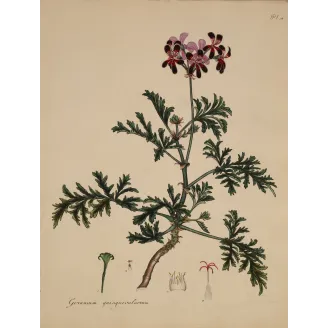
An original botanical engraving from Henry Andrews' celebrated The Botanist's Repository, depicting Geranium quinquevulnerum with richly coloured velvety flowers, transparent hand colouring and refined eighteenth-century botanical craftsmanship.
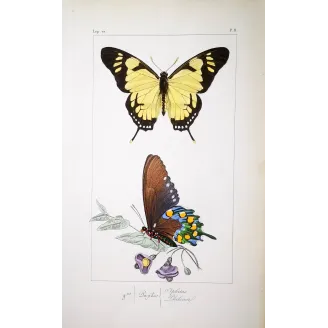
Yellow swallowtail and Pipevine butterfly (Papilio iphitas, Battus philenor) combining bold yellow-black contrast with iridescent blue and green tones. A highly decorative 1835 engraving, ideal as antique butterfly wall art.
Exceptional 19th-century antique print by Pierre Antoine Prêtre depicting the majestic Sawfish with anatomical accuracy and rare charm.
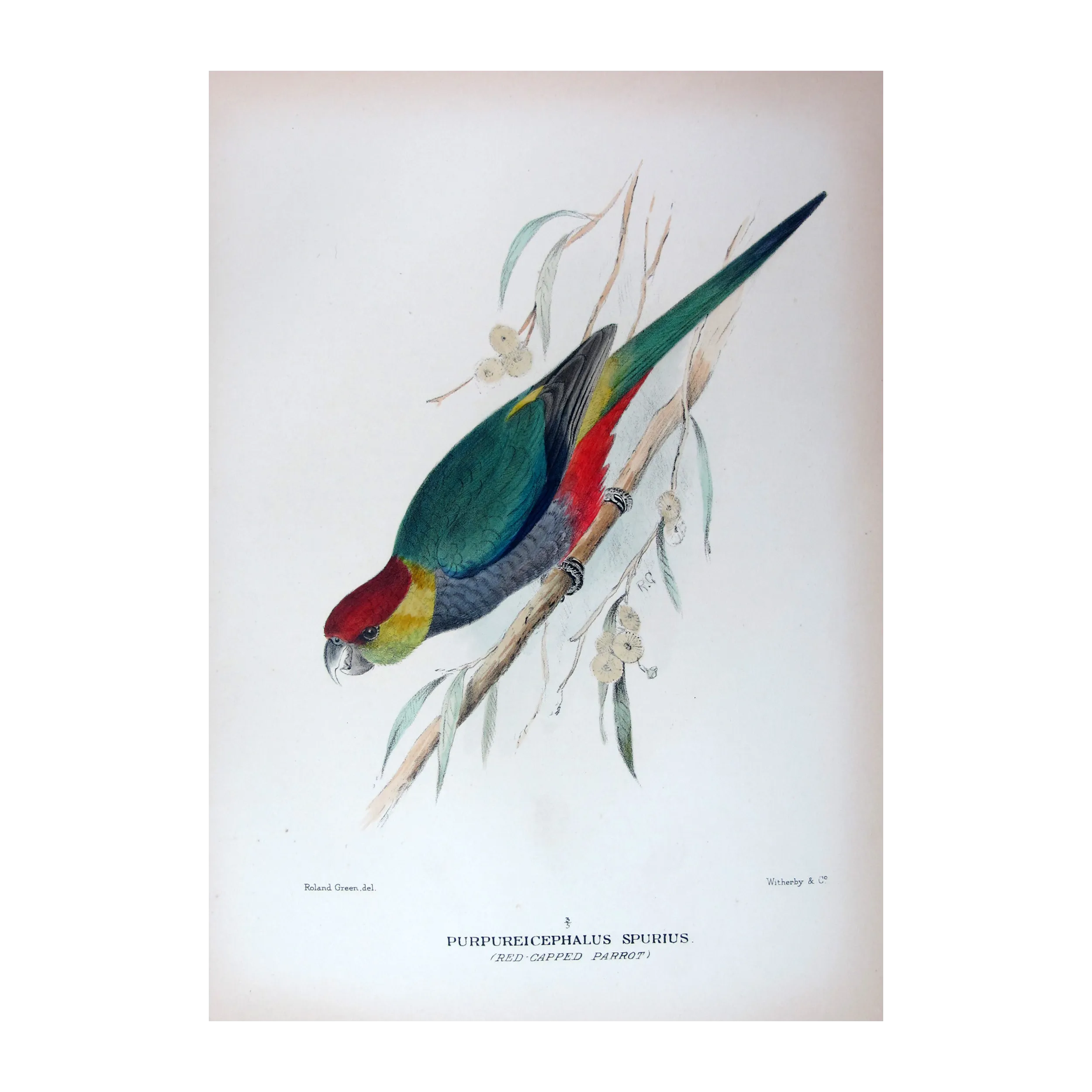
Antique lithograph of the Red-capped Parrot by Roland Green.