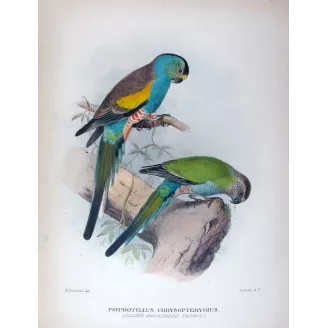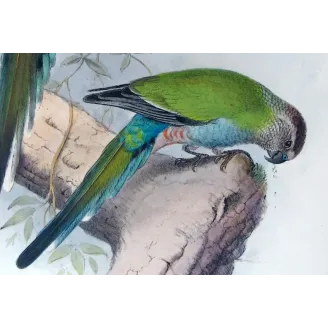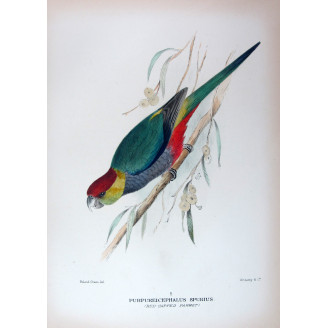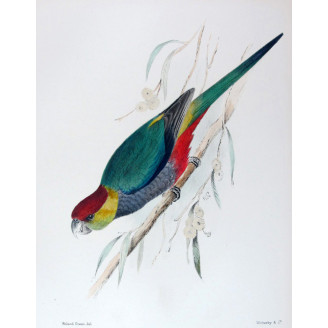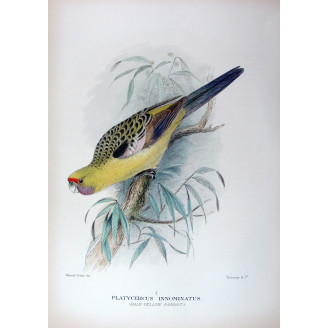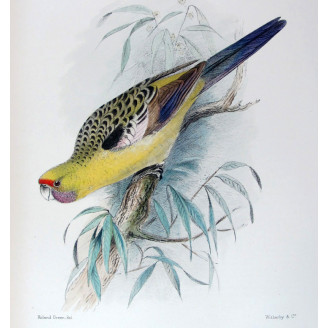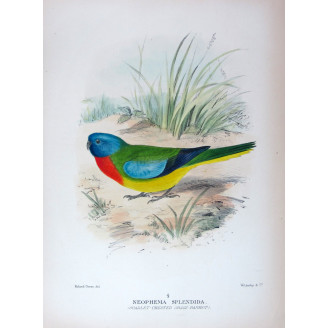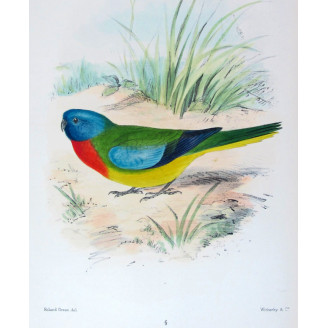
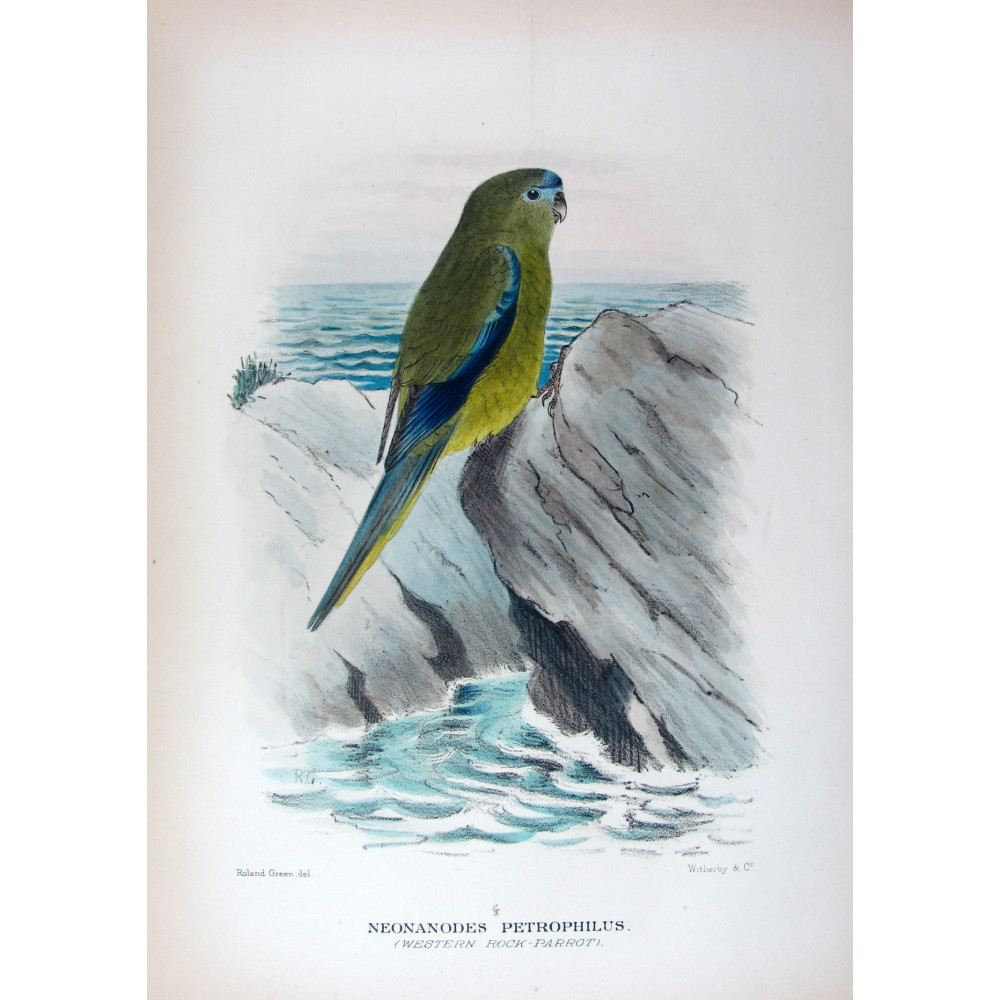
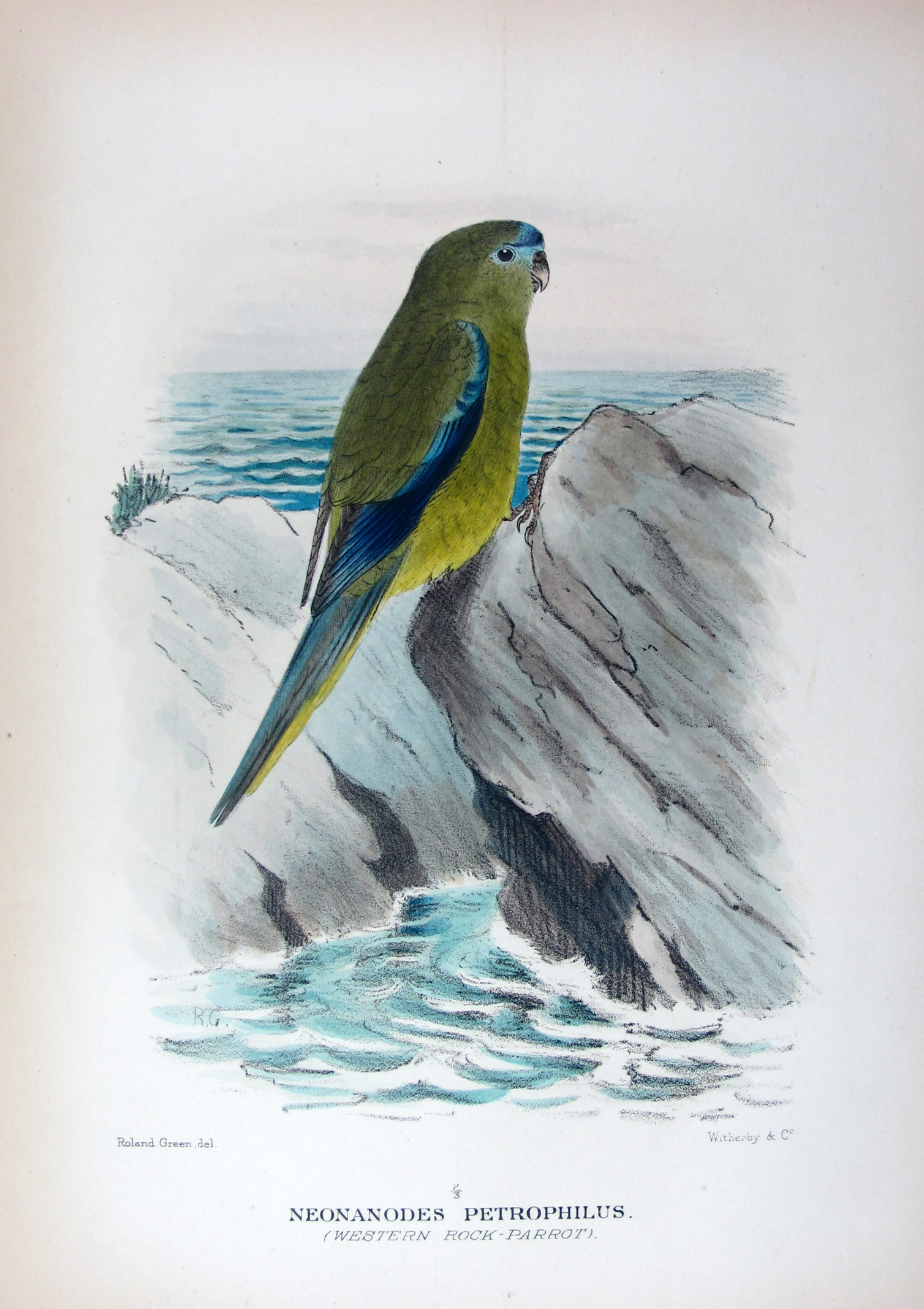
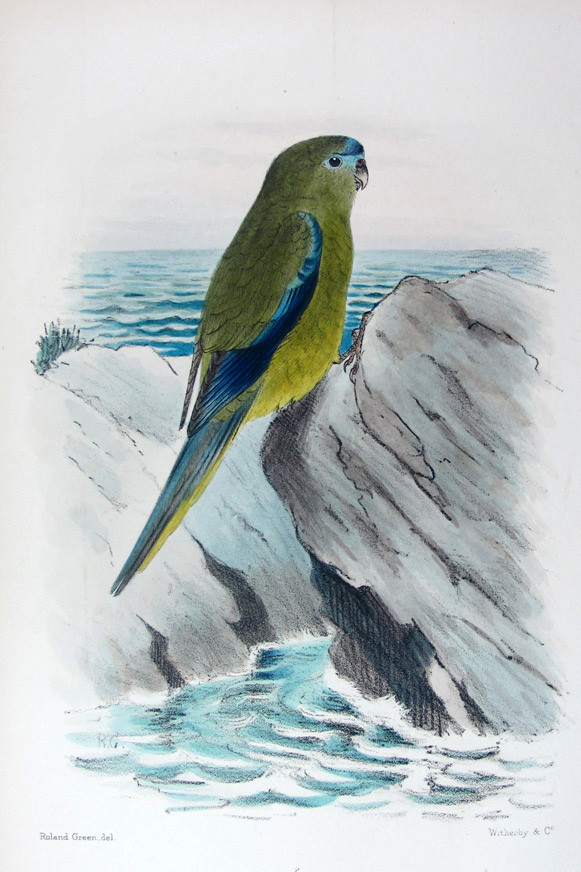
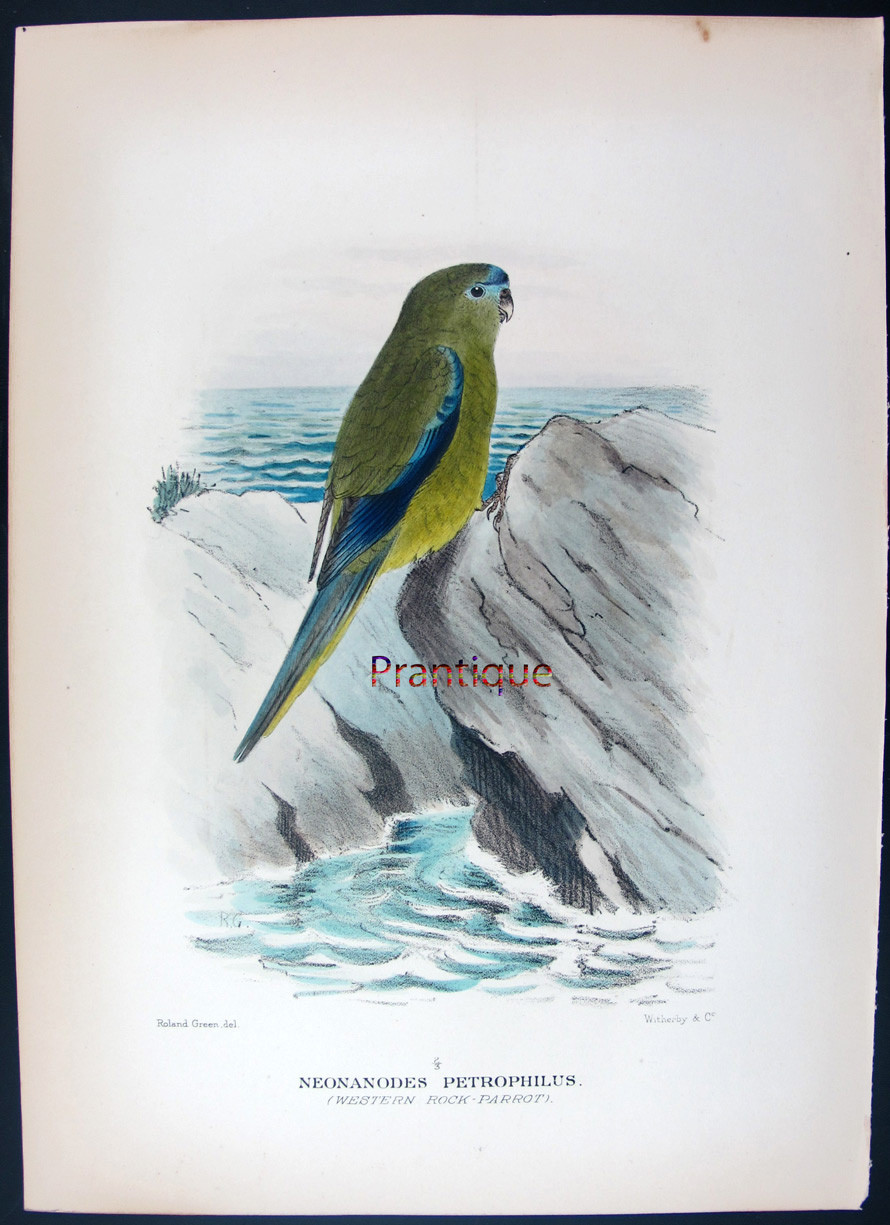

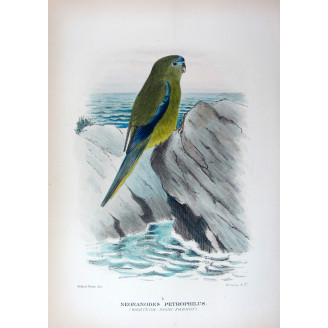
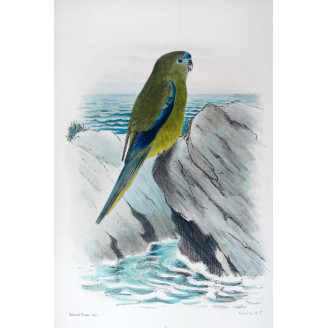
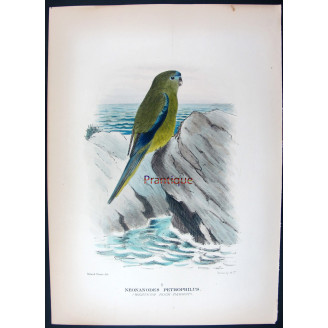
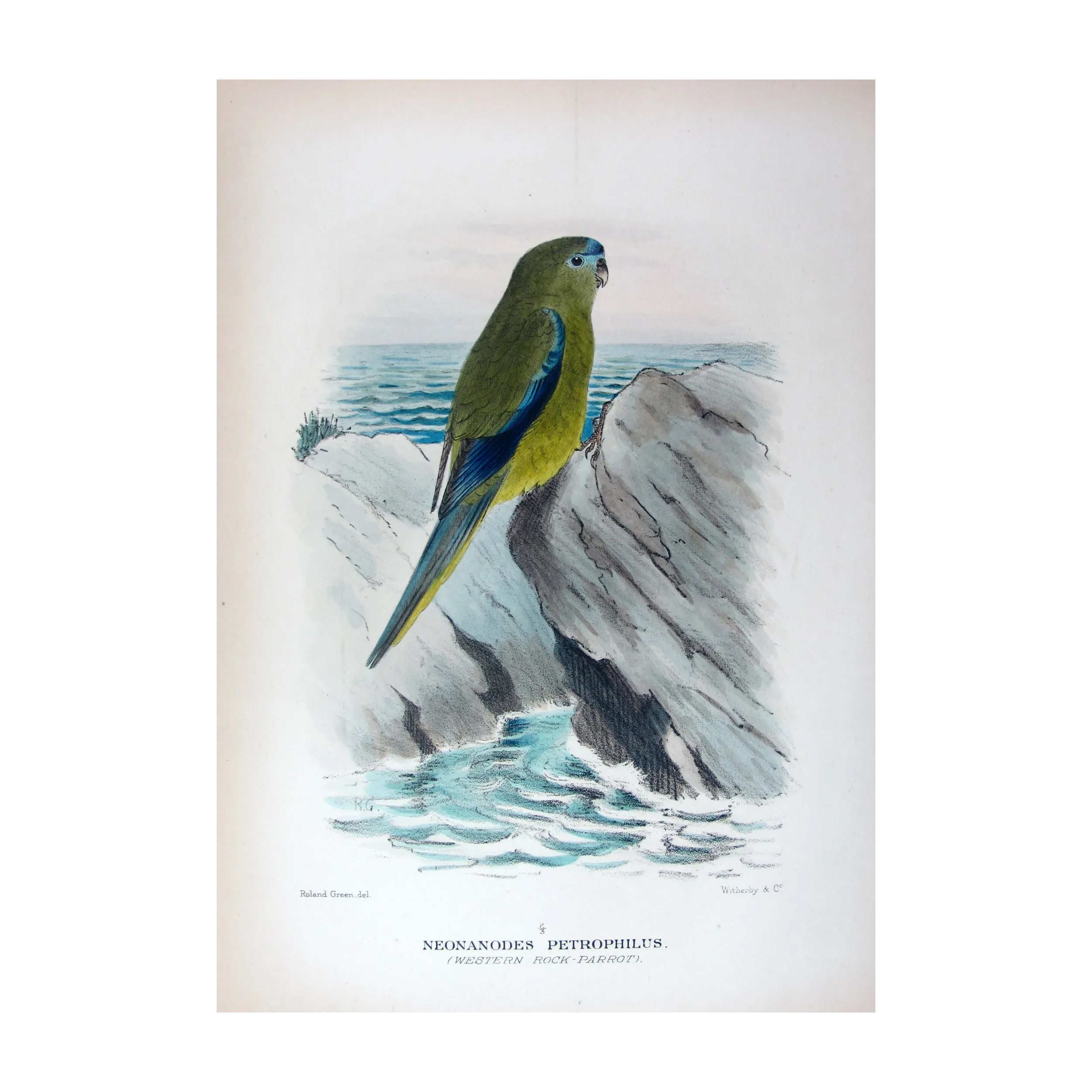
Antique lithograph of the Western Rock Parrot by Roland Green.
 Delivery policy
Your print will be carefully prepared and shipped worldwide via trusted couriers (UPS or similar).
 Authentic antique prints
Original engravings from the 17th–19th century.
This original early twentieth-century hand-colored lithograph depicts Neonanodes petrophilus, titled on the plate as the Western Rock-Parrot. The sheet forms part of Gregory M. Mathews’ monumental publication The Birds of Australia, illustrated by Roland Green and issued by Witherby & Co.
Set against a spare coastal landscape of rock and water, the parrot appears not as a decorative emblem on a branch, but as a true inhabitant of place—an image defined by atmosphere, restraint, and the quiet geometry of shoreline forms.
— • —
Roland Green constructs the plate around tonal harmony rather than high contrast. The bird’s olive-green plumage is subtly modelled with fine feather texture, while cool blue panels along the wing and tail echo the sea tones behind. This repetition of blue across subject and setting creates a coherent chromatic architecture that feels calm and modern.
The rocks are rendered with restrained graphite-like shading, providing weight and structure without visual clutter. Beneath, the water is treated in broken, luminous strokes—enough to suggest movement and salt air, yet kept deliberately understated so the parrot remains the clear focal point.
The Western Rock-Parrot is associated with coastal and offshore environments in southern and western Australia, often linked to rocky shorelines and nearby islands. Its habitat specificity makes it an especially evocative subject within Australian ornithology, where place and ecology are inseparable from identification.
In Mathews’ early twentieth-century survey, plates like this extend beyond taxonomy: they preserve a sense of landscape and ecological character, revealing how natural history illustration could document not only species, but the world it belongs to.
This lithograph originates from The Birds of Australia, Gregory M. Mathews’ ambitious early twentieth-century ornithological enterprise. Conceived as a definitive scientific record, the work united rigorous taxonomy with the refined artistry of leading wildlife illustrators, producing one of the most authoritative visual catalogues of Australian birdlife. Explore the broader historical scope in our editorial feature: Gregory M. Mathews and The Birds of Australia .
Within the series, habitat-driven plates such as this offer a distinctive register—less about spectacle, more about atmosphere—capturing the poetic relationship between species and landscape.
Very good antique condition. Fresh original hand-coloring with strong lithographic impression. Printed on fine early twentieth-century wove paper. Minor age toning slightly more visible along the outer margins, consistent with age.
For further insight into Roland Green’s contribution to ornithological illustration: Roland Green – Dynamic Vision and Field-Born Precision in Bird Art
Specific References
Original lithograph of the Golden-shouldered Parrot (Psephotellus chrysopterygus) by Henrik Grønvold.
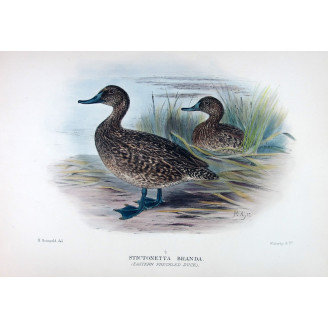
Eastern Freckled Duck (Stictonetta naevosa) – Original antique bird print by H. Grønvold.
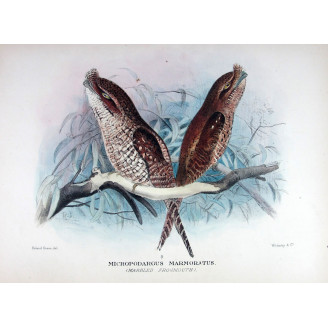
Original lithograph of the Marbled Frogmouth by Roland Green from Mathews' Birds of Australia.
Original lithograph of the Owlet Nightjar by Roland Green from Mathews' Birds of Australia.
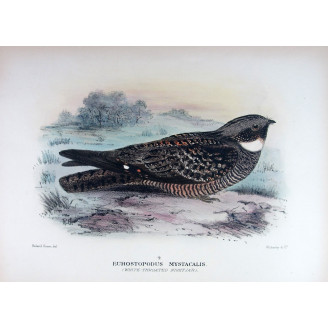
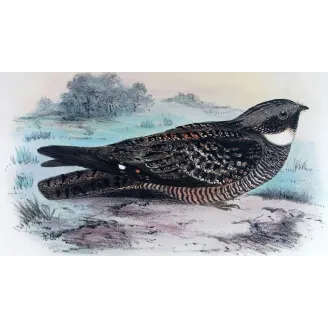
Original lithograph of the White-throated Nightjar by Roland Green from Mathews' Birds of Australia.
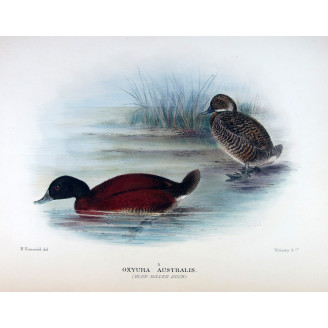
Blue-billed Duck (Oxyura australis) – Original antique bird print by H. Grønvold.
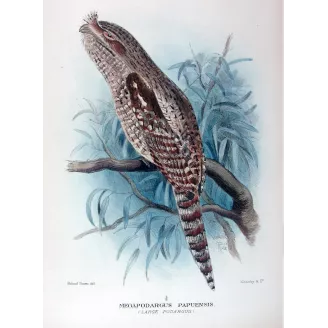
Original lithograph of the Large Podargus by Roland Green from Mathews' Birds of Australia.
Antique lithograph of the Scarlet-chested Grass Parrot by Roland Green.
Australian Red-Tailed Tropic Bird (Phaëthon westralis), original Mathews lithograph.
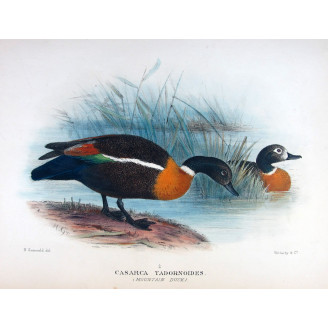
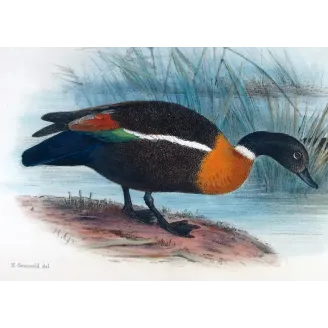
Original lithograph of the Mountain Duck by Henrik Grønvold (Casarca tadornoides).
Antique lithograph of the Scarlet-chested Grass Parrot by Roland Green.
Antique lithograph of the Western Rock Parrot by Roland Green.