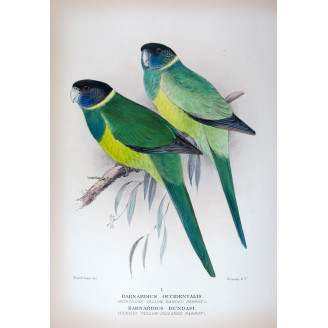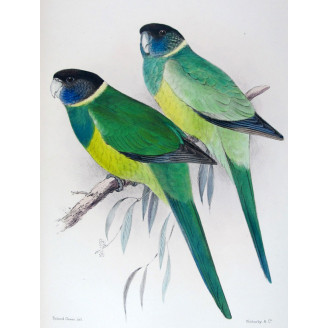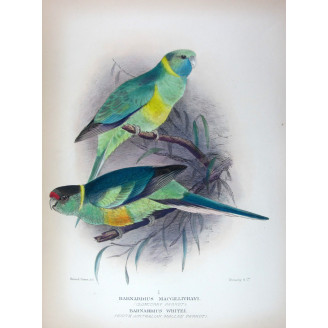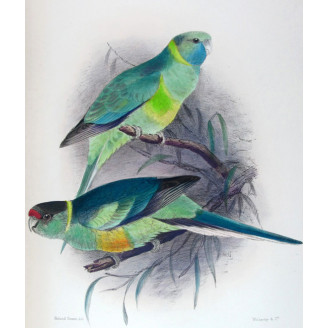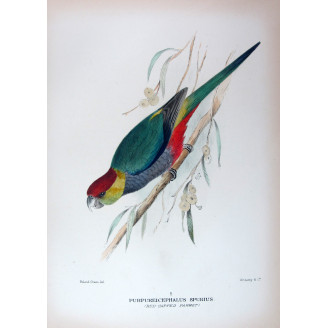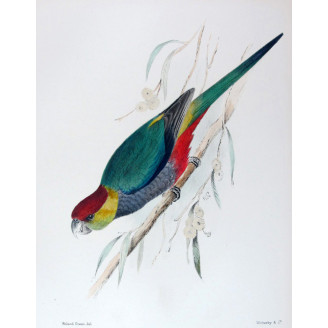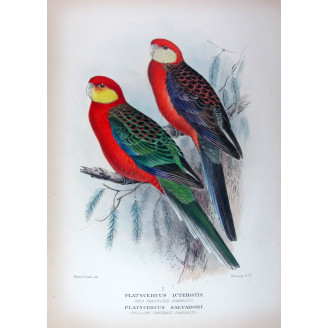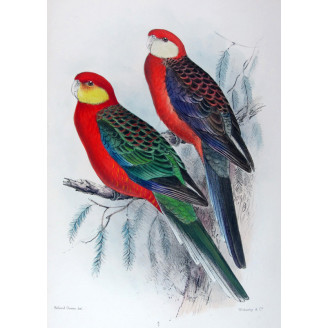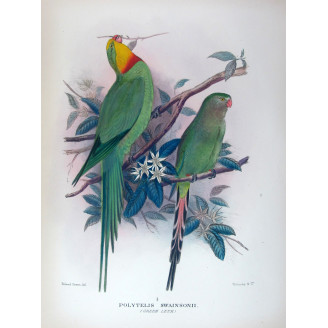
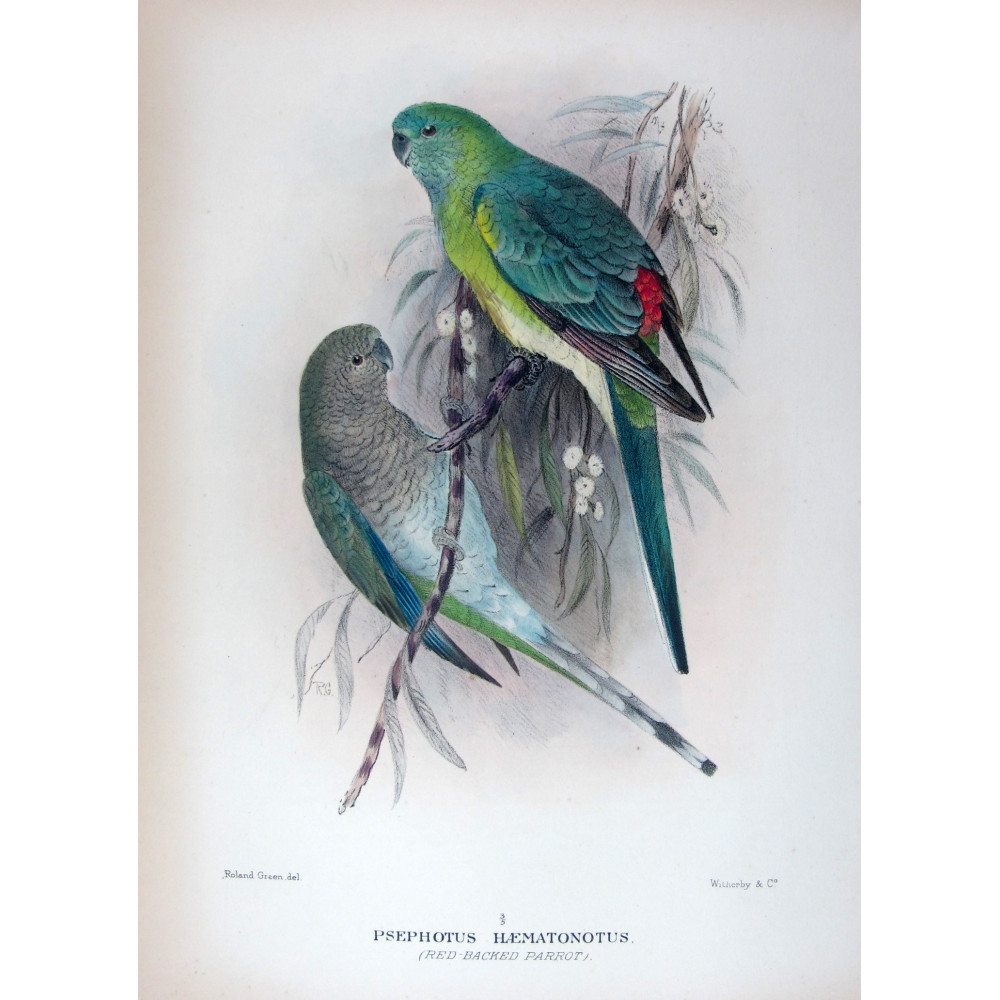
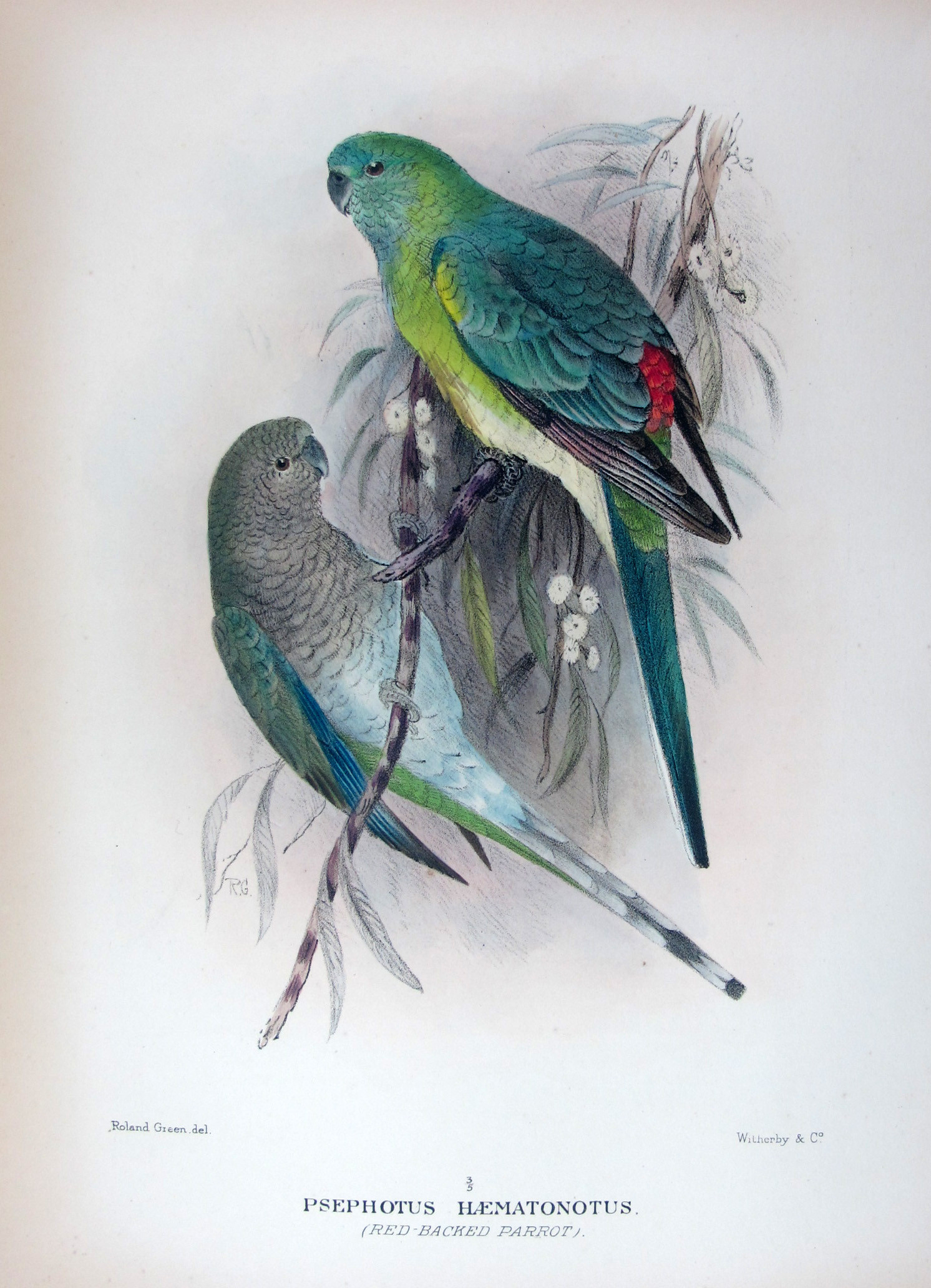
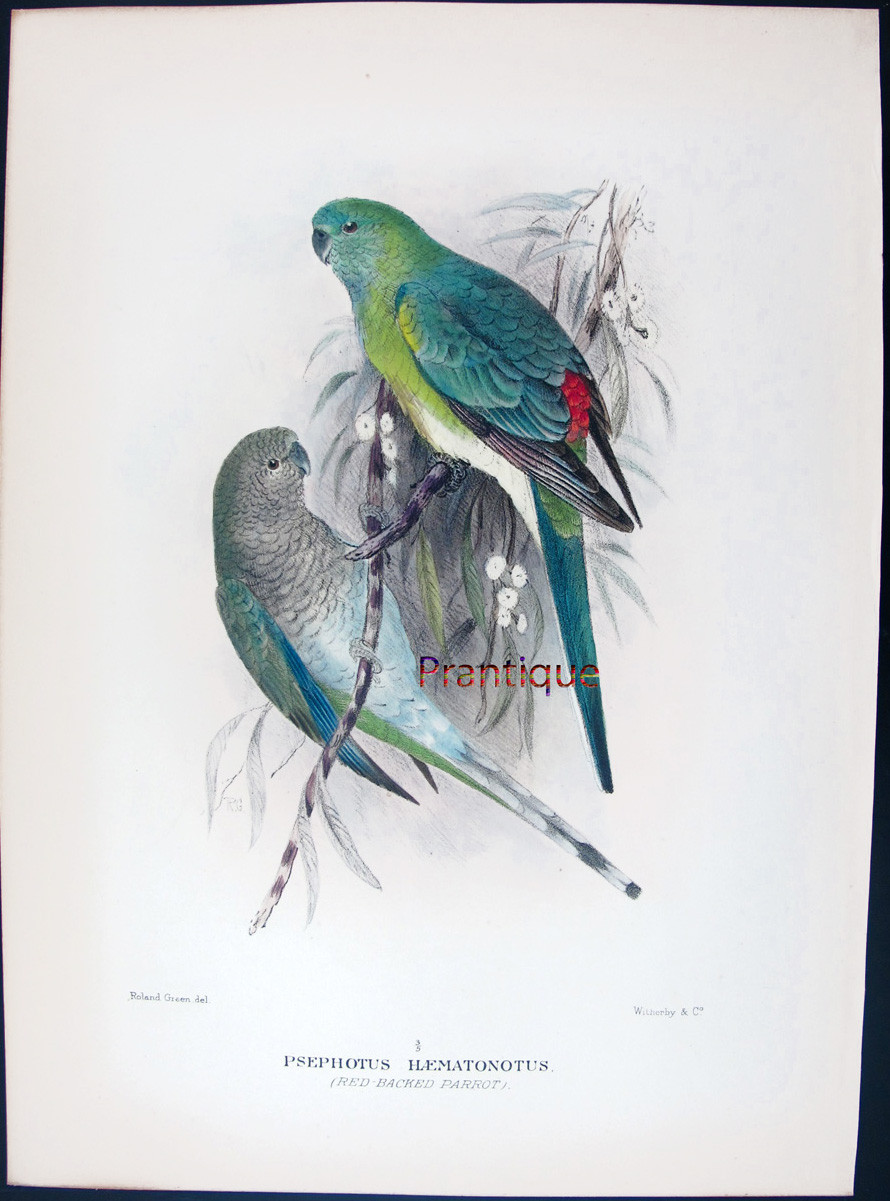
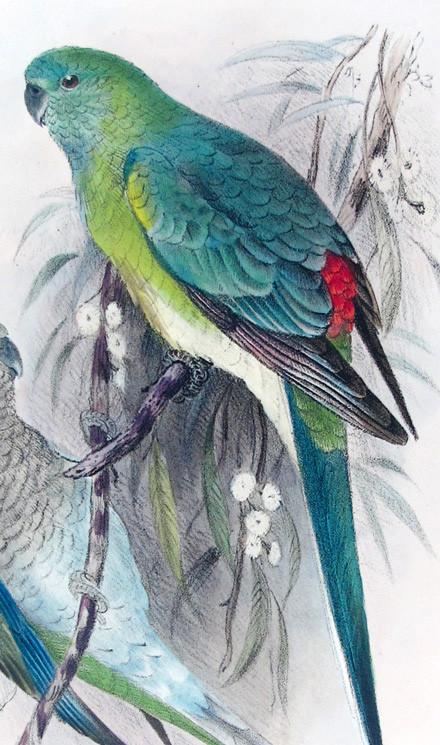
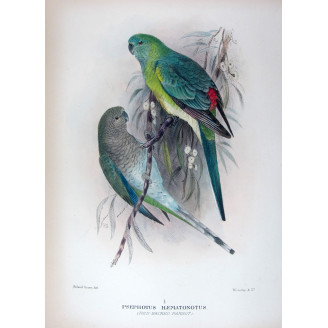
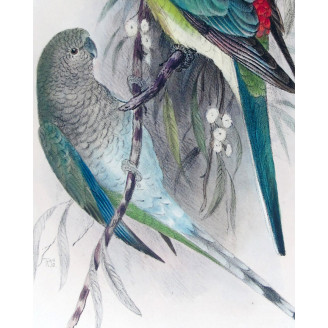
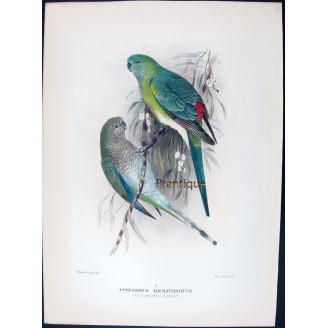
Antique lithograph of the Red-backed Parrot by Roland Green.
 Delivery policy
Your print will be carefully prepared and shipped worldwide via trusted couriers (UPS or similar).
 Authentic antique prints
Original engravings from the 17th–19th century.
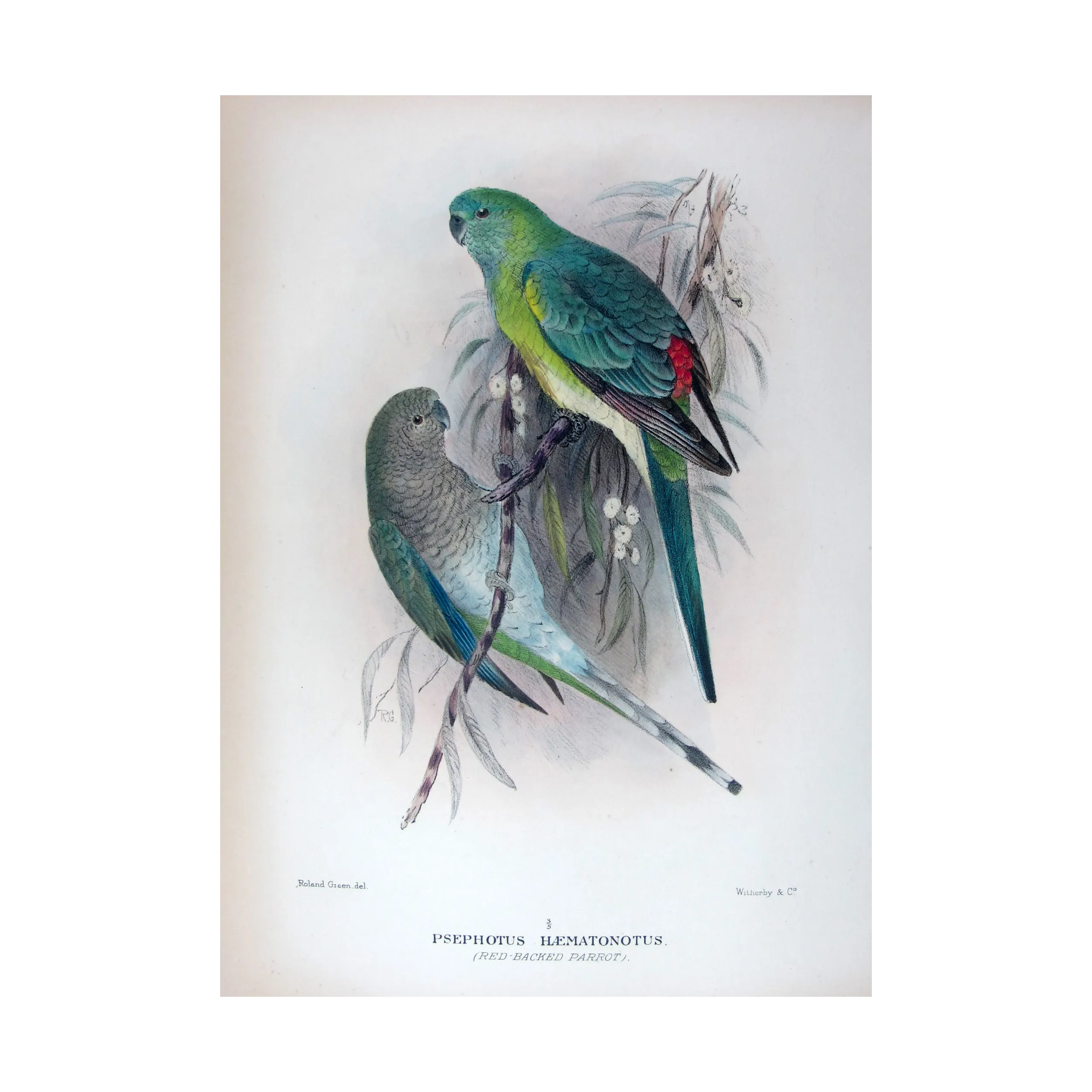
This original early twentieth-century hand-colored lithograph depicts Psephotus haematotus, the Red-backed Parrot. The plate forms part of Gregory M. Mathews’ monumental publication The Birds of Australia, illustrated by Roland Green and issued by Witherby & Co.
Presented as a male and female pair, the composition captures one of the most visually compelling aspects of the species: pronounced sexual dimorphism. The brighter male, with his emerald plumage and vivid crimson dorsal patch, is set in elegant counterpoint to the softer-toned female below.
— • —
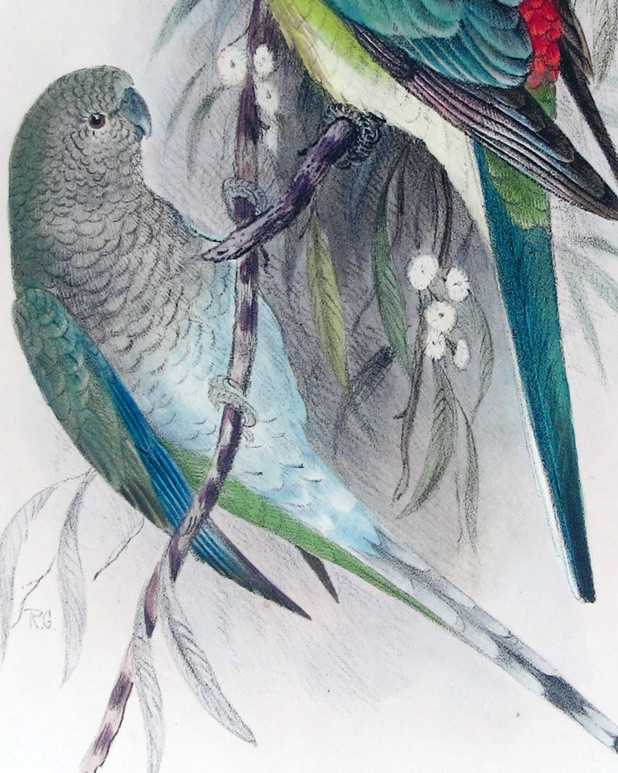
Roland Green arranges the two birds in a vertical interplay that feels both balanced and conversational. The upper figure commands attention through saturated greens and the sharply defined red back panel—an accent that immediately anchors the composition. The lower bird, rendered in cooler greys and muted turquoise tones, introduces visual depth and tonal variation.
The eucalyptus foliage is delicately suggested, creating a soft atmospheric frame without overwhelming the subjects. The vertical branch structure reinforces compositional stability, while the elongated tails provide graceful downward movement, giving the sheet a refined decorative rhythm.
Unlike plates driven purely by bold colour, this composition succeeds through contrast and harmony—brilliance moderated by subtlety, vitality balanced by restraint.
The Red-backed Parrot inhabits open woodland and grassland regions of Australia. The species is particularly noted for its marked sexual dimorphism: males display vibrant green plumage with a striking red dorsal patch, while females exhibit softer, more subdued colouring.
Mathews’ inclusion of both sexes within a single plate underscores his scientific thoroughness. Beyond decorative appeal, this lithograph preserves an important taxonomic and behavioural distinction central to ornithological study.
This lithograph originates from The Birds of Australia, Gregory M. Mathews’ ambitious early twentieth-century ornithological enterprise. Conceived as a definitive scientific record, the work united rigorous taxonomy with the refined artistry of leading wildlife illustrators, producing one of the most authoritative visual catalogues of Australian birdlife. Explore the broader historical scope in our editorial feature: Gregory M. Mathews and The Birds of Australia .
Roland Green’s strength lies in his ability to articulate feather structure and posture with clarity while maintaining compositional elegance—qualities that are especially evident in comparative plates such as this one.
Very good antique condition. Fresh original hand-coloring with strong lithographic impression. Printed on fine early twentieth-century wove paper. Minor age toning slightly more visible along the outer margins, consistent with age.
For further insight into Roland Green’s contribution to ornithological illustration: Roland Green – Dynamic Vision and Field-Born Precision in Bird Art
Specific References
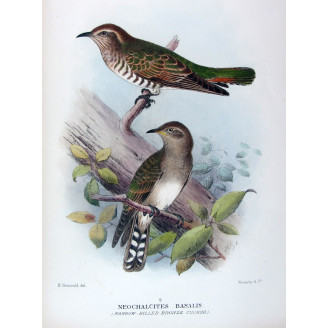
Narrow-billed Bronze Cuckoo (Neochalcites basalis) – Original lithograph by Henrik Grønvold.
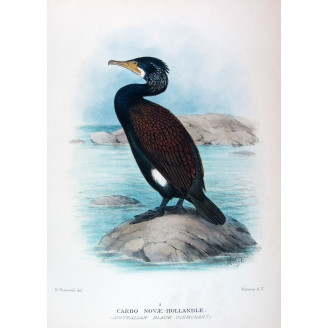
Australian Black Cormorant (Carbo novæ-hollandiæ) – Original antique bird print by H. Grønvold.
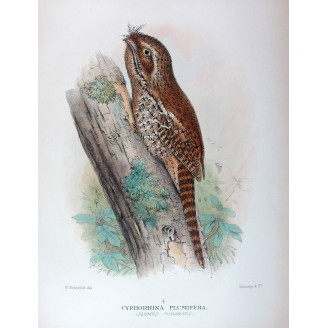
Original lithograph of the Plumed Podargus by H. Grönvold from Mathews' Birds of Australia.
Antique lithograph of the Northern Yellow-banded Parrot & Dundas Yellow-collared Parrot by Roland Green.
Original lithograph of the Black Duck by H. Goodchild (Anas superciliosa).
Original lithograph of the Whistling Duck by H. Goodchild (Dendrocygna gouldi).
Antique lithograph of the Cloncurry Parrot & South Australian Mallee Parrot by Roland Green.
Pied Cormorant from Mathews' Birds of Australia, drawn by Grönvold.
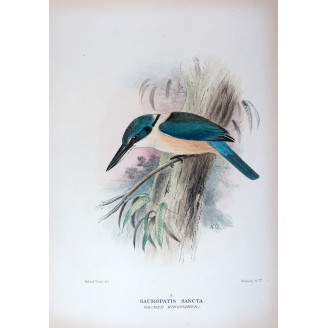
Original lithograph of the Sacred Kingfisher (Sauropatis sancta) by Roland Green
Antique lithograph of the Red-mantled Parrot & Yellow-cheeked Parrot by Roland Green.
Teal (with Grey Teal) (Nettion castaneum & Nettion rogersi) – Original antique bird print by H. Grønvold.
Antique lithograph of the Red-shouldered Grass Parrot by Roland Green.
Antique lithograph of the Red-backed Parrot by Roland Green.