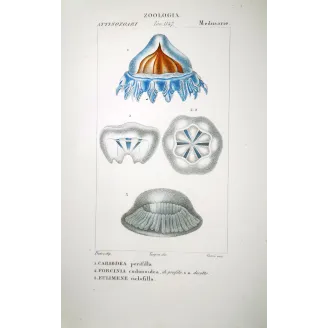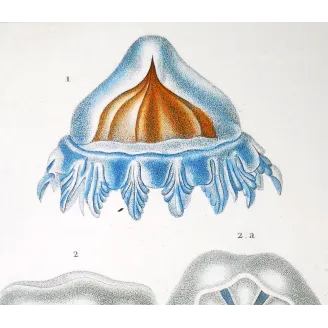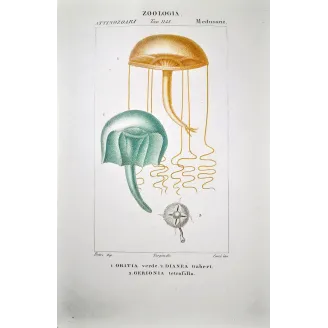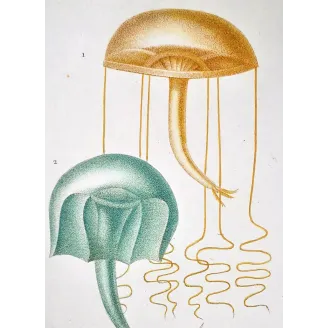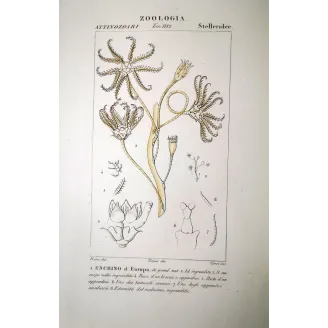
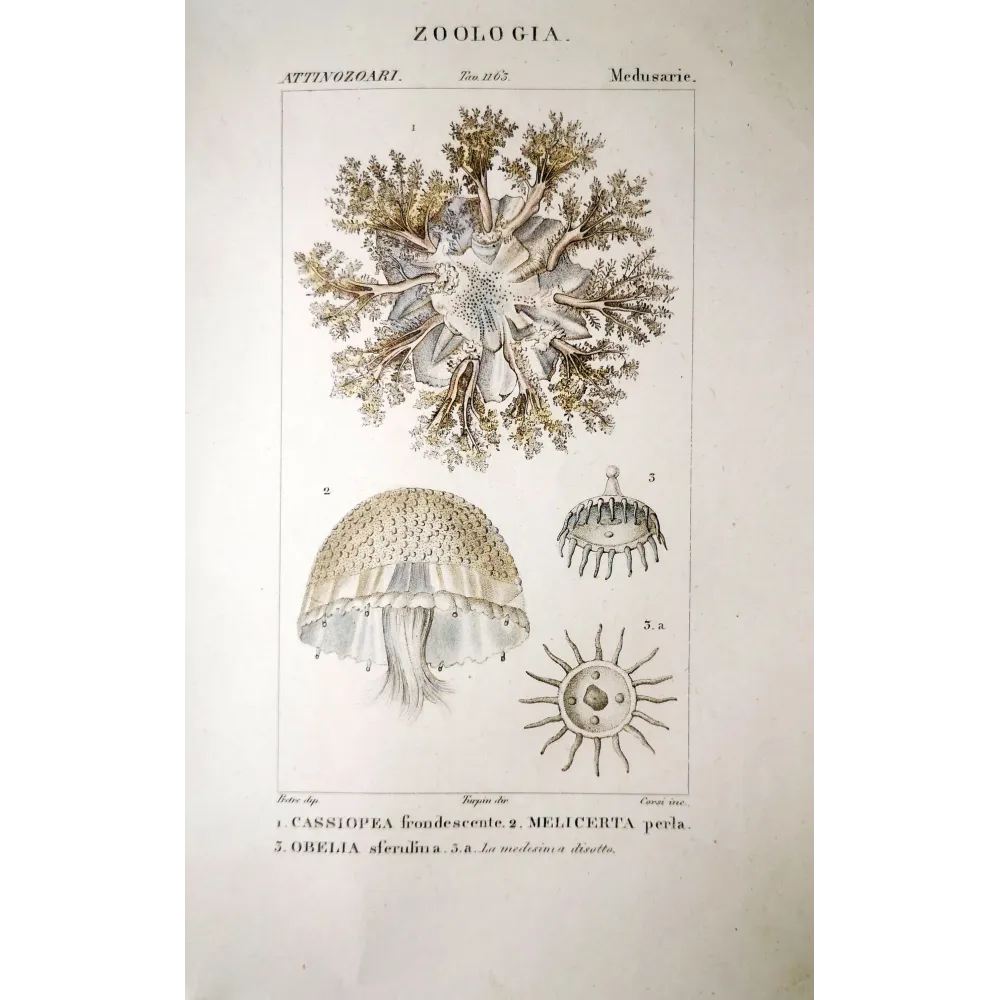
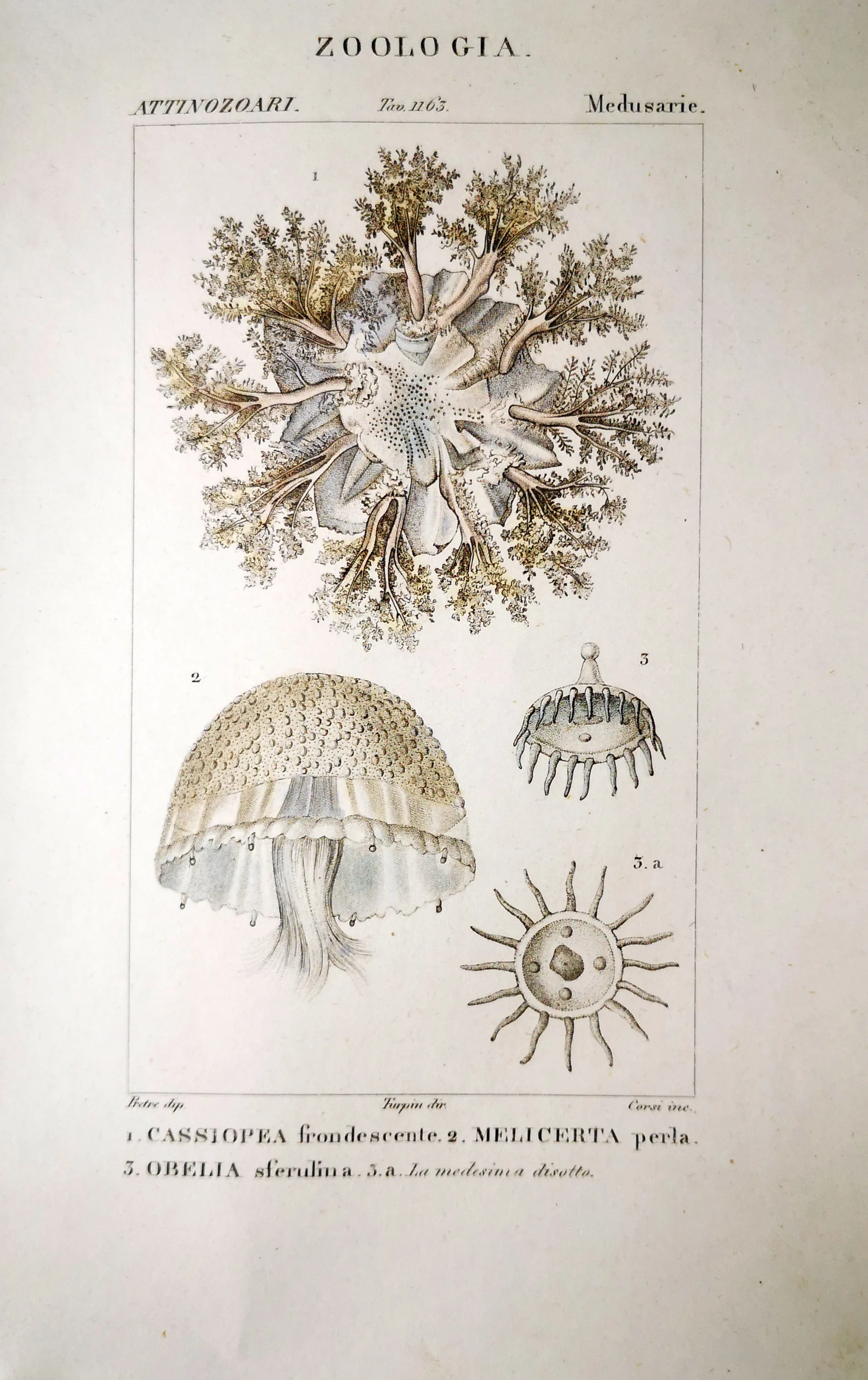
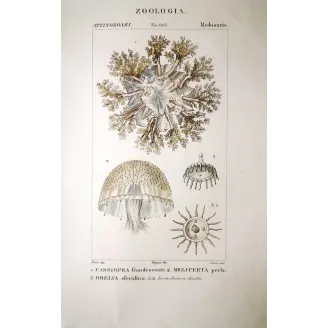
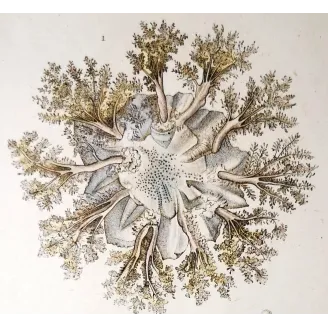
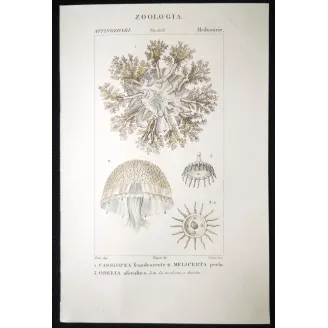
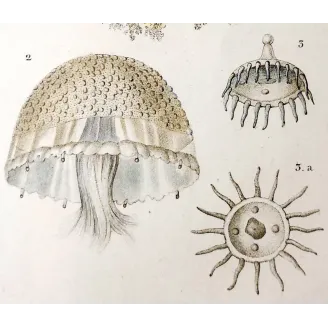
Scientific engraving of Cassiopea, Melicerta and Obelia jellyfish from the Dizionario di Scienze Naturali.
 Delivery policy
Your print will be carefully prepared and shipped worldwide via trusted couriers (UPS or similar).
 Authentic antique prints
Original engravings from the 17th–19th century.
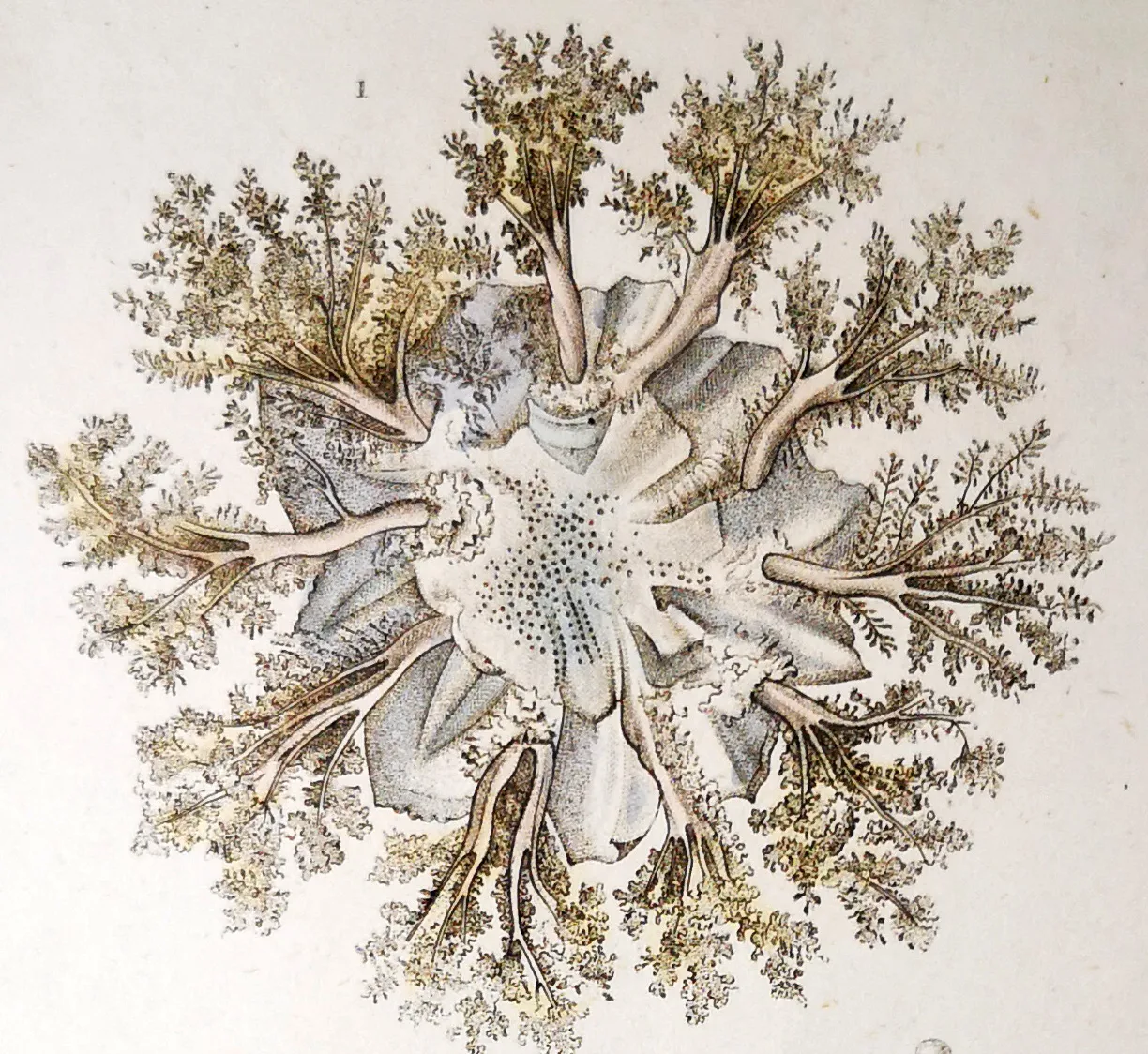
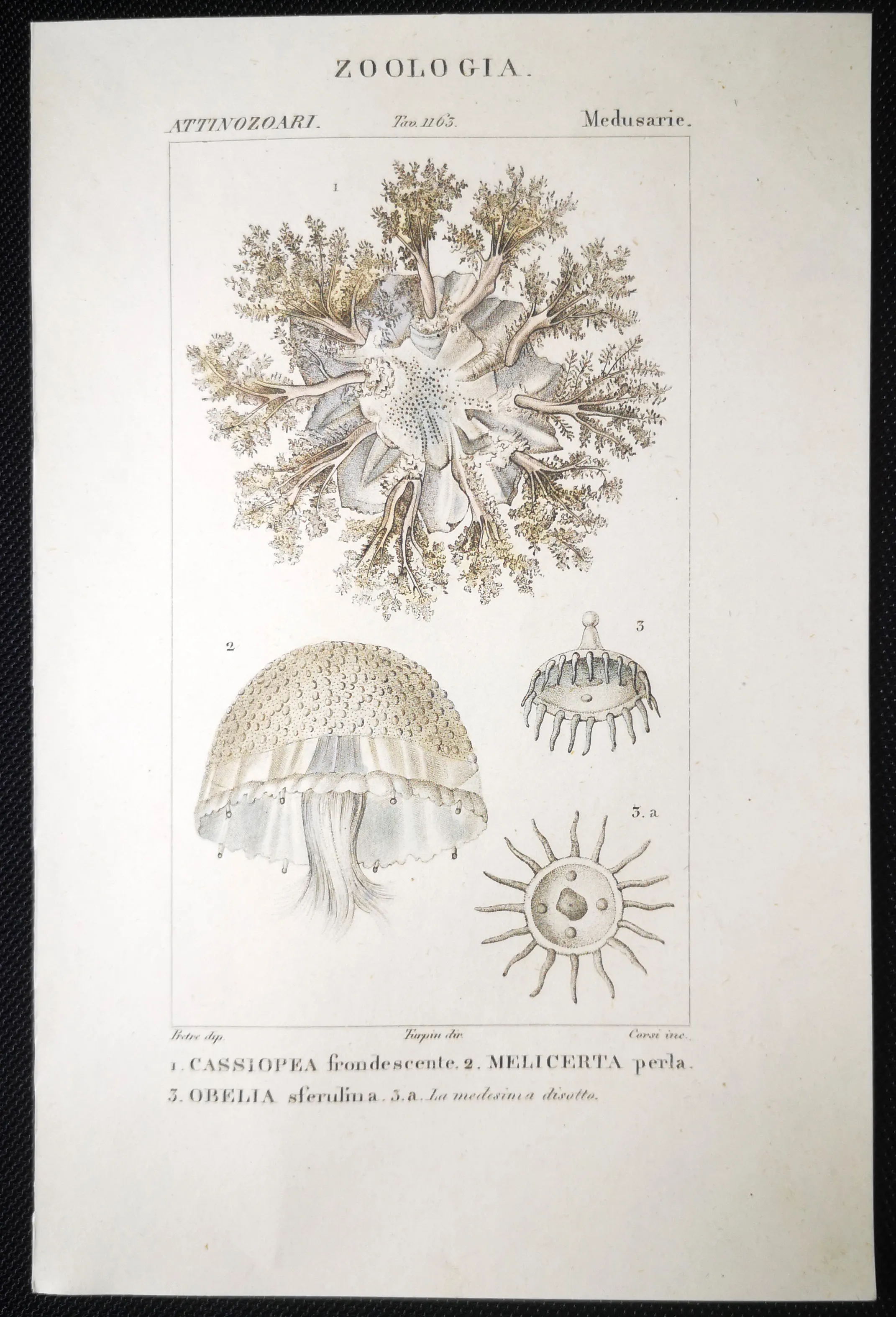
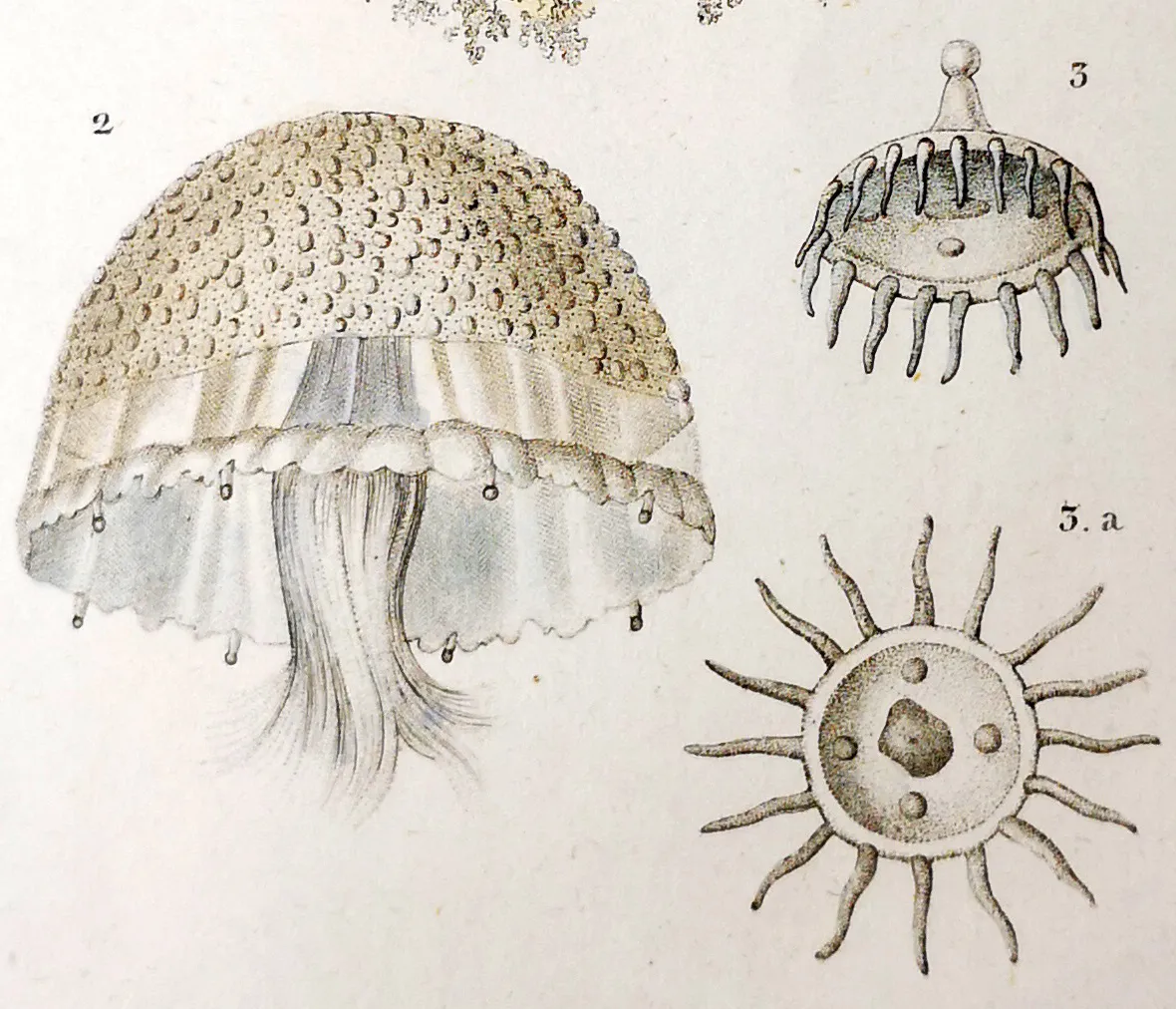
This original hand-colored engraving presents a refined grouping of medusarian and hydrozoan forms, including Cotylorhiza tuberculata (often associated with the “Cassiopea” plates in early zoological literature), alongside Melicerta and Obelia, illustrated by Pierre Antoine Prêtre for the Dizionario di Scienze Naturali (c.1835).
The plate juxtaposes radically different life-forms within the same visual field: a branching, plant-like marine structure above, and a domed jellyfish figure below, completed by schematic medusarian details to the right.
— • —
The upper specimen unfolds like a delicate underwater bouquet, filled with fine stippling and dendritic rhythm. Below, the bell-shaped jellyfish introduces monumentality and balance, its surface rendered with a pearled texture that catches the eye without relying on intense color.
The result is unusually decorative for a scientific plate: part marine study, part ornamental composition, ideal for interiors that favor quiet complexity and natural geometry.
Cotylorhiza tuberculata is known for hosting symbiotic algae within its tissues, a biological partnership that allows it to thrive in sunlit waters and gives it an almost botanical visual character.
Obelia, by contrast, represents a colonial hydrozoan whose life cycle alternates between polyp colonies and free-swimming medusae — a phenomenon that captivated nineteenth-century naturalists as evidence of nature’s “hidden metamorphoses.”
Plates like this reflect the era’s expanding ambition: not merely to illustrate marine animals, but to document their life strategies, structures, and relationships within the living sea.
The Dizionario di Scienze Naturali, preserved through the Sacchetti Collection, stands as a testament to an age when encyclopedic publishing elevated nature into a monumental cultural achievement.
Nearly two centuries later, these marine plates remain vivid witnesses to that union of scientific rigor and artistic refinement.
Nobility of Natural History Prints – The Sacchetti Collection
Excellent antique condition. Clean margins and finely preserved hand coloring on original smooth early nineteenth-century wove paper. No watermark observed.
Read the biography of Pierre Antoine Prêtre and explore his marine illustrations
Cotylorhiza tuberculata print, Obelia hydrozoan engraving, antique jellyfish illustration, 19th-century marine natural history plate.
Specific References
Three jellyfish species illustrated in fine hand-colored lithography by Prêtre.
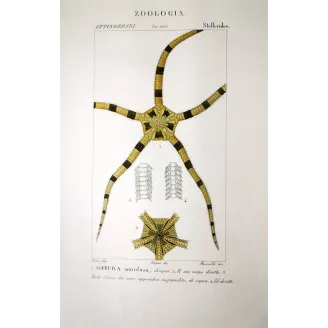
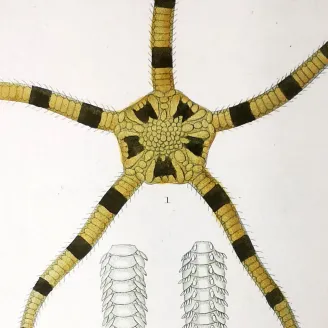
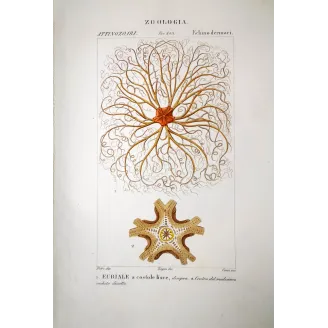
Antique print of Ophiura annulosa (brittle star) with anatomical details from a 19th-century zoological dictionary.
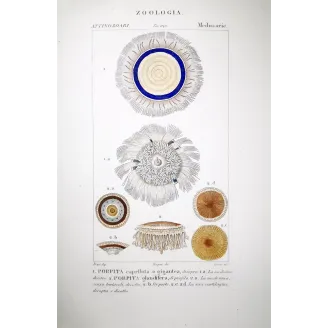
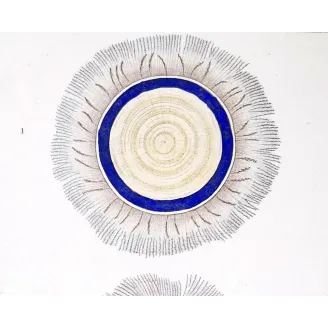
Antique illustration of the jellyfish Porpita capelluta and Porpita glandifera, from the Dizionario di Scienze Naturali.
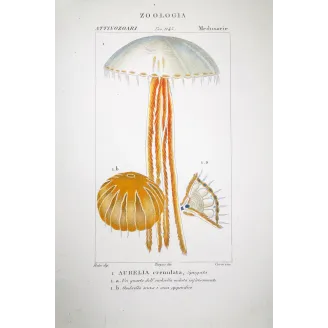
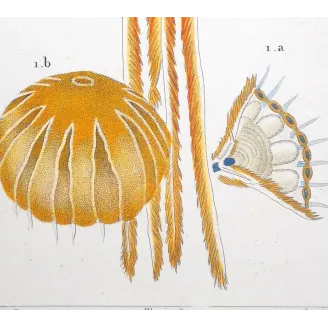
Hand-colored engraving of Aurelia crenulata, with detailed anatomical illustrations.
Trio of rare jellyfish types in soft tones, hand-colored lithograph by Prêtre.
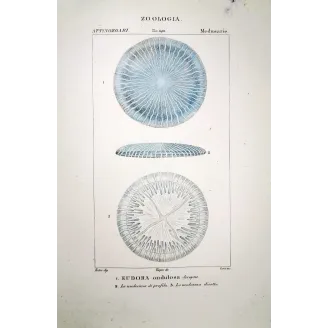
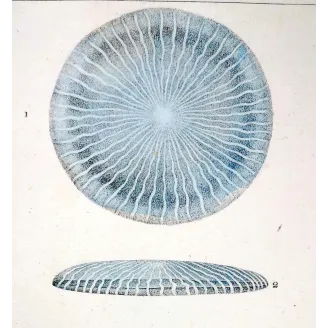
Delicate blue-toned depiction of Eudora ondulosa from three perspectives.
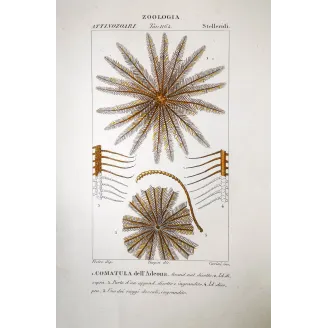
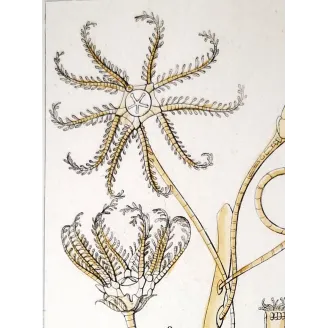
Rare 19th-century print of the feather star Comatula of the Adeona, with anatomical details.
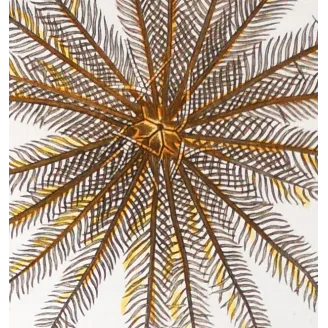
Antique engraving of a delicate feather star, vividly colored and highly detailed.
Elegant antique depiction of a crinoid with anatomical studies and fine detailing.
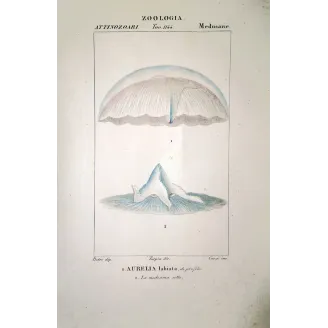
Hand-colored engraving of the moon jellyfish Aurelia labiata, drawn by Prêtre for a 19th-century zoological publication.
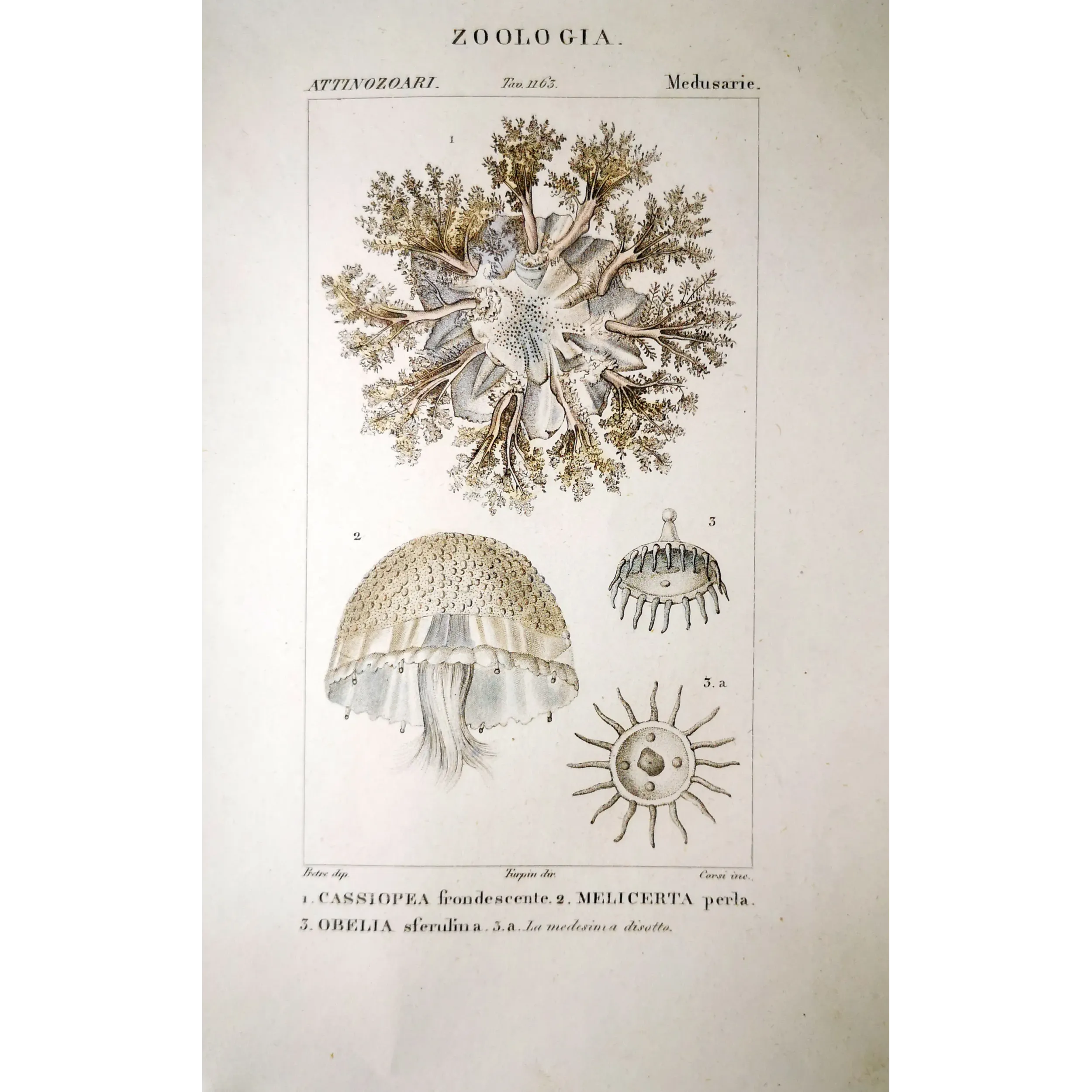
Scientific engraving of Cassiopea, Melicerta and Obelia jellyfish from the Dizionario di Scienze Naturali.