
Paper in Antique Prints: Laid, Wove & Watermarks
Paper in Antique Prints: Laid, Wove & Watermarks
In antique prints, paper is one of the most reliable indicators of authenticity. By understanding the difference between laid and wove paper, collectors can identify original prints and distinguish them from later reproductions.
This page is part of an evolving editorial project dedicated to antique prints and their material history. It complements our Antique Prints Guide .
Why Paper Matters in Antique Prints
Before industrial papermaking, sheets were produced individually, by hand, using molds and organic fibers. As a result, variations in texture, thickness, and translucency are not flaws but integral characteristics. For historians and collectors, these features help distinguish original impressions from later reproductions. When handling original impressions, these variations become immediately perceptible, revealing differences that no reproduction can convey.
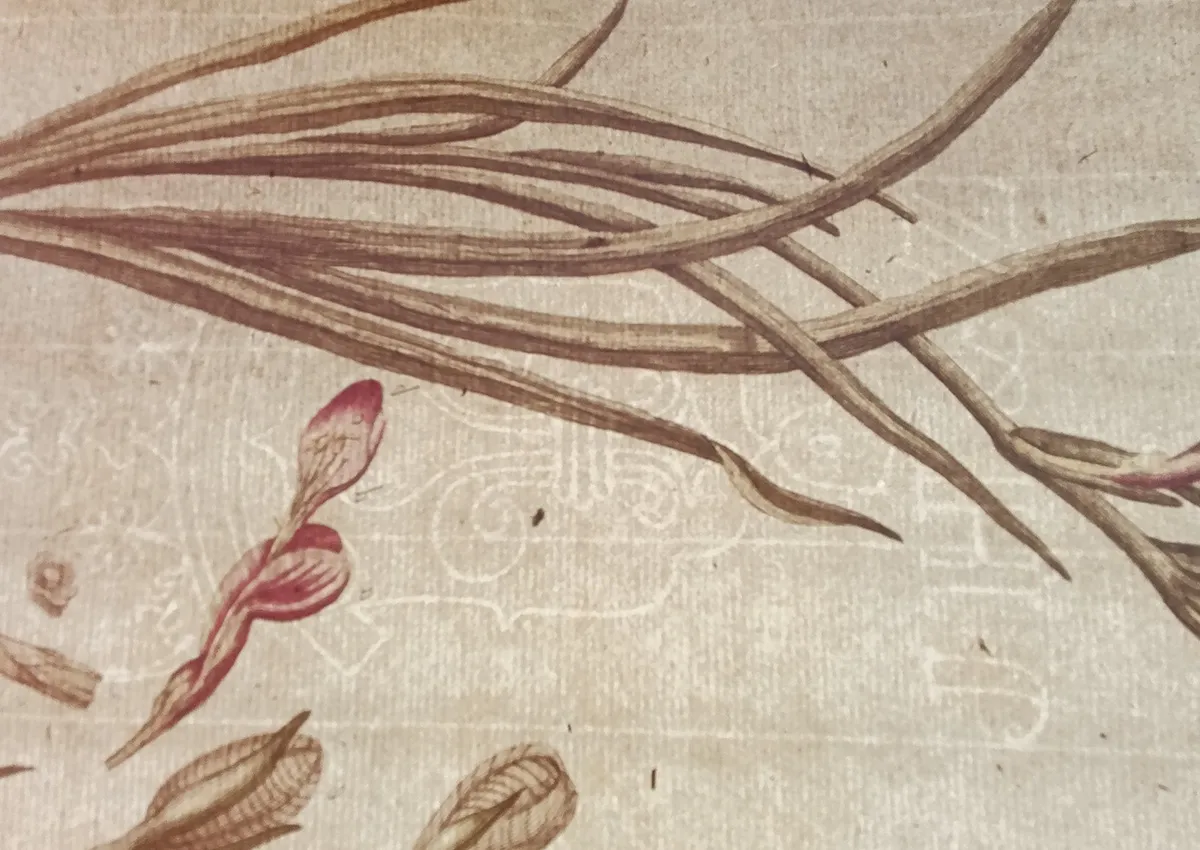
Examining paper under transmitted light often reveals structural patterns or watermarks that are invisible at first glance. These elements provide valuable clues about the paper mill, geographic origin, and approximate date of manufacture.
Laid Paper
Laid paper is characterized by a pattern of parallel lines, known as chain lines and laid lines, created by the wire structure of the papermaking mold. These lines are typically visible when the sheet is held up to the light.
Common from the 16th to the early 19th century, laid paper was widely used for engravings and etchings. Its slightly textured surface absorbed ink well under the pressure of intaglio presses, contributing to the characteristic richness of early impressions.
Wove Paper
Wove paper emerged in the late 18th century as a refinement of traditional papermaking techniques. Unlike laid paper, it lacks visible chain lines, presenting a smoother and more uniform surface.
This surface proved especially suitable for lithography and for prints requiring subtle tonal transitions. By the 19th century, wove paper became increasingly common in natural history publications, reflecting evolving aesthetic and technical standards. In surviving 19th-century impressions, this smoother surface often corresponds with a more controlled and even application of color.
Watermarks
Watermarks are designs embedded into the paper during production, formed by wire shapes attached to the papermaking mold. They often include symbols, initials, dates, or emblems associated with specific paper mills.
For researchers, watermarks are invaluable tools for attribution and dating. While not every antique print bears a visible watermark, its presence can corroborate the authenticity and period of a sheet when studied alongside printing techniques and publication history.
Reading Paper as Historical Evidence
Paper analysis should never be isolated from other material indicators. Plate marks, ink quality, coloring methods, and references to the original publication must be considered together. When approached holistically, paper becomes a silent but eloquent witness to the history of a print.
Related reference: This page expands on topics introduced in the Antique Prints Guide , where printing techniques, identification criteria, and historical context are discussed in greater depth.
Related posts
-
 Pochoir or Lithograph? Understanding the True Technique Behind Grasset’s La Plante
In the world of antique print collecting, the difference between pochoir and color lithography is more than a...Read more
Pochoir or Lithograph? Understanding the True Technique Behind Grasset’s La Plante
In the world of antique print collecting, the difference between pochoir and color lithography is more than a...Read more -
 The Hidden Nobility of Natural History Prints: From the Sacchetti Collection
The Hidden Nobility of Nature Prints In the vast and fascinating world of antique natural history prints, there are...Read more
The Hidden Nobility of Natural History Prints: From the Sacchetti Collection
The Hidden Nobility of Nature Prints In the vast and fascinating world of antique natural history prints, there are...Read more -
 Plate Marks in Antique Prints: Reading the Printed Impression
Plate marks are subtle physical traces left by the printing process itself. This article explores how plate...Read more
Plate Marks in Antique Prints: Reading the Printed Impression
Plate marks are subtle physical traces left by the printing process itself. This article explores how plate...Read more -
 Why Antique Prints Feel Different — And Why They Quietly Transform a Room
A reflective essay on why antique botanical and natural history prints transform interiors not only through their...Read more
Why Antique Prints Feel Different — And Why They Quietly Transform a Room
A reflective essay on why antique botanical and natural history prints transform interiors not only through their...Read more
Leave a comment