
Plate Marks in Antique Prints: Reading the Printed Impression
Plate Marks in Antique Prints: Reading the Printed Impression
In antique prints, the most convincing evidence is often tactile rather than visual. Beyond the subject itself, the sheet preserves physical traces of its making: the grain of the paper, the bite of the ink, and the subtle indentation left by the printing plate. This indentation, known as the plate mark, is not a decorative border—it is the quiet signature of the press.
This page is part of an evolving editorial project dedicated to antique prints and their material history. It complements our Antique Prints Guide.
Why Plate Marks Matter
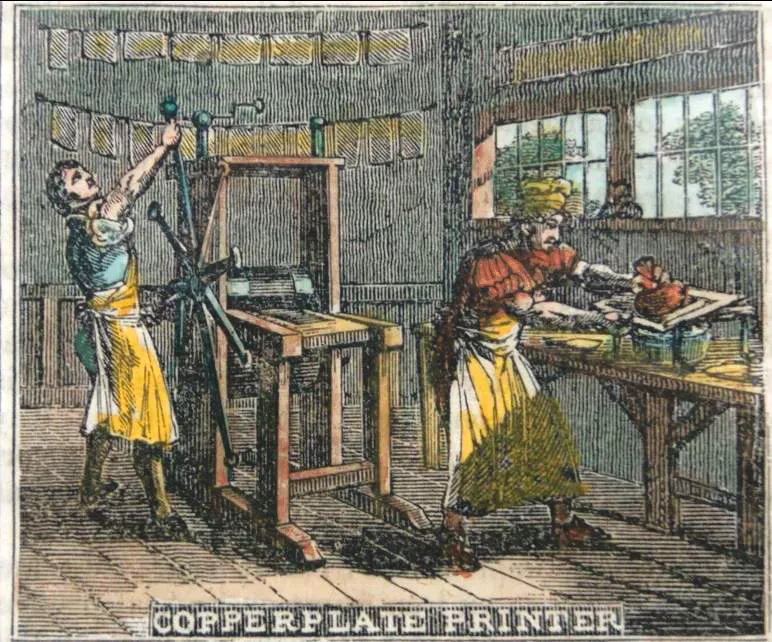
A plate mark forms when dampened paper is pressed under significant pressure against a metal plate (or a plate-backed matrix), forcing the sheet into the shallow recess created by the plate’s edge. In other words, it records a mechanical event—the moment the paper met the plate inside the press. For collectors, it can be a meaningful indicator that a print was produced through traditional intaglio methods rather than by later photographic or digital reproduction.
Yet plate marks are not a simplistic “pass/fail” test. Their visibility depends on paper thickness, humidity, trimming, mounting, and the printing practices of a given workshop or publisher. A plate mark should be read as one clue among several—most powerful when considered alongside paper structure, ink behavior, and coloring methods.
What a Plate Mark Looks Like
A plate mark is typically a rectangular (sometimes slightly irregular) indentation framing the printed image area. Under raking light, it appears as a shallow emboss—often more apparent to the touch than to the eye. In well-preserved impressions, the plate mark can show subtle variations: a stronger bite along one edge, a softer corner, or minor waviness where the sheet was pulled from the blankets.
Importantly, the plate mark does not always sit at a uniform distance from the image. In some prints, especially those printed close to the plate edge or trimmed for binding, the plate mark may appear partial or interrupted. These variations are not necessarily flaws—often they reflect the practical realities of production and use.
Real Plate Mark Examples: Wove and Laid Paper
One of the best ways to understand a plate mark is to observe it on authentic historical prints. The two details below show how the impression left by the printing plate can appear on different types of antique paper: smoother wove paper and more visibly structured laid paper.
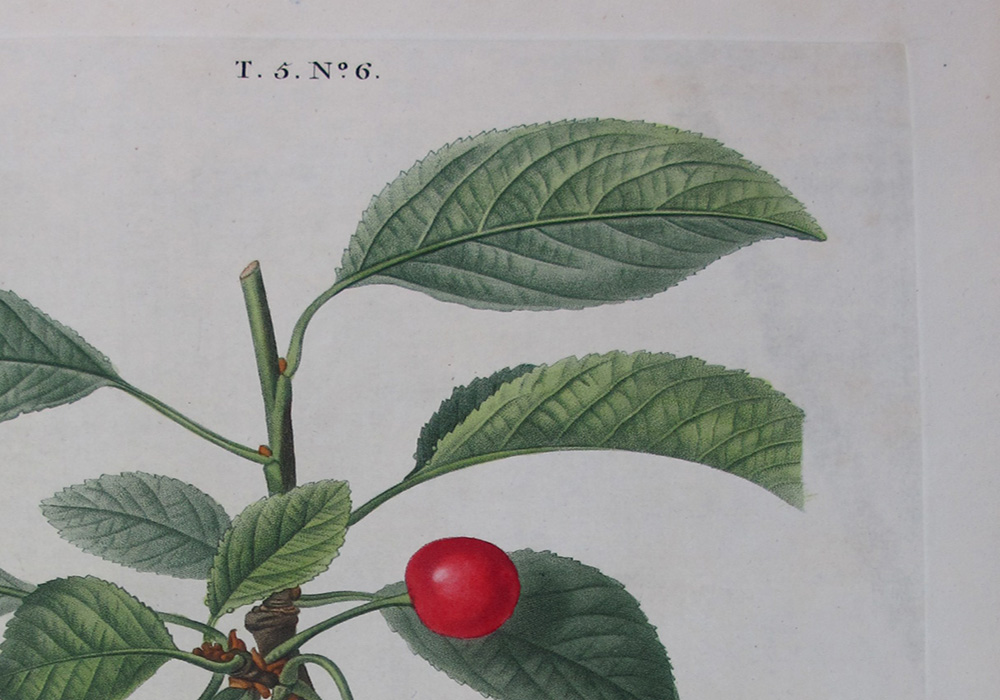
Fig. 1 — The subtle rectangular plate mark surrounding the printed image, visible on wove paper — Pierre-Joseph Redouté, c.1801–1819.
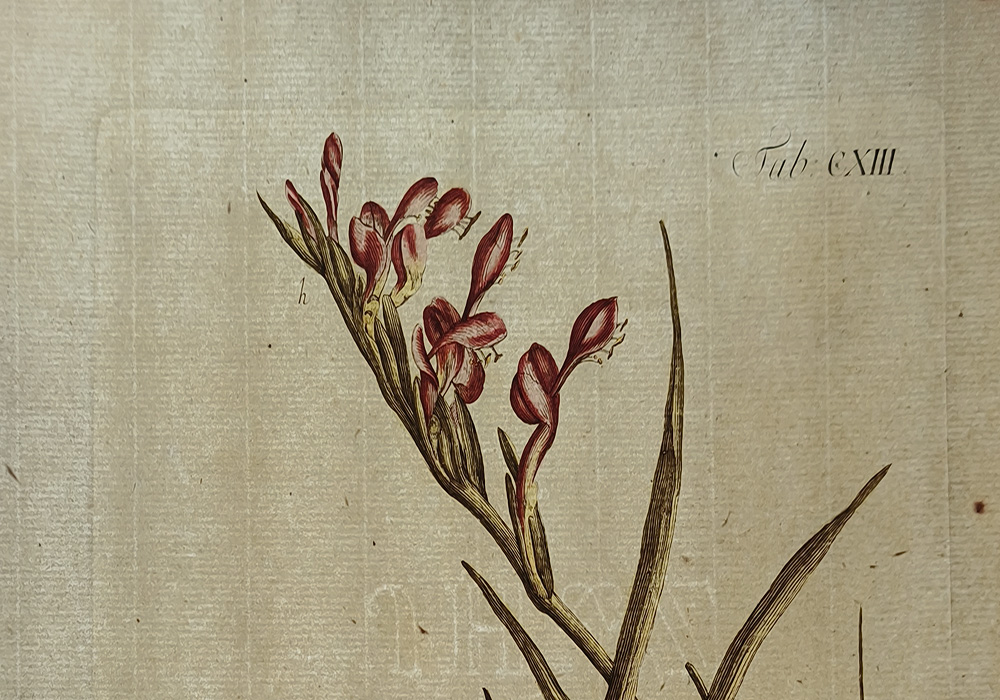
Fig. 2 — A visible plate mark impressed into laid paper, where the characteristic paper structure can still be observed — Miller, 18th century.
Plate Marks and Intaglio Printing
Plate marks are most closely associated with intaglio processes—engraving, etching, and aquatint—where ink sits below the surface of the plate and is transferred under high pressure. The press blankets compress, the damp paper yields, and the sheet takes on the plate’s perimeter. This is one reason why intaglio impressions often feel sculptural: they are not merely printed, but physically pressed into form.
In engraved and etched prints, the plate mark may accompany other material signals—slight plate tone, a crispness to the ink lines, or a particular density in darker passages. In aquatints, where tonal fields are built through granular texture, the plate mark can help confirm the print’s traditional origin even when the image appears painterly.
When Plate Marks Are Absent
The absence of a visible plate mark does not automatically indicate a reproduction. Many authentic prints have been trimmed for framing, rebinding, or publication layout, removing the plate indentation at the sheet’s edge. In bound volumes, margins were often reduced to achieve a clean, consistent page block, especially in the 19th century when natural history works were produced for libraries and collectors.
Paper properties also matter. On thicker sheets, plate marks can appear softer; on very smooth wove paper, the indentation may be subtle; and if a print has been mounted, the backing can flatten the relief. For this reason, plate marks are best assessed in hand, under angled light, and in relation to other evidence.
Plate Marks and Paper: A Shared Language
Plate marks cannot be fully understood without paper. Traditional intaglio printing typically required sheets to be lightly dampened, allowing fibers to relax under pressure and carry ink into fine recesses. The resulting indentation is therefore linked to the paper’s structure: laid lines may become more visible, wove sheets may compress more evenly, and watermarks can appear more pronounced after printing.
If you have not yet explored the material clues embedded in historical sheets, you may find it useful to read our related page on paper types and watermarks, where laid paper, wove paper, and watermark evidence are discussed as complementary indicators.
Reading the Impression as Historical Evidence
The most reliable approach is holistic. Plate marks, paper texture, ink quality, and coloring methods form a coherent set of material signals. When these elements agree, they create a level of authenticity that cannot be replicated by modern reproduction. And when they diverge, they prompt the right kind of question: not “is it real?” in the abstract, but what is the object in front of us, and how was it made?
Related reference: This page expands on topics introduced in the Antique Prints Guide, where printing techniques, identification criteria, and historical context are discussed in greater depth.
Questions about antique prints? Whether you are a collector, researcher, decorating a study or home interior, or simply curious, we are always happy to discuss antique prints, paper, printing techniques, artists and historical context. If you are researching a specific engraving or would like help understanding what you are looking at, feel free to contact us at [email protected].
Related posts
-
 Pochoir or Lithograph? Understanding the True Technique Behind Grasset’s La Plante
In the world of antique print collecting, the difference between pochoir and color lithography is more than a...Read more
Pochoir or Lithograph? Understanding the True Technique Behind Grasset’s La Plante
In the world of antique print collecting, the difference between pochoir and color lithography is more than a...Read more -
 The Hidden Nobility of Natural History Prints: From the Sacchetti Collection
The Hidden Nobility of Nature Prints In the vast and fascinating world of antique natural history prints, there are...Read more
The Hidden Nobility of Natural History Prints: From the Sacchetti Collection
The Hidden Nobility of Nature Prints In the vast and fascinating world of antique natural history prints, there are...Read more -
 Paper in Antique Prints: Laid, Wove & Watermarks
An overview of laid and wove paper in antique prints, with a focus on watermarks as material evidence for dating,...Read more
Paper in Antique Prints: Laid, Wove & Watermarks
An overview of laid and wove paper in antique prints, with a focus on watermarks as material evidence for dating,...Read more -
 Why Antique Prints Feel Different — And Why They Quietly Transform a Room
A reflective essay on why antique botanical and natural history prints transform interiors not only through their...Read more
Why Antique Prints Feel Different — And Why They Quietly Transform a Room
A reflective essay on why antique botanical and natural history prints transform interiors not only through their...Read more
Leave a comment