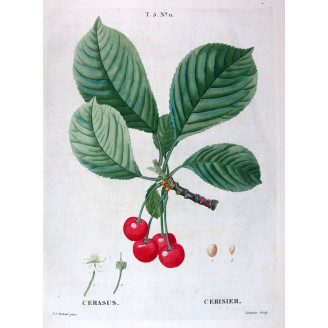
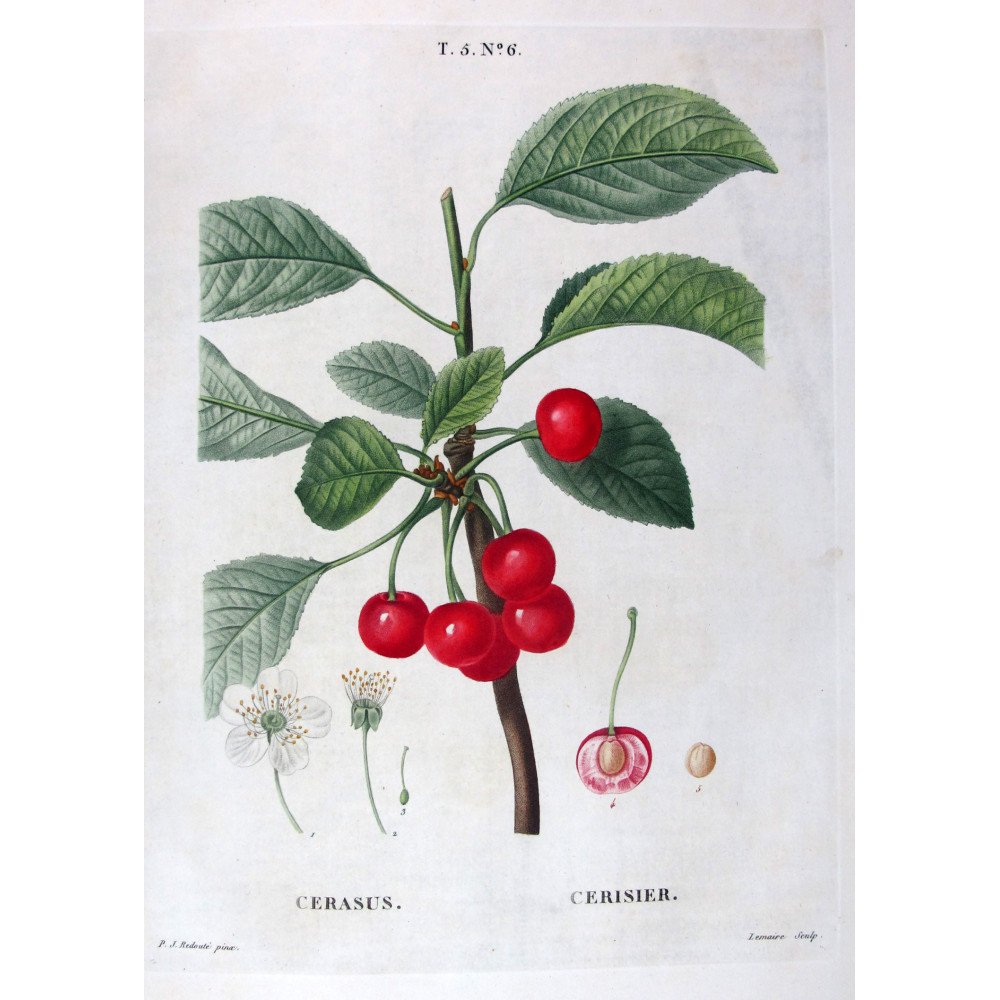
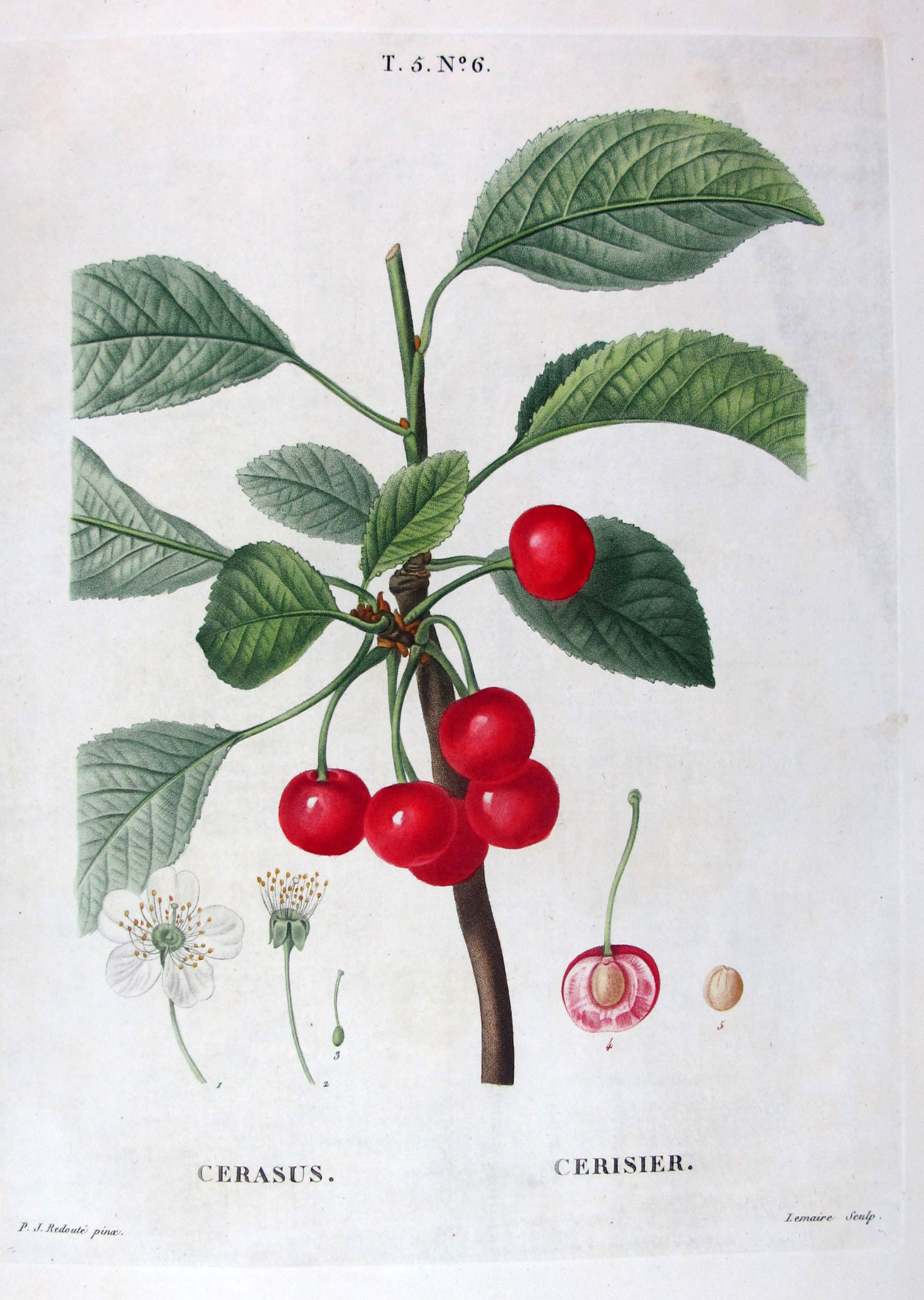
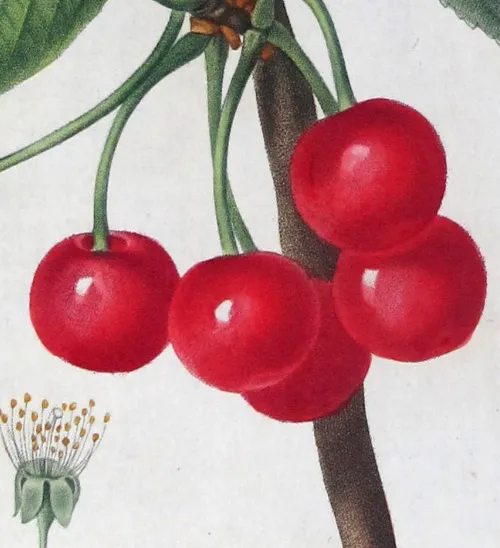
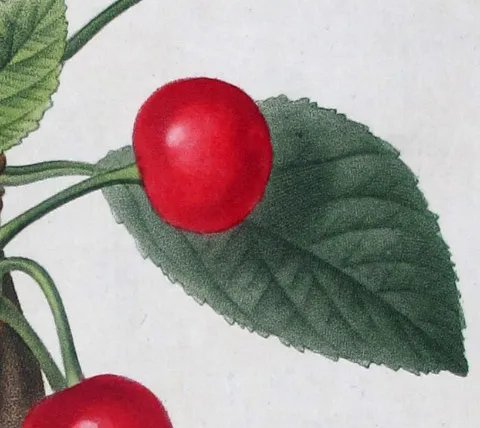
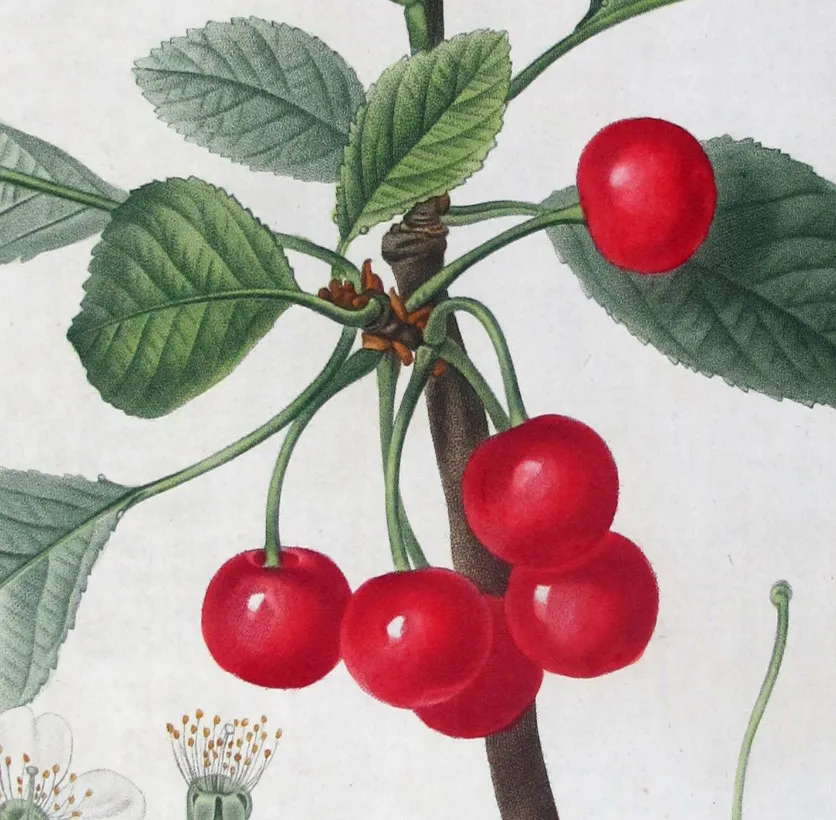
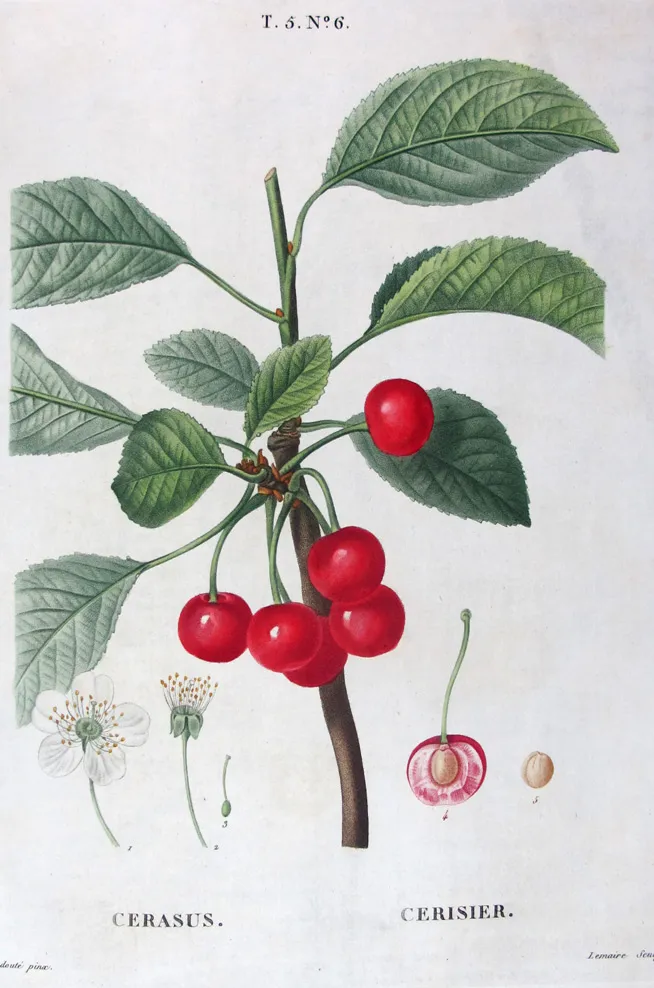
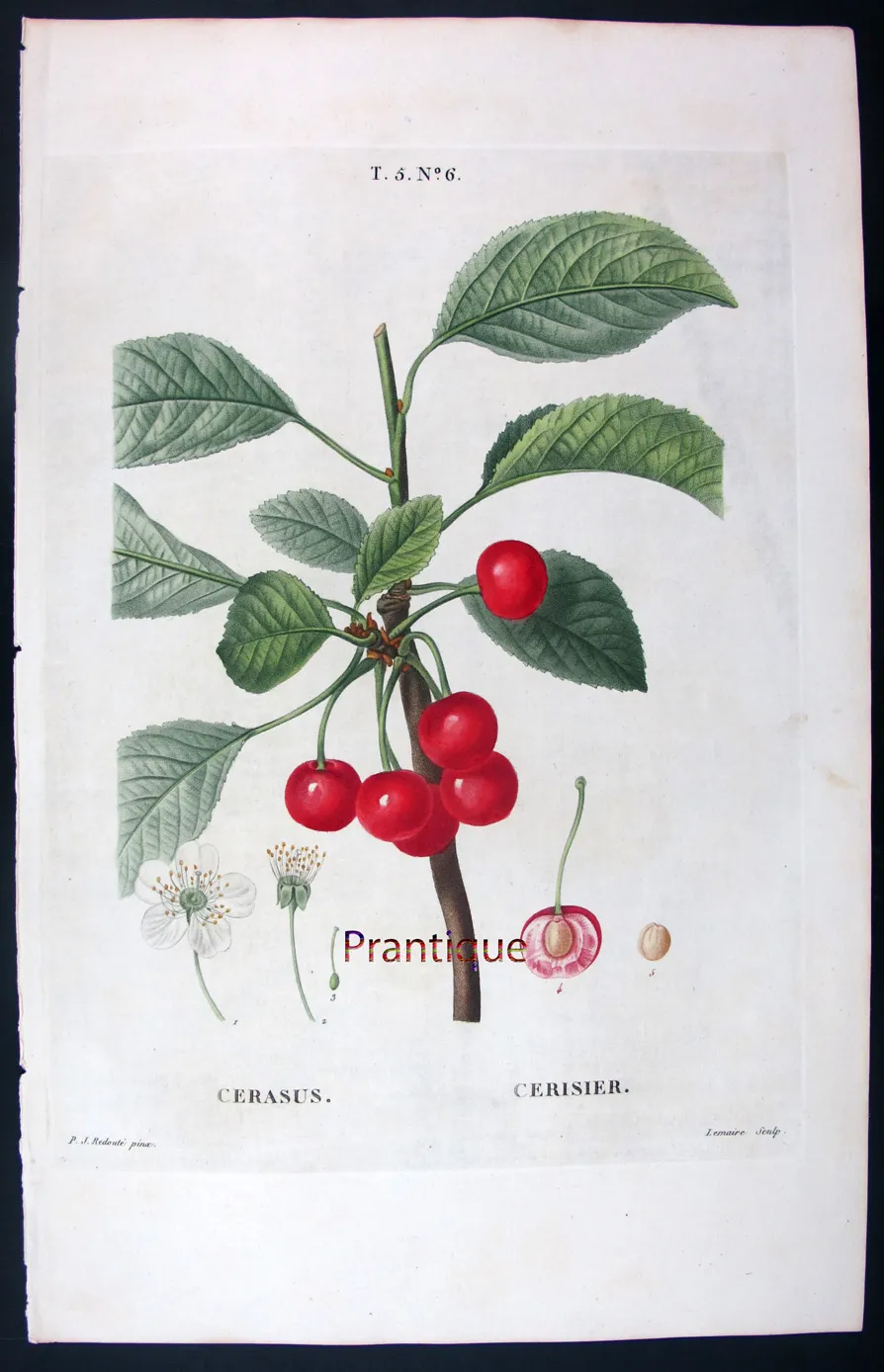

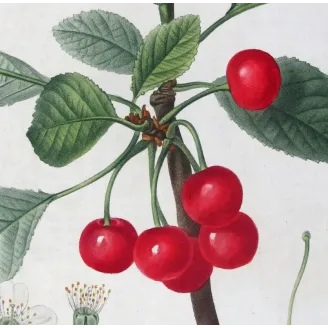
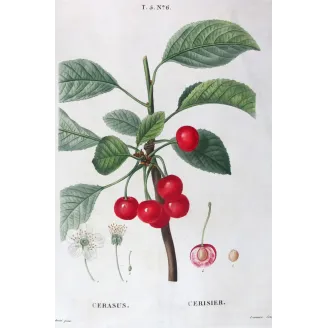
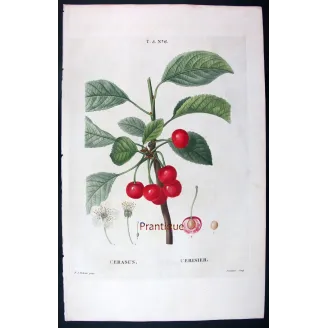
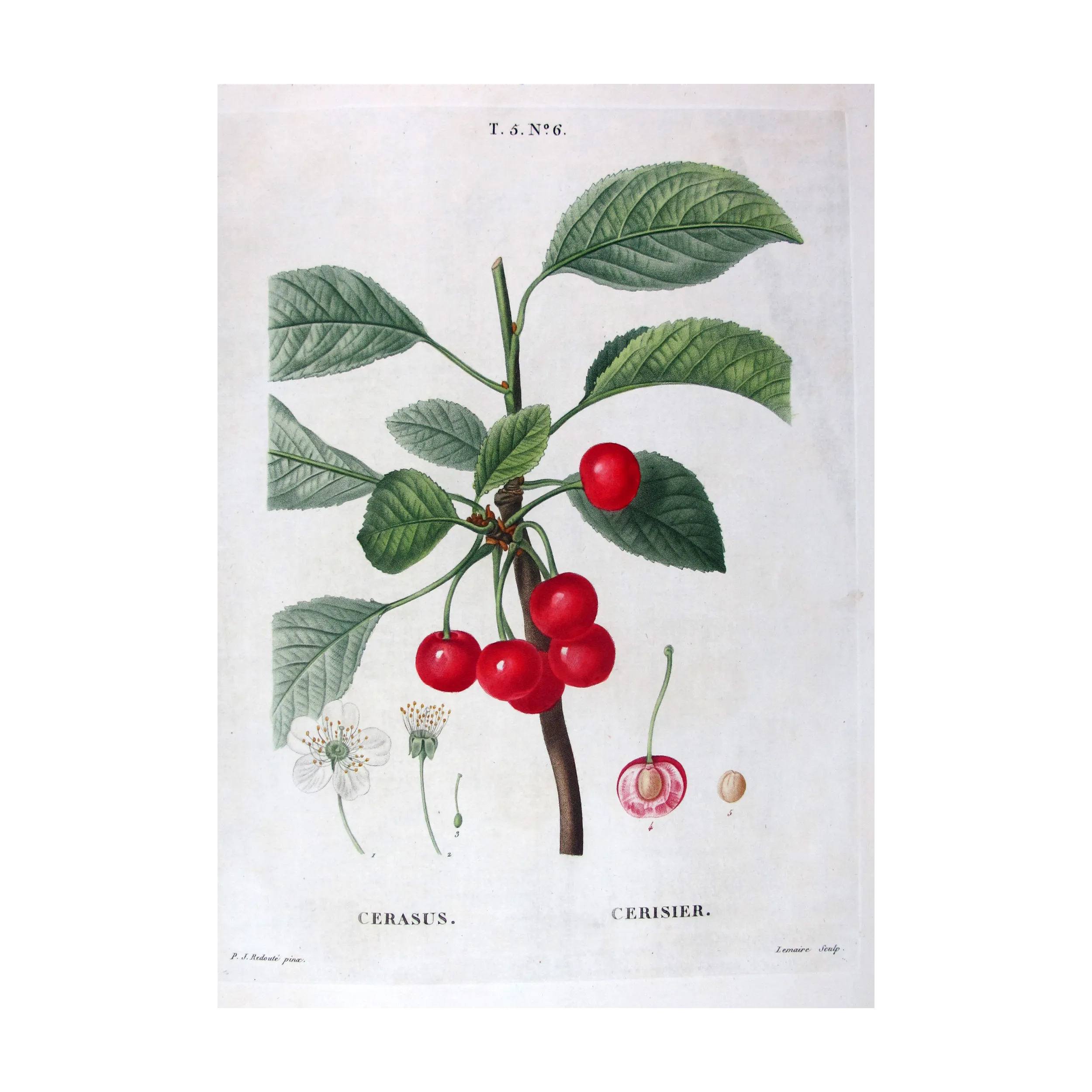
Rare Redouté botanical engraving of the cherry tree (Cerasus). Vivid red fruits and blossoms in exquisite detail.
 Delivery policy
Your print will be carefully prepared and shipped worldwide via trusted couriers (UPS or similar).
 Authentic antique prints
Original engravings from the 17th–19th century.
This refined botanical engraving by Pierre-Joseph Redouté illustrates the cherry tree with a clarity and compositional balance that exemplify the highest standards of early nineteenth-century botanical art.
The subject is presented with scientific precision and visual restraint, allowing the plant’s structure, foliage, and fruit to be read effortlessly. Redouté’s approach transforms a cultivated species into a composition of lasting elegance and clarity.
Created during the golden age of botanical illustration, this plate reflects a moment when natural history sought not only accuracy, but also harmony and visual coherence.
— • —
The composition is organized around a stable vertical axis, from which the fruit-bearing stems radiate outward in a measured and coherent arrangement. This structure anchors the viewer’s eye while maintaining a sense of natural growth and balance.
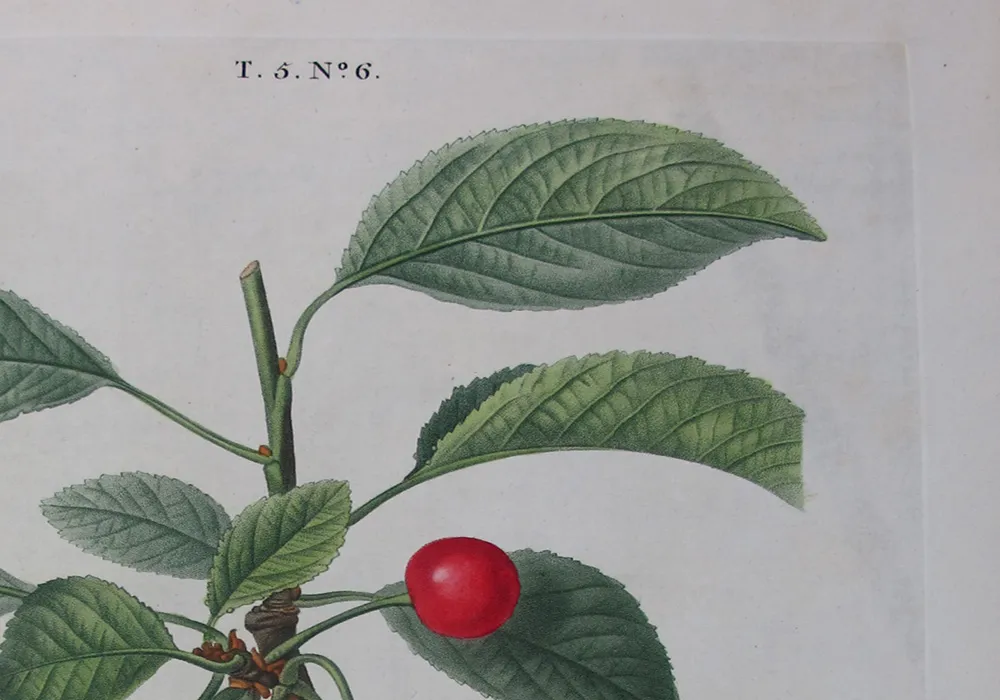
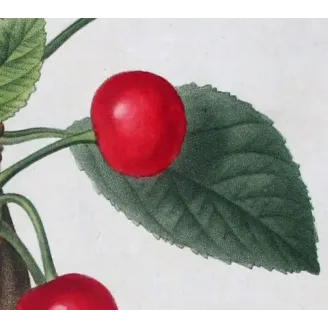
A vivid cluster of red cherries forms the primary visual focus, standing in deliberate contrast to the cool green tones of the surrounding leaves. Fine linework and controlled hand-colouring preserve botanical clarity, while the inclusion of floral and sectional details reinforces the plate’s scientific purpose without disrupting its visual harmony.
Cerasus, commonly known as the cherry tree, has long occupied a prominent place in European horticulture, valued both for its ornamental blossom and its fruit. In botanical illustration, cherry trees were frequently chosen for their clear morphological stages, allowing artists to document flowering, fruiting, and internal structure within a single, coherent image. This plate specifically documents the “Cerisier de Montmorency”, a cultivated cherry variety traditionally associated with the region north of Paris, presented through a complete sequence of floral and fruiting details.
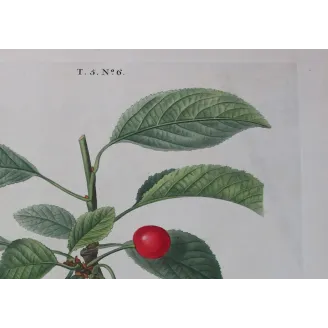
The engraving is in very good condition, printed on period paper with a clean and stable surface. Light, even age-related toning is present, consistent with works of this age. The impression remains sharp, with well-preserved margins and no significant restorations observed. The original engraved credits are present and legible, including “P. J. Redouté pinx.” and “Lemaire sculp.”
For further context on Pierre-Joseph Redouté and his contribution to botanical illustration, see our editorial feature:
Specific References
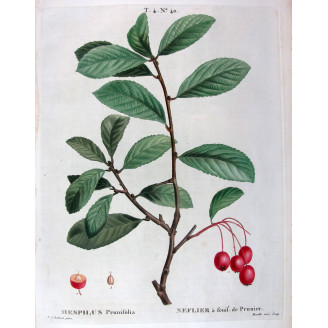
Original botanical engraving of Mespilus prunifolia by Redouté. Elegant branch and fruit, perfect for refined interiors.
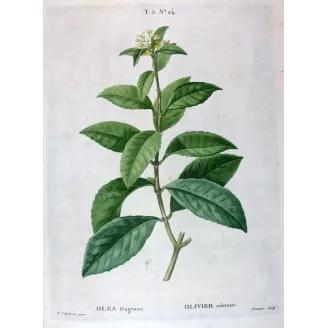
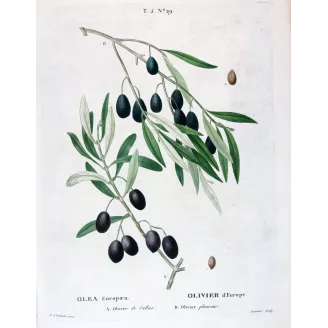
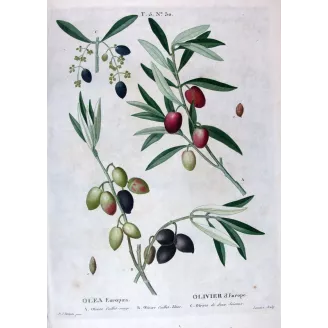
Olive tree study by Redouté with detailed foliage and seeds. bright fruit and slender branches. Decorative and vivid.
Graceful composition of the Amelanchier with fine leaves and berry-like fruit.
Classic hazelnut print by Redouté. Balanced tones and elegant form.
Charming pear study by Redouté, showing delicate blossom and ripening fruit. Balanced and refined.
Antique Botanical print of the Cherry tree by Redouté. Lush foliage and red fruits in harmonious layout.
Rare Redouté botanical engraving of the cherry tree (Cerasus). Vivid red fruits and blossoms in exquisite detail.