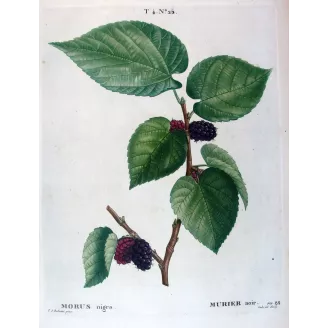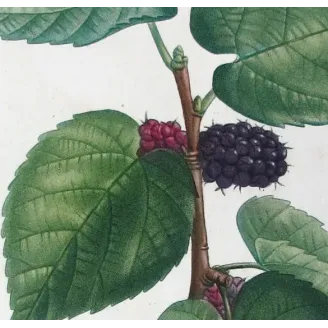

Botanical study of black mulberry with distinctive leaves and dark fruit.
 Delivery policy
Your print will be carefully prepared and shipped worldwide via trusted couriers (UPS or similar).
 Authentic antique prints
Original engravings from the 17th–19th century.
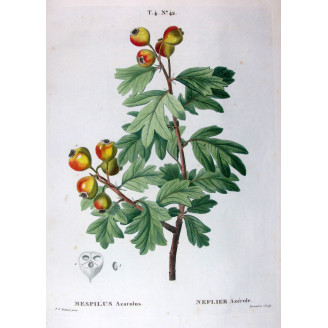
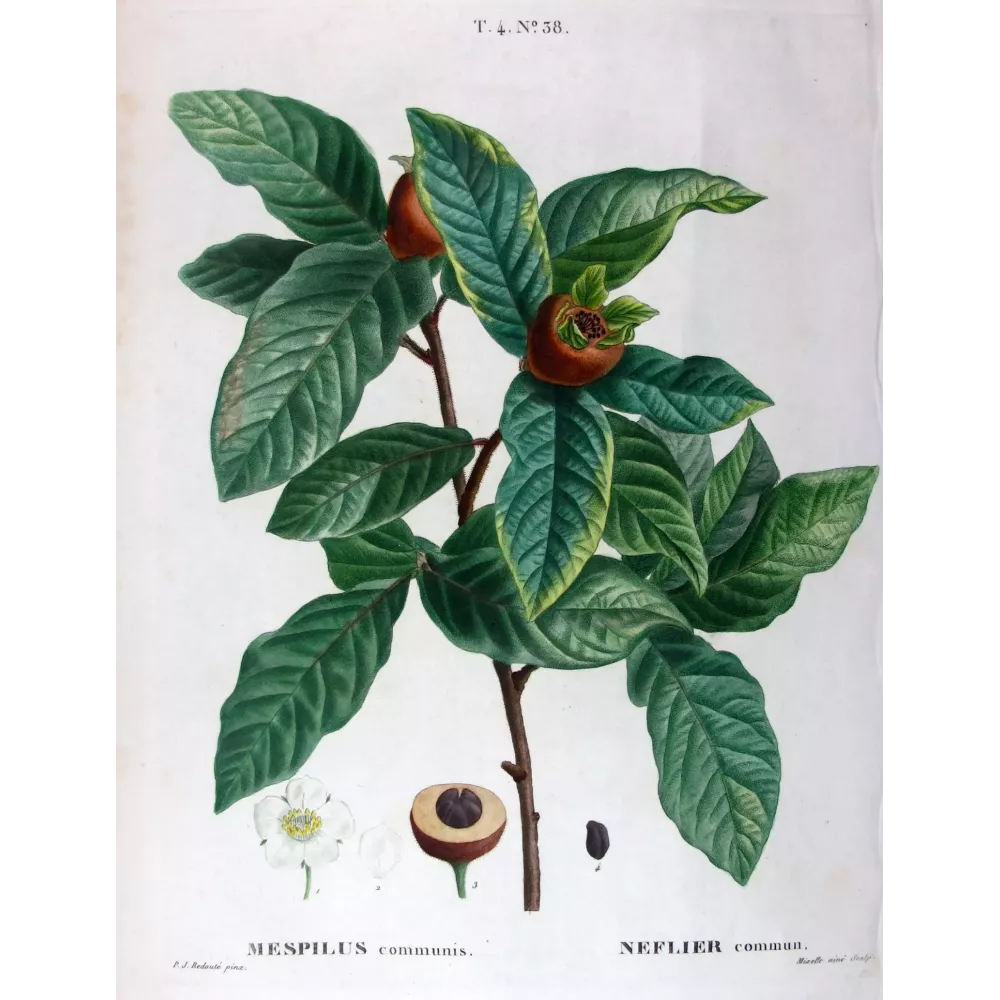
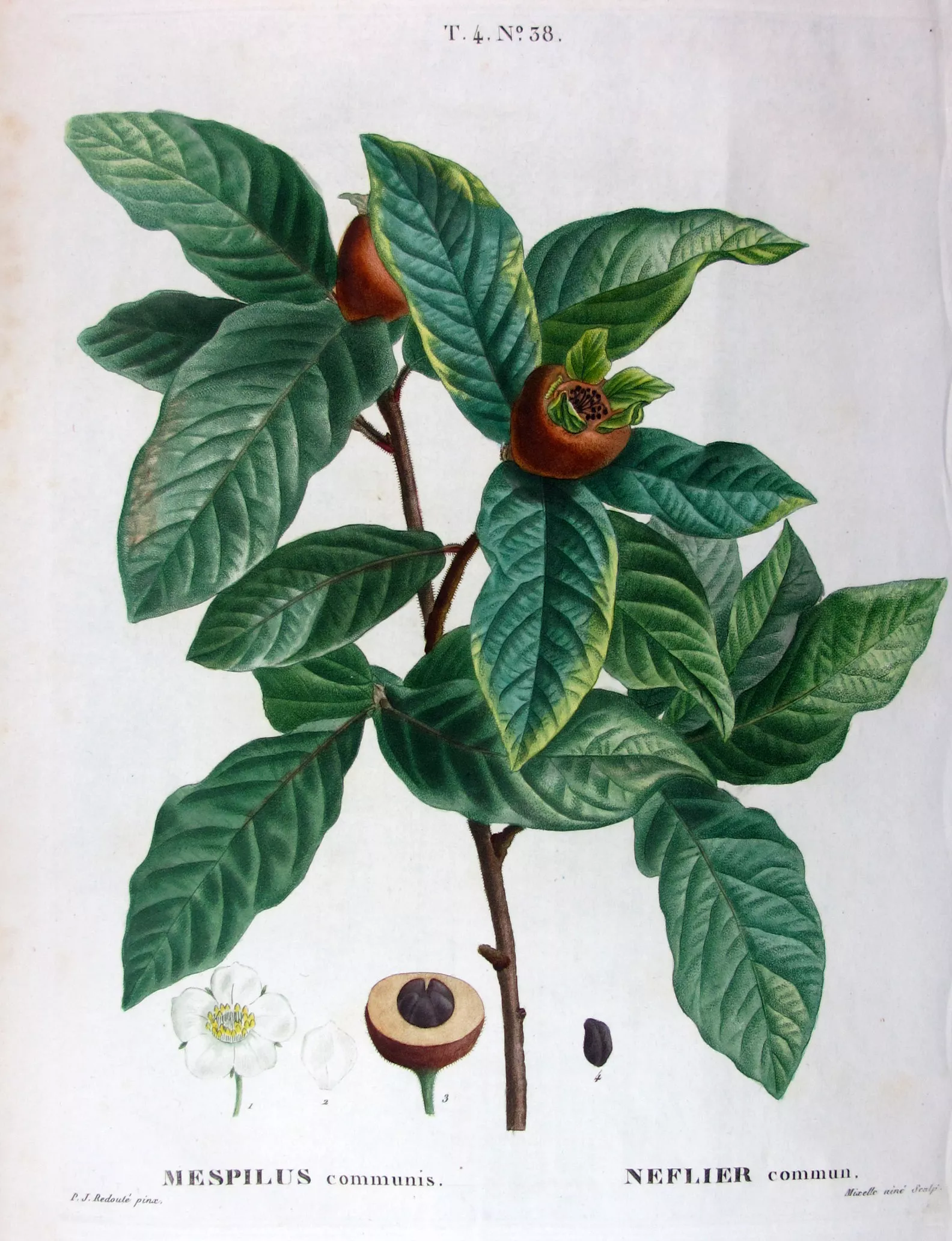
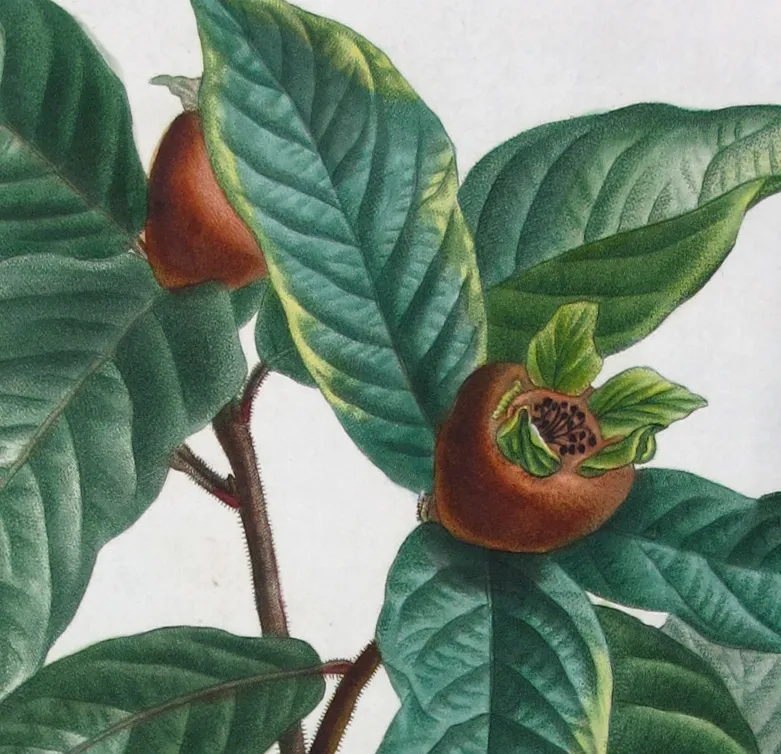
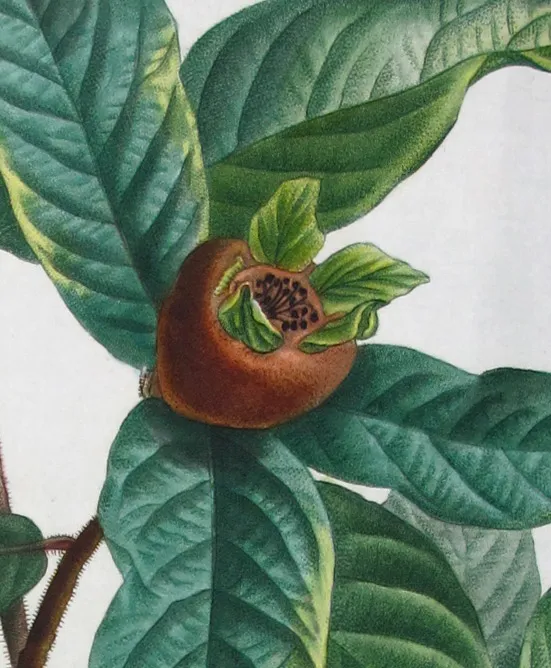
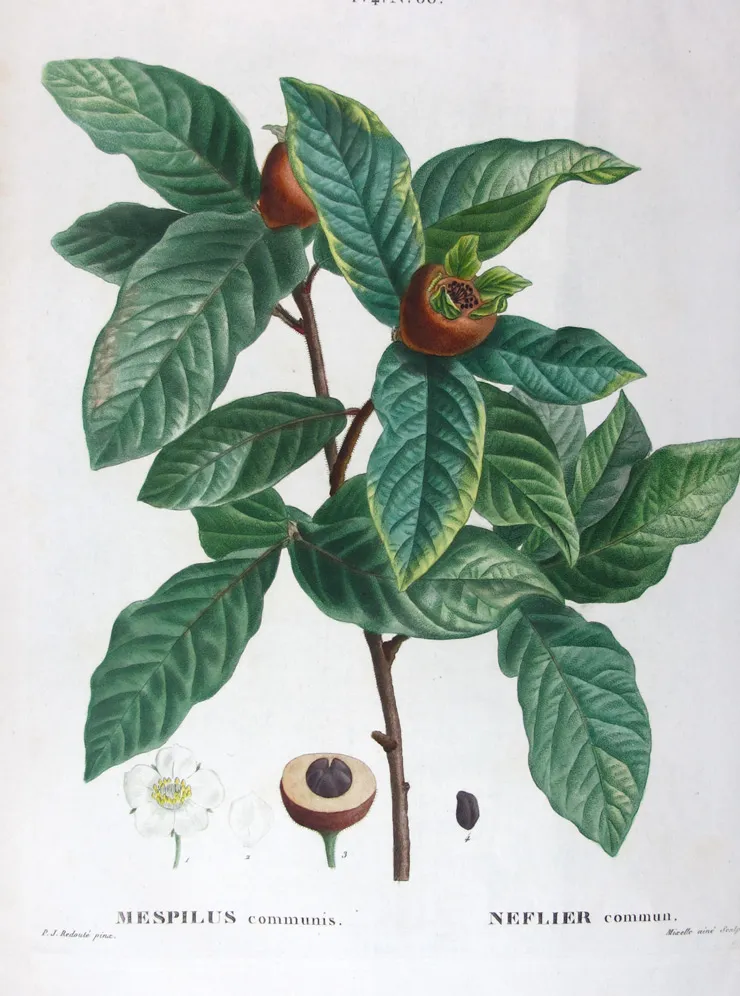
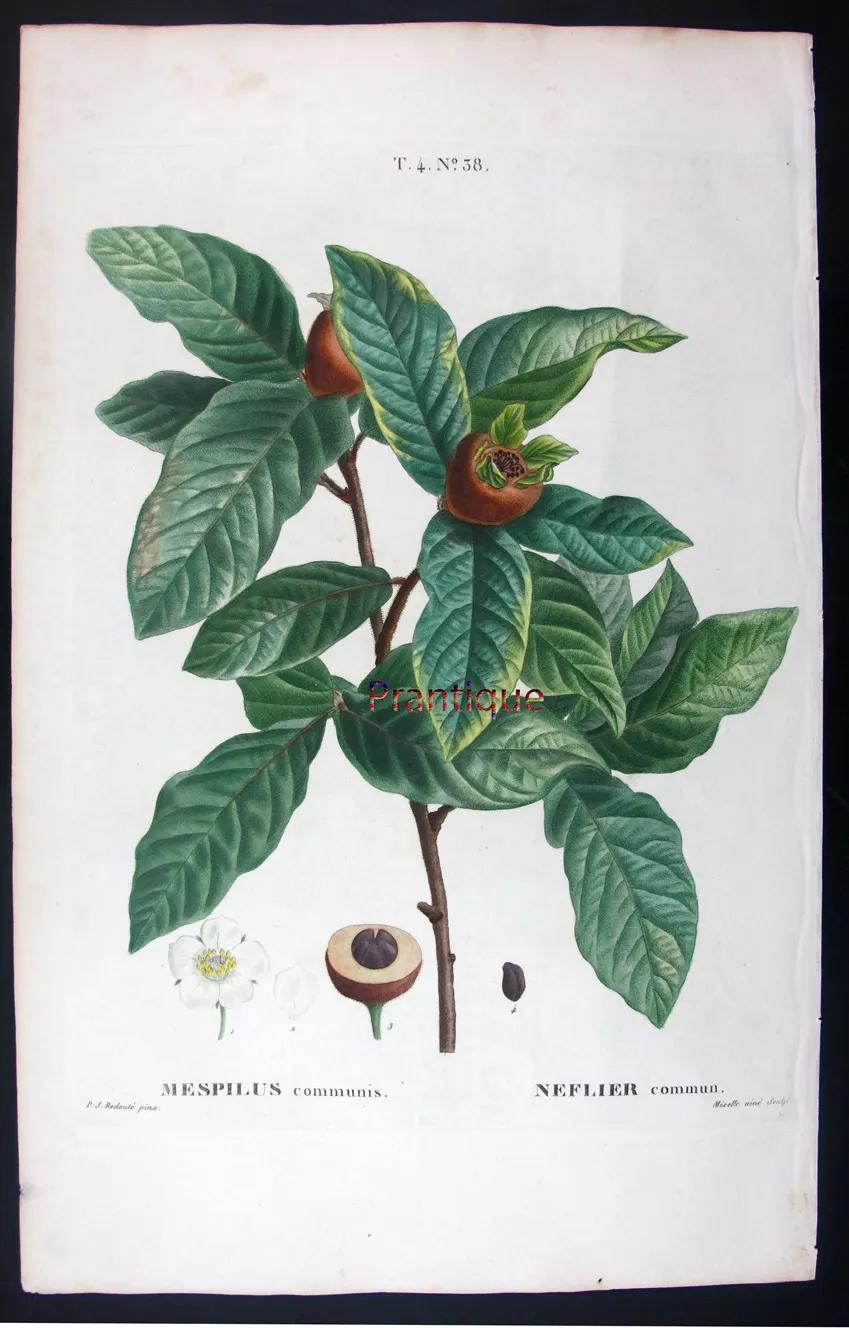
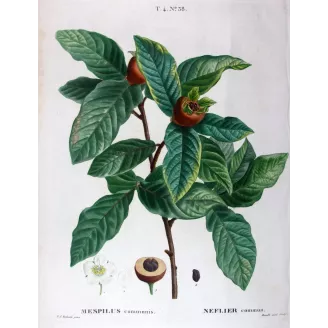
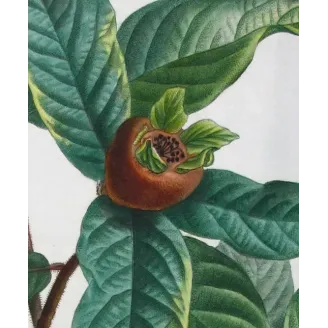
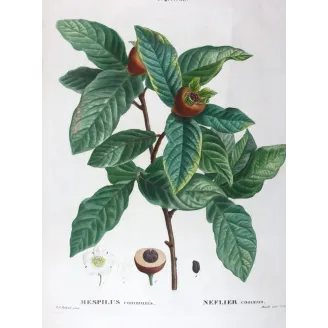
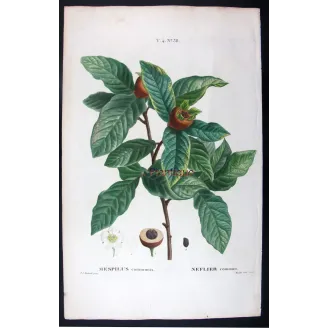
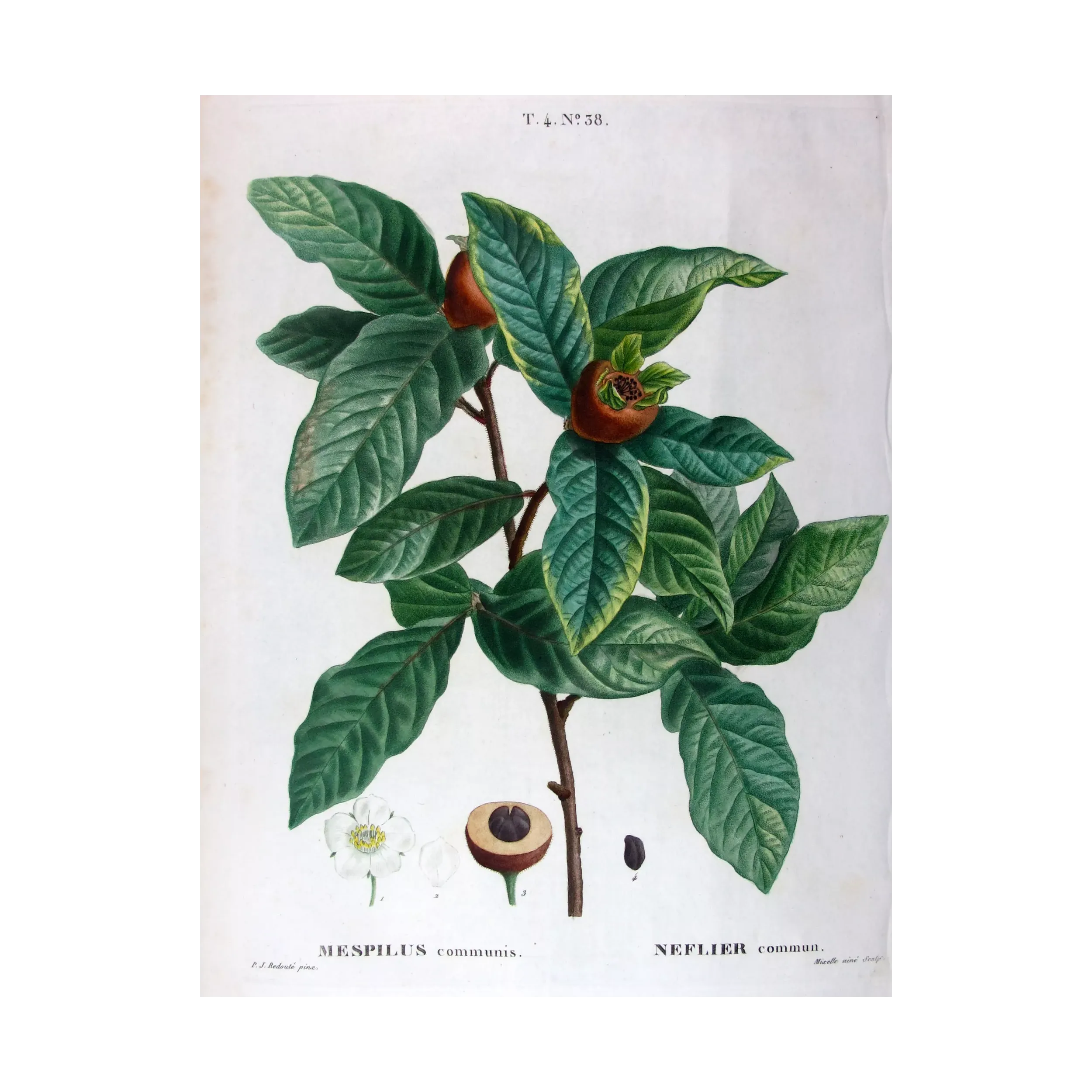
This original early 19th-century botanical engraving depicts the common medlar (Mespilus communis), illustrated by Pierre-Joseph Redouté for his celebrated Arbres et Arbustes. The plate presents a fruit-bearing branch accompanied by botanical details of the flower, seed, and a sectioned fruit, offering a complete visual description of the species.
Executed with calm precision and balanced composition, the engraving reflects Redouté’s mature approach to botanical illustration, in which scientific clarity and visual elegance are held in deliberate equilibrium. The result is a work that functions both as a botanical document and as a refined decorative engraving.
The composition is structured around a central vertical branch, with broad, textured leaves arranged in a measured rhythm that gives the plate a strong architectural presence. Subtle tonal variations in the foliage create depth and volume, while the restrained hand colouring preserves the clarity of the engraved line.
At the lower margin, the inclusion of a flower, a cross-section of the fruit, and the isolated seed reinforces the descriptive intent of the plate. These elements are rendered with the same compositional restraint, allowing the viewer to read the image as both an analytical study and a cohesive visual whole.
The common medlar (Mespilus communis) was a well-known fruit tree in European horticulture, valued historically for both its fruit and its ornamental presence. In botanical works of the early nineteenth century, such species were documented not only for classification, but also for their role in cultivated landscapes. By presenting the plant alongside detailed anatomical elements, Redouté aligns the plate with the Enlightenment ideal of visual completeness and botanical literacy.
The engraving is in very good condition. Printed on period paper with a clean and stable surface. Light, even age-related toning is present, consistent with works of this age. The impression remains clear and well-defined, margins are preserved, and no significant restorations are observed.
Artist: Pierre-Joseph Redouté
Work / Publication: Arbres et Arbustes
Period: Early 19th century (c. 1801–1819)
Technique: Original hand-colored copper engraving
Sheet size: approx. 40 × 25 cm
Inscriptions: “P. J. Redouté pinx.” / “Lemaire sculp.”
For further context on Pierre-Joseph Redouté and his contribution to botanical illustration, see our editorial feature:
Pierre-Joseph Redouté: Floral Art in the Service of Science
Specific References
Charming pear study by Redouté, showing delicate blossom and ripening fruit. Balanced and refined.
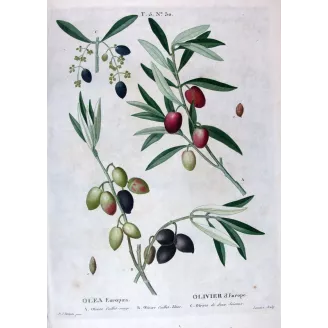
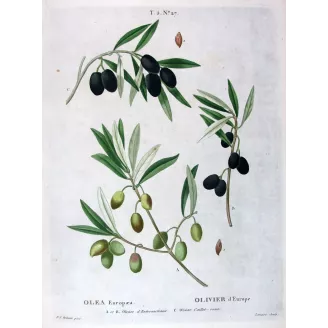
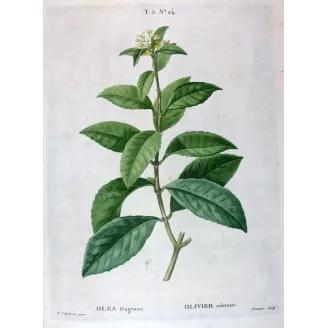
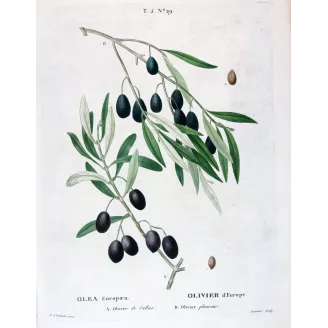
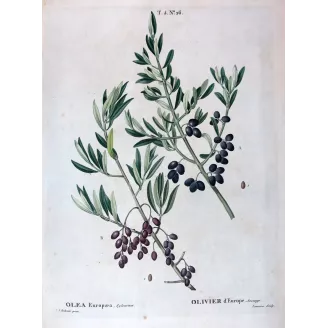
Olive tree study by Redouté with detailed foliage and seeds. bright fruit and slender branches. Decorative and vivid.
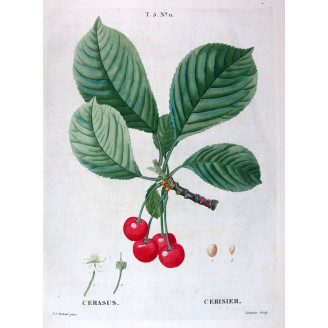
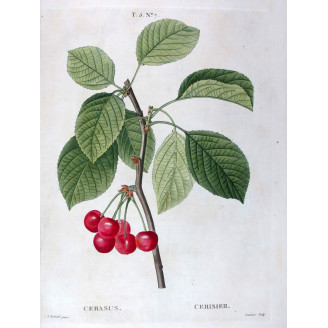
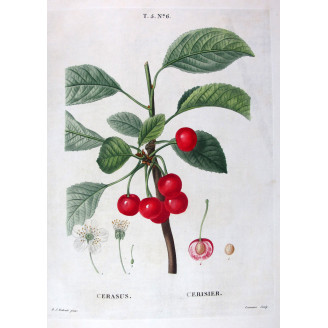
Antique Botanical print of the Cherry tree by Redouté. Lush foliage and red fruits in harmonious layout.
Classic hazelnut print by Redouté. Balanced tones and elegant form.
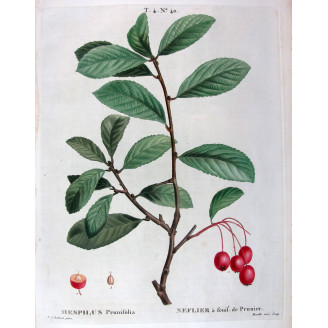
Original botanical engraving of Mespilus prunifolia by Redouté. Elegant branch and fruit, perfect for refined interiors.
Rare Redouté botanical engraving of the cherry tree (Cerasus). Vivid red fruits and blossoms in exquisite detail.
Graceful composition of the Amelanchier with fine leaves and berry-like fruit.
Botanical study of black mulberry with distinctive leaves and dark fruit.