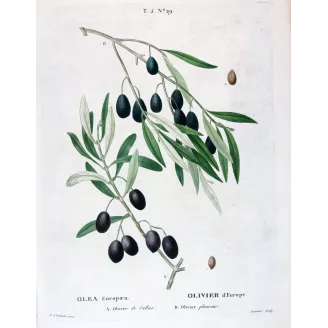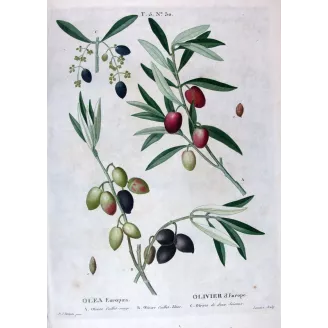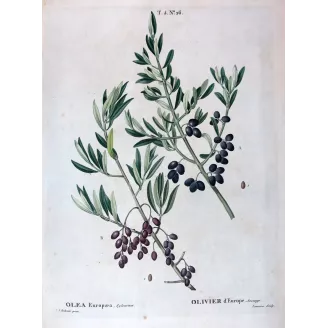

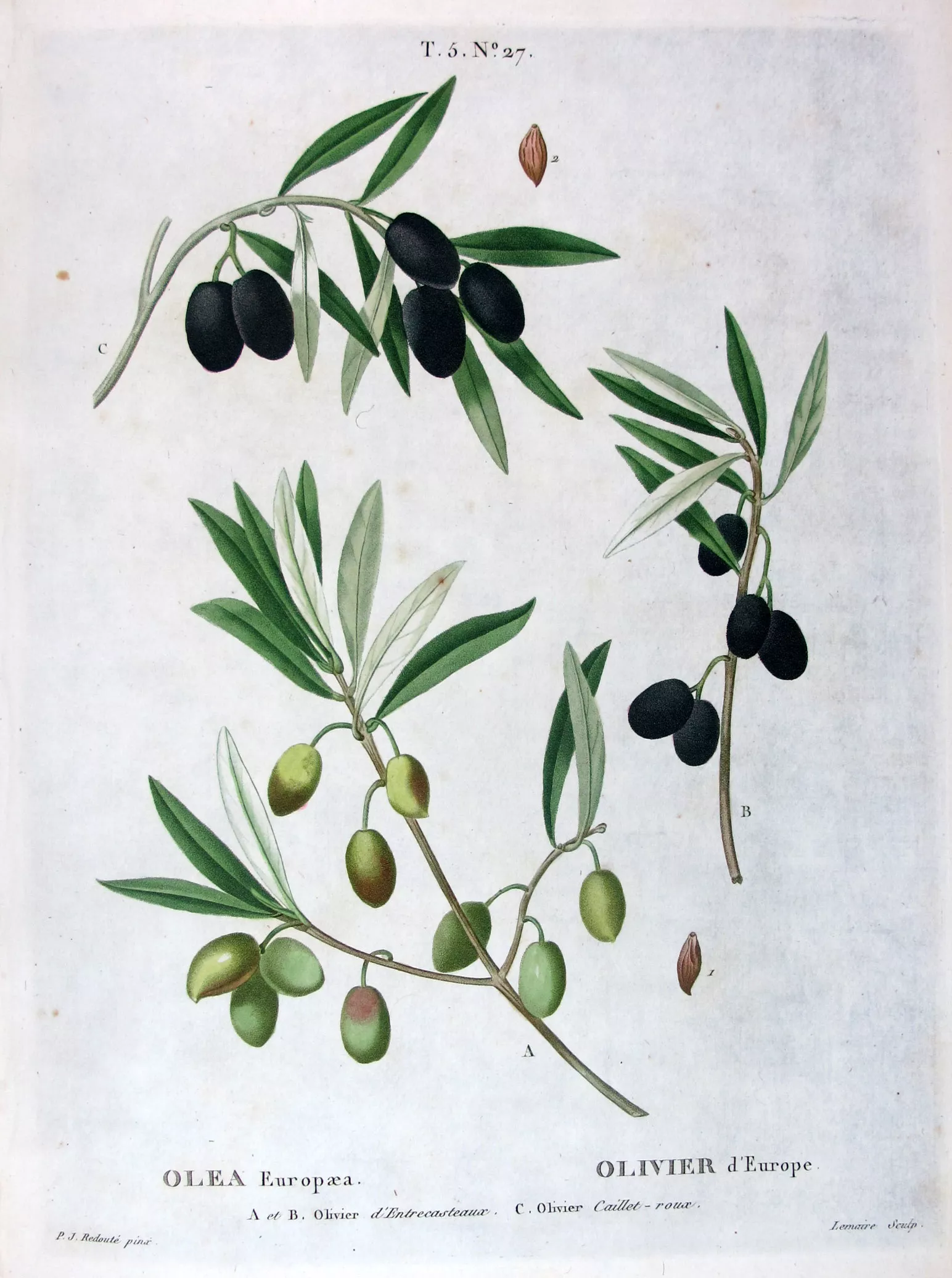


Olive tree study by Redouté with detailed foliage and seeds. bright fruit and slender branches. Decorative and vivid.
 Delivery policy
Your print will be carefully prepared and shipped worldwide via trusted couriers (UPS or similar).
 Authentic antique prints
Original engravings from the 17th–19th century.
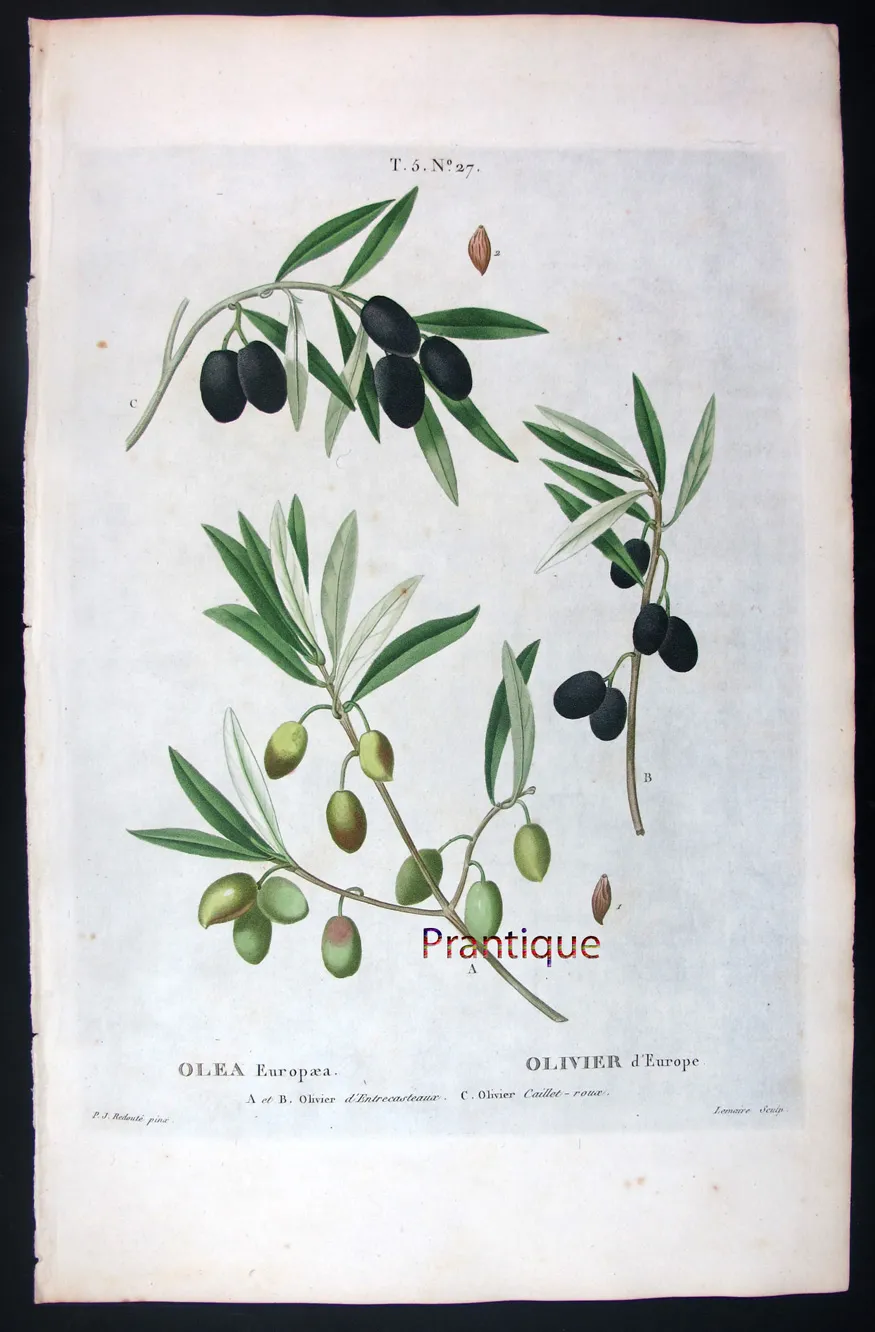
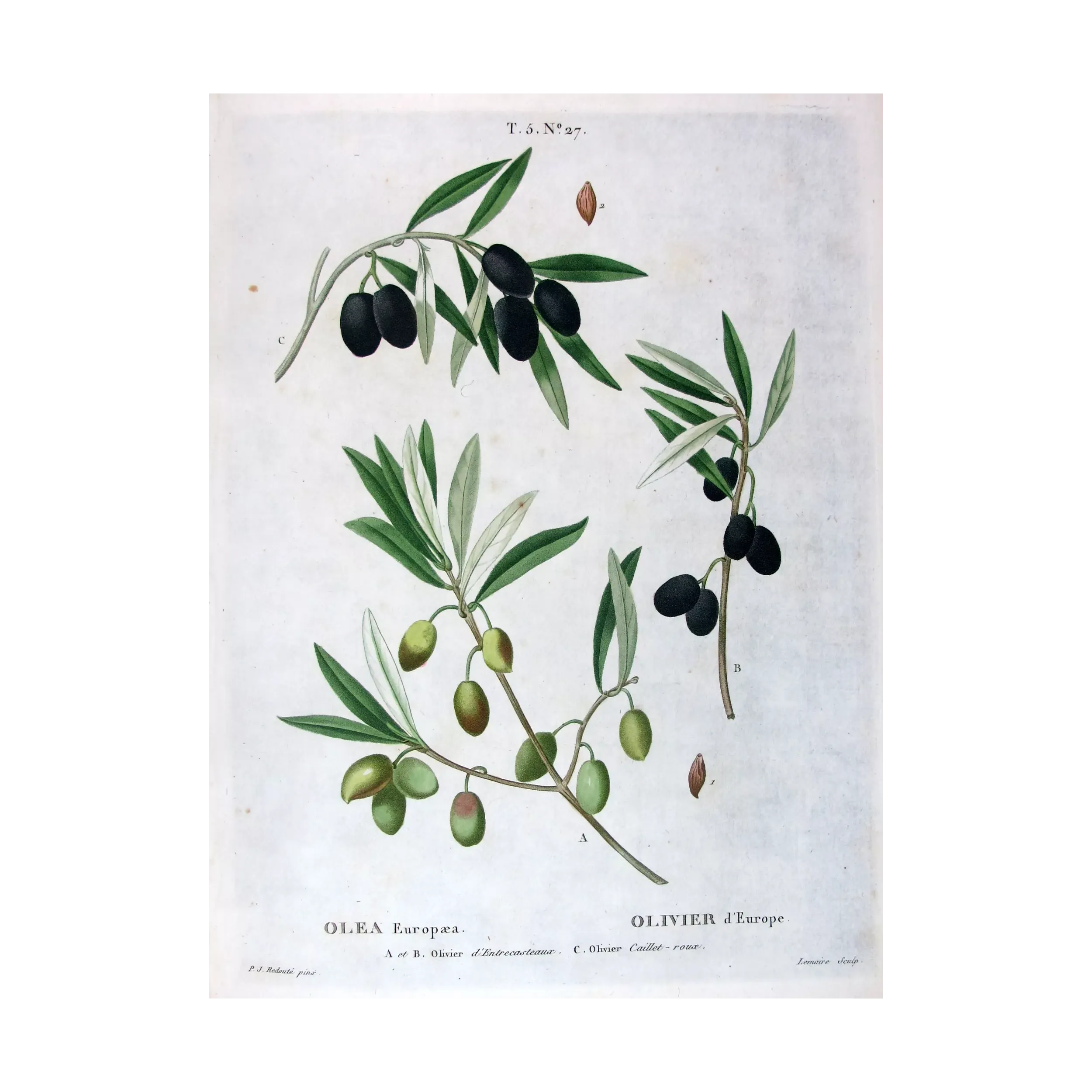
This refined botanical engraving by Pierre-Joseph Redouté presents a cultivated European olive in a comparative format, combining varietal observation with the compositional restraint characteristic of early nineteenth-century botanical art.
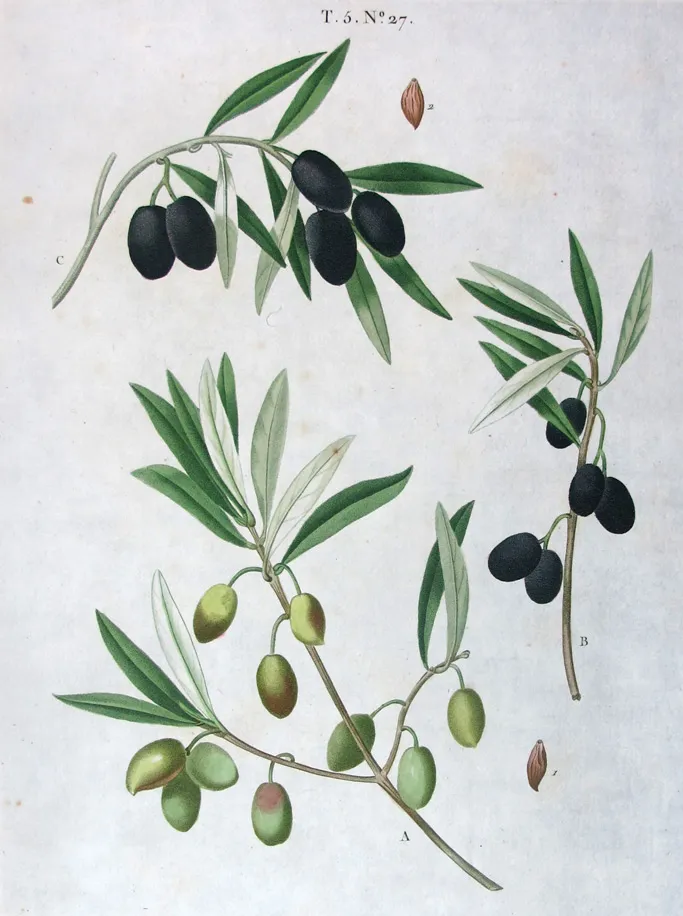
Rather than isolating a single branch, the plate juxtaposes multiple fruiting stems to show differences in form and maturation. The result is both analytical and visually balanced—an image designed for botanical clarity, yet composed with unmistakable elegance.
Produced during the period often regarded as the golden age of botanical illustration, this engraving reflects a time when cultivated varieties were recorded with precision, supporting agricultural knowledge through carefully structured visual evidence.
— • —
The composition is arranged as a comparative study across open space: separate branches are distributed to keep each varietal element distinct, while maintaining an overall equilibrium. Narrow, silvery-green leaves establish a restrained rhythm that guides the eye between the groups.
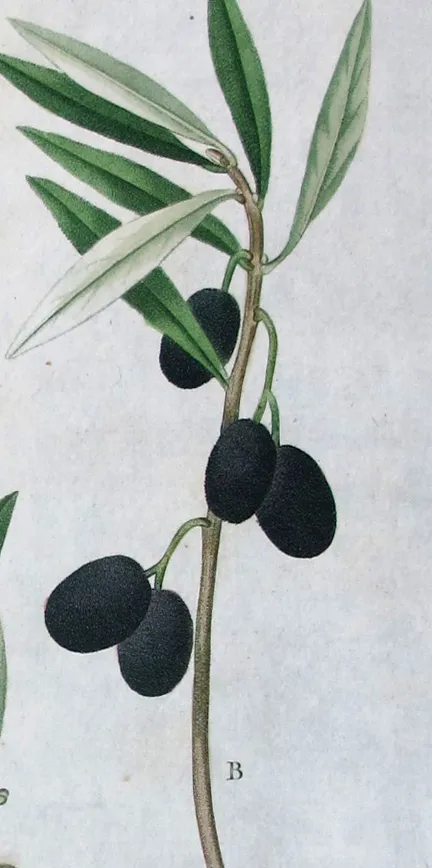
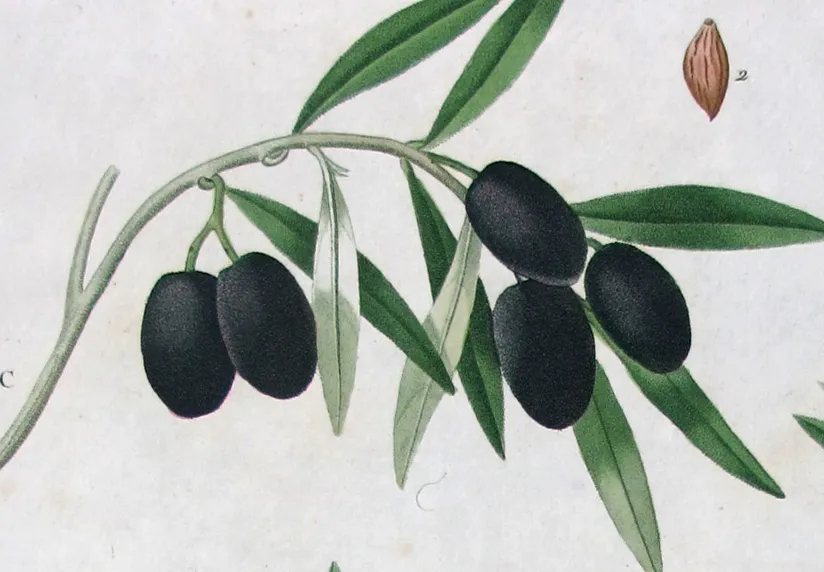
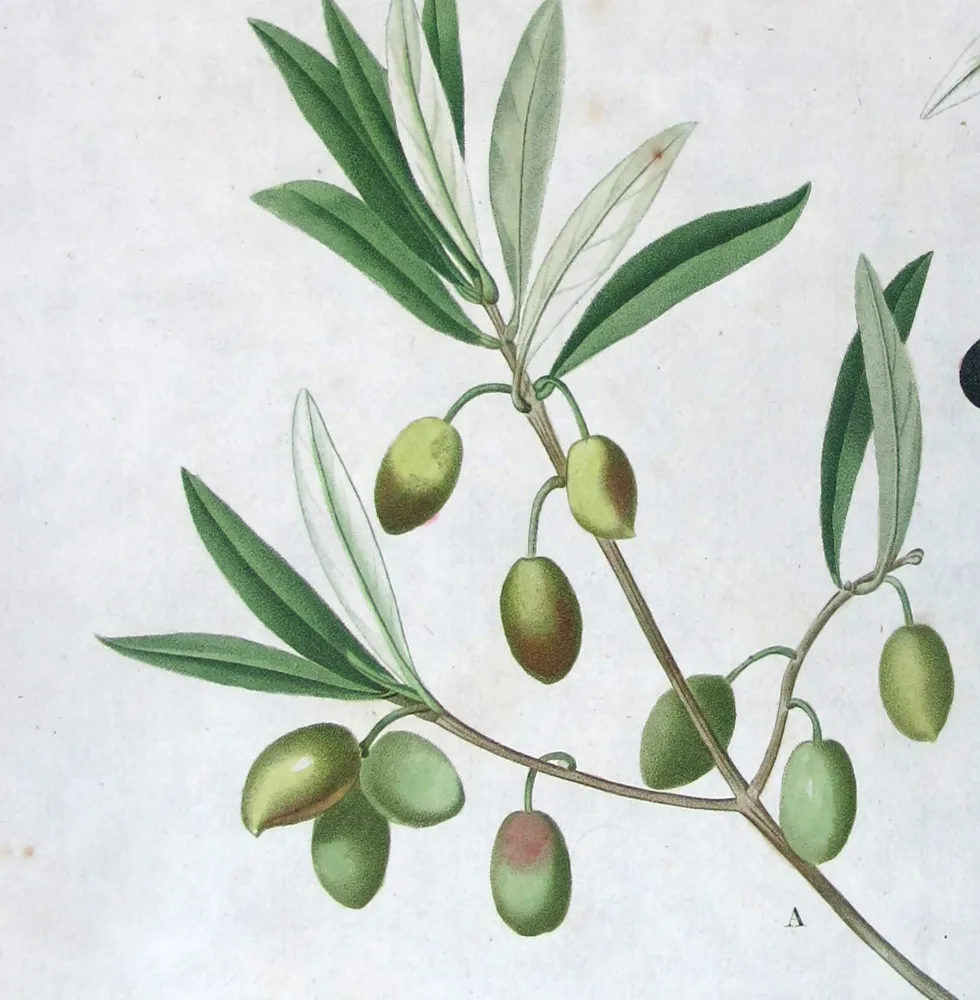
The fruit provides the plate’s key visual contrast, moving from pale green olives to deep, almost black ripened clusters. This tonal progression gives the image a quiet narrative of maturation, while the isolated stones placed nearby function as precise analytical anchors. Fine engraved linework and controlled hand-colouring preserve clarity of contour and leaf structure without decorative excess.
This plate documents a cultivated variety of the European olive (Olea europaea) through distinct labelled figures. In the accompanying description, branches A and B are identified as “L’Olivier d’Entrecasteaux”, while figure C is “Olivier Caillet-Roux”. The print also isolates the stones (fig. 1 and fig. 2), reinforcing the plate’s focus on varietal comparison through fruit, maturation stage, and morphological detail.
The engraving is in very good condition, printed on period paper with a clean and stable surface. Light, even age-related toning is present, consistent with works of this age. The impression remains clear and well-defined, with margins preserved and no significant restorations observed. The original engraved credits are present and legible, including “P. J. Redouté pinx.” and “Lemaire sculp.”
For further context on Pierre-Joseph Redouté and his contribution to botanical illustration, see our editorial feature:
Specific References
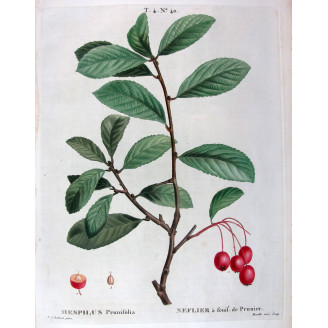
Original botanical engraving of Mespilus prunifolia by Redouté. Elegant branch and fruit, perfect for refined interiors.
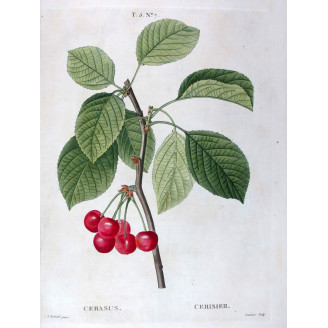
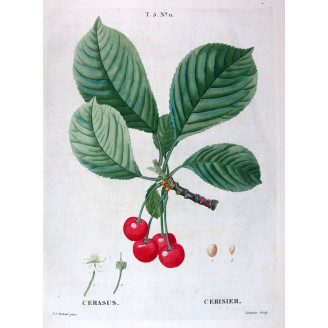
Antique Botanical print of the Cherry tree by Redouté. Lush foliage and red fruits in harmonious layout.
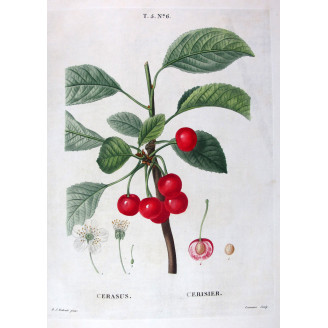
Rare Redouté botanical engraving of the cherry tree (Cerasus). Vivid red fruits and blossoms in exquisite detail.
Classic hazelnut print by Redouté. Balanced tones and elegant form.
Charming pear study by Redouté, showing delicate blossom and ripening fruit. Balanced and refined.
Graceful composition of the Amelanchier with fine leaves and berry-like fruit.
Olive tree study by Redouté with detailed foliage and seeds. bright fruit and slender branches. Decorative and vivid.