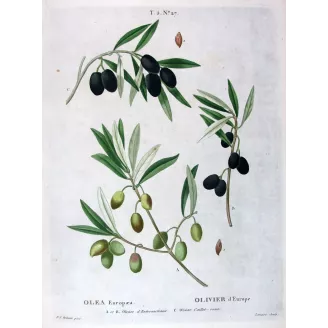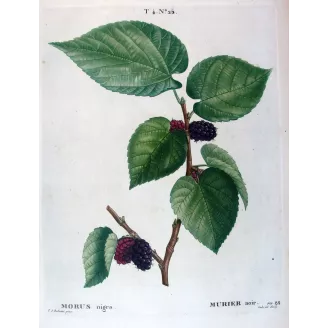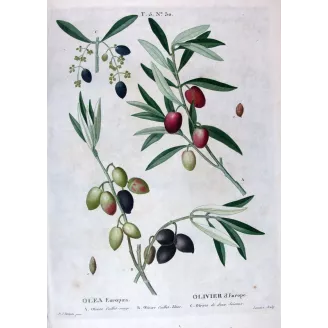
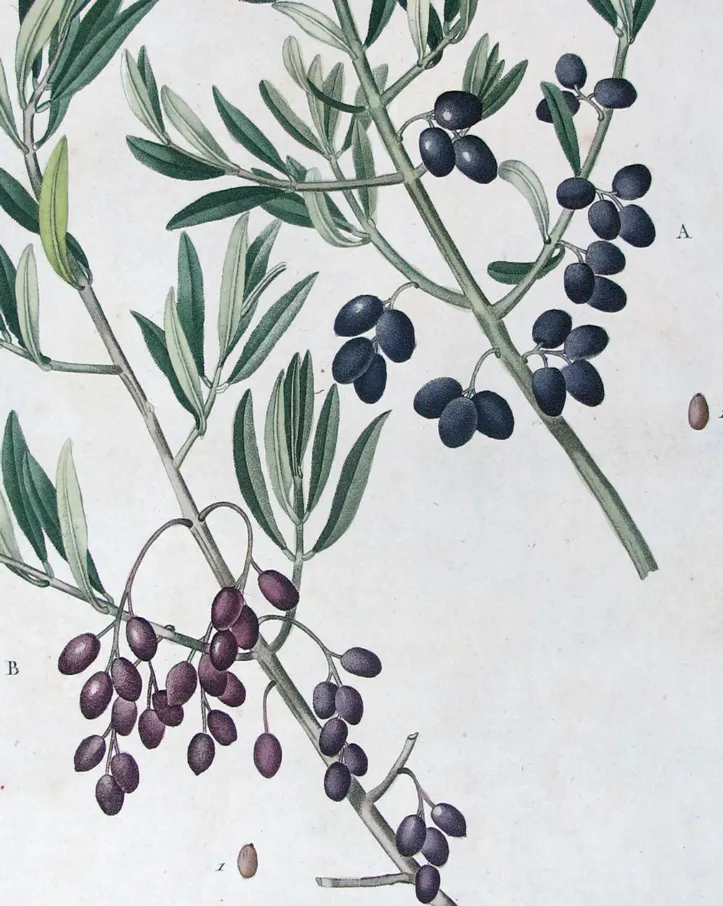
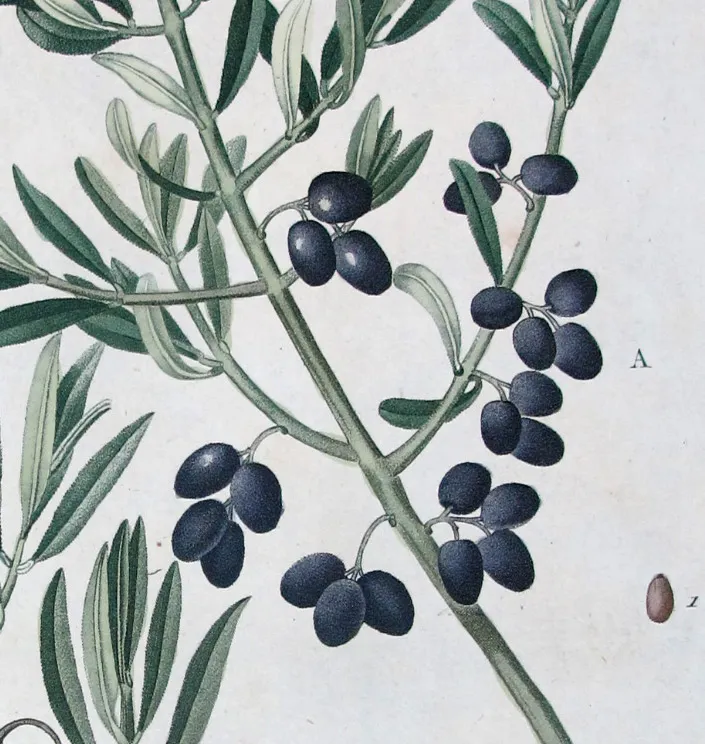
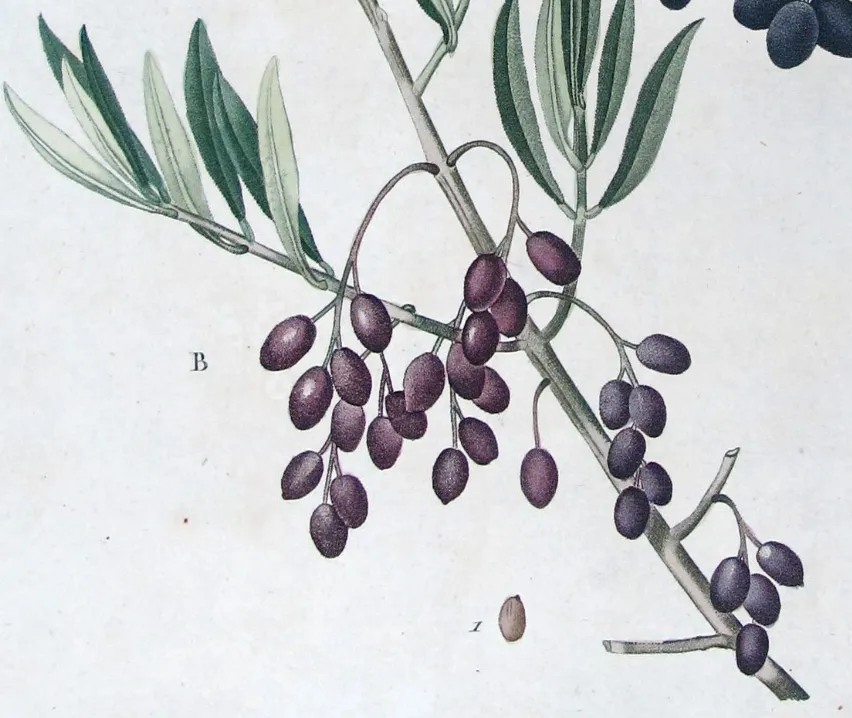
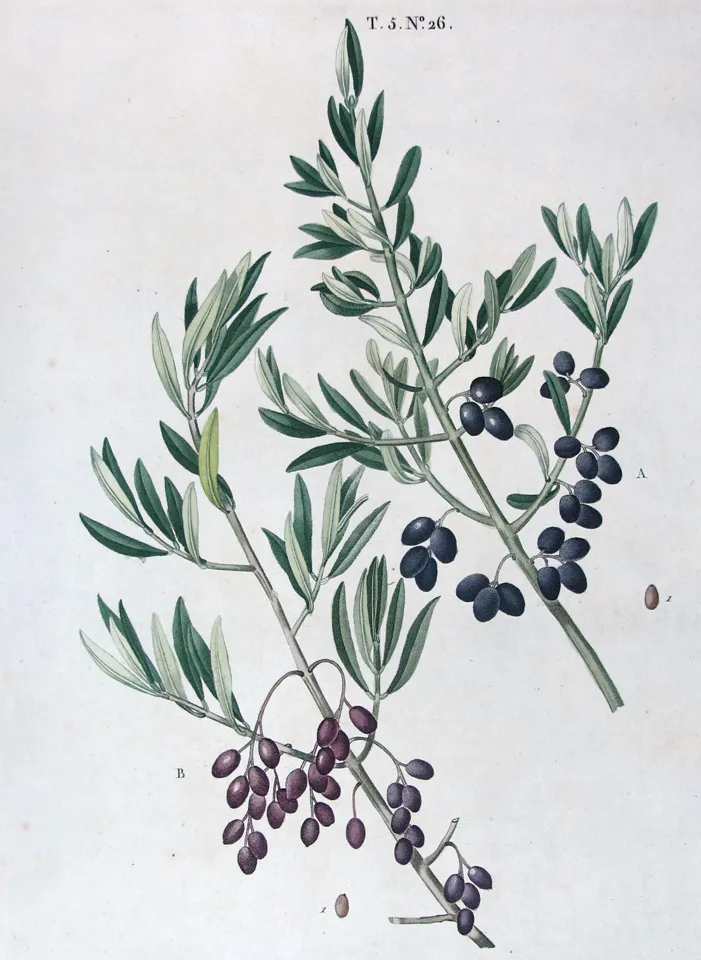
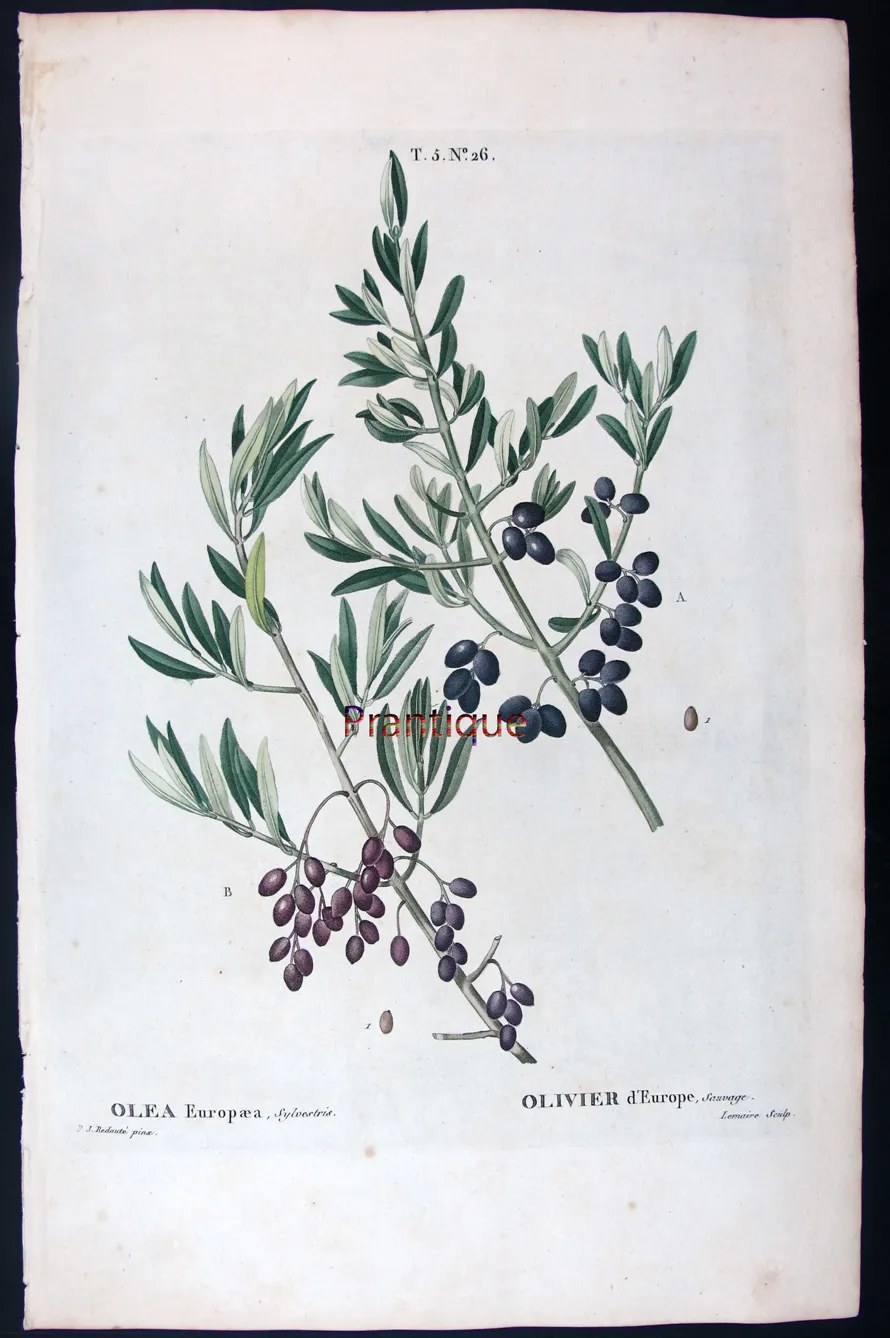

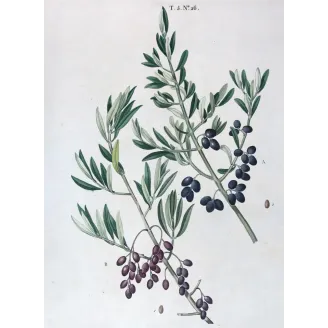
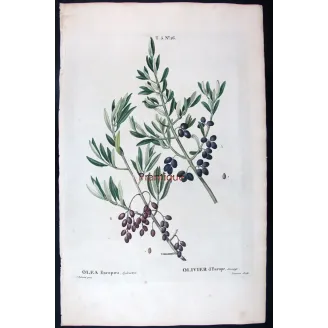
Olive tree study by Redouté with detailed foliage and seeds.
 Delivery policy
Your print will be carefully prepared and shipped worldwide via trusted couriers (UPS or similar).
 Authentic antique prints
Original engravings from the 17th–19th century.
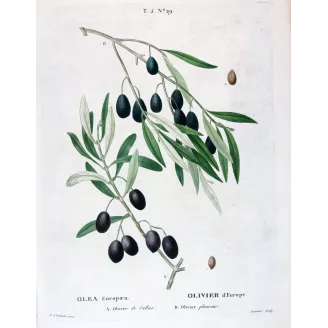
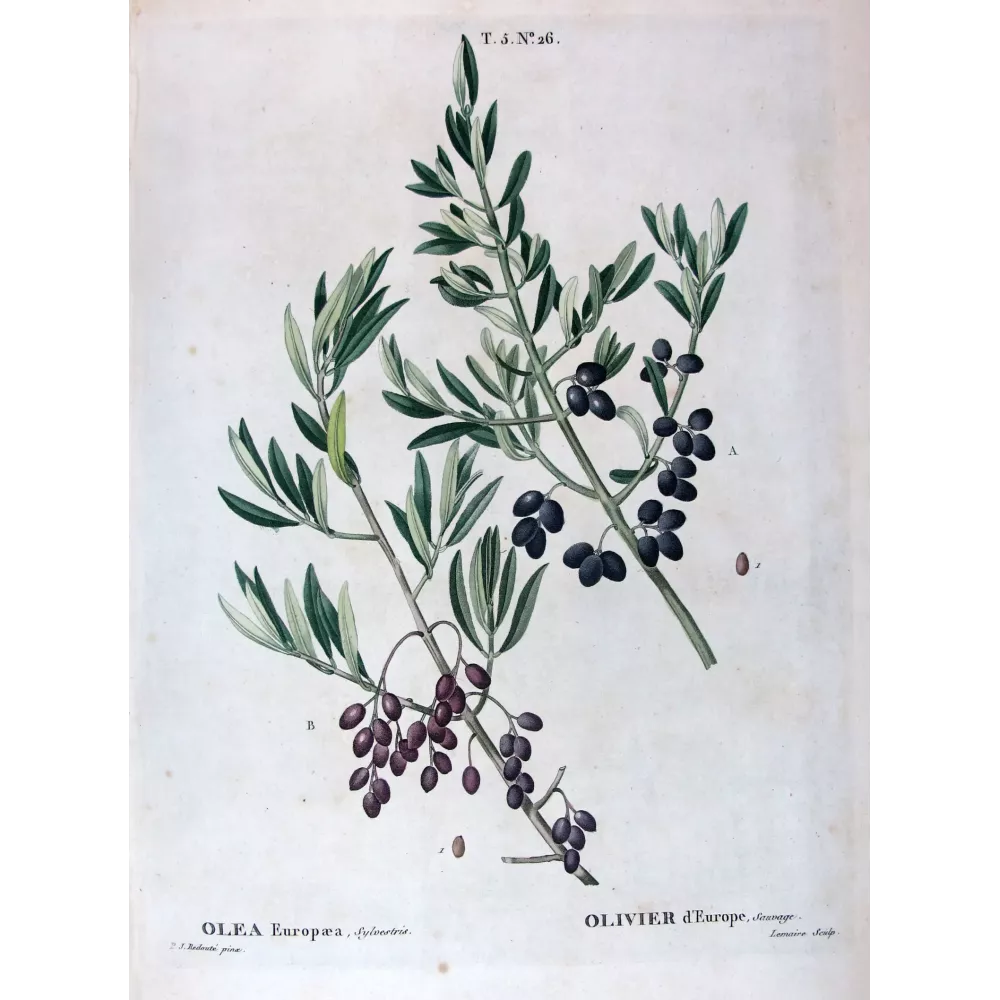
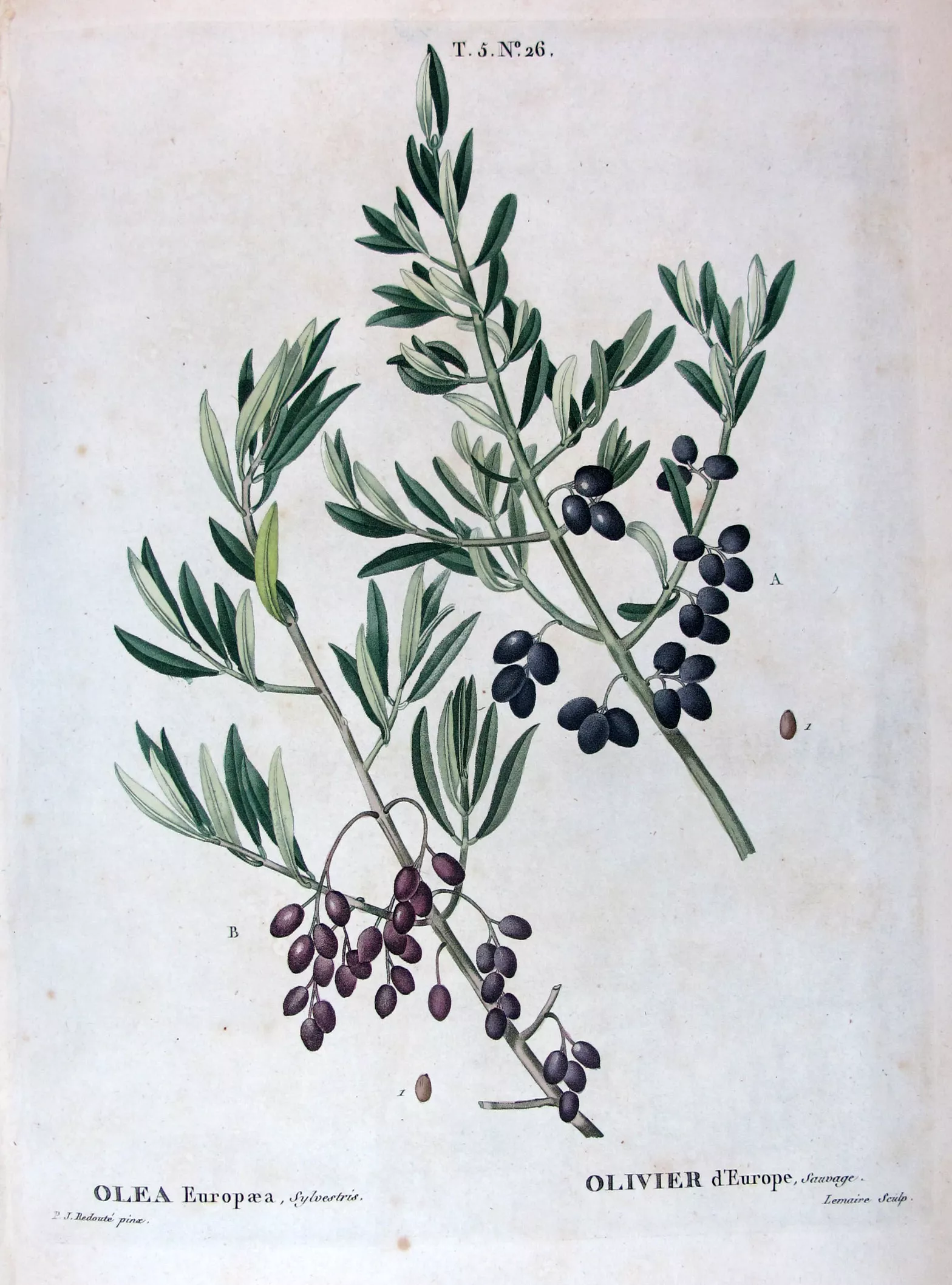
This original early 19th-century botanical engraving depicts the wild olive (Olea europaea sylvestris), illustrated by Pierre-Joseph Redouté as part of his celebrated Arbres et Arbustes. Unlike cultivated varieties, this plate focuses on the natural form of the olive, presenting its fruit and foliage without ornamental emphasis, in a manner both precise and restrained.
Selected for its quiet authority and botanical clarity, the composition reflects Redouté’s ability to render even modest, non-ornamental subjects with balance, rhythm, and visual coherence—transforming agricultural observation into a refined visual document.
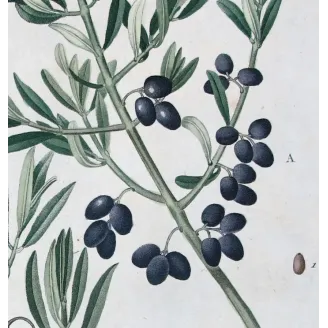
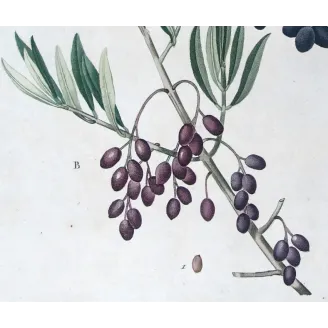
Two branches of wild olive are arranged diagonally, creating a sense of natural growth rather than formal symmetry. The elongated, silvery-green leaves are rendered with subtle tonal transitions, while the dark fruits introduce a measured contrast that anchors the composition visually. Hand colouring is deliberately restrained, enhancing volume without overpowering the engraved line. The absence of decorative background allows the botanical structure to remain legible and calm, giving the plate an understated elegance suited to curated interiors, libraries, or study spaces.
The wild olive (Olea europaea sylvestris) represents the ancestral form from which cultivated olives developed. In early 19th-century botanical literature, documenting these wild varieties was essential for understanding plant domestication, regional diversity, and agricultural history. By including the wild olive alongside cultivated forms, Redouté acknowledged the botanical continuum between nature and cultivation—a theme central to Enlightenment natural science.
The engraving is in very good condition. Printed on period paper with a clean and stable surface. Light, even age-related toning is present, consistent with works of this age. The impression remains clear, margins are preserved, and no significant restorations are observed.
Artist: Pierre-Joseph Redouté
Work / Publication: Arbres et Arbustes
Period: Early 19th century (c. 1801–1819)
Technique: Original hand-colored copper engraving
Sheet size: approx. 40 × 25 cm
Inscriptions: “P. J. Redouté pinx.” / “Lemaire sculp.”
For further context on Pierre-Joseph Redouté and his contribution to botanical illustration, see our editorial feature:
Pierre-Joseph Redouté: Floral Art in the Service of Science
Specific References
Olive tree study by Redouté with detailed foliage and seeds. bright fruit and slender branches. Decorative and vivid.
Classic hazelnut print by Redouté. Balanced tones and elegant form.
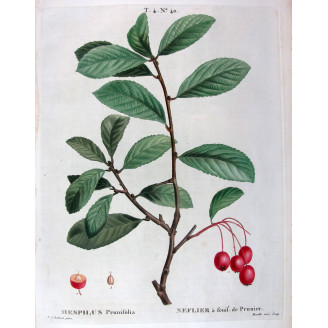
Original botanical engraving of Mespilus prunifolia by Redouté. Elegant branch and fruit, perfect for refined interiors.
Charming pear study by Redouté, showing delicate blossom and ripening fruit. Balanced and refined.
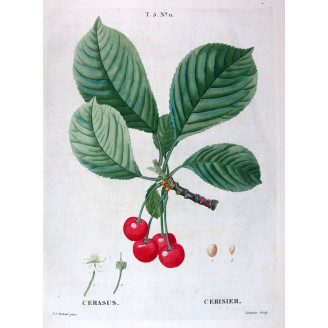
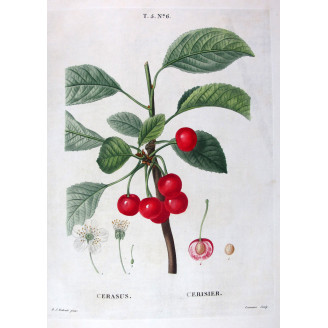
Rare Redouté botanical engraving of the cherry tree (Cerasus). Vivid red fruits and blossoms in exquisite detail.
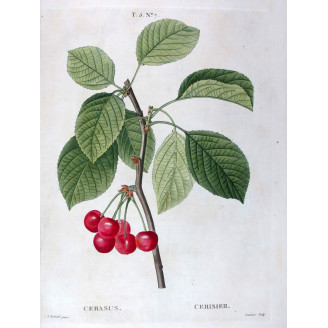
Antique Botanical print of the Cherry tree by Redouté. Lush foliage and red fruits in harmonious layout.
Graceful composition of the Amelanchier with fine leaves and berry-like fruit.
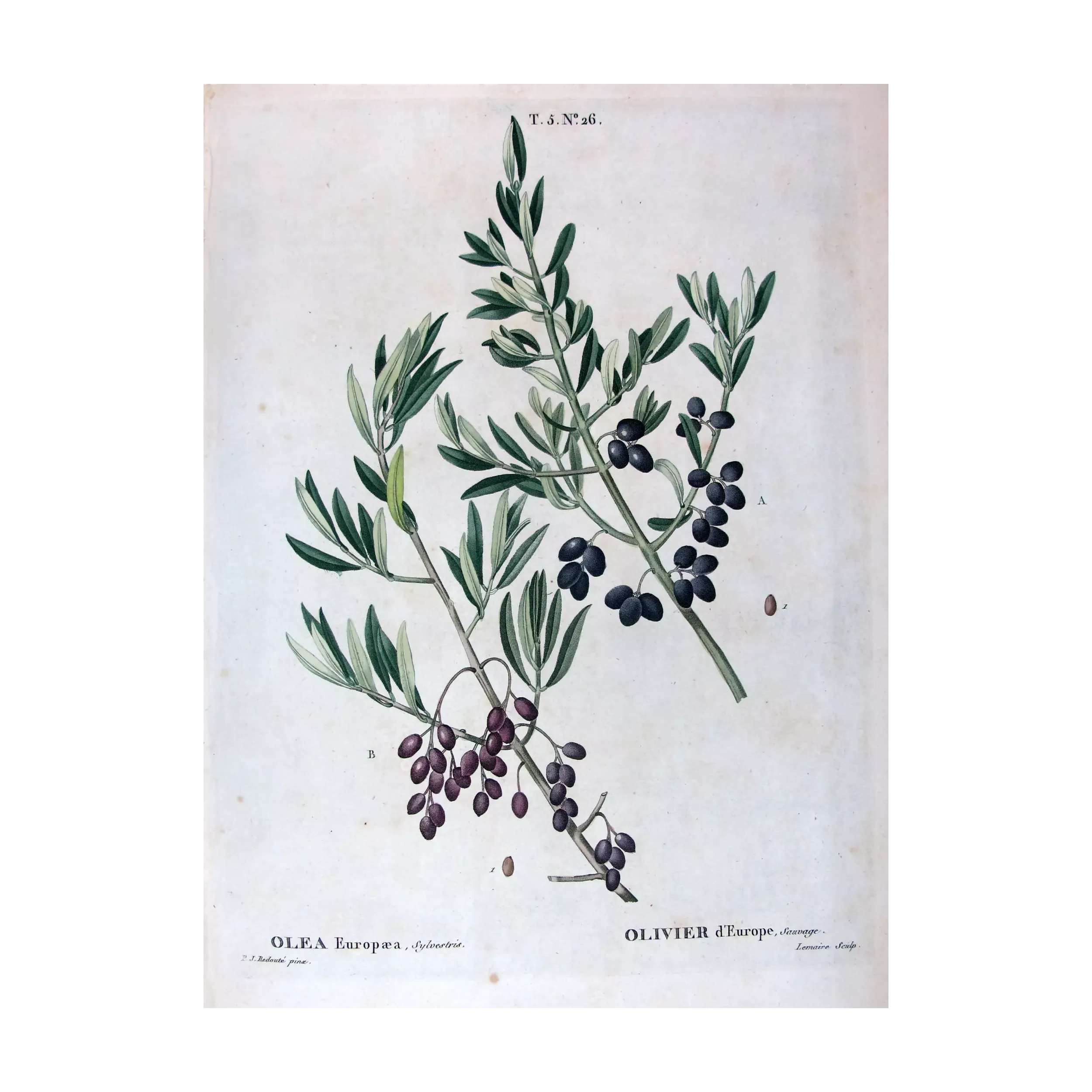
Olive tree study by Redouté with detailed foliage and seeds.