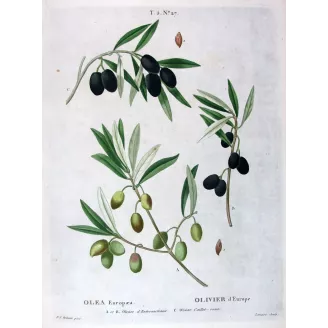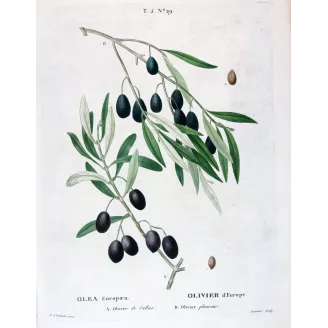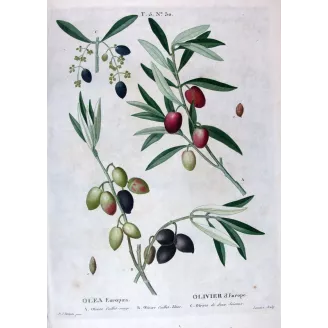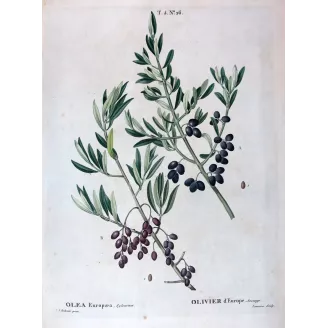
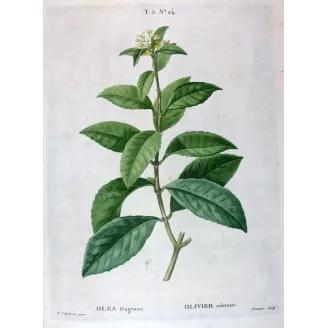

Olive tree study by Redouté with detailed foliage and seeds.
 Delivery policy
Your print will be carefully prepared and shipped worldwide via trusted couriers (UPS or similar).
 Authentic antique prints
Original engravings from the 17th–19th century.
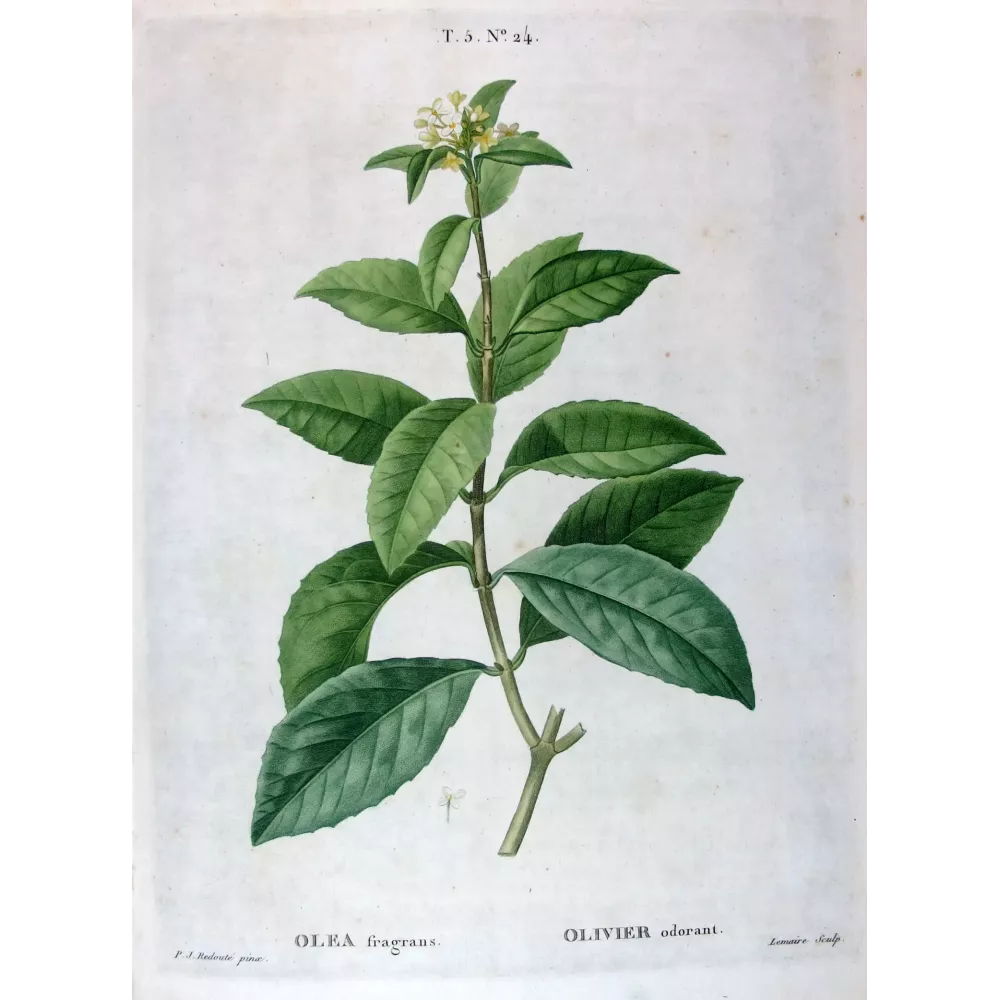
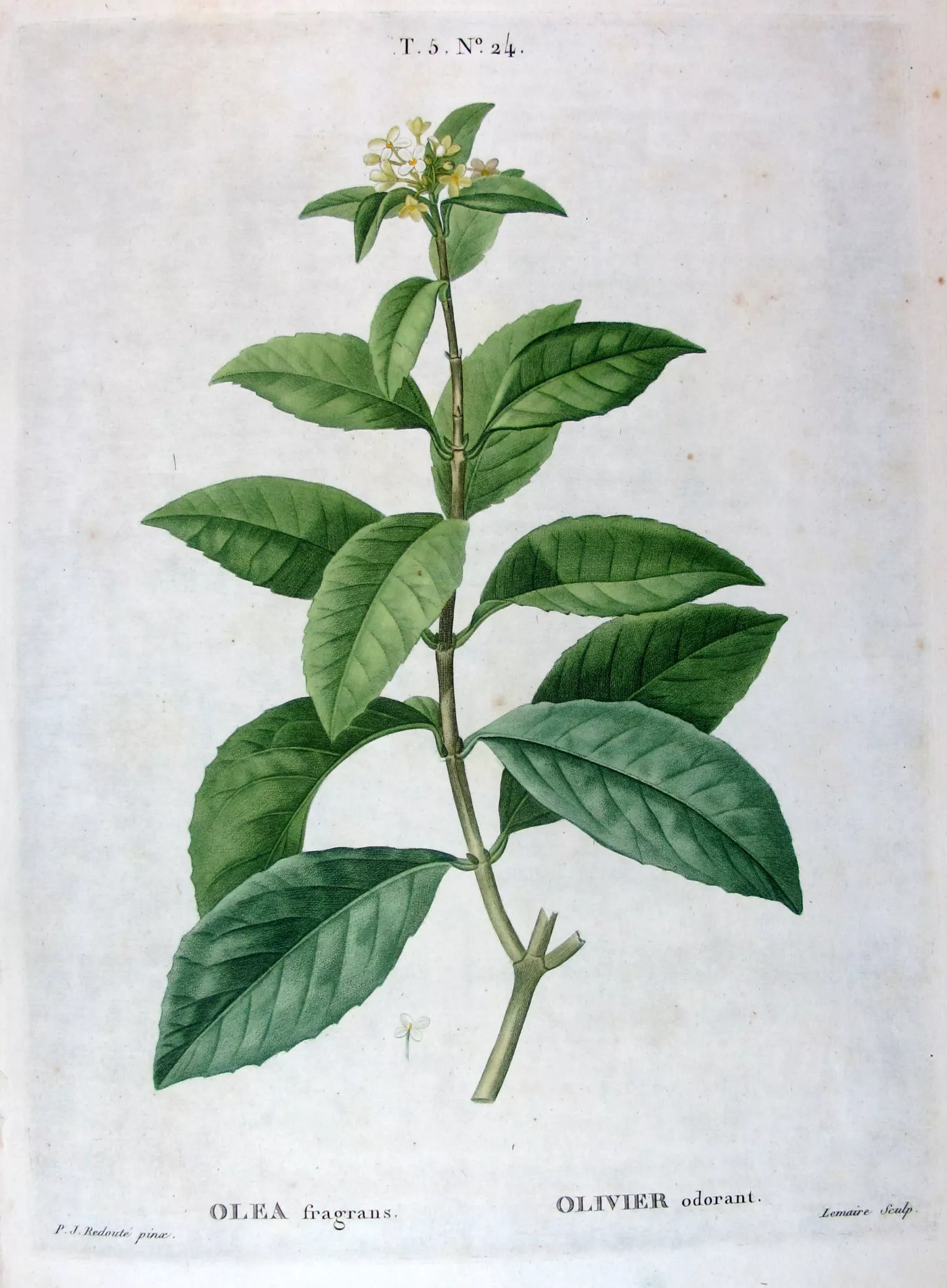
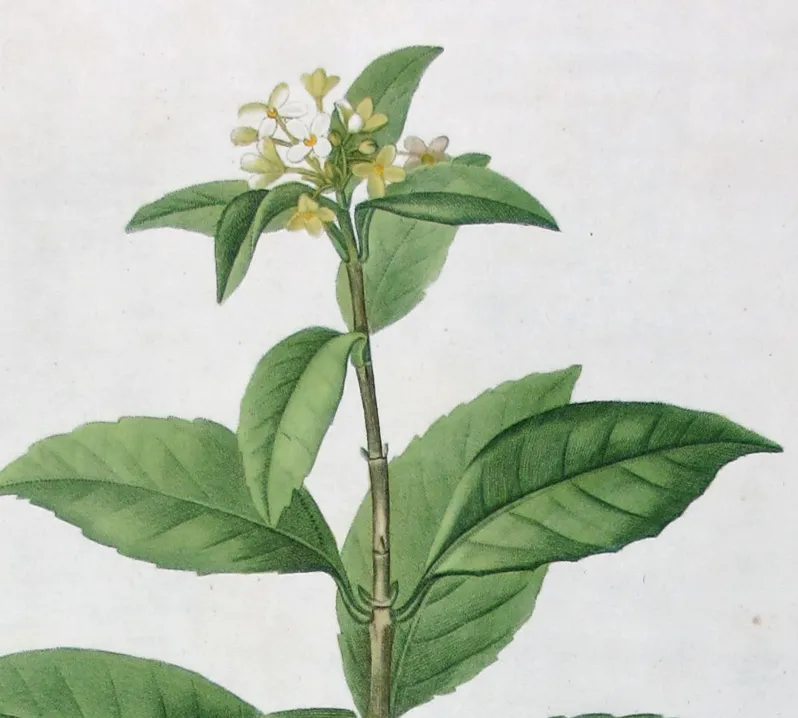
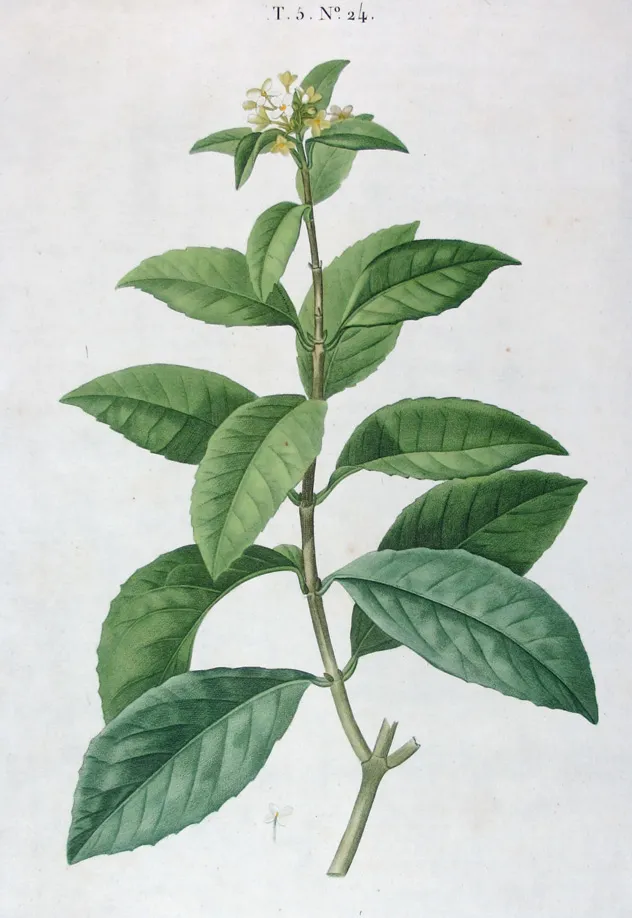
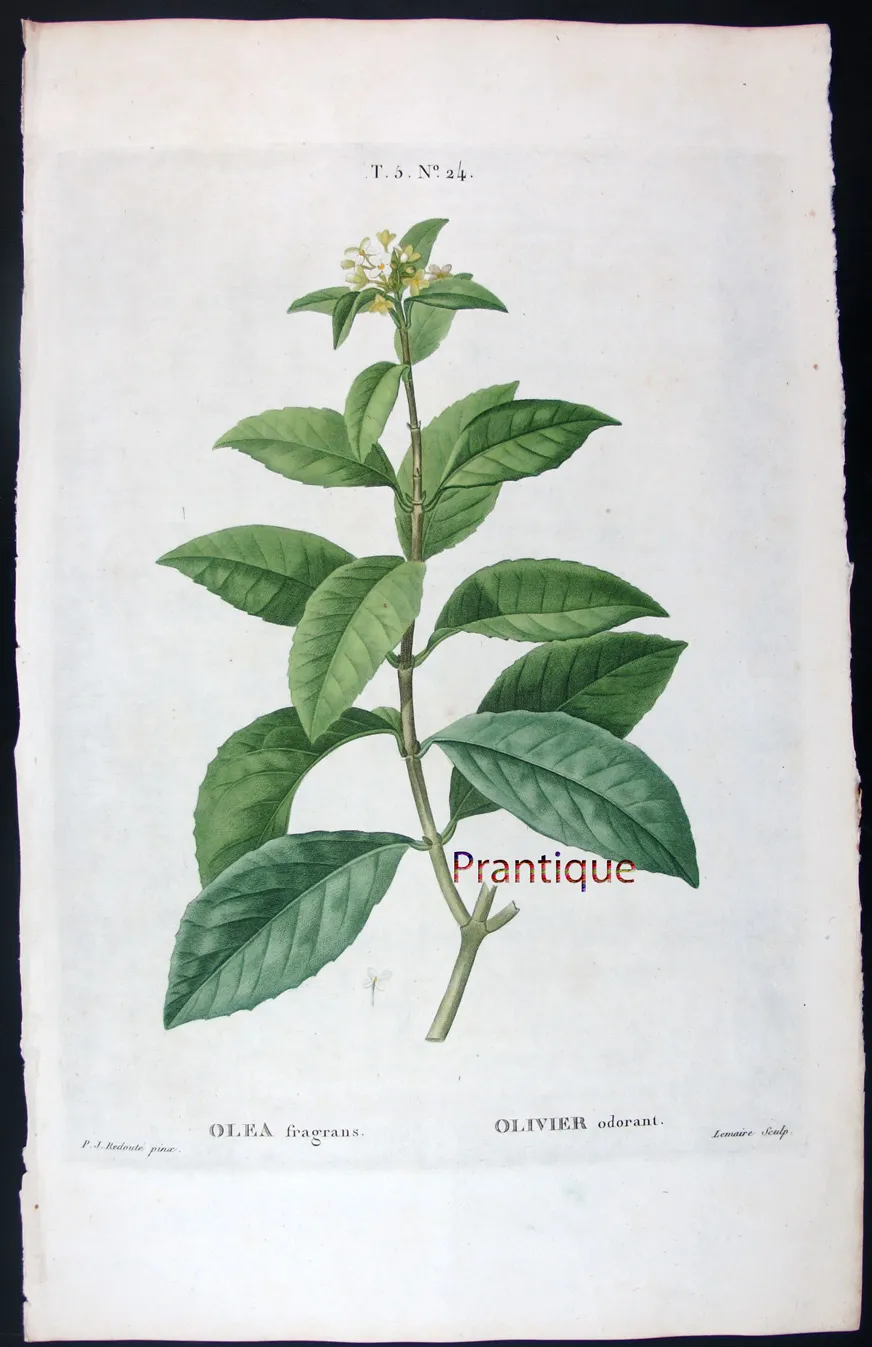
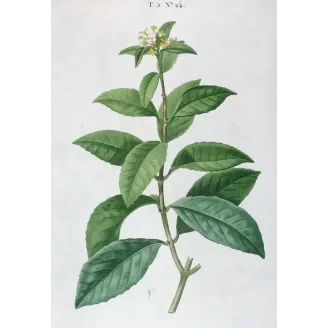
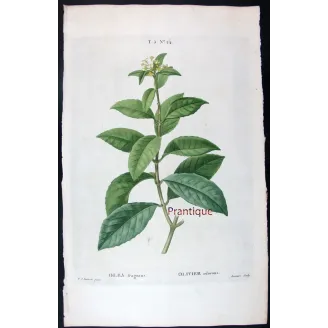
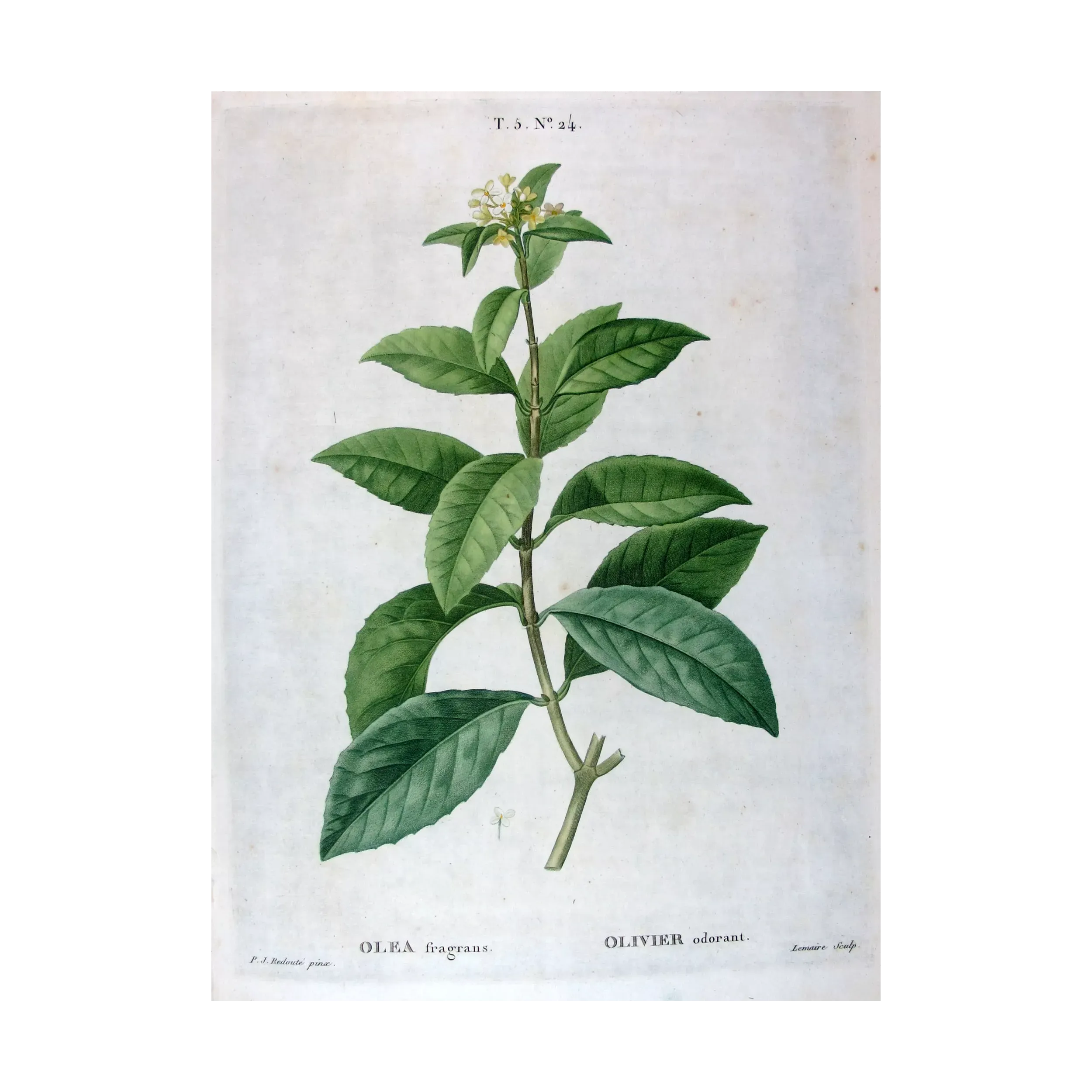
This original early 19th-century botanical engraving depicts Olea fragrans, described in the accompanying text as the “Olivier odorant”. Illustrated by Pierre-Joseph Redouté for his celebrated Arbres et Arbustes, the plate presents a flowering branch with quiet precision and an exceptionally calm, architectural presence on the page.
Notably, the subject is indicated as shown “de grandeur naturelle” (at natural size), emphasizing direct observation and faithful scale. The result is a work that reads both as a botanical record and as a refined decorative engraving suited to curated interiors, libraries, or study spaces.
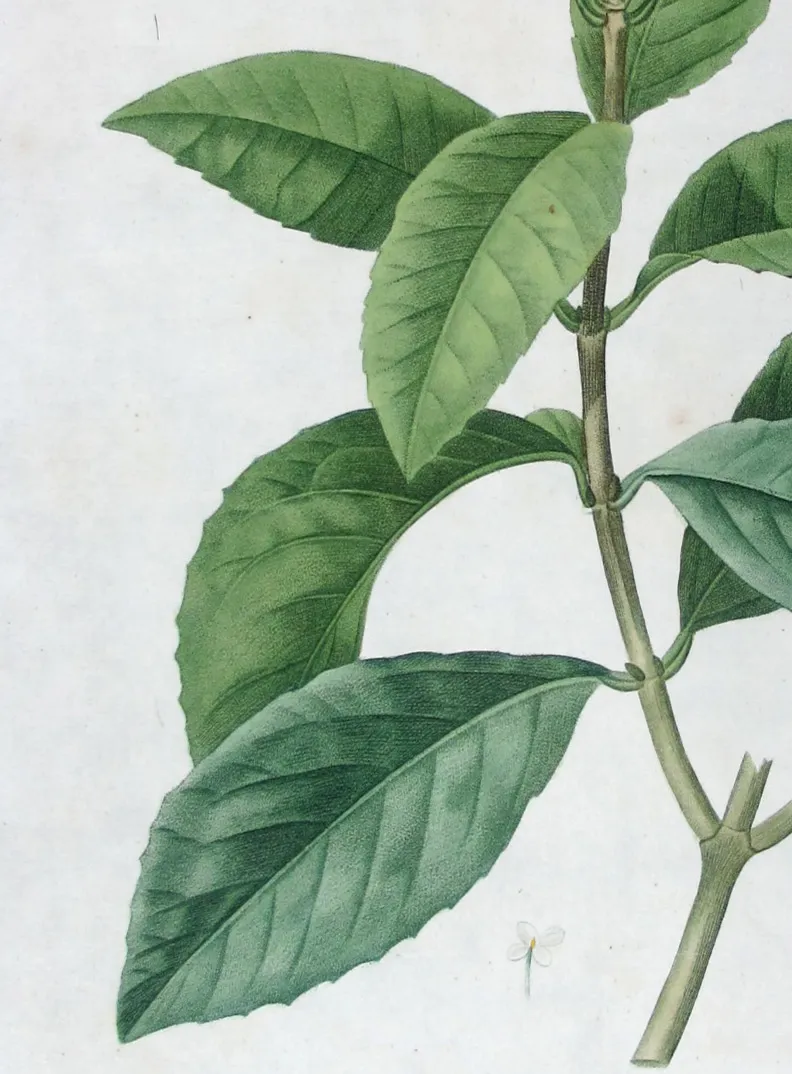
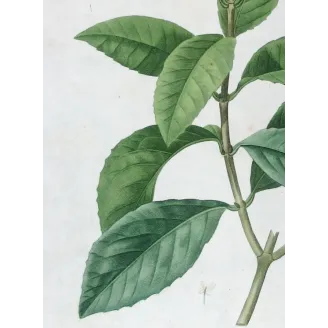
The composition is organized along a steady vertical axis, with leaves unfolding in measured intervals that create a sense of rhythm and structural clarity. Subtle tonal shifts in the foliage—ranging from cool green to deeper, shadowed notes—give the plant volume without breaking the plate’s overall restraint.
At the crown, a delicate cluster of pale blossoms introduces a light focal accent, while a small isolated floral detail near the lower margin reinforces the plate’s descriptive intent. Fine engraved linework and controlled hand-colouring preserve crisp leaf edges and vein structure, resulting in an image that feels both botanical and quietly elegant.
“Olivier odorant” refers to an olive-related subject valued for its aromatic flowering character, presented here as a single branch. The accompanying description specifies that the engraving is shown at natural size, a choice that underscores the period’s emphasis on accurate scale as part of botanical communication. In works such as Arbres et Arbustes, these plates served both horticultural curiosity and the broader Enlightenment project of cataloguing cultivated and notable plants with clarity and permanence.
The engraving is in very good condition. Printed on period paper with a clean and stable surface. Light, even age-related toning is present, consistent with works of this age. The impression remains clear and well-defined, margins are preserved, and no significant restorations are observed.
Artist: Pierre-Joseph Redouté
Work / Publication: Arbres et Arbustes
Period: Early 19th century (c. 1801–1819)
Technique: Original hand-colored copper engraving
Sheet size: approx. 40 × 25 cm
Inscriptions: “P. J. Redouté pinx.” / “Lemaire sculp.”
For further context on Pierre-Joseph Redouté and his contribution to botanical illustration, see our editorial feature:
Pierre-Joseph Redouté: Floral Art in the Service of Science
Specific References
Olive tree study by Redouté with detailed foliage and seeds. bright fruit and slender branches. Decorative and vivid.
Classic hazelnut print by Redouté. Balanced tones and elegant form.
Charming pear study by Redouté, showing delicate blossom and ripening fruit. Balanced and refined.
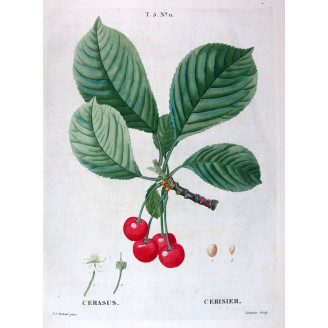
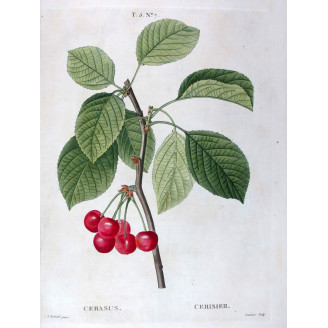
Antique Botanical print of the Cherry tree by Redouté. Lush foliage and red fruits in harmonious layout.
Graceful composition of the Amelanchier with fine leaves and berry-like fruit.
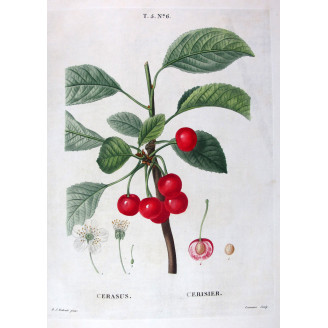
Rare Redouté botanical engraving of the cherry tree (Cerasus). Vivid red fruits and blossoms in exquisite detail.
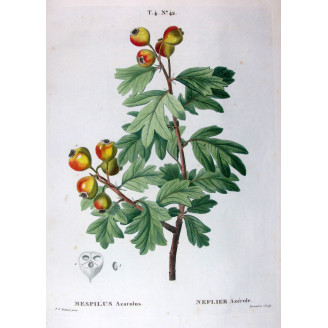
Original botanical engraving of Mespilus prunifolia by Redouté. Elegant branch and fruit, perfect for refined interiors.
Olive tree study by Redouté with detailed foliage and seeds.