
Elegant hawthorn study with pale fruit and detailed branch structure.
 Delivery policy
Your print will be carefully prepared and shipped worldwide via trusted couriers (UPS or similar).
 Authentic antique prints
Original engravings from the 17th–19th century.
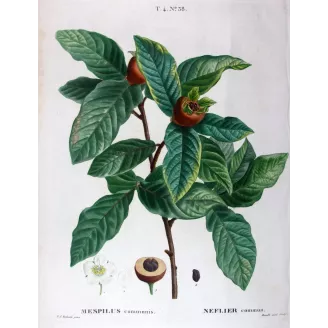
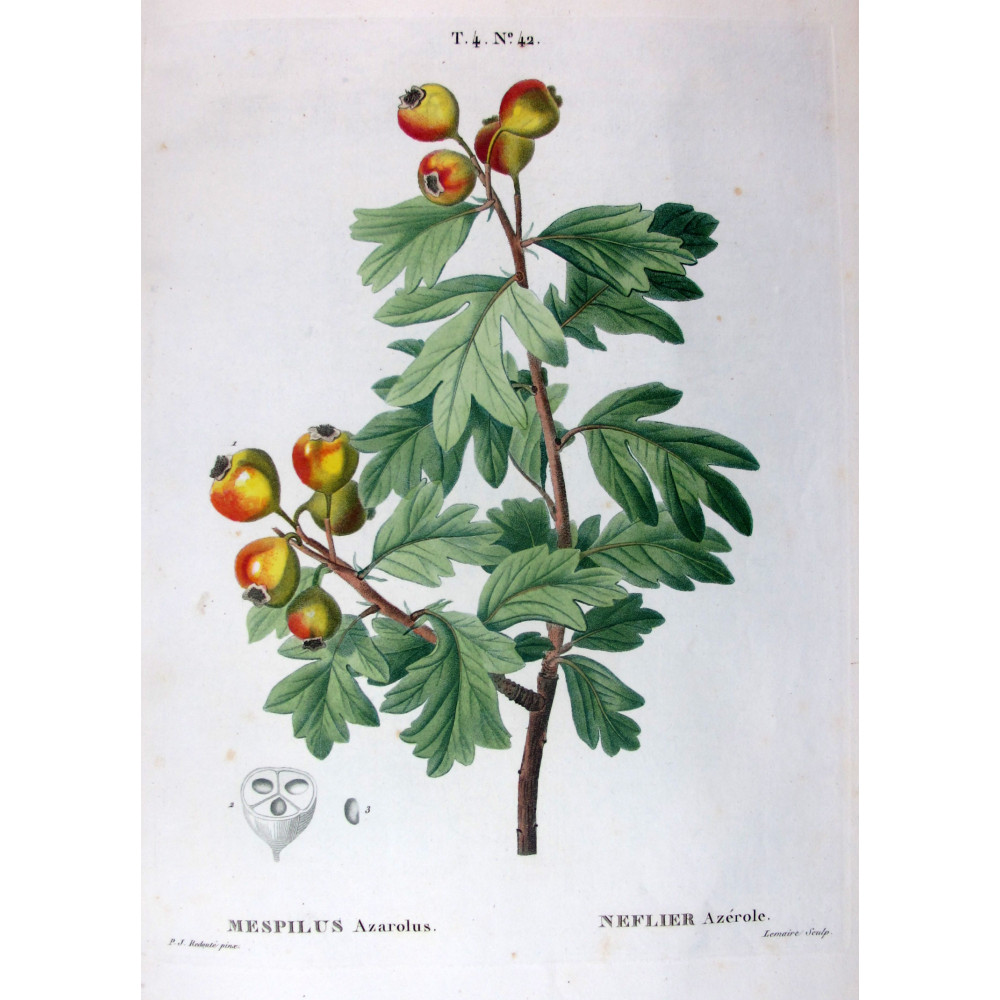
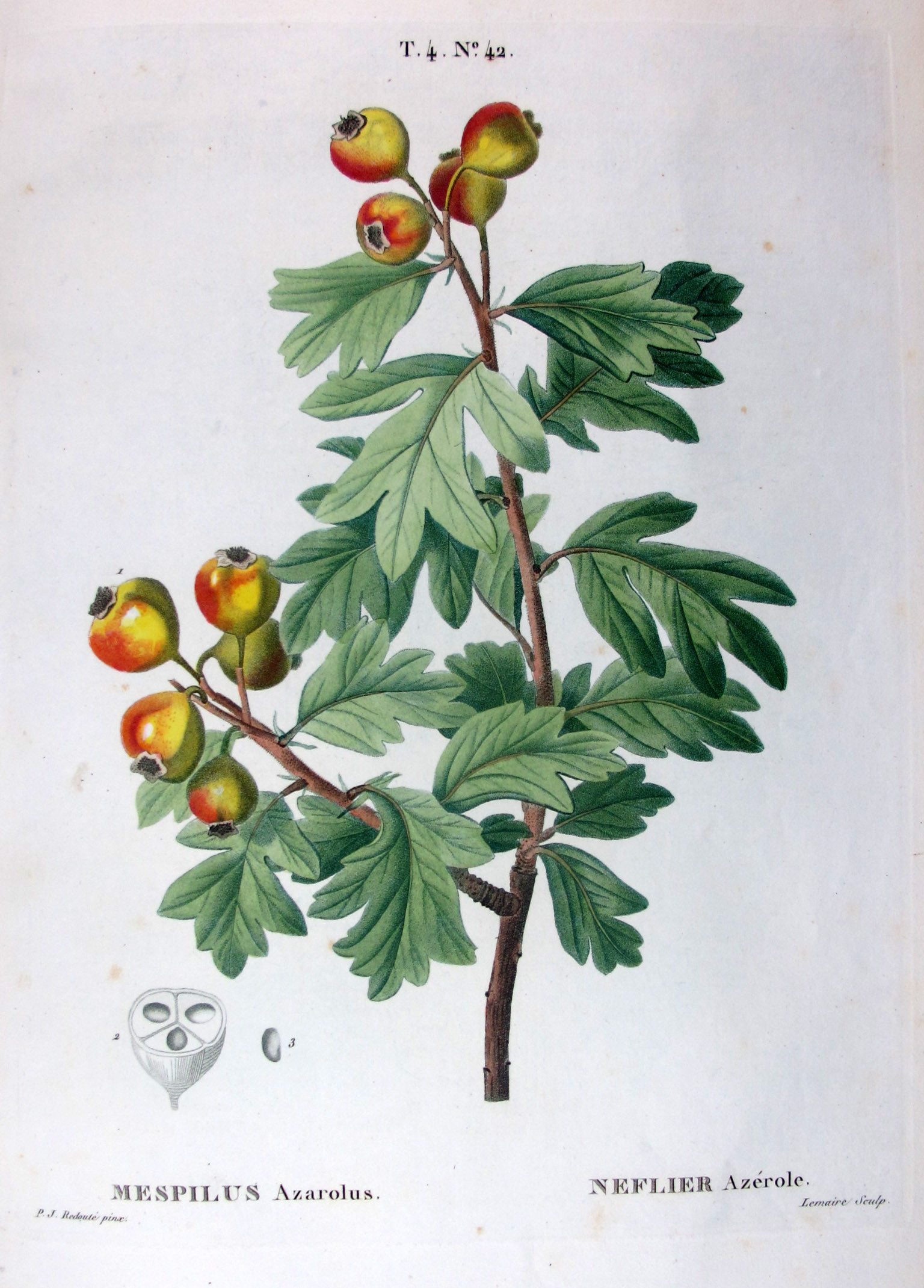
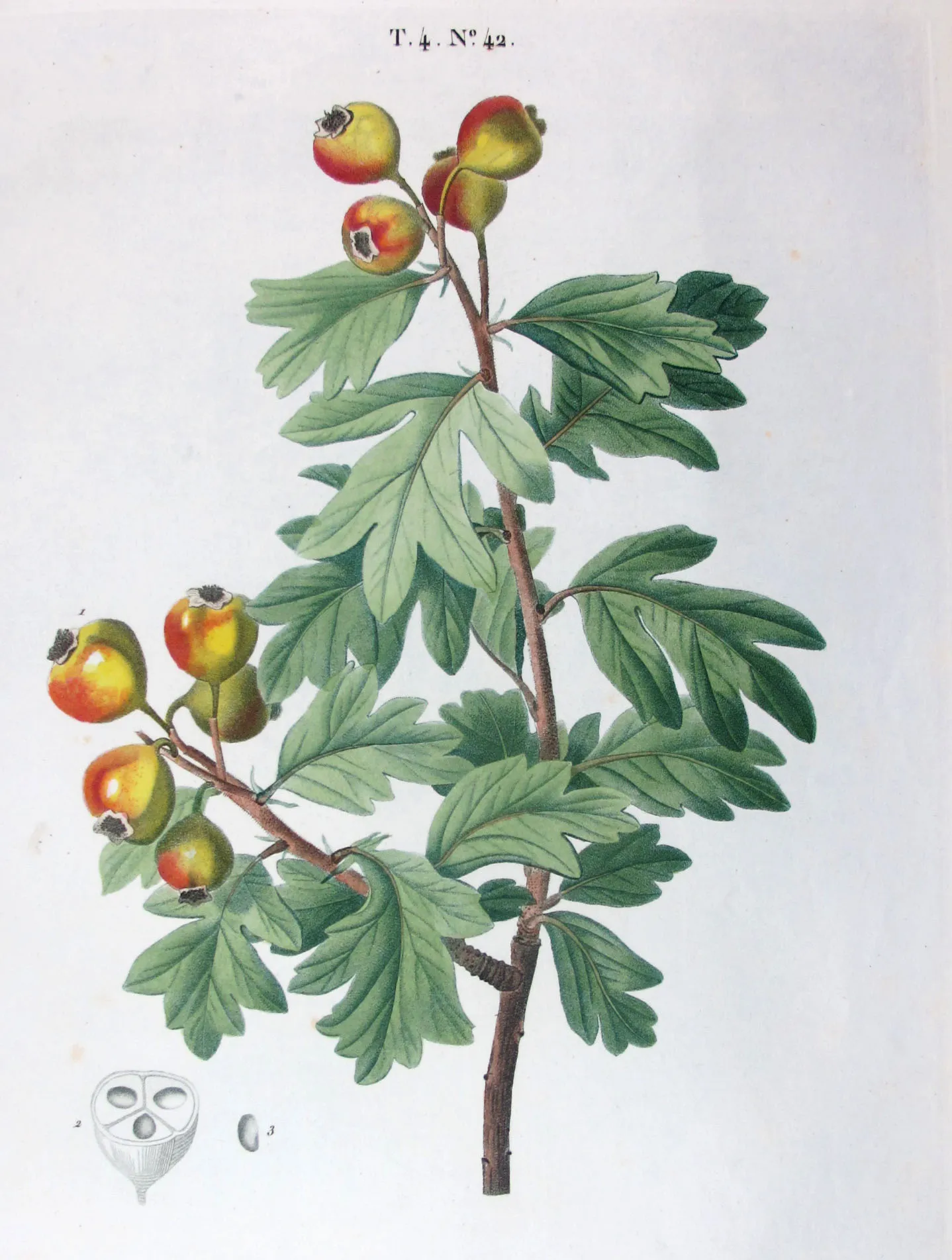
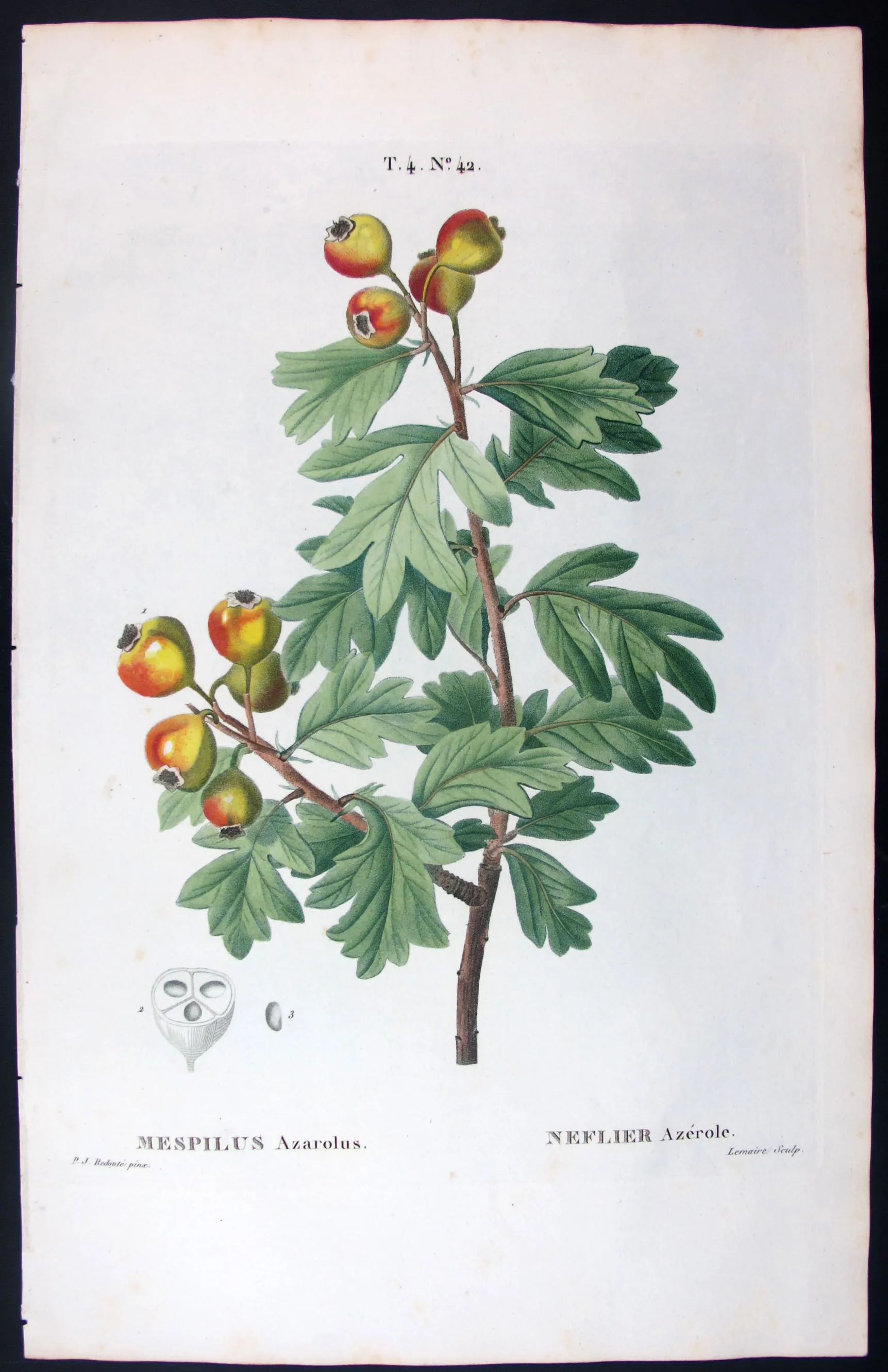
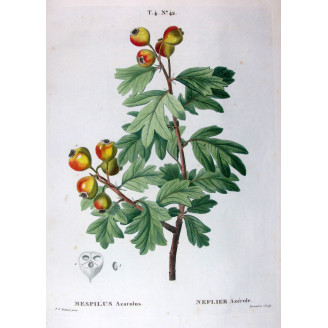
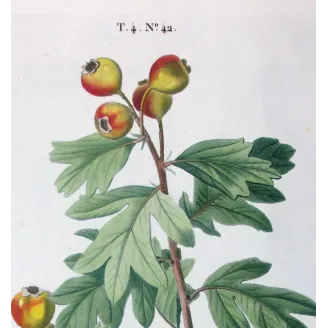
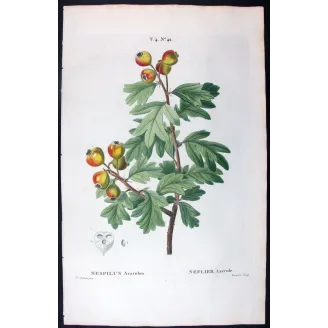
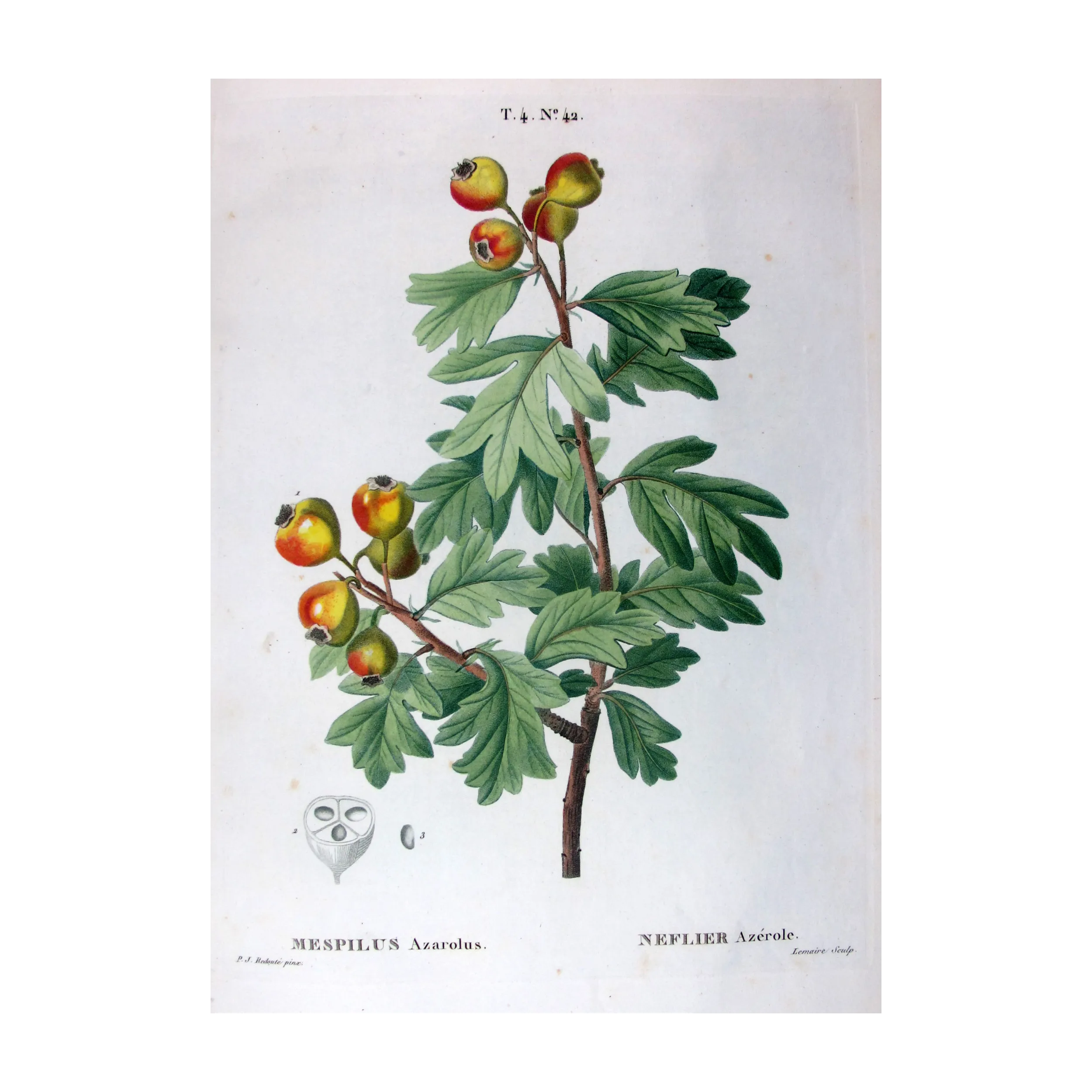
This original early 19th-century botanical engraving depicts Mespilus azarolus, known in French as the “Néflier Azérole”. Illustrated by Pierre-Joseph Redouté for his celebrated Arbres et Arbustes, the plate presents a fruiting branch accompanied by detailed anatomical elements, offering a precise and visually complete representation of the species.
Compared to the common medlar, this species is distinguished by smaller, vividly coloured fruits and a more finely structured foliage. Redouté renders these characteristics with clarity and restraint, allowing the botanical differences to emerge naturally through observation rather than emphasis.
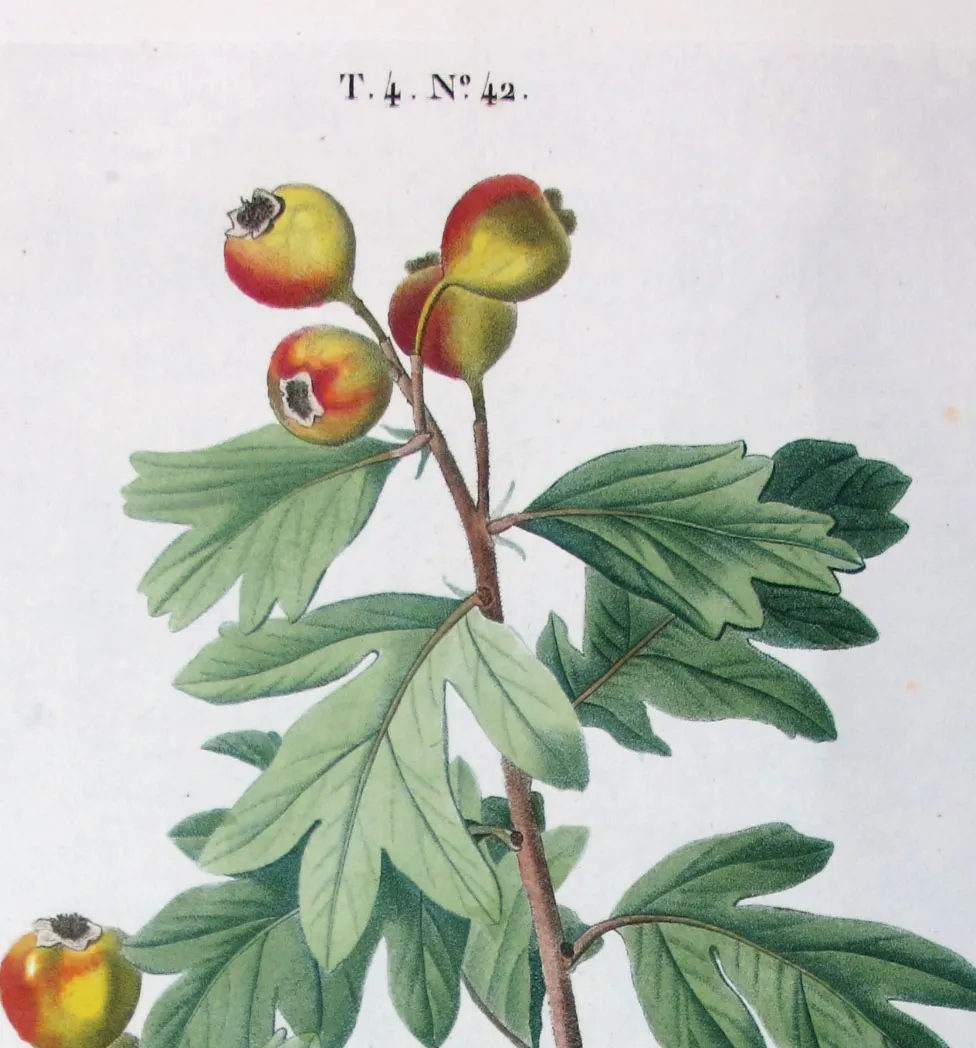
The composition is organized along a gently angled branch, creating a sense of movement while maintaining overall balance. The lobed leaves form a rhythmic pattern across the page, their muted green tones providing a calm backdrop to the warm hues of the fruit.
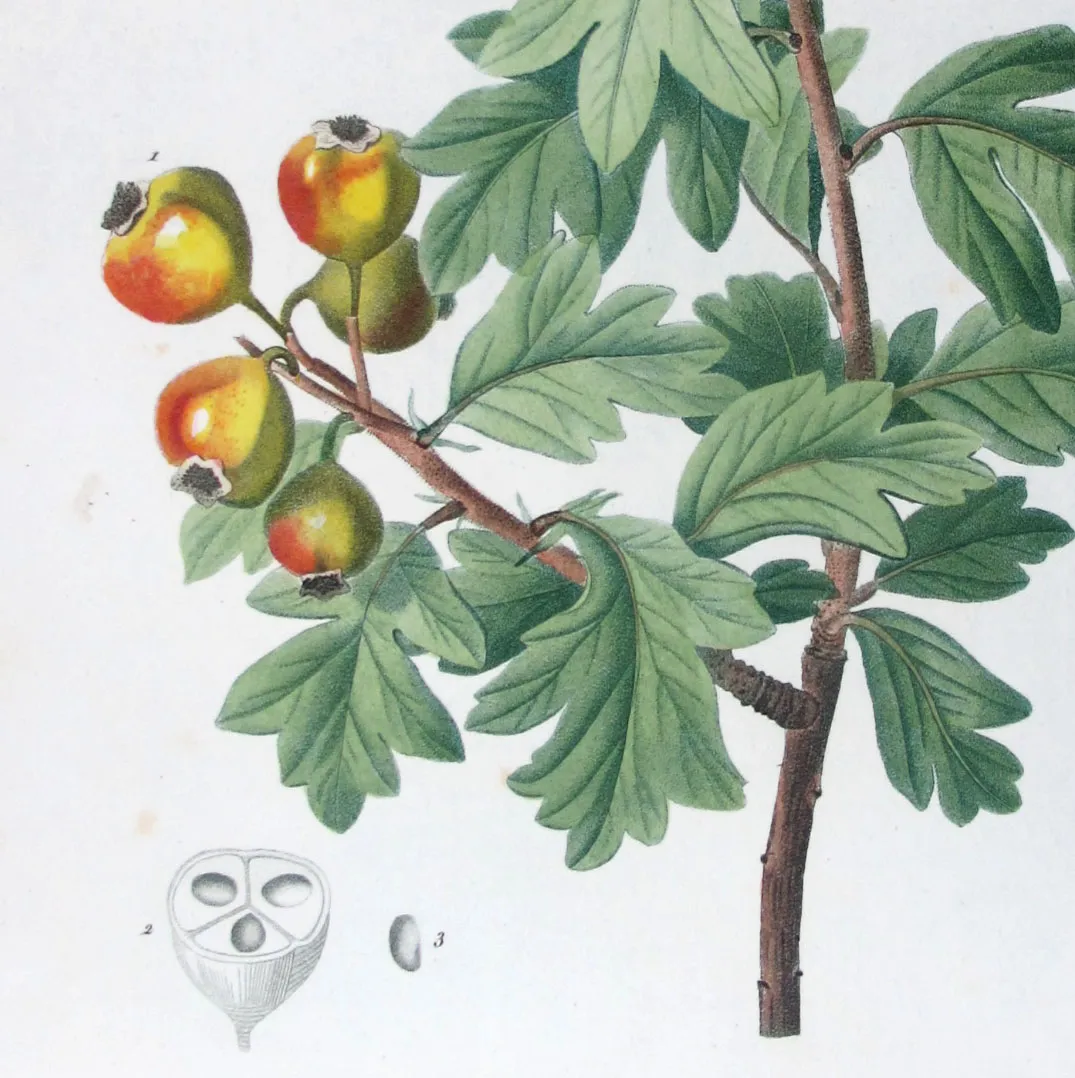
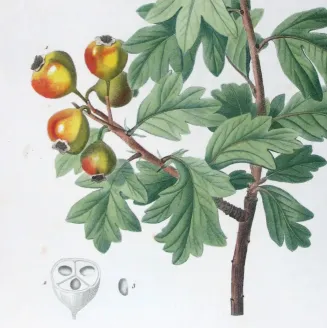
Clusters of azérole fruits are rendered with subtle variations of yellow, orange, and red, suggesting different stages of ripeness. At the lower margin, the inclusion of a cross-section of the fruit and an isolated seed reinforces the analytical purpose of the plate, integrating scientific description seamlessly into the visual composition.
The azérole (Mespilus azarolus) is a lesser-known relative of the medlar, historically cultivated in parts of southern Europe and the Mediterranean region. In early botanical literature, it was valued both as a fruit-bearing tree and as an object of horticultural study. By documenting this species alongside more familiar medlars, Redouté situates it within a broader botanical continuum, reflecting the period’s interest in varietal distinction and cultivated diversity.
The engraving is in very good condition. Printed on period paper with a clean and stable surface. Light, even age-related toning is present, consistent with works of this age. The impression remains clear and well-defined, margins are preserved, and no significant restorations are observed.
Artist: Pierre-Joseph Redouté
Work / Publication: Arbres et Arbustes
Period: Early 19th century (c. 1801–1819)
Technique: Original hand-colored copper engraving
Sheet size: approx. 40 × 25 cm
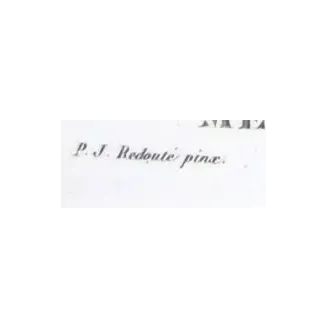
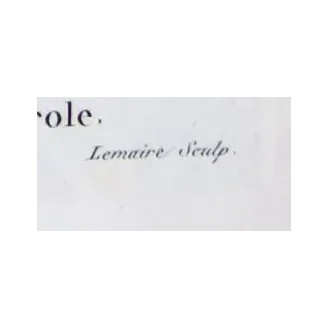
Inscriptions: “P. J. Redouté pinx.” / “Lemaire sculp.”
For further context on Pierre-Joseph Redouté and his contribution to botanical illustration, see our editorial feature:
Pierre-Joseph Redouté: Floral Art in the Service of Science
Specific References
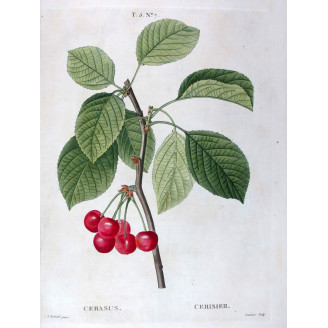
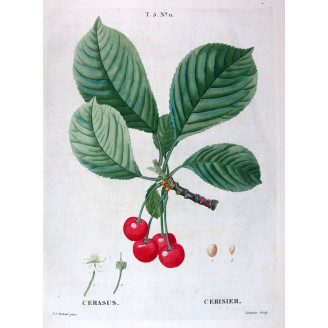
Antique Botanical print of the Cherry tree by Redouté. Lush foliage and red fruits in harmonious layout.
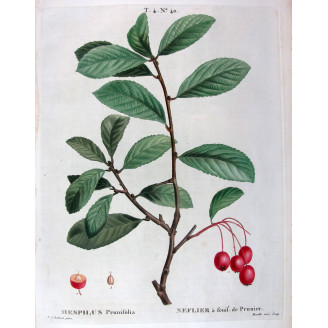
Original botanical engraving of Mespilus prunifolia by Redouté. Elegant branch and fruit, perfect for refined interiors.
Graceful composition of the Amelanchier with fine leaves and berry-like fruit.
Charming pear study by Redouté, showing delicate blossom and ripening fruit. Balanced and refined.
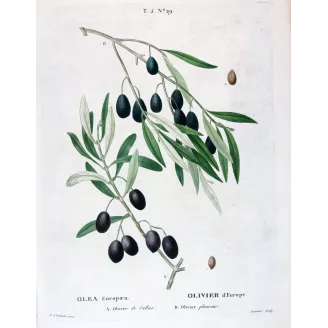
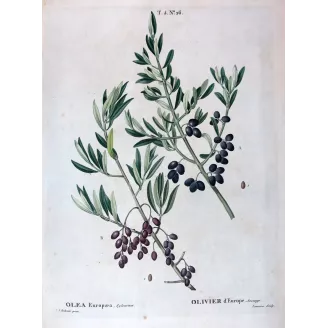
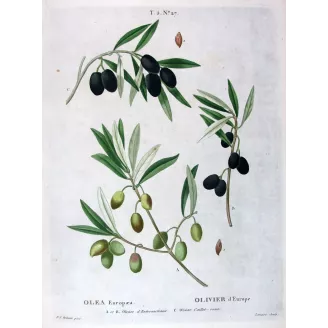
Olive tree study by Redouté with detailed foliage and seeds. bright fruit and slender branches. Decorative and vivid.
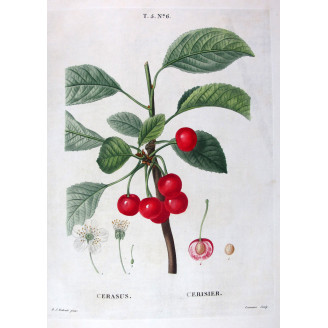
Rare Redouté botanical engraving of the cherry tree (Cerasus). Vivid red fruits and blossoms in exquisite detail.
Classic hazelnut print by Redouté. Balanced tones and elegant form.
Elegant hawthorn study with pale fruit and detailed branch structure.