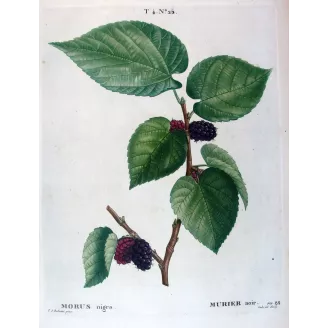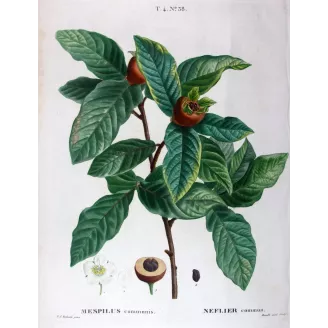
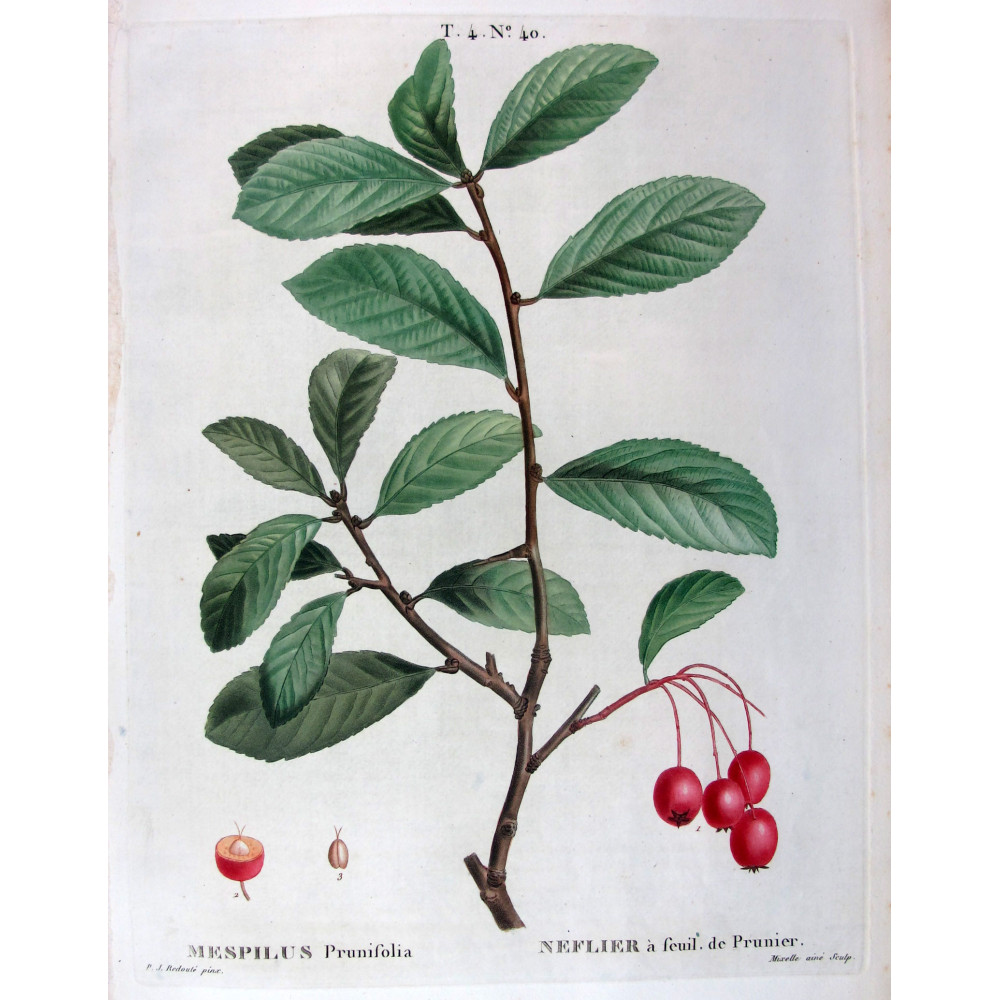
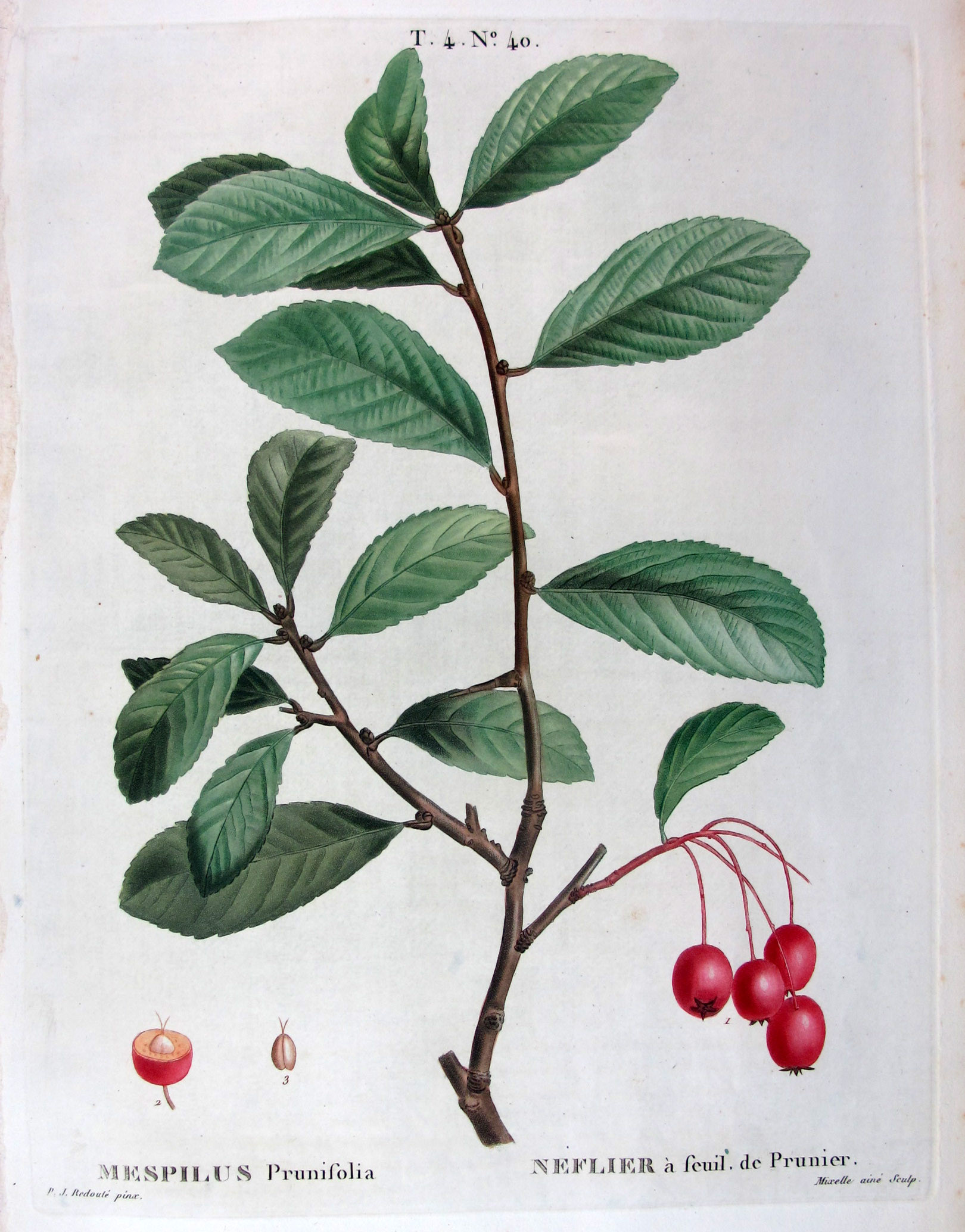
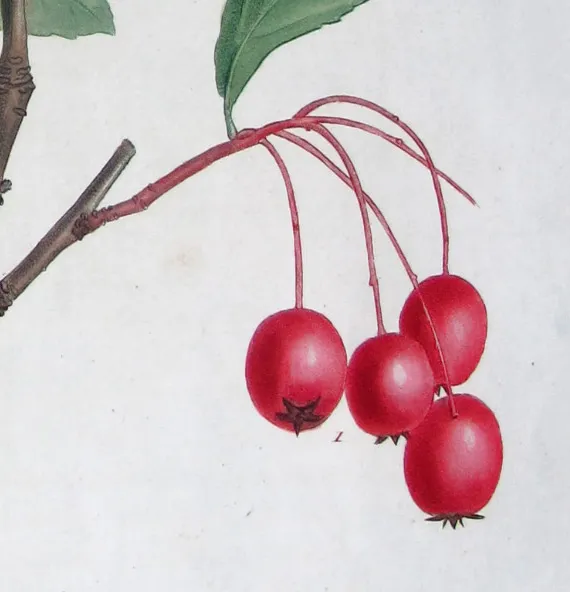
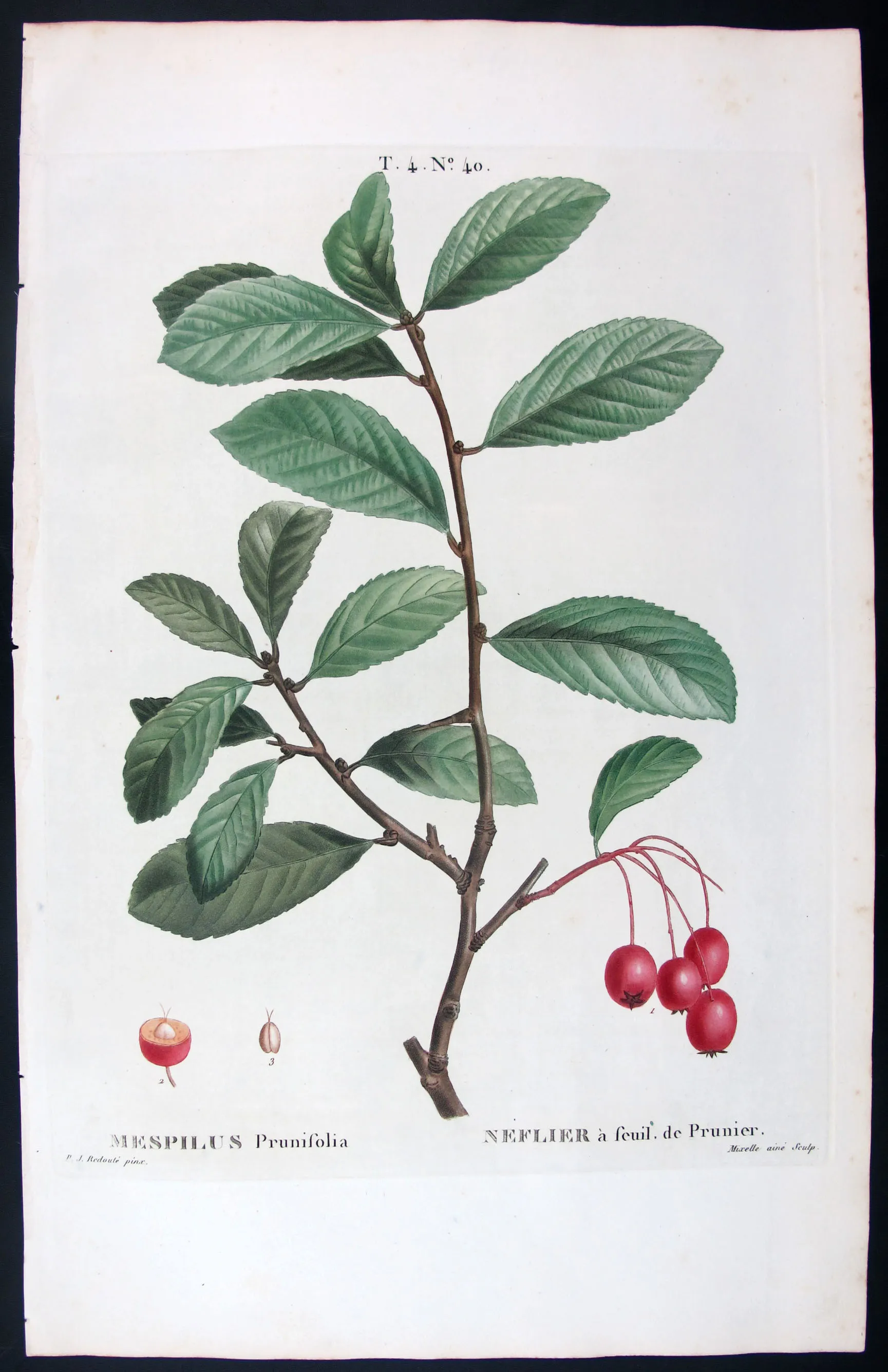

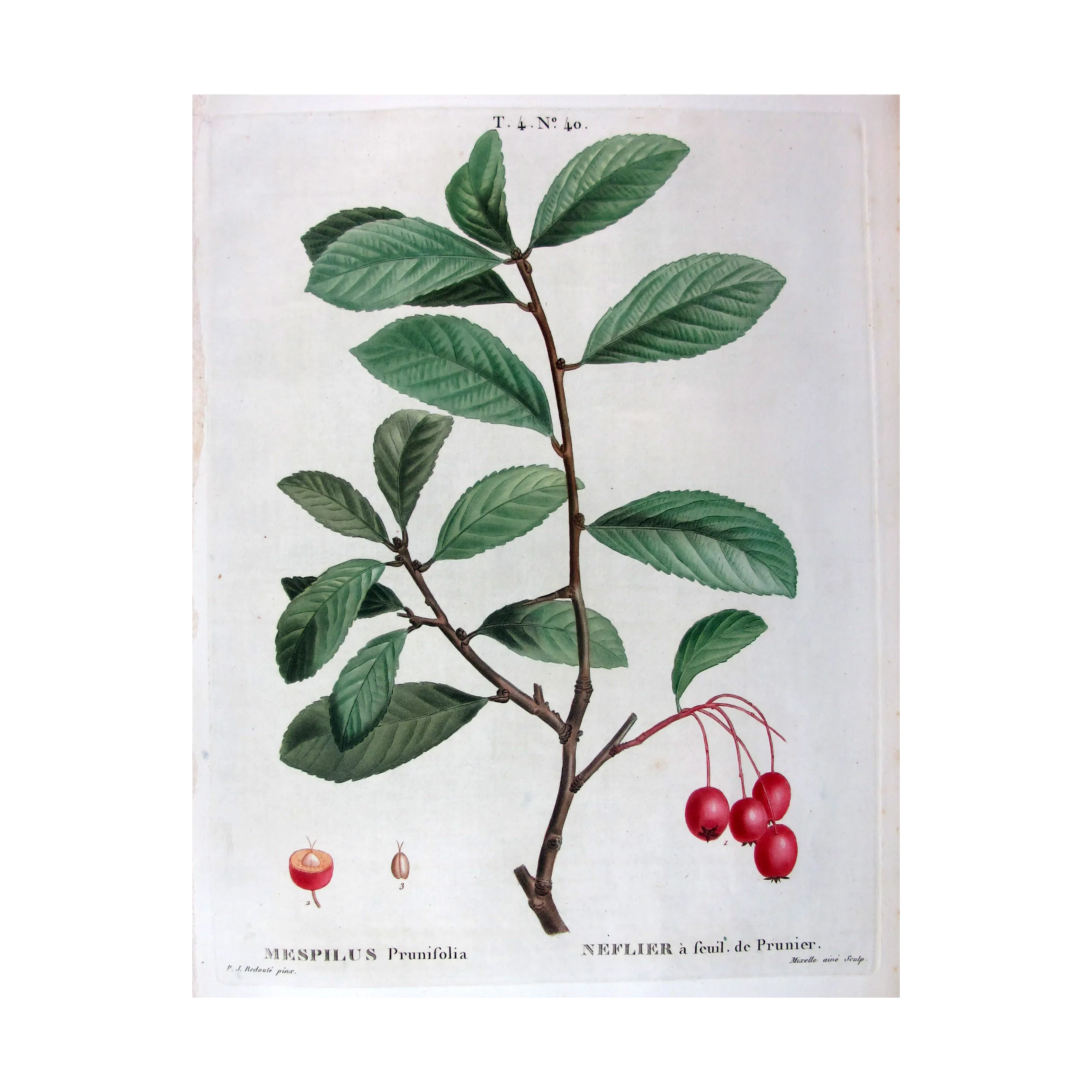
Original botanical engraving of Mespilus prunifolia by Redouté. Elegant branch and fruit, perfect for refined interiors.
 Delivery policy
Your print will be carefully prepared and shipped worldwide via trusted couriers (UPS or similar).
 Authentic antique prints
Original engravings from the 17th–19th century.
This refined botanical engraving by Pierre-Joseph Redouté exemplifies the balance between scientific clarity and visual elegance that characterizes the finest botanical works of the early nineteenth century.
The composition is presented with calm precision, allowing the subject to emerge naturally, without decorative excess. This measured approach reflects Redouté’s unique ability to transform botanical study into enduring visual form.
Produced during the period often regarded as the golden age of botanical illustration, this engraving conveys a quiet authority that continues to resonate with collectors and refined interiors alike.
— • —
The composition is structured around a gently rising vertical branch, articulated by secondary offshoots that introduce a measured asymmetry. This arrangement gives the plate a sense of natural growth and visual balance, allowing each botanical element to remain clearly legible within an open field.
Broad, finely veined leaves establish a calm green rhythm across the surface, while the cluster of red fruit creates a deliberate chromatic counterpoint. The restrained hand-colouring enhances form and texture without excess, guiding the eye from structure to foliage and finally to fruit, and resulting in a composition that feels both precise and quietly expressive.
Mespilus prunifolia, commonly known as the plum-leaved medlar, belongs to a group of fruit-bearing plants long cultivated in European gardens for both their ornamental character and their symbolic associations. Historically, medlar fruits were notable for requiring a period of natural softening before becoming edible, a trait that made the plant a quiet emblem of patience and seasonal maturity within cultivated landscapes.
The engraving is in very good condition, printed on period paper with a clean and stable surface. Light, even age-related toning is present, consistent with works of this age. The impression remains clear and well-defined, with margins preserved and no significant restorations observed. The original engraved credits are present and legible, including “P. J. Redouté pinx.” and “Mielle aîné sculp.”
For further context on Pierre-Joseph Redouté and his contribution to botanical illustration, see our editorial feature:
Specific References
Classic hazelnut print by Redouté. Balanced tones and elegant form.
Graceful composition of the Amelanchier with fine leaves and berry-like fruit.
Charming pear study by Redouté, showing delicate blossom and ripening fruit. Balanced and refined.
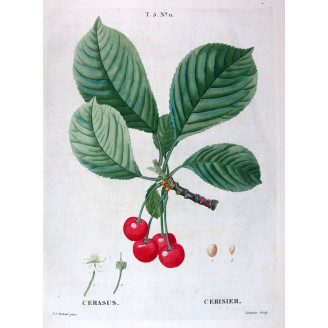
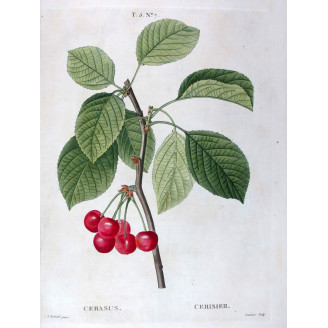
Rare Redouté botanical engraving of the cherry tree (Cerasus). Vivid red fruits and blossoms in exquisite detail.
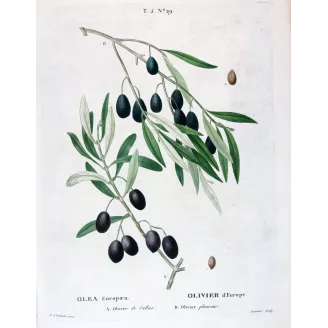
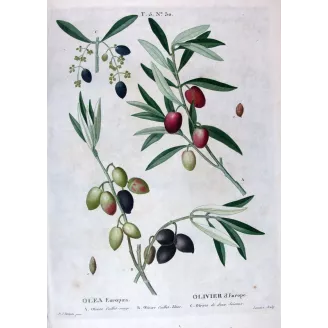
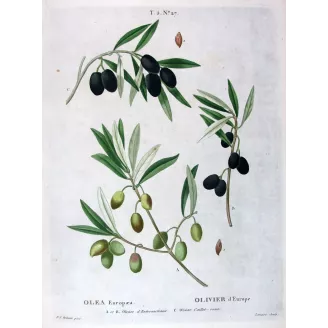
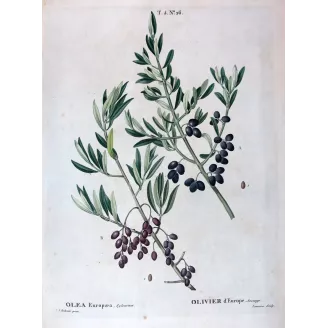
Olive tree study by Redouté with detailed foliage and seeds. bright fruit and slender branches. Decorative and vivid.
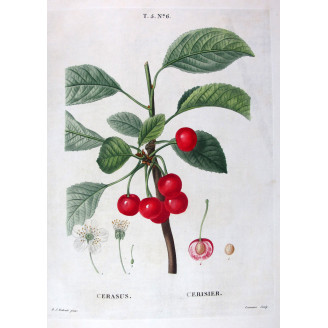
Antique Botanical print of the Cherry tree by Redouté. Lush foliage and red fruits in harmonious layout.
Original botanical engraving of Mespilus prunifolia by Redouté. Elegant branch and fruit, perfect for refined interiors.