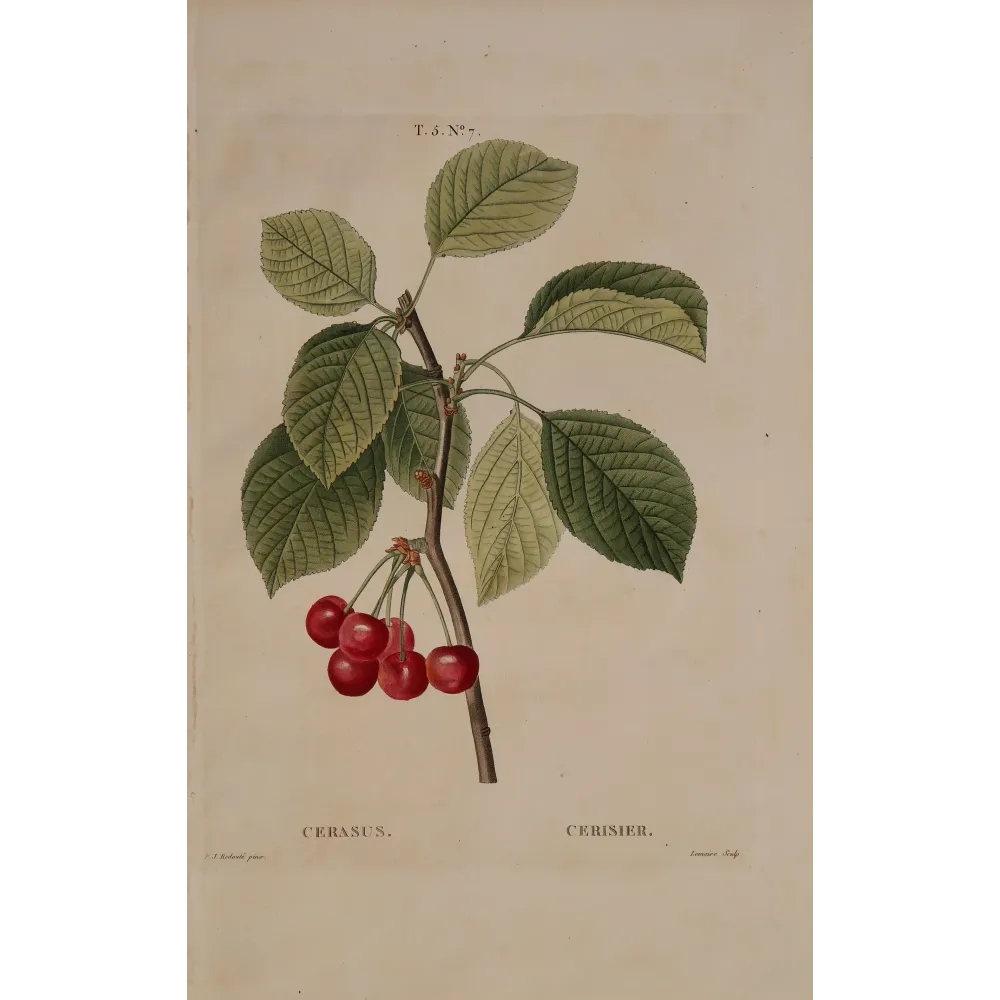

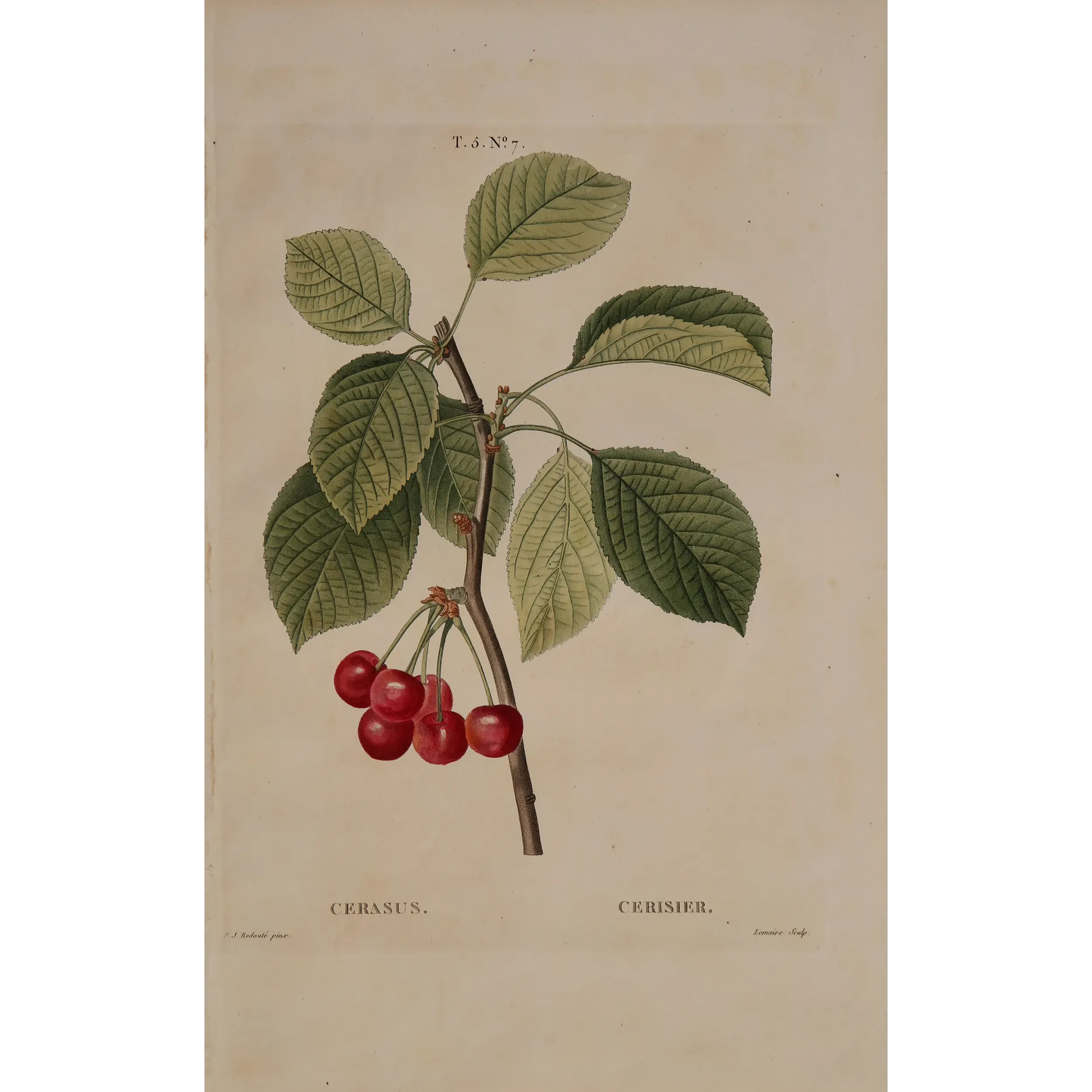
Antique Botanical print of the Cherry tree by Redouté. Lush foliage and red fruits in harmonious layout.
 Delivery policy
Your print will be carefully prepared and shipped worldwide via trusted couriers (UPS or similar).
 Authentic antique prints
Original engravings from the 17th–19th century.
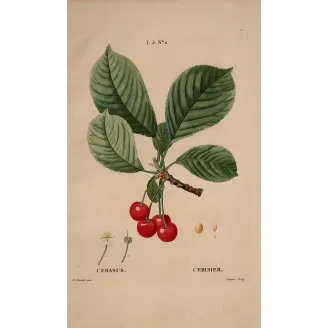
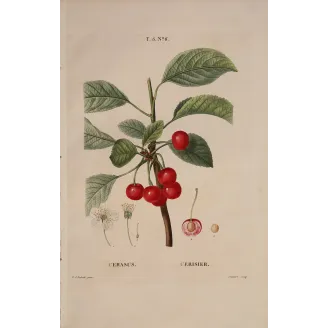
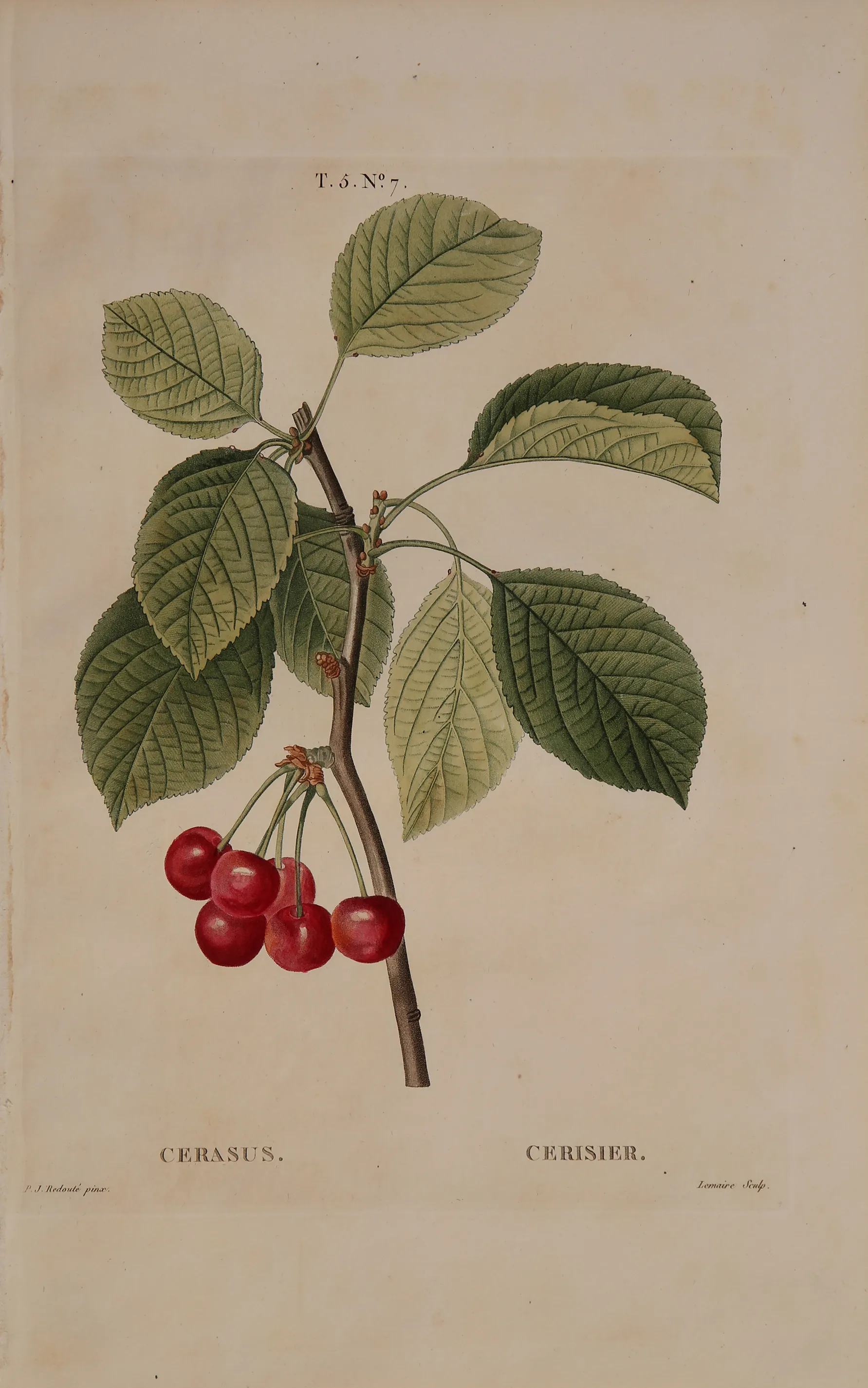
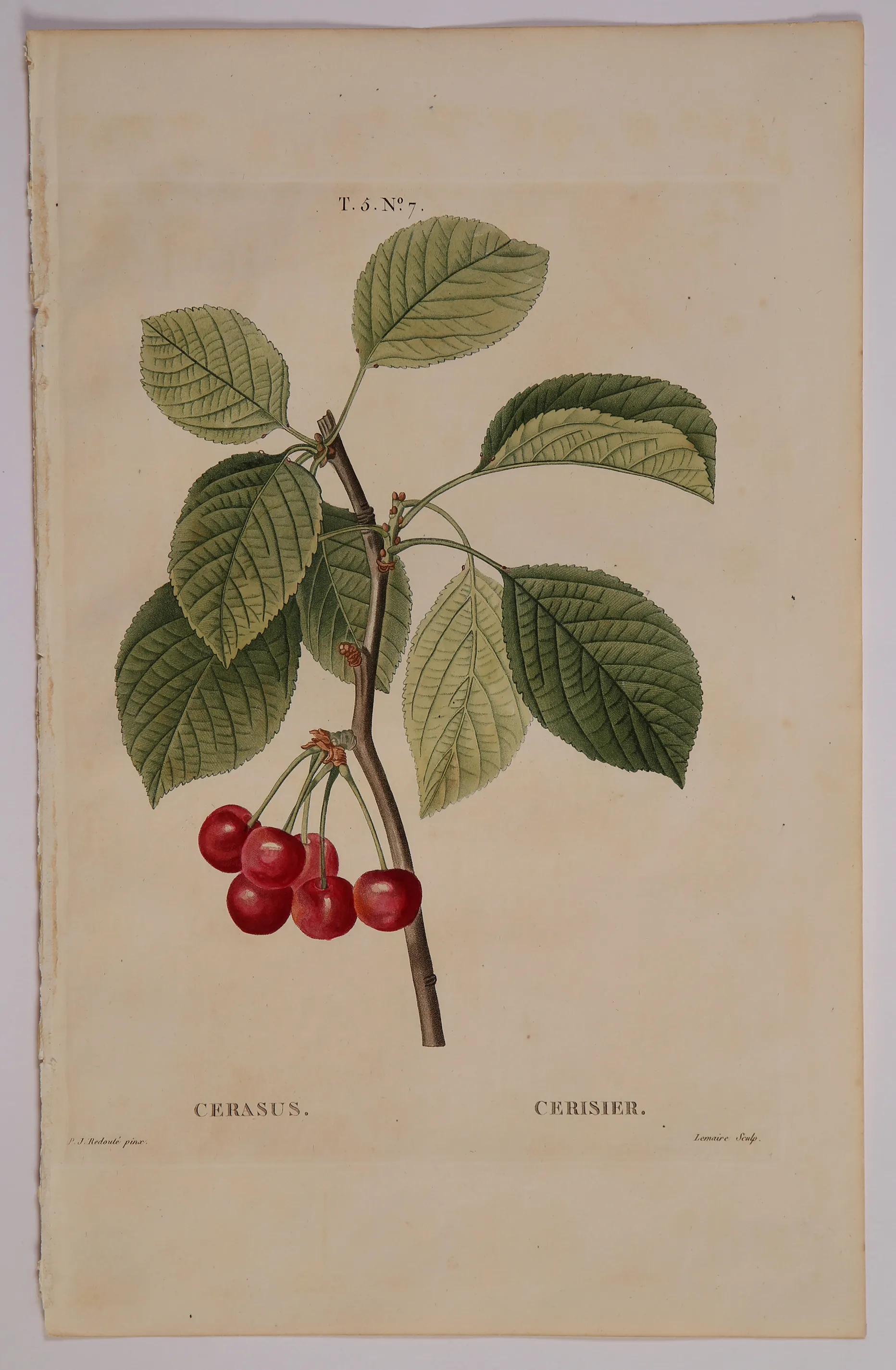
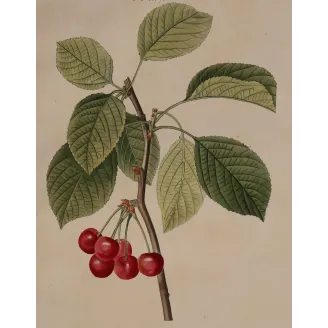
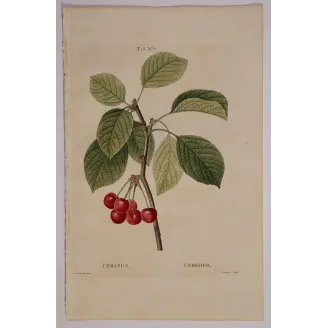
This original botanical engraving presents a cherry branch under the historical headings Cerasus and Cerisier. Plate 7 in volume V of the Nouveau Duhamel, it concentrates on the relationship between foliage, woody stem and mature fruit.
The engraved credits identify Pierre-Joseph Redouté as painter of the model and Lemaire as engraver. Leaves shown at different angles surround the rising branch, while a cluster of red cherries hangs in the open space beneath them.
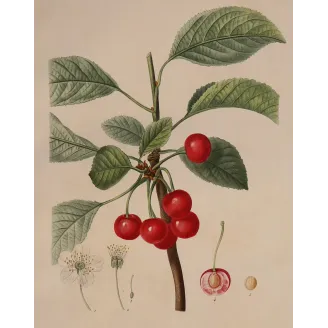
The plate’s character lies in the contrast between pale leaf reverses, darker green surfaces and the rounded red fruits gathered beside the stem.
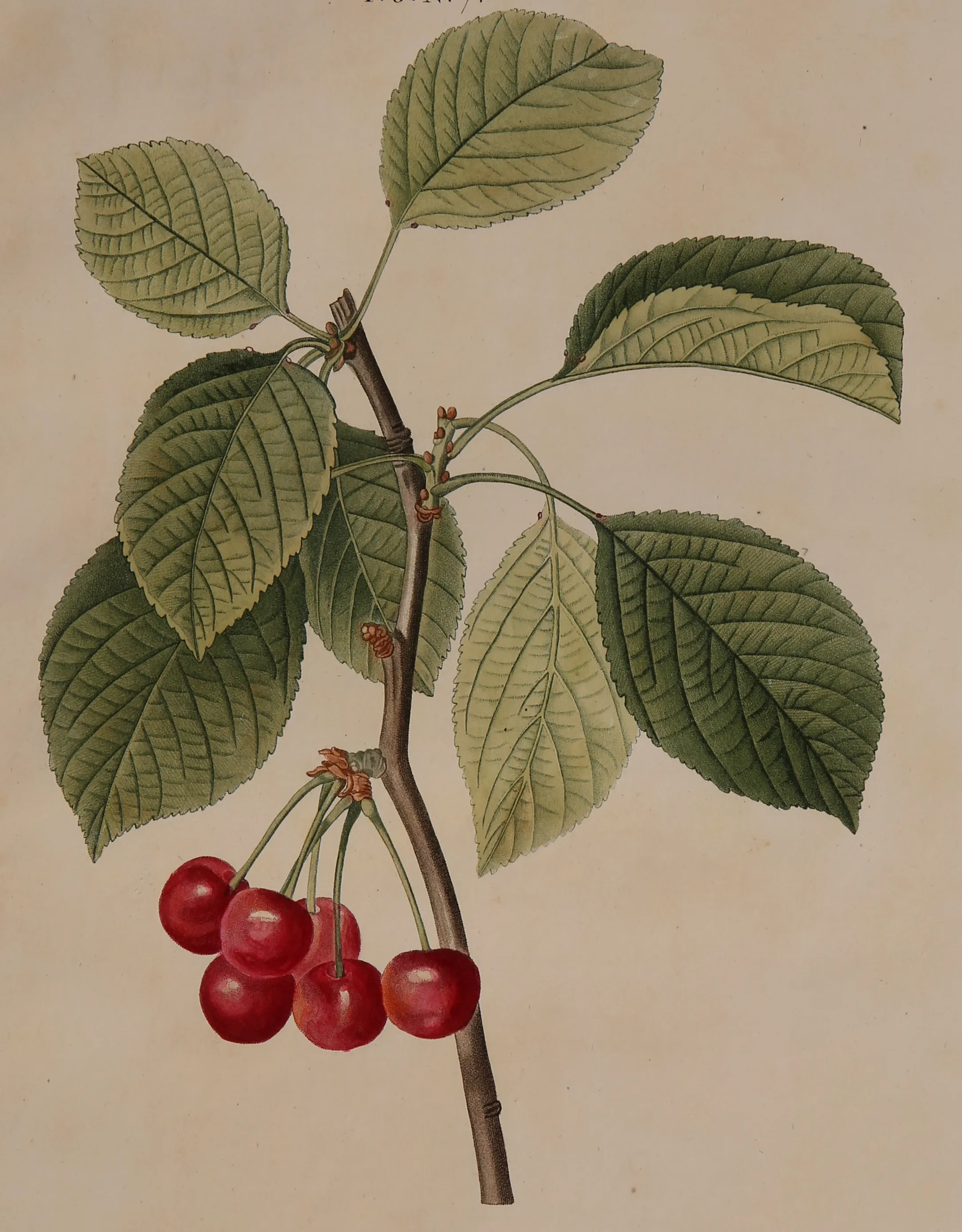
A gently inclined brown branch provides the composition’s central axis. Leaves extend upwards and to both sides on slender stalks, opening the image into an irregular canopy rather than a compact, symmetrical group.
Changes in leaf orientation create much of the visual depth. Pale yellow-green reverses alternate with darker upper surfaces, while a partly turned leaf on the right shows both within one outline. Fine serrations and branching veins remain clearly articulated throughout.
The overlapping leaves on the left introduce a denser rhythm, balanced by the larger, more separated forms on the right. Unprinted paper remains visible around the foliage and between its stalks.
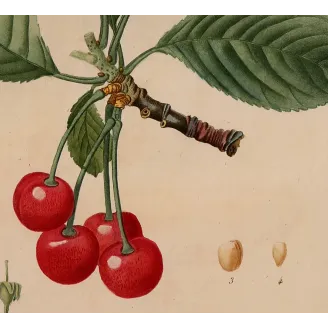
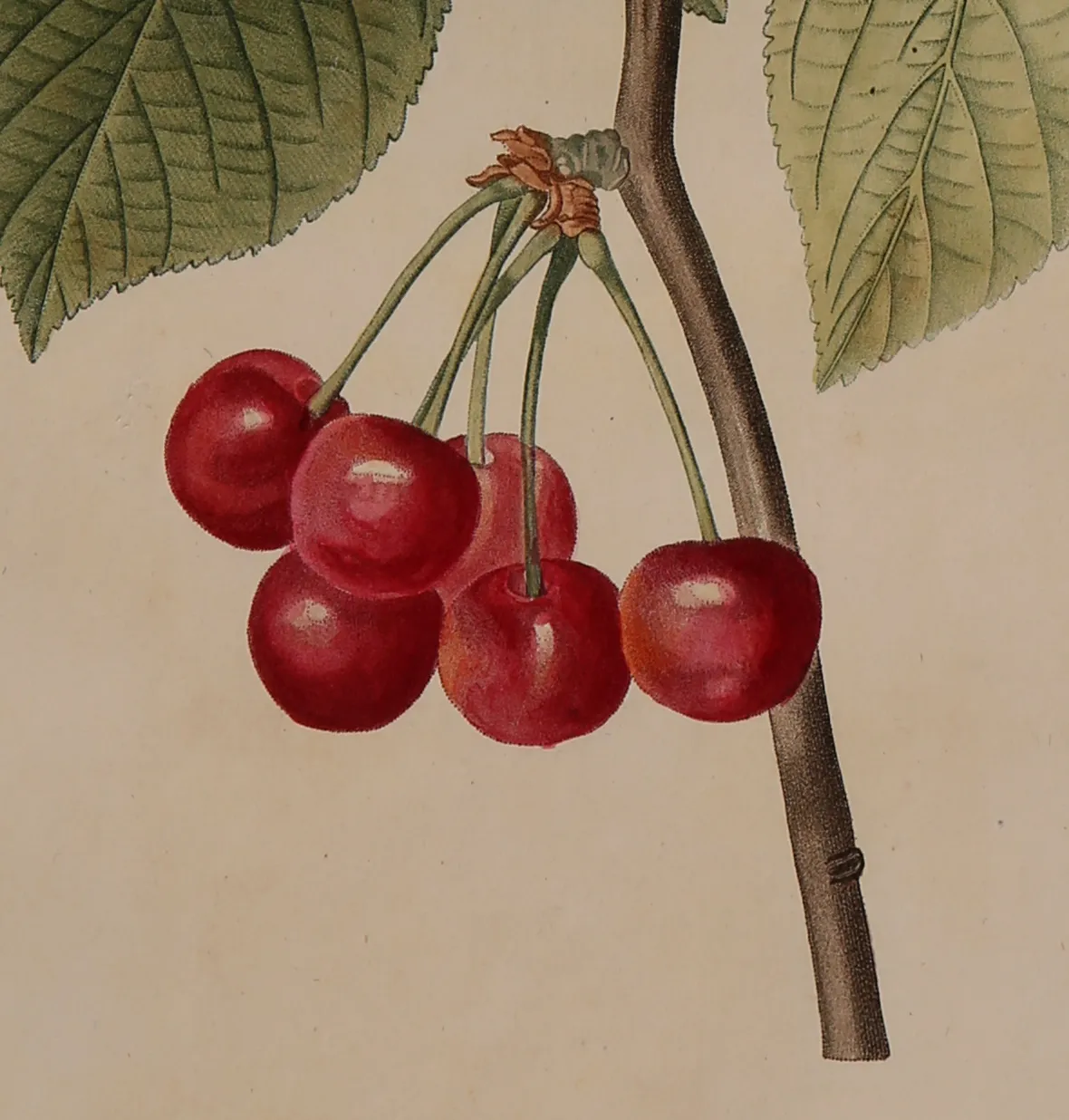
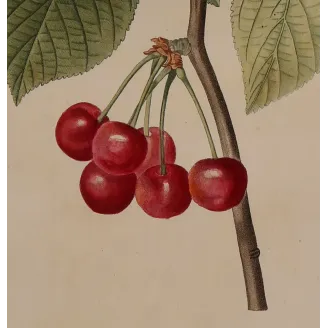
The cherries hang below the leaves on long curved stems. Their deep red tones and small highlights give the rounded fruits volume, providing a concentrated colour accent within the broader green arrangement.
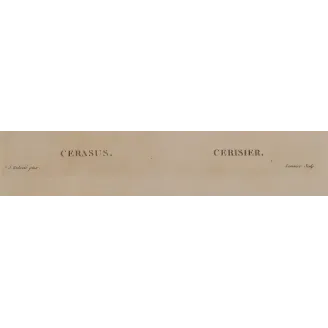
The engraved headings identify the cherry subject as Cerasus and Cerisier. The image records a fruit-bearing branch, with particular attention to leaf surfaces, attachment points and the disposition of the mature cherries.
Unlike plates that combine a branch with isolated floral or sectional figures, this composition remains focused on the plant’s external appearance. The viewer follows the connections between woody stem, leaf stalks and fruit stalks within one continuous study.
The historical headings are retained as the primary identification of the published image. A cultivar name is not engraved on the sheet.
The absence of separate analytical figures gives this plate a distinctive continuity. Every illustrated element belongs to the same branch, allowing the image to be read from the cut stem upwards through the foliage and back down towards the fruit.
The contrasting leaf surfaces have both descriptive and visual value. They make the changes in orientation legible while introducing lighter passages between the darker greens. The cherries anchor the lower part of the composition without competing with the foliage’s scale.
This is a study of relationships within a fruiting branch: the botanical account emerges through attachment, orientation, overlap and colour.
The upper inscription, T. 5. N° 7., identifies plate 7. The lower headings read Cerasus and Cerisier. Inventory reference UAB connects the physical print to its photographic record.
No watermark was detected during the owner’s examination of this sheet. No paper mill attribution is made for this individual print.
The engraved credit P. J. Redouté pinx. identifies Redouté as painter of the model; Lemaire sculp. identifies the engraver. These printed inscriptions preserve the distinction between the painted model and its translation into an engraved image.
The rectangular plate impression remains visible around the composition. Irregularities and binding remnants along the left sheet edge also form part of the print’s material record.
The Nouveau Duhamel brought botanical plates and explanatory text together within a renewed study of trees and shrubs cultivated in France. This cherry image belongs to that editorial programme, presenting a fruiting branch as a coherent botanical study.
Redouté’s model was translated into an engraving by Lemaire. The two credits preserve the collaboration behind the printed image, while its colouring makes the contrasts between leaf surfaces and ripe fruit readily visible.
Our associated Redouté essays explore the artistic and scientific context of the work, the making of a botanical image, and paper and watermark evidence recorded on other prints from the publication.
Pierre-Joseph Redouté — Botanical Illustration and History →
Pierre-Joseph Redouté — Scientific Accuracy and Poetic Beauty →
The print is in excellent overall condition, as assessed through the owner’s direct examination. The botanical image, engraved headings and production credits remain clearly legible.
The photograph shows light age-related toning, scattered small spots and slightly darker toning near the outer edges. Irregularities and remnants of former binding are visible along the left sheet edge, outside the engraved composition.
The foliage retains clear distinctions between pale reverses and deeper green surfaces. Fine veins and toothed margins remain legible, while the cherries preserve differentiated red tones and rounded modelling.
Please examine the high-resolution photograph for a complete visual assessment. Additional photographs are available upon request.
Historical botanical inscription: Cerasus
French inscription: Cerisier
Work: Traité des arbres et arbustes que l’on cultive en France — Nouveau Duhamel
Plate: 7
Period: Early nineteenth century
Painted model: Pierre-Joseph Redouté (1759–1840), credited P. J. Redouté pinx.
Engraving credit: Lemaire sculp.
Technique: Original botanical engraving with hand colouring
Artistic tradition: Early nineteenth-century botanical and horticultural illustration
Contents: One original print
Watermark: None detected
Sheet size: Approximately 40 × 25 cm (height × width)
Inventory reference: UAB
Condition: Excellent overall condition, with minor age-related and marginal traces as described above
Photography: Full-sheet photograph
Additional photographs: Available upon request
Authenticity: Original nineteenth-century print — never a modern reproduction
Specific References
Charming pear study by Redouté, showing delicate blossom and ripening fruit. Balanced and refined.
A complete Study Set comprising all seven fig plates from Volume IV of the Nouveau Duhamel (1809), after painted models by Pierre-Joseph Redouté. Printed in colour and finished by hand, the engravings bring together historical varieties, leafy branches, fruit sections and botanical details. Each sheet measures 40 × 25.5 cm. All seven prints are in excellent overall condition; watermarks are recorded on six sheets
Graceful composition of the Amelanchier with fine leaves and berry-like fruit.
Rare Redouté botanical engraving of the cherry tree (Cerasus). Vivid red fruits and blossoms in exquisite detail.
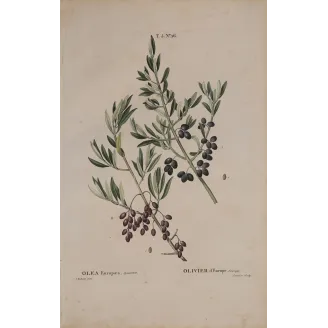
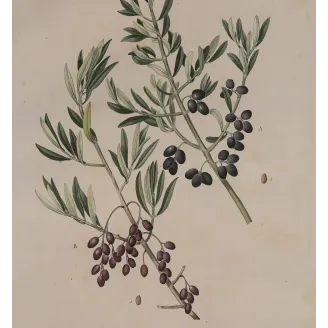
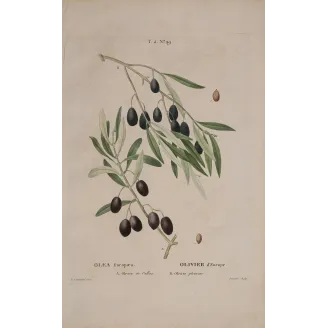
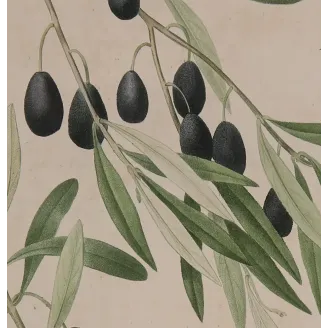
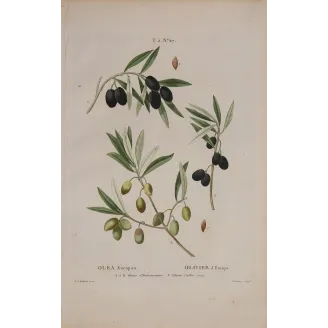
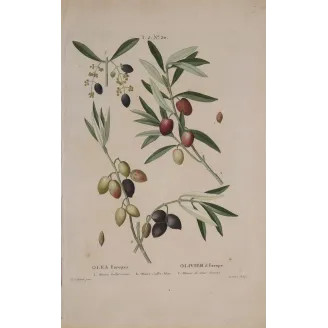
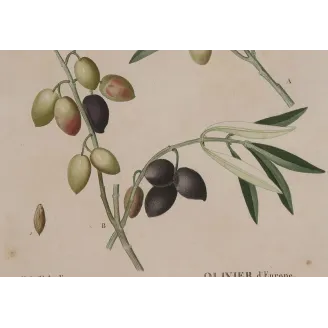
Olive tree study by Redouté with detailed foliage and seeds. bright fruit and slender branches. Decorative and vivid.
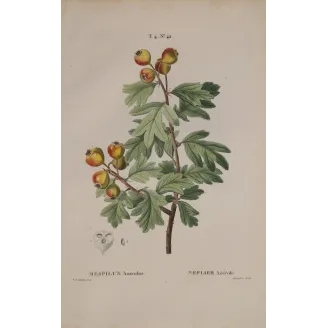
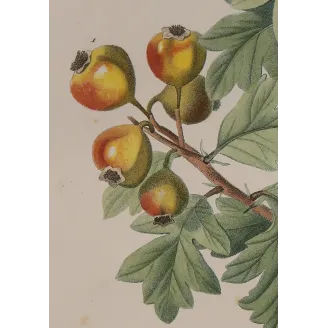
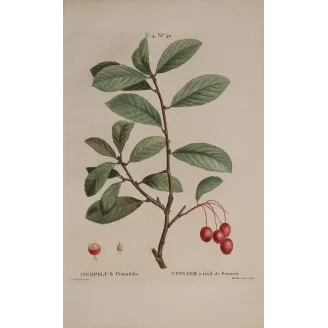
Original botanical engraving of Mespilus prunifolia by Redouté. Elegant branch and fruit, perfect for refined interiors.
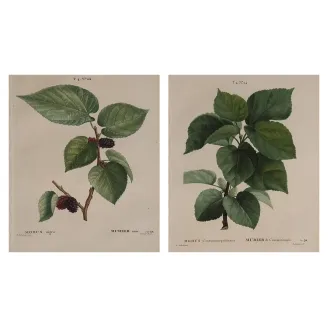
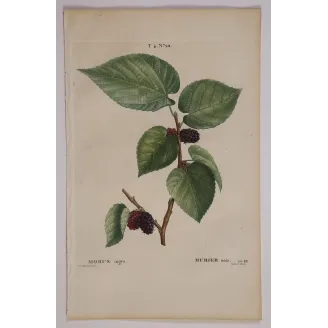
A pair of original botanical engravings after Pierre-Joseph Redouté from Volume IV of the Nouveau Duhamel, depicting the black mulberry and the historically named Constantinople mulberry. Printed in colour and finished by hand, the two plates offer complementary studies of foliage and fruit. Each sheet measures 40 × 25.5 cm. Both are in excellent condition.
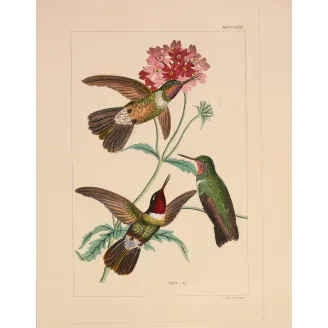
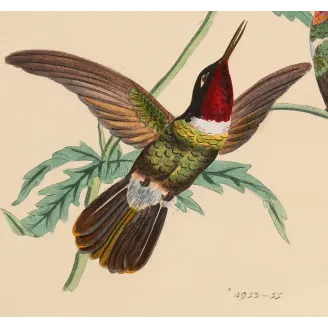
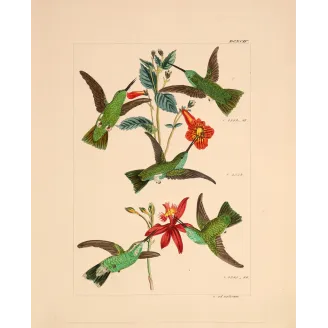
Original nineteenth-century hand-colored engraving by Ludwig Reichenbach, depicting three hummingbirds among pink blossoms. A rare later plate from the Trochilinarum Enumeratio corpus, not fully documented in the principal published index.
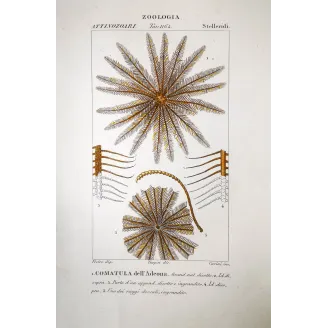
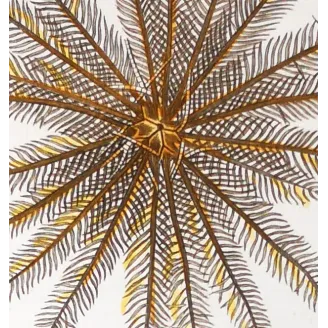
Rare 19th-century print of the feather star Comatula of the Adeona, with anatomical details.
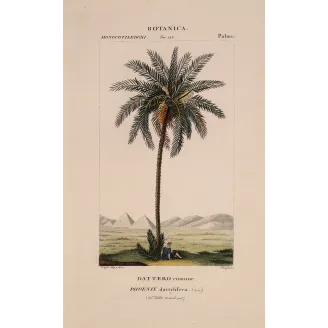
Detailed antique illustrations of the date palm tree and its floral and fruit anatomy.
Fine botanical engraving showing delicate redcurrant clusters and bright green leaves.
An exceptional original hand-colored engraving from Ludwig Reichenbach's Trochilinarum Enumeratio, depicting five brilliant hummingbirds feeding among scarlet tropical flowers. Featuring Esmeralda, Euchloris and Maculicollis, this dynamic nineteenth-century composition beautifully combines botanical richness with the elegance of Victorian ornithological illustration.
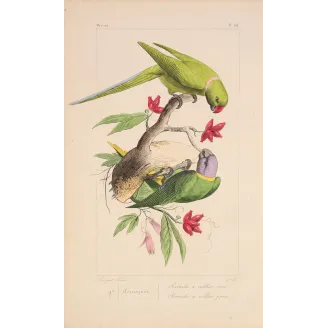
Vivid 19th-century hand-colored engraving depicting two parakeets in dynamic interaction, with striking green plumage and contrasting red and violet accents. A highly decorative exotic bird composition.
A striking 19th-century engraving depicting two vividly colored parakeets in a dynamic composition. The intense contrast of blue, red, green and yellow creates a highly decorative work, ideal as a focal piece in refined interiors.
Antique Botanical print of the Cherry tree by Redouté. Lush foliage and red fruits in harmonious layout.