
Charming pear study by Redouté, showing delicate blossom and ripening fruit. Balanced and refined.
 Delivery policy
Your print will be carefully prepared and shipped worldwide via trusted couriers (UPS or similar).
 Authentic antique prints
Original engravings from the 17th–19th century.
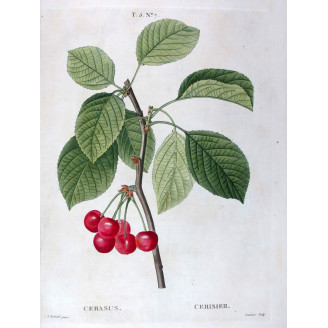
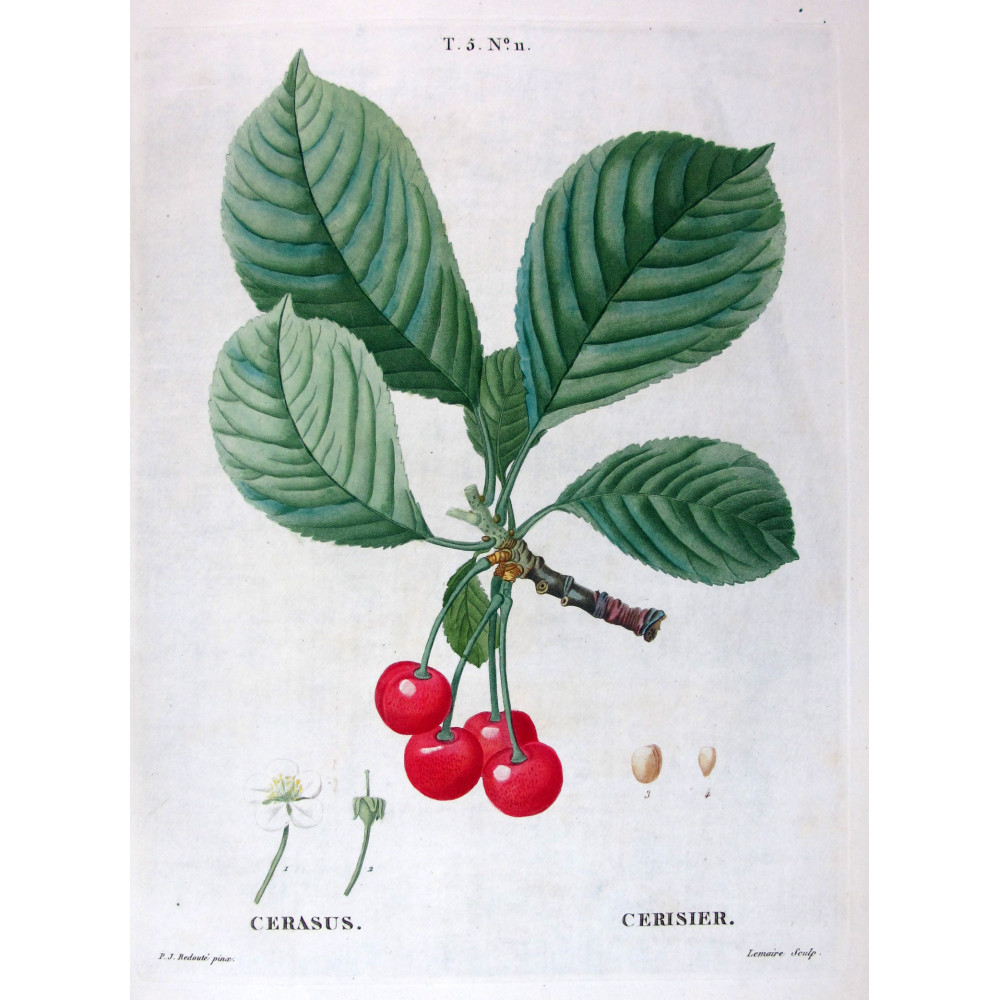
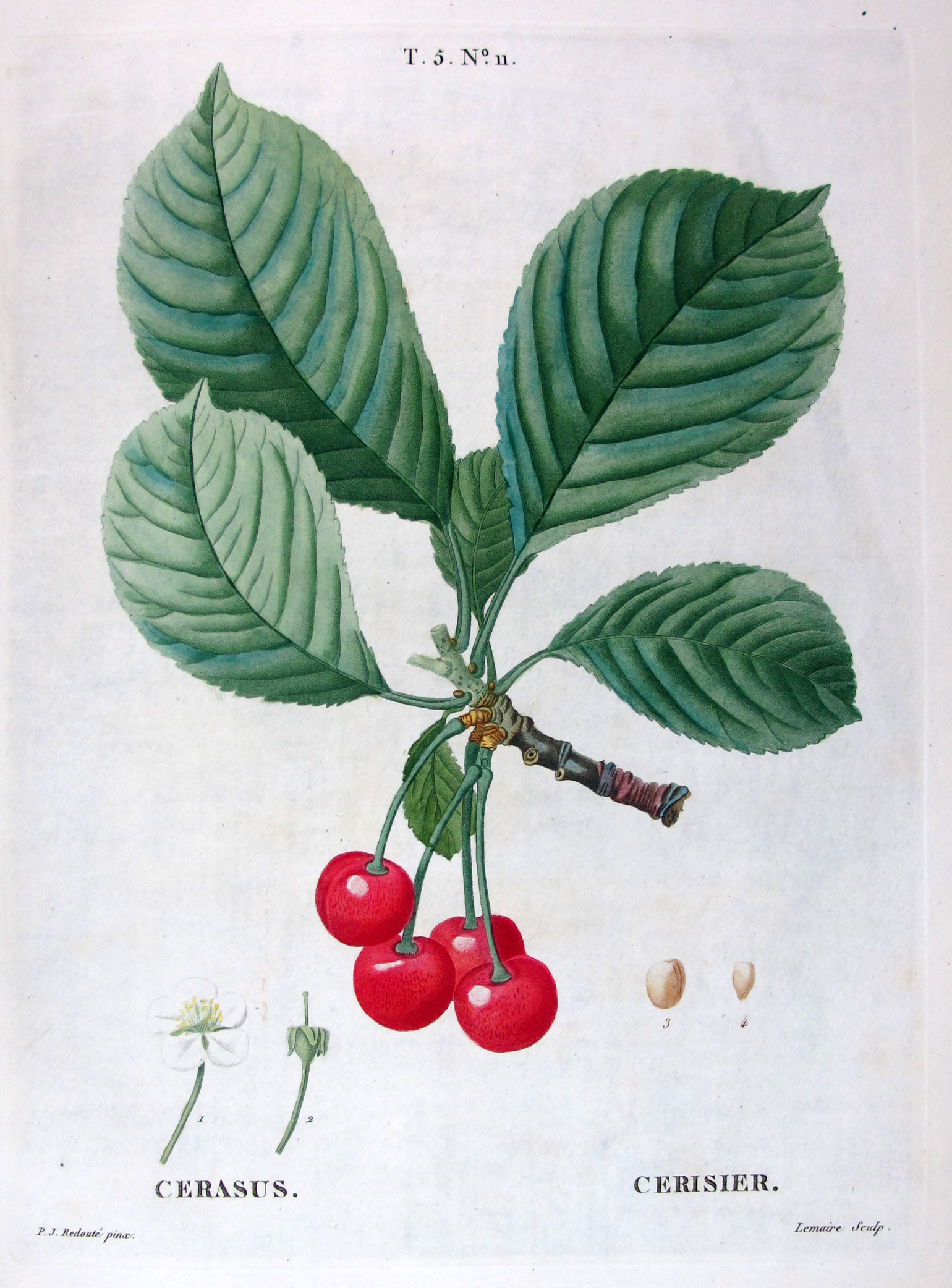
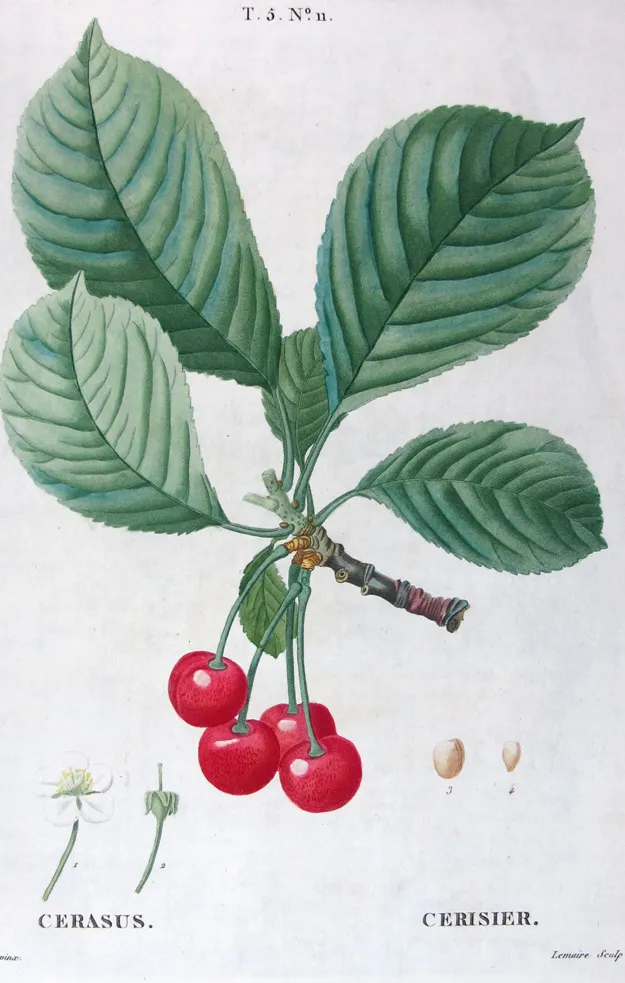
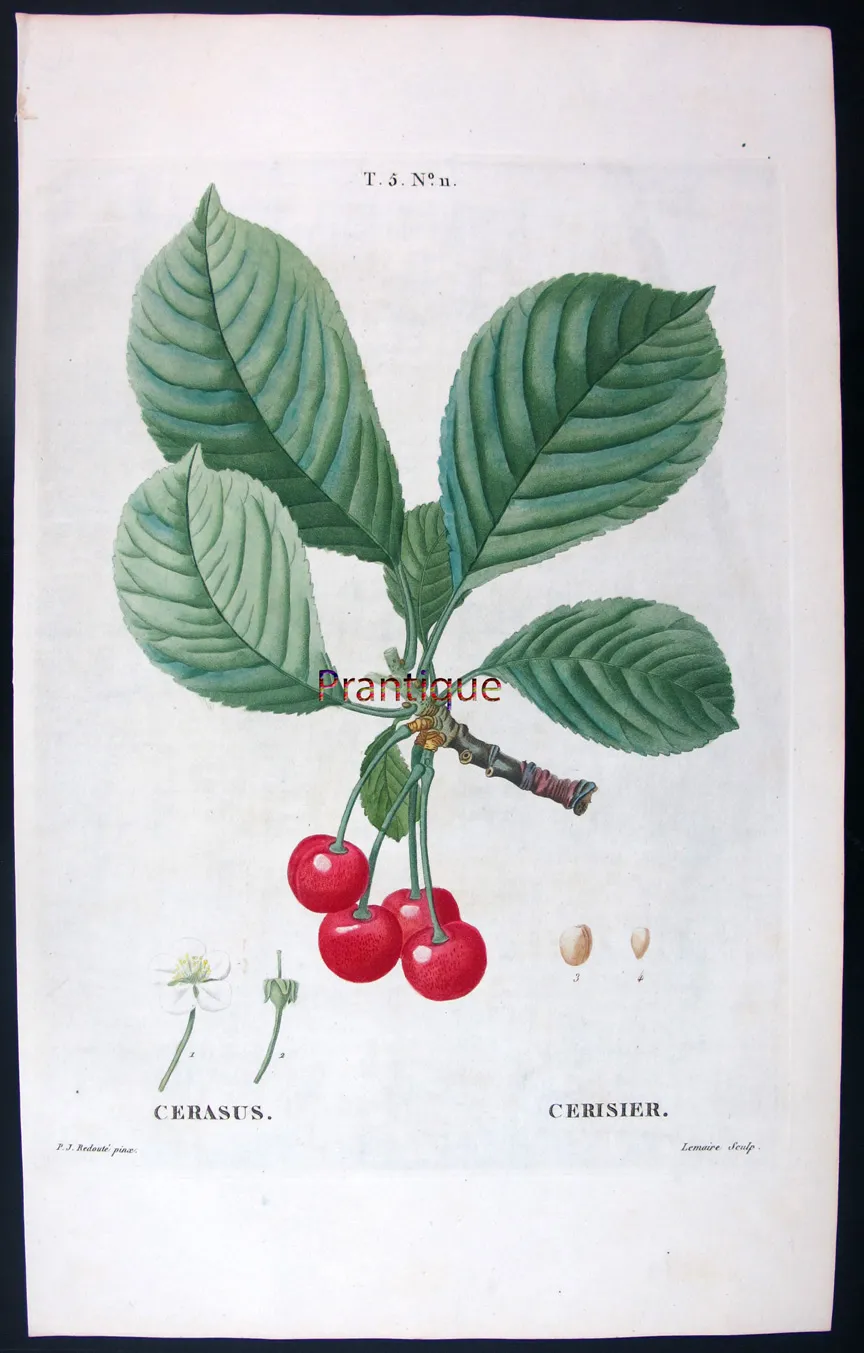
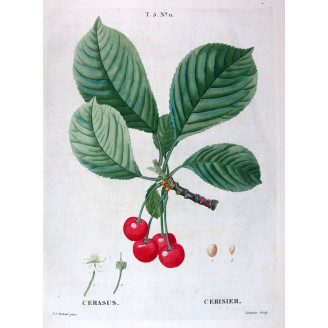
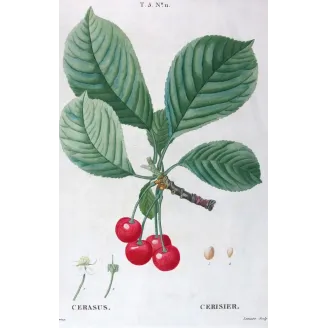
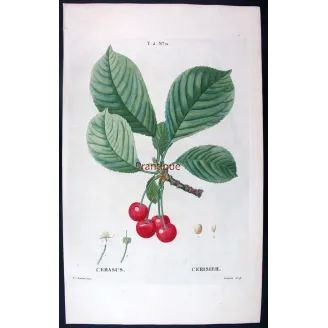
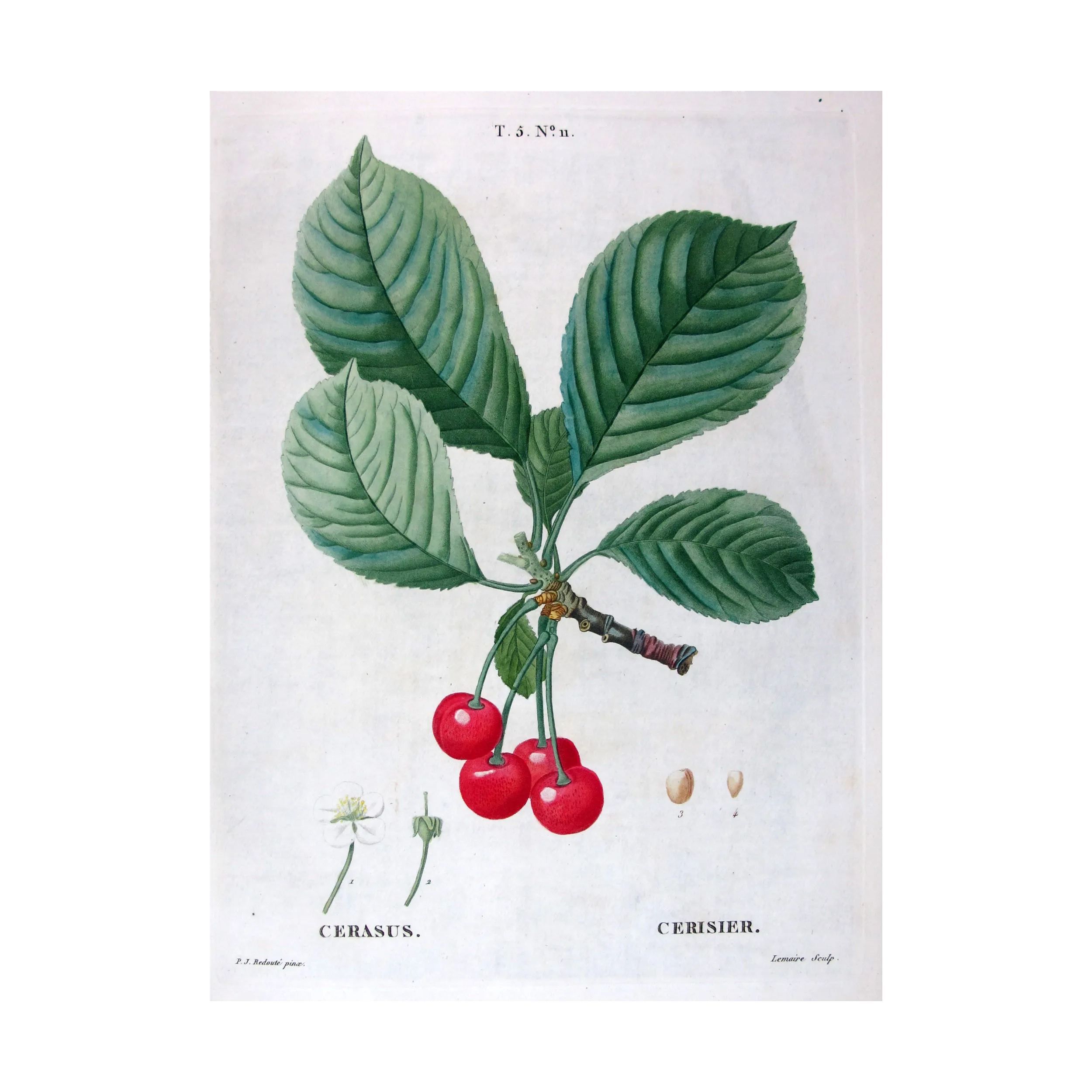
This refined botanical engraving by Pierre-Joseph Redouté presents a cultivated cherry variety with the clarity and compositional restraint that define the finest botanical plates of the early nineteenth century.
The image balances scientific legibility with a calm decorative harmony: broad foliage frames the fruiting stems, while the cherries form a concentrated focal point of colour. The plate reads both as a document of horticultural knowledge and as an elegant work on paper.
Created during the golden age of botanical illustration, this work reflects a period in which cultivated fruit trees were recorded with remarkable care, linking botanical observation to the visual culture of refinement.
— • —
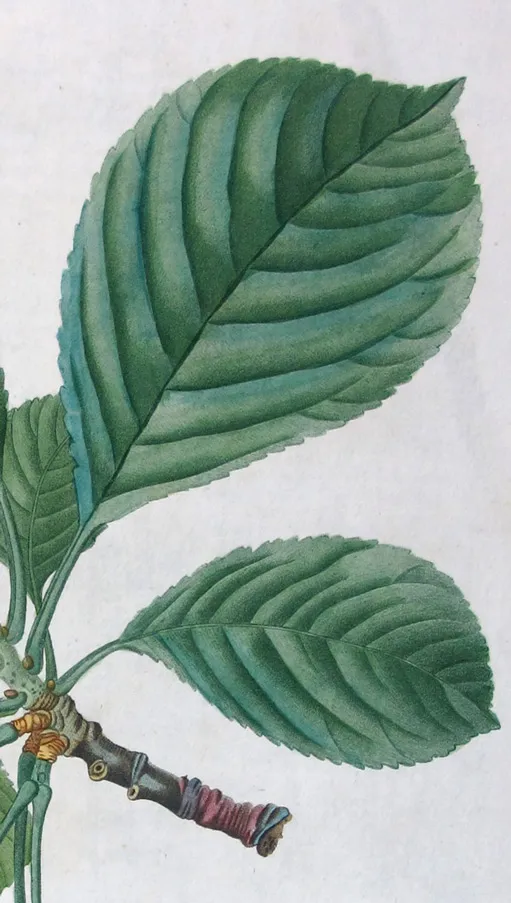
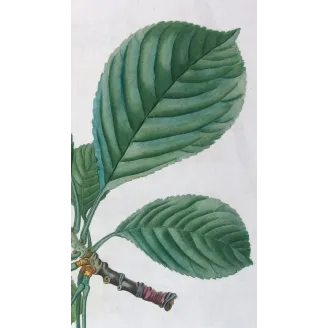
The composition is organized around a central branching point from which leaves spread in a wide, stabilising canopy. Their scale and rhythm create a strong structural presence, giving the plate an almost architectural balance within generous negative space.
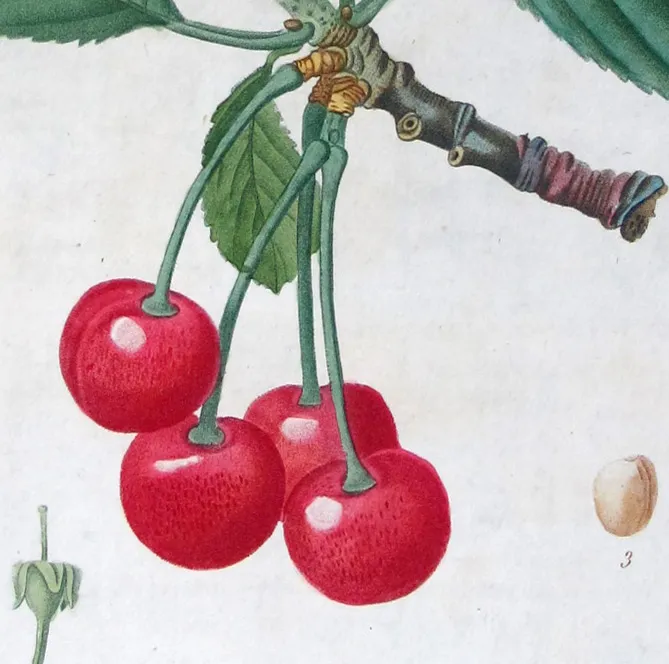
Below the foliage, a small cluster of cherries hangs on slender stems, providing the dominant chromatic accent. The saturated reds are deliberately isolated against cool greens and an open background, while the fine engraved line and restrained hand-colouring preserve crisp edges and vein structure. Small analytical details at the lower margin—flower, floral structure, and stone—reinforce the plate’s scientific intent without disrupting its visual calm.
This plate documents the “Cerisier de Choisy”, presented as a fruiting branch. In the accompanying description, the subject is supported by botanical figures that clarify key stages and structures: a complete flower, the calyx and pistil, the stone, and the kernel (“l’amande”). Together, these elements reflect the period’s interest in cultivated cherries as precise objects of morphological observation, not only as orchard fruit.
The engraving is in very good condition, printed on period paper with a clean and stable surface. Light, even age-related toning is present, consistent with works of this age. The impression remains clear and well-defined, with margins preserved and no significant restorations observed. The original engraved credits are present and legible, including “P. J. Redouté pinx.” and “Lemaire sculp.”
For further context on Pierre-Joseph Redouté and his contribution to botanical illustration, see our editorial feature:
Specific References
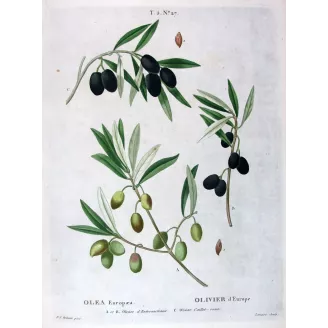
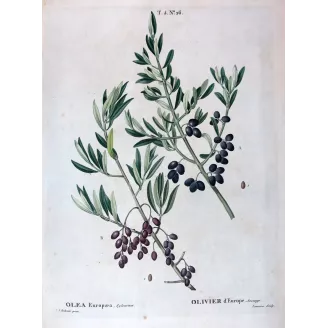
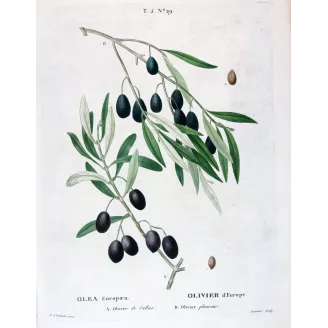
Olive tree study by Redouté with detailed foliage and seeds. bright fruit and slender branches. Decorative and vivid.
Graceful composition of the Amelanchier with fine leaves and berry-like fruit.
Antique Botanical print of the Cherry tree by Redouté. Lush foliage and red fruits in harmonious layout.
Classic hazelnut print by Redouté. Balanced tones and elegant form.
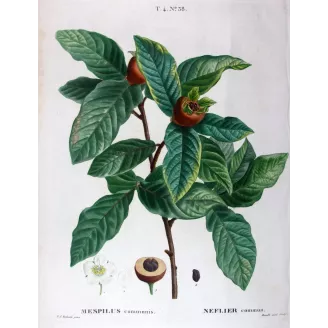
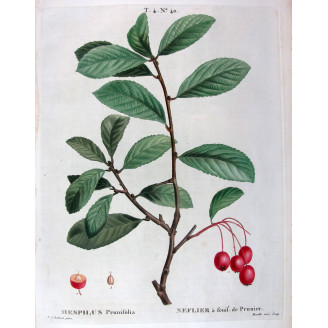
Original botanical engraving of Mespilus prunifolia by Redouté. Elegant branch and fruit, perfect for refined interiors.
Rare Redouté botanical engraving of the cherry tree (Cerasus). Vivid red fruits and blossoms in exquisite detail.
Charming pear study by Redouté, showing delicate blossom and ripening fruit. Balanced and refined.