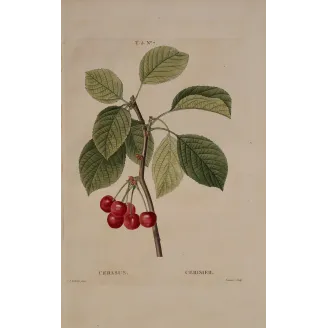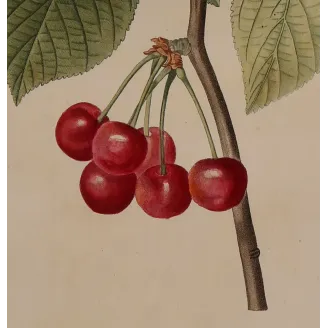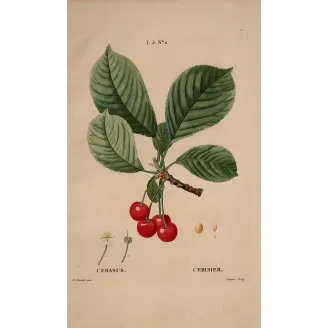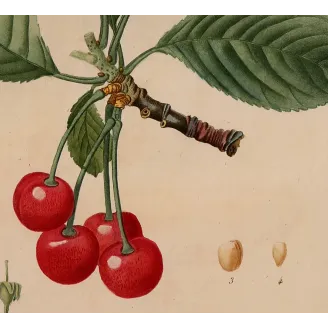
Graceful composition of the Amelanchier with fine leaves and berry-like fruit.
 Delivery policy
Your print will be carefully prepared and shipped worldwide via trusted couriers (UPS or similar).
 Authentic antique prints
Original engravings from the 17th–19th century.
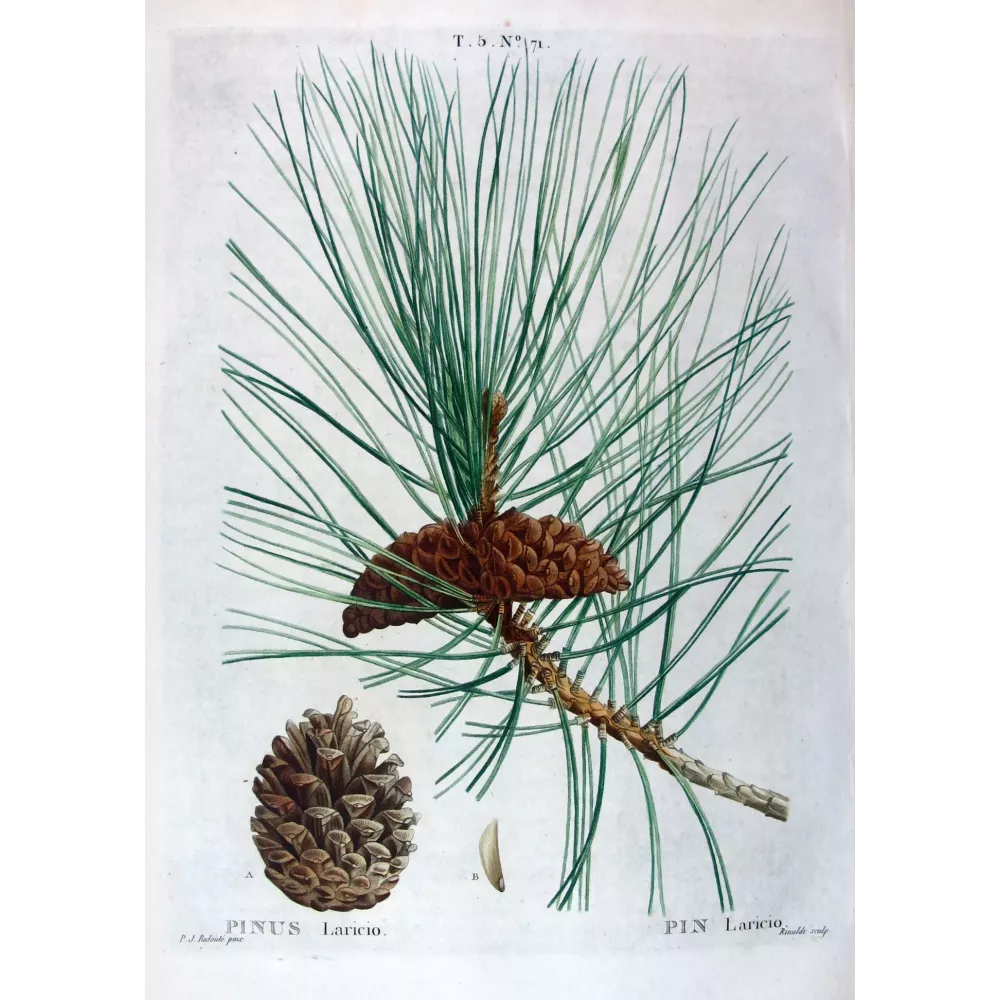
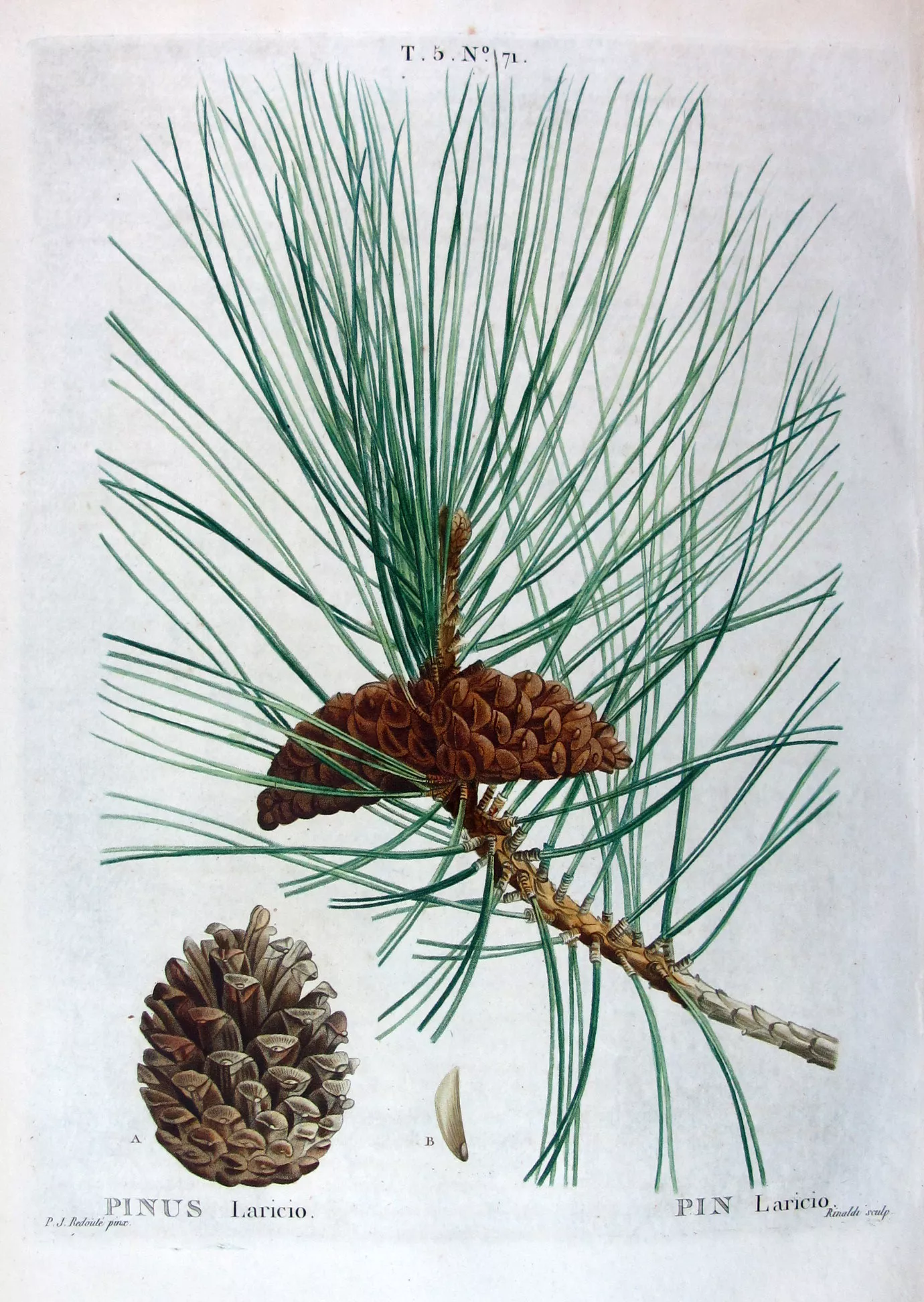
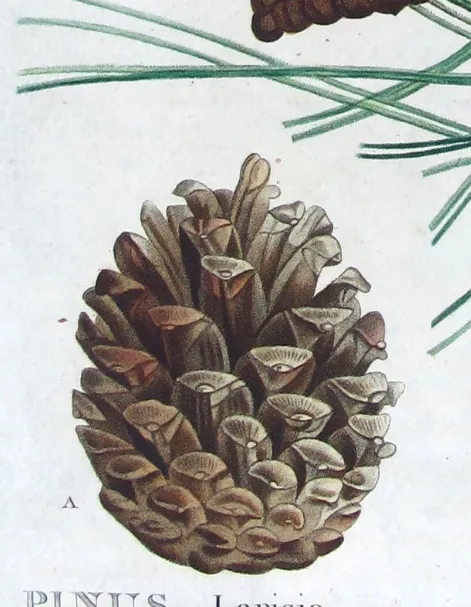
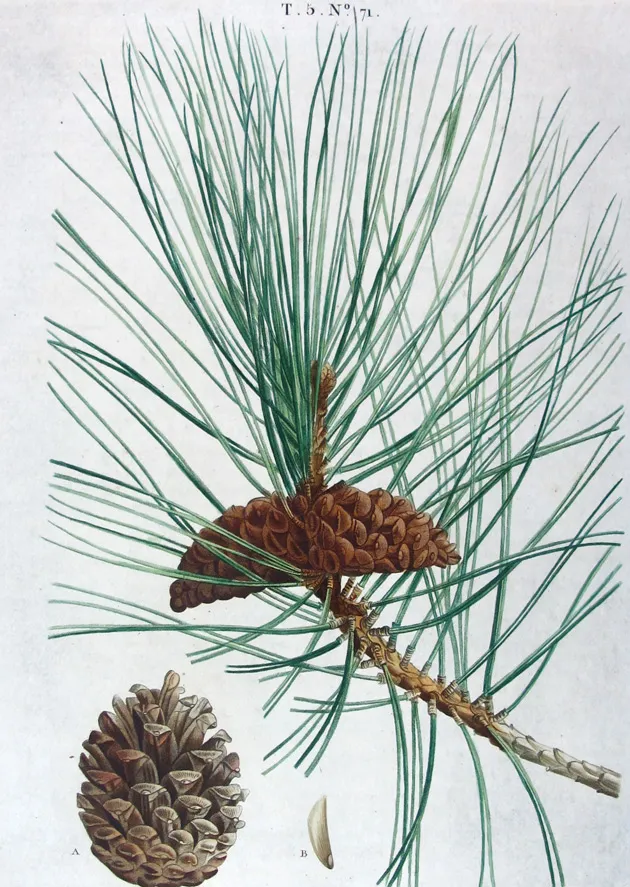
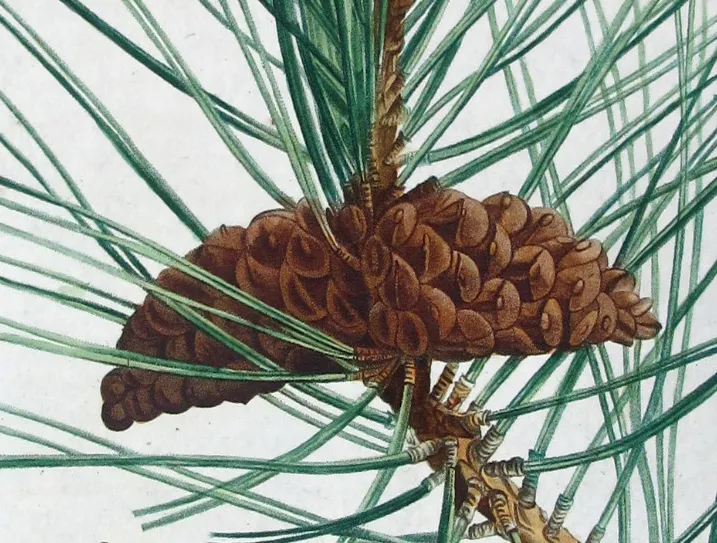
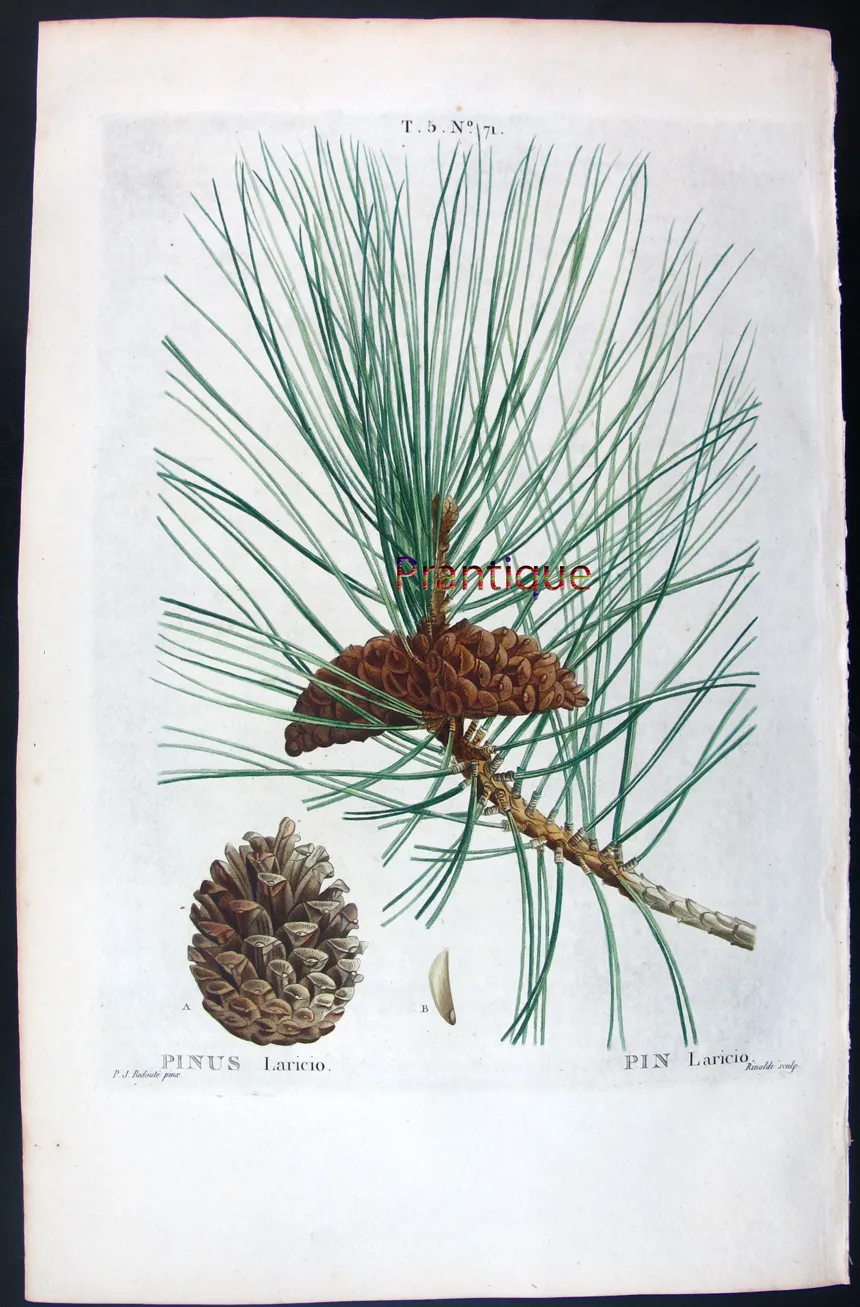
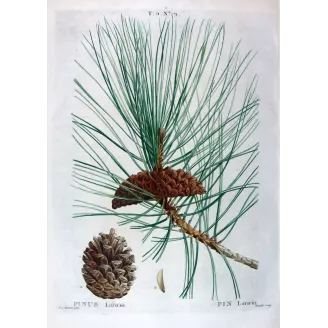
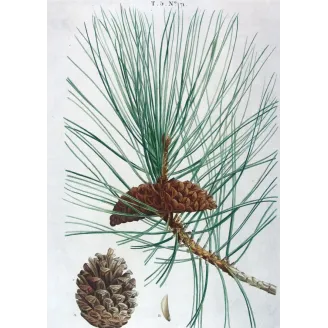
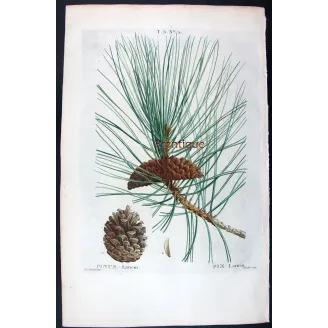
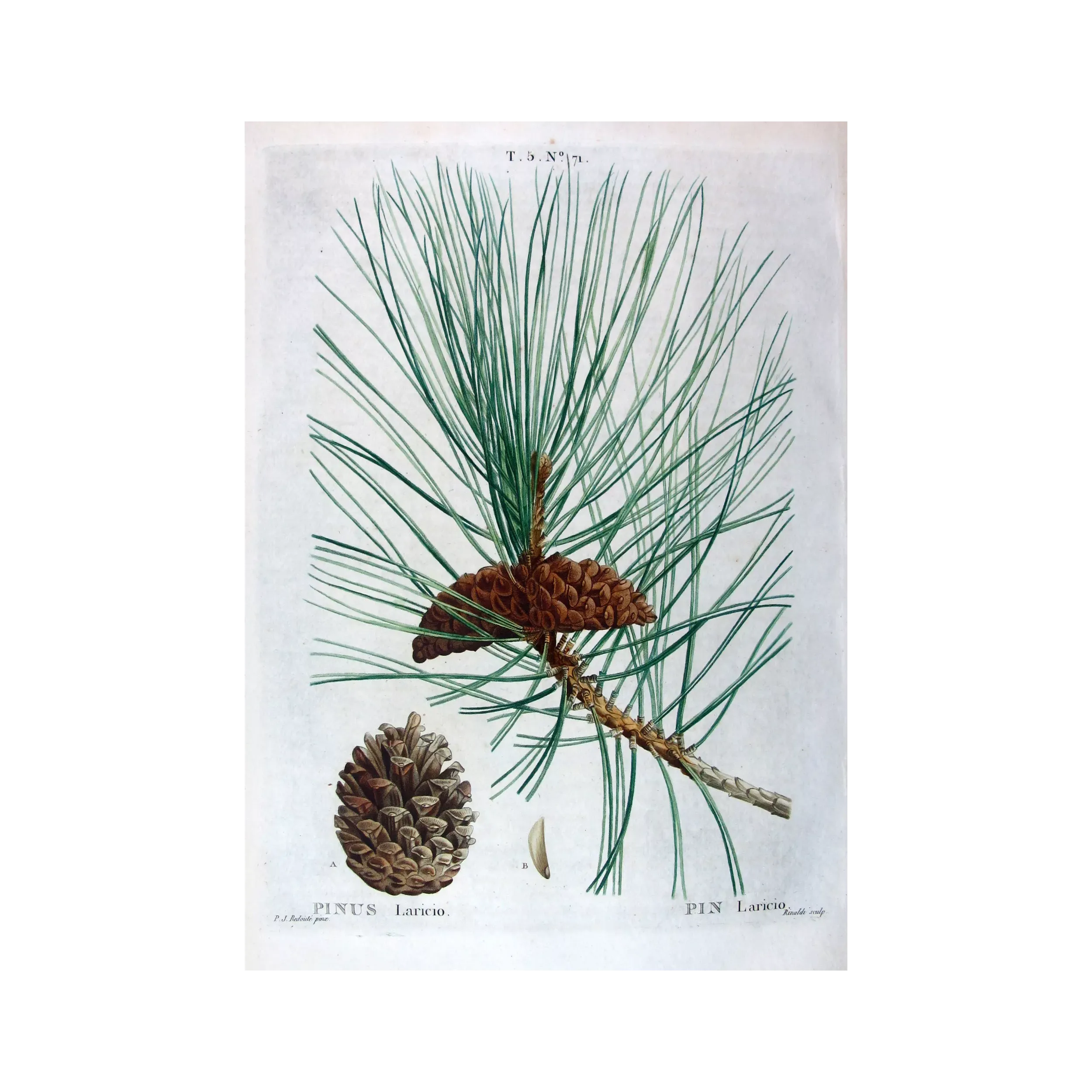
This original hand-coloured engraving depicts Pinus laricio, presented as a large-scale branch study with a mature cone and needle clusters rendered with refined botanical clarity. The composition favours amplitude and elegance, allowing the long needles to create a sweeping rhythm across the sheet.
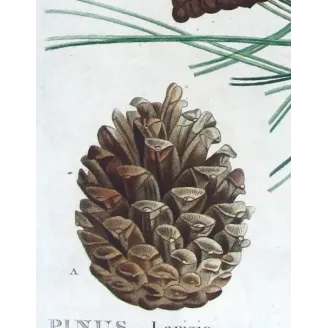
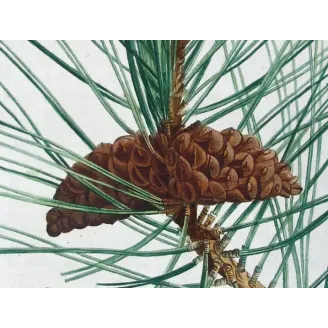
The cone provides structural weight and sculptural texture, its layered scales modelled through controlled shading. Against this, the needle clusters form a near calligraphic movement — a balance of mass and airiness that gives the plate strong decorative authority when framed.
An especially interesting detail in pine identification lies in the “architecture” of the needles: their length, stiffness, and grouping create a visual signature. Here, the species is defined as much by this rhythmic needle language as by the cone itself — a reminder that botanical illustration often served as a practical tool for recognition, not merely ornament.
— • —
The plate is compositionally confident: the branch cuts through the white space with decisive diagonals, while the cone anchors the scene with compact density. Colour remains restrained — cool greens and warm browns — producing a sophisticated, quiet contrast.
The result is both scientific and decorative: a botanical specimen elevated into an image of structural elegance.
The engraving is in Like Brand New condition. The sheet remains clean and well preserved, with fresh original hand-colouring and an even paper tone. No watermark has been observed. The engraved credits confirm its authenticity as an original early nineteenth-century period plate.
For further context on Pierre-Joseph Redouté and his role within Arbres et Arbustes, see our editorial feature:
Specific References
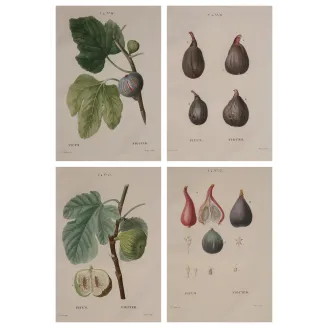
A complete Study Set comprising all seven fig plates from Volume IV of the Nouveau Duhamel (1809), after painted models by Pierre-Joseph Redouté. Printed in colour and finished by hand, the engravings bring together historical varieties, leafy branches, fruit sections and botanical details. Each sheet measures 40 × 25.5 cm. All seven prints are in excellent overall condition; watermarks are recorded on six sheets
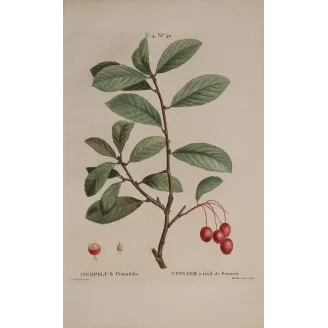
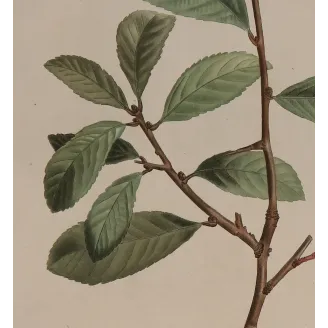
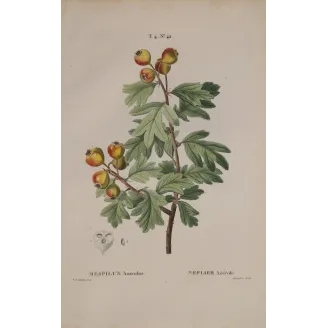
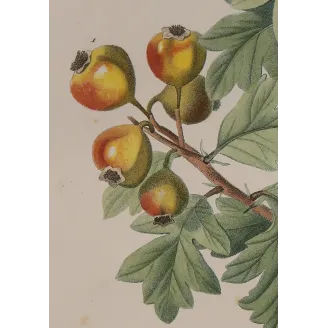
Original botanical engraving of Mespilus prunifolia by Redouté. Elegant branch and fruit, perfect for refined interiors.
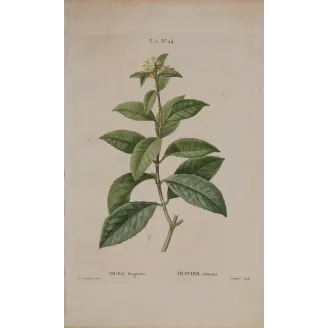
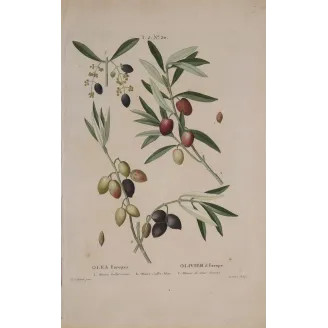
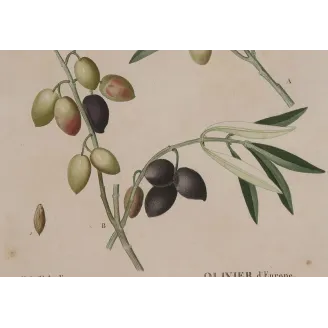
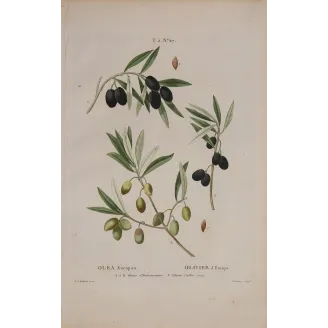
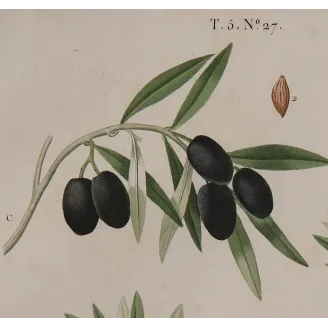
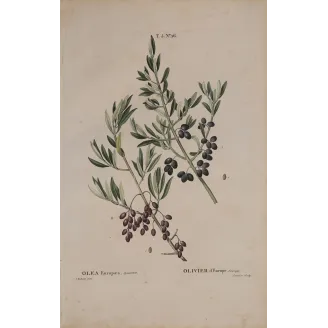
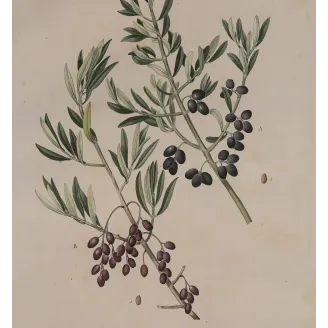
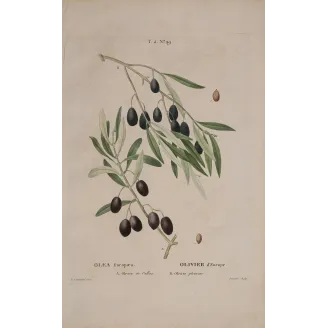
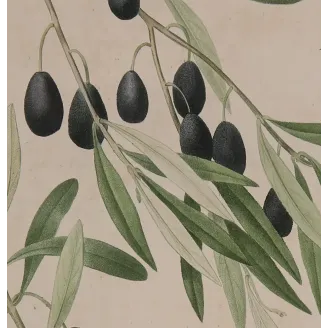
Olive tree study by Redouté with detailed foliage and seeds. bright fruit and slender branches. Decorative and vivid.
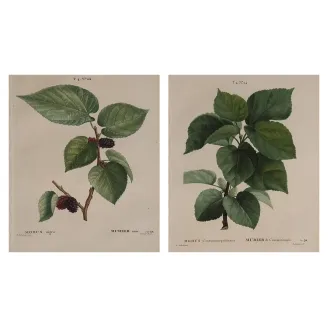
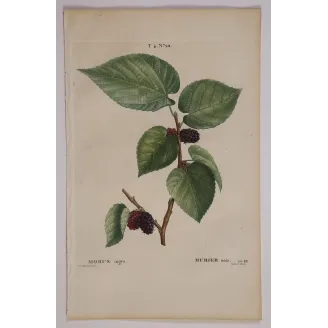
A pair of original botanical engravings after Pierre-Joseph Redouté from Volume IV of the Nouveau Duhamel, depicting the black mulberry and the historically named Constantinople mulberry. Printed in colour and finished by hand, the two plates offer complementary studies of foliage and fruit. Each sheet measures 40 × 25.5 cm. Both are in excellent condition.
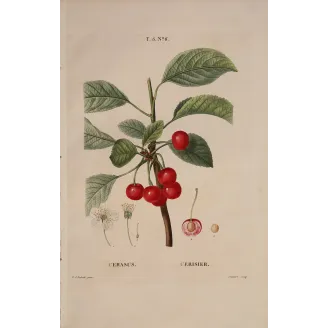
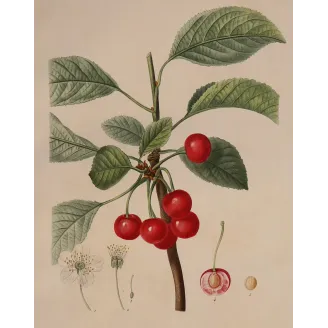
Antique Botanical print of the Cherry tree by Redouté. Lush foliage and red fruits in harmonious layout.
Charming pear study by Redouté, showing delicate blossom and ripening fruit. Balanced and refined.
Rare Redouté botanical engraving of the cherry tree (Cerasus). Vivid red fruits and blossoms in exquisite detail.
18th-century hand-colored engraving of a Garden Cucumber by Elisabeth Blackwell, with curling tendrils and yellow blossoms.
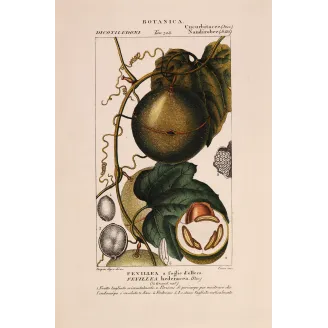
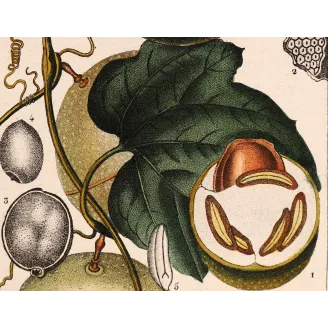
A coordinated pair of engravings depicting *Fevillea hederacea*, with intricate tendrils and elegant fruit structure, hand-colored with precision.
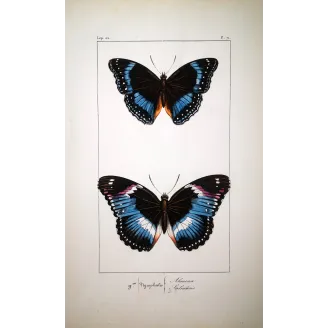
A vivid 19th-century hand-colored engraving depicting two striking tropical butterflies: the Blue-banded Eggfly (Hypolimnas alimena) and the Blue Diadem (Hypolimnas salmacis). Published in Hippolyte Lucas’s Exotic Butterflies (1835), the plate highlights their dramatic contrast of velvety black wings with electric blue bands and delicate white markings.
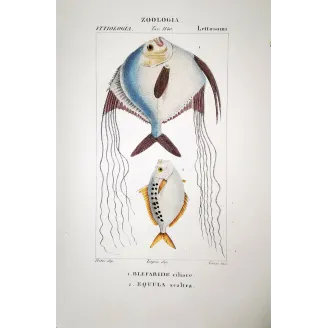
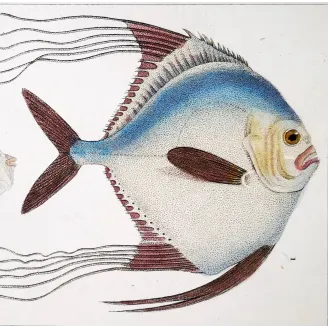
Delicate 19th-century hand-colored engraving of a ponyfish with companion species, ideal for marine-themed interiors and collectors.
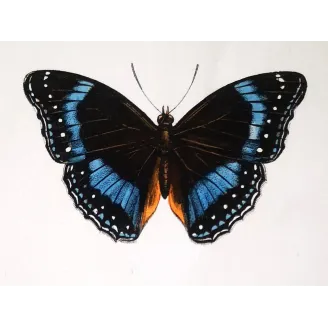
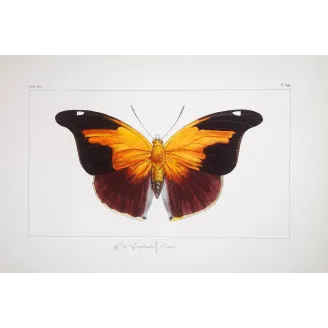
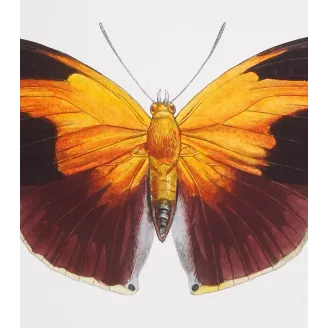
Original 1835 hand-colored engraving of Nymphalis orion, drawn and engraved by Pauquet under the scientific direction of Hippolyte Lucas for Exotic Butterflies.
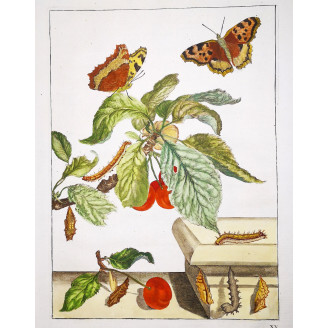
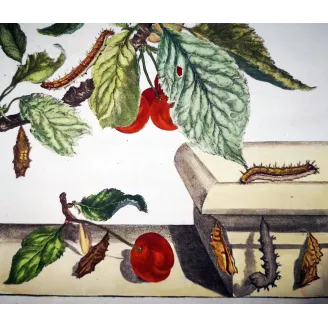
Original 1774 engraving by Jacob L'Admiral: Large Tortoiseshell on Sweet Cherry.
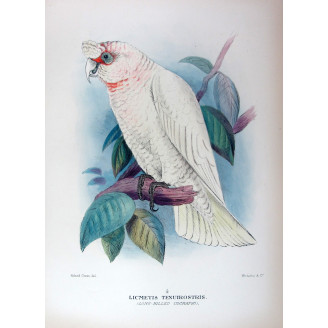
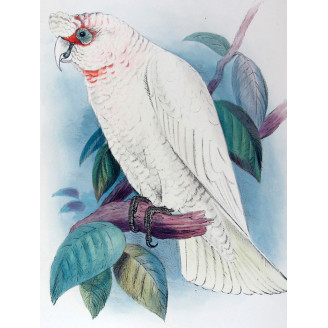
Glossy Cockatoo print by H. Goodchild, dark tones and rare presence on the plate
Graceful composition of the Amelanchier with fine leaves and berry-like fruit.