
Hortus Eystettensis by Basilius Besler – A Garden Against Time
Basilius Besler and the Hortus Eystettensis: A Garden Against Time
Published in 1613, Basilius Besler's Hortus Eystettensis transformed the celebrated gardens of Eichstätt into one of the most ambitious botanical monuments ever printed. Yet behind its spectacular images lies a deeper idea: gardens change, flowers disappear and human lives pass — but an image can preserve what time cannot.
Modern scholarship has examined the Hortus Eystettensis from many perspectives, including its botanical, artistic and cultural significance. This Historical Perspective follows a deliberately narrower path: it begins with Besler's own words.
Through Besler's prefatory reflections, contemporary testimony and the surviving pages of the work, this Historical Perspective explores one of the ideas at the heart of the Hortus Eystettensis: the desire to preserve what nature and human life could not.
A Garden Worth Preserving
At the beginning of the seventeenth century, the gardens surrounding the episcopal residence at Eichstätt contained an exceptional collection of plants gathered from different regions of the known world. Under Prince-Bishop Johann Konrad von Gemmingen, rare and exotic species grew beside familiar European plants, medicinal specimens and flowers cultivated for their beauty.
Around the first years of the seventeenth century, the garden and the extraordinary printed project that would preserve it became closely associated with the Nuremberg apothecary and naturalist Basilius Besler.
The undertaking itself was necessarily collective. Gardeners, draughtsmen, engravers, printers and, for the most sumptuous copies, colourists all contributed to transforming living specimens into printed images.
The choice was profound. A garden is magnificent precisely because it is alive, and because it is alive it can never remain unchanged. Flowers emerge and disappear. Seasons replace one another. Exceptional plants may flourish only briefly before vanishing from sight. To preserve such a garden required another form of existence.
The Garden That Could Never Be Seen at Once
A visitor walking through Eichstätt could encounter only the garden of that particular moment. Spring flowers disappeared before the plants of summer reached their fullness. Summer yielded to autumn, autumn to winter.
The complete garden existed across time, but never before the eye at a single instant.
The book could do what the garden could not.
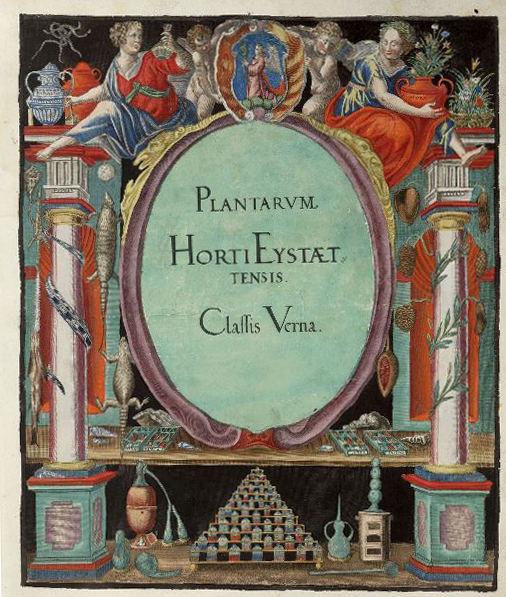
The Hortus Eystettensis organised its botanical world through the progression of the seasons. Spring, summer, autumn and winter became part of the architecture of the book.
Nature's passage through time had been transformed into a sequence that could be opened again. The garden could never be seen in its entirety at a single moment. The book could.
From Living Plant to Printed Memory
The plants cultivated at Eichstätt were living specimens: irregular, temporary and constantly changing. On the printed page they became isolated from the accidents of the garden and presented with extraordinary visual presence.
Roots and bulbs are exposed. Stems rise through generous areas of untouched paper. Leaves expand across the sheet while flowers, fruits and seeds are given space to reveal their individual structures.
The enormous scale of the work allowed individual plants to acquire a presence rarely encountered in earlier botanical illustration. In exceptional cases even a single page was insufficient, and one monumental plant could continue across two separate sheets.
These images communicate botanical information, but they do something more. The plants have become portraits. Their isolation gives them individuality. Their scale gives them authority. A flower that might survive only briefly in Eichstätt could now remain permanently in bloom.
Besler's Message: What Can Survive Us?
Behind the visual magnificence of the Hortus Eystettensis lies a surprisingly human idea.
In the prefatory pages associated with the work, Besler reflects upon the limits of human life and upon the desire to resist oblivion through achievement and memory. His language is striking: transience, permanence and almost immortality belong to the conceptual world from which the work emerged.
The idea of posterity is fundamental. A living garden can be experienced only by those who are present. An image can escape that limitation. Through engraving, a plant flowering at Eichstätt could travel beyond the walls of the garden — and, more remarkably, beyond Besler's own lifetime.
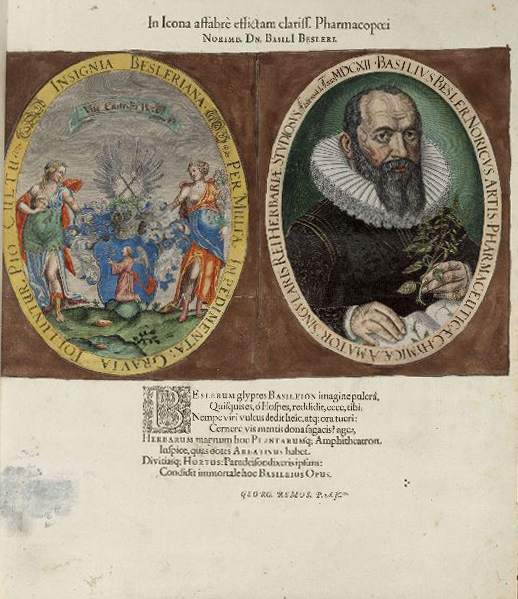
The poem culminates in an extraordinary judgement:
“Paradisum dixeris ipsum … Condidit immortale hoc Basilius Opus.”
“You would call it Paradise itself … Basilius created this immortal work.”
The distinction is striking. The man is mortal. The work is described as immortal. In an image devoted to flowers — among nature's most temporary creations — the choice of language could hardly be more revealing.
A Paradise on Paper
Remus's idea of Paradise captures something essential about the ambition of the Hortus Eystettensis. The garden at Eichstätt had already brought together plants originating from widely separated places. The book performed another transformation: it gathered these plants into a visual world no longer entirely dependent upon climate, geography or season.
What nature separated in space could coexist within its pages. What nature separated in time could be opened again.
The Hortus was therefore more than the record of a particular garden. It created another garden — ordered, portable and capable of surviving the living collection from which it arose.
An Image Worth Protecting
Turning such a garden into a monumental printed work required exceptional resources. Plants had to be cultivated and observed, drawings prepared, large copperplates engraved, sheets of handmade paper obtained and printed, and the most sumptuous impressions individually coloured.
The contemporary documents surrounding the publication reveal that this investment was clearly understood.
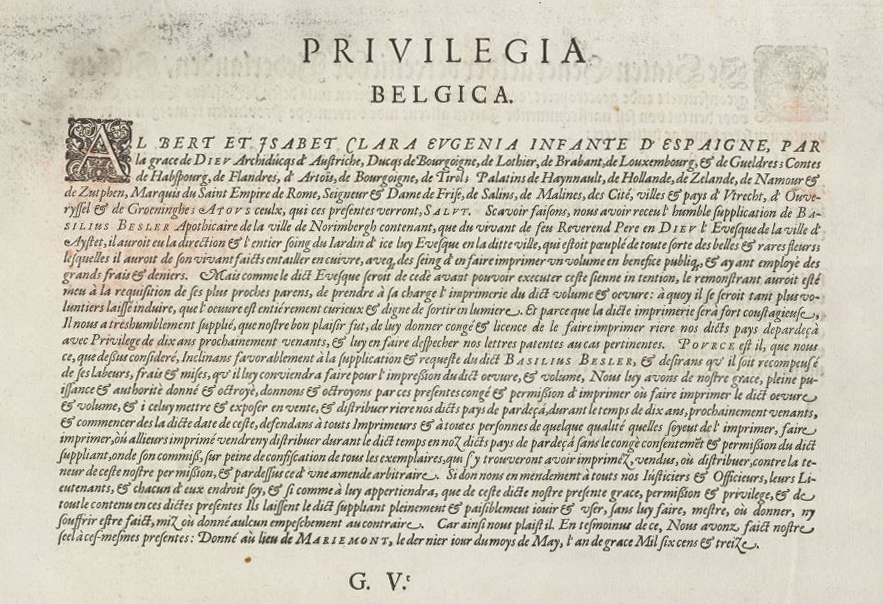
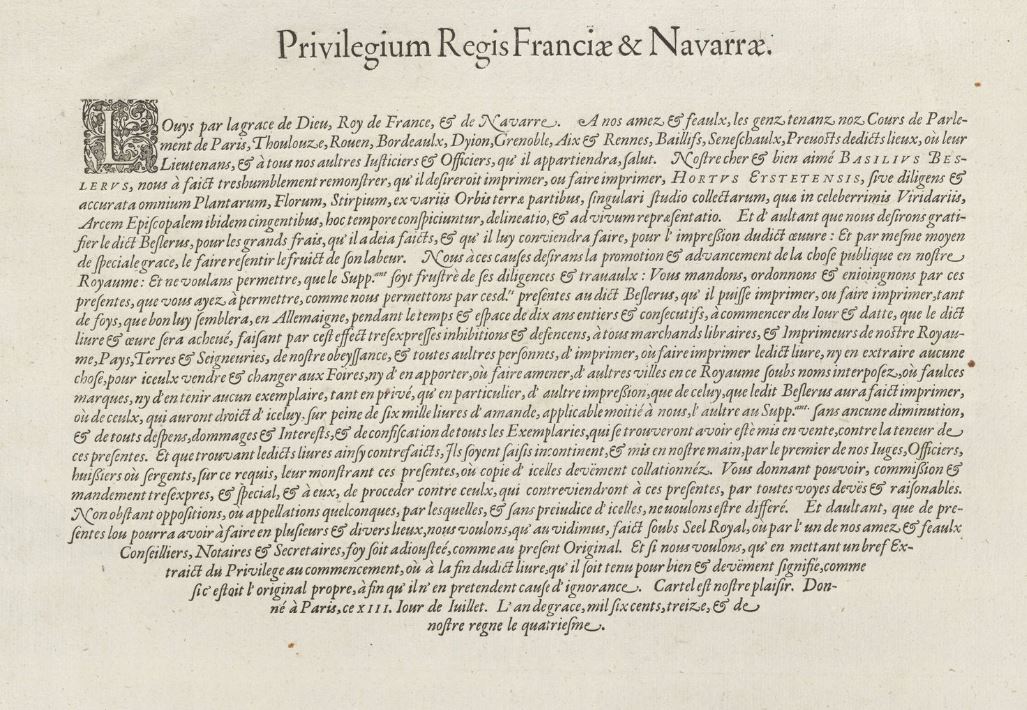
Their significance extends beyond legal history. Once the living garden had been transformed into engraved images, those images had acquired another kind of value: they could circulate far beyond Eichstätt, and they could also be copied.
The same work intended to reach beyond the garden and toward posterity therefore also required protection. Besler wanted the images to travel, but what travelled had become precious.
Colour and the Memory of the Living Plant
For the most sumptuous copies of the Hortus Eystettensis, engraving was only part of the transformation.
The hand-coloured copies include a particularly prestigious form of the work described by the University Library Eichstätt-Ingolstadt as the Fürstenausgabe — the “prince's edition” — in which the plates were printed on one side of the sheet only.
Colour restored something that the copperplate alone could not preserve. Leaves acquire different densities and temperatures of green. Flowers recover their intensity and variation. Roots and bulbs gain weight and substance.
The engraved line supplies the structure.
Colour brings the plant closer again to the experience of something living.
And because colour was applied by hand, each coloured impression acquired an individuality that the repeated copperplate alone could never provide. The printed image could be multiplied.
The final coloured object could never be repeated in precisely the same way.
This combination — reproducible engraving and individual handwork — is part of the extraordinary tension at the heart of the Hortus: a monumental attempt to preserve living forms through an object made by human hands.
Survivors from the Garden
The garden at Eichstätt has changed. Its seasons have passed countless times. Yet individual images created to preserve its plants have continued their own journeys through history.
An original sheet of the Hortus Eystettensis reaches us not simply as an image of a plant, but as a physical survivor of the world that produced it.
Paper, impression and colour have crossed generations. Sheets have passed through books, collections and different hands; some have remained remarkably complete, while others carry the visible consequences of four centuries of preservation and change.
These differences are not distractions from the images.
They are evidence of survival.
Every surviving impression therefore preserves two histories at once: the history of the plant Besler sought to perpetuate, and the biography of the sheet that carried its image forward.
The paper is not merely the support of the image.
It is part of the evidence.
The Posterity Besler Imagined
Besler could not have known what posterity would eventually mean.
He could not have imagined an individual botanical sheet leaving its original volume, passing through collections, crossing countries and surviving more than four hundred years.
He could not have known who would eventually stand in front of it.
But he understood the essential problem.
Human lives end. Flowers fade. Gardens change. Memory disappears unless something carries it forward.
Four centuries later, the surviving sheets of the Hortus Eystettensis make that ambition tangible. They are images of plants that once grew in a particular garden, but they are also objects that have themselves endured.
Besler sought a way beyond the transient. The surviving image is the answer.
It preserves centuries of wonder for the natural world,
careful observation and patient craftsmanship,
thanks to the care of those who chose
to preserve the values it embodies.
Four centuries later,
we are that posterity.
The Hortus Eystettensis was an extraordinary attempt to transform the temporary splendour of a living garden into images capable of travelling beyond the garden, beyond the season and ultimately beyond the lives of those who created them.
The flower disappeared.
The season passed.
The garden changed.
The image remained.
Discover the Hortus Eystettensis Collection
The story continues beyond these pages.
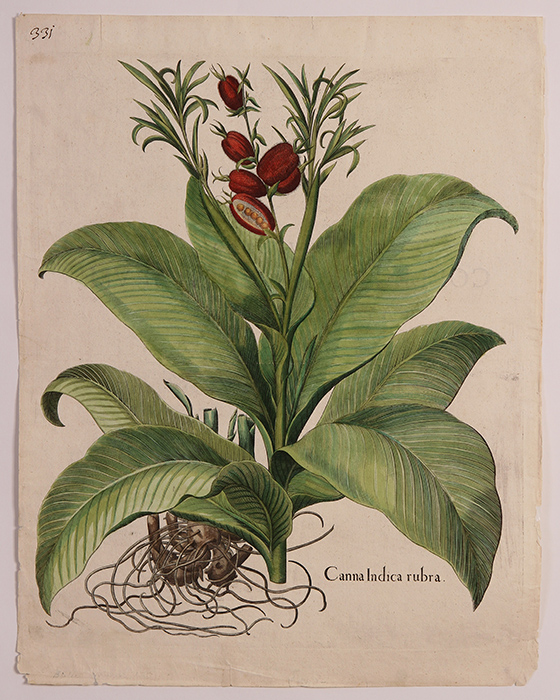
THE IMAGE
Hand-coloured botanical engraving
|
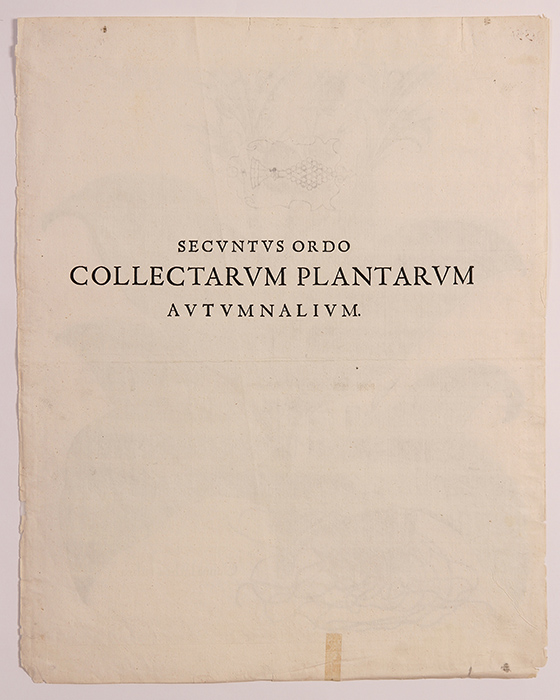
THE VERSO
Original typographical evidence
|
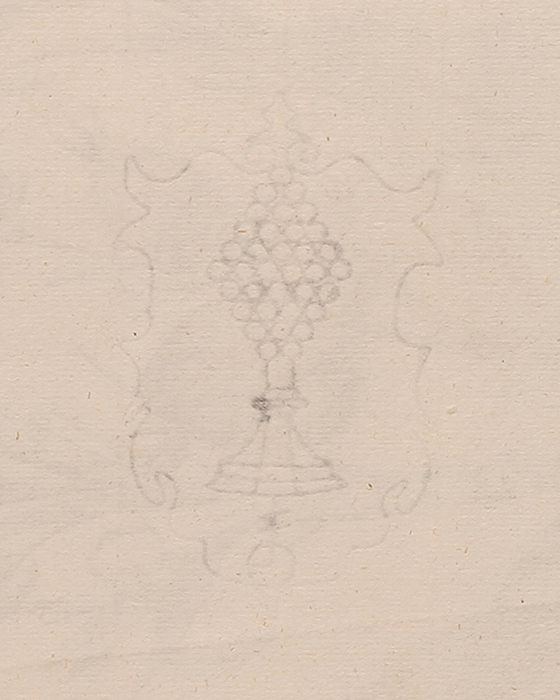
THE PAPER
Watermark within the laid sheet
|
Each original Hortus Eystettensis impression in the Prantique collection is individually examined as both an image and a historical object.
Its catalogue entry brings the story closer: botanical identity and composition are considered alongside the physical evidence preserved by the sheet itself — its paper, watermark, verso, margins and other characteristics revealed through direct examination.
Explore the individual works to discover what each original impression can still reveal.
Related posts
-
 Émile-Allain Séguy and Prismes: Art Deco Geometry in Full Color
At the intersection of biology, modernism, and decorative arts, Émile-Allain Séguy occupies a singular place. Best...Read more
-
 La Plante et ses Applications Ornementales: Eugène Grasset and the Birth of Modern Botanical Design
In the golden age of Art Nouveau, few works embody the marriage between art and nature as perfectly as La Plante et...Read more
-
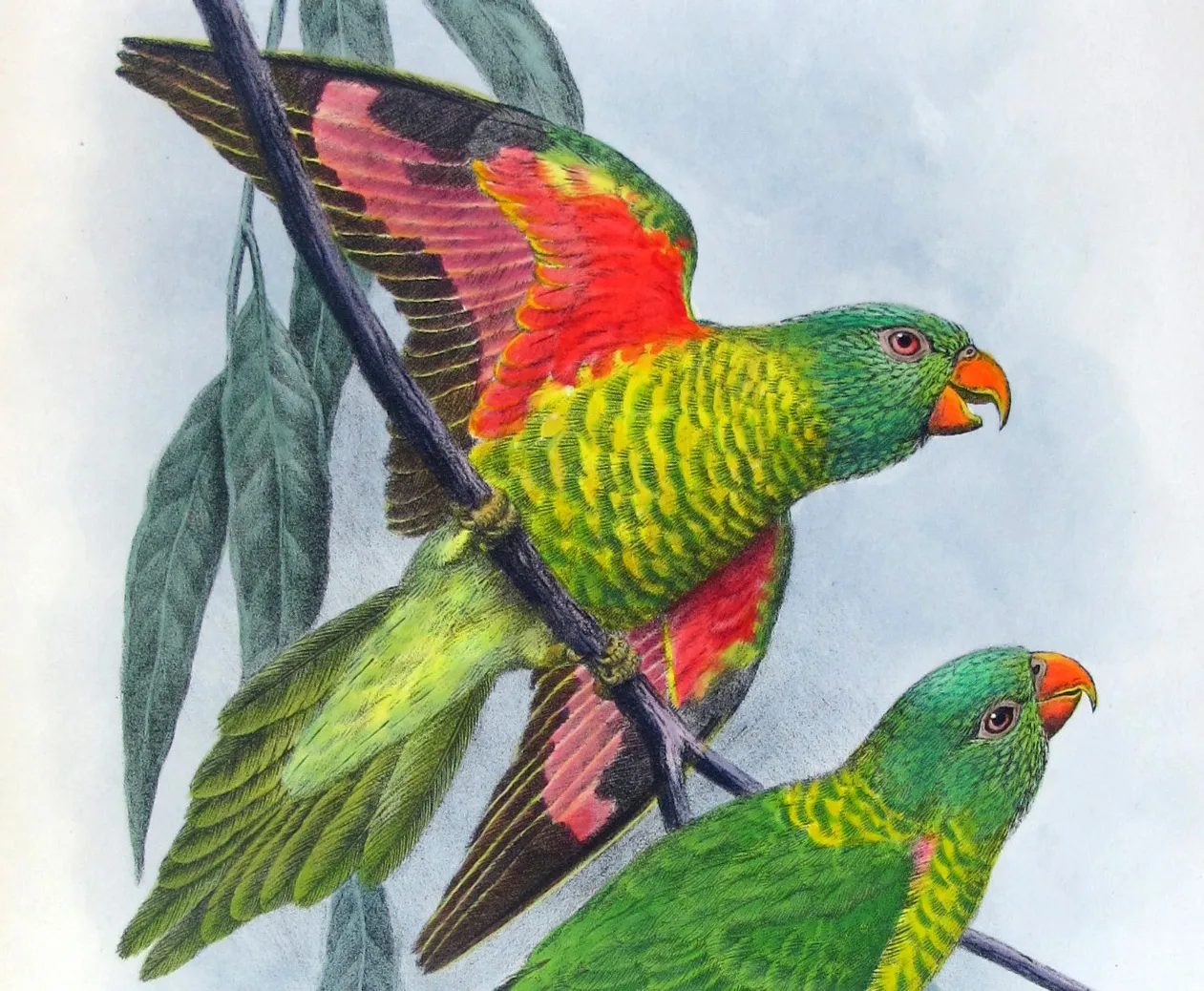 Gregory M. Mathews and The Birds of Australia: A Monument of Ornithological Ambition
Gregory M. Mathews’ The Birds of Australia is a monumental blend of taxonomy and art. This article explores the...Read more
-
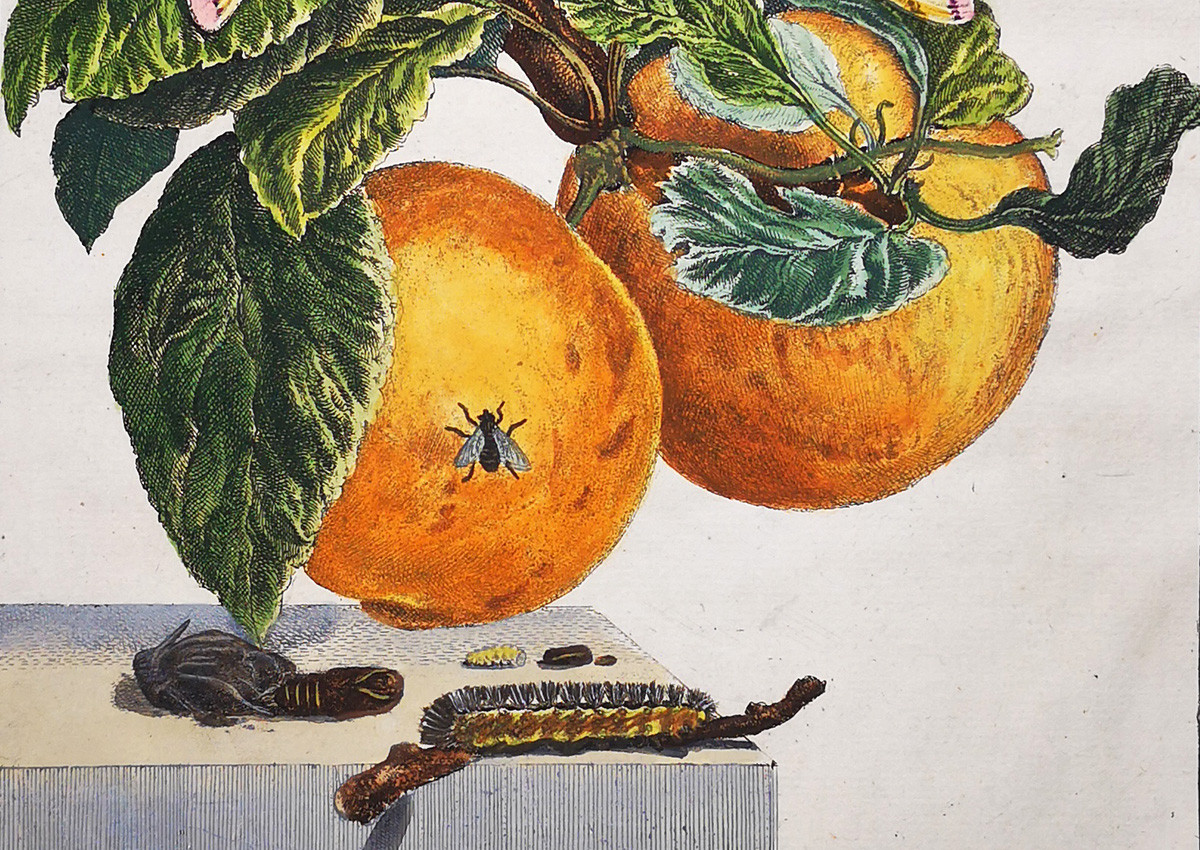 Jacob L'Admiral and the Metamorphosis of Insects – A Dutch Enlightenment Marvel (1774)
In the vibrant scientific atmosphere of the 18th century, Jacob L’Admiral (1700–1775), a Dutch naturalist and...Read more
-
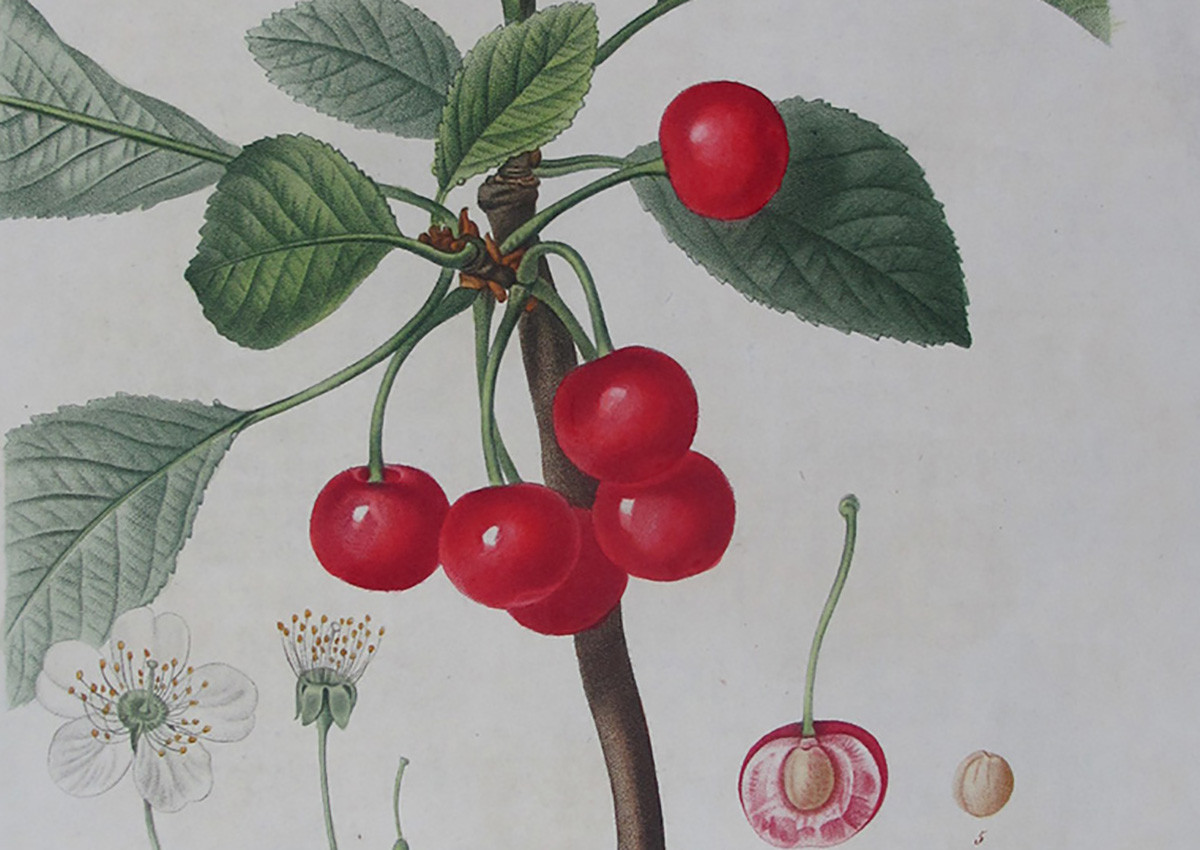 Pierre-Joseph Redouté: Botanical Illustration Beyond Roses
Pierre-Joseph Redouté (1759–1840) is universally regarded as the most influential botanical illustrator of the late...Read more
Leave a comment