- New
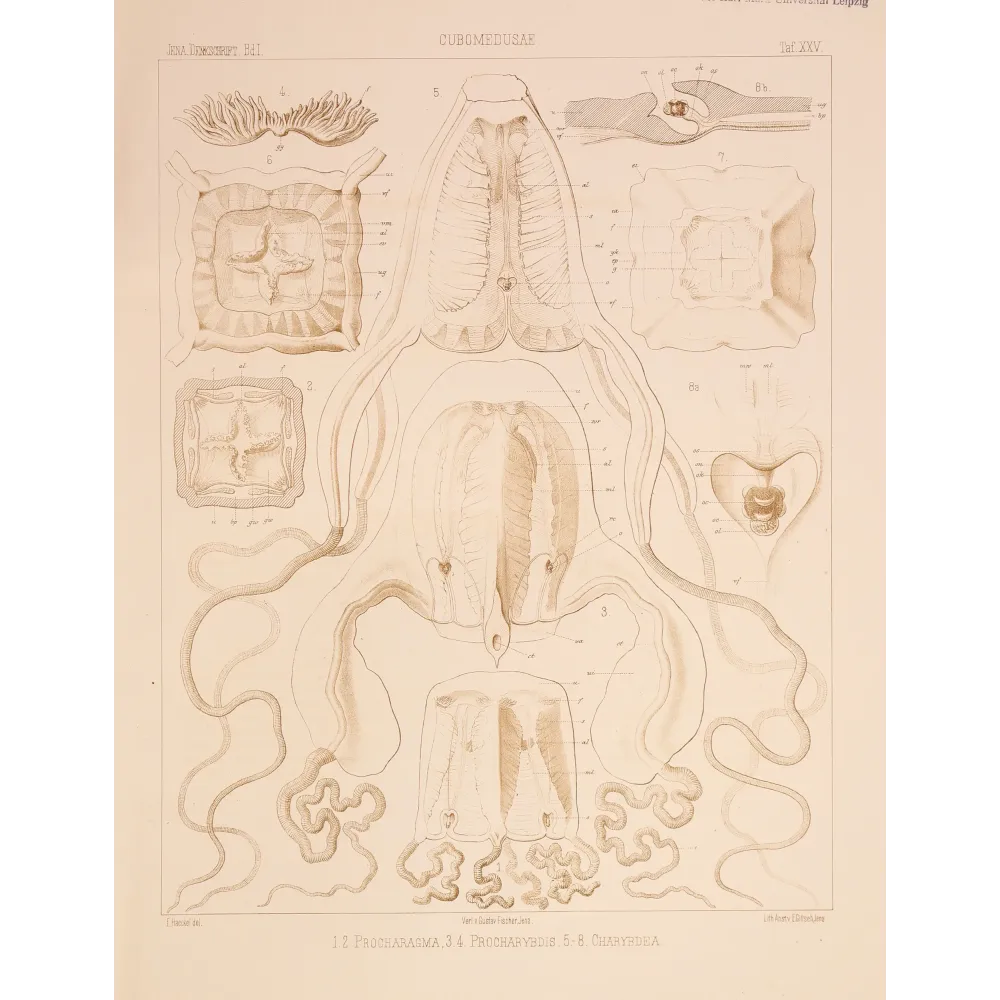
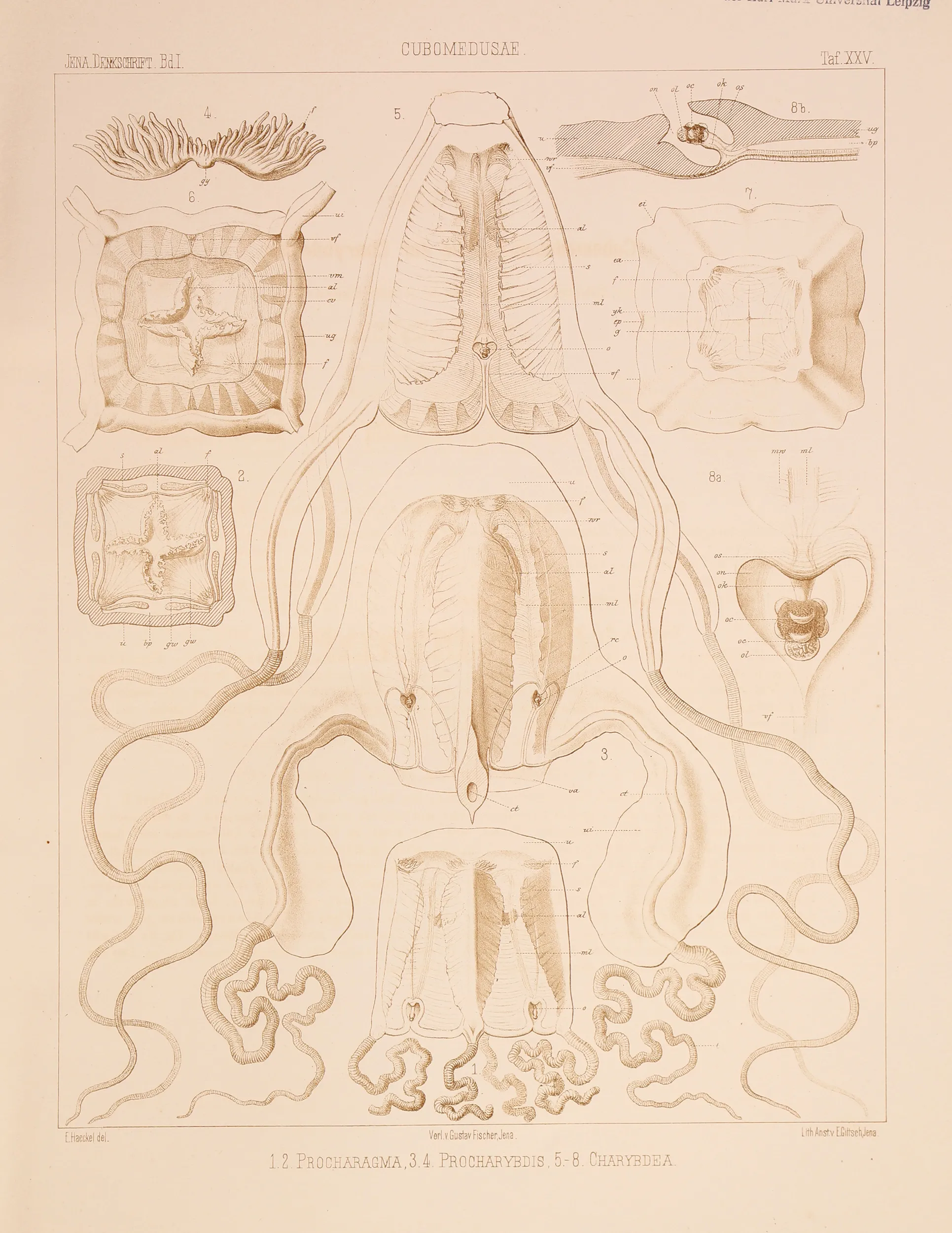
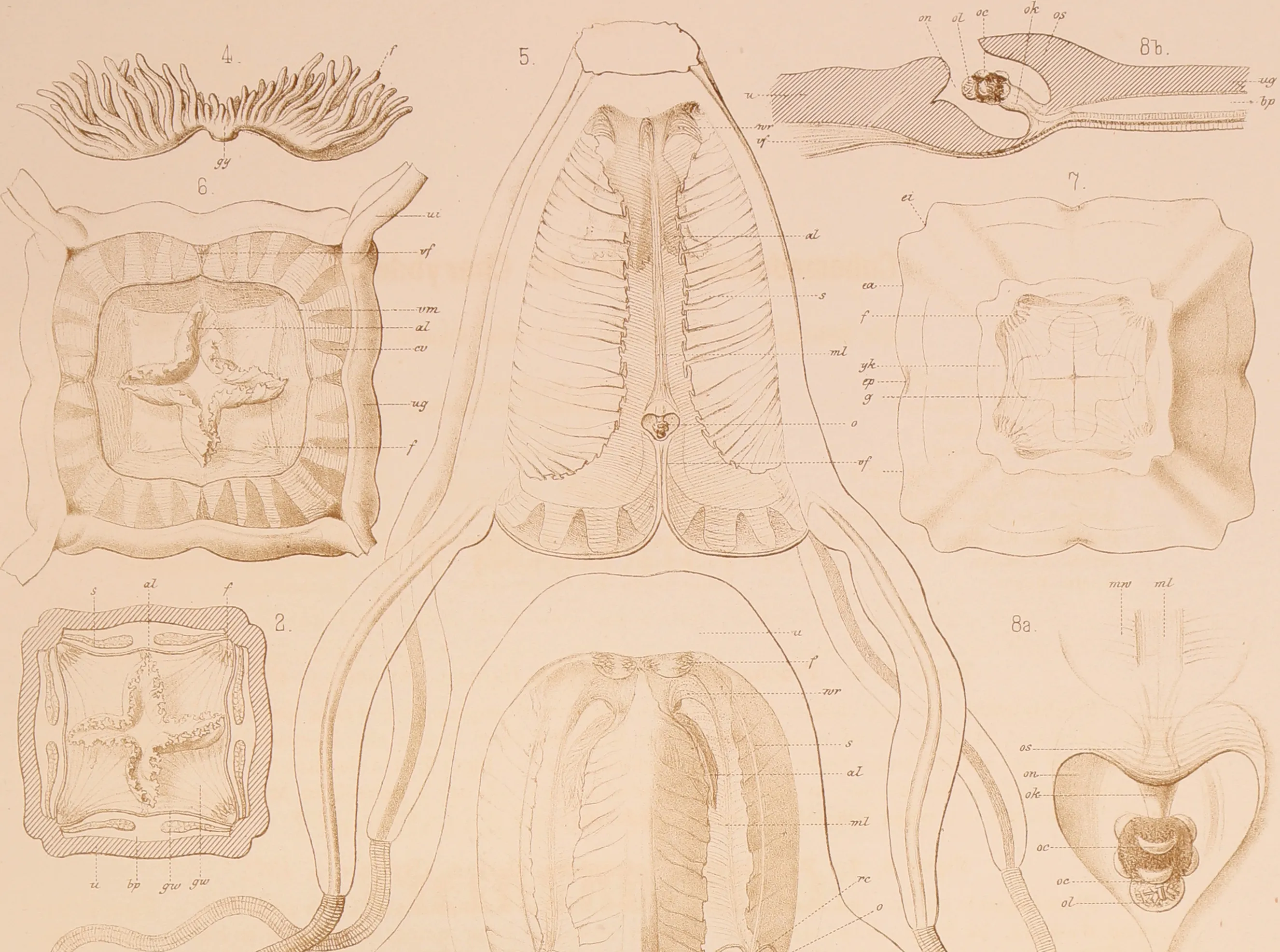
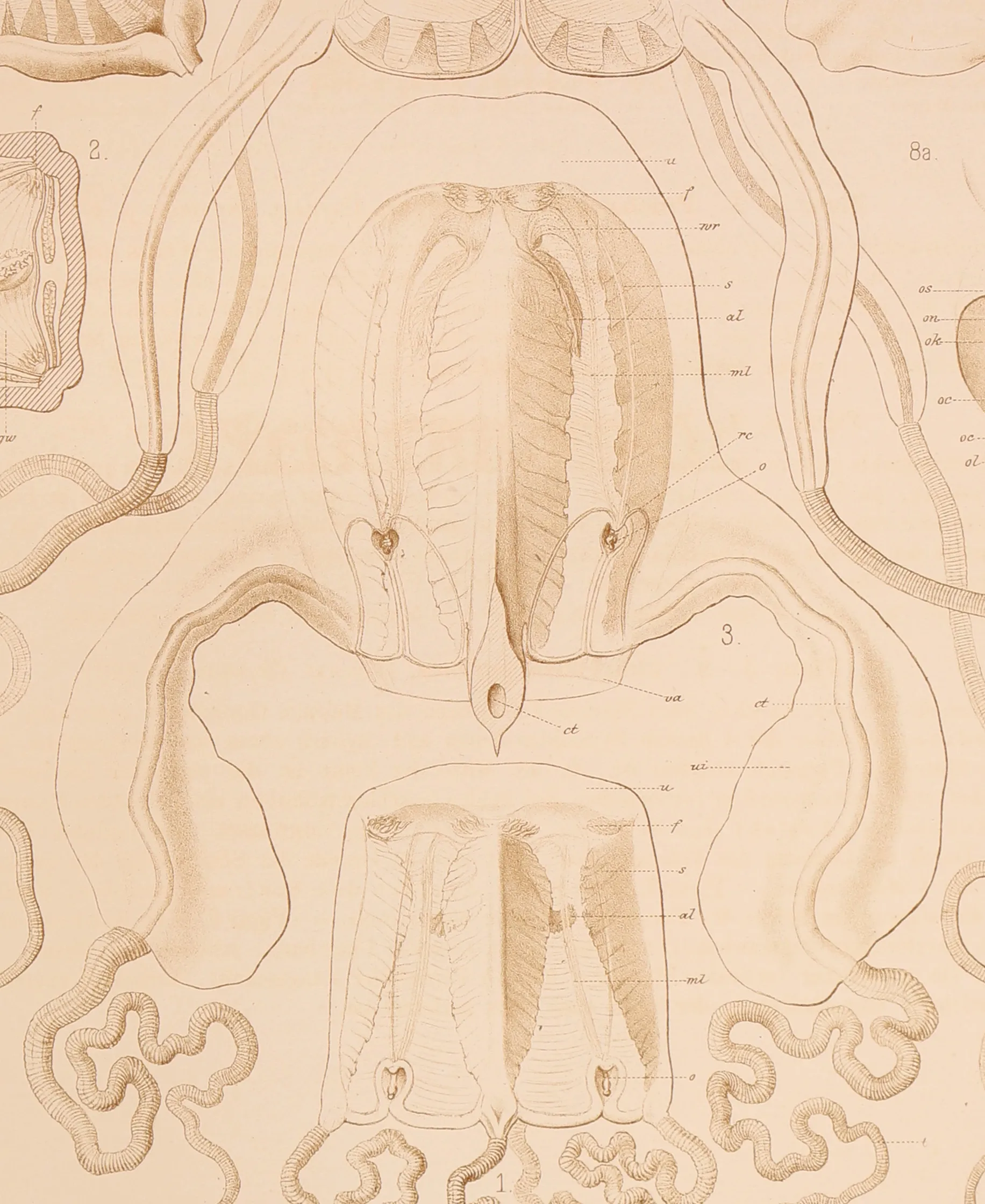
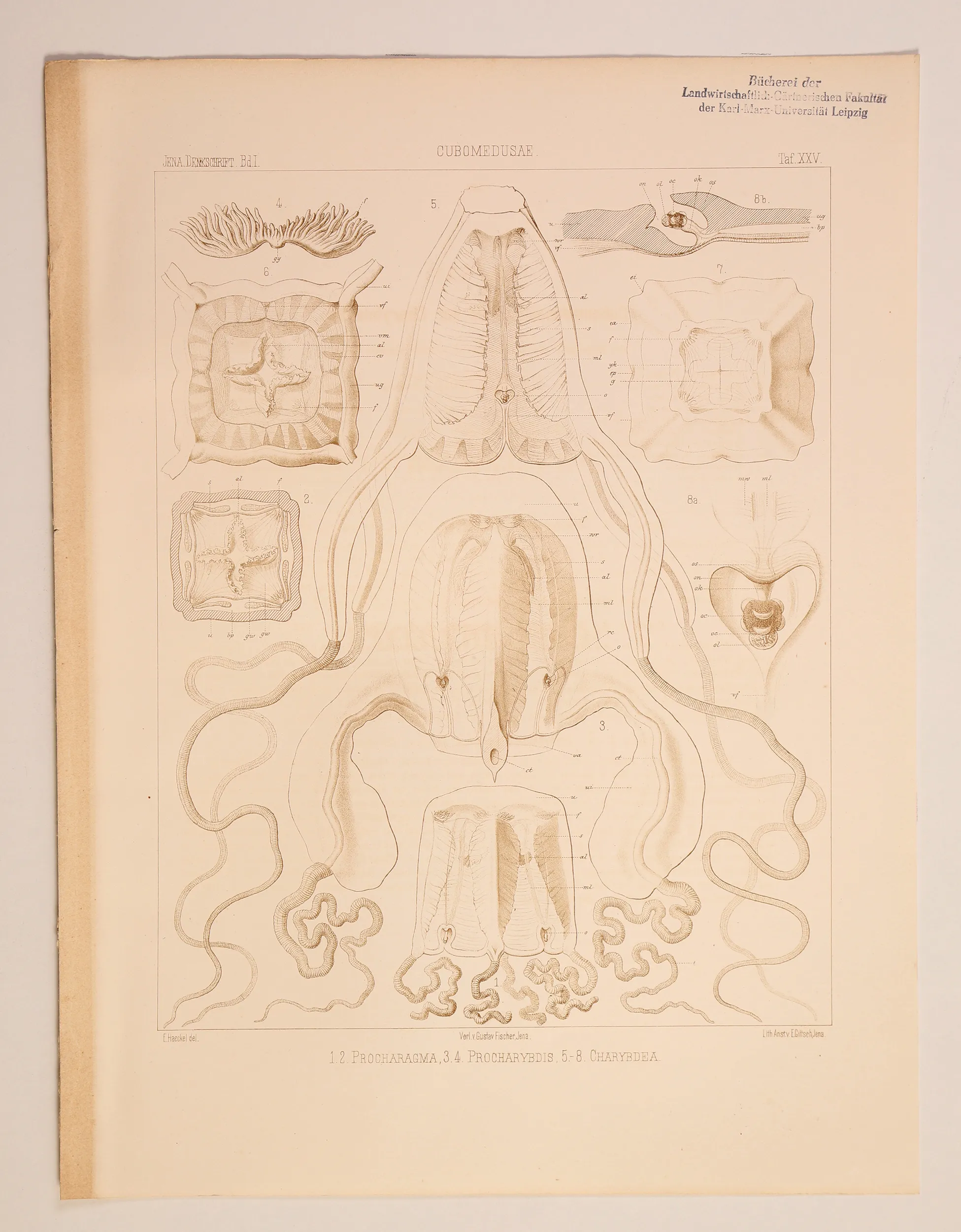
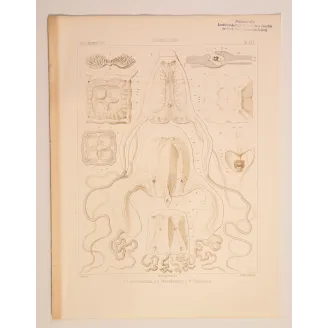
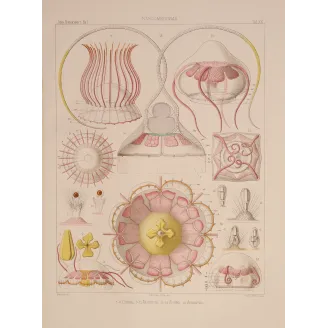
An original 1879 lithograph by Ernst Haeckel from Das System der Medusen, depicting the remarkable anatomy of Cubomedusae (box jellyfish). Combining scientific precision with striking architectural symmetry, this authentic nineteenth-century plate reveals the hidden biological structures behind one of the ocean’s most fascinating marine organisms.
 Delivery policy
Your print will be carefully prepared and shipped worldwide via trusted couriers (UPS or similar).
 Authentic antique prints
Original engravings from the 17th–19th century.
This original lithograph from Ernst Haeckel’s monumental scientific masterpiece Das System der Medusen (1879) explores the remarkable anatomy of the Cubomedusae, commonly known today as box jellyfish. Created during Haeckel’s direct study of marine organisms and bearing the important plate credit “E. Haeckel del.”, the work combines scientific observation with extraordinary visual clarity.
Unlike more decorative representations of marine life, this plate focuses on structure, revealing the hidden geometry and biological organisation of one of the ocean’s most fascinating creatures. The result is an image that feels both scientific and unexpectedly modern.
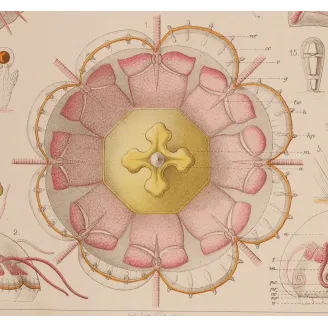
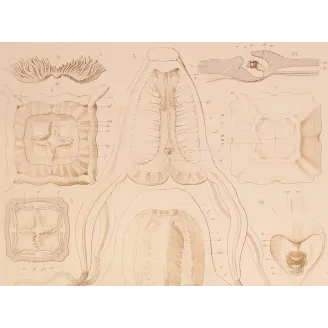
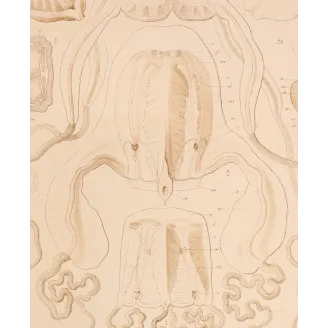
The composition is dominated by a powerful central anatomical study surrounded by detailed sectional views and scientific observations. Together these elements create a visual language that recalls architectural drawings, transforming marine biology into a sophisticated work of graphic design.
With its restrained palette and remarkable symmetry, this lithograph works particularly well in studies, libraries, contemporary interiors and collections devoted to natural history. It appeals equally to collectors of scientific illustration and admirers of minimalist nineteenth-century design.
Displayed on its own, the plate offers a refined and intellectual presence, highlighting Haeckel’s unique ability to reveal beauty through scientific investigation.
Discover more about Ernst Haeckel, his marine studies and the visual world behind his extraordinary jellyfish plates in our editorial feature:
Ernst Haeckel and the Beauty of Jellyfish
Printed on original nineteenth-century paper and preserved in very good antique condition. Minor age-related toning, occasional spotting and gentle signs of handling may be present, consistent with authentic scientific lithographs of this period. Please examine the photographs carefully, as each impression retains its own individual antique character.
Specific References
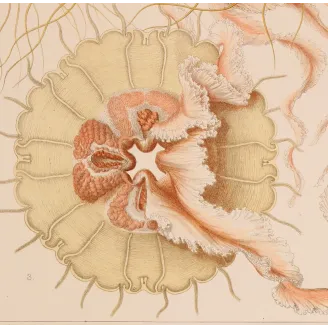
An original 1879 lithograph by Ernst Haeckel from Das System der Medusen, depicting the remarkable forms of the Narcomedusae. Combining delicate pink, coral and golden tones with extraordinary scientific precision, this authentic nineteenth-century marine study reveals why Haeckel's jellyfish imagery later became one of the defining visual inspirations of Art Nouveau.
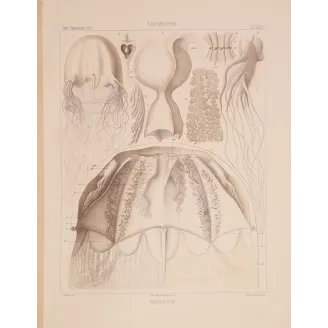
An original 1879 lithograph by Ernst Haeckel from Das System der Medusen, depicting the extraordinary anatomy of Chirodropus, one of the most remarkable Cubomedusae. Combining scientific precision, monumental scale and elegant nineteenth-century lithographic craftsmanship, this authentic marine study reveals the hidden architecture of one of nature’s most complex jellyfish forms.
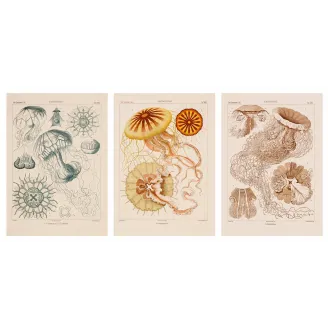
A rare curated suite of three original 1879 lithographs by Ernst Haeckel, bringing together medusae later visually echoed in his iconic Kunstformen der Natur. A museum-grade grouping combining scientific beauty, early marine illustration and exceptional decorative presence.
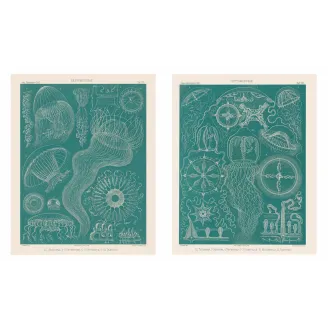
A refined pair of original 19th-century jellyfish lithographs by Ernst Haeckel, selected from Das System der Medusen (1879). Rendered in delicate monochrome cyan tones, these scientific plates reveal the hidden geometry of marine life with remarkable decorative elegance. A striking museum-quality ensemble for interiors inspired by science, design and natural history.
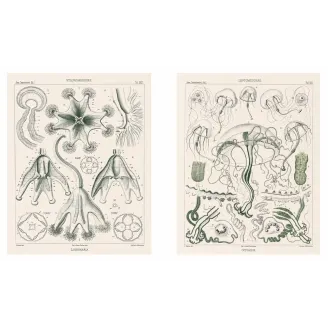
A refined curated diptych of two original 1879 lithographs by Ernst Haeckel from Das System der Medusen, printed in delicate monochromatic green and bearing the plate credit “E. Haeckel del.” Combining marine geometry with scientific precision, these authentic nineteenth-century jellyfish studies create an unusually elegant visual ensemble for collectors, interiors and natural history enthusiasts.
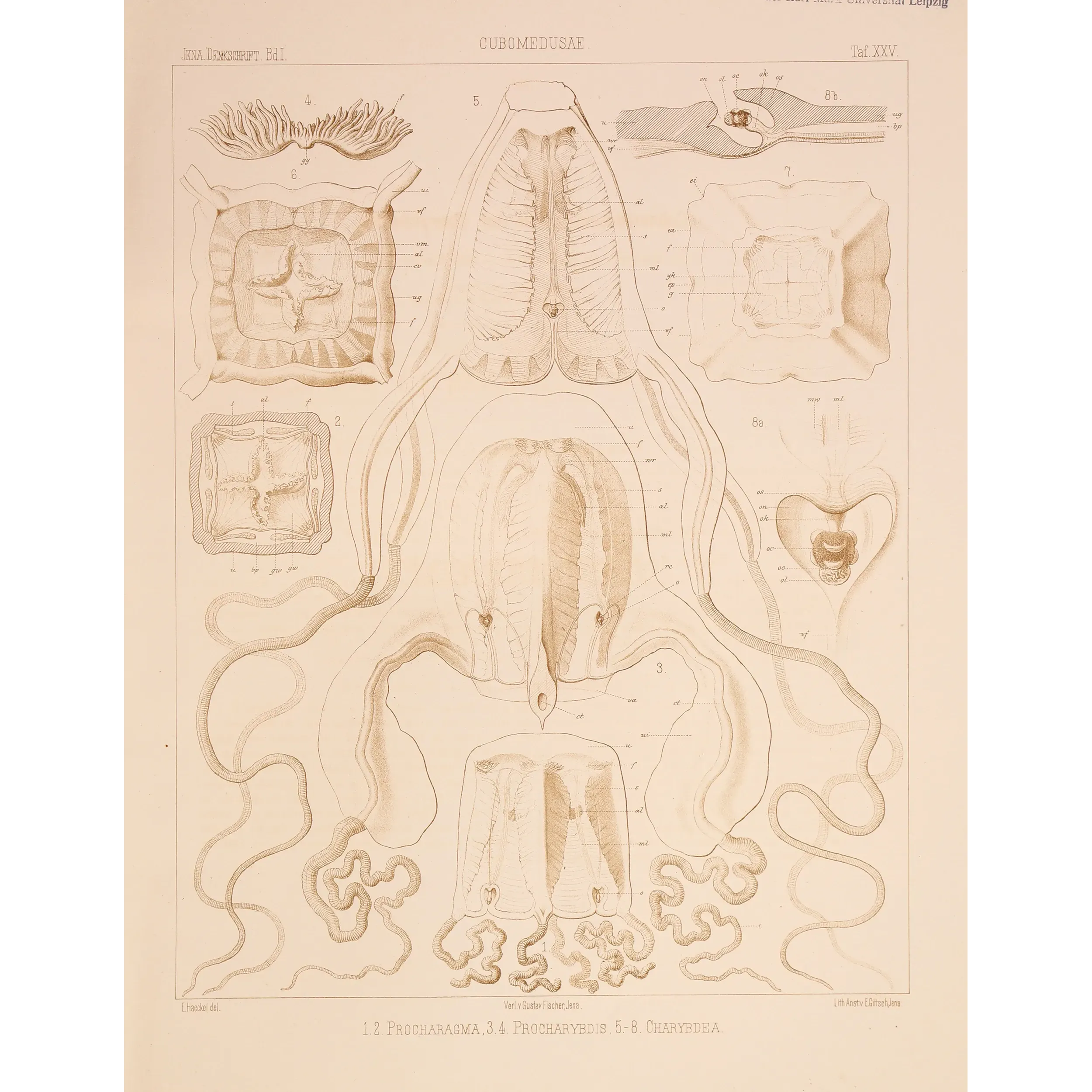
An original 1879 lithograph by Ernst Haeckel from Das System der Medusen, depicting the remarkable anatomy of Cubomedusae (box jellyfish). Combining scientific precision with striking architectural symmetry, this authentic nineteenth-century plate reveals the hidden biological structures behind one of the ocean’s most fascinating marine organisms.