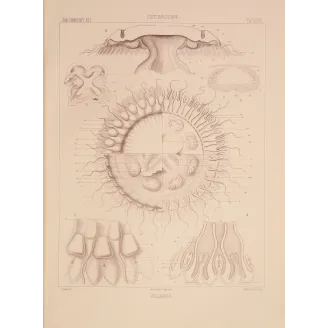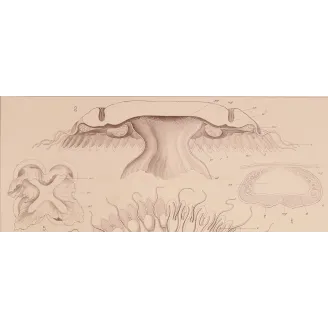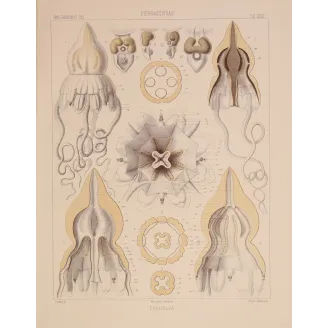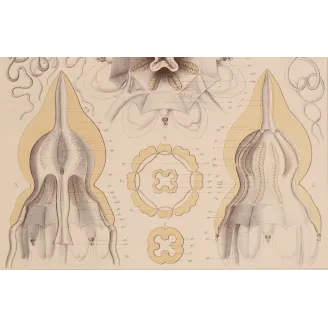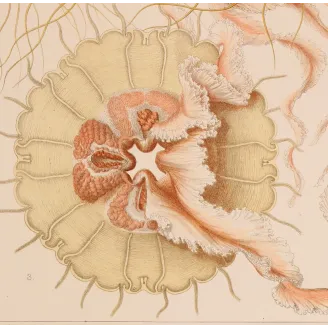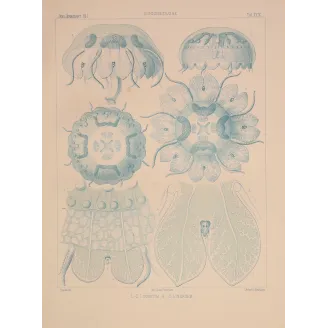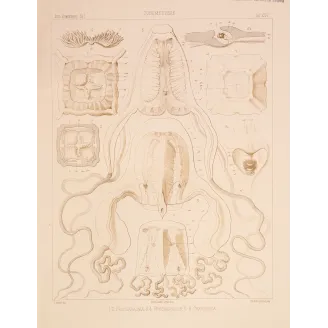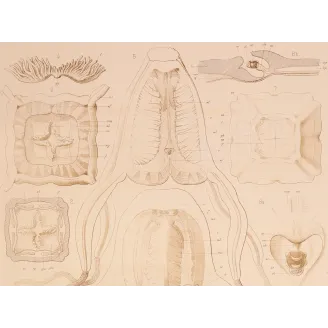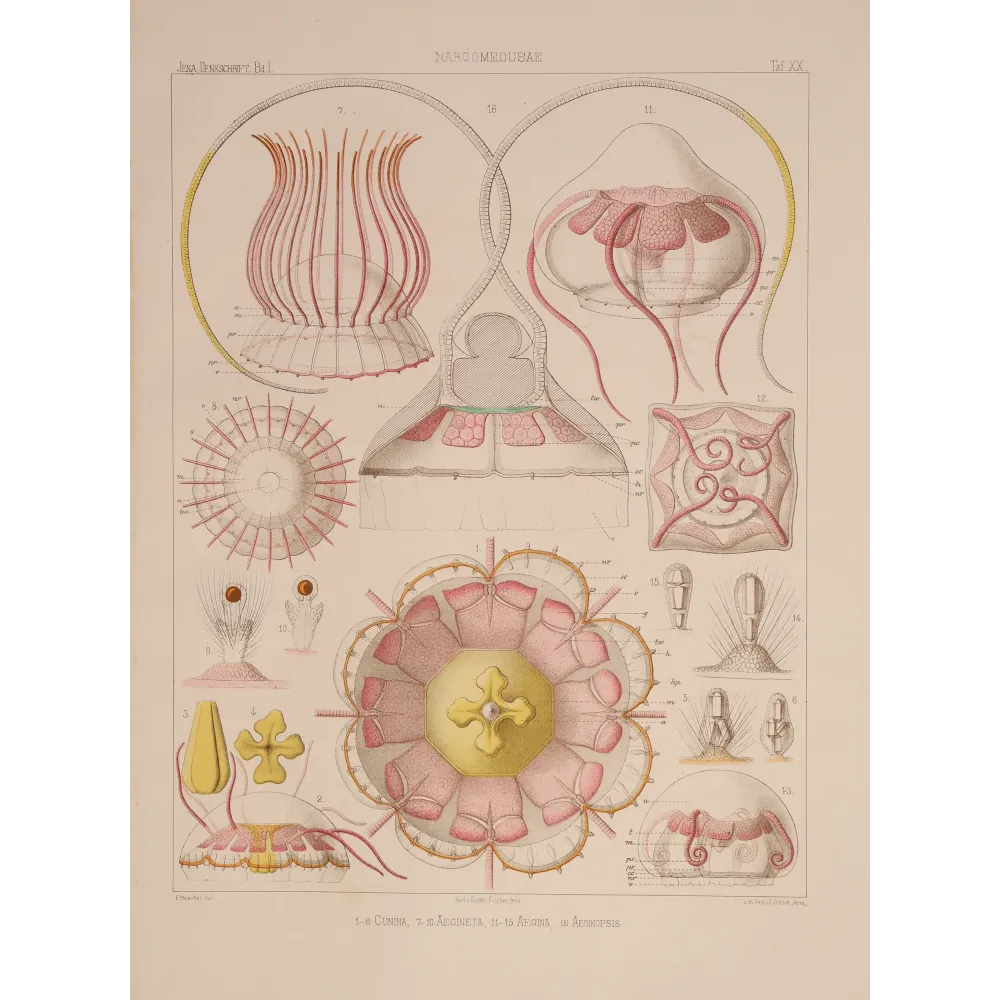
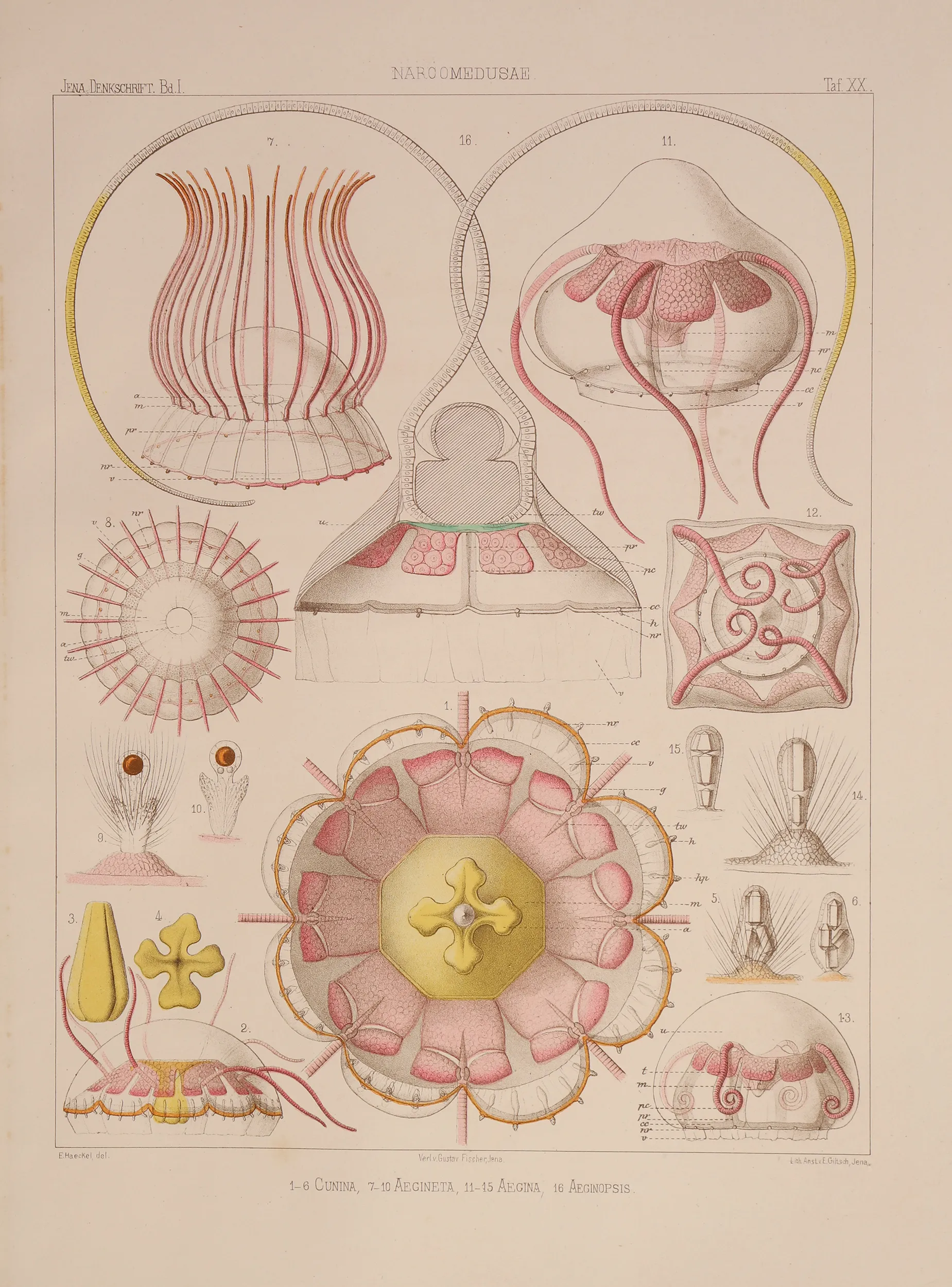
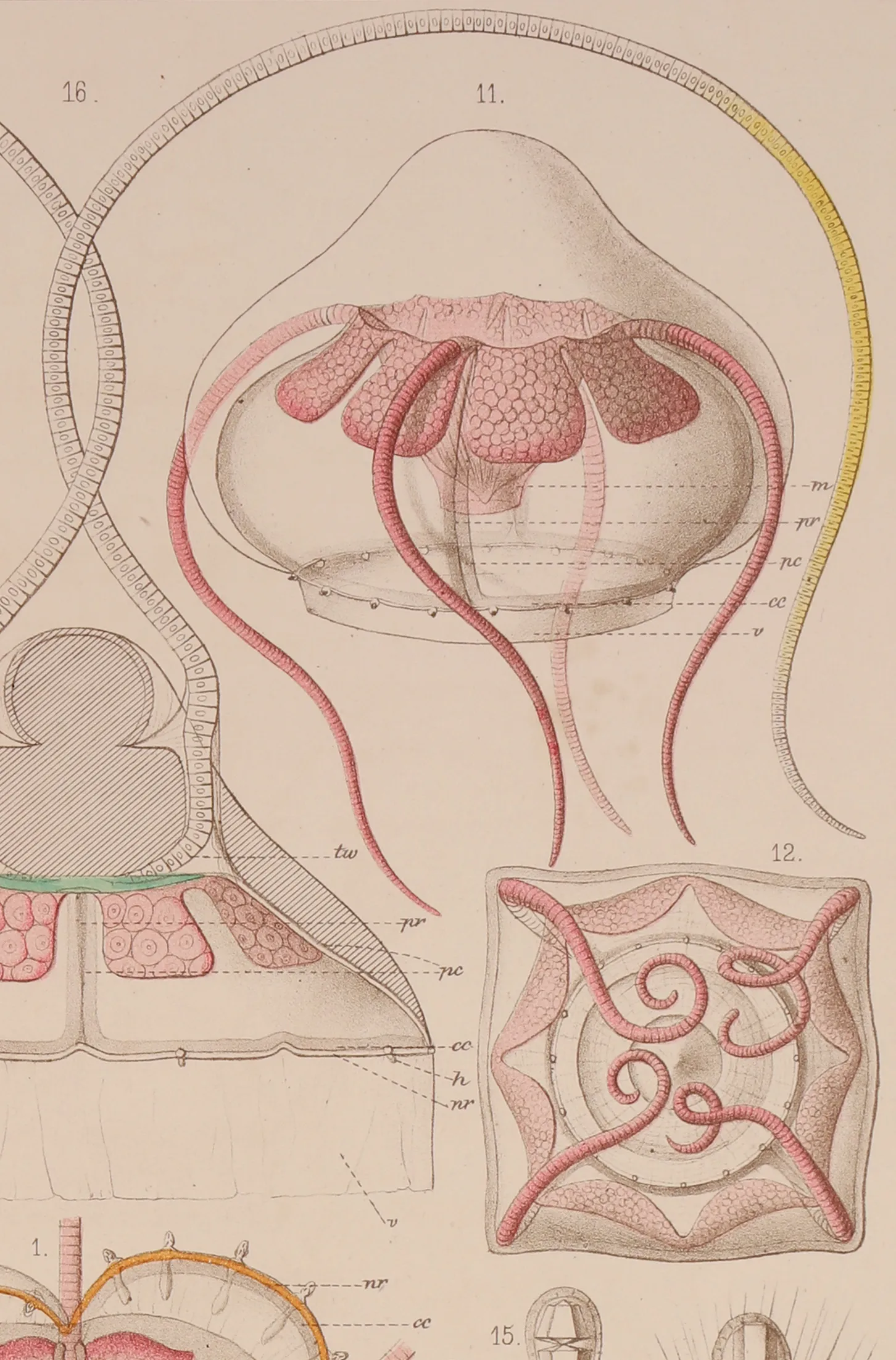
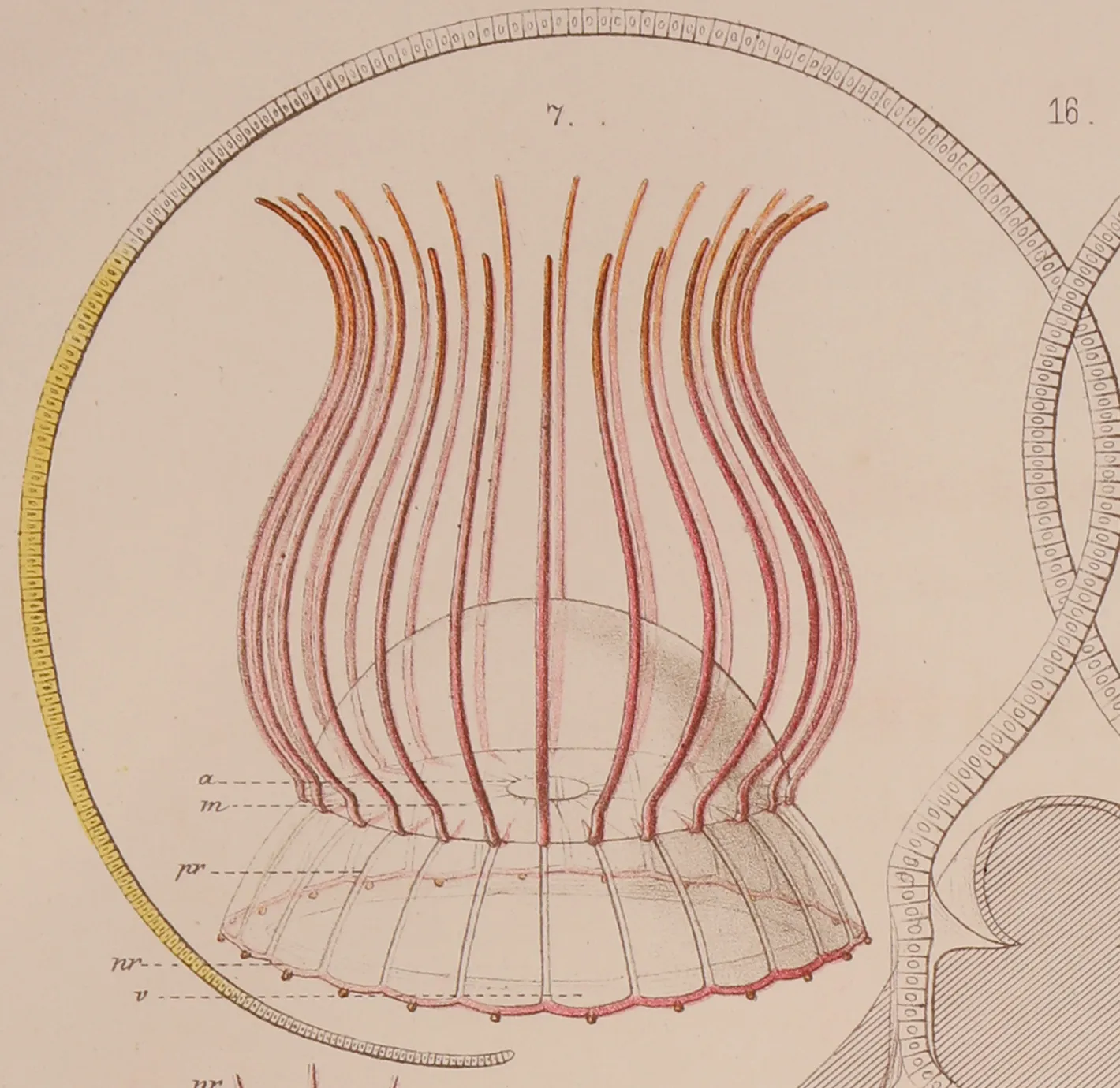
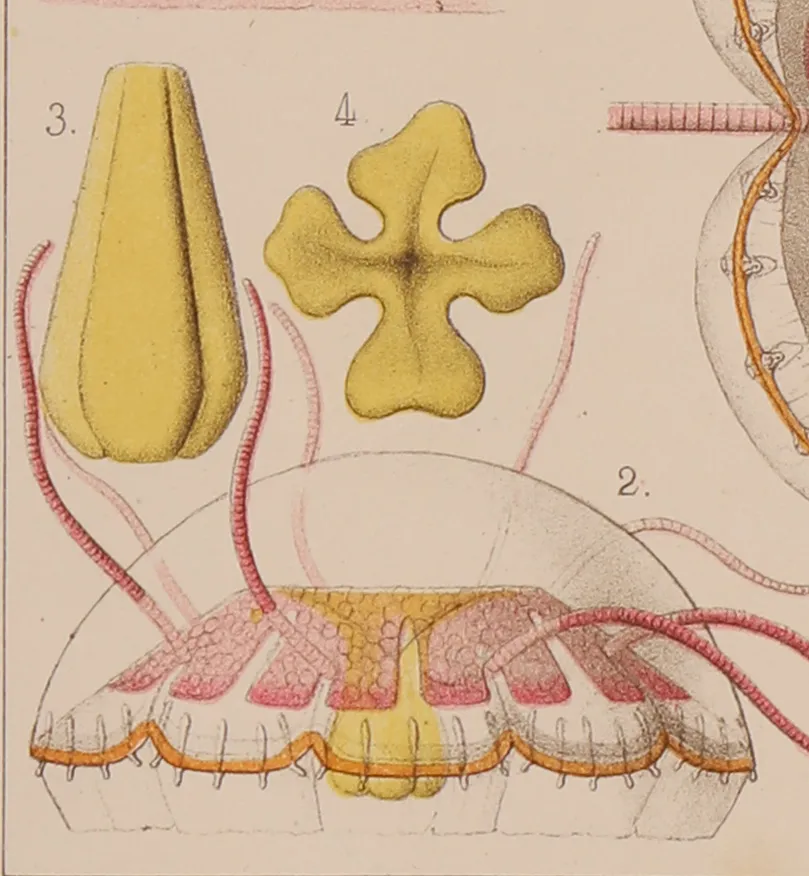

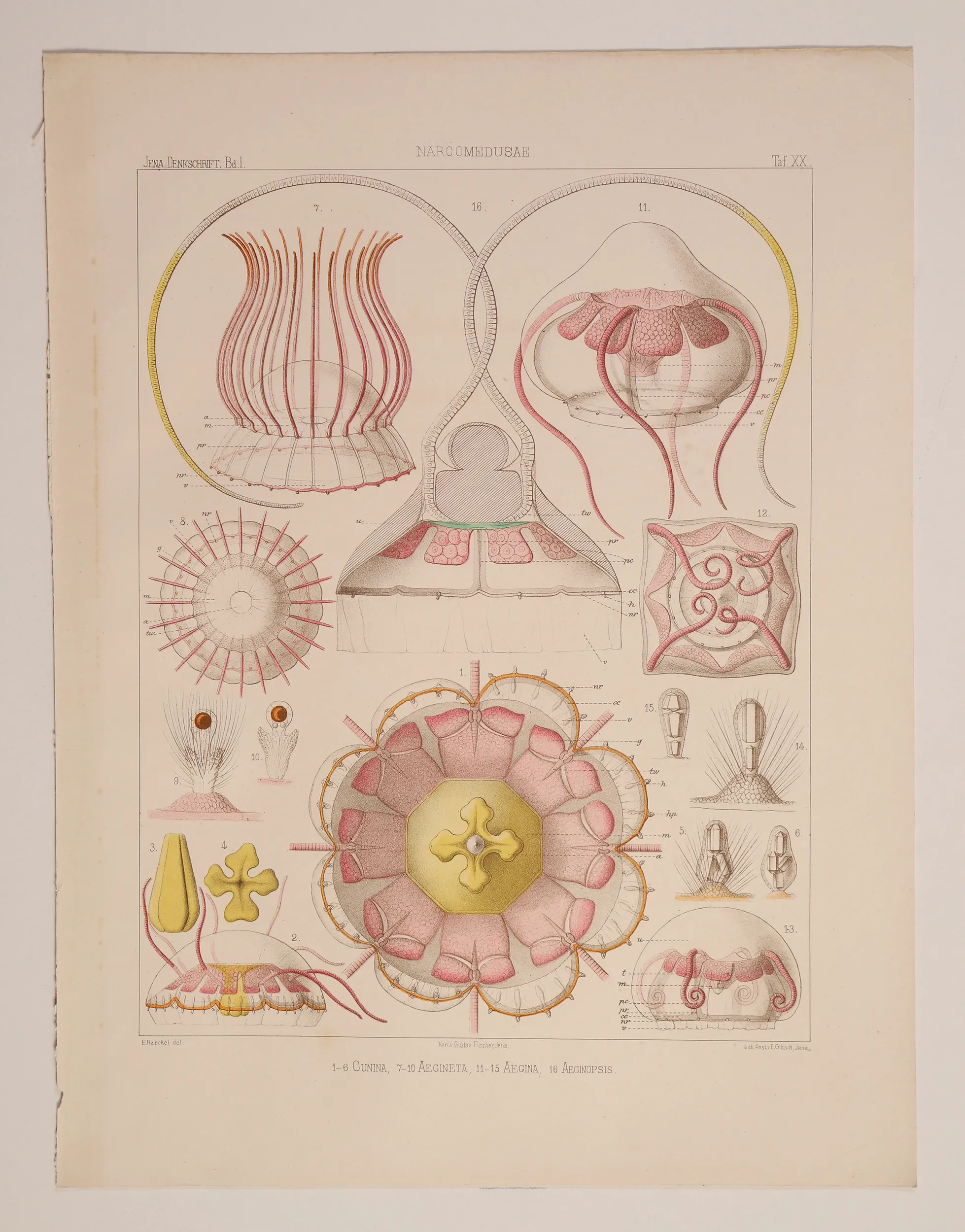
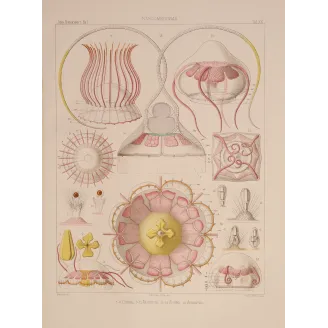
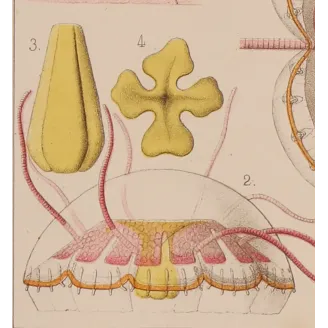
An original 1879 lithograph by Ernst Haeckel from Das System der Medusen, depicting the remarkable forms of the Narcomedusae. Combining delicate pink, coral and golden tones with extraordinary scientific precision, this authentic nineteenth-century marine study reveals why Haeckel's jellyfish imagery later became one of the defining visual inspirations of Art Nouveau.
 Delivery policy
Your print will be carefully prepared and shipped worldwide via trusted couriers (UPS or similar).
 Authentic antique prints
Original engravings from the 17th–19th century.
This original lithograph from Ernst Haeckel’s monumental scientific masterpiece Das System der Medusen (1879) depicts the remarkable forms of the Narcomedusae. Printed in delicate pink, coral and golden tones, and bearing the important plate credit “E. Haeckel del.”, the work reveals Haeckel’s unique ability to transform marine biology into a language of visual harmony.
Few scientific illustrations of the nineteenth century so clearly anticipate the visual language that would later define Art Nouveau. In this plate, anatomical observation, radial symmetry and ornamental rhythm meet in a composition of exceptional elegance.
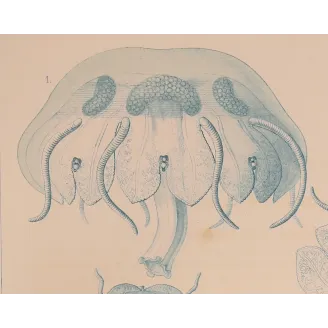
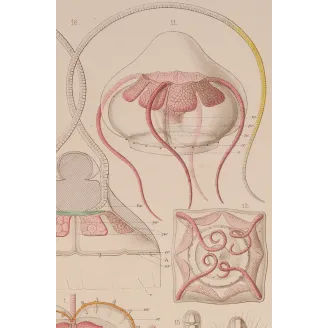
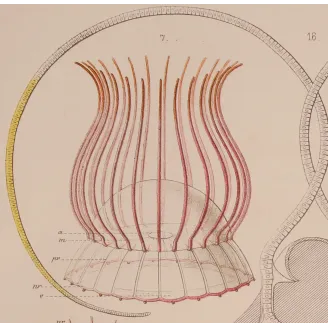
The composition brings together several medusae forms, including Cunina, Aegineta, Aegina and Aeginopsis. Their circular structures, delicate tentacles and translucent anatomical forms create a visual rhythm that feels both scientific and ornamental.
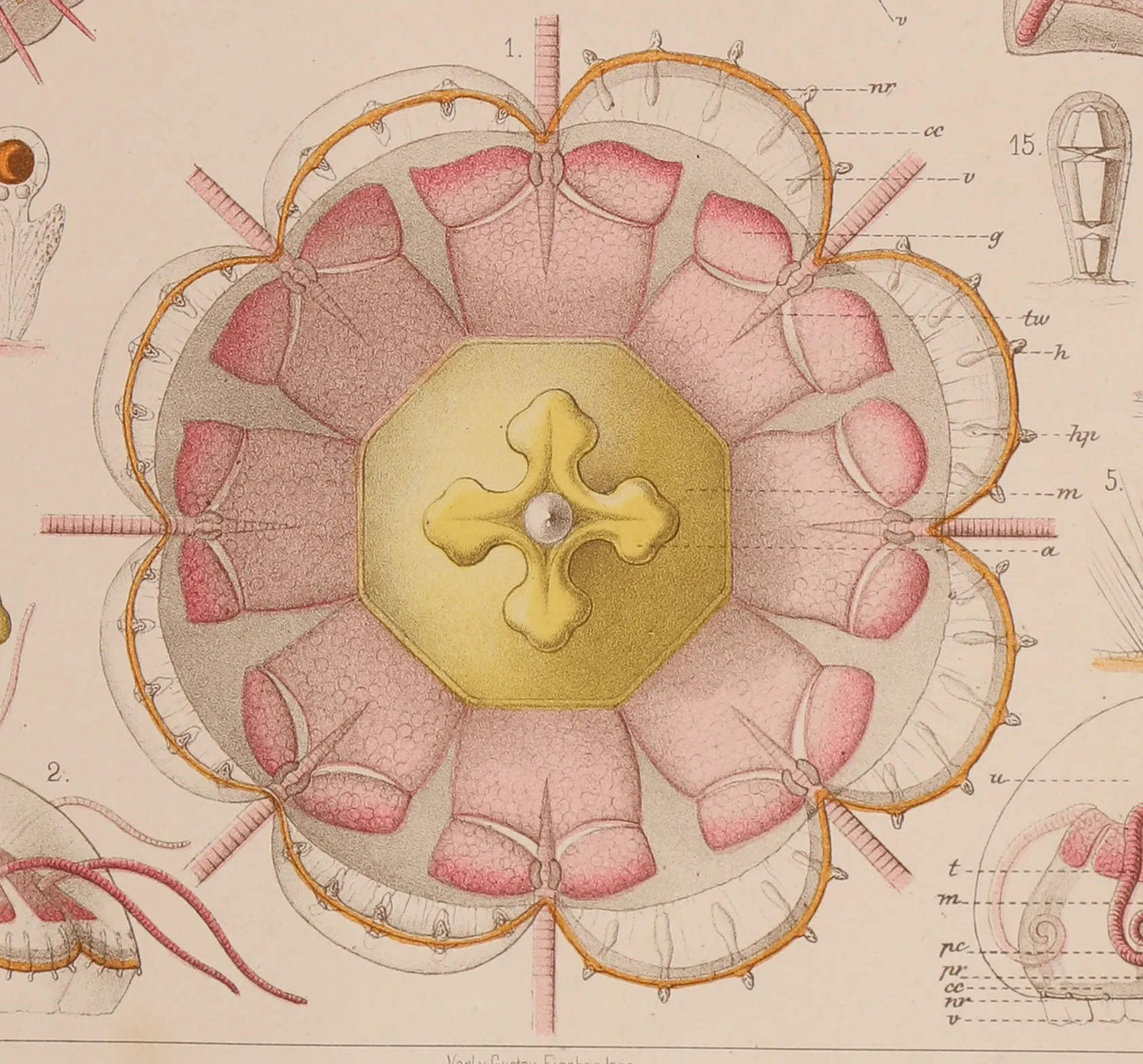
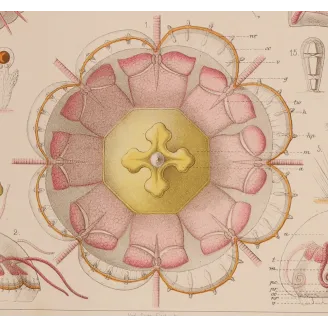
The central figure, with its soft pink geometry and golden core, gives the plate a particularly decorative presence, while the surrounding studies preserve the precision and clarity expected from Haeckel’s scientific work.
With its refined palette and almost floral symmetry, this lithograph is one of the most visually accessible plates from the collection. It has strong appeal for collectors of natural history, admirers of Art Nouveau, and interiors seeking a rare marine artwork with both scientific depth and decorative grace.
Displayed on its own, the plate offers a sophisticated focal point; placed alongside other Haeckel medusae, it introduces warmth, colour and ornamental balance into a curated wall composition.
Discover more about Ernst Haeckel, his marine studies and the visual world behind his extraordinary jellyfish plates in our editorial feature:
Ernst Haeckel and the Beauty of Jellyfish
Printed on original nineteenth-century paper and preserved in very good antique condition. Minor age-related toning, occasional spotting and gentle signs of handling may be present, consistent with authentic scientific lithographs of this period. Please examine the photographs carefully, as each impression retains its own individual antique character.
Specific References
Original 1879 lithograph from Ernst Haeckel's Das System der Medusen, depicting Collaspis jellyfish with extraordinary anatomical precision. A refined scientific composition centered on radial symmetry and marine morphology.
Original 1879 lithograph from Ernst Haeckel's Das System der Medusen, depicting Pericolpa and related Peromedusae forms. A refined marine study combining biological symmetry, architectural structure and delicate golden tones.
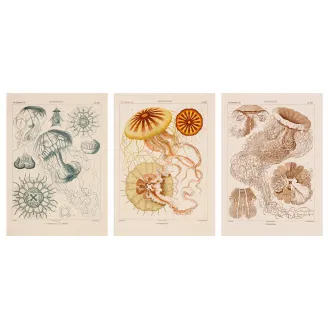
A rare curated suite of three original 1879 lithographs by Ernst Haeckel, bringing together medusae later visually echoed in his iconic Kunstformen der Natur. A museum-grade grouping combining scientific beauty, early marine illustration and exceptional decorative presence.
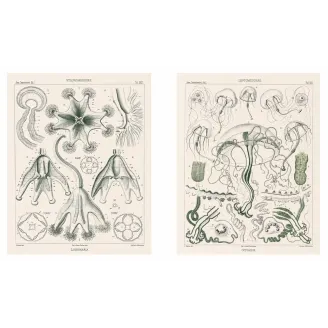
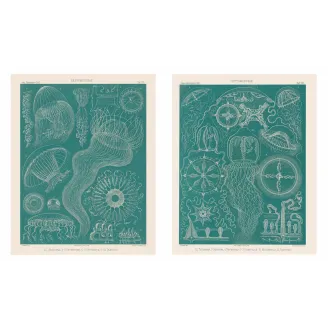
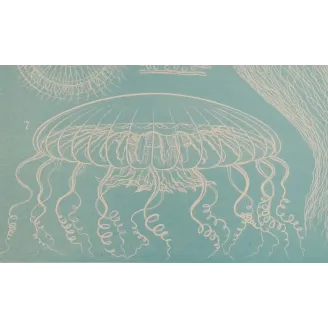
A refined curated diptych of two original 1879 lithographs by Ernst Haeckel from Das System der Medusen, printed in delicate monochromatic green and bearing the plate credit “E. Haeckel del.” Combining marine geometry with scientific precision, these authentic nineteenth-century jellyfish studies create an unusually elegant visual ensemble for collectors, interiors and natural history enthusiasts.
Original 1879 lithograph from Ernst Haeckel's Das System der Medusen, depicting Linantha and Linerges jellyfish in a refined pale-blue palette. A striking combination of scientific precision, marine symmetry and decorative elegance.
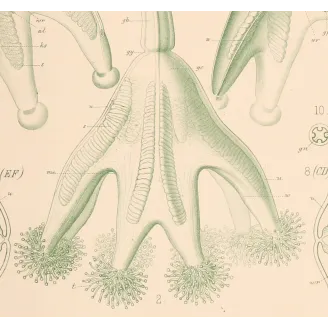
An original 1879 lithograph by Ernst Haeckel from Das System der Medusen, depicting the extraordinary anatomy of Chirodropus, one of the most remarkable Cubomedusae. Combining scientific precision, monumental scale and elegant nineteenth-century lithographic craftsmanship, this authentic marine study reveals the hidden architecture of one of nature’s most complex jellyfish forms.
An original 1879 lithograph by Ernst Haeckel from Das System der Medusen, depicting the remarkable anatomy of Cubomedusae (box jellyfish). Combining scientific precision with striking architectural symmetry, this authentic nineteenth-century plate reveals the hidden biological structures behind one of the ocean’s most fascinating marine organisms.
A refined pair of original 19th-century jellyfish lithographs by Ernst Haeckel, selected from Das System der Medusen (1879). Rendered in delicate monochrome cyan tones, these scientific plates reveal the hidden geometry of marine life with remarkable decorative elegance. A striking museum-quality ensemble for interiors inspired by science, design and natural history.
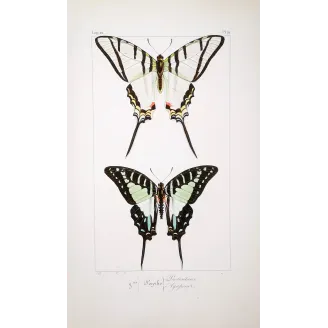
A refined 19th-century hand-colored engraving depicting two elegant kite swallowtails: Eurytides protesilaus and Eurytides agapenor. Published in Hippolyte Lucas’s Exotic Butterflies (1835), the plate highlights their distinctive elongated tails and delicate translucent wings.
An original 1879 lithograph by Ernst Haeckel from Das System der Medusen, depicting the remarkable anatomy of Cubomedusae (box jellyfish). Combining scientific precision with striking architectural symmetry, this authentic nineteenth-century plate reveals the hidden biological structures behind one of the ocean’s most fascinating marine organisms.
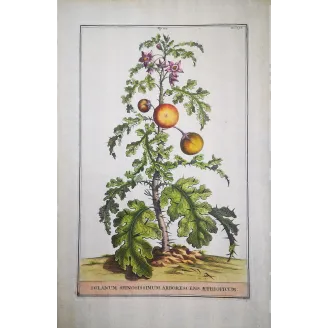
Original 17th-century hand-colored engraving of a spiny Solanum (Solanum aethiopicum) by Abraham Munting, featuring thorned stems, vivid fruit and striking botanical contrast.
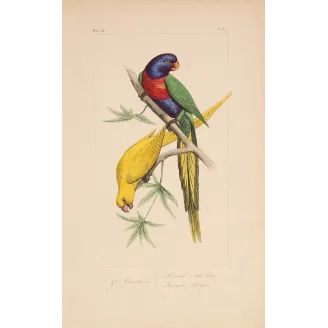
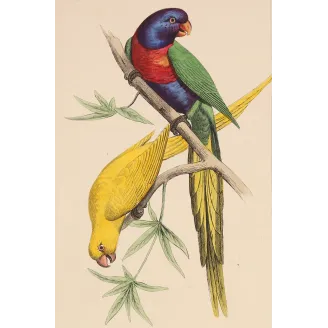
A striking 19th-century engraving depicting two vividly colored parakeets in a dynamic composition. The intense contrast of blue, red, green and yellow creates a highly decorative work, ideal as a focal piece in refined interiors.
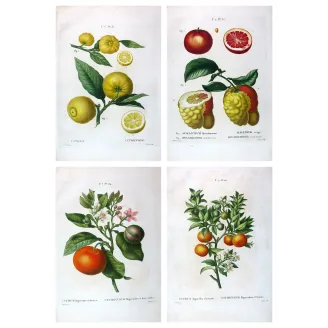
A coherent ensemble of eight original orange and bigarade engravings by Pancrace Bessa, reflecting the cultivated discipline of French orangeries in the Napoleonic era. Botanical precision and architectural composure unite in a refined citrus portfolio preserved as a complete series.
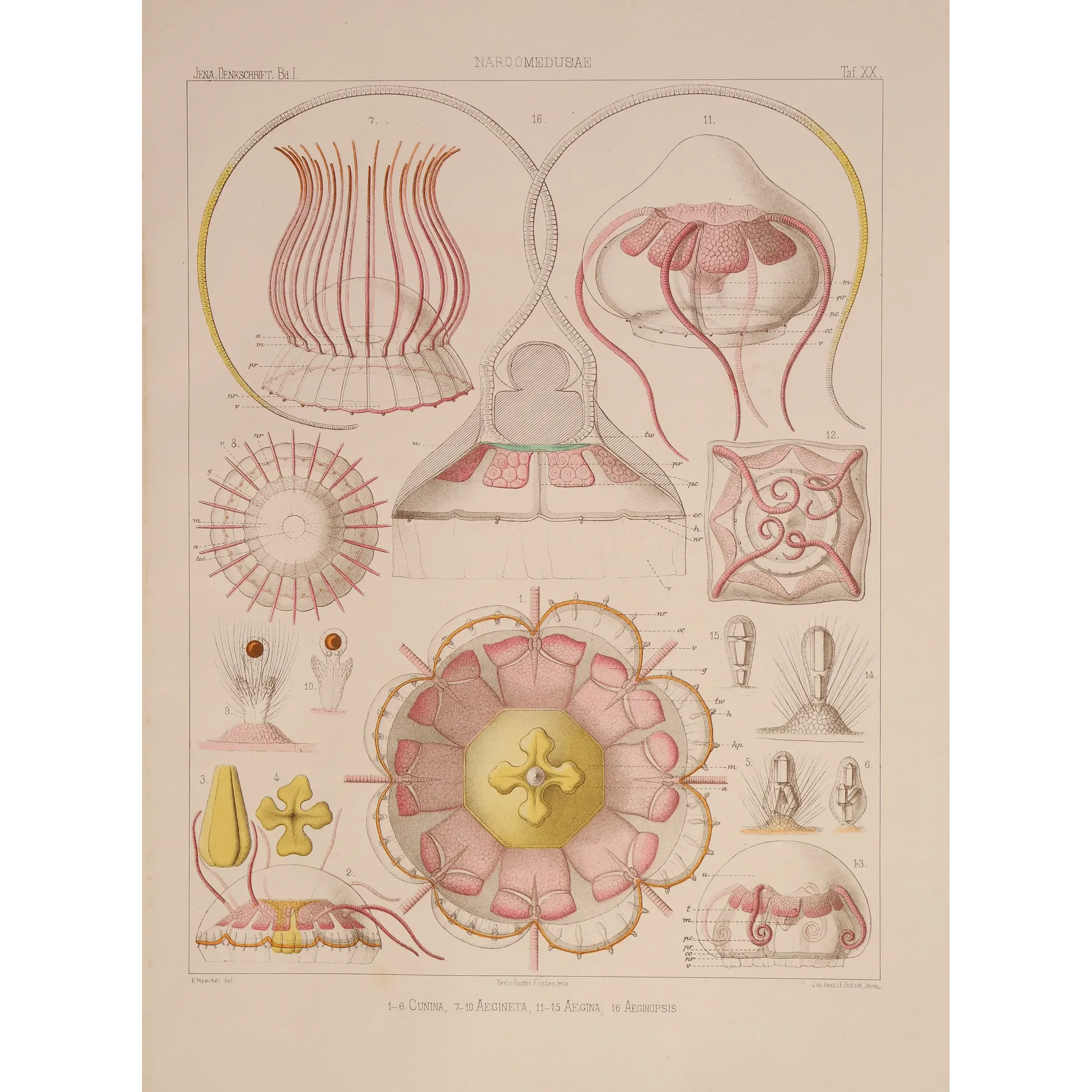
An original 1879 lithograph by Ernst Haeckel from Das System der Medusen, depicting the remarkable forms of the Narcomedusae. Combining delicate pink, coral and golden tones with extraordinary scientific precision, this authentic nineteenth-century marine study reveals why Haeckel's jellyfish imagery later became one of the defining visual inspirations of Art Nouveau.