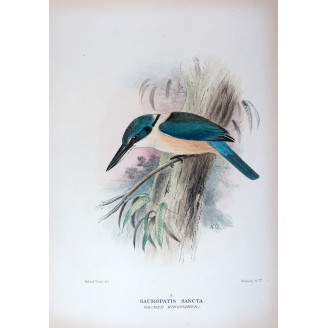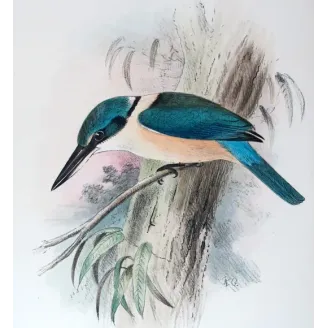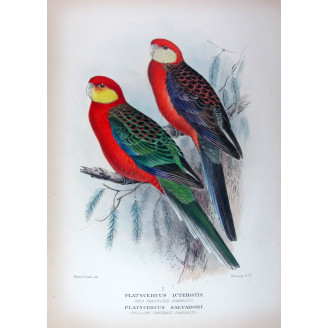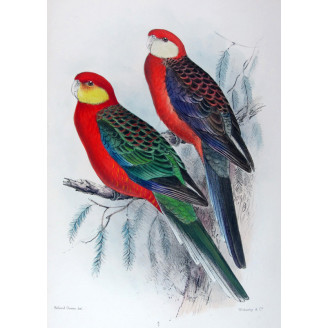
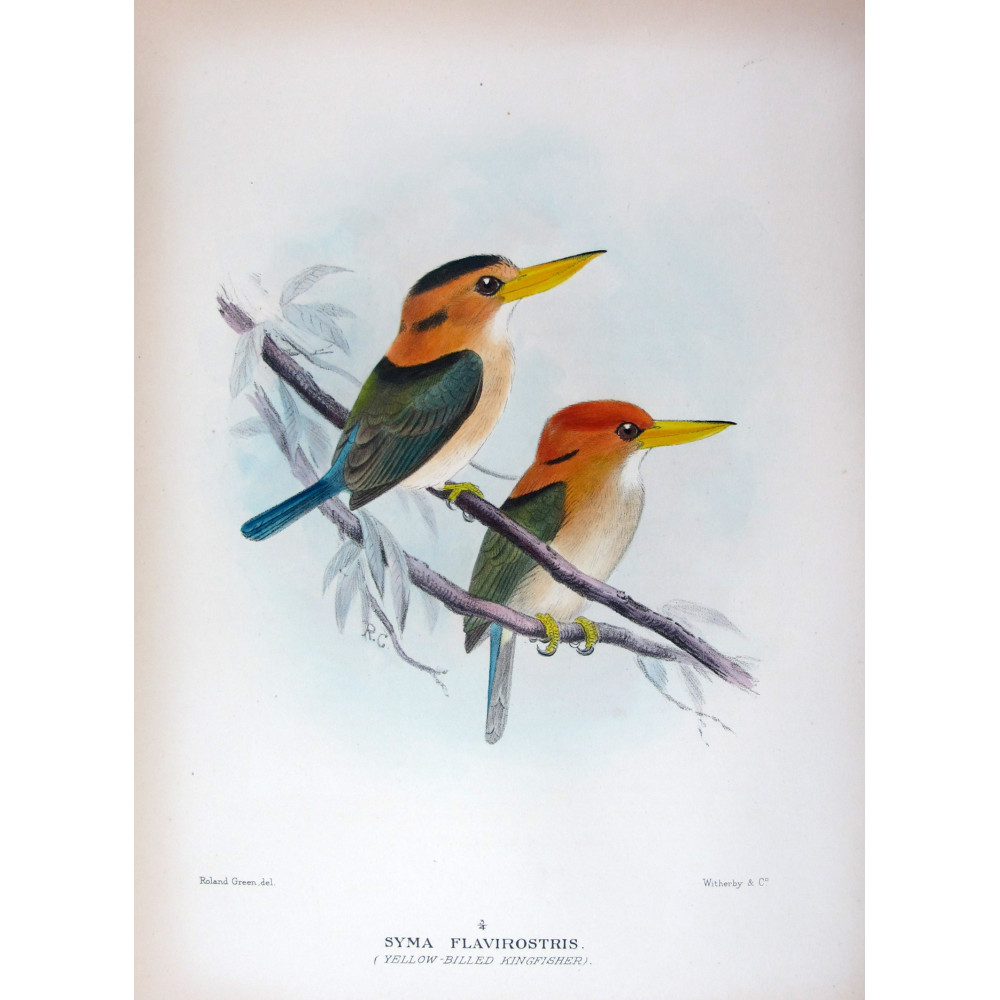
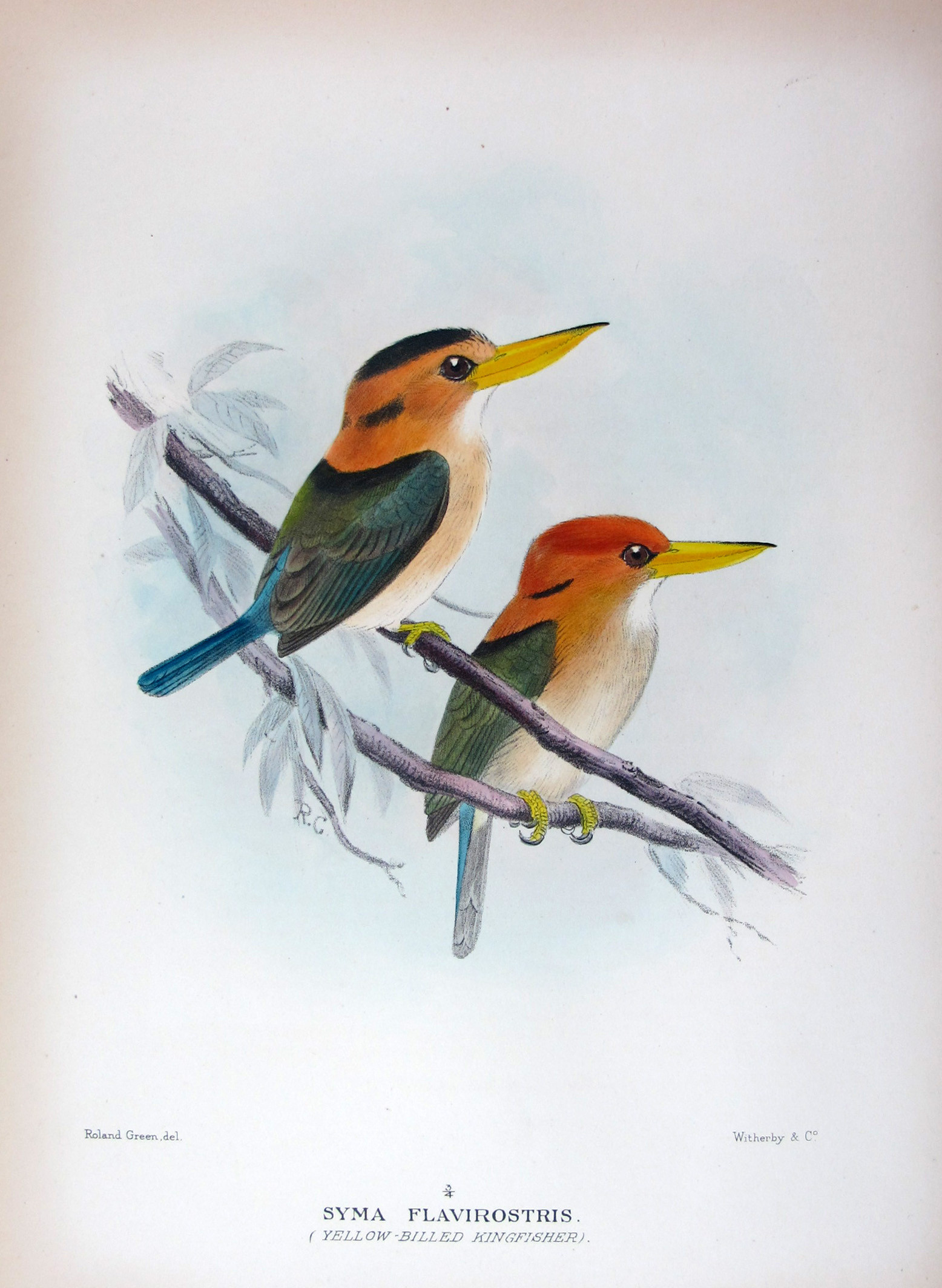
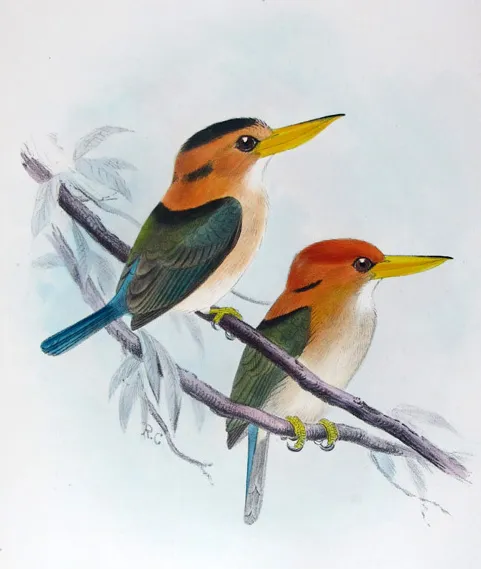
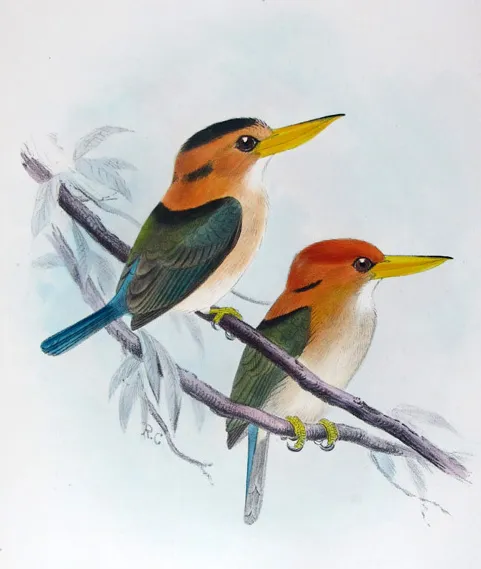
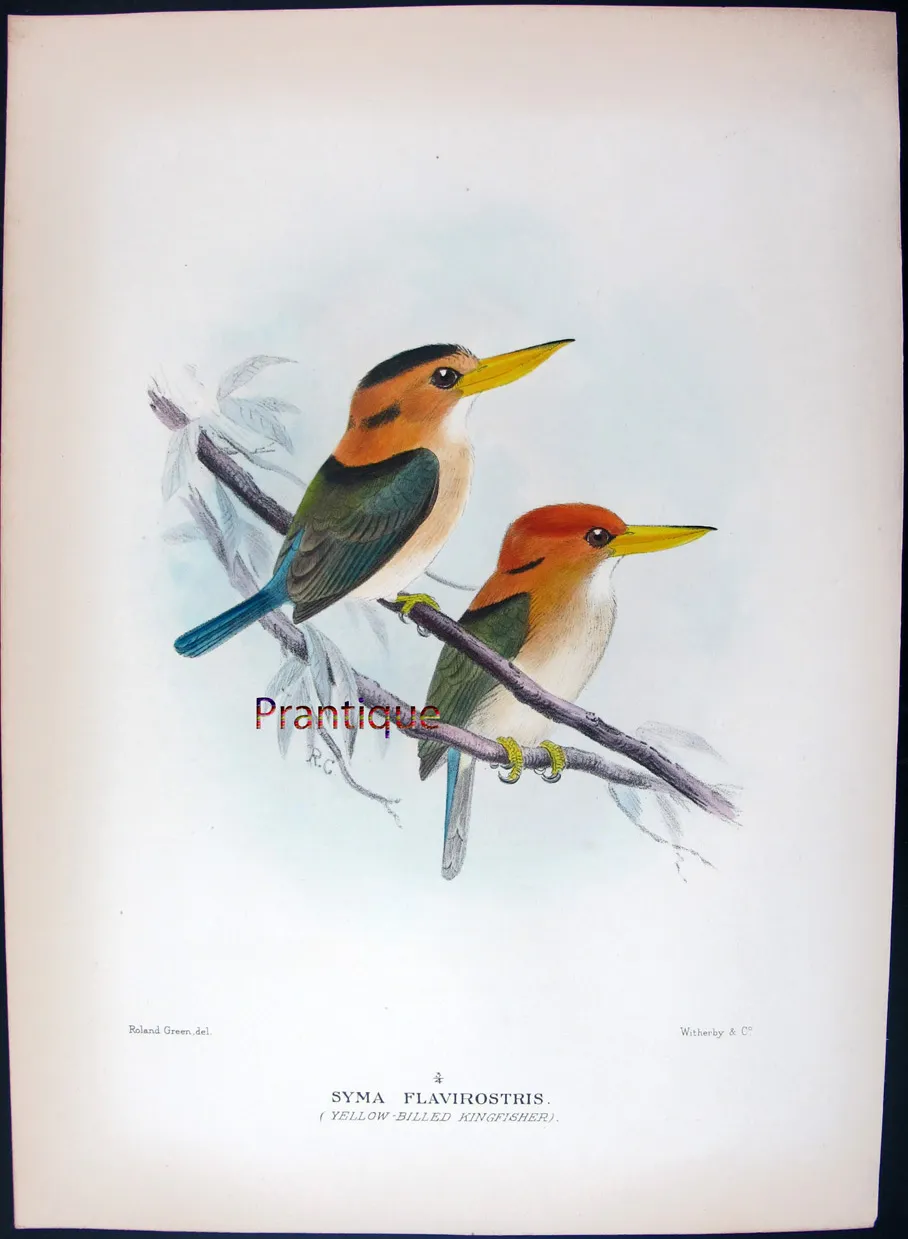

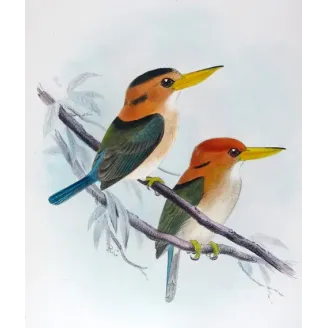
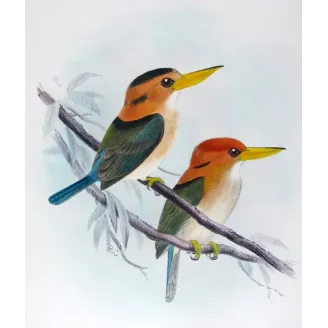
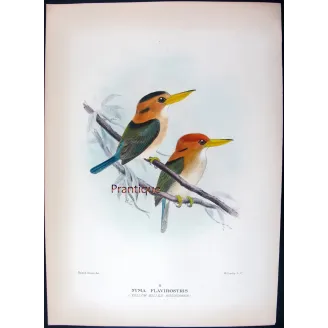
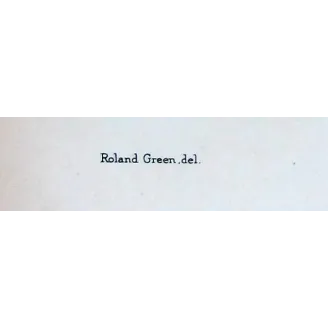
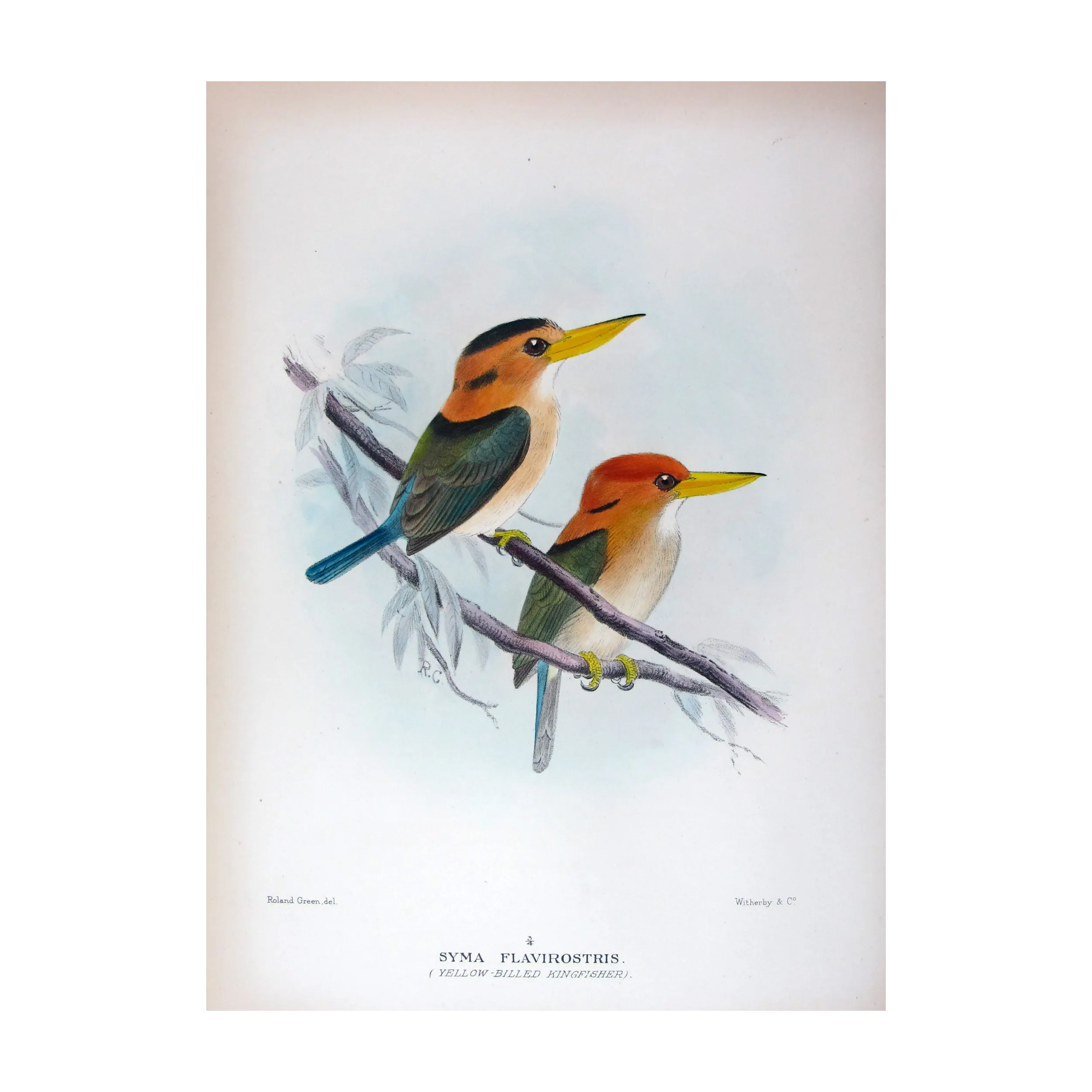
Original lithograph of the Yellow-billed Kingfisher (Syma flavirostris) by Roland Green
 Delivery policy
Your print will be carefully prepared and shipped worldwide via trusted couriers (UPS or similar).
 Authentic antique prints
Original engravings from the 17th–19th century.
This original early twentieth-century hand-colored lithograph depicts Syma flavirostris, the Yellow-billed Kingfisher. The plate forms part of Gregory M. Mathews’ monumental publication The Birds of Australia, illustrated by Roland Green and issued by Witherby & Co.
Presented as a poised pair resting along a slender branch, the composition emphasizes the species’ refined colour transitions and sculptural clarity. The restrained setting allows the birds’ warm tonal palette to emerge with striking decorative balance.
— • —
Roland Green arranges the two birds in gentle parallel orientation, creating compositional harmony rather than dramatic contrast. The upper figure displays a soft amber-orange head set against deep emerald wings, while the bright yellow bill acts as a luminous focal point.
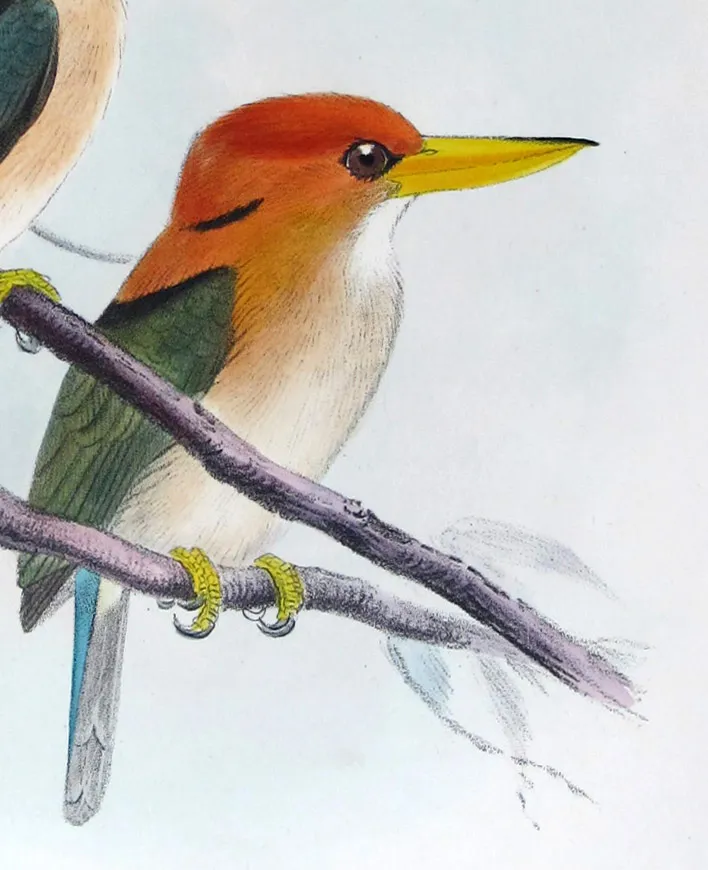
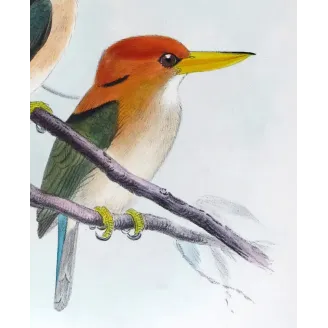
The lower bird mirrors the palette with slightly richer chestnut tones, producing subtle variation without breaking symmetry. Cool turquoise in the tail feathers introduces chromatic relief, preventing the composition from becoming overly warm. The pale background wash preserves air and spatial clarity.
Unlike more theatrical kingfisher plates, this sheet succeeds through elegance and balance. It is a study in tonal harmony, where colour relationships—not action—define the visual authority of the work.
The Yellow-billed Kingfisher inhabits forested regions of northern Australia and New Guinea. Distinct from riverine kingfishers, it is often associated with woodland environments rather than open water, where it feeds primarily on insects and small invertebrates.
Mathews’ paired representation highlights subtle variation in plumage intensity and posture, underscoring his commitment to taxonomic precision. The species’ vivid bill coloration provides both biological function and immediate visual identity.
This lithograph originates from The Birds of Australia, Gregory M. Mathews’ ambitious early twentieth-century ornithological enterprise. Conceived as a definitive scientific record, the work united rigorous taxonomy with the refined artistry of leading wildlife illustrators, producing one of the most authoritative visual catalogues of Australian birdlife. Explore the broader historical scope in our editorial feature: Gregory M. Mathews and The Birds of Australia .
Roland Green’s sensitivity to colour modulation is particularly evident in this plate. His controlled layering of warm and cool tones preserves naturalism while enhancing decorative clarity, a balance that defines his contribution to Mathews’ monumental series.
Very good antique condition. Fresh original hand-coloring with strong lithographic impression. Printed on fine early twentieth-century wove paper. Minor age toning consistent with age.
For further insight into Roland Green’s contribution to ornithological illustration: Roland Green – Dynamic Vision and Field-Born Precision in Bird Art
Specific References
Original lithograph of the Owlet Nightjar by Roland Green from Mathews' Birds of Australia.
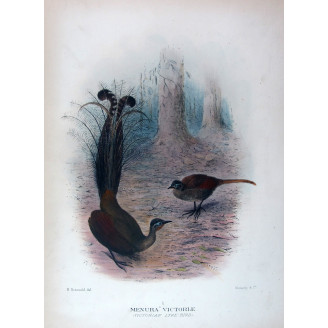
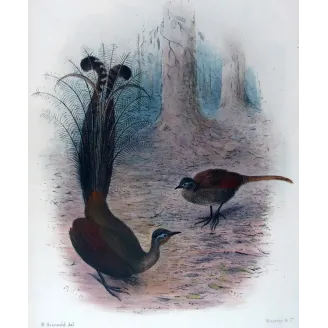
Original lithograph of the Victorian Lyre-bird (Menura victoriae) by Henrik Grønvold
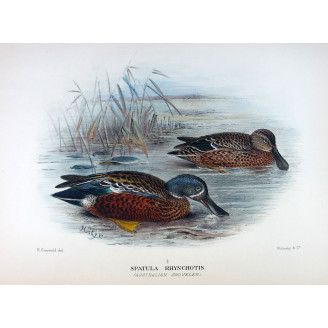
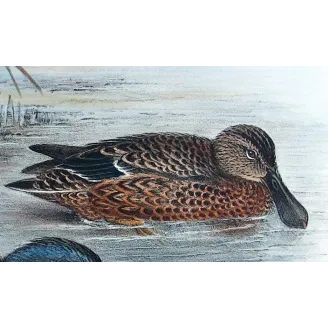
Australian Shoveler (Spatula rhynchotis) – Original antique bird print by H. Grønvold.
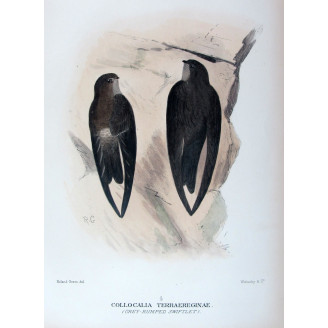
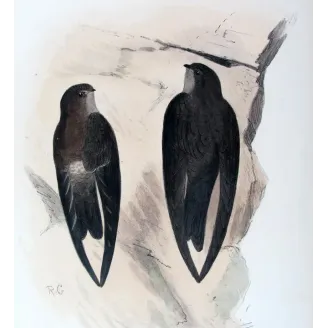
Original lithograph of the Grey-rumped Swiftlet by Roland Green from Mathews' Birds of Australia.
Original lithograph of the Sacred Kingfisher (Sauropatis sancta) by Roland Green
Antique lithograph of the Red-mantled Parrot & Yellow-cheeked Parrot by Roland Green.
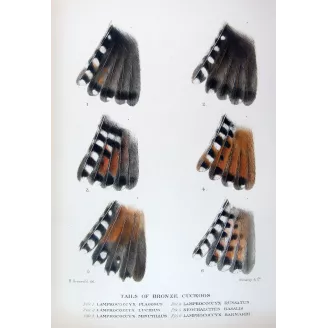
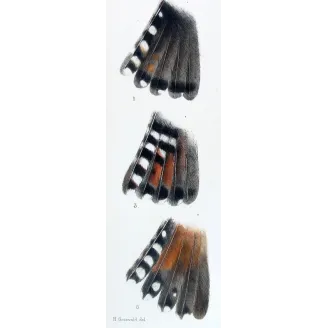
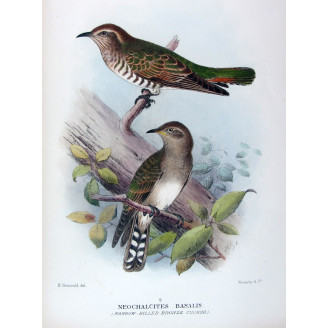
Narrow-billed Bronze Cuckoo (Neochalcites basalis) – Original lithograph by Henrik Grønvold.
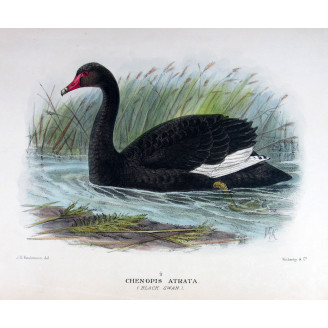
Original lithograph of the Black Swan by J.G. Keulemans (Chenopis atrata).
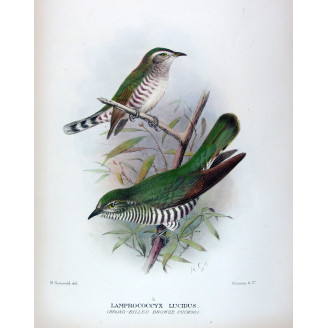
Broad-billed Bronze Cuckoo (Lamprococcyx lucidus) – Original lithograph by Henrik Grønvold.
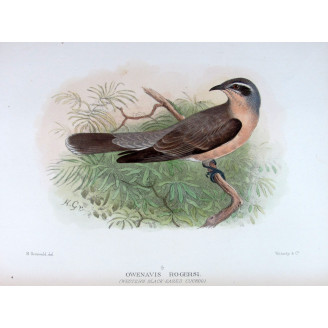
Western Black-eared Cuckoo (Owenavis rogersi) – Original lithograph by Henrik Grønvold.
Graceful vertical stem with rounded leaves and yellow blossoms, paired with a prominent root study.
Original lithograph of the Yellow-billed Kingfisher (Syma flavirostris) by Roland Green