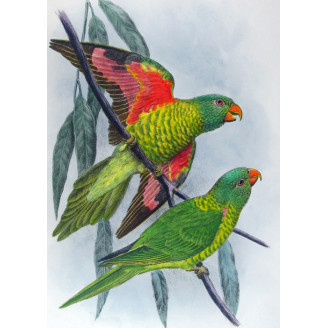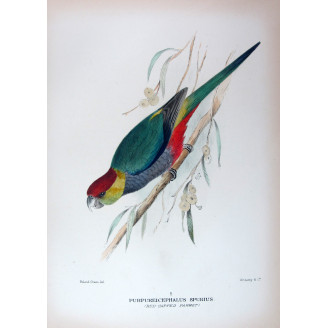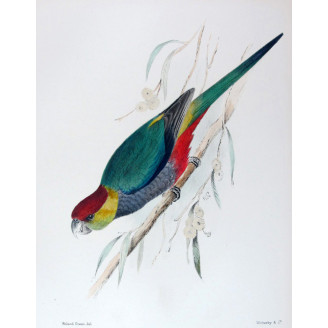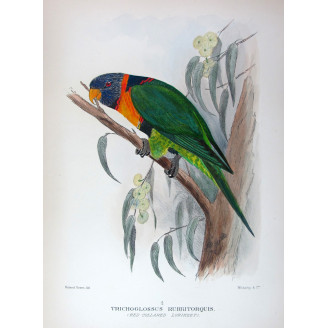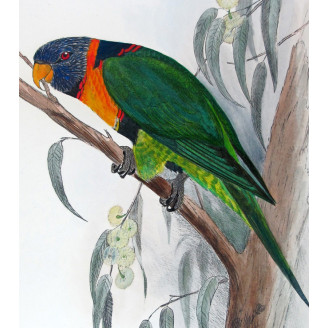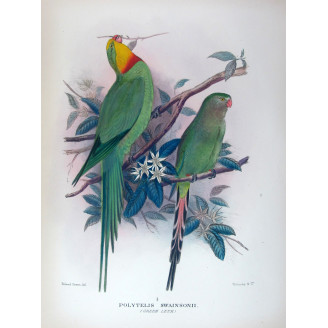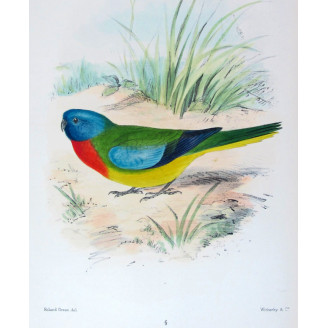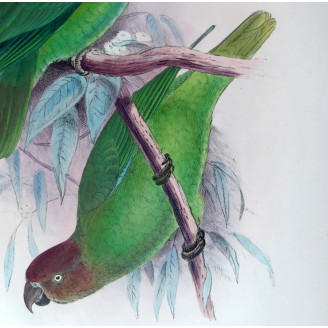
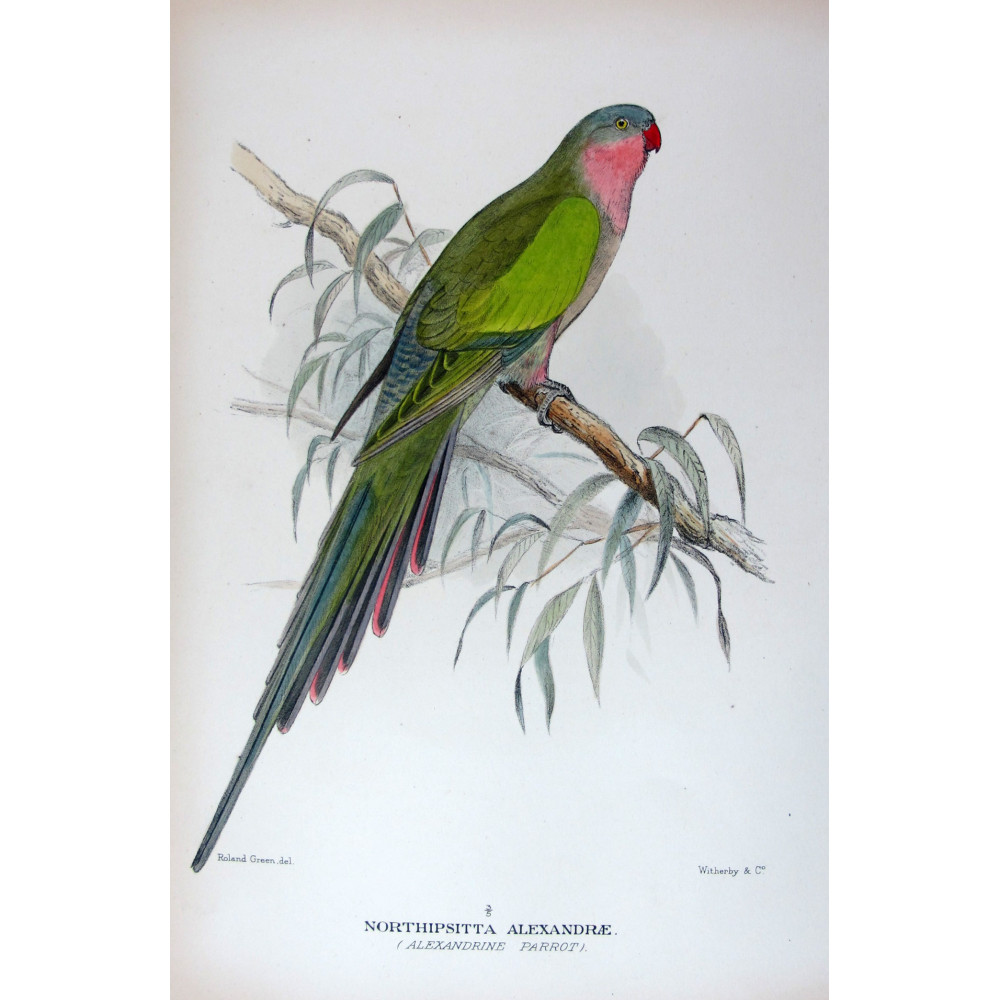
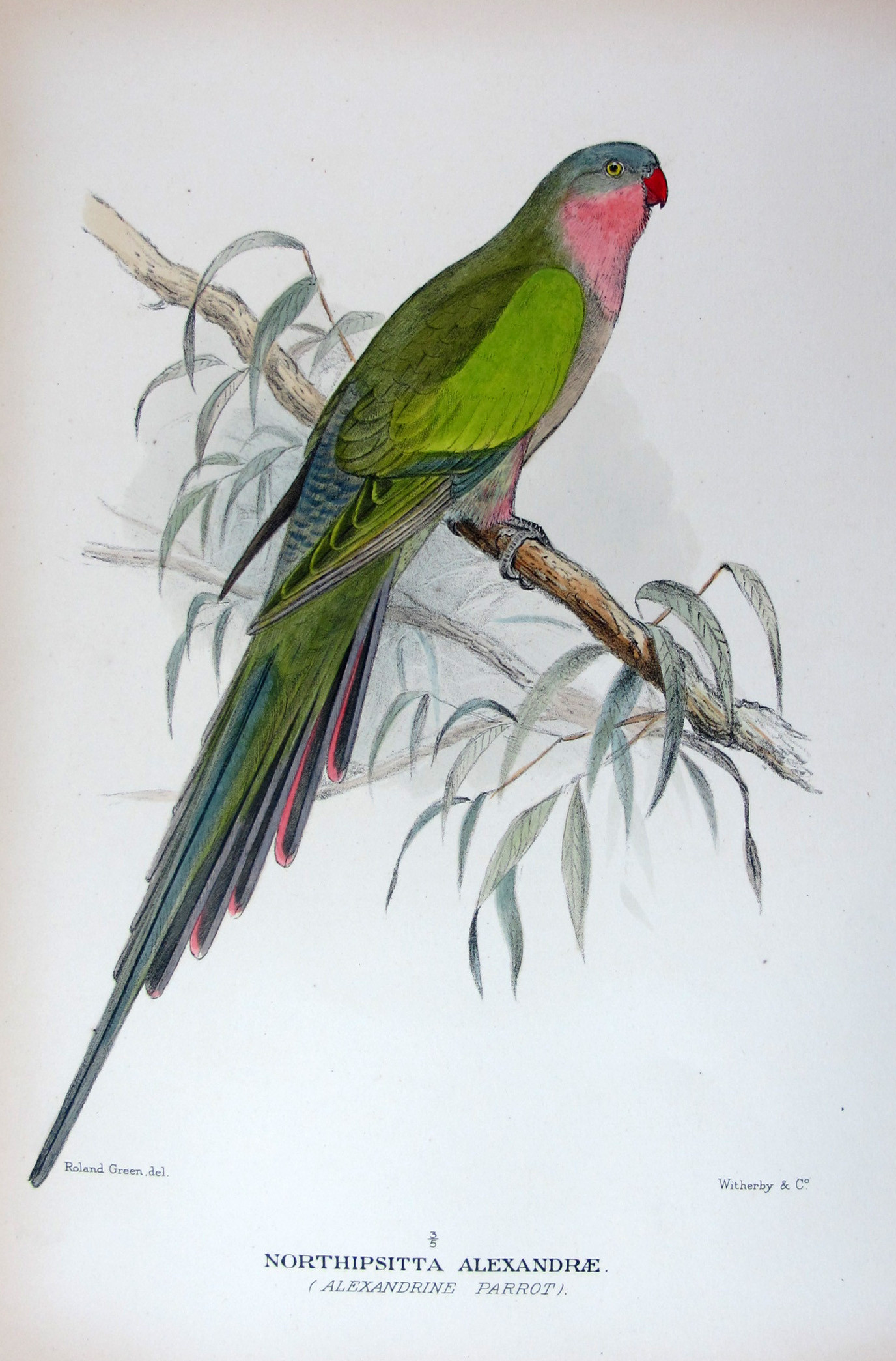
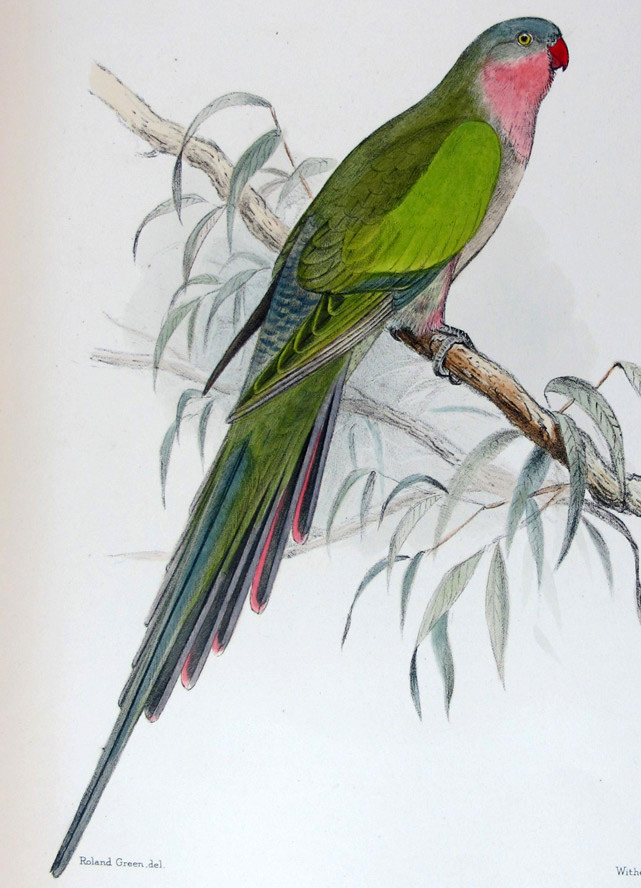
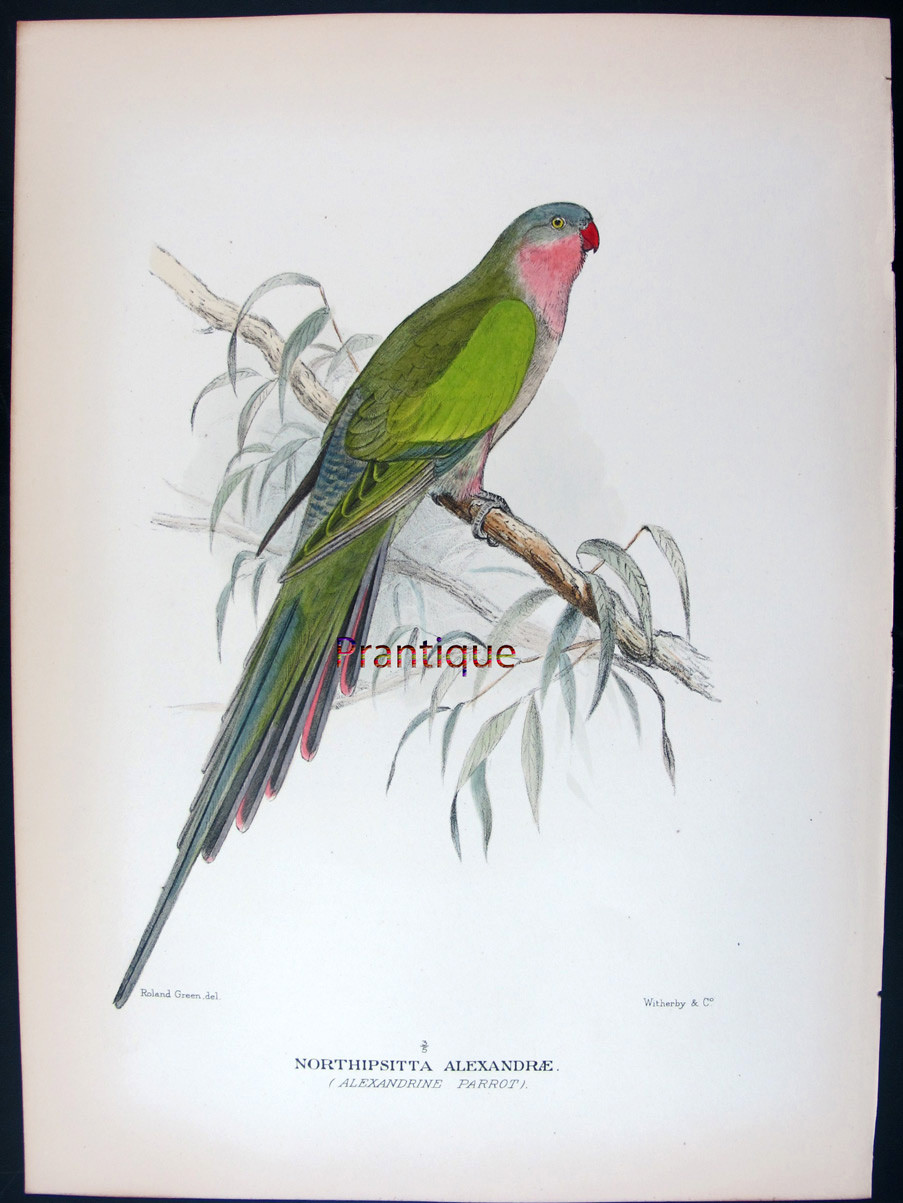
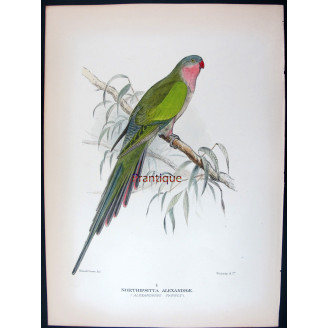
Antique lithograph of the Princess Parrot by Roland Green.
 Delivery policy
Your print will be carefully prepared and shipped worldwide via trusted couriers (UPS or similar).
 Authentic antique prints
Original engravings from the 17th–19th century.
This original early twentieth-century hand-colored lithograph depicts Northiella alexandræ, the Princess Parrot. The plate forms part of The Birds of Australia, Gregory M. Mathews’ landmark ornithological publication, illustrated here by Roland Green.
Rendered in a quiet, airy composition, the bird’s long tapering tail and soft blush-toned head create an image of understated luxury—less about spectacle, more about refinement and line.
— • —
Roland Green approaches the Princess Parrot with tonal restraint and meticulous control. The head is washed in delicate rose and pale coral, subtly modelled to preserve softness without losing definition. Across the body, muted olive greens shift gently into cooler blue-grey tones along the wing, creating depth through gradation rather than contrast.
The elongated tail, edged with refined pink accents, introduces a strong linear axis that stabilizes the composition and gives the bird a sense of elegant motion. The surrounding foliage is intentionally subdued—cool, silvery eucalyptus tones that keep the palette calm and contemporary, making this plate exceptionally suited to sophisticated interior settings.
The Princess Parrot is native to Australia’s arid interior, where it inhabits remote scrub and woodland regions. Its rarity and softly coloured plumage made it a particularly prized subject for early ornithological documentation.
In Mathews’ early twentieth-century survey, species such as Northiella alexandræ represent the quieter poetry of Australian avifauna—proof that natural history illustration could capture delicacy and elegance alongside dramatic tropical colour.
This lithograph originates from The Birds of Australia, Gregory M. Mathews’ ambitious early twentieth-century ornithological enterprise. Conceived as a definitive scientific record, the work united rigorous taxonomy with the refined artistry of leading wildlife illustrators, producing one of the most authoritative visual catalogues of Australian birdlife. Explore the broader historical scope in our editorial feature: Gregory M. Mathews and The Birds of Australia .
The plate was illustrated by Roland Green, whose field-driven precision and compositional discipline are especially evident in species where subtle tonal harmony must remain both accurate and highly decorative.
Very good antique condition. Fresh original hand-coloring with strong lithographic impression. Printed on fine early twentieth-century wove paper. Minor age toning slightly more visible along the outer margins, consistent with age.
For further insight into Roland Green’s contribution to ornithological illustration: Roland Green – Dynamic Vision and Field-Born Precision in Bird Art
Specific References
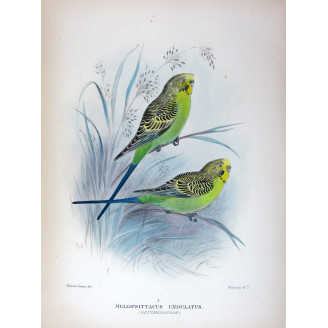
Original lithograph of the Budgerigar (Melopsittacus undulatus) by Roland Green.
Gold-breasted Lorikeet lithograph by Henrik Grønvold, dynamic dual composition.
Original lithograph of the Western Purple Kingfisher (Alcyone alisteri) by Roland Green
Colorful print of the Red-collared Lorikeet by Roland Green, original hand-color.
Original lithograph of the Mountain Duck by Henrik Grønvold (Casarca tadornoides).
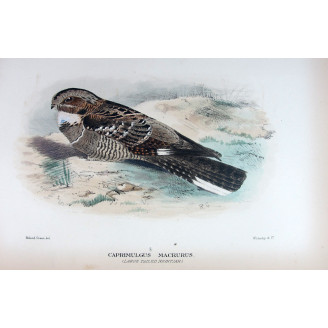
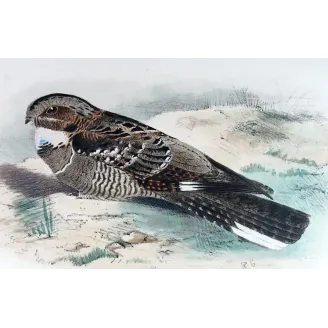
Original lithograph of the Large-tailed Nightjar by Roland Green from Mathews' Birds of Australia.
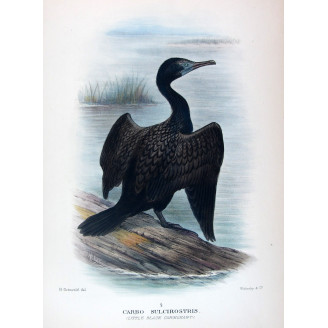
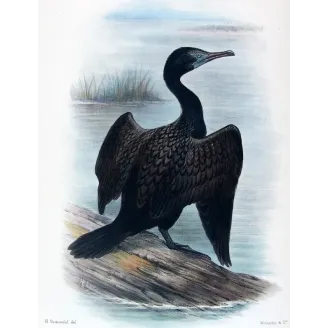
Little Black Cormorant (Carbo sulcirostris) – Original antique bird print by H. Grønvold
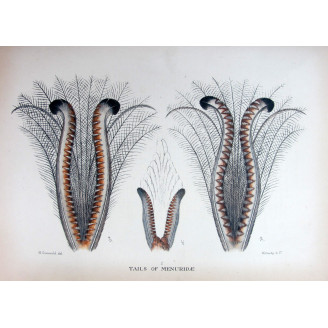
Original lithograph of the Lyrebird Tail Study (Tails of Menuridae) by Henrik Grønvold
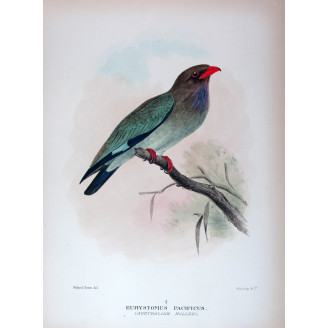
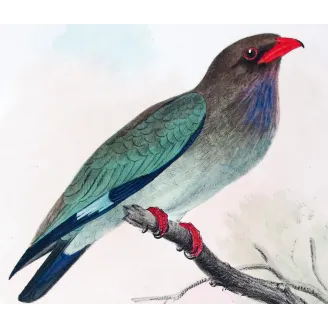
Original lithograph of the Australian Roller (Eurystomus pacificus) by Roland Green
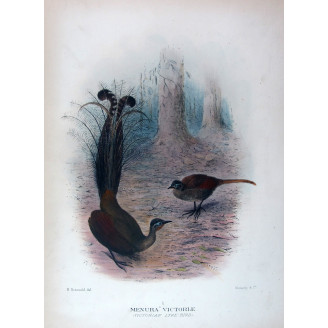
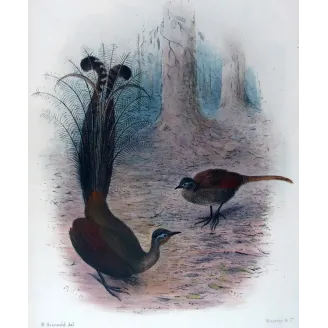
Original lithograph of the Victorian Lyre-bird (Menura victoriae) by Henrik Grønvold
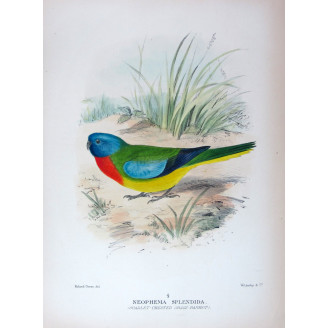
Antique lithograph of the Scarlet-chested Grass Parrot by Roland Green.
Chestnut-breasted Cuckoo & Queensland Pigeon illustrated by Henrik Grønvold.
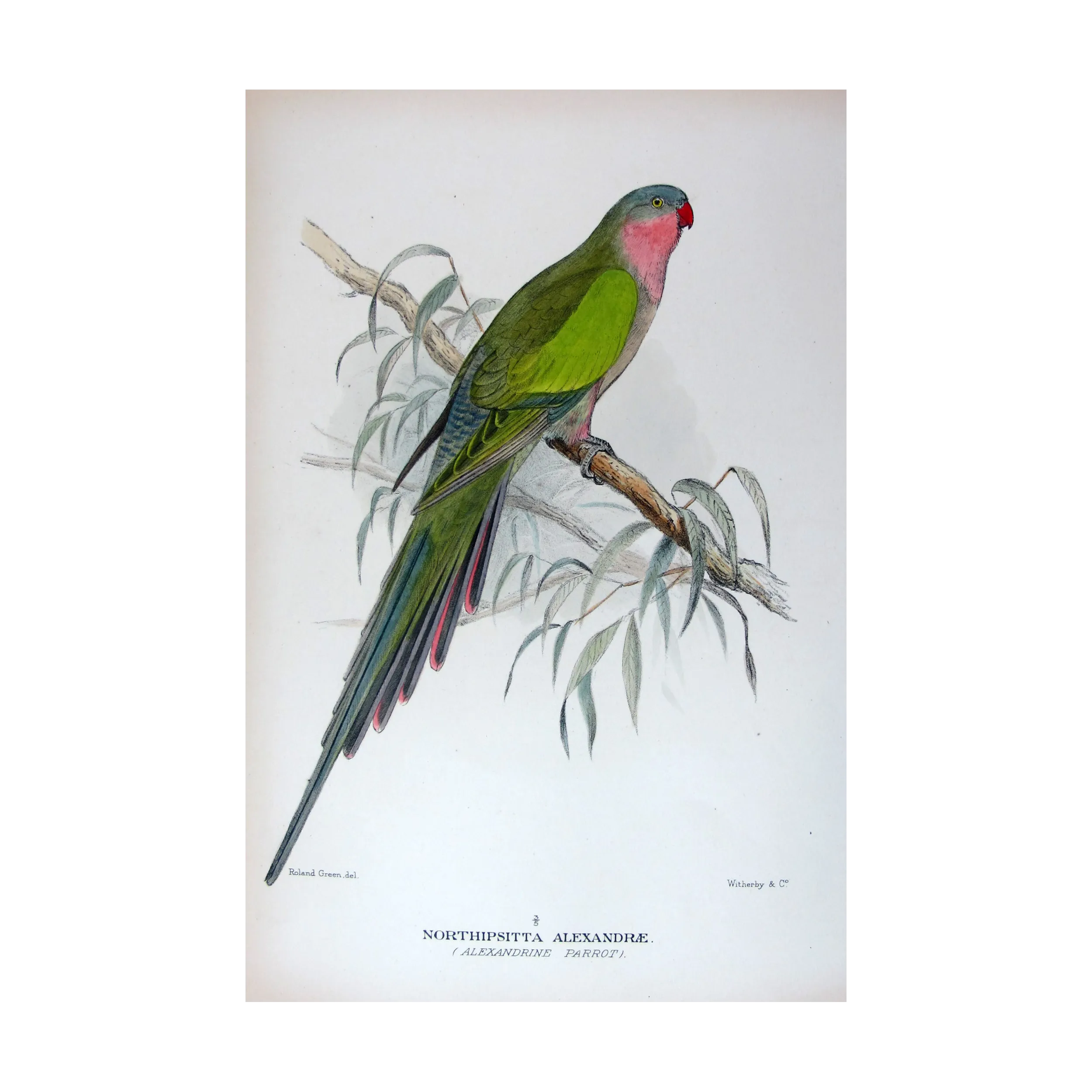
Antique lithograph of the Princess Parrot by Roland Green.