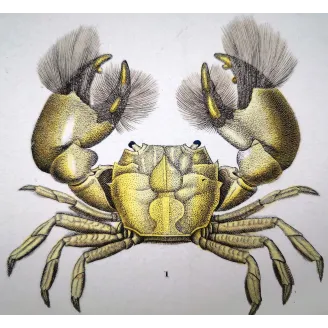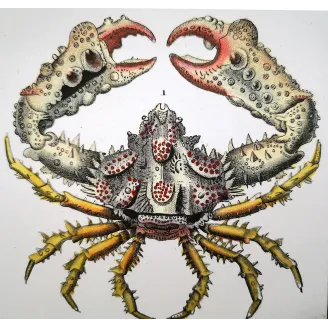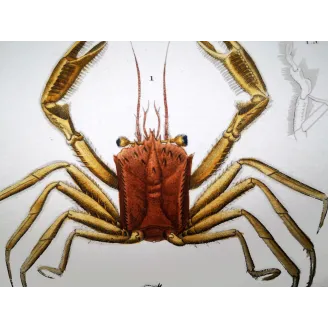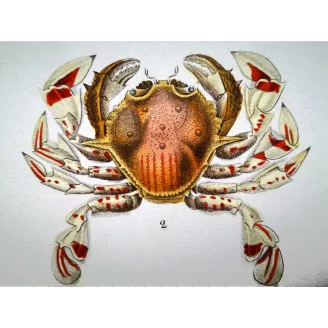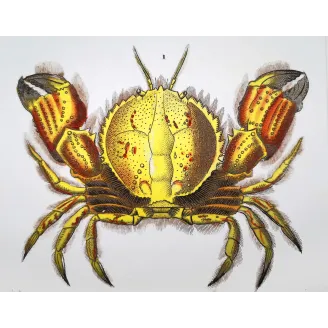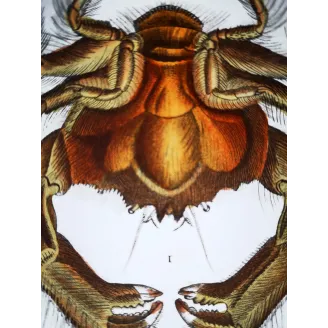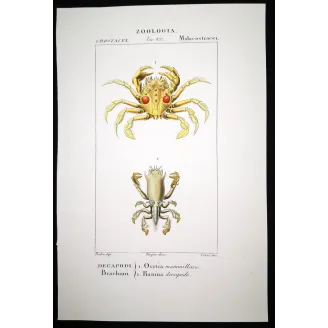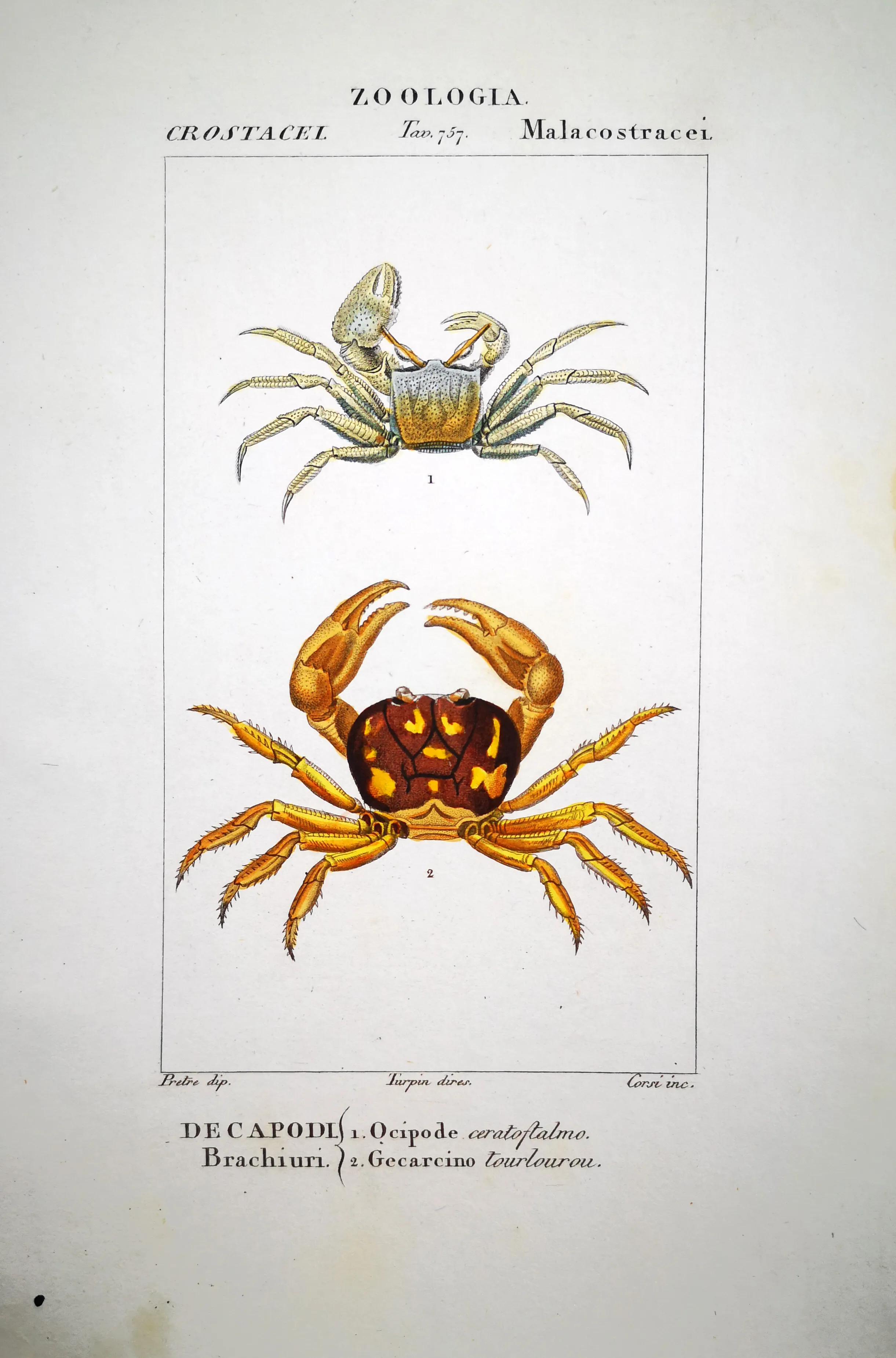
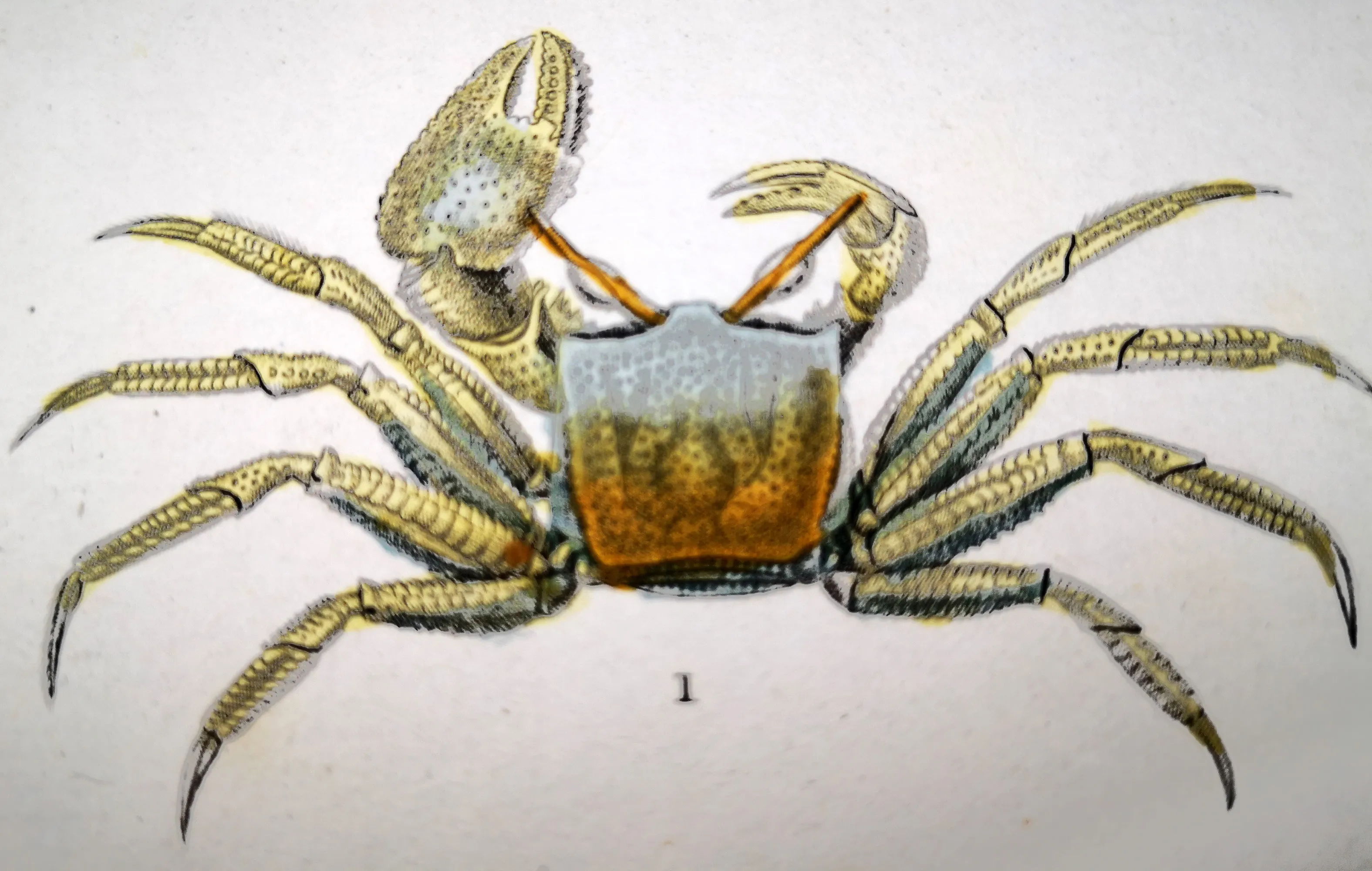


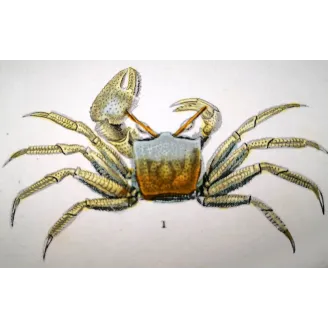
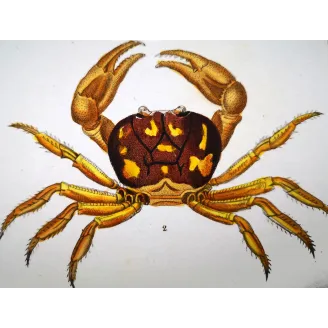
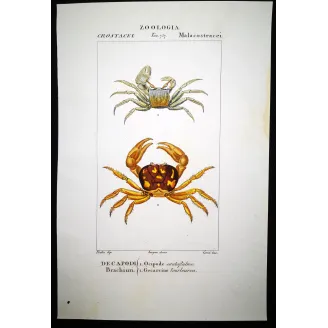

Dynamic 19th-century engraving of *Ocypode ceratophthalma*, a crab with expressive claws and bold coloration.
 Delivery policy
Your print will be carefully prepared and shipped worldwide via trusted couriers (UPS or similar).
 Authentic antique prints
Original engravings from the 17th–19th century.
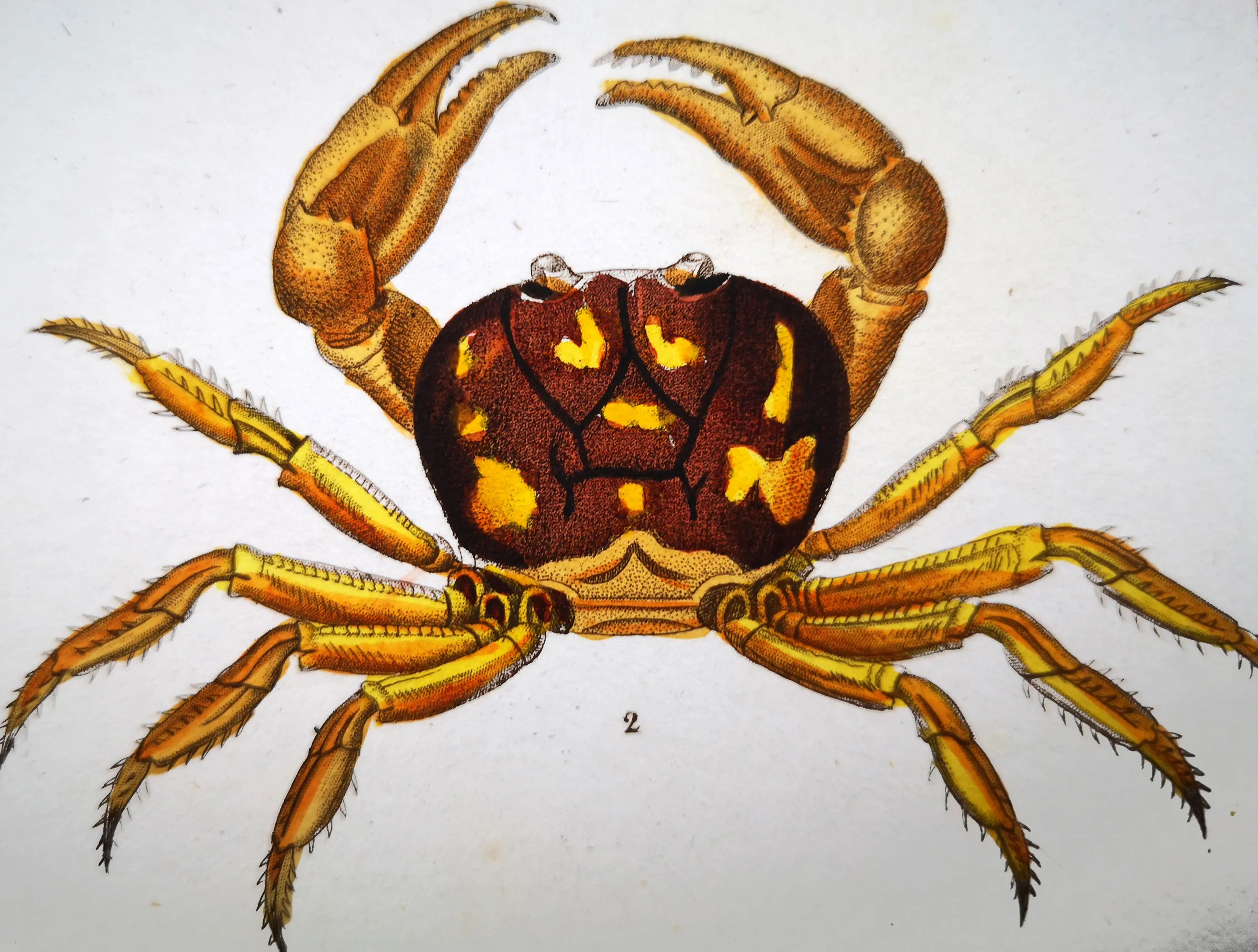
This dynamic engraving illustrates Ocypode ceratophthalma and Gecarcinus toulourou, two visually compelling crab species rendered by Pierre Antoine Prêtre for the Dizionario di Scienze Naturali.
The upper figure presents delicate tonal gradation, while the lower specimen commands attention through its deep amber and crimson carapace punctuated by luminous yellow markings.
— • —
The lower crab’s intense coloration creates dramatic contrast against the pale ground. Engraved lines articulate each joint with precision, enhancing structural clarity.
The bold chromatic presence lends this plate strong decorative impact, ideal for collectors seeking visual intensity combined with scientific authenticity.
Ocypode species are adapted to sandy coastal habitats, while Gecarcinus represents terrestrial adaptation among crabs.
Their contrasting ecological niches fascinated nineteenth-century zoologists documenting the breadth of crustacean diversity.
The engraving preserves this ecological narrative with clarity and elegance.
Within the Sacchetti Collection, crustacean plates illustrate the ambition of early nineteenth-century encyclopedic scholarship.
These works reflect a time when nature was celebrated through monumental illustrated publications.
Nobility of Natural History Prints – The Sacchetti Collection
Excellent antique condition. Clean margins and vibrant original hand coloring. No watermark observed.
Discover more about Pierre Antoine Prêtre and his contribution to natural history illustration
Looking for: Gecarcinus engraving, colorful antique crab print, 19th-century crustacean art, marine natural history illustration.
Specific References
19th-century hand-colored engraving of *Grapsus penicillatus*, a vivid marine crab with expressive claws and warm tones.
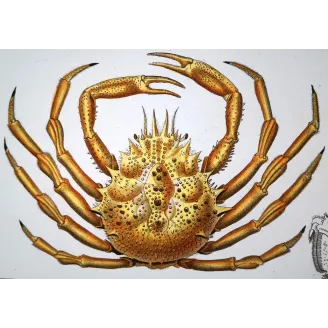
Fine 19th-century hand-colored engraving of *Maia squinado*, a striking spiny crab rendered with vivid tones, ideal for refined marine-themed interiors.
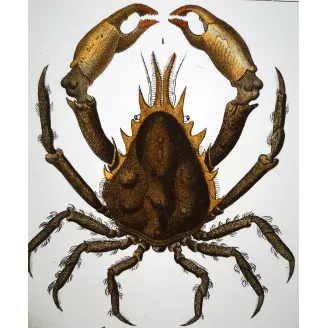
Vivid 19th-century hand-colored engraving of *Pisa tetraodonte*, a distinctive crab with elaborate ornamentation and warm marine tones.
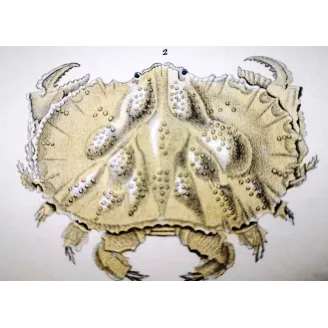
Fine 19th-century engraving of *Calappa tuberculata*, a beautifully armored crab with ornate textures and yellow tones.
Exceptional 19th-century hand-colored engraving of *Partenope orrida*, a spectacular crab with dramatic claws and vibrant marine coloration.
Refined 19th-century engraving of *Omola frontespinosa*, a rare crab with slender claws and delicate yellow-orange tones.
Fine 19th-century hand-colored engraving of *Polybia henslowii*, a vivid marine crab illustrated with contrasting tones.
Elegant 19th-century engraving of the rare *Ateleciclo*, a vividly colored marine crab illustrated with sharp detail and refined shading.
19th-century hand-colored engraving of *Dromia invadissima*, a rare crab with rich orange tones, illustrated by Prêtre with refined marine detail.
Elegant 19th-century engraving of *Oritia mammillare*, a beautifully textured marine species with red highlights.
Charming pear study by Redouté, showing delicate blossom and ripening fruit. Balanced and refined.
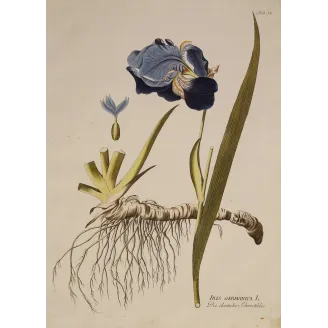
An original eighteenth-century botanical engraving depicting Iris germanica, published in Joseph Jacob von Plenck's celebrated Icones Plantarum Medicinalium. Printed on fine laid paper bearing the Honig watermark, the sheet combines scientific precision with the refined artistic craftsmanship of the Viennese botanical school.
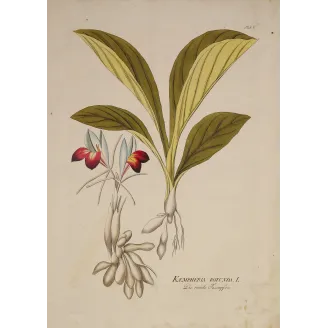
Original eighteenth-century botanical engraving depicting Kaempferia rotunda, published in Vienna by Joseph Jacob von Plenck for Icones Plantarum Medicinalium (Plate 5). The elegant composition combines broad architectural foliage, richly coloured crimson flowers and delicately modelled underground tubers, demonstrating the extraordinary refinement of Plenck's Viennese botanical school. Printed on fine Honig laid paper with visible "IV" watermark.
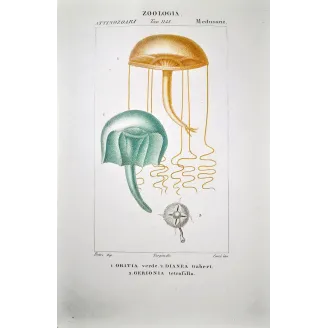
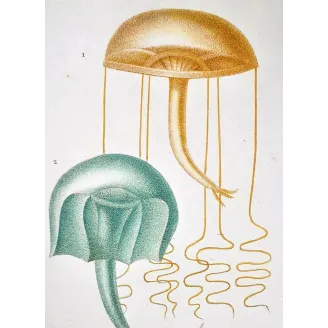
Trio of rare jellyfish types in soft tones, hand-colored lithograph by Prêtre.
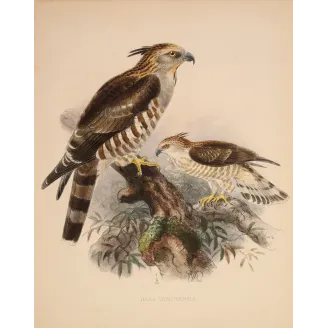
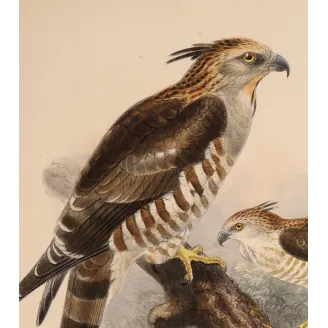
Original antique bird print depicting Baza ceylonensis (Ceylon Hawk-Eagle), illustrated by J.G. Keulemans for A History of the Birds of Ceylon. A striking Victorian ornithological lithograph featuring a refined pair of raptors with strong decorative presence.
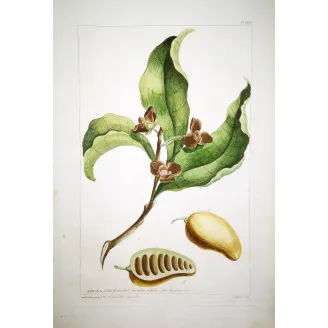
An original 18th-century hand-colored engraving depicting a Custard Apple (Annona sp.), from Philip Miller’s Figures of the Most Beautiful, Useful, and Uncommon Plants. Combining botanical precision with decorative clarity, the composition features both the plant and its distinctive fruit in sectional detail.
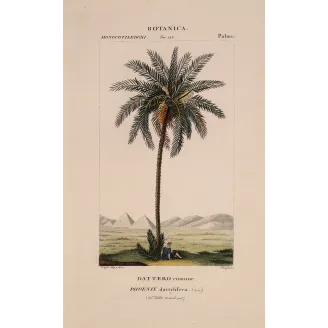
Detailed antique illustrations of the date palm tree and its floral and fruit anatomy.
Fine botanical engraving showing delicate redcurrant clusters and bright green leaves.
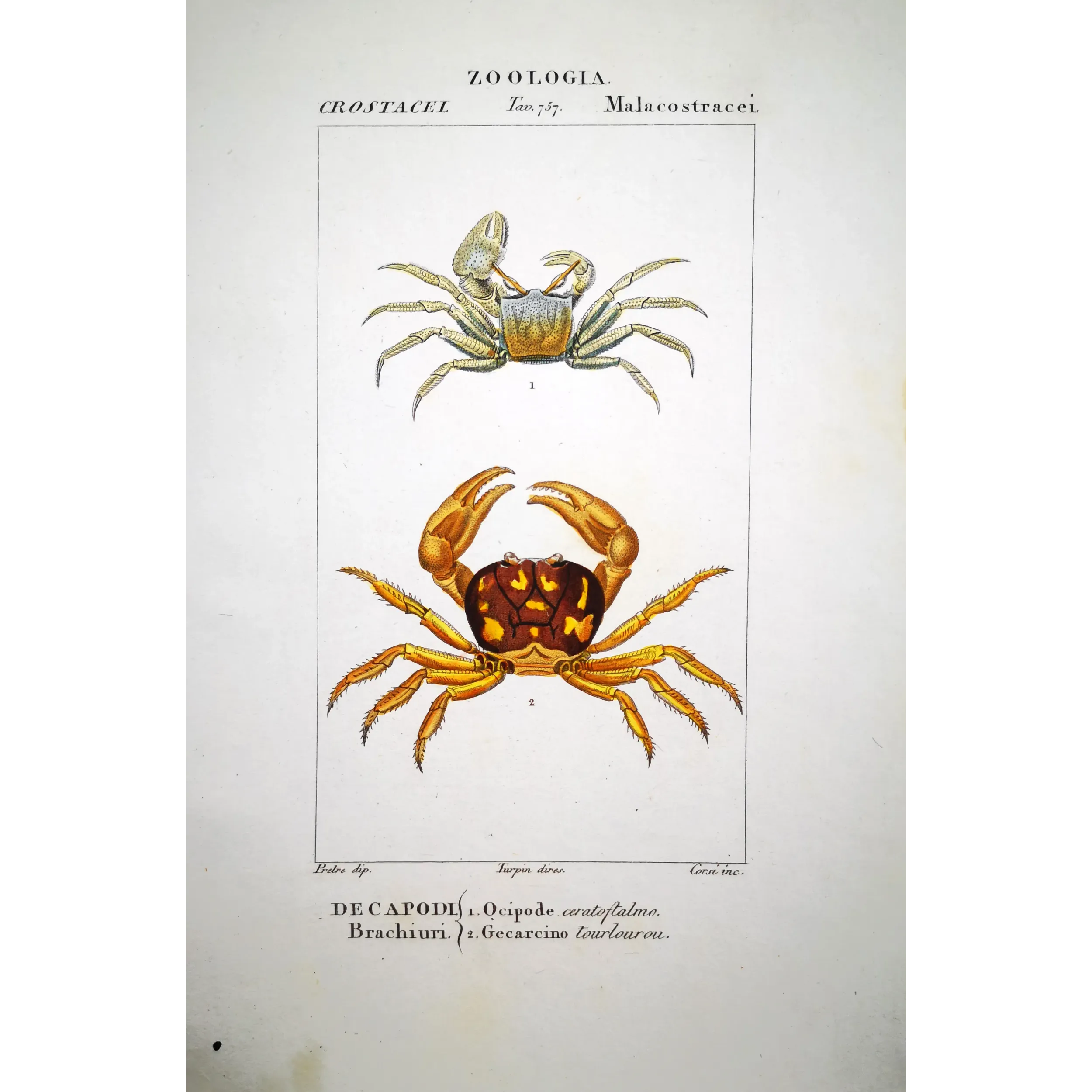
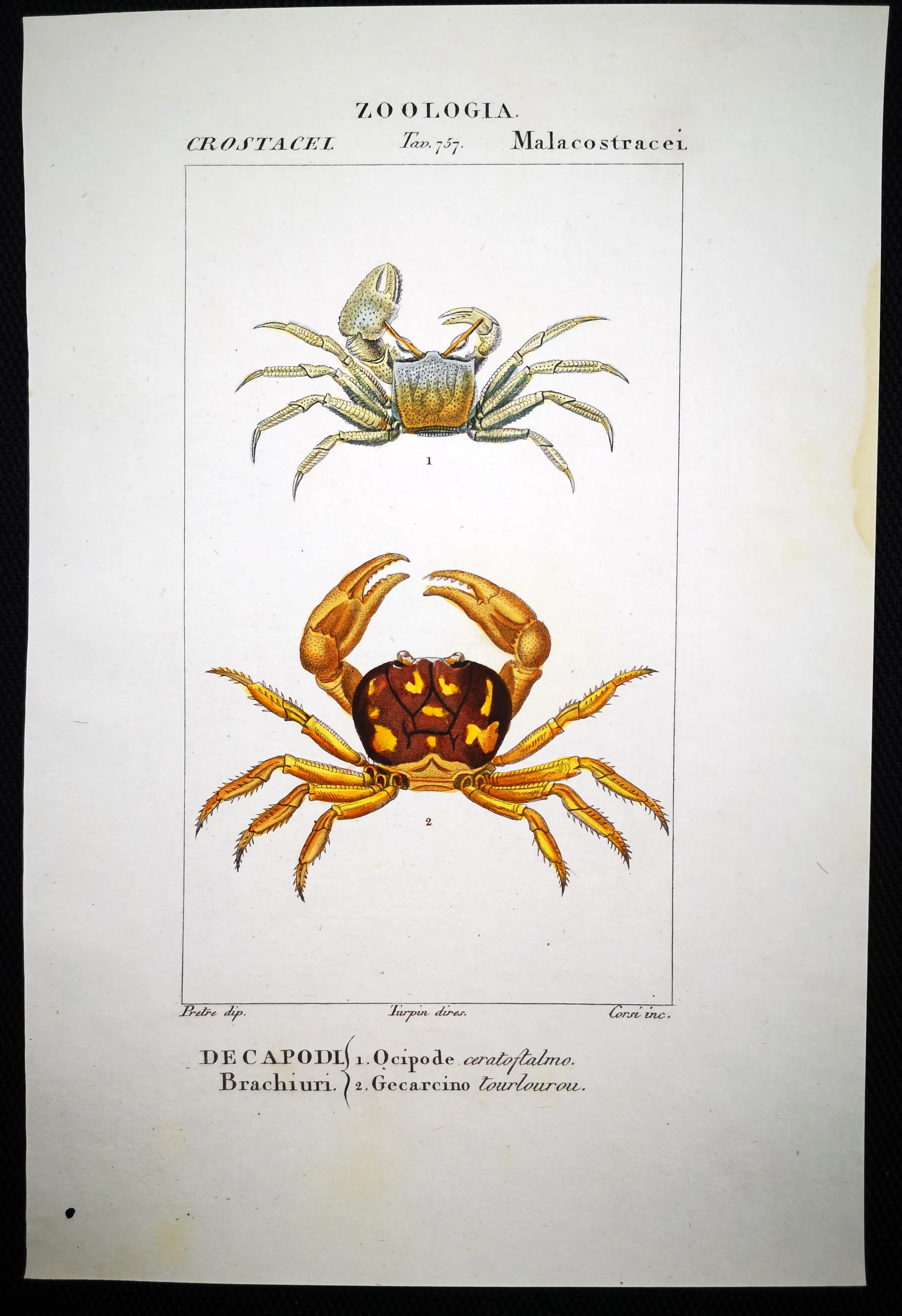
Dynamic 19th-century engraving of *Ocypode ceratophthalma*, a crab with expressive claws and bold coloration.