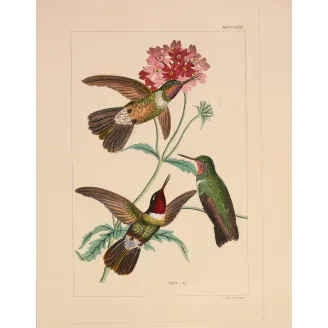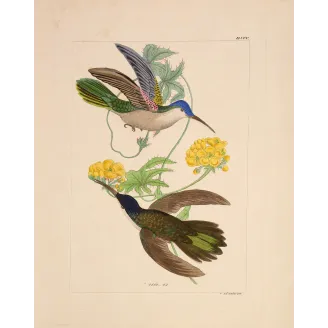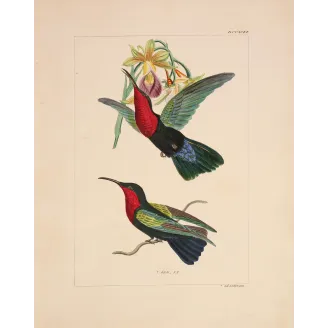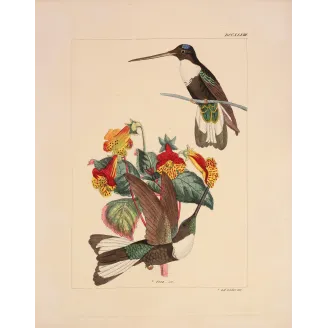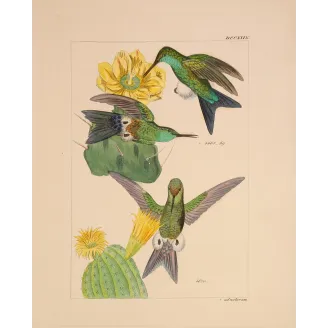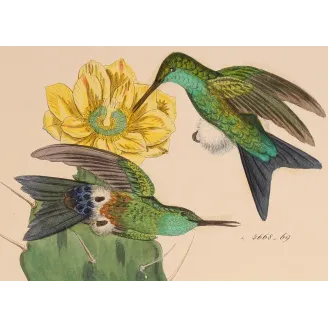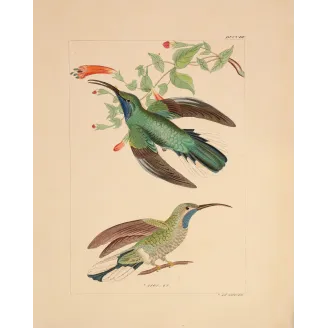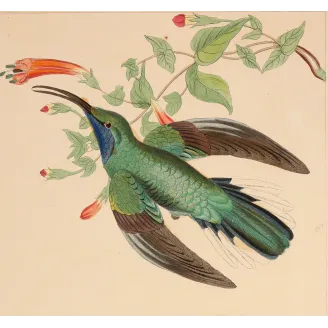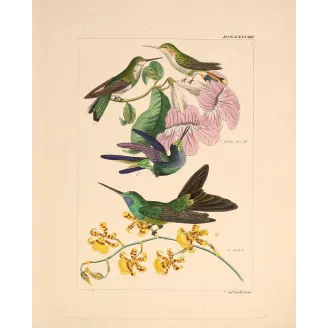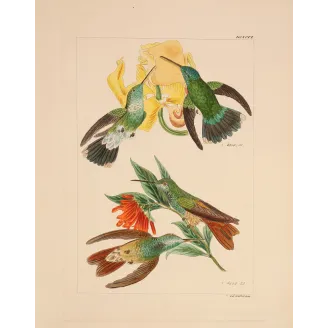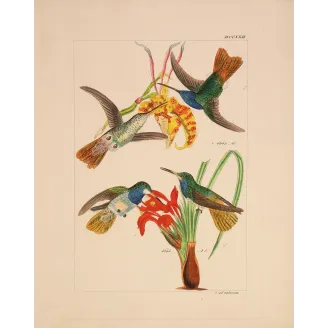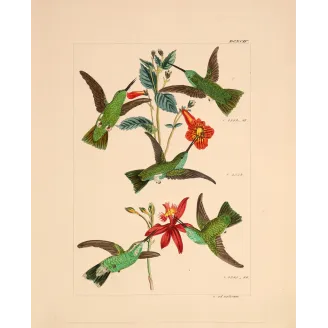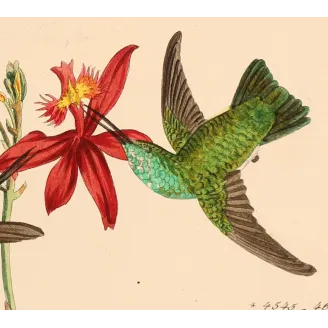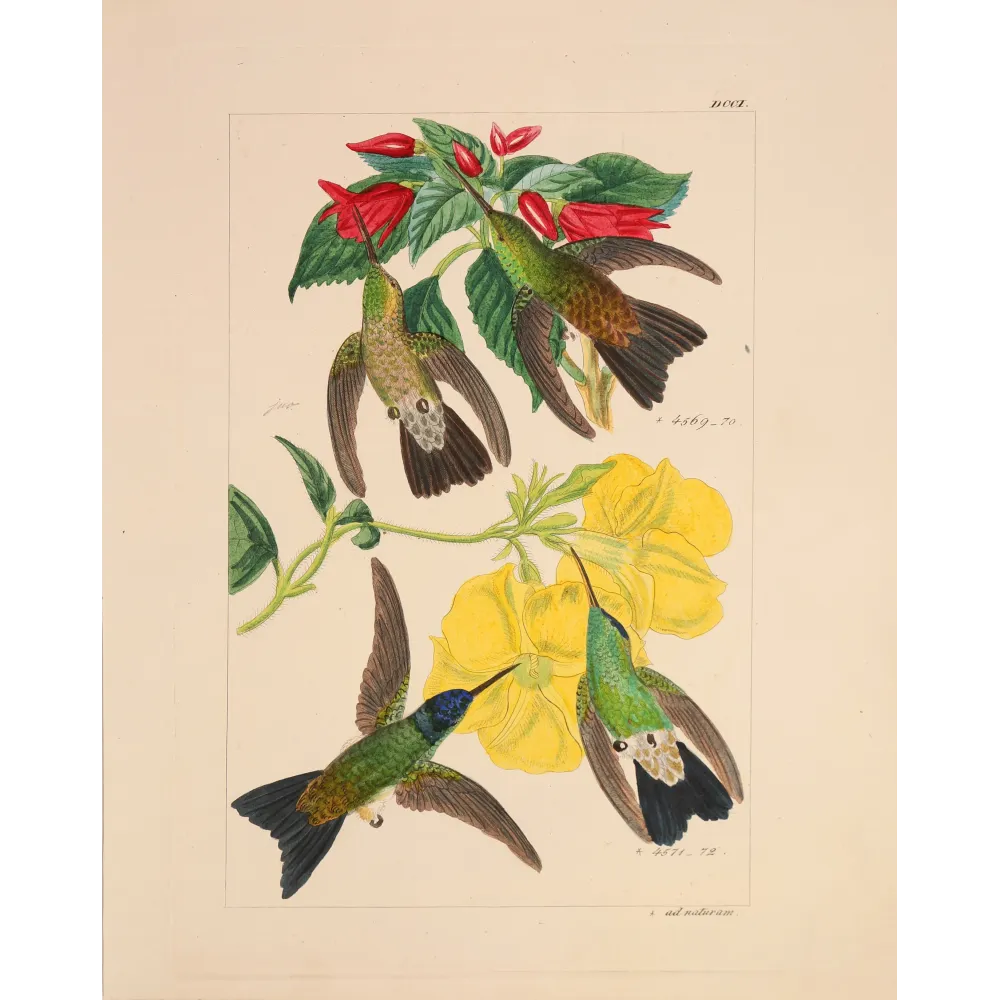
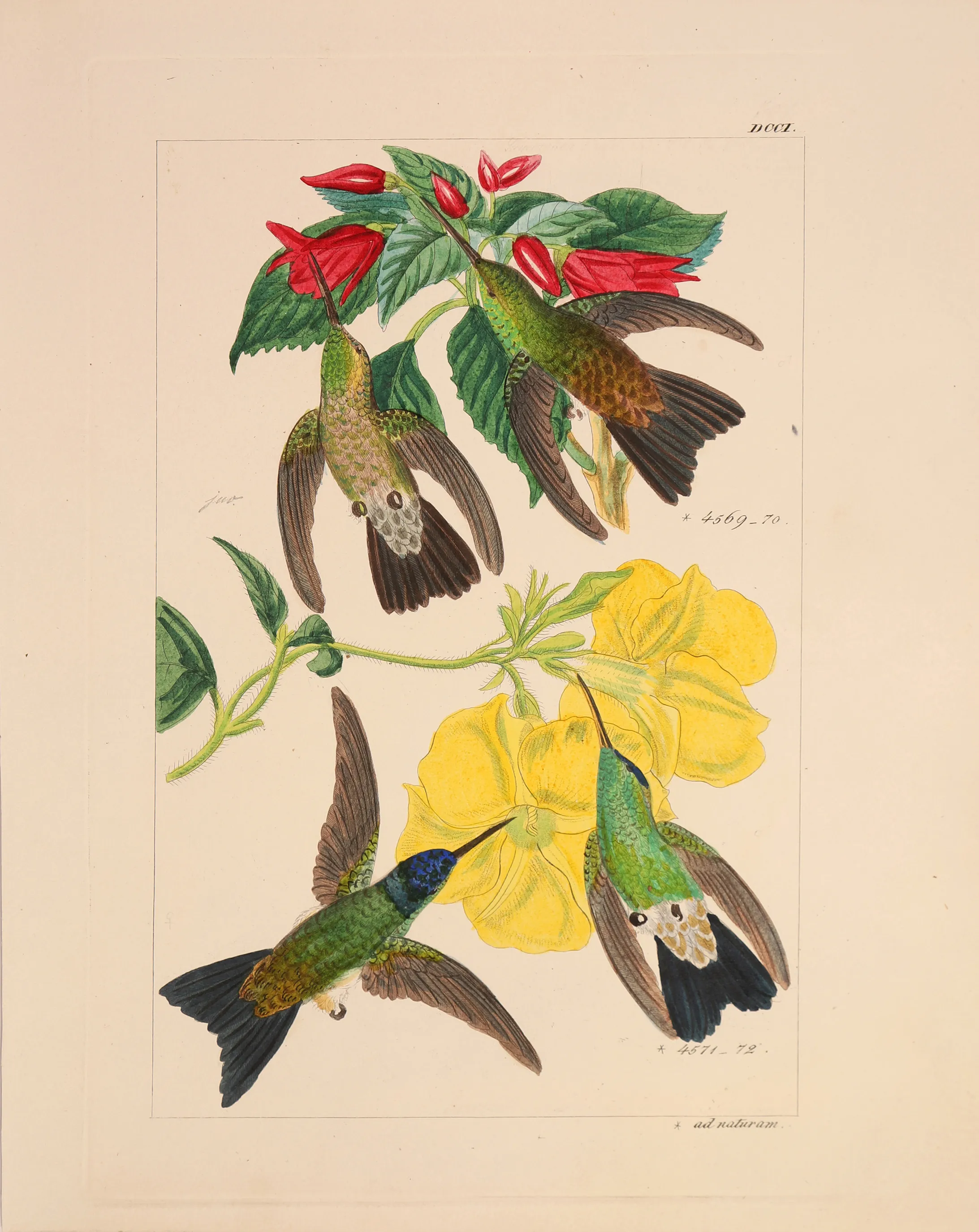
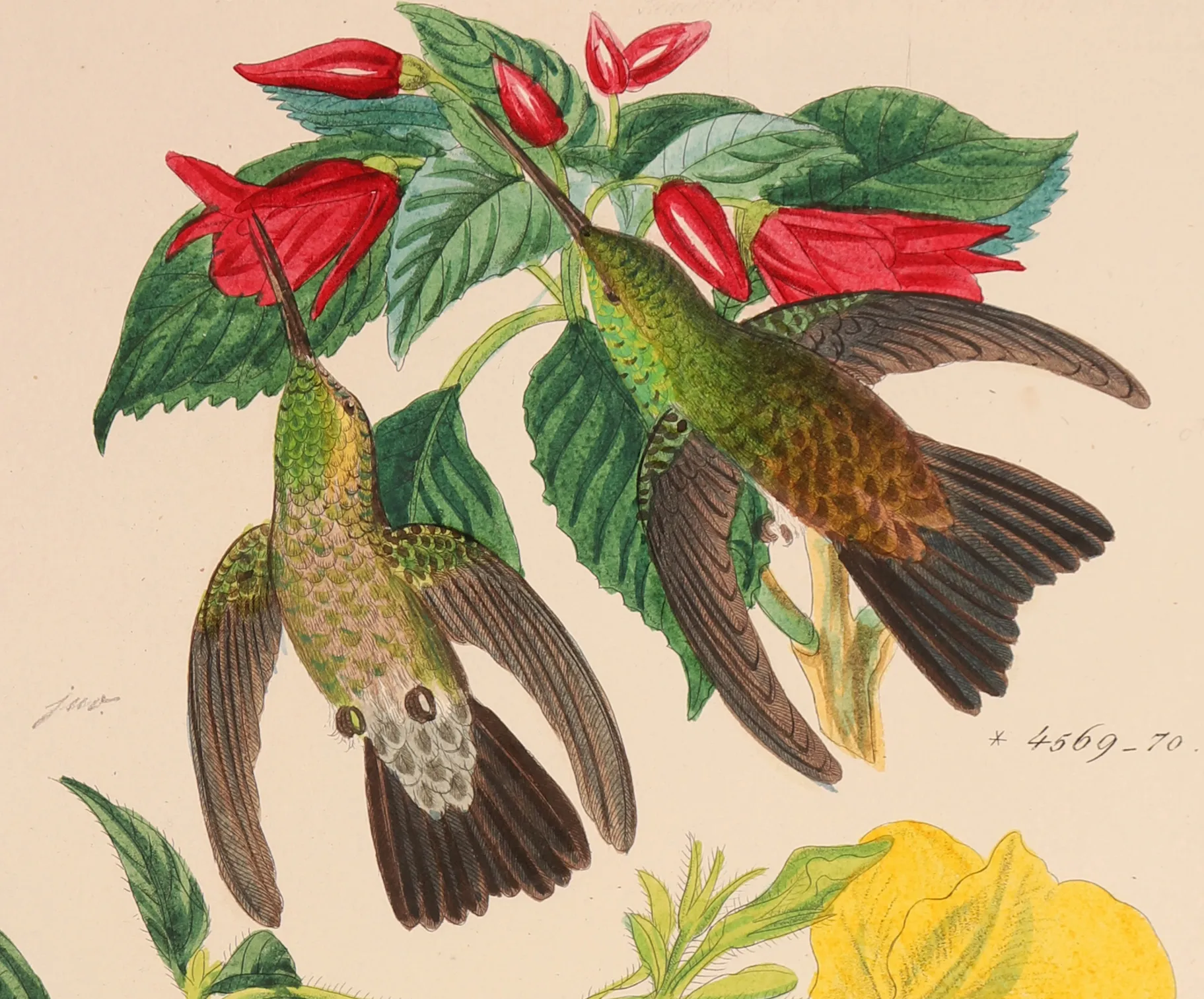
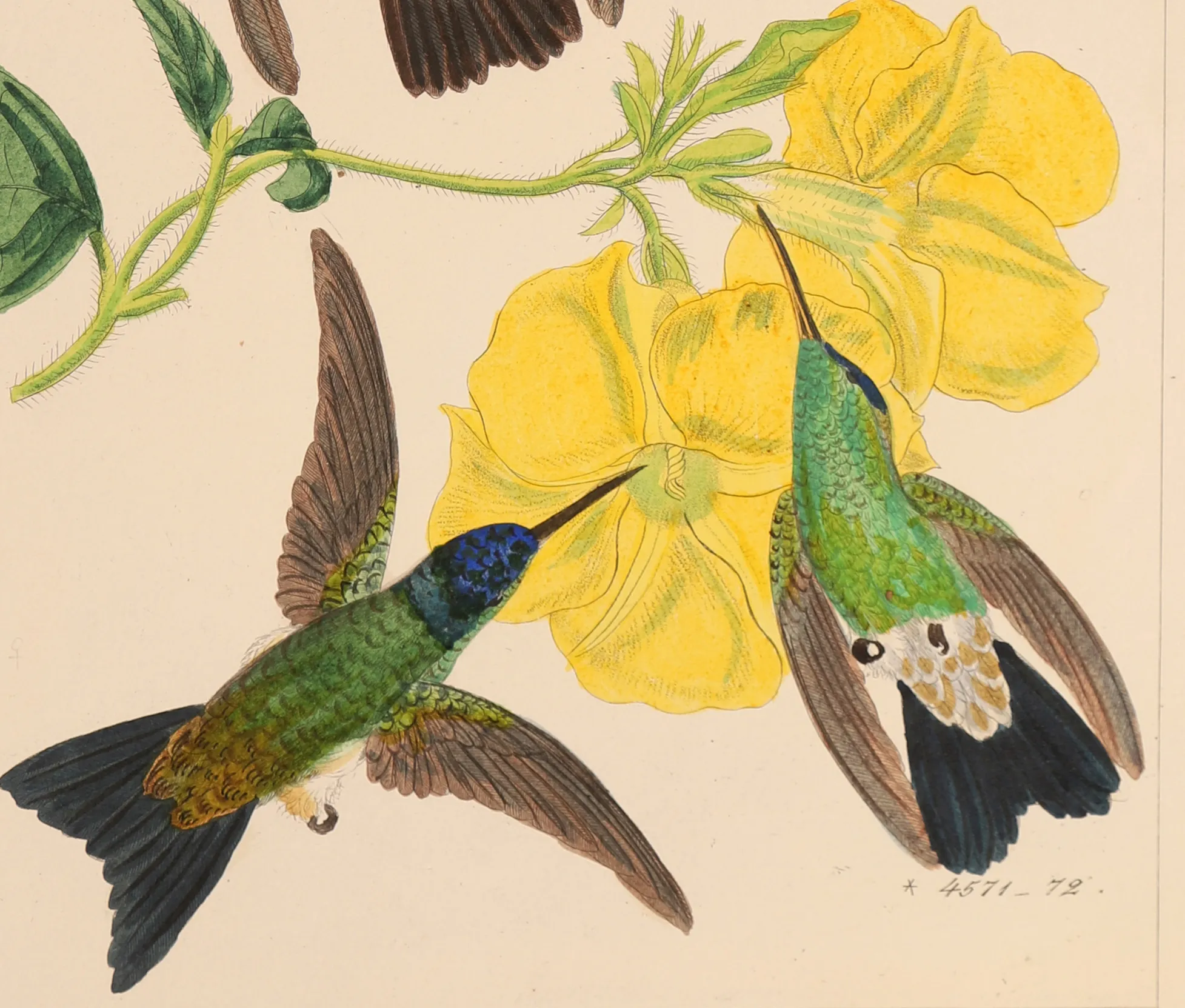
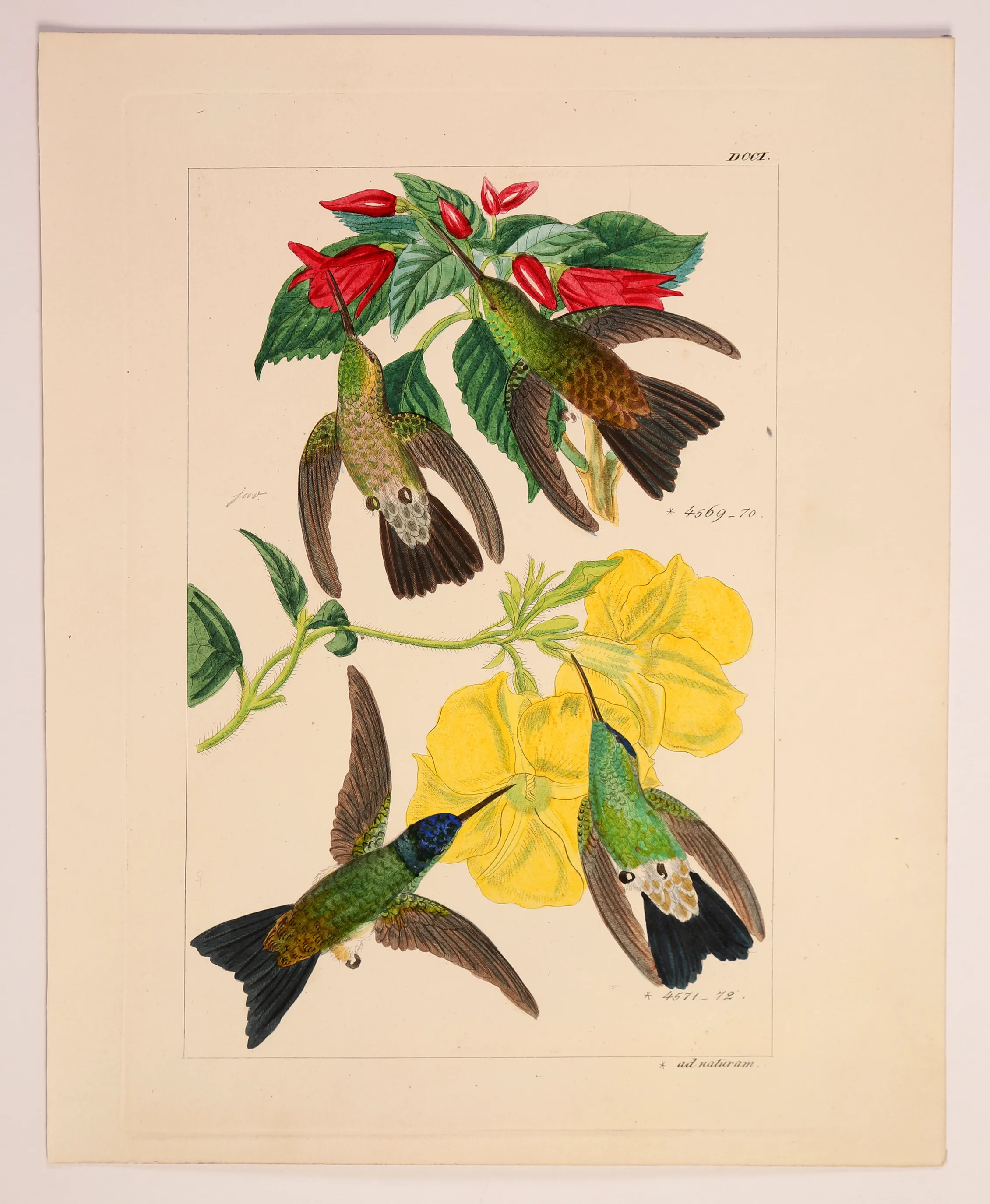
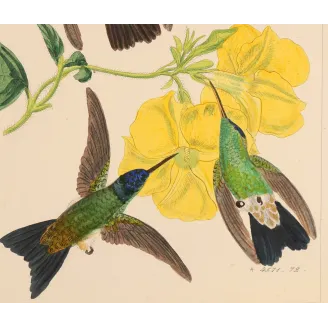
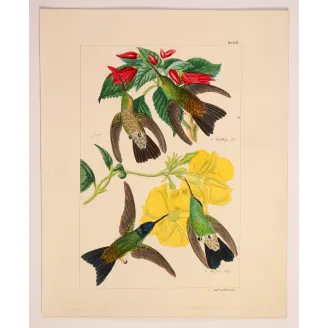
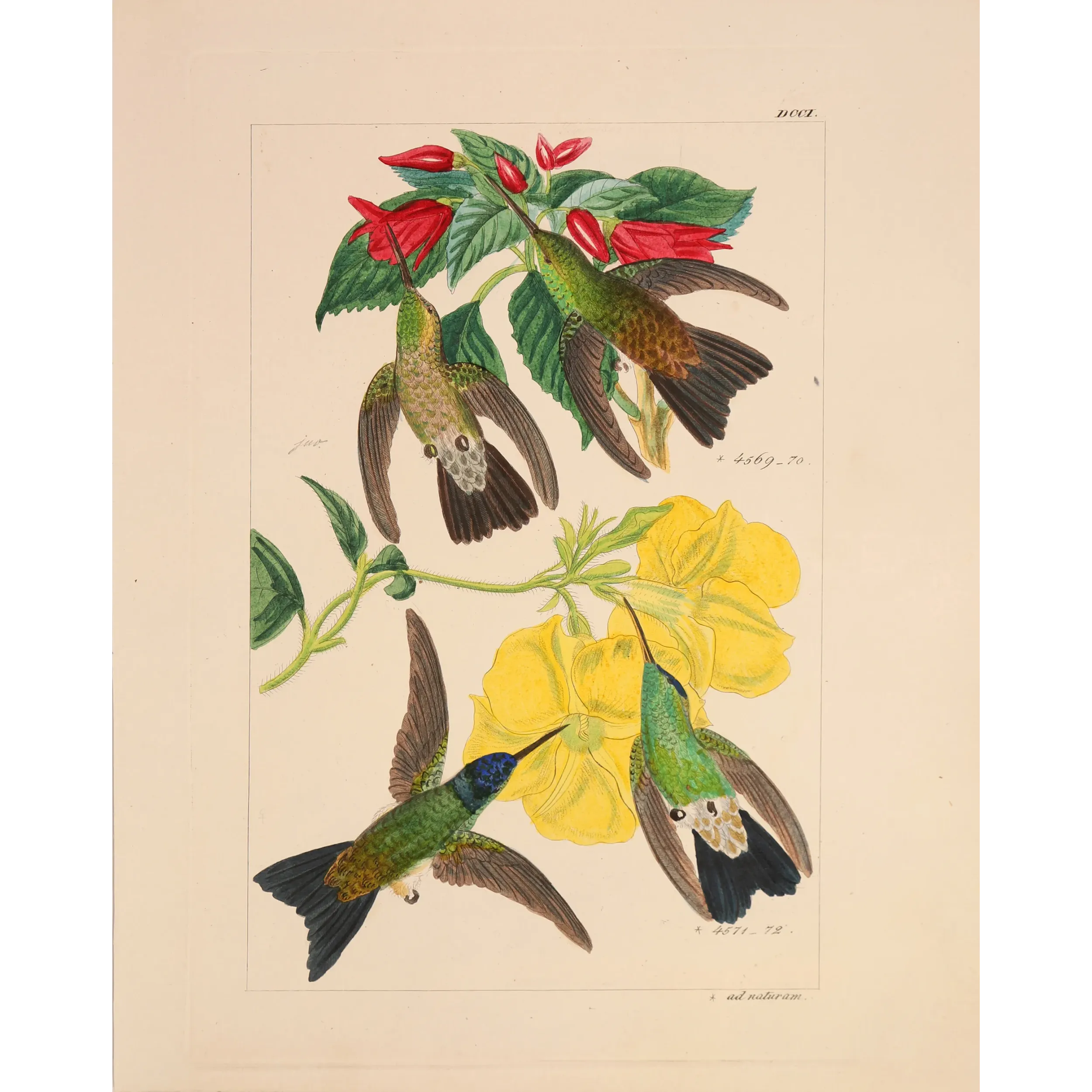
An original nineteenth-century hand-colored engraving from Ludwig Reichenbach's Trochilinarum Enumeratio, portraying emerald hummingbirds feeding among brilliant crimson and golden blossoms. A refined natural history composition celebrating the extraordinary colours and botanical diversity of the tropical forest.
 Delivery policy
Your print will be carefully prepared and shipped worldwide via trusted couriers (UPS or similar).
 Authentic antique prints
Original engravings from the 17th–19th century.
This magnificent original nineteenth-century hand-colored engraving from Ludwig Reichenbach's Trochilinarum Enumeratio portrays Tilmatura lepida, an elegant hummingbird associated by Reichenbach with the tropical landscapes of Mexico and Guatemala. Emerald plumage, crimson accents and luminous golden blossoms combine to create one of the most vibrant and decorative compositions of the series.
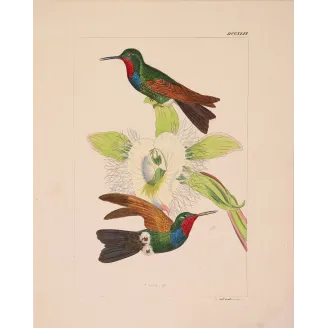
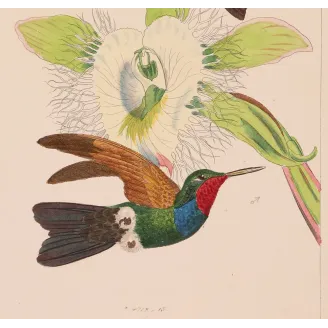
Rather than presenting the bird as an isolated specimen, Reichenbach places it within a rich botanical setting centred on Passiflora caerulea. The result is a composition where colour, movement and natural history merge into a vivid celebration of the tropical world.
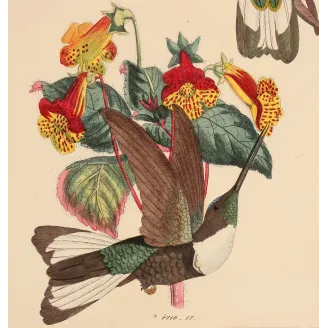
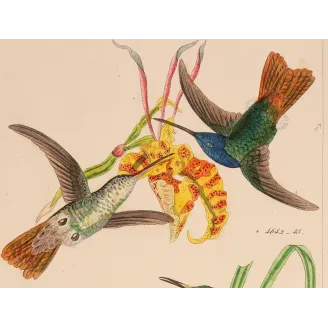
The composition is built around an elegant dialogue of colour. Rich crimson blossoms occupy the upper half of the engraving, while generous golden flowers illuminate the lower section. The hummingbirds link these contrasting botanical settings, creating a dynamic visual rhythm that guides the eye naturally across the plate.
The luminous emerald plumage acts as the visual bridge between red and gold, producing a remarkably balanced palette that feels both scientifically precise and artistically sophisticated. The generous use of white space enhances the intensity of every colour, allowing each botanical and ornithological element to breathe within the composition.
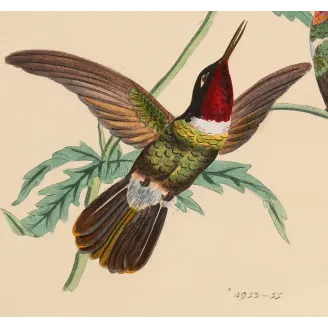
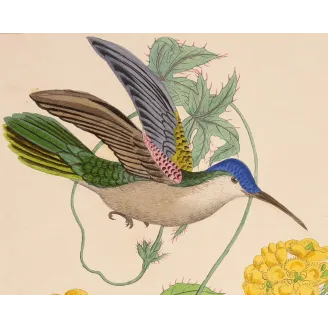
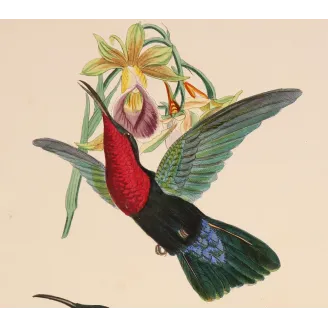
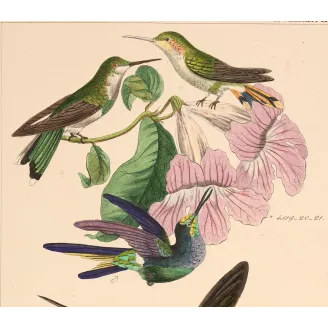
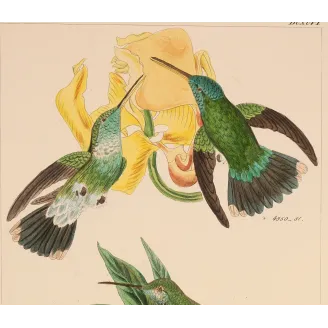
This engraving depicts Tilmatura lepida, recorded by Reichenbach in association with Mexico and Guatemala. The plate presents the species through multiple poses, allowing the viewer to appreciate its delicate proportions, refined plumage and graceful movement among flowering plants.
Reichenbach associated Tilmatura lepida with Passiflora caerulea L., one of the most recognisable passionflowers of the Americas. Its nectar-bearing blossoms illustrate the remarkable ecological relationship between hummingbirds and tropical flowering plants, where specialised flowers and long-billed pollinators evolved together over countless generations.
This engraving belongs to Ludwig Reichenbach's remarkable world of hummingbirds, where Victorian scientific curiosity meets extraordinary visual elegance. Explore the story behind Trochilinarum Enumeratio and discover why these original hummingbird engravings remain so compelling today.
Very Good condition. Original nineteenth-century paper with strong hand colouring and a clear plate mark. Minor age-related signs may be present, entirely consistent with authenticity and the historical character of the work.
Species: Tilmatura lepida (Lichtenstein, 1830)
Common name: Sparkling-tailed Hummingbird
Work: Trochilinarum Enumeratio
Author: Ludwig Reichenbach
Date: c. 1855–1860
Technique: Original hand-colored engraving
Plate: DCCXI (711)
Reference numbers: 4610–4614
Inscription: ad naturam (“drawn from life”)
Associated plant: Passiflora caerulea L.
Origin noted by Reichenbach: Mexico and Guatemala
Sheet size: approx. 28.5 × 22.5 cm
Specific References
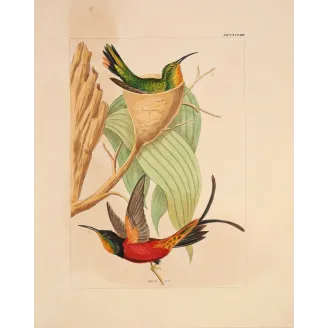
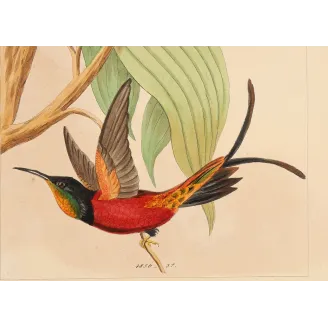
An exceptional original hand-colored engraving from Ludwig Reichenbach's Trochilinarum Enumeratio, depicting the magnificent Crimson Topaz (Topaza pyra) beside its beautifully woven nest. One of the rarest behavioural studies in nineteenth-century ornithological illustration, combining scientific observation with remarkable decorative elegance.
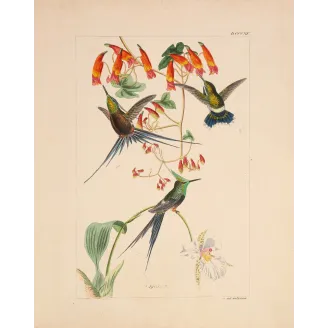
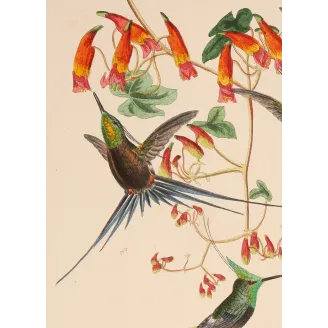
An original nineteenth-century hand-colored engraving from Ludwig Reichenbach's Trochilinarum Enumeratio, portraying elegant long-tailed hummingbirds suspended among cascading tropical blossoms. This exceptionally decorative composition combines graceful movement, botanical beauty and the refined artistry of Victorian natural history illustration.
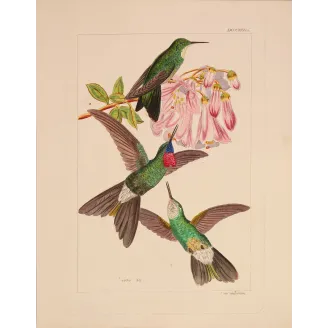
Original nineteenth-century hand-colored engraving by Ludwig Reichenbach, depicting three hummingbirds among pink blossoms. A rare later plate from the Trochilinarum Enumeratio corpus, not fully documented in the principal published index.
Original nineteenth-century hand-colored engraving depicting the Blue-headed Sabrewing (Saepiopterus lazulus), a tropical hummingbird illustrated by Ludwig Reichenbach in his celebrated Trochilinarum Enumeratio.
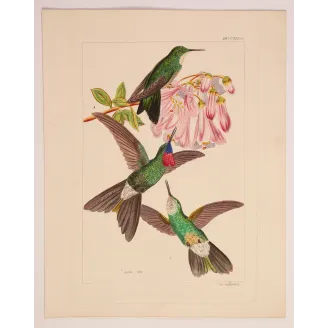
Original nineteenth-century hand-colored engraving by Ludwig Reichenbach, depicting three hummingbirds among pink blossoms. A rare later plate from the Trochilinarum Enumeratio corpus, not fully documented in the principal published index.
An original nineteenth-century hand-colored engraving from Ludwig Reichenbach's Trochilinarum Enumeratio, depicting Bourcieria prunellii among the vibrant blossoms of Achimenes picta. A refined composition balancing quiet observation and graceful flight in one of the most elegant plates of the series.
An original nineteenth-century hand-colored engraving from Ludwig Reichenbach's Trochilinarum Enumeratio, depicting Eriocnemis simplex among flowering passionflowers and cactus blossoms. A remarkable natural history engraving celebrating the extraordinary botanical diversity of hummingbird habitats.
An elegant original nineteenth-century hand-colored engraving from Ludwig Reichenbach's Trochilinarum Enumeratio, depicting Ramond's Hummingbird among the scarlet blossoms of Lemoinea spectabilis. A beautifully balanced composition celebrating the harmony between hummingbirds and tropical flowers.
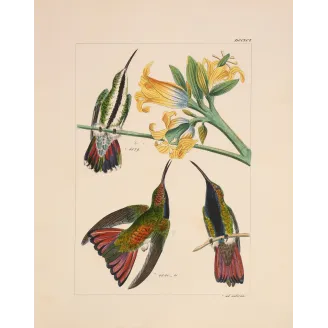
An original nineteenth-century hand-colored engraving from Ludwig Reichenbach's Trochilinarum Enumeratio, depicting Coeligena ourissia among the elegant blossoms of Bignonia picta. Four hummingbirds create one of the most harmonious and visually refined compositions in the celebrated Victorian series.
An original nineteenth-century hand-colored engraving from Ludwig Reichenbach's Trochilinarum Enumeratio, depicting three hummingbirds gathered around elegant pendulous blossoms. One of the most harmonious compositions of the series, celebrating movement, colour and the timeless relationship between hummingbirds and flowering plants.
An original nineteenth-century hand-colored engraving from Ludwig Reichenbach's Trochilinarum Enumeratio, depicting Mango Hummingbirds feeding among elegant tropical blossoms. This refined composition celebrates the remarkable evolutionary relationship between hummingbirds and the flowers they pollinate.
An original nineteenth-century hand-colored engraving from Ludwig Reichenbach's Trochilinarum Enumeratio, depicting Lesbia victoriae among spectacular tropical blossoms. A refined natural history composition celebrating the remarkable partnership between hummingbirds and flowering plants.
An original nineteenth-century hand-colored engraving from Ludwig Reichenbach's Trochilinarum Enumeratio, depicting Chrysuronia eliciae among the tropical blossoms of Pitcairnia exscapa. A richly composed Victorian natural history plate celebrating hummingbirds, botanical diversity and the living complexity of tropical ecosystems.
Original nineteenth-century hand-colored engraving depicting the Purple-throated Carib (Eulampis jugularis), one of the most spectacular Caribbean hummingbirds illustrated in Ludwig Reichenbach’s Trochilinarum Enumeratio.
An exceptional original hand-colored engraving from Ludwig Reichenbach's Trochilinarum Enumeratio, depicting five brilliant hummingbirds feeding among scarlet tropical flowers. Featuring Esmeralda, Euchloris and Maculicollis, this dynamic nineteenth-century composition beautifully combines botanical richness with the elegance of Victorian ornithological illustration.
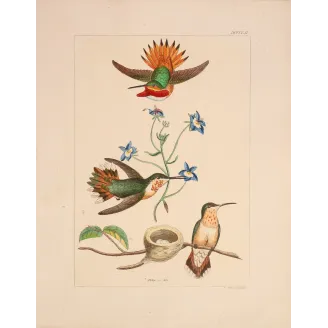
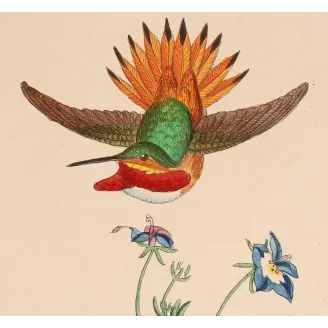
An exceptional original hand-colored engraving from Ludwig Reichenbach's Trochilinarum Enumeratio, portraying hummingbirds during the nesting season. Featuring a beautifully woven nest, delicate blue flowers and vibrant emerald plumage, this rare nineteenth-century composition combines ornithological observation with remarkable decorative elegance.
Refined depiction of the stone pine with cone, needles and botanical elements.
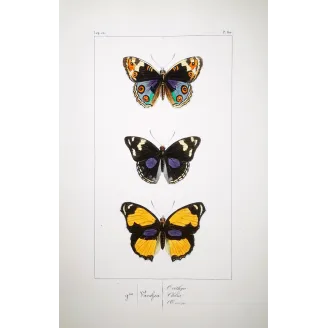
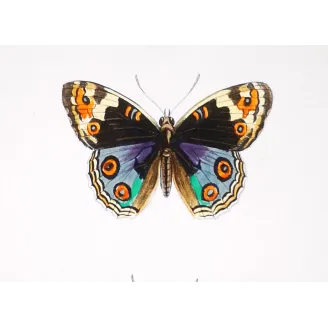
Vivid butterflies with striking eye-spots, deep purple, and bright orange tones. A bold 1835 engraving with strong decorative appeal.
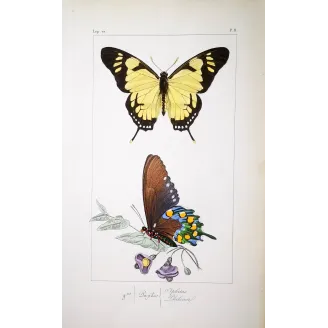
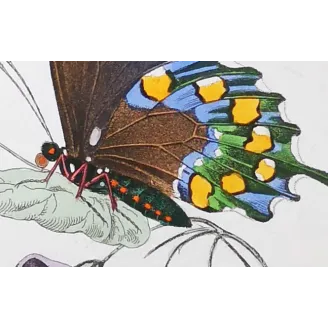
Yellow swallowtail and Pipevine butterfly (Papilio iphitas, Battus philenor) combining bold yellow-black contrast with iridescent blue and green tones. A highly decorative 1835 engraving, ideal as antique butterfly wall art.
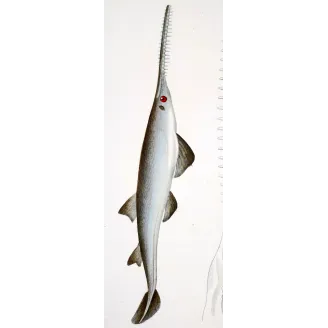
Exceptional 19th-century antique print by Pierre Antoine Prêtre depicting the majestic Sawfish with anatomical accuracy and rare charm.
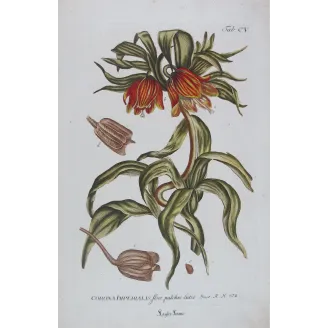
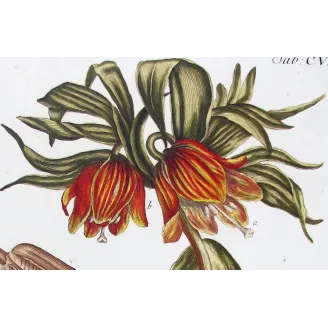
A striking 18th-century botanical engraving of Crown Imperial (Fritillaria imperialis), distinguished by unusually bold hand-coloring and a dynamic, flowing composition. This plate exemplifies the expressive character of German botanical illustration, combining strong visual presence with refined natural observation.
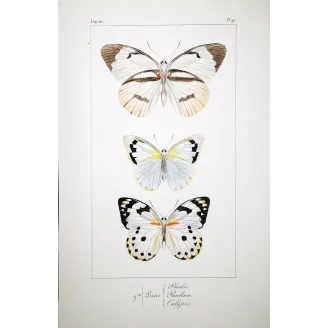
Delicate white butterflies with subtle yellow, orange, and black accents. A refined 1835 engraving with light and elegant decorative appeal.
An original nineteenth-century hand-colored engraving from Ludwig Reichenbach's Trochilinarum Enumeratio, portraying emerald hummingbirds feeding among brilliant crimson and golden blossoms. A refined natural history composition celebrating the extraordinary colours and botanical diversity of the tropical forest.