
Hippolyte Lucas: Scientific Vision and the Golden Age of Exotic Butterflies
Hippolyte Lucas: Scientific Vision and the Golden Age of Exotic Butterflies
Hippolyte Lucas (1814–1899) was a distinguished French entomologist of the nineteenth century, active during one of the most ambitious periods of natural history exploration. His work on exotic Lepidoptera reflects an era in which science, taxonomy, and engraving converged to produce publications of remarkable intellectual and visual authority.
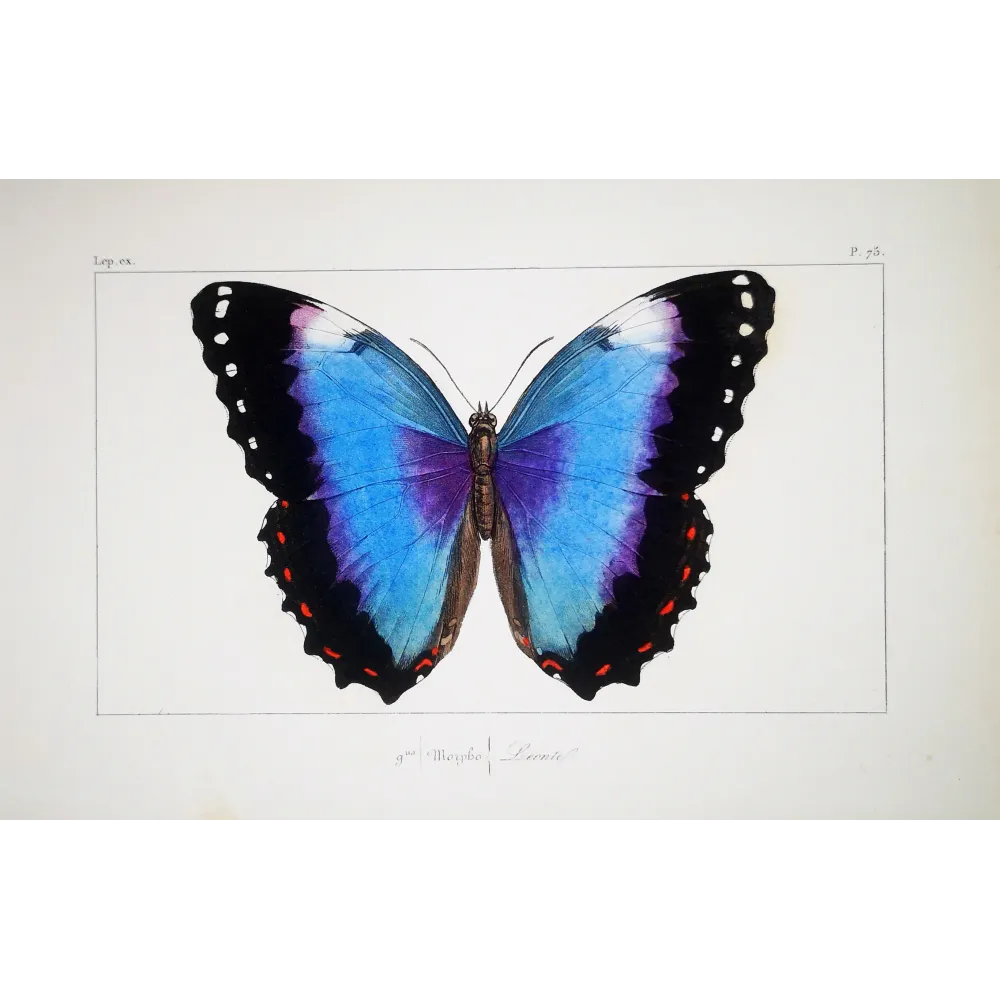
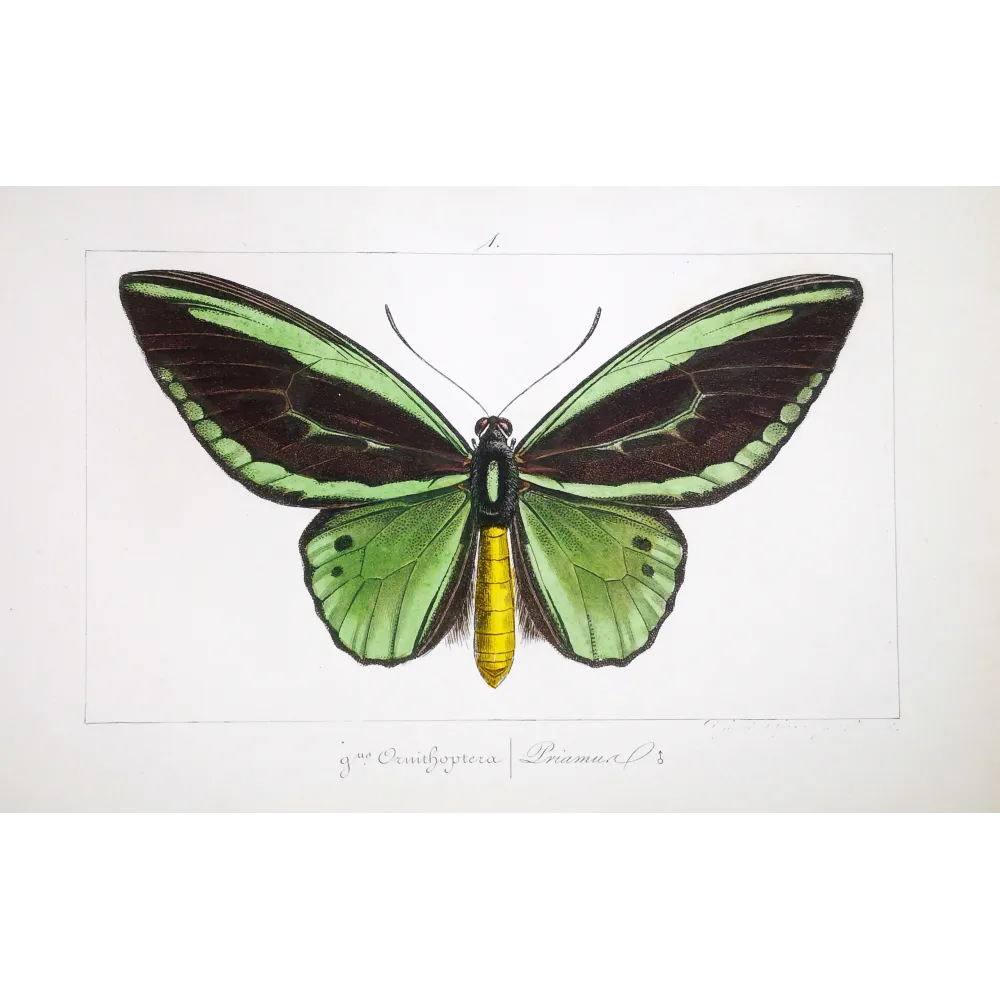
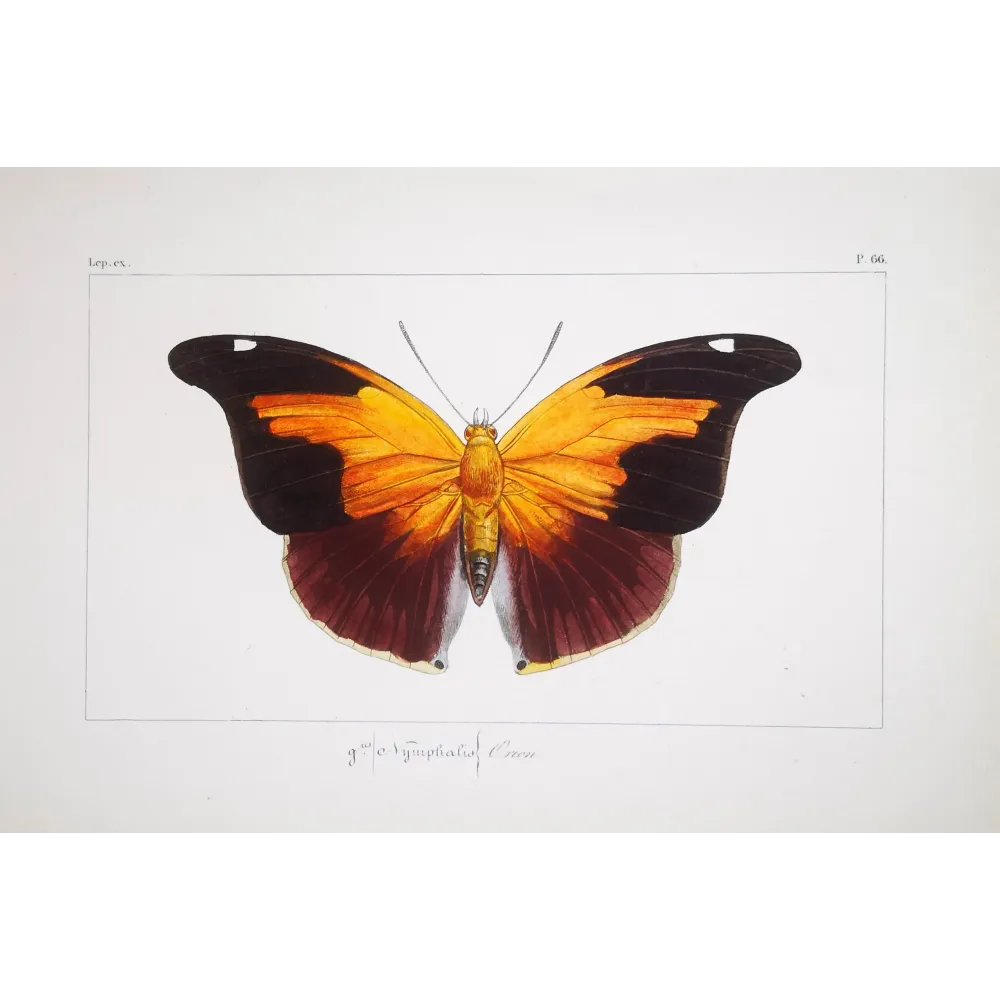
Selected Originals — Iconic Plates from Exotic Butterflies
View full plate details and condition reports.
 |
 |
 |
Browse the full Lucas – Exotic Butterflies collection →
Born in Paris in 1814, Lucas began his career at just thirteen as an apprenti-préparateur at the Muséum National d’Histoire Naturelle. Working alongside leading figures such as Pierre André Latreille, he was formed within one of Europe’s most rigorous scientific environments. This early immersion in taxonomy and specimen preparation shaped a lifetime devoted to the systematic study of invertebrates.
Lucas later took part in the landmark Exploration Scientifique de l’Algérie (1839–1842), one of the first modern biological surveys of North Africa. The resulting multi-volume publications — particularly those devoted to articulated animals and insects — introduced numerous species new to science. His contributions to Lepidoptera, arachnids, crustacea and broader entomological fauna established him as one of the most prolific French naturalists of his generation.
Lucas belonged to a generation determined to catalogue the expanding discoveries brought back from Africa, Asia, and the Pacific. Museums and private cabinets grew rapidly, and the need for accurate visual documentation became essential. Under his scientific direction, butterfly species were not only classified but rendered with clarity and precision in finely engraved plates.
The resulting works transcend mere scientific illustration. From the luminous greens of Ornithoptera to the dramatic contrasts of tropical swallowtails, these hand-coloured engravings transform fragile specimens into enduring images — disciplined, studied, and aesthetically compelling.
Scientific Direction and Artistic Collaboration
In nineteenth-century natural history publishing, the naturalist and the engraver worked in close collaboration. Lucas provided taxonomic authority and scientific supervision, ensuring that each species was accurately represented and properly described.
The plates were drawn and engraved by skilled artists such as Pauquet, who translated real specimens into copperplate form. Every contour of the wing, every chromatic transition, was studied before being engraved and subsequently coloured entirely by hand.
A final application of gum arabic enhanced tonal depth and unified the surface. The result is a rare balance: scientific exactitude paired with visual elegance. These engravings are not stylised fantasies, but disciplined interpretations grounded in observation — a defining feature of the golden age of entomological art.
Heritage Stories
The scientific authority of Lucas’ project relied on master engravers capable of translating taxonomy into image with exceptional clarity. Among them, Pauquet played a decisive role in shaping the monumental symmetry and chromatic precision that define these plates.
Discover more in our dedicated feature: Pauquet — The Engraver Behind the Exotic Butterflies.
Related posts
-
 Émile-Allain Séguy and Prismes: Art Deco Geometry in Full Color
At the intersection of biology, modernism, and decorative arts, Émile-Allain Séguy occupies a singular place. Best...Read more
Émile-Allain Séguy and Prismes: Art Deco Geometry in Full Color
At the intersection of biology, modernism, and decorative arts, Émile-Allain Séguy occupies a singular place. Best...Read more -
 La Plante et ses Applications Ornementales: Eugène Grasset and the Birth of Modern Botanical Design
In the golden age of Art Nouveau, few works embody the marriage between art and nature as perfectly as La Plante et...Read more
La Plante et ses Applications Ornementales: Eugène Grasset and the Birth of Modern Botanical Design
In the golden age of Art Nouveau, few works embody the marriage between art and nature as perfectly as La Plante et...Read more -
 Gregory M. Mathews and The Birds of Australia: A Monument of Ornithological Ambition
Gregory M. Mathews’ The Birds of Australia is a monumental blend of taxonomy and art. This article explores the...Read more
Gregory M. Mathews and The Birds of Australia: A Monument of Ornithological Ambition
Gregory M. Mathews’ The Birds of Australia is a monumental blend of taxonomy and art. This article explores the...Read more -
 Jacob L'Admiral and the Metamorphosis of Insects – A Dutch Enlightenment Marvel (1774)
In the vibrant scientific atmosphere of the 18th century, Jacob L’Admiral (1700–1775), a Dutch naturalist and...Read more
Jacob L'Admiral and the Metamorphosis of Insects – A Dutch Enlightenment Marvel (1774)
In the vibrant scientific atmosphere of the 18th century, Jacob L’Admiral (1700–1775), a Dutch naturalist and...Read more -
 Pierre-Joseph Redouté: Botanical Illustration Beyond Roses
Pierre-Joseph Redouté (1759–1840) is universally regarded as the most influential botanical illustrator of the late...Read more
Pierre-Joseph Redouté: Botanical Illustration Beyond Roses
Pierre-Joseph Redouté (1759–1840) is universally regarded as the most influential botanical illustrator of the late...Read more
Leave a comment