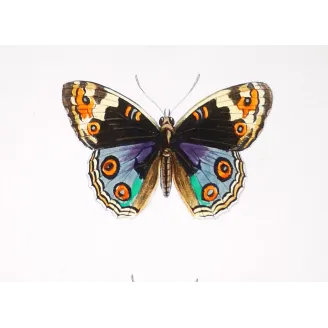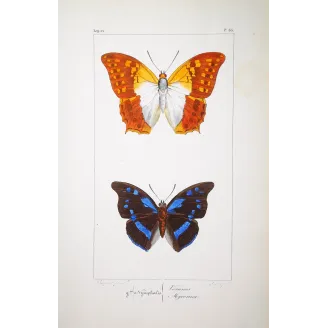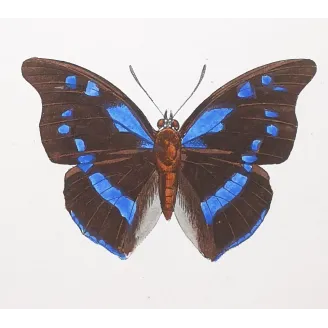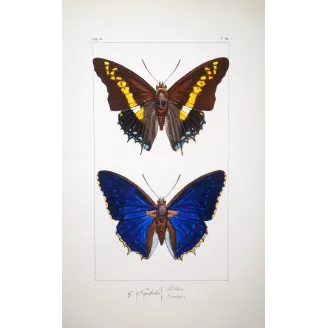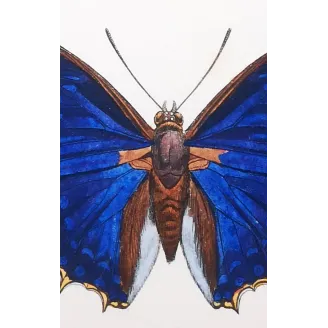
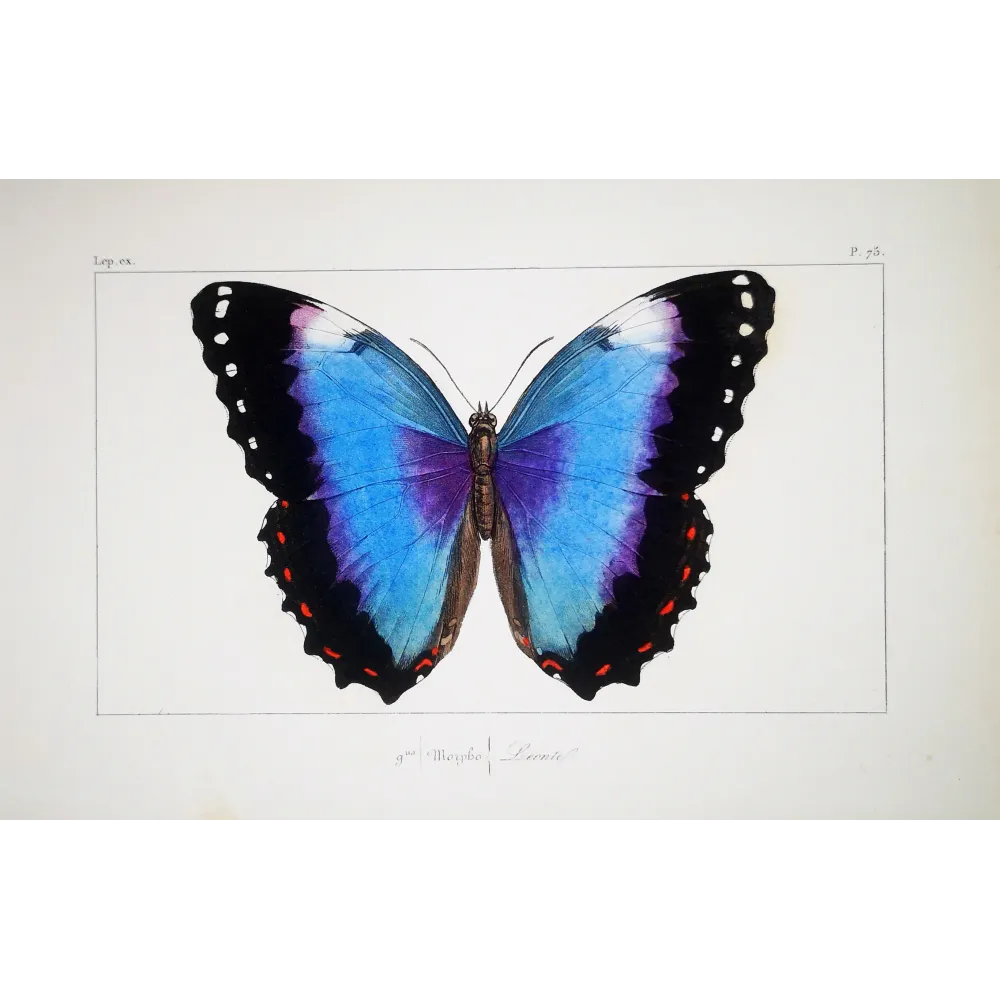
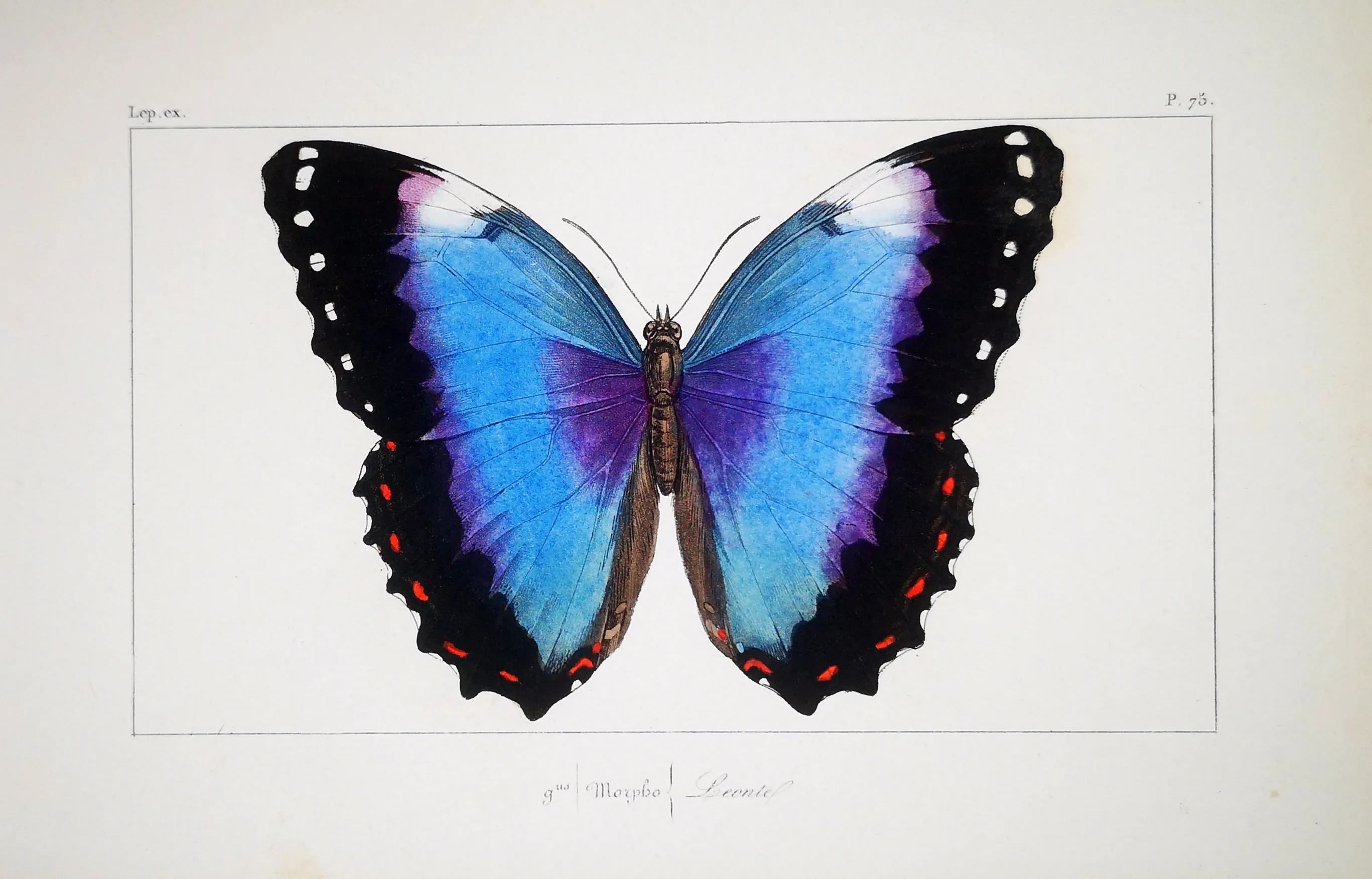
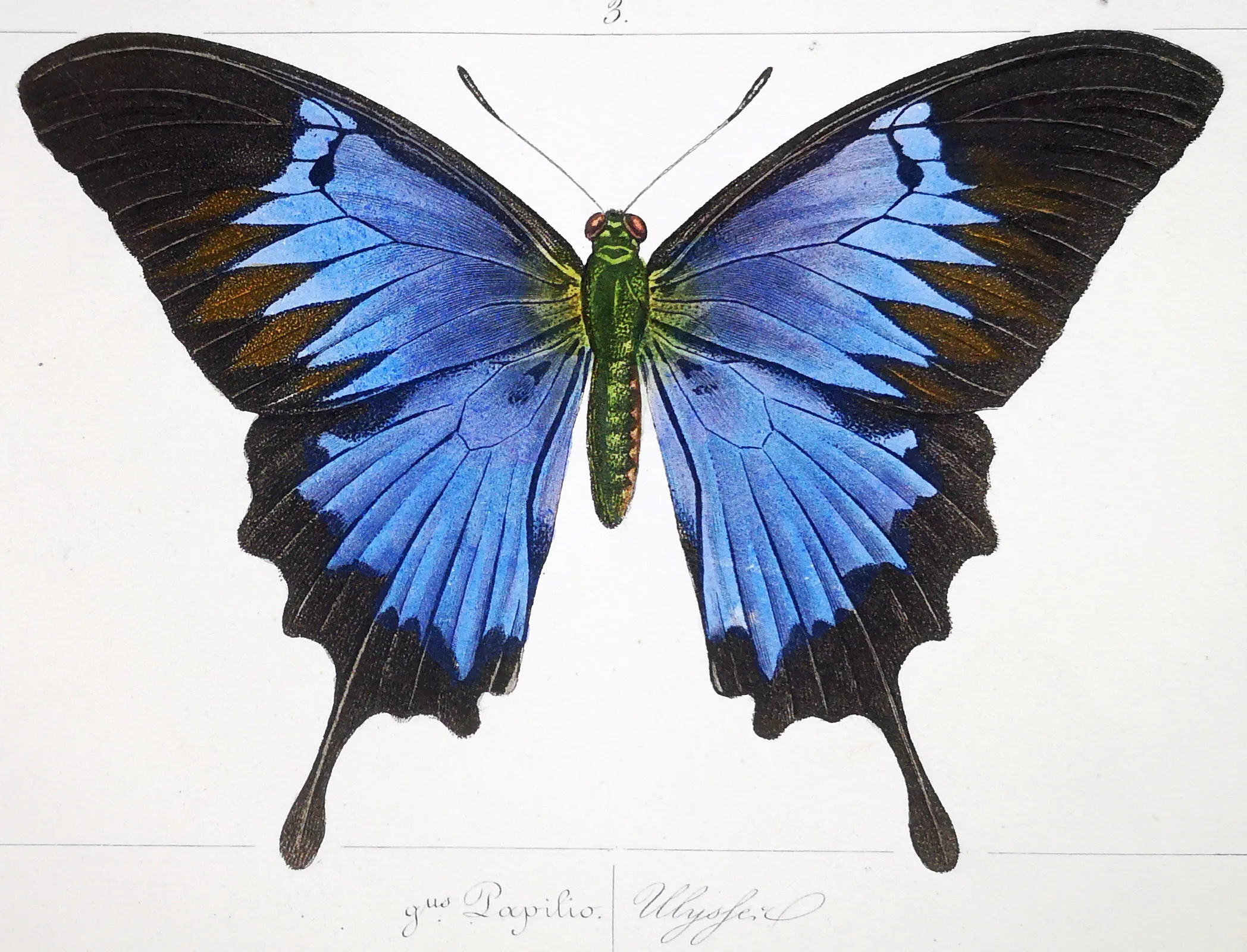
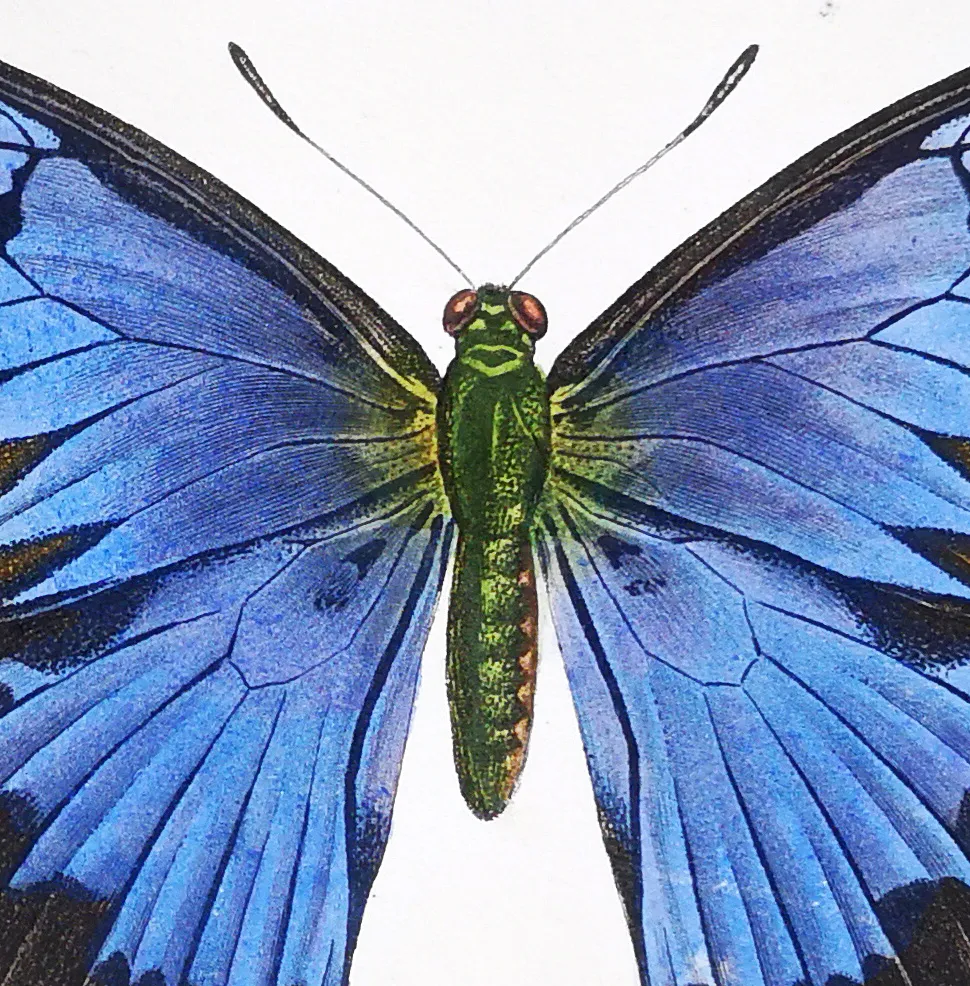
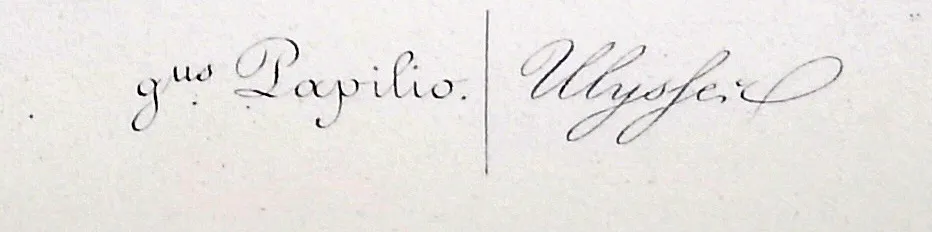
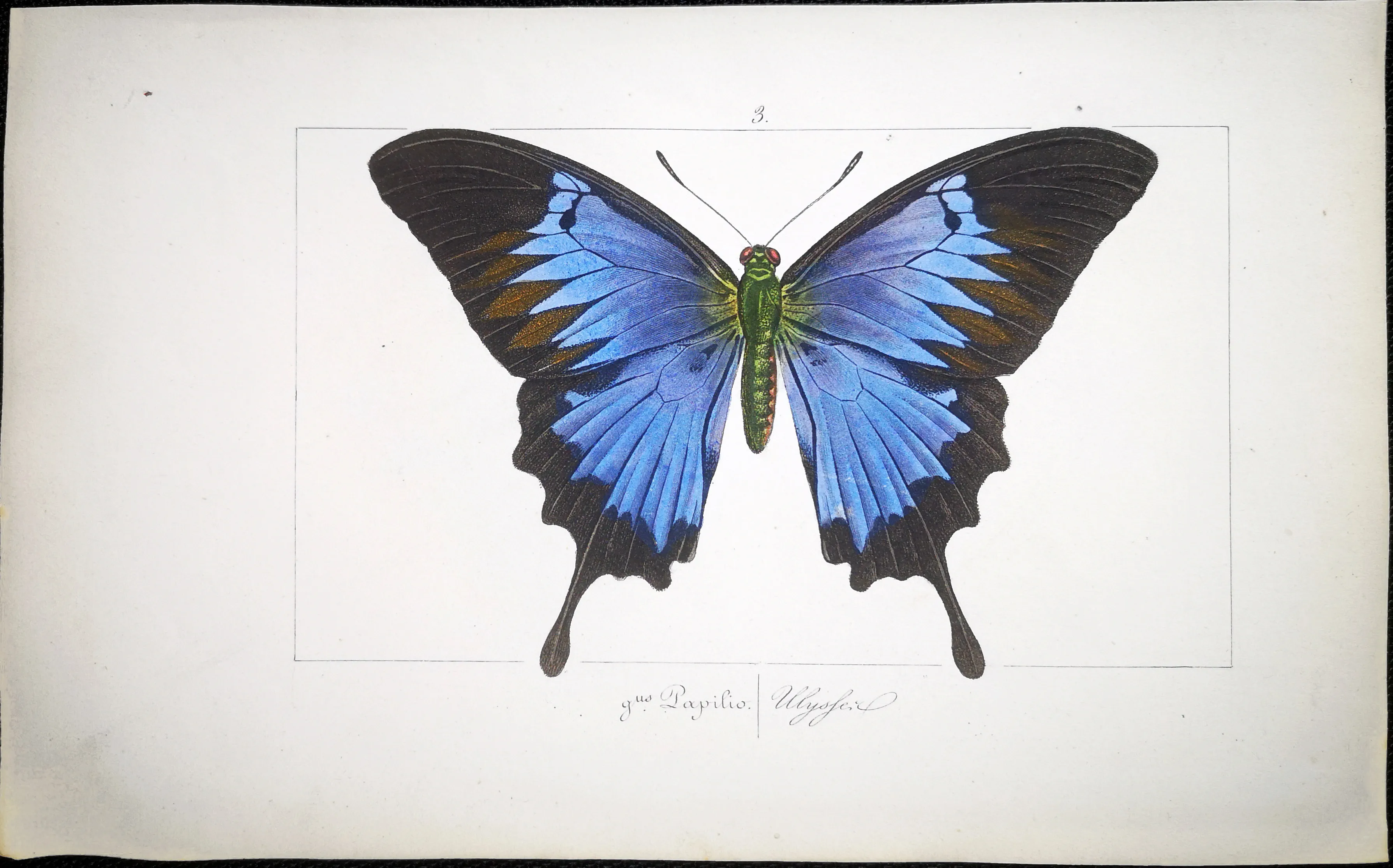
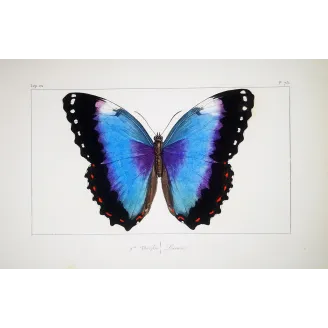
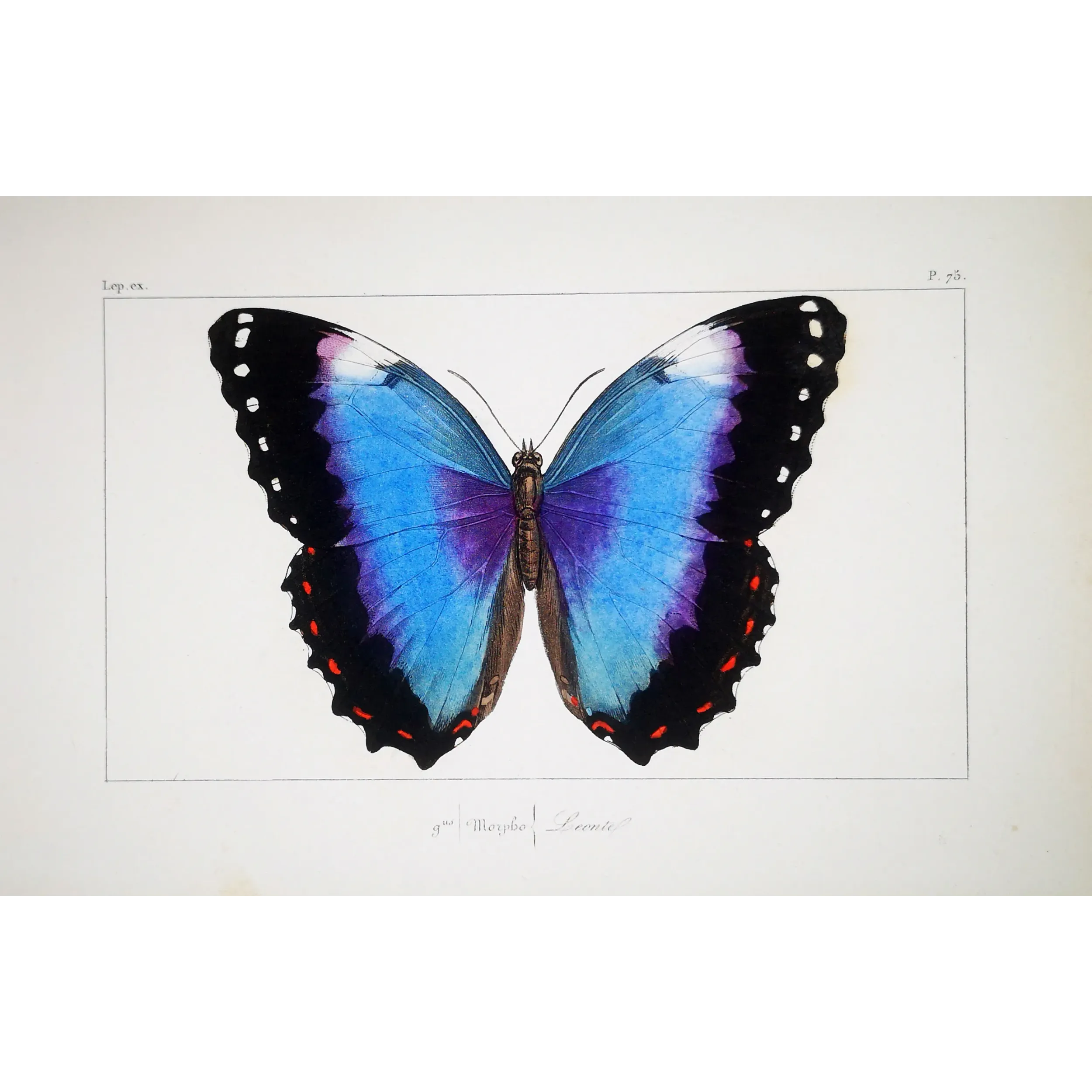
An original 19th-century hand-colored engraving of Morpho leonte, the striking Blue Morpho butterfly, drawn and engraved by Pauquet under the scientific direction of Hippolyte Lucas.
 Delivery policy
Your print will be carefully prepared and shipped worldwide via trusted couriers (UPS or similar).
 Authentic antique prints
Original engravings from the 17th–19th century.
This original 1835 hand-colored copper engraving depicts Morpho leonte, a celebrated Blue Morpho butterfly renowned for its luminous, iridescent wings. The plate forms part of Exotic Butterflies, produced under the scientific direction of Hippolyte Lucas and drawn and engraved by Pauquet.
Presented with museum-like clarity against a clean ground, the specimen becomes both scientific document and decorative icon — a disciplined image of nature designed to preserve structure, symmetry, and chromatic intensity.
— • —
The composition is defined by an extraordinary chromatic architecture: a radiant field of electric blue dissolves into violet transitions near the thorax, framed by deep black margins that heighten contrast and visual tension. Small red accents along the lower wings punctuate the perimeter with controlled intensity, while the pale white spotting at the tips provides a final note of rhythm and balance.
The wings are rendered with measured precision, preserving venation and form without flattening the luminous effect. This combination of restraint and brilliance is characteristic of the finest nineteenth-century entomological plates — images crafted to be read scientifically, yet powerful enough to function as refined wall art in contemporary interiors.
Blue Morpho butterflies are renowned for their structural iridescence: their intense blue colour is produced not solely by pigment but by microscopic scale structures that refract light, creating a shifting, almost metallic brilliance.
In the early nineteenth century, such spectacular species embodied the European fascination with “exotic nature.” Their monumental wings and intense chromatic presence made them ideal subjects for engraved publication — at once visually arresting and scientifically significant.
This engraving belongs to the remarkable series Exotic Butterflies , published in 1835 under the scientific direction of Hippolyte Lucas — a period when nature was celebrated through monumental illustrated works that combined taxonomy with refined artistic craftsmanship.
Discover the historical context in our editorial feature: Hippolyte Lucas: Scientific Vision and the Golden Age of Exotic Butterflies .
The plate was drawn and engraved by Pauquet, whose refined copperplate technique translated real specimens into enduring images of exceptional clarity: Pauquet: The Engraver Behind the Exotic Butterflies .
Very good antique condition. Fresh and vibrant original hand-coloring with strong engraved impression. Printed on fine original nineteenth-century paper. Minor age toning consistent with 1835 publication. It's increasingly rare to find impressions preserved with such freshness of color and overall integrity.
Specific References
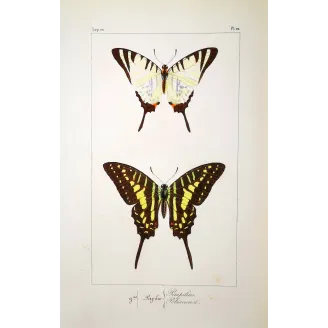
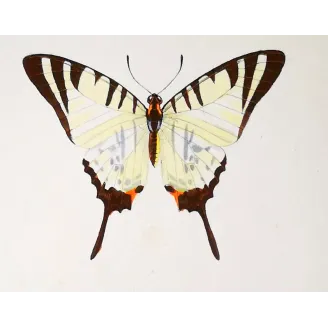
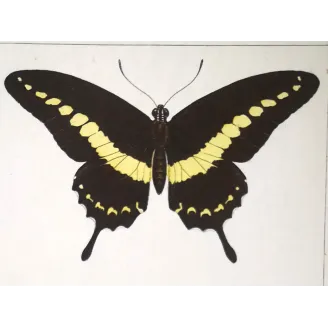
Black swallowtail butterflies with ivory, yellow and green patterns. A refined 1835 engraving, ideal as antique butterfly wall art.
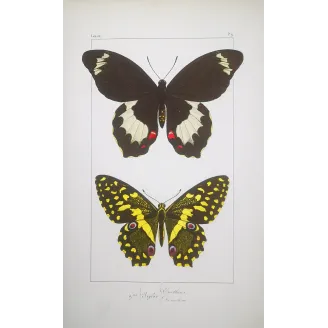
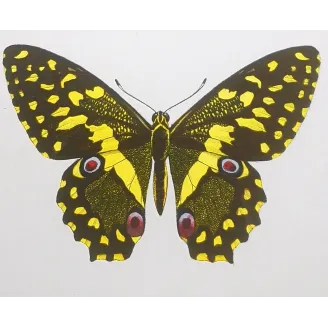
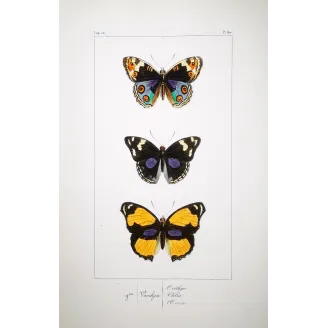
Yellow and black butterflies with striking eye spots and bold contrast patterns. A vivid 1835 engraving, perfect as antique butterfly wall art.
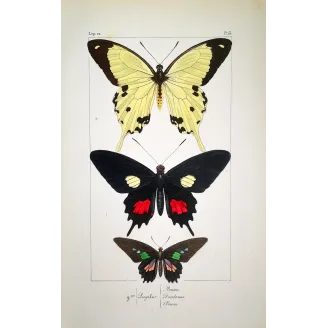
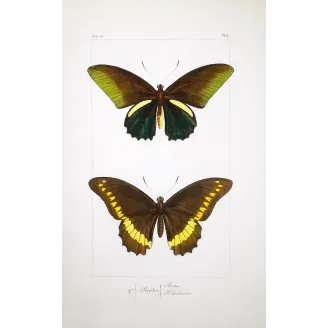
Dramatic swallowtail butterflies including Papilio dardanus, featuring bold yellow, black, and red contrasts with iridescent accents. A striking 1835 engraving, ideal as antique butterfly wall art.
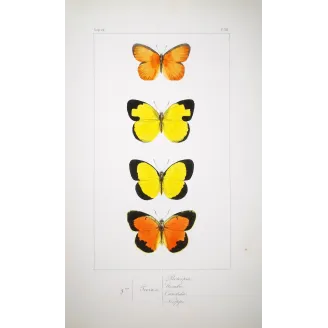
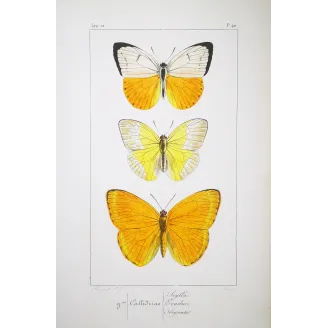
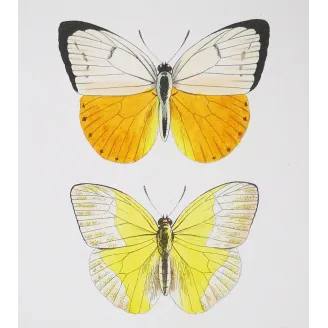
Sulphur Butterflies (Terias hecabe, candida, nicippe) – Antique Hand-Colored Engraving (1835)
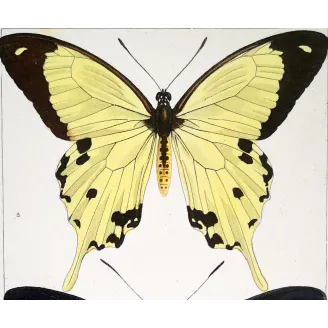
Elegant golden and yellow swallowtail butterflies with luminous contrast and flowing wing shapes. A refined antique engraving from 1835.
Vivid butterflies with striking eye-spots, deep purple, and bright orange tones. A bold 1835 engraving with strong decorative appeal.
A vivid pairing of Lacewing (Cethosia cyane) and Erycina butterflies, combining fiery orange tones with electric blue accents. A striking piece of antique butterfly wall art with strong decorative contrast.
Striking butterflies in deep red, violet, and dark tones with eye-like markings. A refined 1835 engraving with strong decorative character.
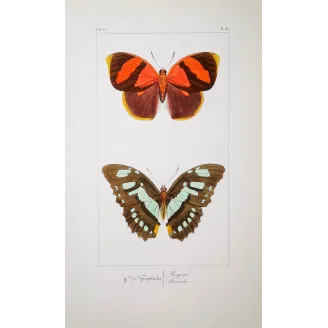
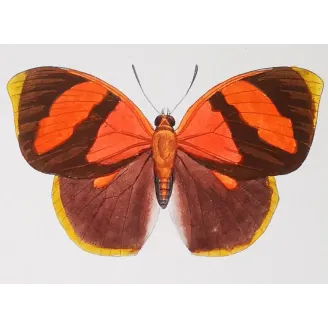
This vivid 1835 hand-colored engraving presents two striking tropical butterflies: the intensely colored Agrias rogeri, with its brilliant red and orange wings, and the elegant Adelpha stenele, known for its intricate pattern and pale blue markings. The strong chromatic contrast between the two species creates a visually compelling composition, making this piece a refined example of antique butterfly wall art and natural history illustration.
Original 1835 hand-colored copper engraving depicting the butterflies Pollux and Eurilochus. A visually striking double-specimen plate from Hippolyte Lucas’ celebrated Exotic Butterflies, engraved by Pauquet, with strong appeal as natural history art and antique butterfly wall art.
Luminous yellow and white butterflies with warm golden tones. A refined 1835 engraving with bright and elegant decorative appeal.
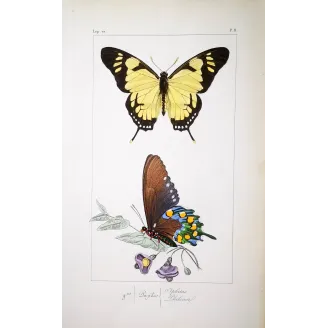
Yellow swallowtail and Pipevine butterfly (Papilio iphitas, Battus philenor) combining bold yellow-black contrast with iridescent blue and green tones. A highly decorative 1835 engraving, ideal as antique butterfly wall art.
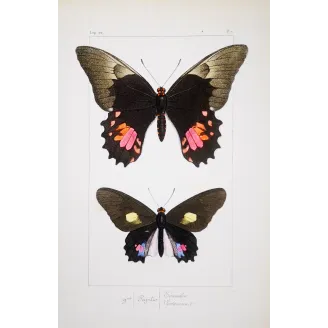
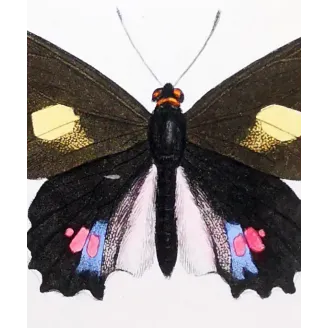
Elegant black butterflies with luminous pink and orange accents, creating a refined yet dramatic visual composition. A distinctive 1835 antique butterfly engraving.
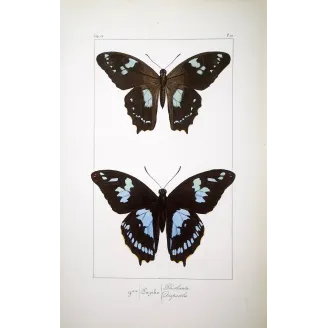
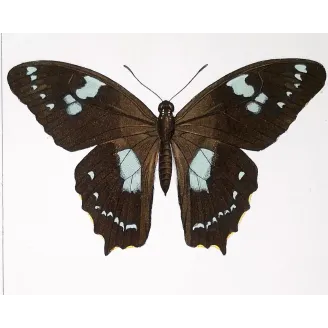
A refined 19th-century hand-colored engraving depicting two forms of the La Réunion Swallowtail (Papilio phorbanta). Published in Hippolyte Lucas’s Exotic Butterflies (1835), the plate captures the striking contrast between deep velvety wings and luminous pale blue markings characteristic of this Indian Ocean species.
Colored illustration depicting two South American toucans: the Toco and the Red-belted Aracari.
An original 19th-century hand-colored engraving of Morpho leonte, the striking Blue Morpho butterfly, drawn and engraved by Pauquet under the scientific direction of Hippolyte Lucas.