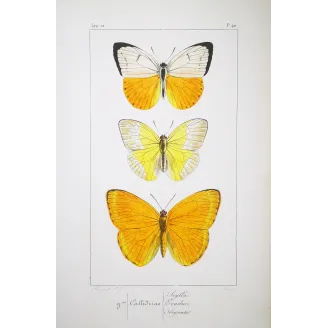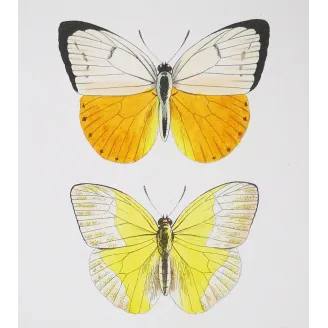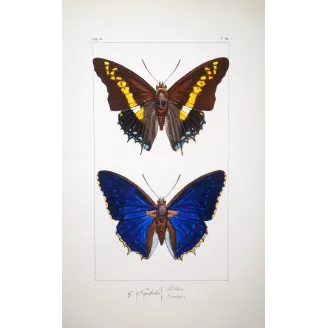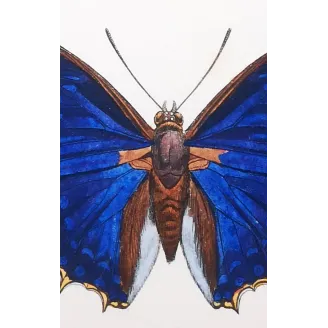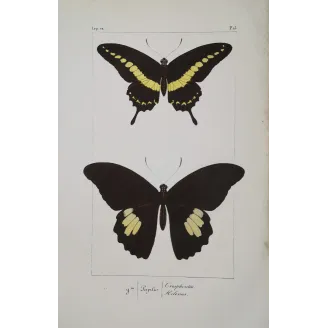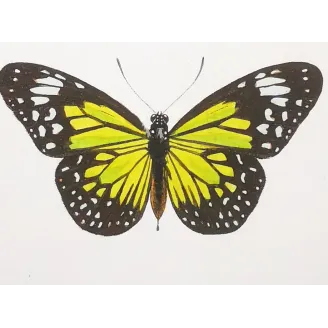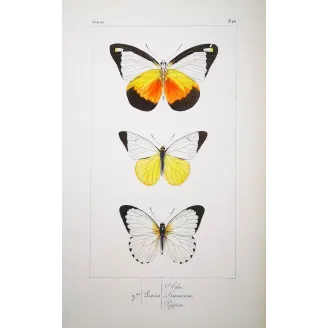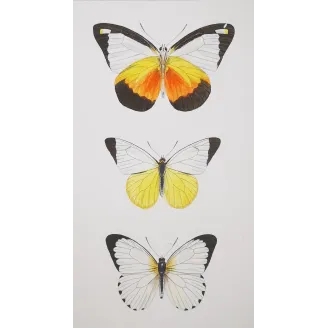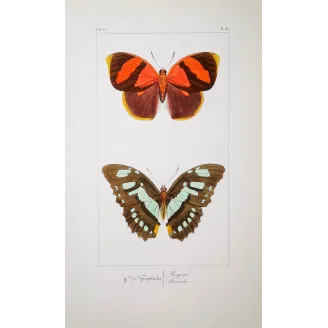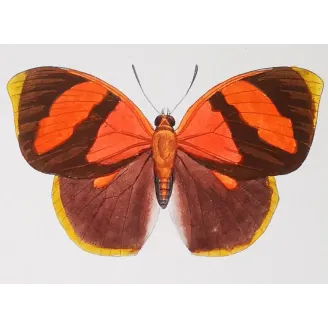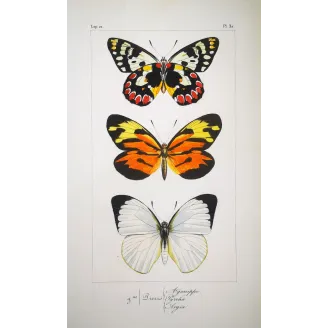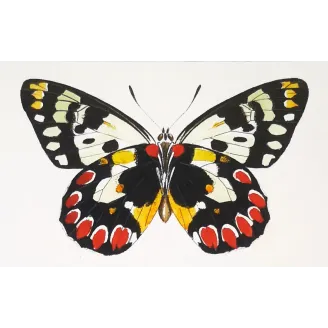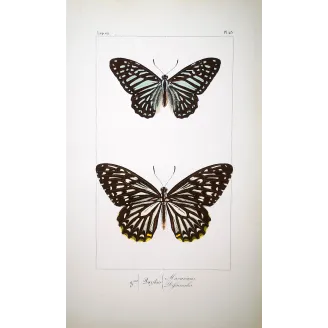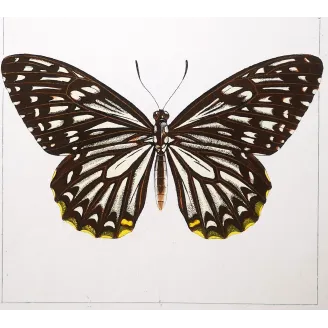
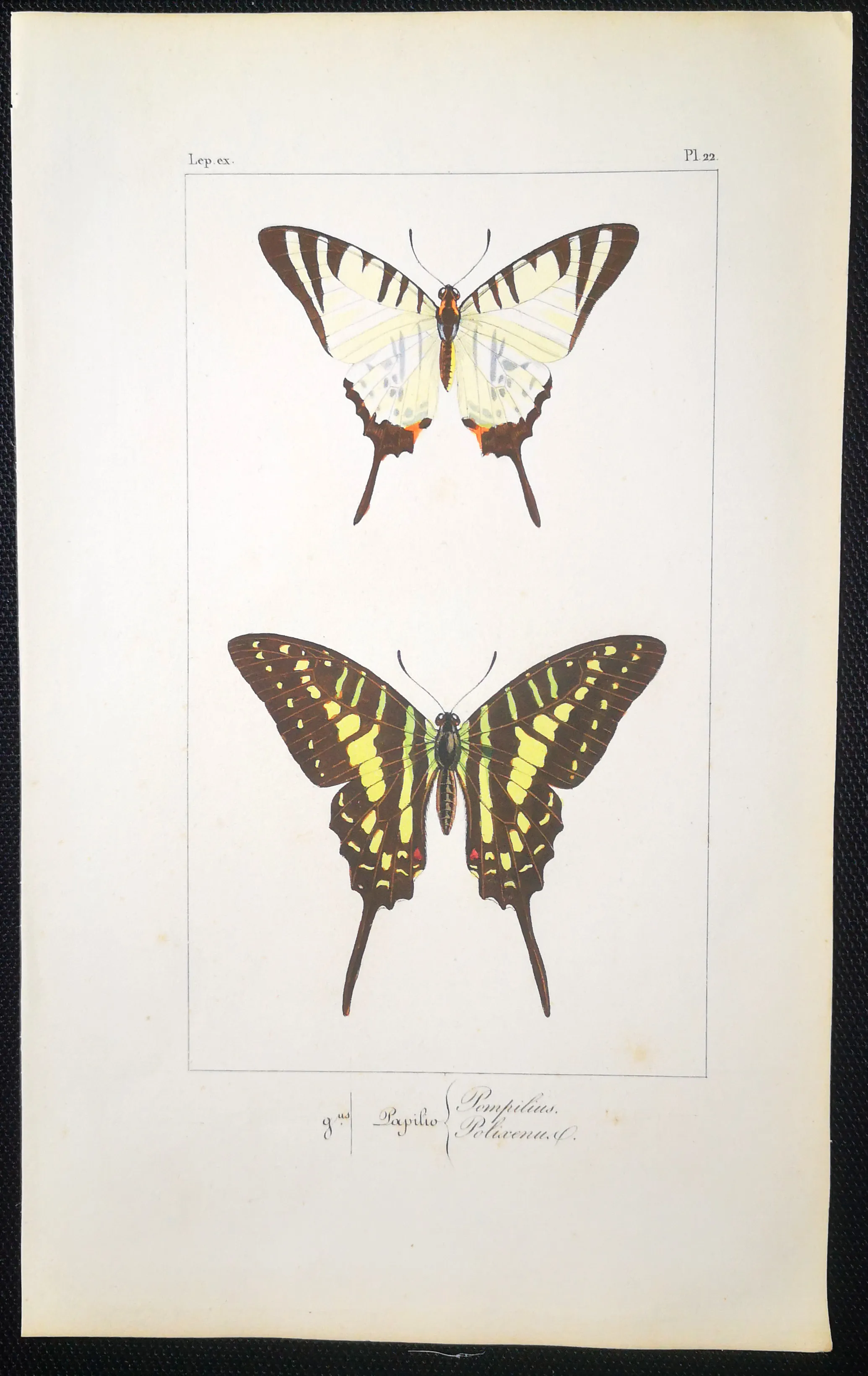
Black swallowtail butterflies with ivory, yellow and green patterns. A refined 1835 engraving, ideal as antique butterfly wall art.
 Delivery policy
Your print will be carefully prepared and shipped worldwide via trusted couriers (UPS or similar).
 Authentic antique prints
Original engravings from the 17th–19th century.
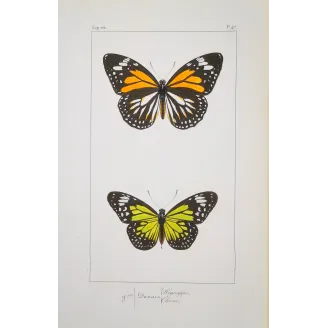
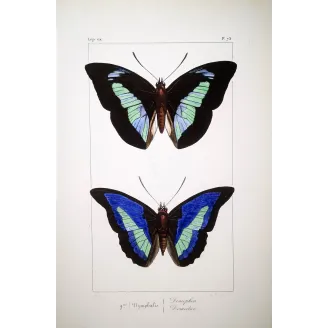
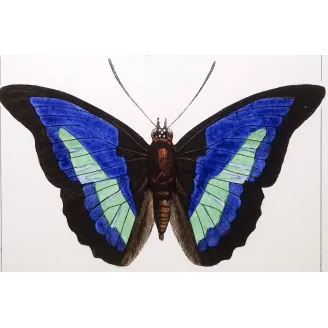
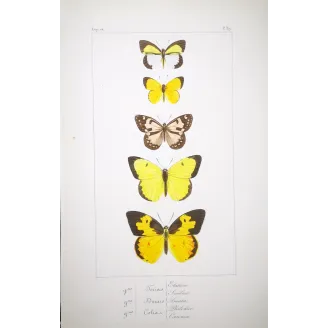
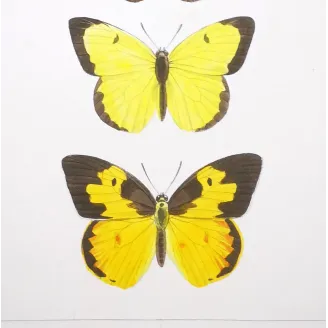
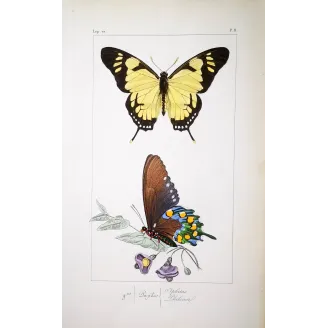
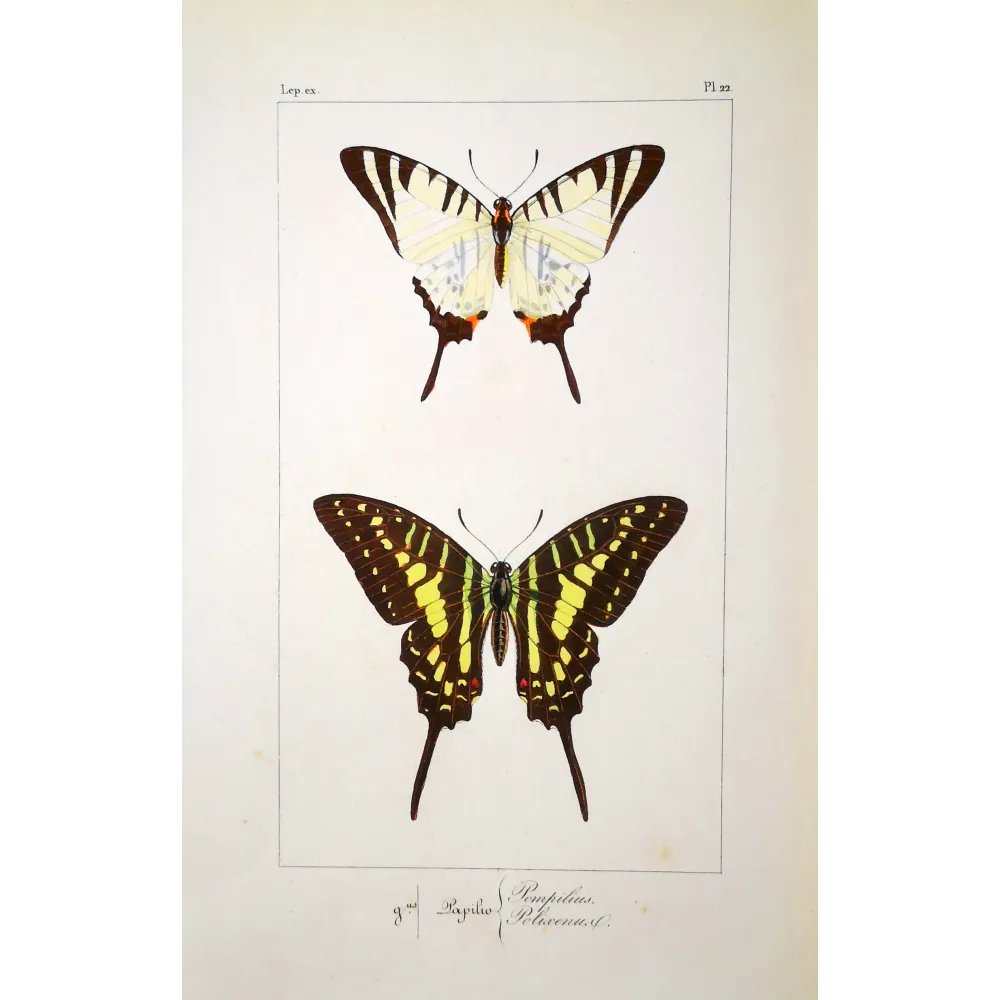
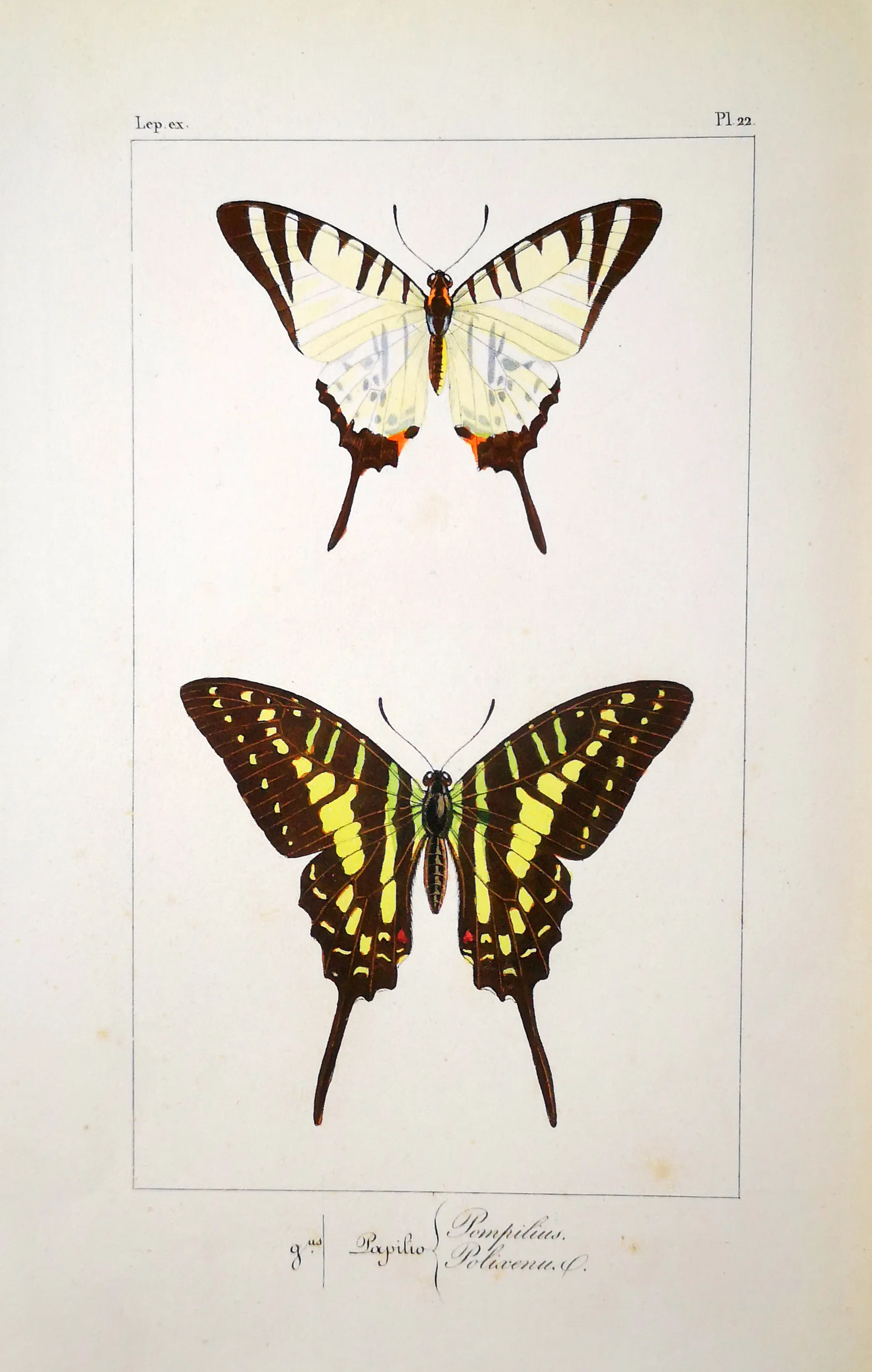
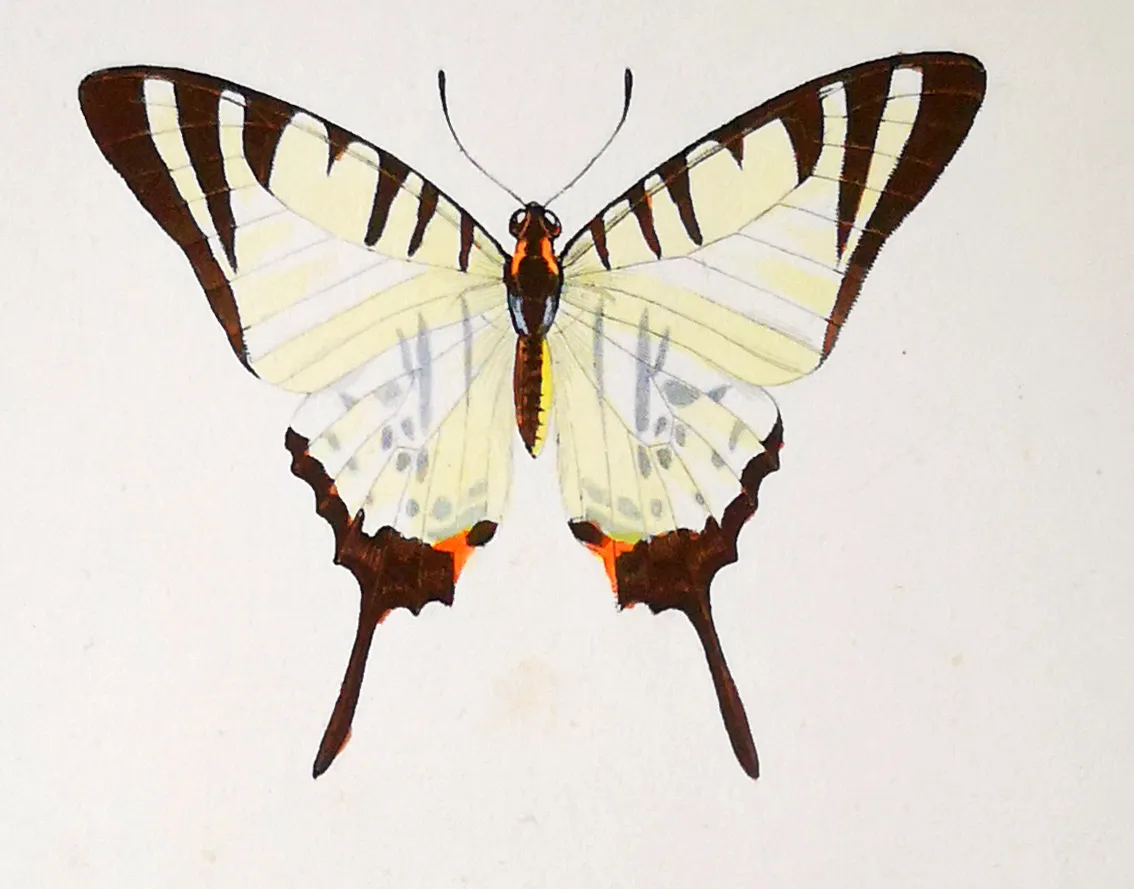
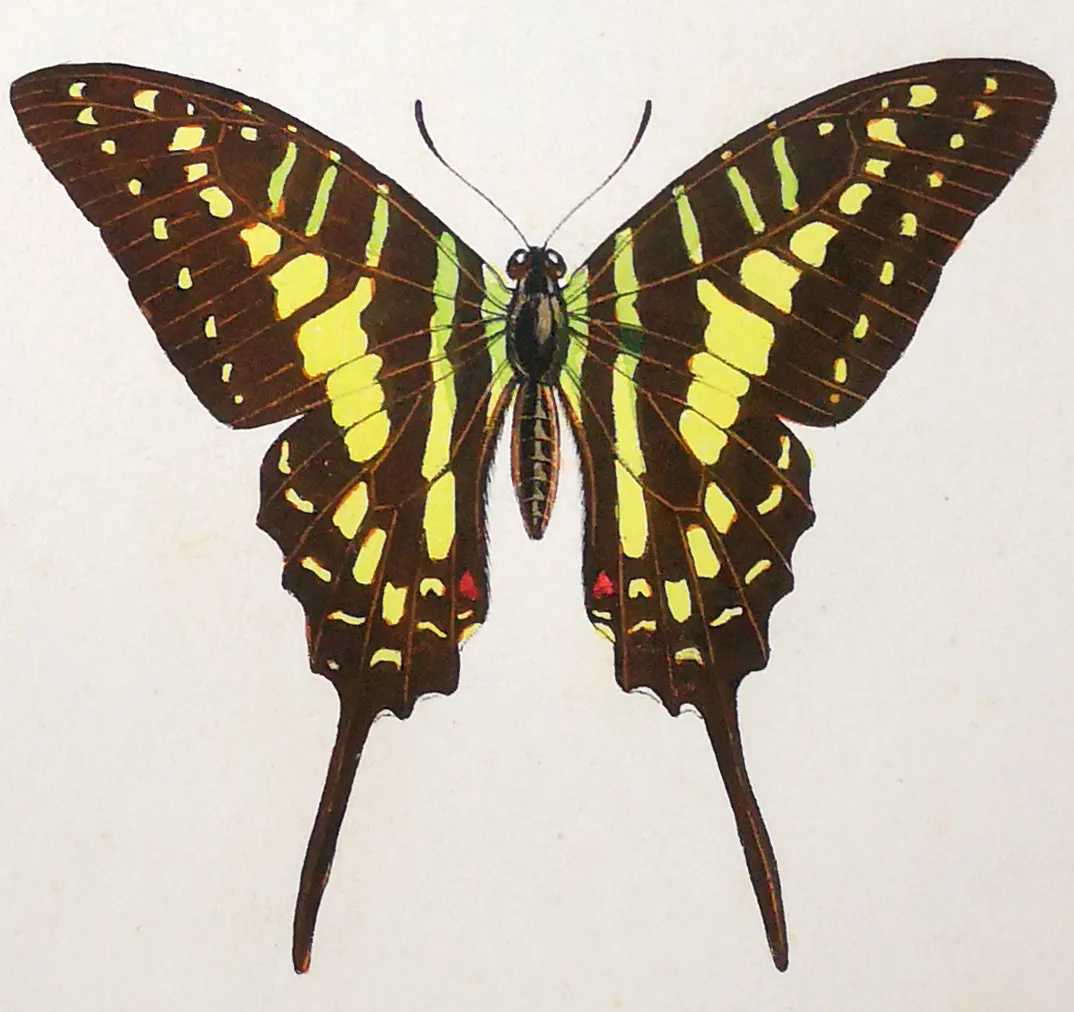
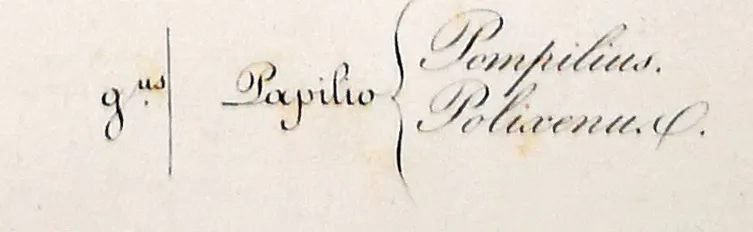
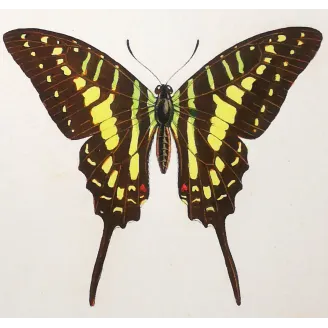
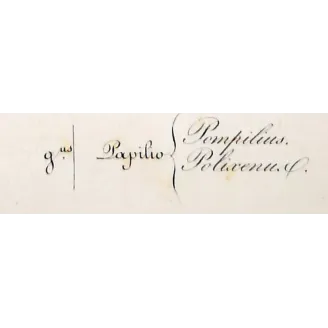
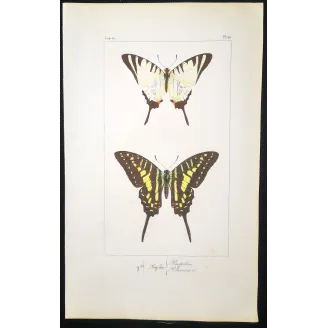
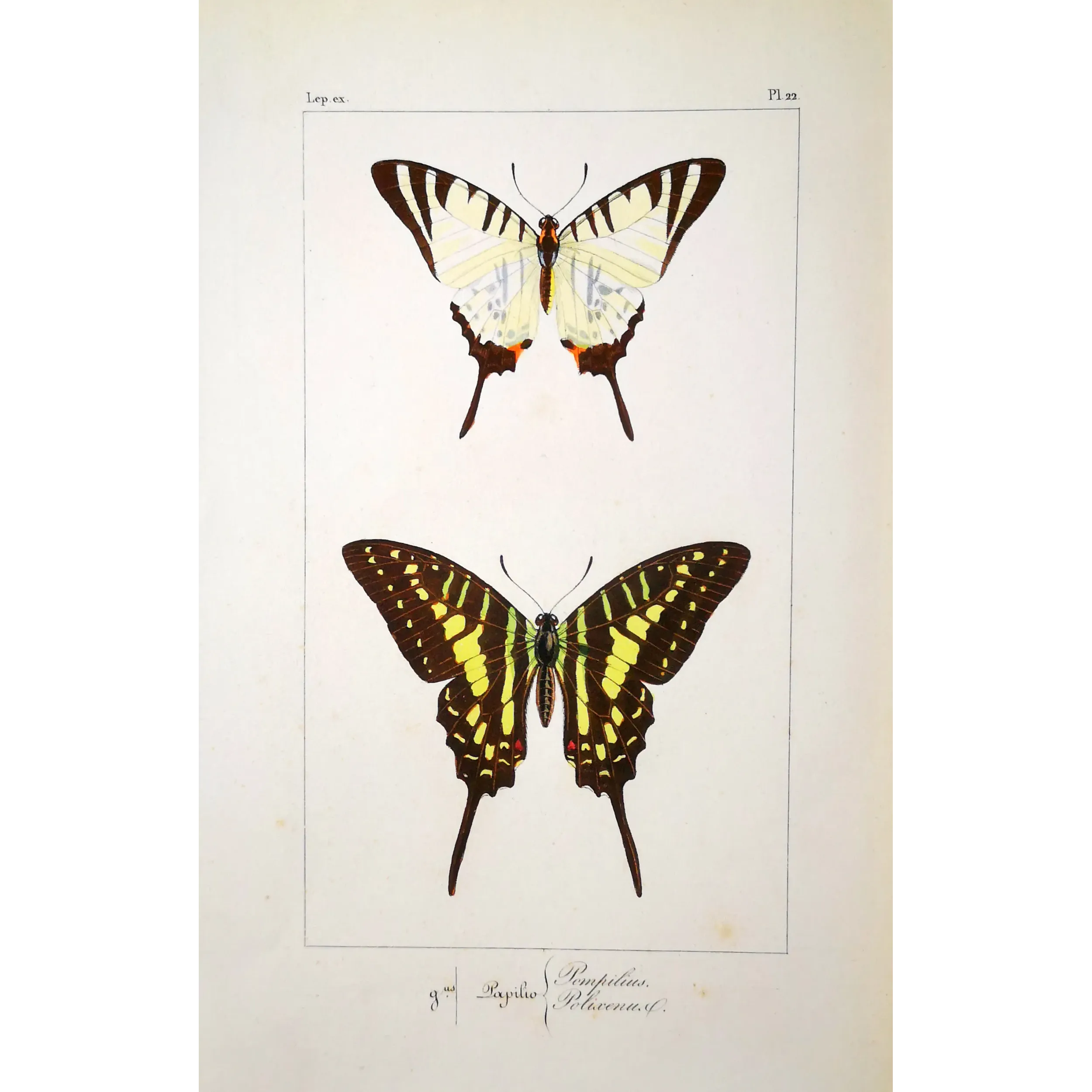
This original 1835 hand-colored copper engraving depicts two elegant butterflies associated with the Papilio polyxenes group, commonly known as Black Swallowtail butterflies. The plate belongs to Exotic Butterflies, produced under the scientific direction of Hippolyte Lucas and engraved by Pauquet. On the original plate, the specimens are identified under historical names such as Papilio pamphilus and Papilio polixenus.
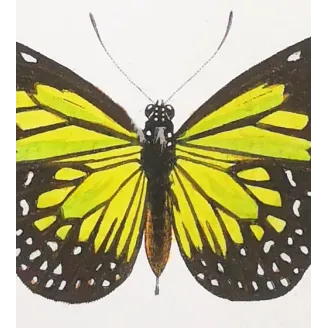
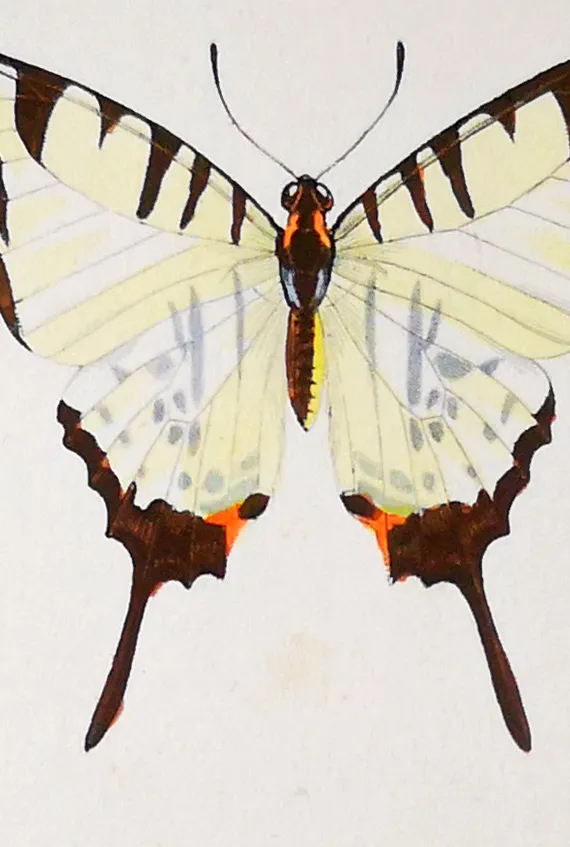
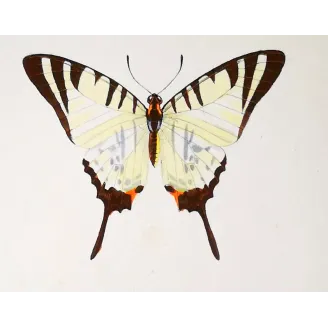
The composition presents two contrasting yet complementary interpretations of swallowtail form. The upper butterfly is defined by pale ivory wings crossed with delicate dark banding, creating a light and almost translucent appearance. Below, a more richly colored specimen introduces vibrant yellow and green patterns against deep brown wings, producing a stronger and more decorative visual rhythm.
Together, the two butterflies create a refined balance between lightness and structure, making this engraving a versatile example of antique butterfly wall art, suitable for both classic and contemporary interiors.
— • —
The upper specimen stands out for its luminous quality. The pale wings, intersected by fine dark markings, create a sense of transparency and delicacy that is relatively rare among butterfly engravings of this period.
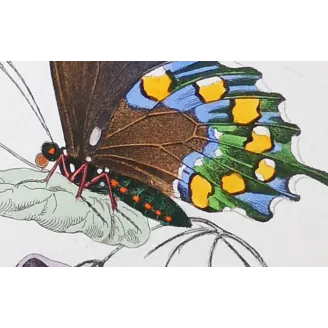
In contrast, the lower butterfly introduces depth and richness. The interplay of yellow and green markings across darker wings produces a more structured and decorative composition, enhanced by the elongated tails and subtle red accents near the margins.
Butterflies of the Papilio polyxenes group are among the most recognizable swallowtails, known for their adaptability and wide geographic distribution. They inhabit a variety of environments, from open meadows to cultivated landscapes, where their larvae feed on plants such as parsley, fennel, and carrot.
Their coloration combines camouflage and signaling. While the darker forms blend into their surroundings, the brighter patterns and subtle red accents serve as warning cues to predators, reflecting complex evolutionary strategies that fascinated early naturalists.
For nineteenth-century audiences, such butterflies represented both the familiarity of European species and the expanding knowledge of global biodiversity, making them central subjects in the development of natural history illustration.
This engraving forms part of the refined series Lucas – Exotic Butterflies , published in 1835 under the scientific direction of Hippolyte Lucas — a period in which the natural world was documented through works combining scientific rigor and artistic sophistication.
Explore the broader context in our editorial feature: Hippolyte Lucas and the Golden Age of Exotic Butterflies .
The plate was engraved by Pauquet, whose work is distinguished by precision and clarity, transforming natural specimens into enduring works of art: Pauquet, Master Engraver .
Very good antique condition. Fresh original hand-coloring with clear tonal contrasts and strong engraved impression. Printed on fine original nineteenth-century paper. Minor age toning consistent with the 1835 publication. Well-preserved examples with this level of clarity and color balance are becoming increasingly difficult to find.
Specific References
Striking butterflies in deep red, violet, and dark tones with eye-like markings. A refined 1835 engraving with strong decorative character.
Demophon & Demodice Butterflies (Archaeoprepona demophon, Prepona laertes demodice) – Antique Hand-Colored Engraving, Exotic Butterflies (1835).
Elegant yellow butterflies with soft brown and natural tones. A refined 1835 engraving with balanced and decorative appeal.
Luminous yellow and white butterflies with warm golden tones. A refined 1835 engraving with bright and elegant decorative appeal.
Original 1835 hand-colored copper engraving depicting the butterflies Pollux and Eurilochus. A visually striking double-specimen plate from Hippolyte Lucas’ celebrated Exotic Butterflies, engraved by Pauquet, with strong appeal as natural history art and antique butterfly wall art.
Yellow swallowtail and Pipevine butterfly (Papilio iphitas, Battus philenor) combining bold yellow-black contrast with iridescent blue and green tones. A highly decorative 1835 engraving, ideal as antique butterfly wall art.
Vivid butterflies with striking eye-spots, deep purple, and bright orange tones. A bold 1835 engraving with strong decorative appeal.
Elegant black swallowtail butterflies with soft yellow markings and refined contrast. A sophisticated 1835 engraving, ideal as antique butterfly wall art.
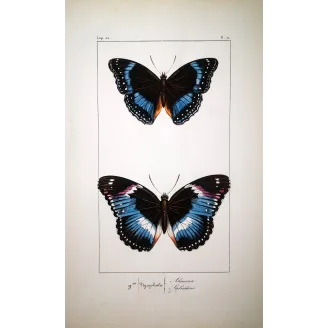
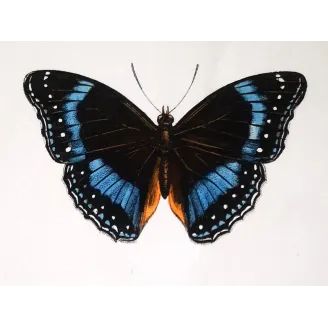
A vivid 19th-century hand-colored engraving depicting two striking tropical butterflies: the Blue-banded Eggfly (Hypolimnas alimena) and the Blue Diadem (Hypolimnas salmacis). Published in Hippolyte Lucas’s Exotic Butterflies (1835), the plate highlights their dramatic contrast of velvety black wings with electric blue bands and delicate white markings.
Elegant white and yellow butterflies with a striking orange-accented specimen. A refined 1835 engraving with bright and balanced decorative appeal.
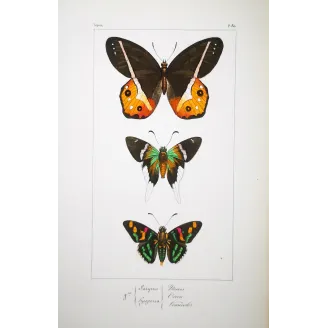
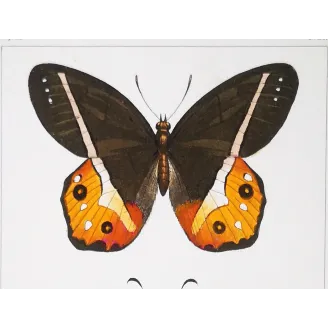
This vivid 1835 hand-colored engraving presents two striking tropical butterflies: the intensely colored Agrias rogeri, with its brilliant red and orange wings, and the elegant Adelpha stenele, known for its intricate pattern and pale blue markings. The strong chromatic contrast between the two species creates a visually compelling composition, making this piece a refined example of antique butterfly wall art and natural history illustration.
Striking multicolored butterflies with deep black, orange, green, and iridescent tones. A bold 1835 engraving with exceptional decorative impact.
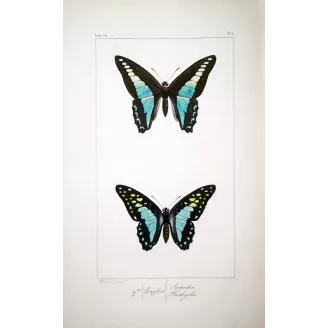
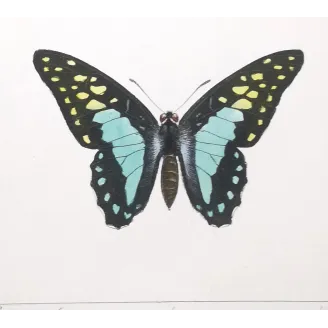
A vivid 19th-century hand-colored engraving depicting two striking Asian swallowtail butterflies: the Common Bluebottle (Papilio sarpedon) and the Spotted Bluebottle (Papilio bathycles). Published in Hippolyte Lucas’s Exotic Butterflies (1835), the plate highlights their elegant turquoise wing bands set against deep black wings.
Elegant butterflies combining bright orange, yellow, and white tones. A refined 1835 engraving with strong visual contrast and balance.
A finely detailed 19th-century hand-colored engraving depicting two forms of the Clipper Butterfly (Parthenos sylvia). Published in Hippolyte Lucas’s Exotic Butterflies (1835), the plate highlights the species’ elegant network of white markings across dark wings, creating a striking geometric pattern characteristic of tropical Asian butterflies.
Elegant butterflies with vivid red tips and bright yellow tones. A refined 1835 engraving balancing delicacy and bold contrast.
Black swallowtail butterflies with ivory, yellow and green patterns. A refined 1835 engraving, ideal as antique butterfly wall art.