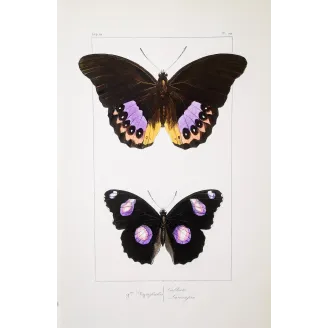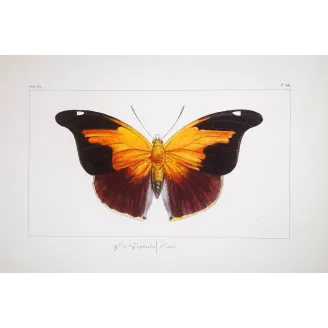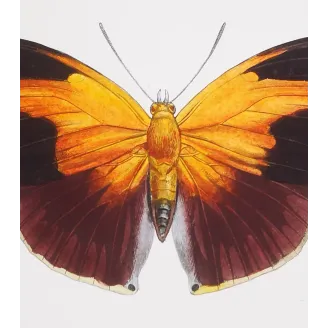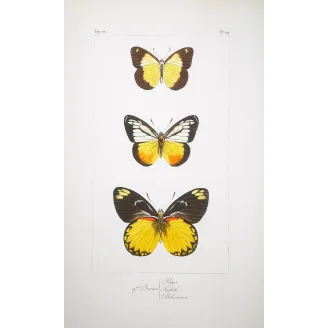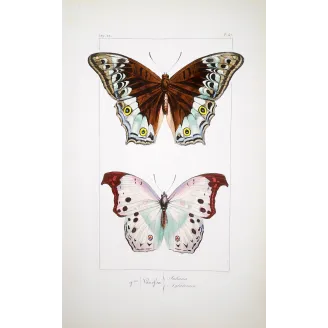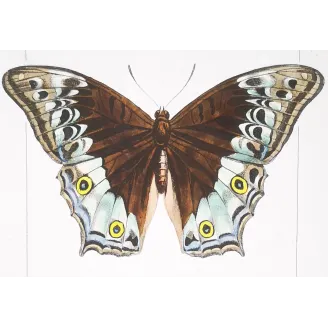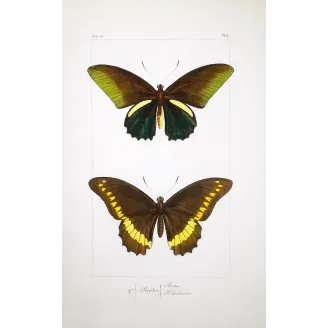
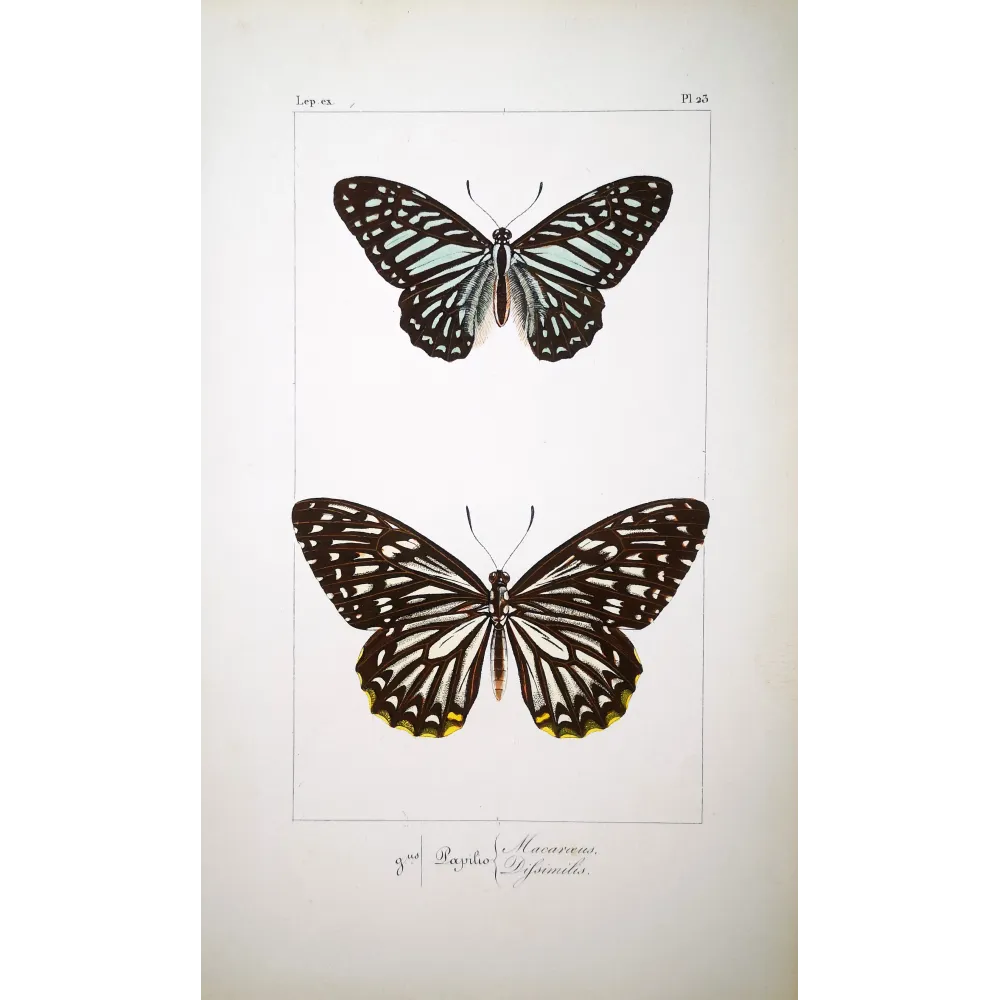
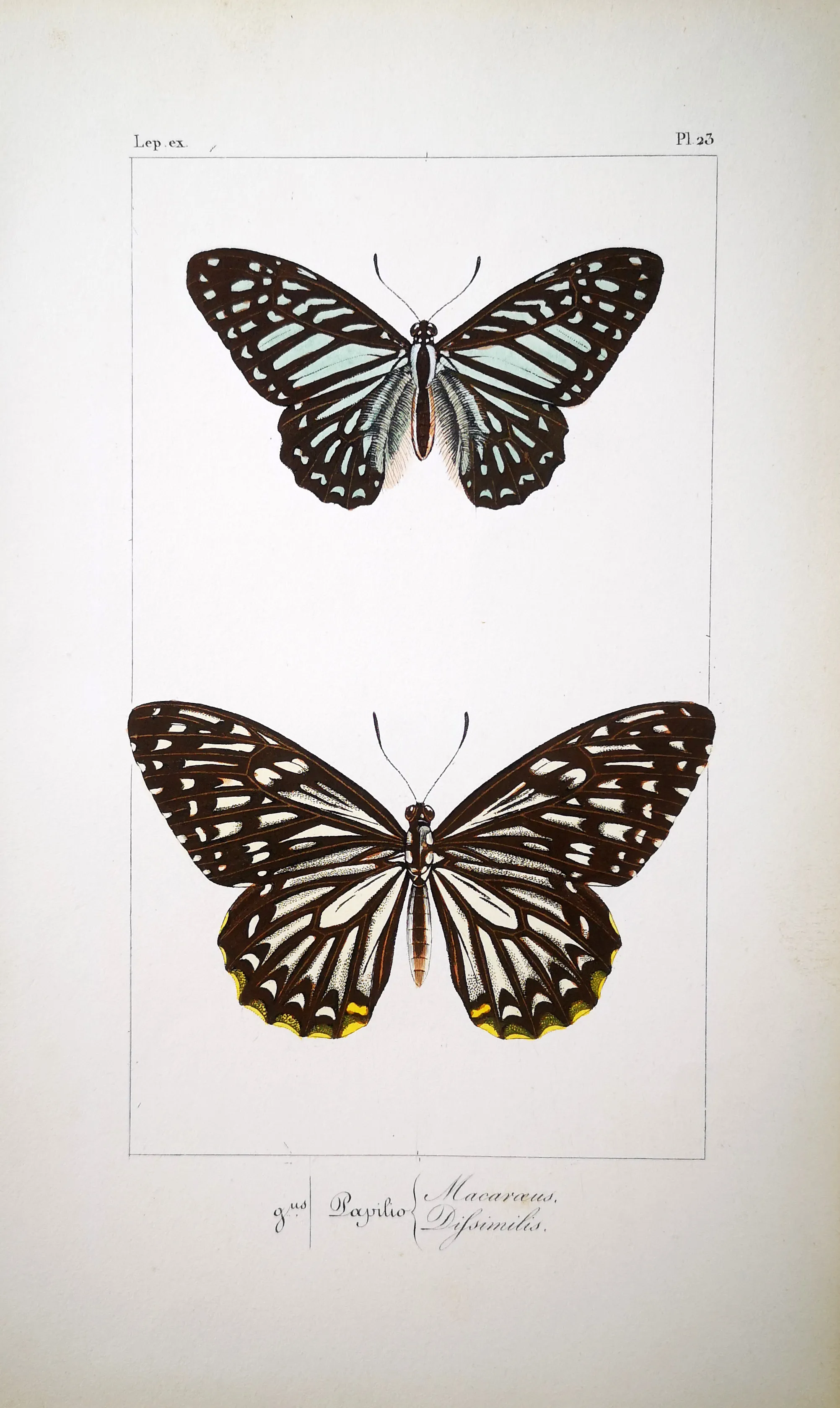
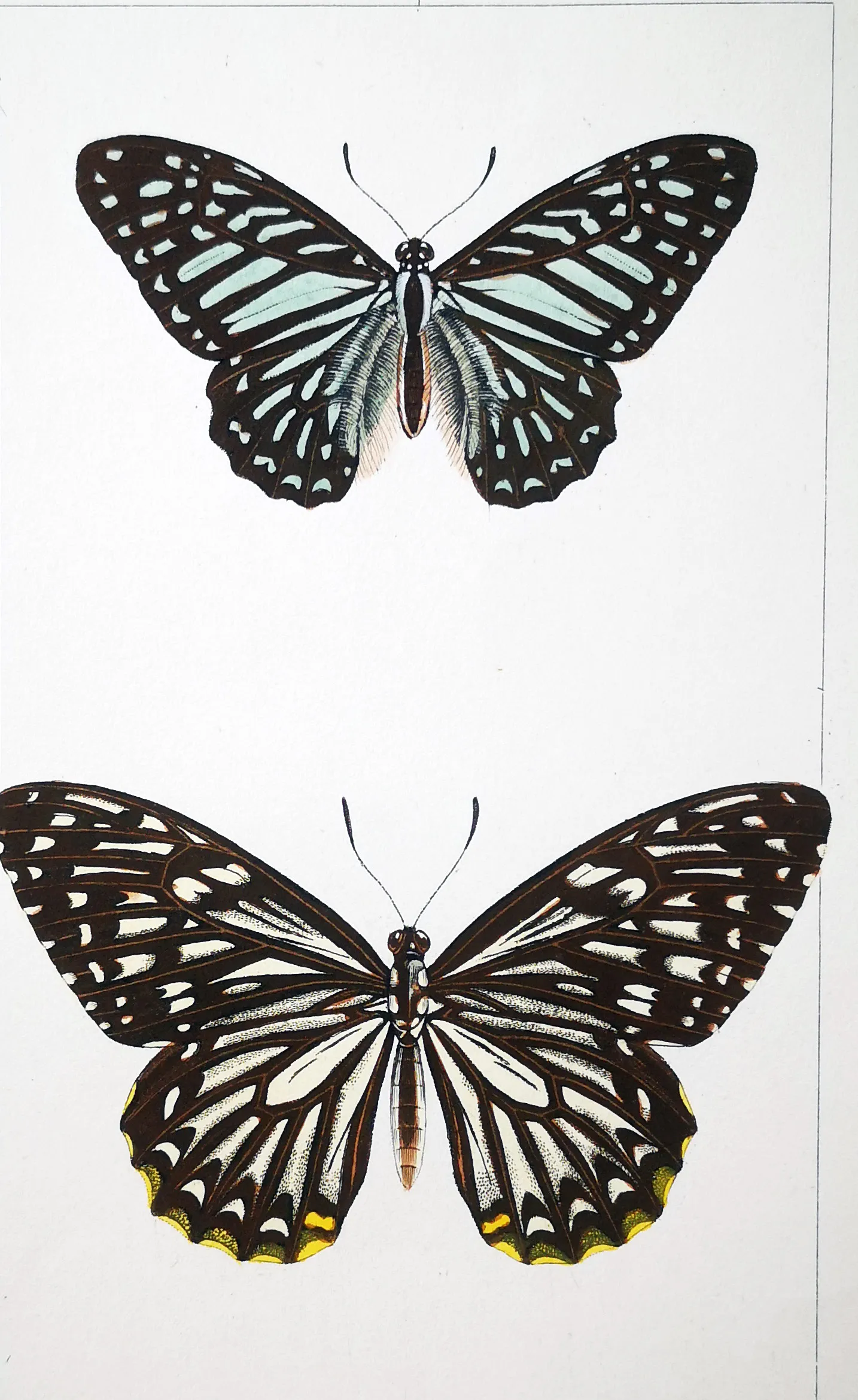
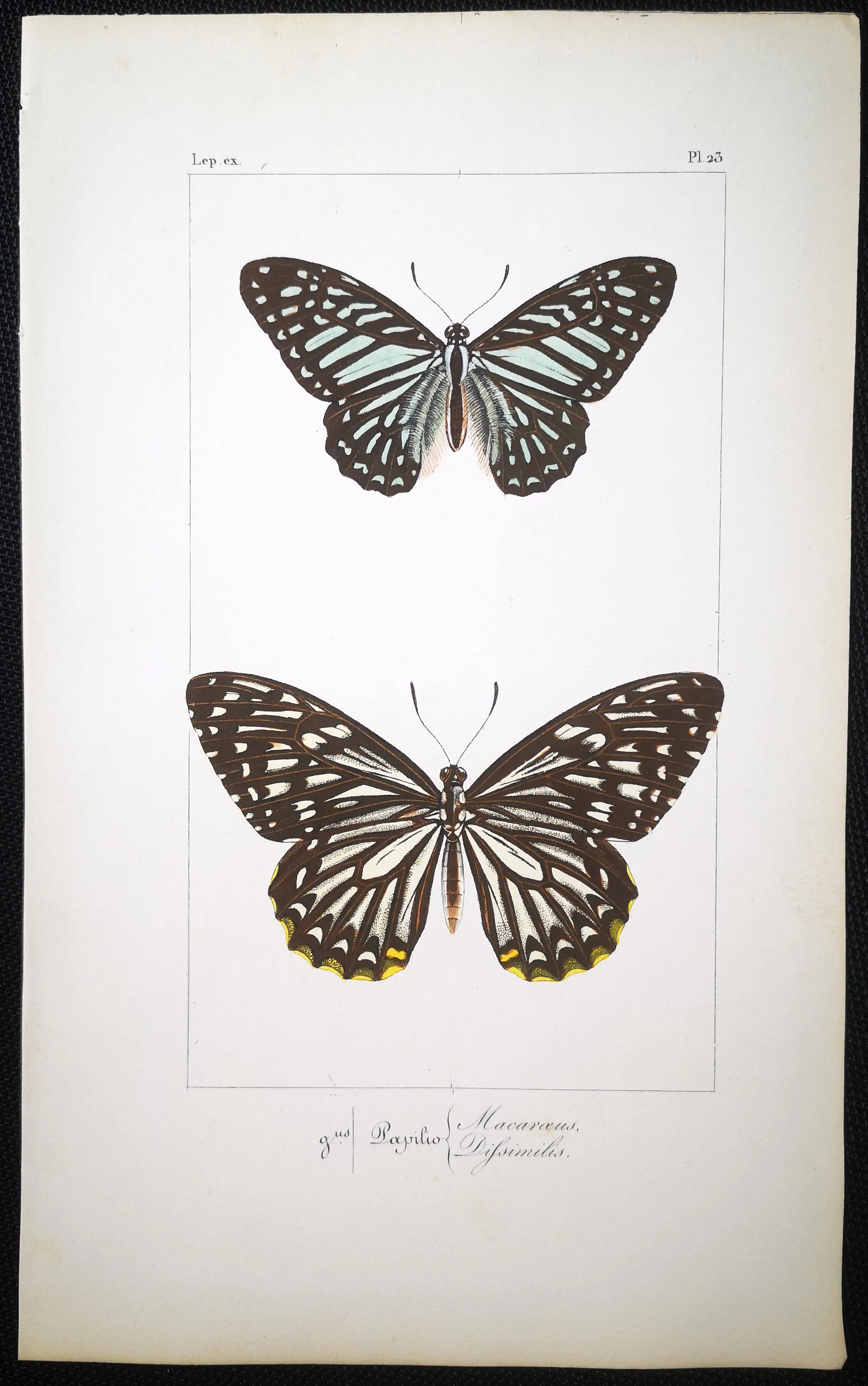
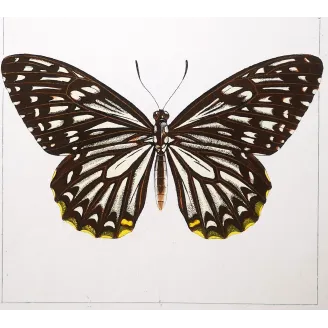
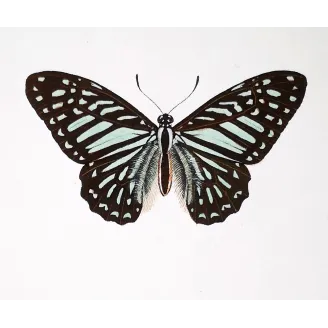
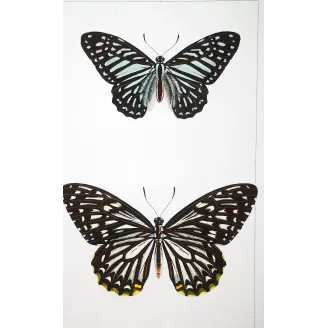
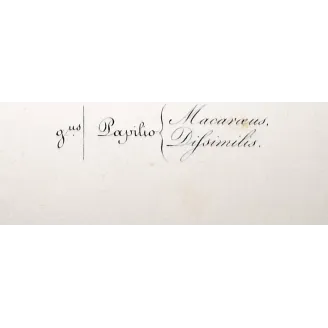
A finely detailed 19th-century hand-colored engraving depicting two forms of the Clipper Butterfly (Parthenos sylvia). Published in Hippolyte Lucas’s Exotic Butterflies (1835), the plate highlights the species’ elegant network of white markings across dark wings, creating a striking geometric pattern characteristic of tropical Asian butterflies.
 Delivery policy
Your print will be carefully prepared and shipped worldwide via trusted couriers (UPS or similar).
 Authentic antique prints
Original engravings from the 17th–19th century.
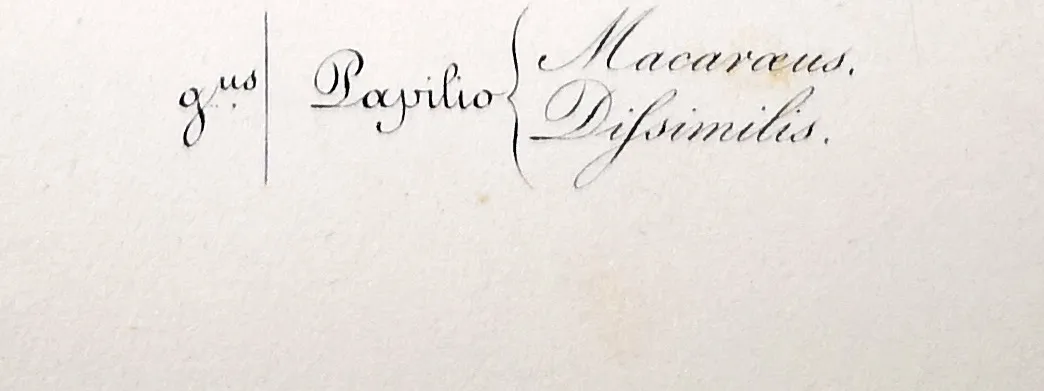
This original 1835 hand-colored copper engraving depicts two forms of the remarkable Clipper Butterfly, Parthenos sylvia, a species native to tropical Asia and admired for its striking black-and-white wing pattern. The plate forms part of the celebrated work Exotic Butterflies, produced under the scientific direction of Hippolyte Lucas and drawn and engraved by Pauquet.
Presented in a balanced vertical composition against a clean ground, the two specimens appear almost like a carefully curated natural history display. Their luminous pale markings unfold across deep brown wings with a clarity that reflects the refined visual language of nineteenth-century entomological illustration.
Beyond its scientific significance, the engraving also possesses a strong decorative quality. The butterfly’s graphic contrast, elegant symmetry, and rhythmic patterning give the plate a modern visual force, making it especially appealing today as antique butterfly wall art for interiors inspired by natural history and refined historical design.
— • —
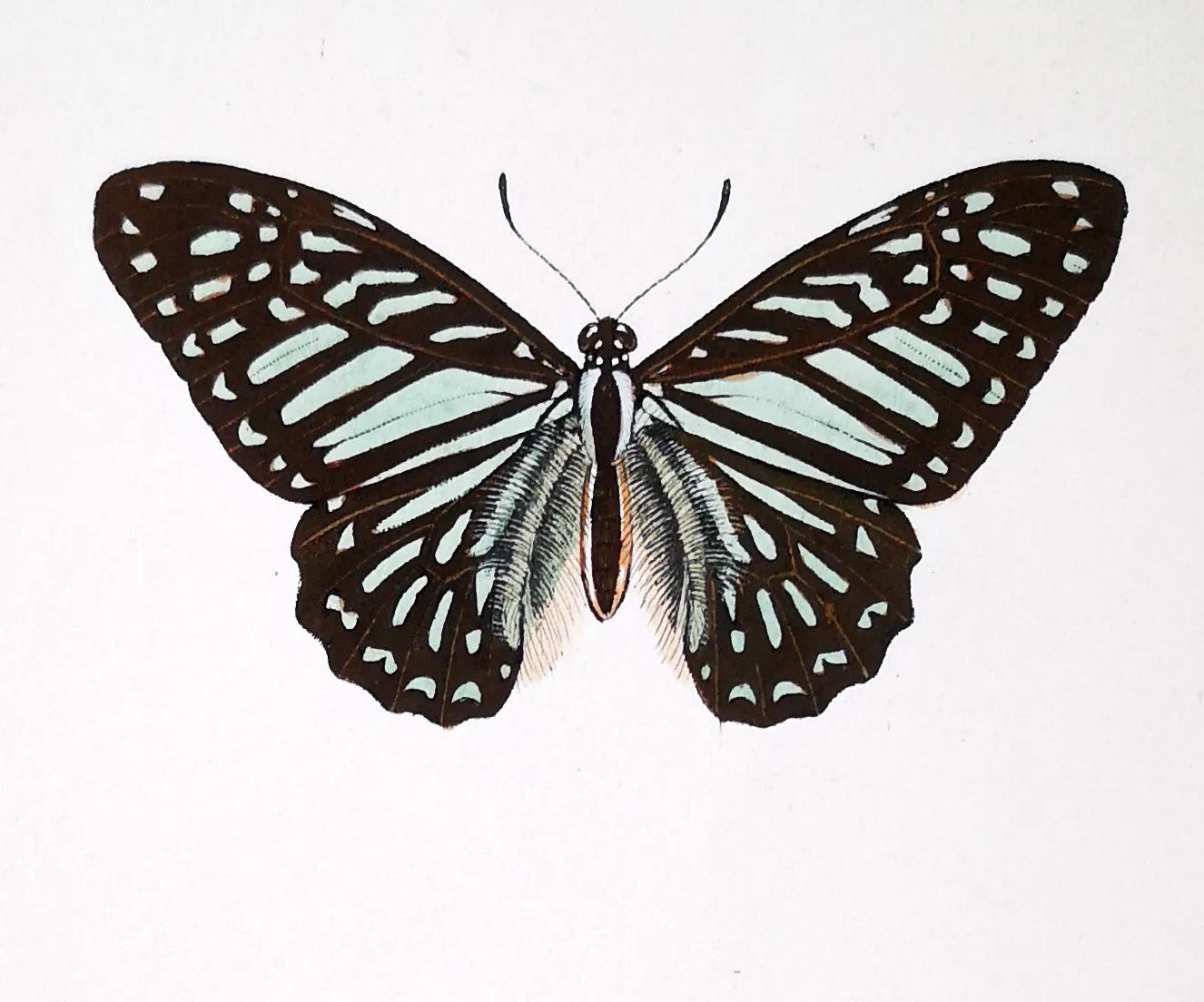
The upper butterfly displays elongated pale panels and spotted markings that seem to float across the dark wings, creating a delicate interplay between structure and openness. The composition feels light and airy, with the pale areas acting almost like windows within the surface of the wings.
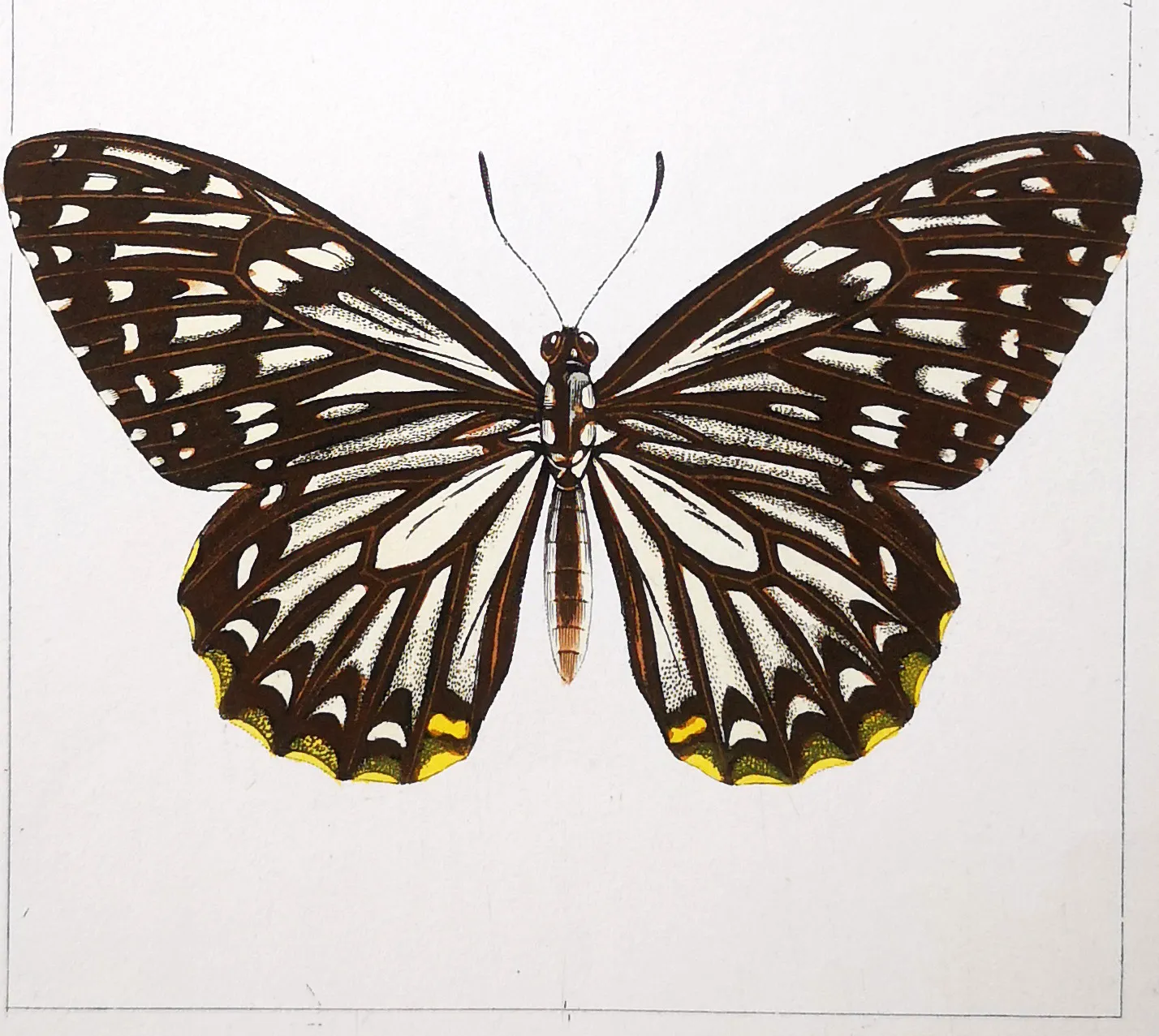
Below, the second specimen reveals a bolder and broader arrangement of cream-white markings framed by dark outlines and enriched by warm yellow accents near the hindwing margins. Together, the two forms highlight subtle variation within the species while creating a harmonious visual dialogue marked by rhythm, symmetry, and graphic refinement.
Parthenos sylvia, commonly known as the Clipper Butterfly, is one of the most visually recognizable butterflies of tropical Asia. Its distinctive wing pattern, combining dark ground colour with pale geometric markings, made it especially admired by nineteenth-century collectors and naturalists.
Illustrated publications such as Lucas’s Exotic Butterflies allowed European scholars and collectors to study and compare species from distant tropical regions. Engraved plates like this one served not only as scientific records but also as enduring works of natural history art.
This engraving forms part of the celebrated series Lucas – Exotic Butterflies , published in 1835 under the scientific direction of Hippolyte Lucas — a period when nature was celebrated through monumental illustrated works combining scientific observation with refined artistic craftsmanship.
Discover the broader historical context in our editorial feature: Hippolyte Lucas: Scientific Vision and the Golden Age of Exotic Butterflies .
The plate was drawn and engraved by Pauquet, whose refined copperplate technique translated real specimens into enduring images of exceptional clarity: Pauquet: The Engraver Behind the Exotic Butterflies .
Very good antique condition. Fresh and vibrant original hand-coloring with strong engraved impression. Printed on fine original nineteenth-century paper. Minor age toning consistent with the 1835 publication. Pieces retaining this level of color brilliance and paper quality are becoming progressively harder to source.
Specific References
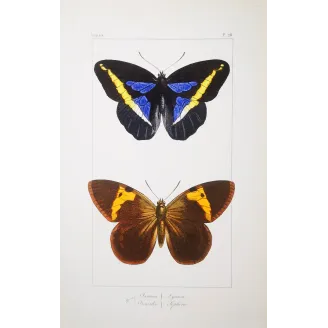
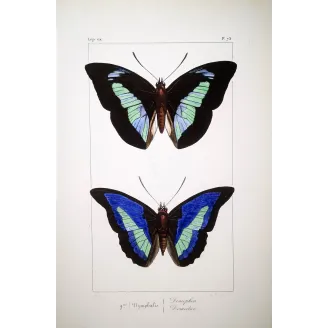
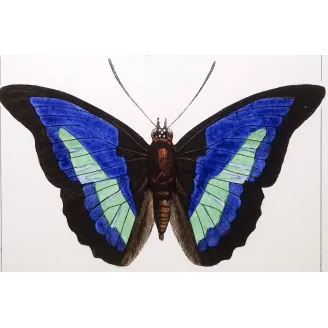
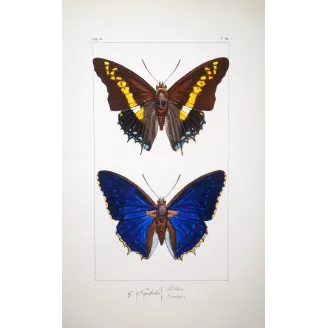
A bold pairing of Demophon Prepona (Archaeoprepona demophon) and Brassolis sophorae, featuring electric blue and golden bands on deep black wings. A striking example of antique butterfly wall art with strong visual contrast.
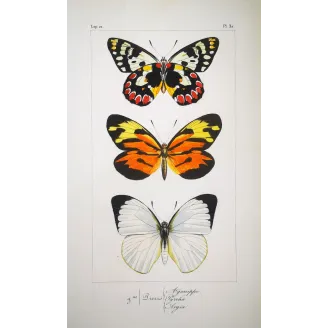
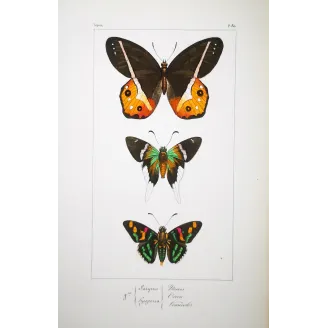
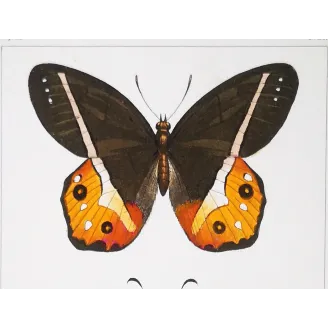
Elegant butterflies combining bright orange, yellow, and white tones. A refined 1835 engraving with strong visual contrast and balance.
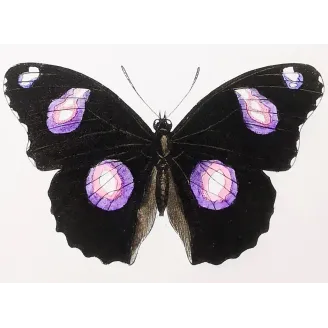
A striking 19th-century hand-colored engraving depicting two tropical pansy butterflies: the Golden Pansy (Junonia callista) and the Purple Pansy (Junonia laomedia). Published in Hippolyte Lucas’s Exotic Butterflies (1835), the plate highlights their dramatic wing contrasts and luminous violet eye-spots.
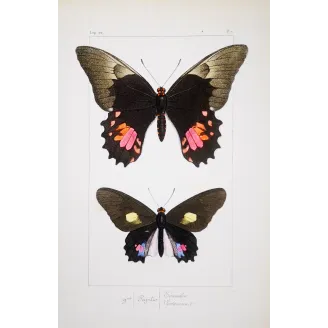
Elegant black butterflies with luminous pink and orange accents, creating a refined yet dramatic visual composition. A distinctive 1835 antique butterfly engraving.
Elegant yellow butterflies with soft brown and natural tones. A refined 1835 engraving with balanced and decorative appeal.
Metalmark & Long-Tailed Butterflies (Erycina cnidus, Lysis iphron, Moyina sapra) – Antique Hand-Colored Engraving (1835).
Original 1835 hand-colored engraving of Nymphalis orion, drawn and engraved by Pauquet under the scientific direction of Hippolyte Lucas for Exotic Butterflies.
Bright yellow butterflies with bold black and white contrasts. A refined 1835 engraving with strong decorative appeal.
Striking multicolored butterflies with deep black, orange, green, and iridescent tones. A bold 1835 engraving with exceptional decorative impact.
Demophon & Demodice Butterflies (Archaeoprepona demophon, Prepona laertes demodice) – Antique Hand-Colored Engraving, Exotic Butterflies (1835).
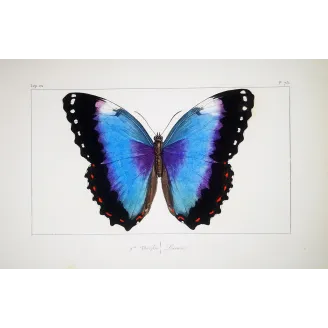
An original 19th-century hand-colored engraving of Morpho leonte, the striking Blue Morpho butterfly, drawn and engraved by Pauquet under the scientific direction of Hippolyte Lucas.
Peacock Pansy (Junonia almana) and Grey Pansy (Junonia atlites) with distinctive eye-spots and soft tonal contrasts. A refined 1835 engraving, ideal as antique butterfly wall art.
Elegant golden and yellow swallowtail butterflies with luminous contrast and flowing wing shapes. A refined antique engraving from 1835.
A vivid pairing of Lacewing (Cethosia cyane) and Erycina butterflies, combining fiery orange tones with electric blue accents. A striking piece of antique butterfly wall art with strong decorative contrast.
Original 1835 hand-colored copper engraving depicting the butterflies Pollux and Eurilochus. A visually striking double-specimen plate from Hippolyte Lucas’ celebrated Exotic Butterflies, engraved by Pauquet, with strong appeal as natural history art and antique butterfly wall art.
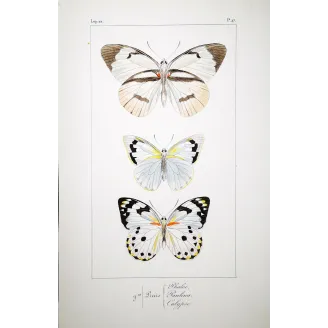
Delicate white butterflies with subtle yellow, orange, and black accents. A refined 1835 engraving with light and elegant decorative appeal.
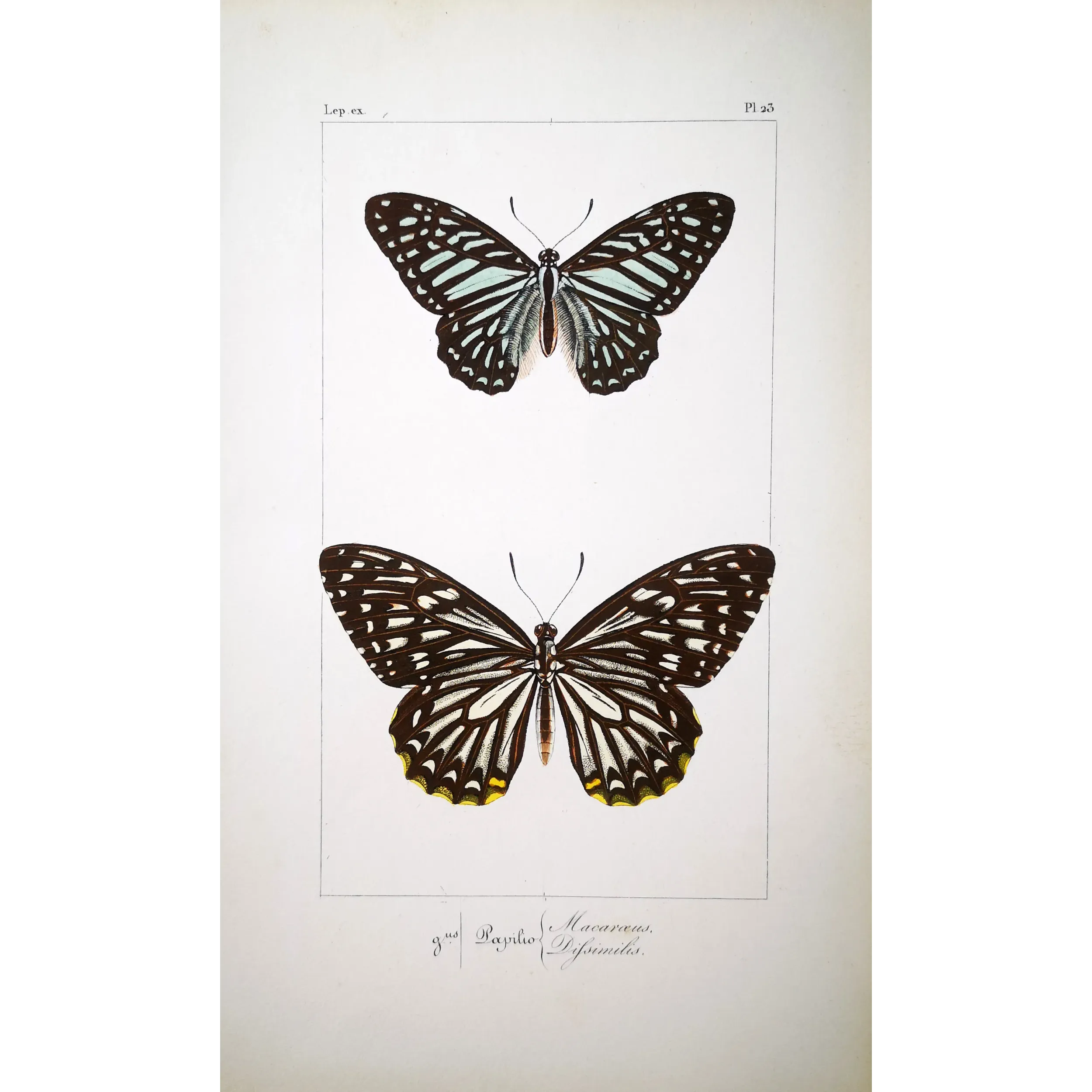
A finely detailed 19th-century hand-colored engraving depicting two forms of the Clipper Butterfly (Parthenos sylvia). Published in Hippolyte Lucas’s Exotic Butterflies (1835), the plate highlights the species’ elegant network of white markings across dark wings, creating a striking geometric pattern characteristic of tropical Asian butterflies.