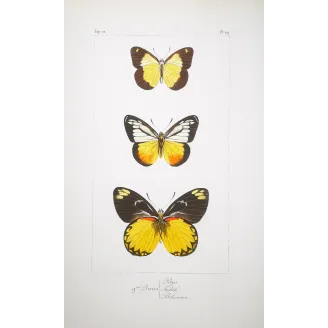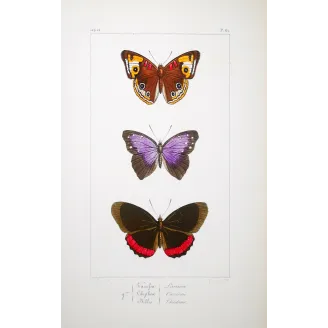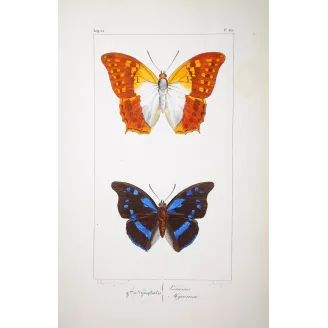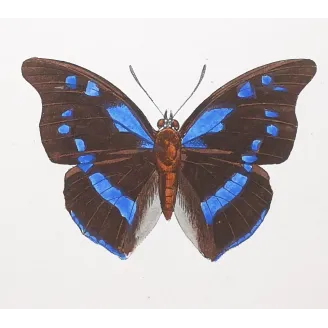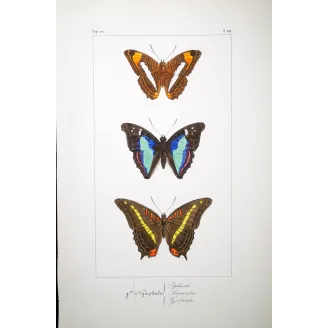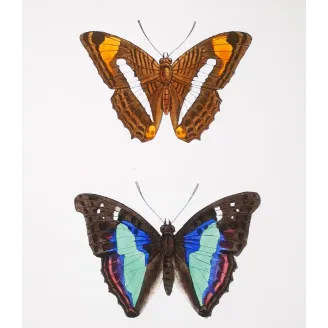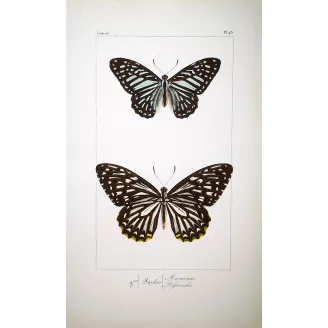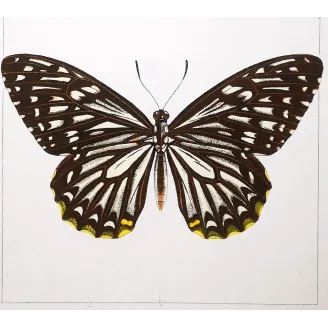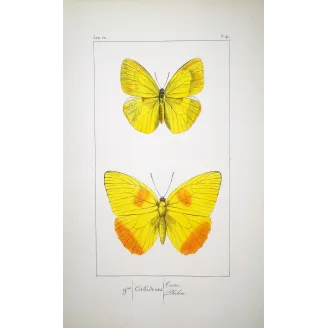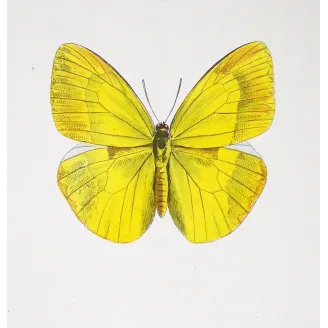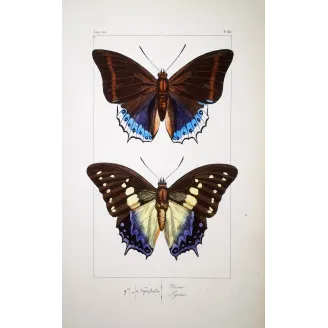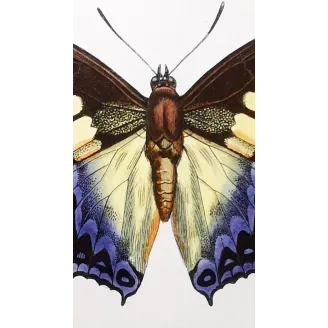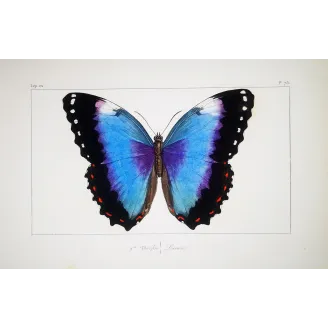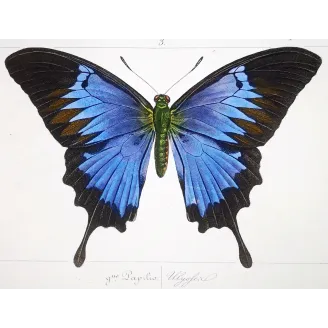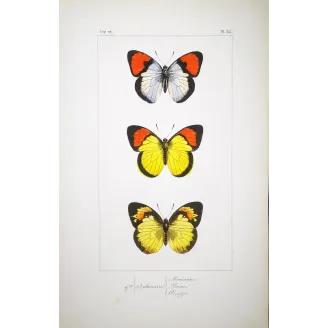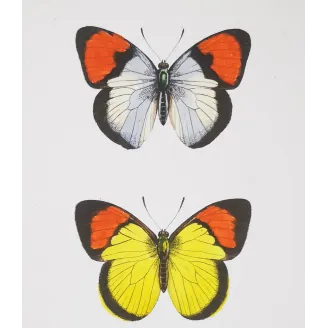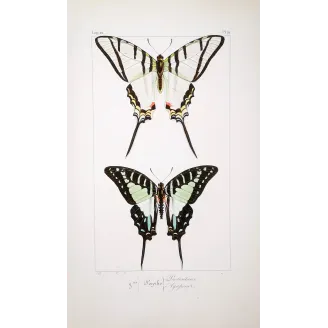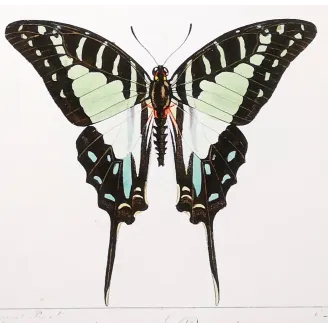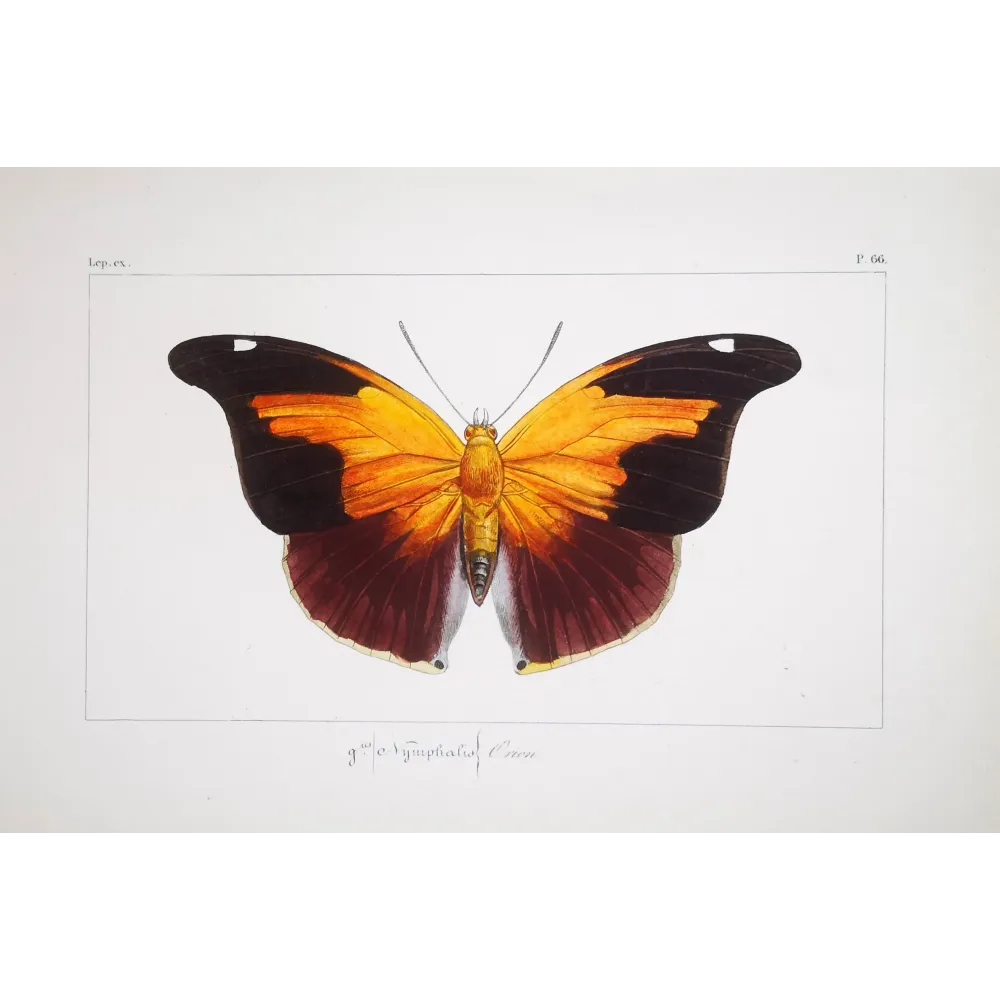
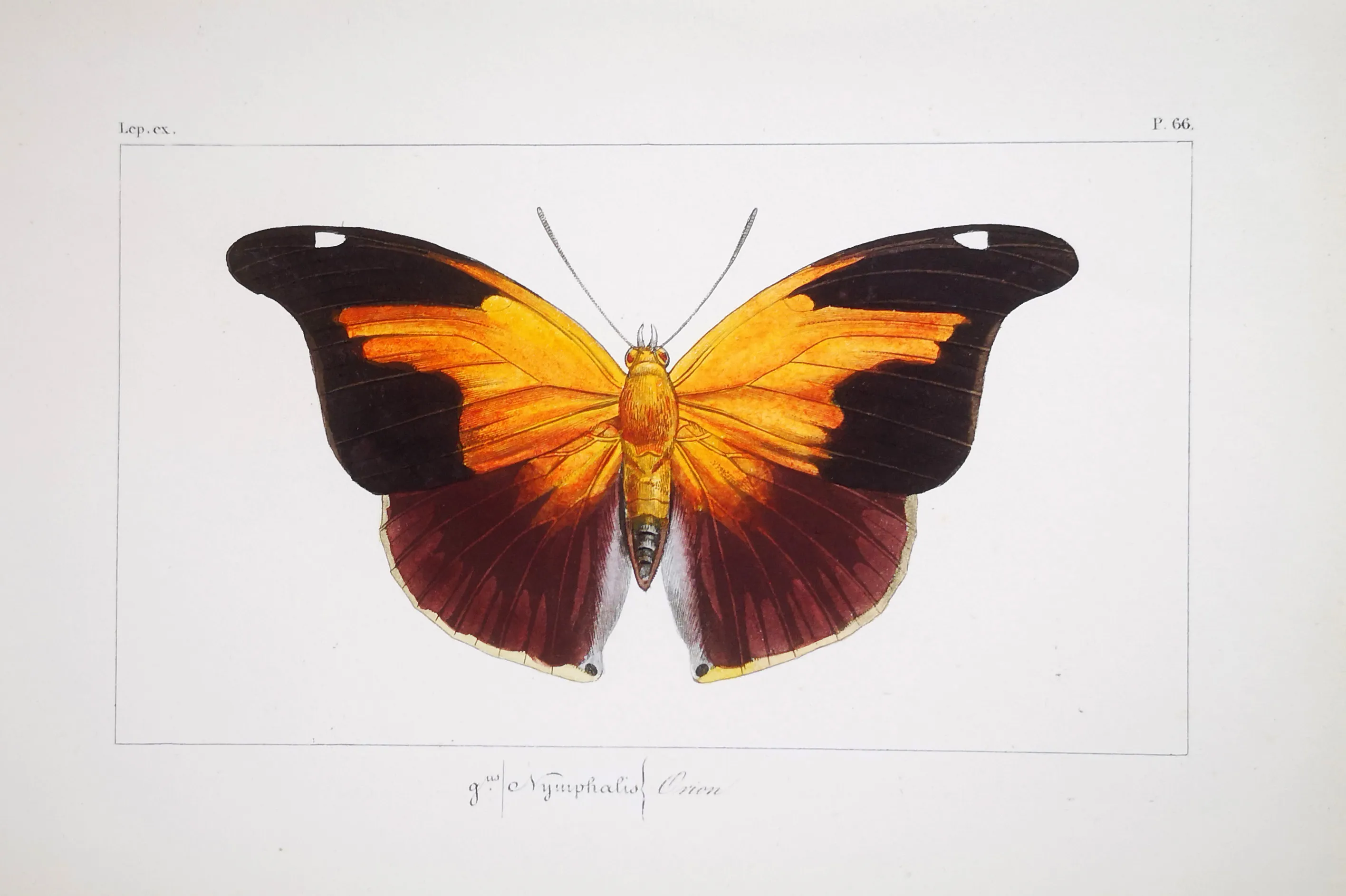
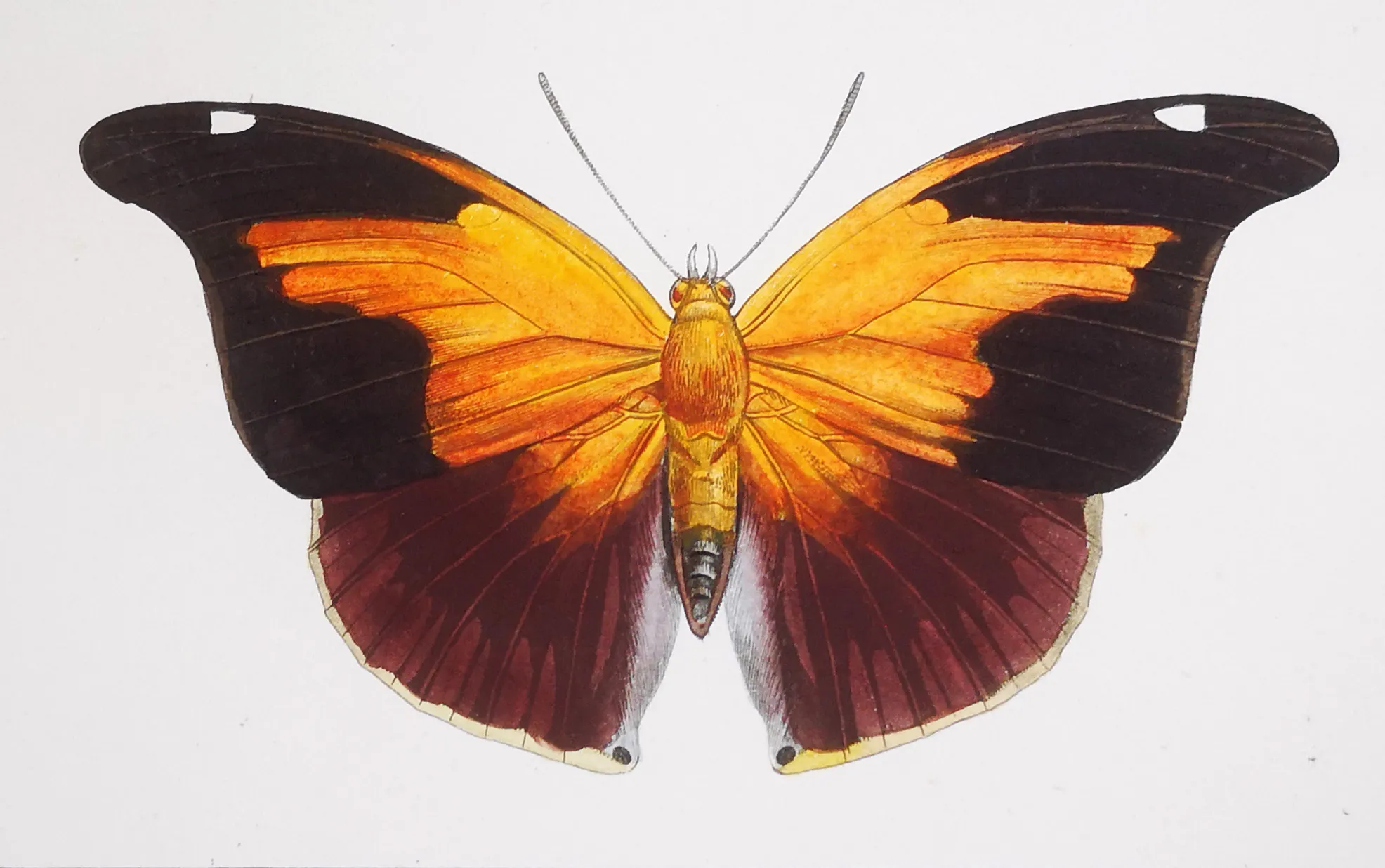
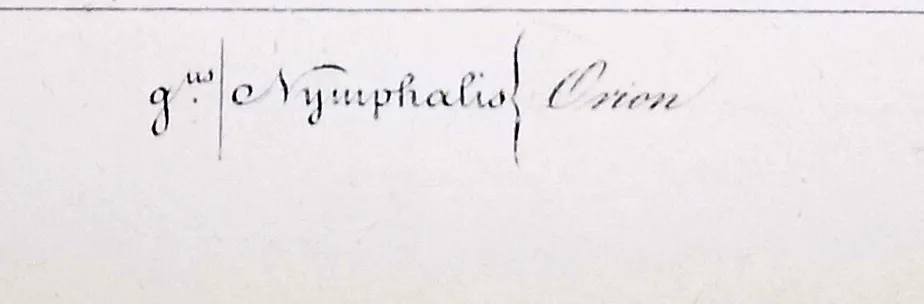
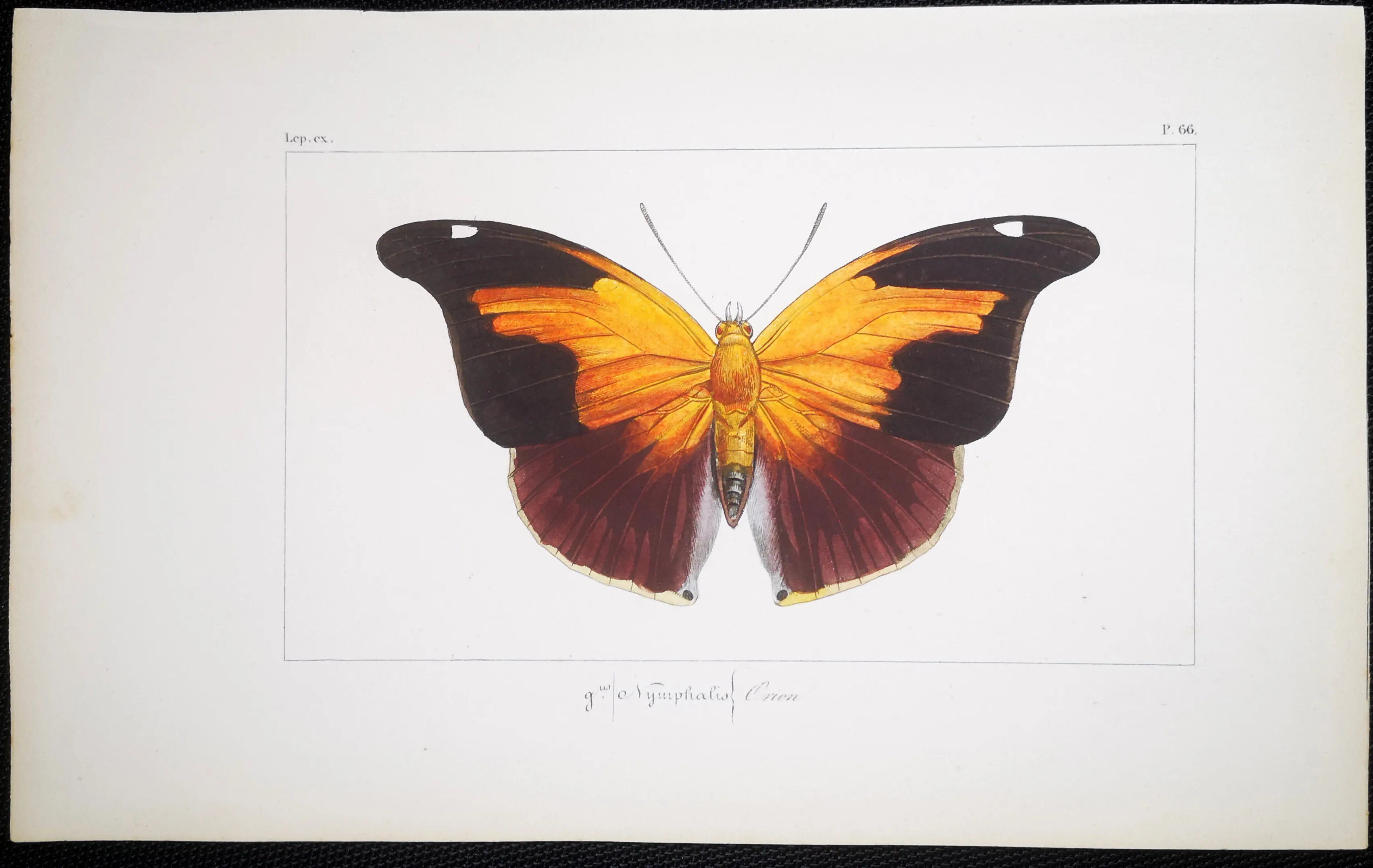
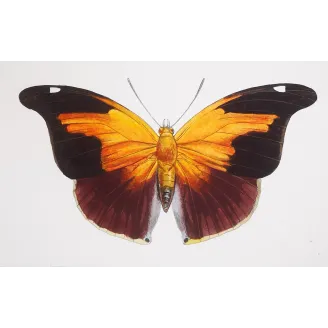
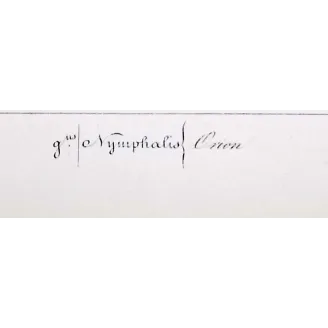
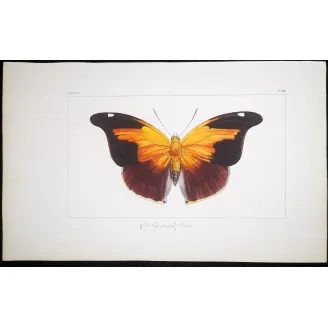
Original 1835 hand-colored engraving of Nymphalis orion, drawn and engraved by Pauquet under the scientific direction of Hippolyte Lucas for Exotic Butterflies.
 Delivery policy
Your print will be carefully prepared and shipped worldwide via trusted couriers (UPS or similar).
 Authentic antique prints
Original engravings from the 17th–19th century.
This original 1835 hand-colored copper engraving depicts Nymphalis orion, a striking tropical butterfly admired for its intense coloration and dramatic wing contrasts. The plate forms part of Exotic Butterflies, produced under the scientific direction of Hippolyte Lucas and drawn and engraved by Pauquet.
Presented with balanced symmetry against a clean ground, the specimen appears almost monumental. The composition reflects the refined visual language of nineteenth-century natural history illustration, where scientific clarity and decorative elegance were deliberately intertwined.
— • —
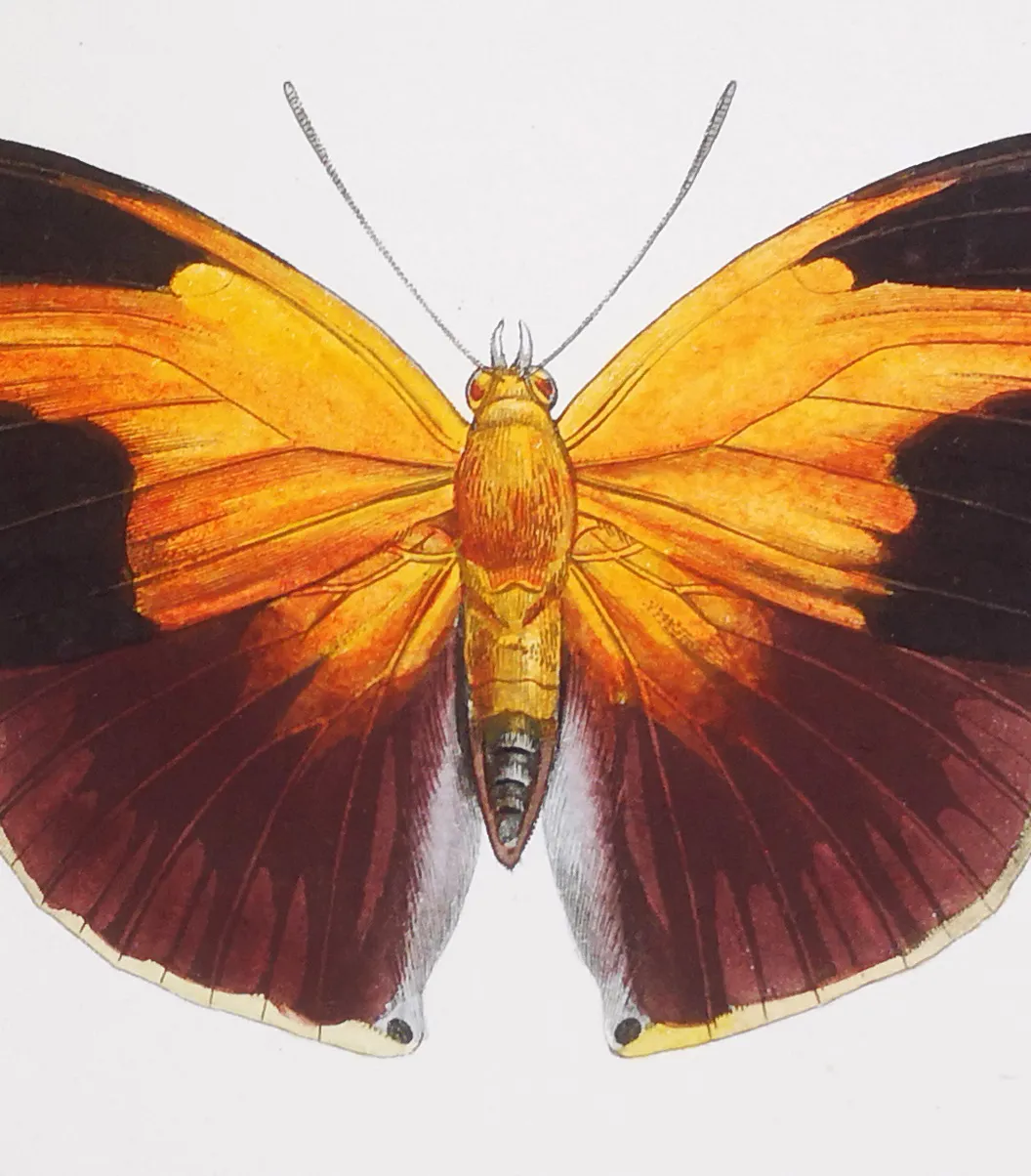
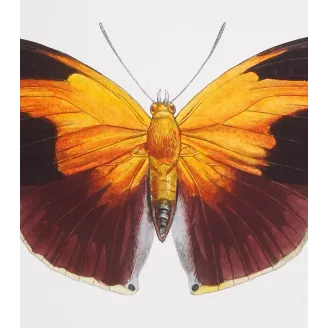
The wings unfold in a powerful chromatic composition. Luminous amber and orange tones ignite across the upper wings before dissolving into deep velvety blacks along the margins. Below, the hindwings deepen into rich burgundy and crimson hues that create a dramatic tonal gradient.
This interplay between radiant colour and dark framing produces a visual effect of remarkable intensity. Pauquet’s engraving preserves delicate venation and anatomical precision while allowing the hand-applied colouring to achieve depth, luminosity, and painterly vitality.
Species belonging to the genus Nymphalis fascinated nineteenth-century naturalists for their striking wing structures and bold colour contrasts. Many tropical butterflies of this group became highly prized specimens within European collections.
During this period, illustrated publications allowed scientists and collectors to study rare species far beyond museum cabinets. Engraved plates such as this one served both as scientific documentation and as enduring works of natural history art.
This engraving forms part of the celebrated series Lucas – Exotic Butterflies , published in 1835 under the scientific direction of Hippolyte Lucas — a period when nature was celebrated through monumental illustrated works combining scientific observation with refined artistic craftsmanship.
Discover the broader historical context in our editorial feature: Hippolyte Lucas: Scientific Vision and the Golden Age of Exotic Butterflies .
The plate was drawn and engraved by Pauquet, whose refined copperplate technique translated real specimens into enduring images of exceptional clarity: Pauquet: The Engraver Behind the Exotic Butterflies .
Very good antique condition. Fresh and vibrant original hand-coloring with strong engraved impression. Printed on fine original nineteenth-century paper. Minor age toning consistent with the 1835 publication. Well-preserved examples of this quality are becoming increasingly scarce, particularly with such fresh color and clarity.
Specific References
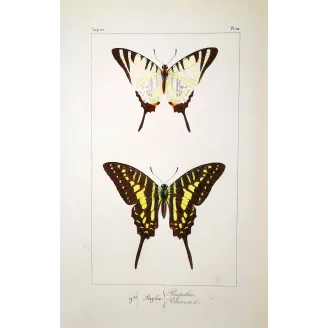
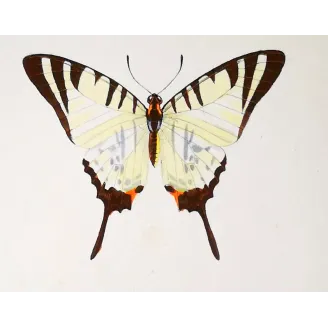
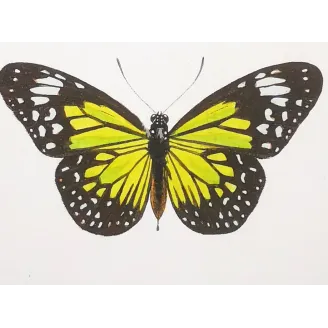
Bright yellow butterflies with bold black and white contrasts. A refined 1835 engraving with strong decorative appeal.
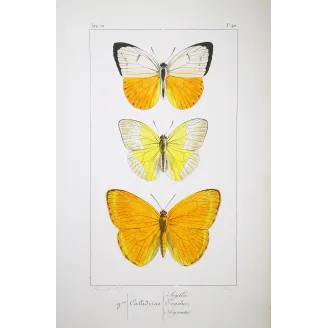
Luminous yellow and white butterflies with warm golden tones. A refined 1835 engraving with bright and elegant decorative appeal.
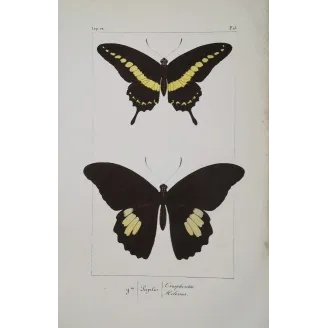
Black swallowtail butterflies with ivory, yellow and green patterns. A refined 1835 engraving, ideal as antique butterfly wall art.
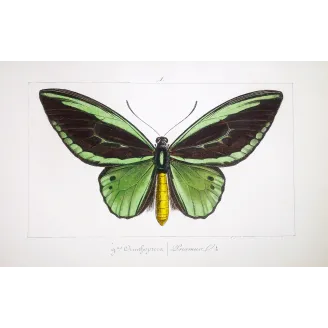
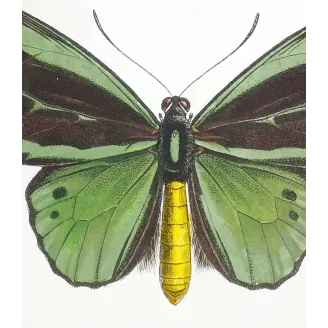
Original 1835 hand-colored engraving of Ornithoptera priamus (Common Green Birdwing), drawn and engraved by Pauquet under the scientific direction of Hippolyte Lucas.
Elegant black swallowtail butterflies with soft yellow markings and refined contrast. A sophisticated 1835 engraving, ideal as antique butterfly wall art.
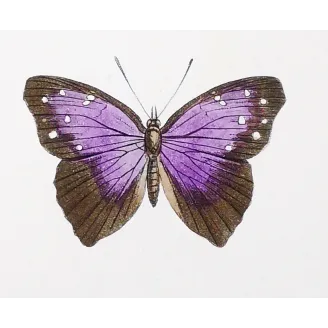
Striking butterflies in deep red, violet, and dark tones with eye-like markings. A refined 1835 engraving with strong decorative character.
A vivid pairing of Lacewing (Cethosia cyane) and Erycina butterflies, combining fiery orange tones with electric blue accents. A striking piece of antique butterfly wall art with strong decorative contrast.
Bright orange and yellow butterflies with striking contrast against white wings. A vivid 1835 engraving with strong decorative and visual impact.
Striking butterflies with iridescent blue, green, and warm orange tones. A bold 1835 engraving with exceptional decorative presence.
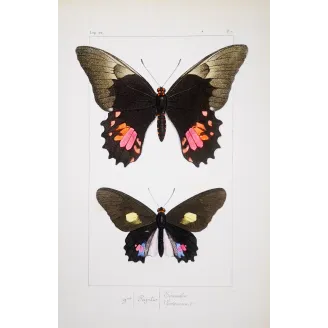
Elegant black butterflies with luminous pink and orange accents, creating a refined yet dramatic visual composition. A distinctive 1835 antique butterfly engraving.
A finely detailed 19th-century hand-colored engraving depicting two forms of the Clipper Butterfly (Parthenos sylvia). Published in Hippolyte Lucas’s Exotic Butterflies (1835), the plate highlights the species’ elegant network of white markings across dark wings, creating a striking geometric pattern characteristic of tropical Asian butterflies.
Deep brown butterflies with electric blue bands and eye-spot patterns, characteristic of Prepona-type species. A refined and highly decorative 1835 engraving, ideal as antique butterfly wall art.
An original 19th-century hand-colored engraving of Morpho leonte, the striking Blue Morpho butterfly, drawn and engraved by Pauquet under the scientific direction of Hippolyte Lucas.
Elegant butterflies with vivid red tips and bright yellow tones. A refined 1835 engraving balancing delicacy and bold contrast.
A refined 19th-century hand-colored engraving depicting two elegant kite swallowtails: Eurytides protesilaus and Eurytides agapenor. Published in Hippolyte Lucas’s Exotic Butterflies (1835), the plate highlights their distinctive elongated tails and delicate translucent wings.
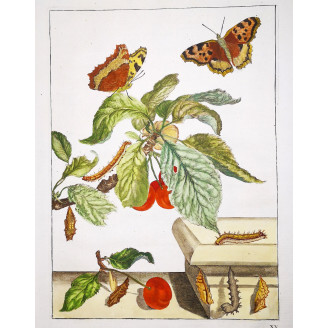
Original 1774 engraving by Jacob L'Admiral: Large Tortoiseshell on Sweet Cherry.
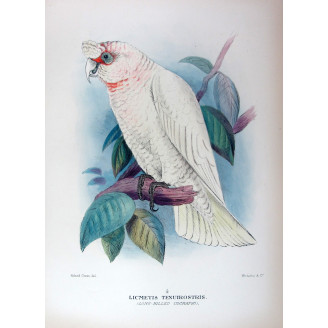
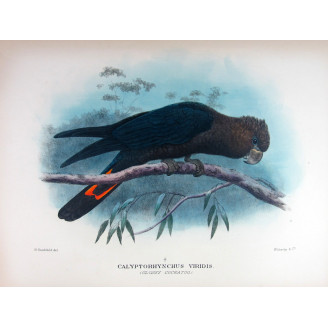
Glossy Cockatoo print by H. Goodchild, dark tones and rare presence on the plate
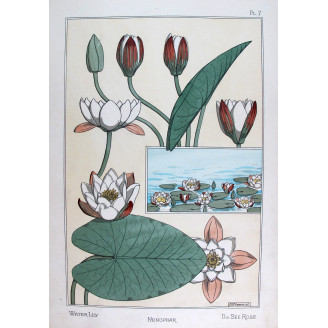
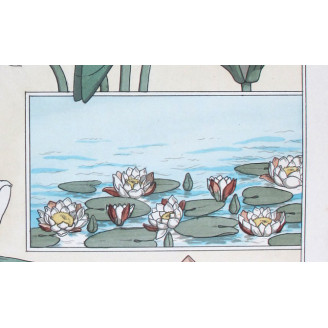
This second edition of the Water-Lily plate (No. 7) captures all the refined serenity of Plate 9, with slight variations in layout and ornamental balance.
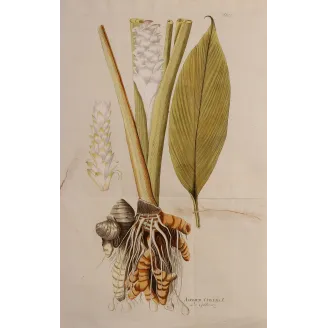
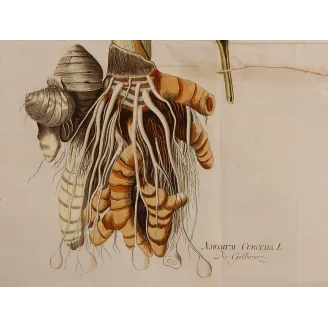
Exceptional large-format eighteenth-century botanical engraving depicting <em>Amomum Curcuma</em> L., published as Plate IV of Joseph Jacob von Plenck’s <em>Icones Plantarum Medicinalium</em>. Printed on a large folded sheet of Honig laid paper with complete watermark and contemporary hand colouring, the composition combines a remarkably refined pale inflorescence, monumental foliage and an exceptionally detailed rhizomatous structure. A powerful Plenck Statement Piece preserving both extraordinary botanical clarity and the visible material history of an eighteenth-century folded plate.
In this vibrant composition, Grasset elevates the humble gourd (courge) to an elegant decorative form.
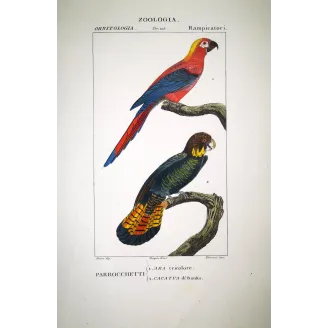
Vibrant parakeets perched on branches: a scarlet macaw and a black cockatoo with yellow and red highlights.
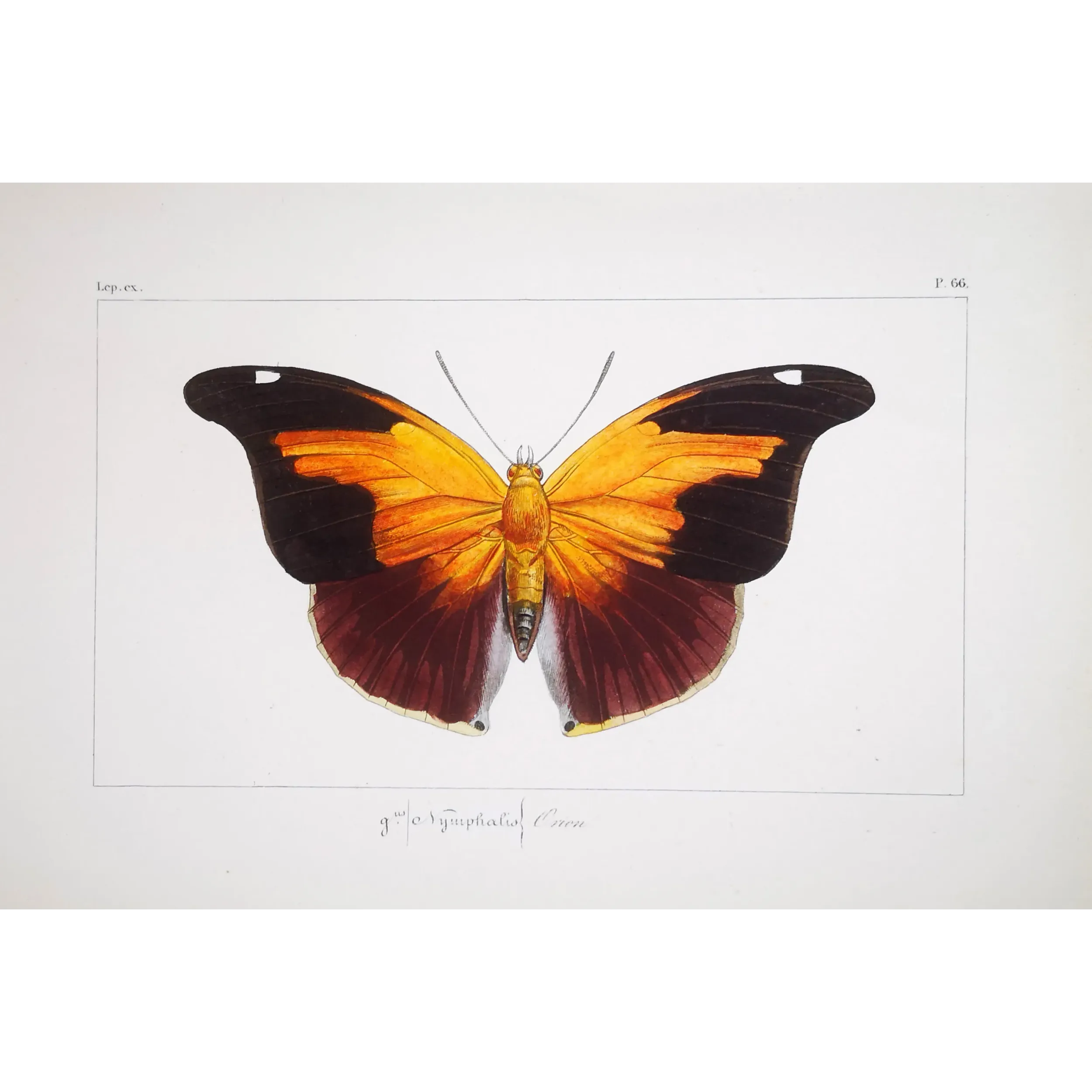
Original 1835 hand-colored engraving of Nymphalis orion, drawn and engraved by Pauquet under the scientific direction of Hippolyte Lucas for Exotic Butterflies.