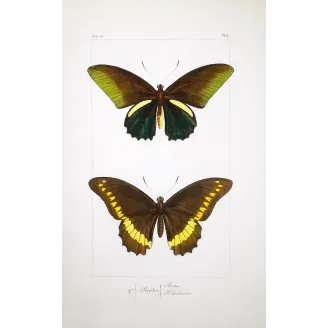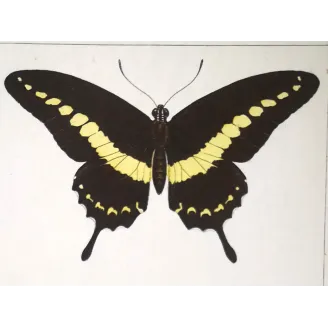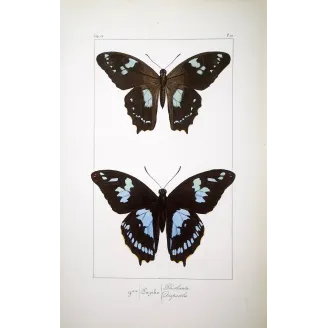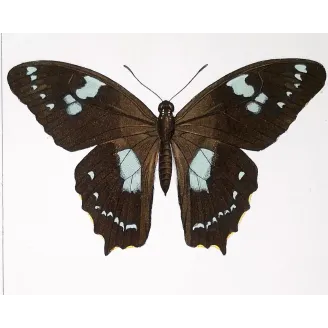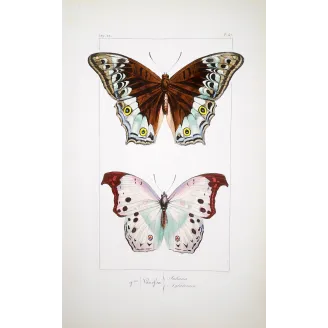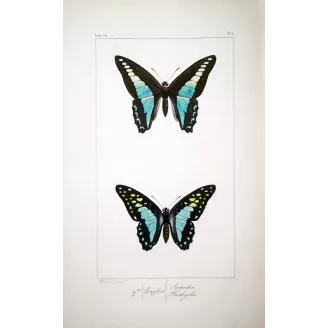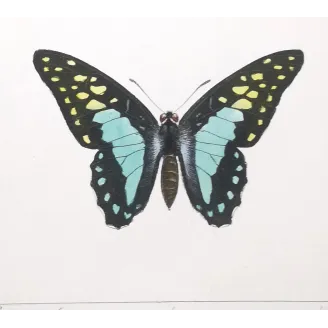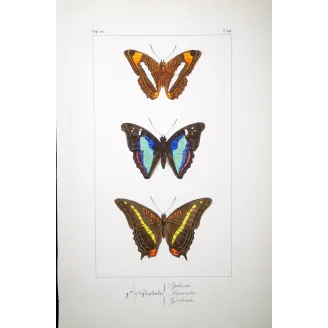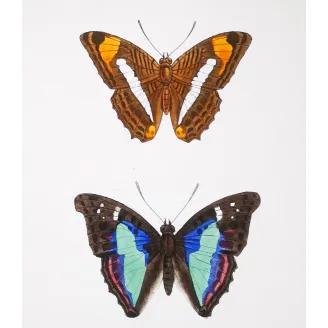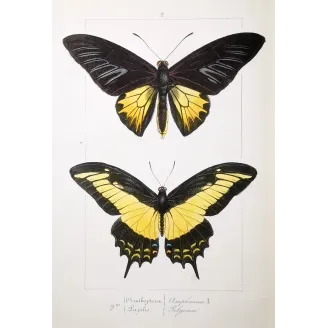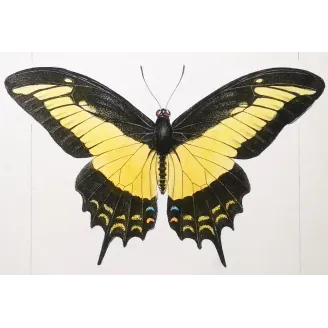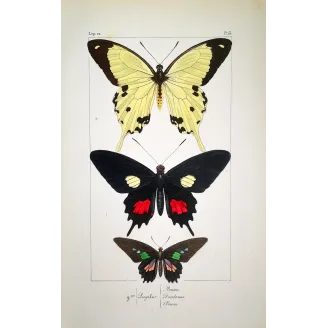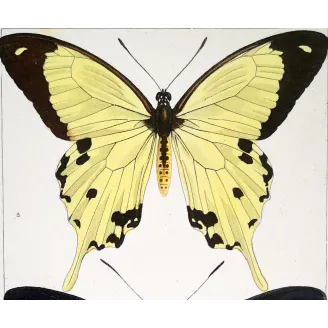
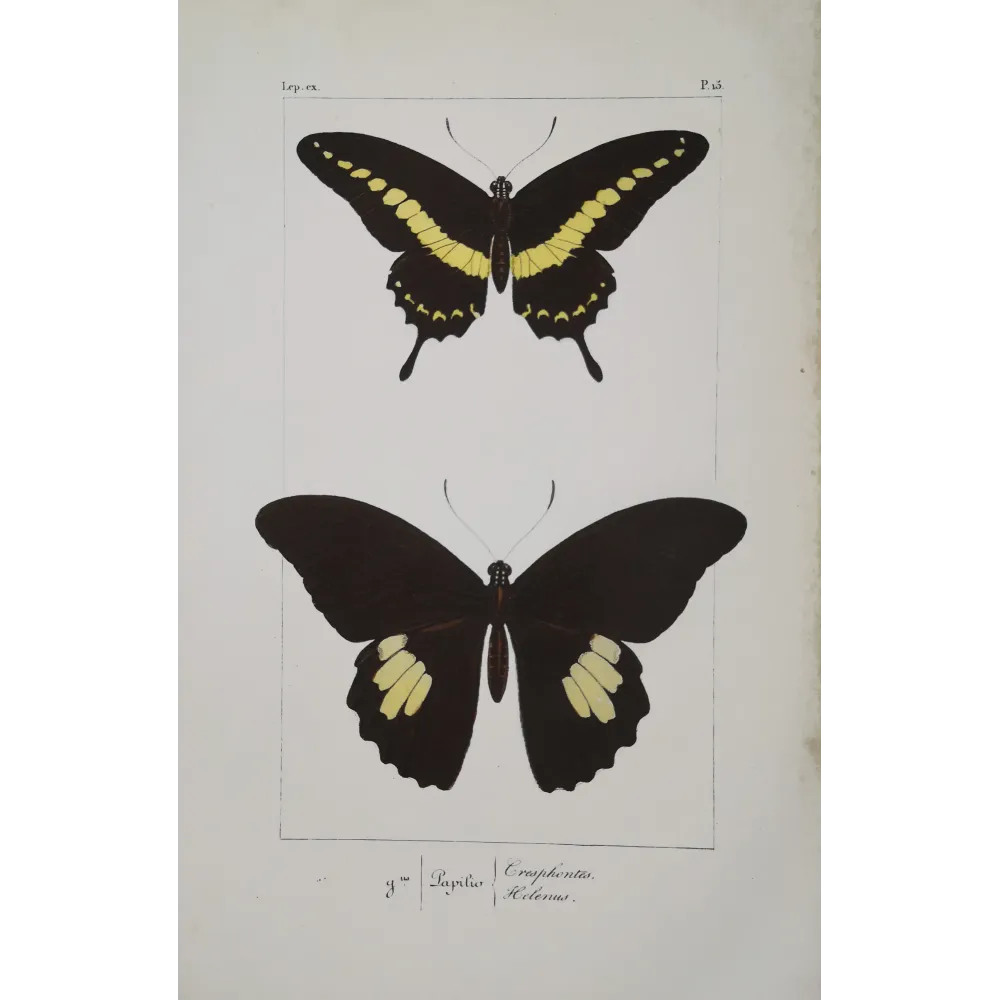
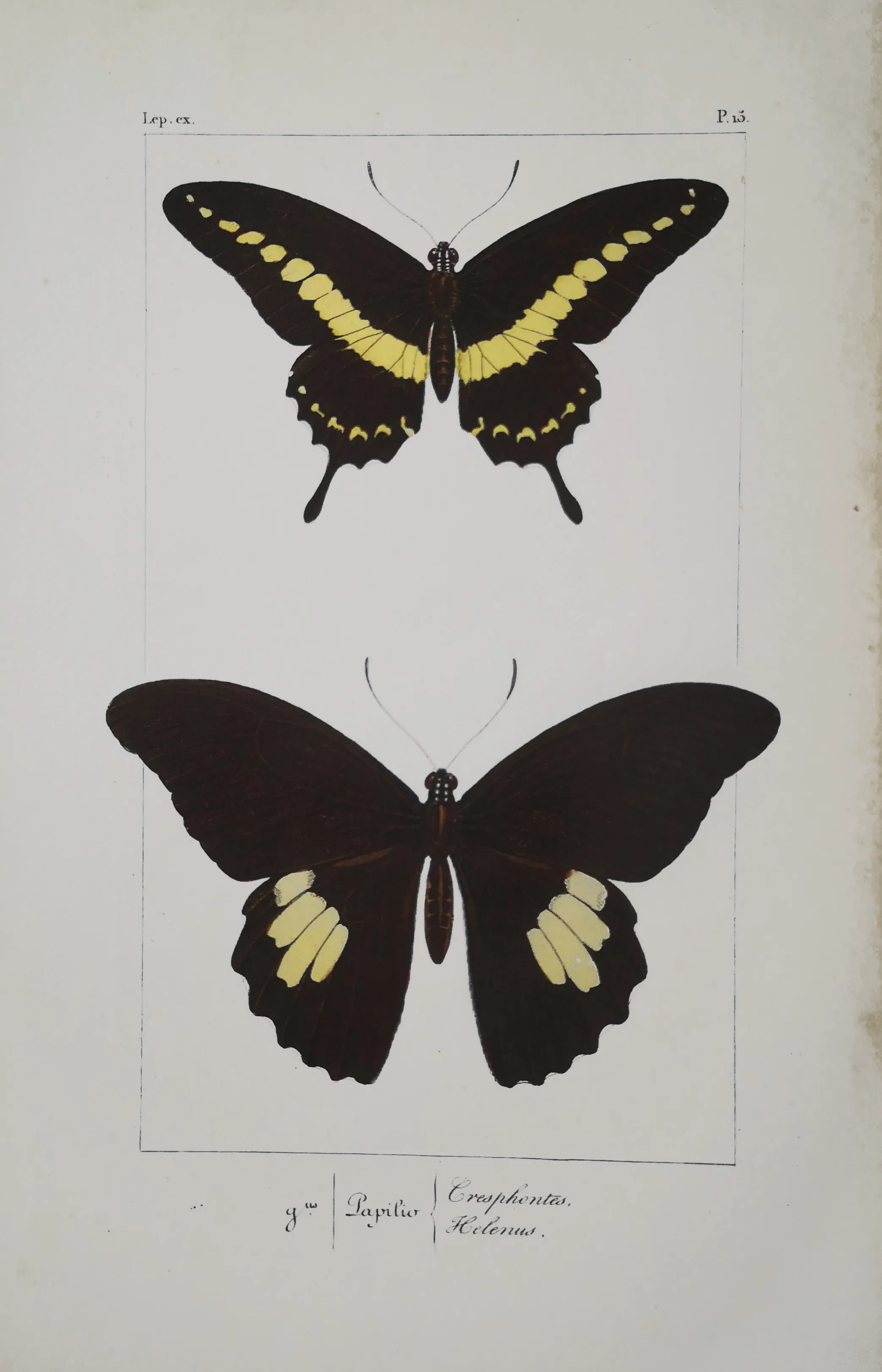
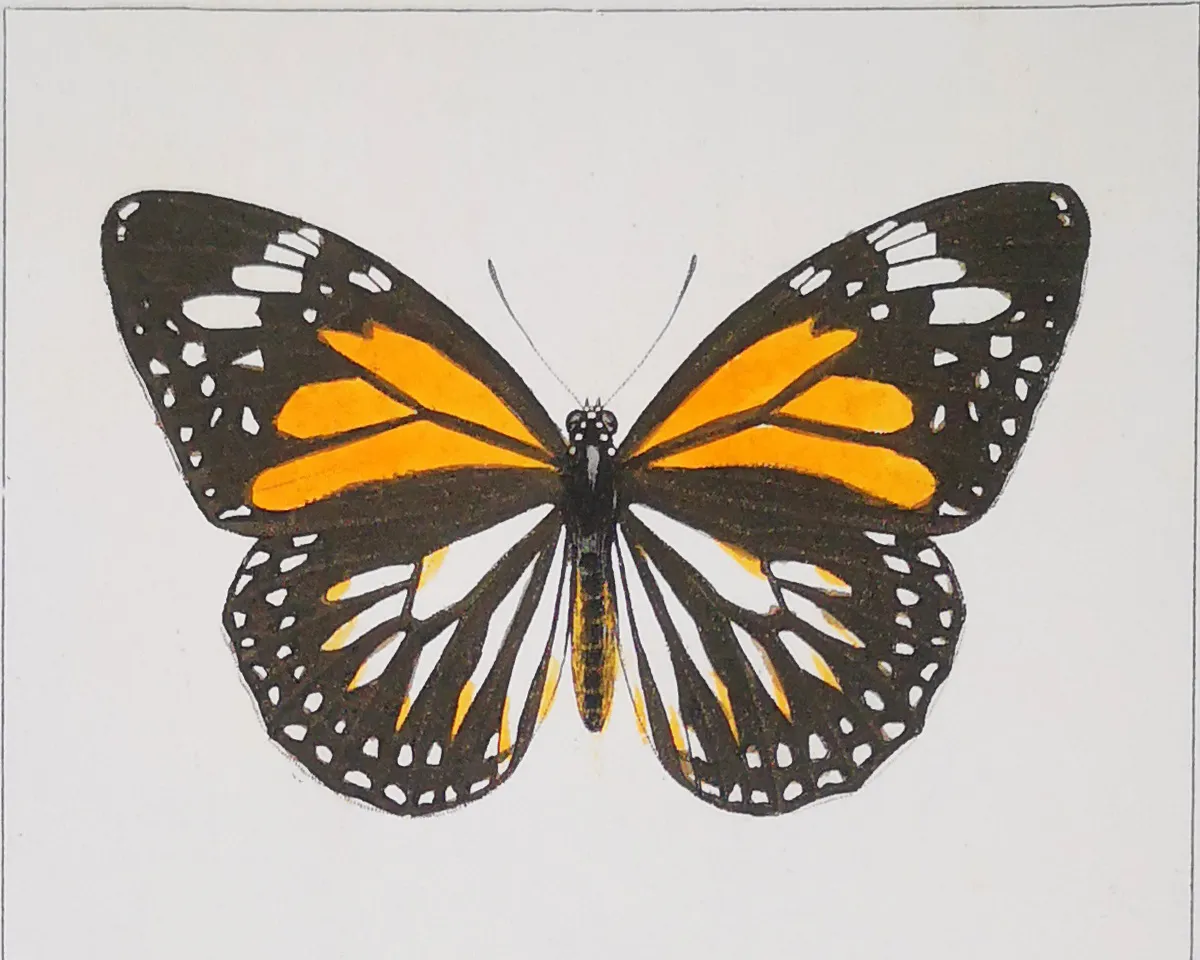
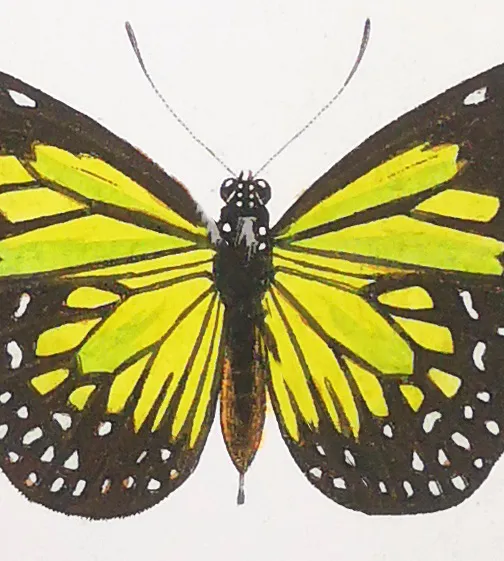
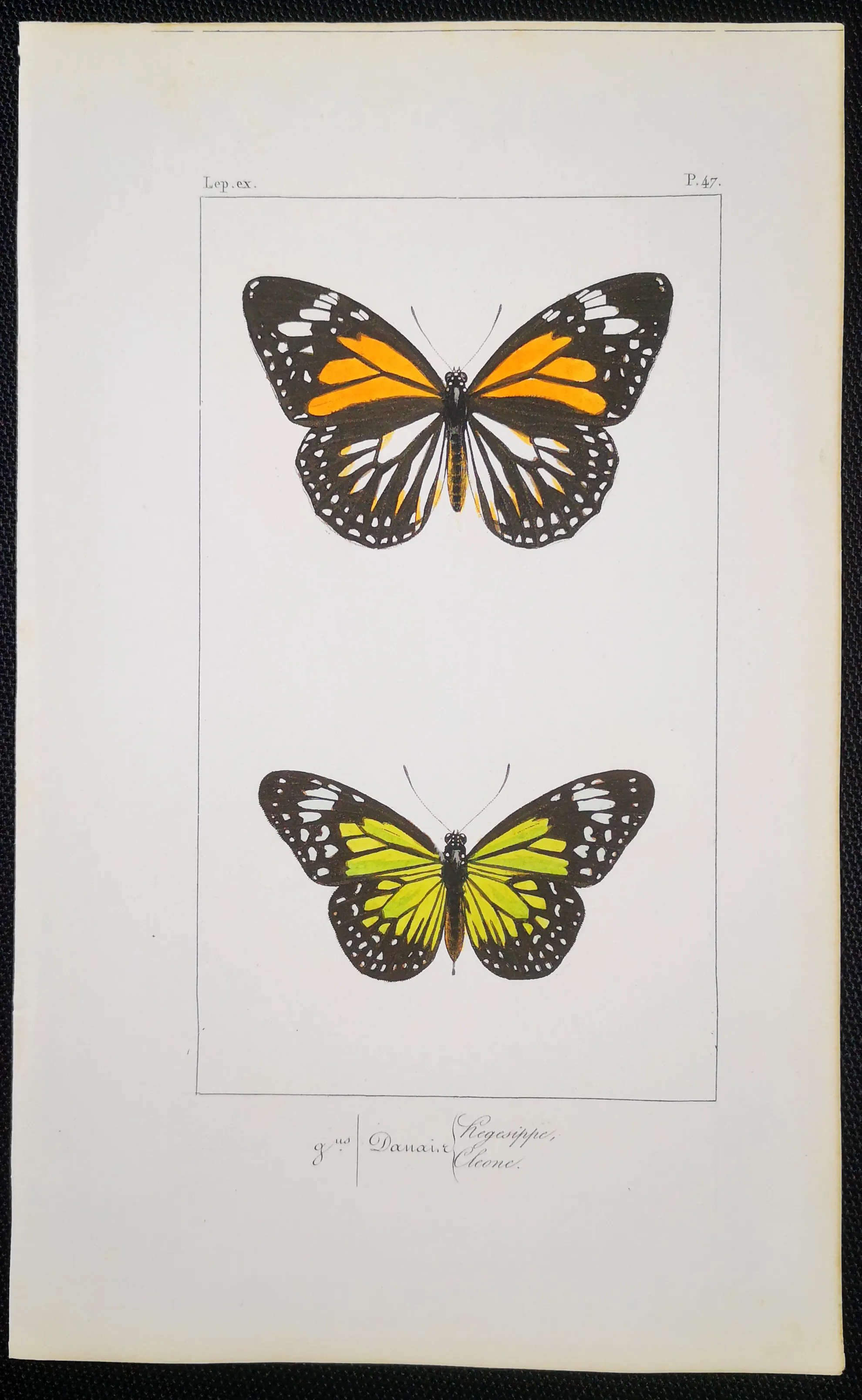
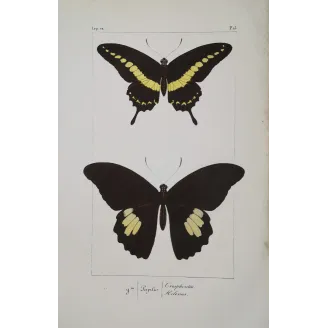
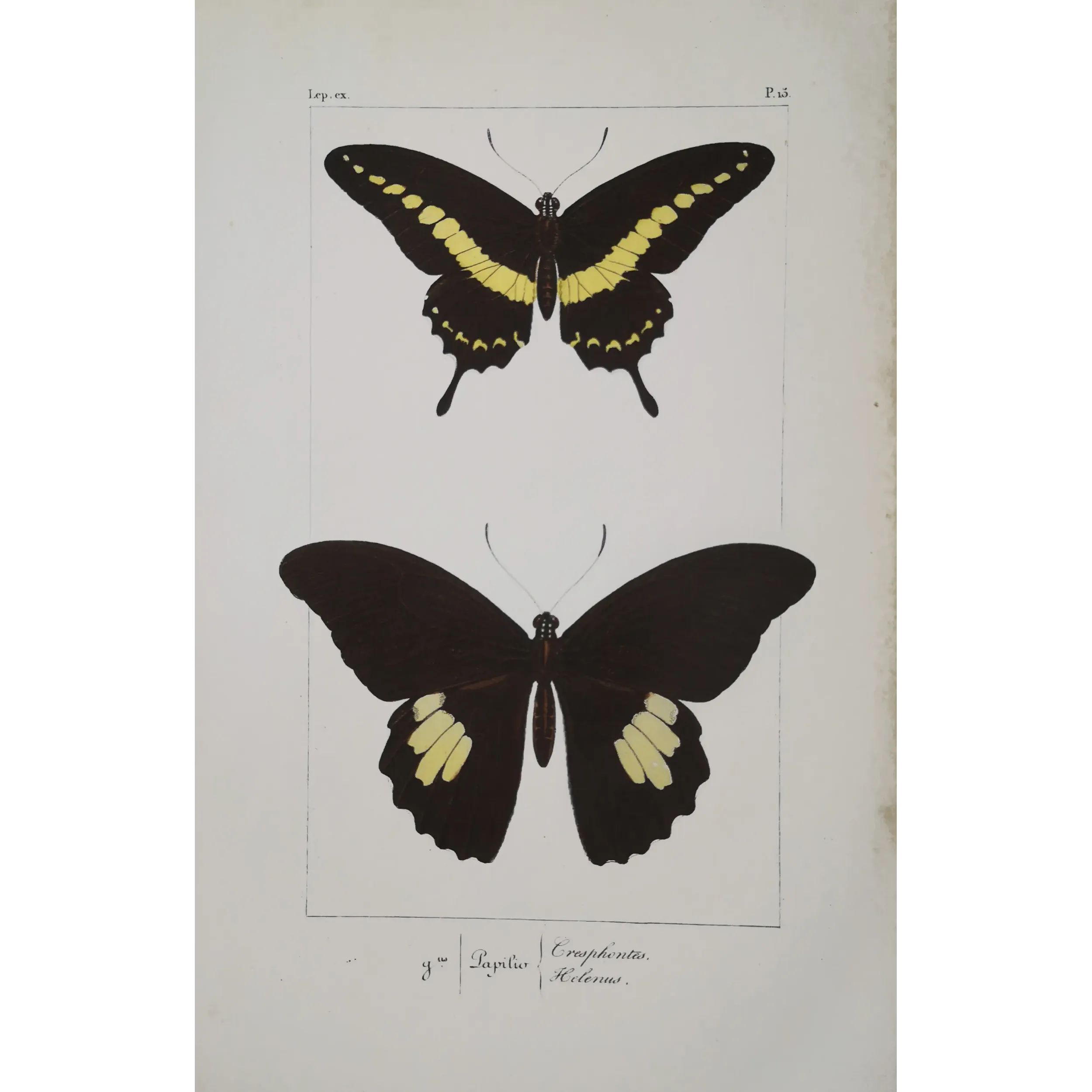
Elegant black swallowtail butterflies with soft yellow markings and refined contrast. A sophisticated 1835 engraving, ideal as antique butterfly wall art.
 Delivery policy
Your print will be carefully prepared and shipped worldwide via trusted couriers (UPS or similar).
 Authentic antique prints
Original engravings from the 17th–19th century.
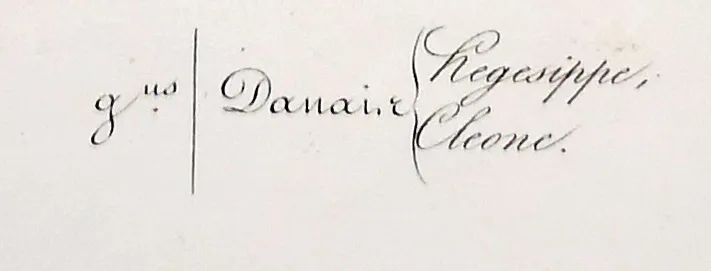
This original 1835 hand-colored copper engraving presents two elegant swallowtail butterflies identified on the plate as Papilio cresphontes and Papilio helenus. The composition belongs to the celebrated Exotic Butterflies series directed by Hippolyte Lucas and engraved by Pauquet, where scientific observation meets refined artistic interpretation.
Both butterflies are characterized by deep black wings subtly interrupted by soft yellow markings, creating a restrained yet highly sophisticated visual language. The clean presentation enhances the natural symmetry of the specimens, allowing their forms and contrasts to emerge with clarity and elegance.
The result is a composition of remarkable balance and quiet strength, making this engraving particularly suitable as antique butterfly wall art for interiors that value minimalism, contrast, and natural refinement.
— • —
The upper specimen displays a more structured pattern, with a continuous band of soft yellow extending across the wings and echoing along the margins. This creates a gentle rhythm that guides the eye across the composition, while preserving the dominance of the deep black ground.
Below, the second butterfly adopts a more minimal approach, with isolated pale patches emerging from the dark wings. This reduction of pattern enhances the sense of calm and refinement, giving the plate a distinctly modern and decorative appeal despite its nineteenth-century origin.
Papilio cresphontes, often known as the Giant Swallowtail, is one of the largest butterflies in North America. Its bold black and yellow coloration serves both as camouflage and as a visual signal, blending with foliage while maintaining a strong presence in flight.
Papilio helenus, widely distributed across Asia, is equally admired for its dark, velvety wings and subtle pale markings. Butterflies of this kind illustrate how contrast and restraint can be as visually powerful as more vibrant coloration, a principle well understood by nineteenth-century naturalists and artists.
Together, these species highlight the diversity of swallowtail butterflies, demonstrating how variations in pattern and tone can produce entirely different visual effects while remaining within the same broader family.
This engraving is part of the renowned Lucas – Exotic Butterflies series, published in 1835 during a period when natural history was documented through richly illustrated works combining scientific precision and artistic elegance.
Explore the broader context in our editorial feature: Hippolyte Lucas and the Art of Exotic Butterflies.
The engraving was executed by Pauquet, whose refined copperplate technique captures the subtle tonal contrasts and structural beauty of these specimens with exceptional clarity: Pauquet: Master Engraver of Natural History.
Very good antique condition. Fresh original hand-coloring with well-preserved contrast and fine engraved detail. Printed on original nineteenth-century paper. Minor age toning consistent with age. Well-preserved examples with this level of clarity, contrast, and color balance are increasingly difficult to find.
Specific References
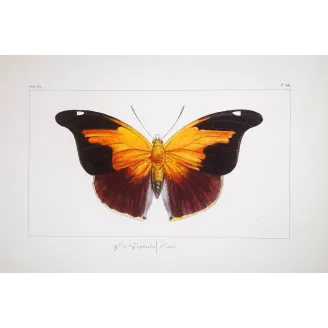
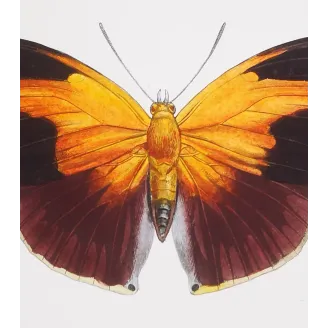
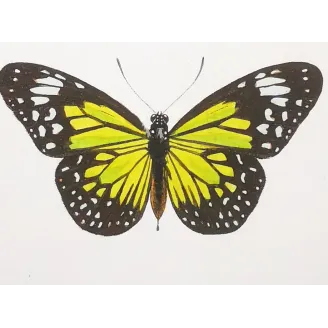
Elegant golden and yellow swallowtail butterflies with luminous contrast and flowing wing shapes. A refined antique engraving from 1835.
A refined 19th-century hand-colored engraving depicting two forms of the La Réunion Swallowtail (Papilio phorbanta). Published in Hippolyte Lucas’s Exotic Butterflies (1835), the plate captures the striking contrast between deep velvety wings and luminous pale blue markings characteristic of this Indian Ocean species.
Peacock Pansy (Junonia almana) and Grey Pansy (Junonia atlites) with distinctive eye-spots and soft tonal contrasts. A refined 1835 engraving, ideal as antique butterfly wall art.
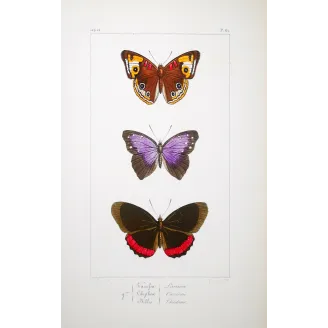
Striking butterflies in deep red, violet, and dark tones with eye-like markings. A refined 1835 engraving with strong decorative character.
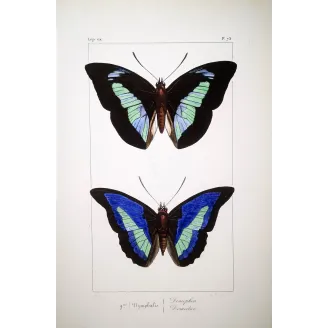
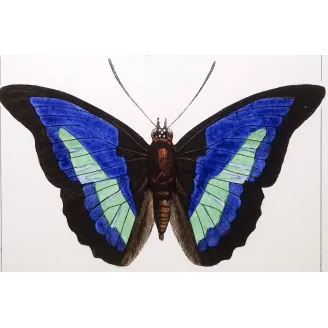
Original 1835 hand-colored engraving of Nymphalis orion, drawn and engraved by Pauquet under the scientific direction of Hippolyte Lucas for Exotic Butterflies.
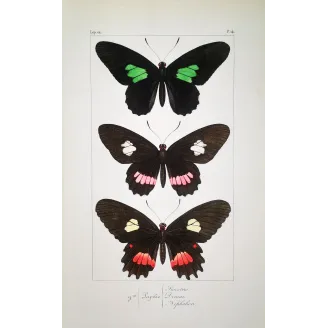
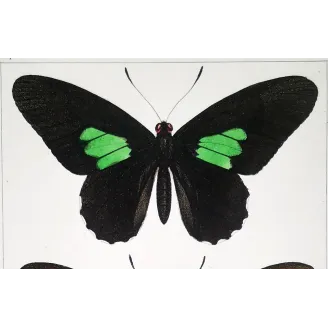
Striking black butterflies with vivid green, pink, and red accents. A dramatic 1835 engraving with strong contrast and bold decorative appeal.
A vivid 19th-century hand-colored engraving depicting two striking Asian swallowtail butterflies: the Common Bluebottle (Papilio sarpedon) and the Spotted Bluebottle (Papilio bathycles). Published in Hippolyte Lucas’s Exotic Butterflies (1835), the plate highlights their elegant turquoise wing bands set against deep black wings.
Striking butterflies with iridescent blue, green, and warm orange tones. A bold 1835 engraving with exceptional decorative presence.
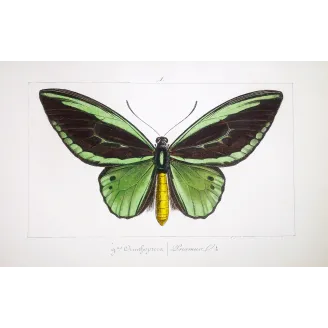
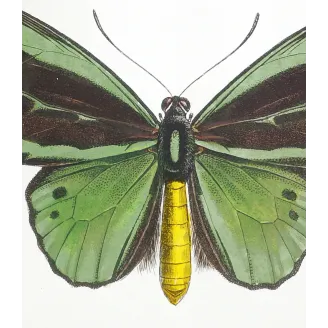
Original 1835 hand-colored engraving of Ornithoptera priamus (Common Green Birdwing), drawn and engraved by Pauquet under the scientific direction of Hippolyte Lucas.
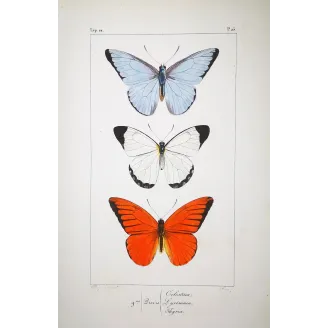
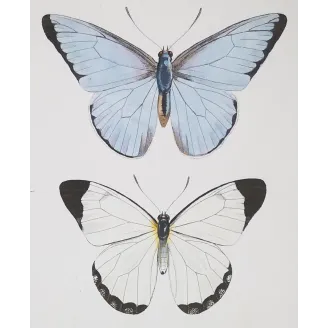
Delicate blue, white, and vivid red butterflies arranged in a refined vertical composition. An elegant 1835 engraving with balanced decorative appeal.
Golden Birdwing butterflies with bold yellow and black contrast and elegant swallowtail forms. A striking 1835 engraving, ideal as antique butterfly wall art.
Dramatic swallowtail butterflies including Papilio dardanus, featuring bold yellow, black, and red contrasts with iridescent accents. A striking 1835 engraving, ideal as antique butterfly wall art.
Demophon & Demodice Butterflies (Archaeoprepona demophon, Prepona laertes demodice) – Antique Hand-Colored Engraving, Exotic Butterflies (1835).
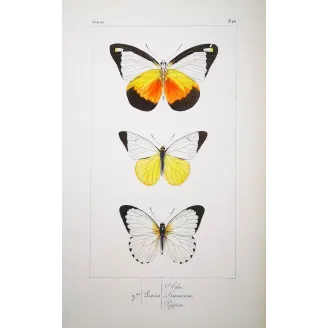
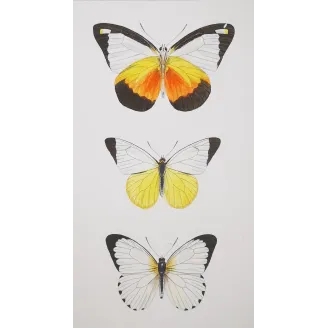
Elegant white and yellow butterflies with a striking orange-accented specimen. A refined 1835 engraving with bright and balanced decorative appeal.
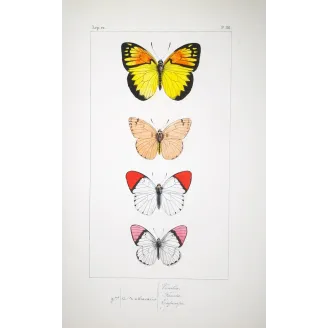
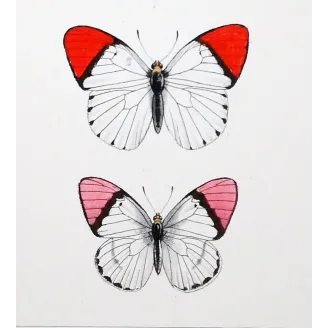
Bright yellow and white butterflies with vivid orange and pink tips. A refined 1835 engraving with strong decorative contrast.
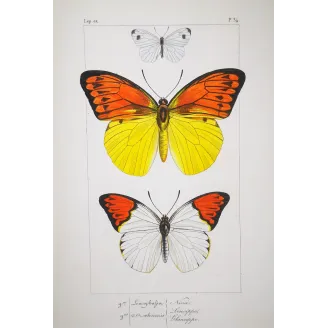
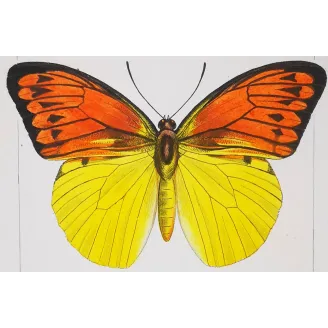
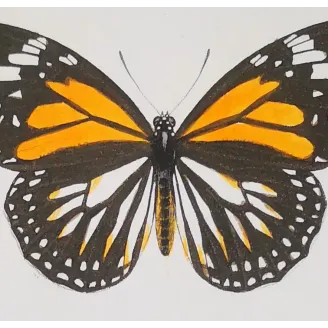
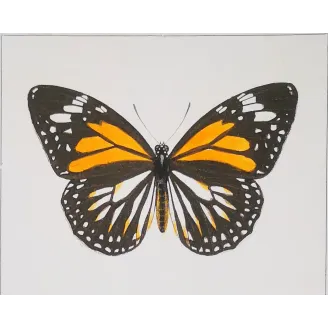
Bright orange and yellow butterflies with striking contrast against white wings. A vivid 1835 engraving with strong decorative and visual impact.
Elegant black swallowtail butterflies with soft yellow markings and refined contrast. A sophisticated 1835 engraving, ideal as antique butterfly wall art.