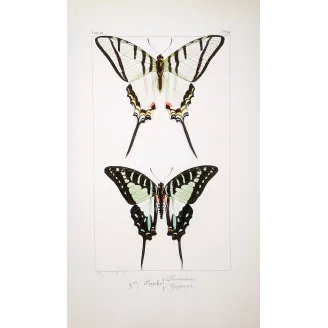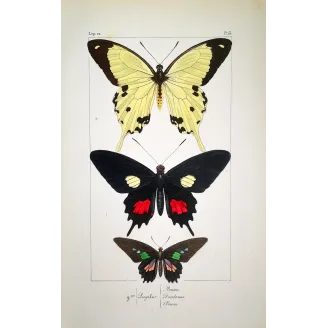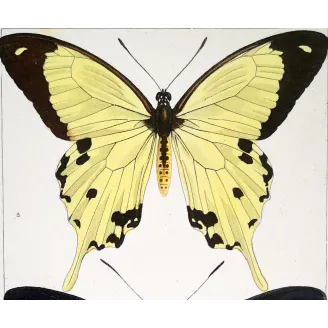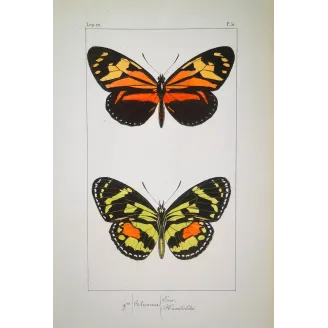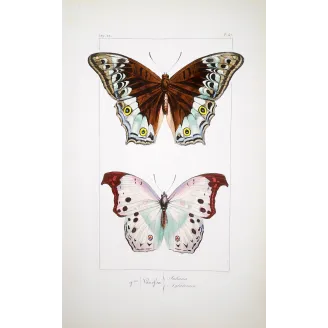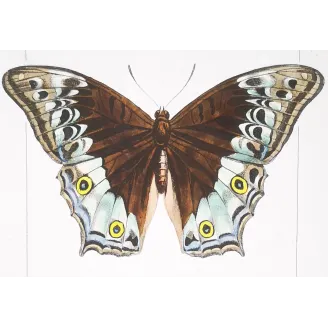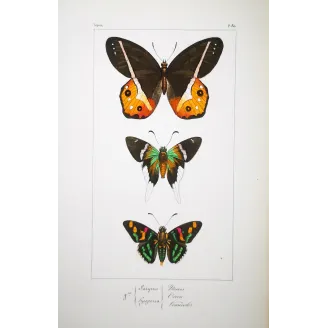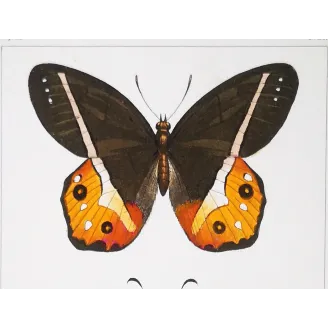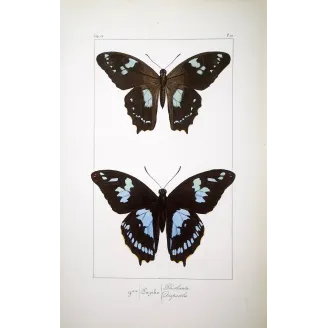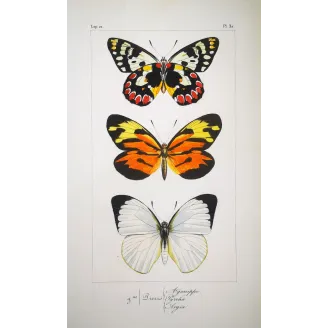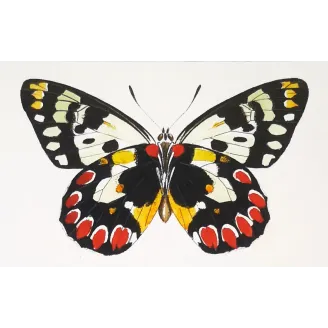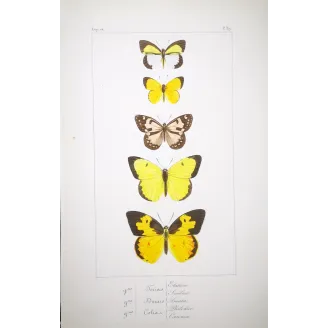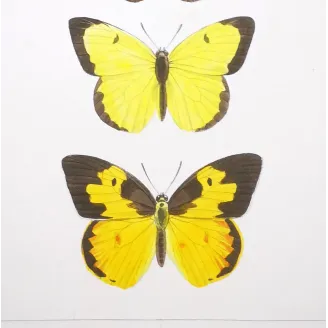
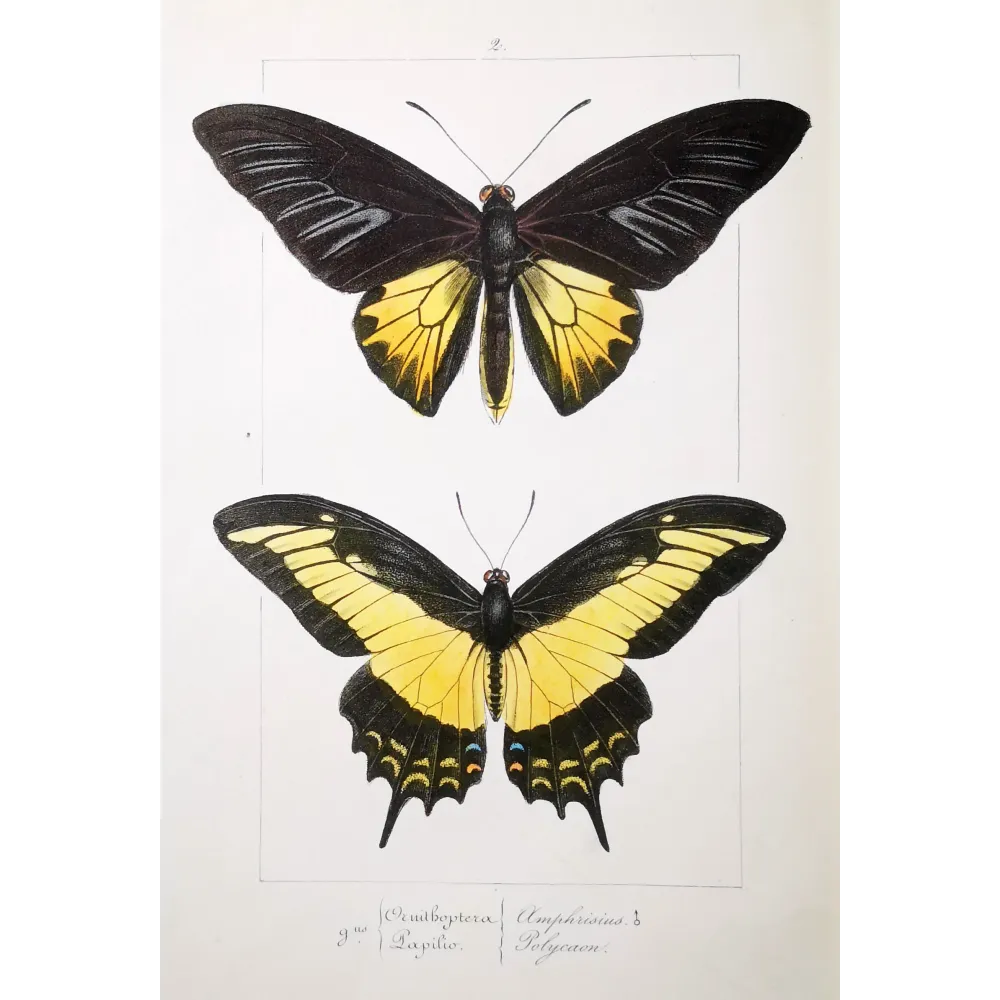
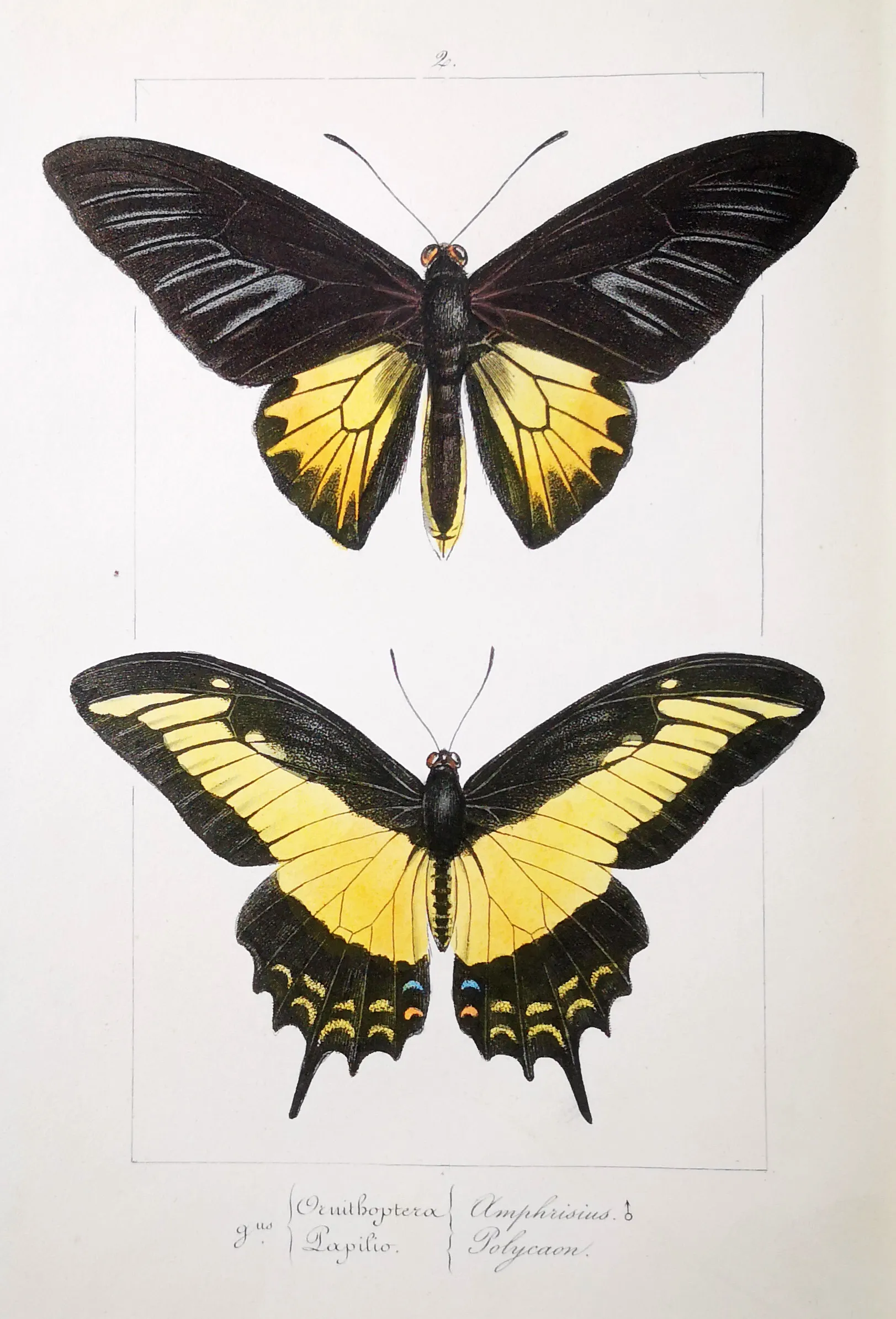
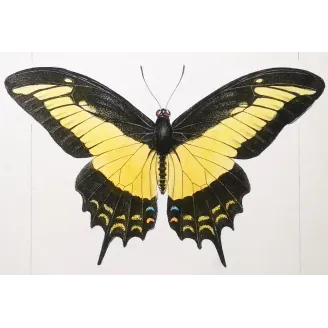
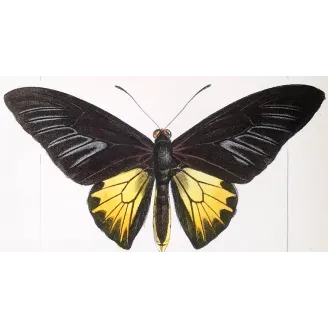
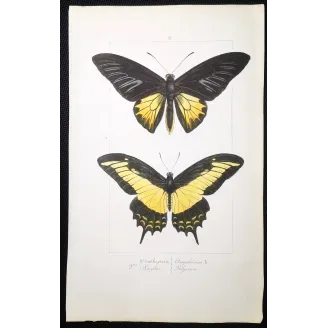
Golden Birdwing butterflies with bold yellow and black contrast and elegant swallowtail forms. A striking 1835 engraving, ideal as antique butterfly wall art.
 Delivery policy
Your print will be carefully prepared and shipped worldwide via trusted couriers (UPS or similar).
 Authentic antique prints
Original engravings from the 17th–19th century.
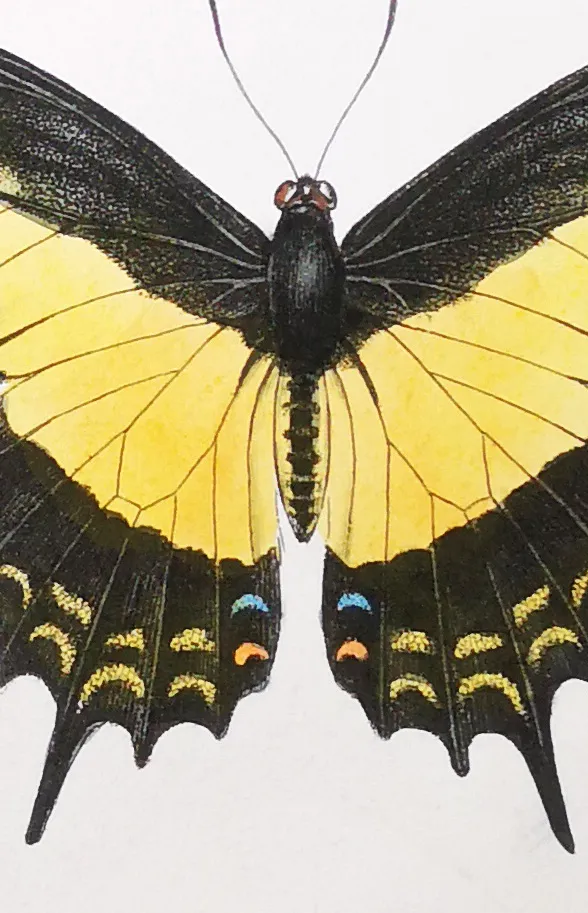
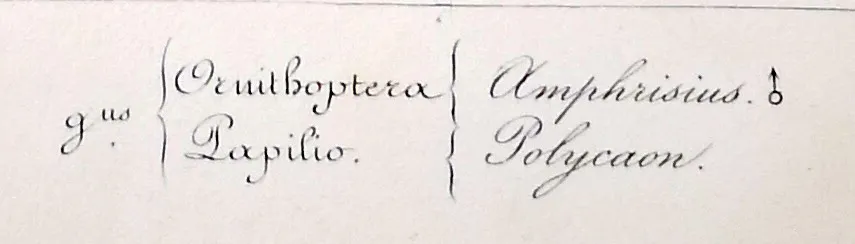
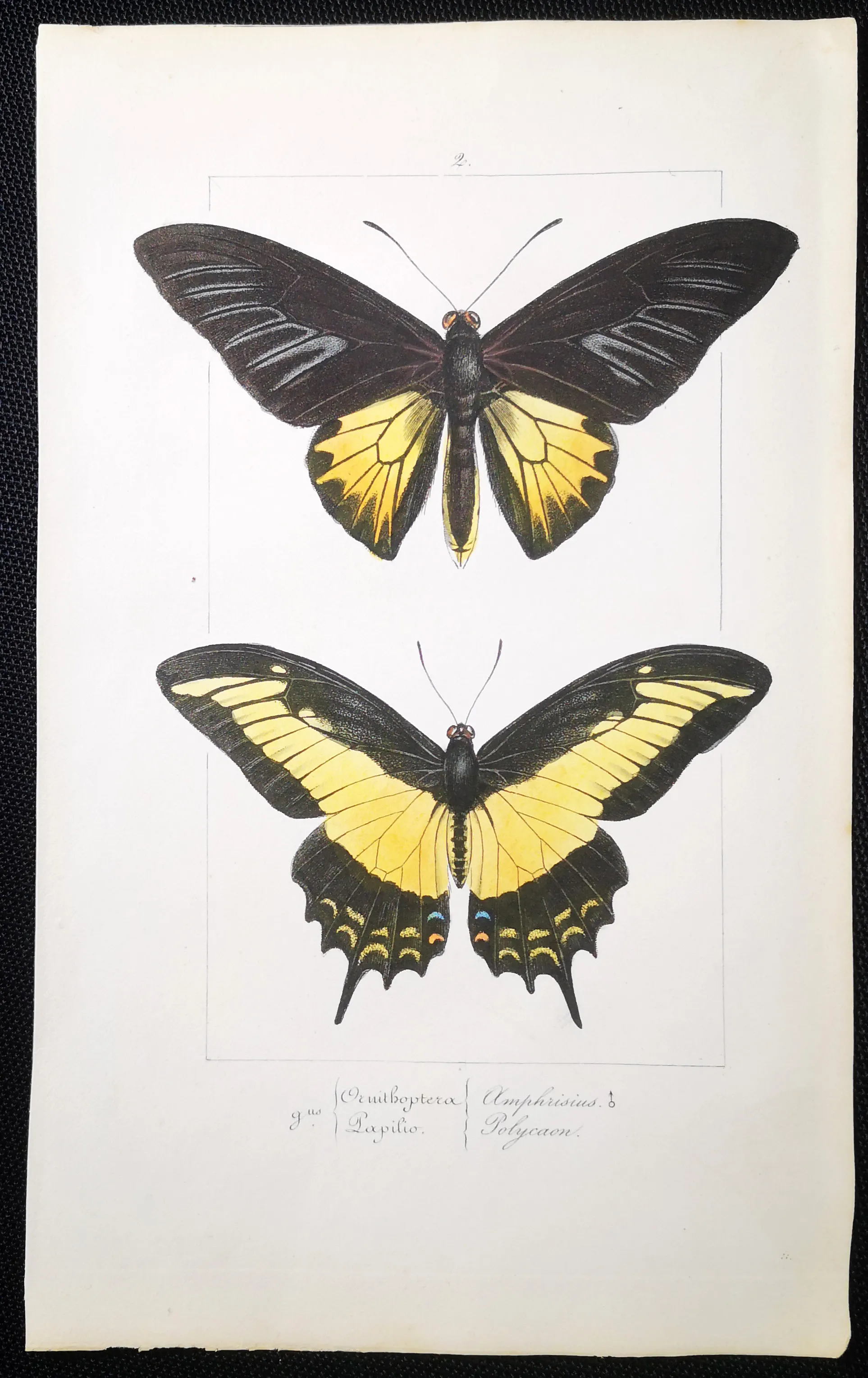
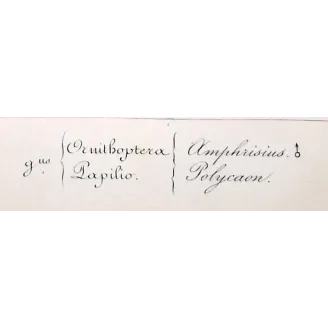
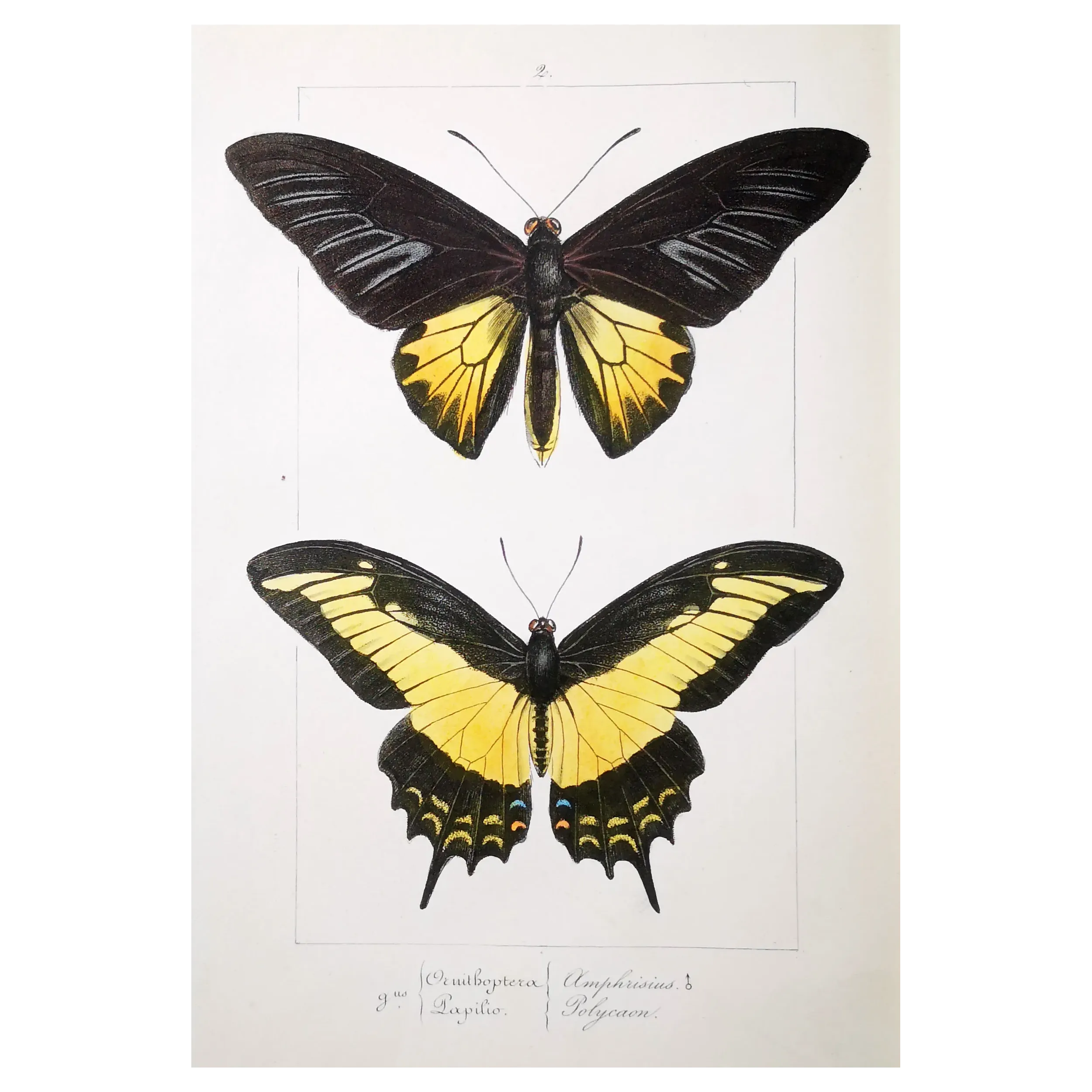
This original 1835 hand-colored copper engraving depicts two magnificent butterflies belonging to the Troides amphrysus group, commonly known as Golden Birdwing butterflies. These spectacular insects, among the largest butterflies in the world, were celebrated in nineteenth-century natural history for their size, rarity, and striking coloration. The plate forms part of Exotic Butterflies, produced under the scientific direction of Hippolyte Lucas and engraved by Pauquet.
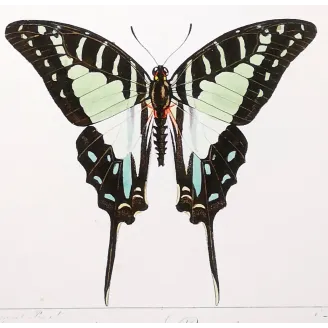
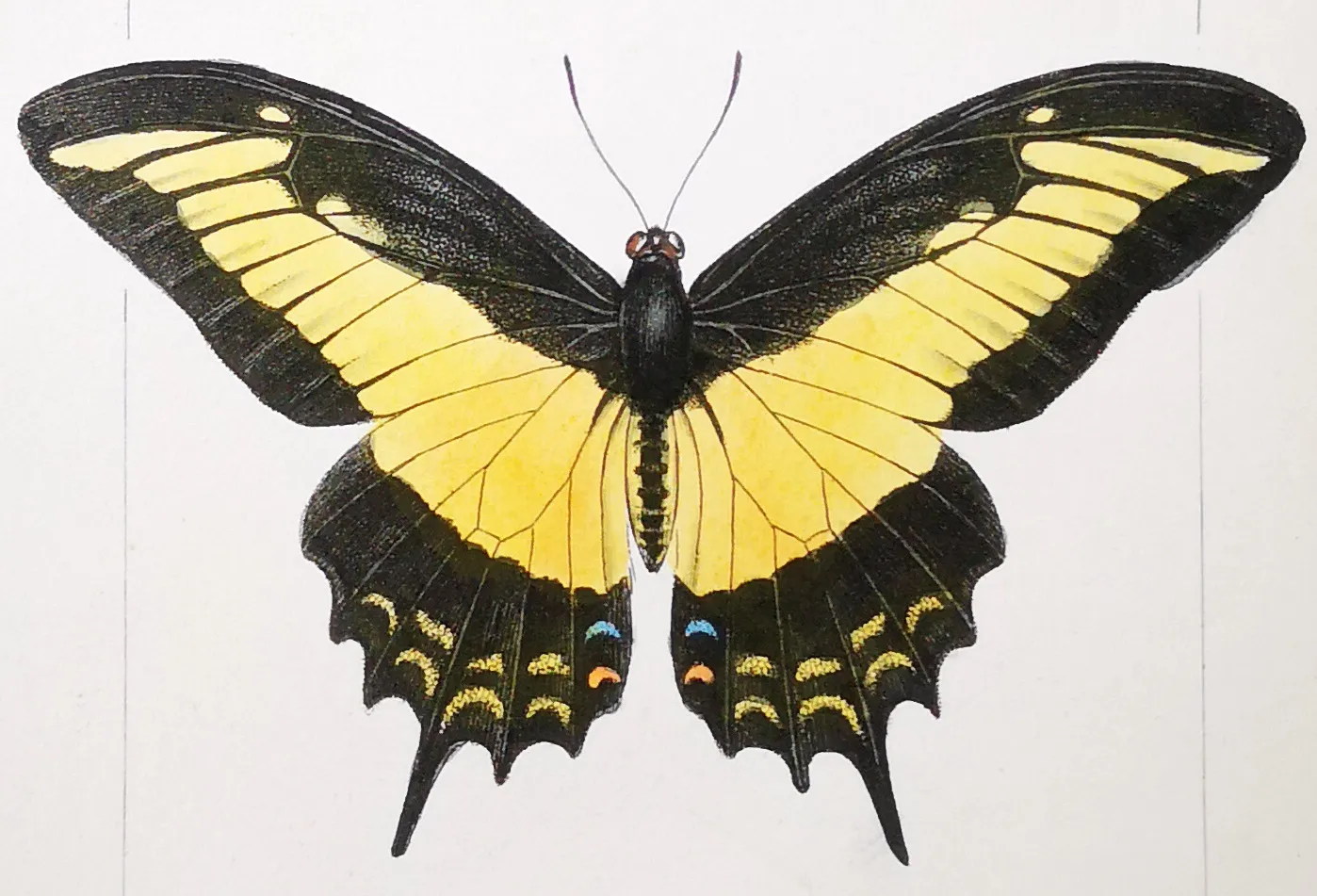
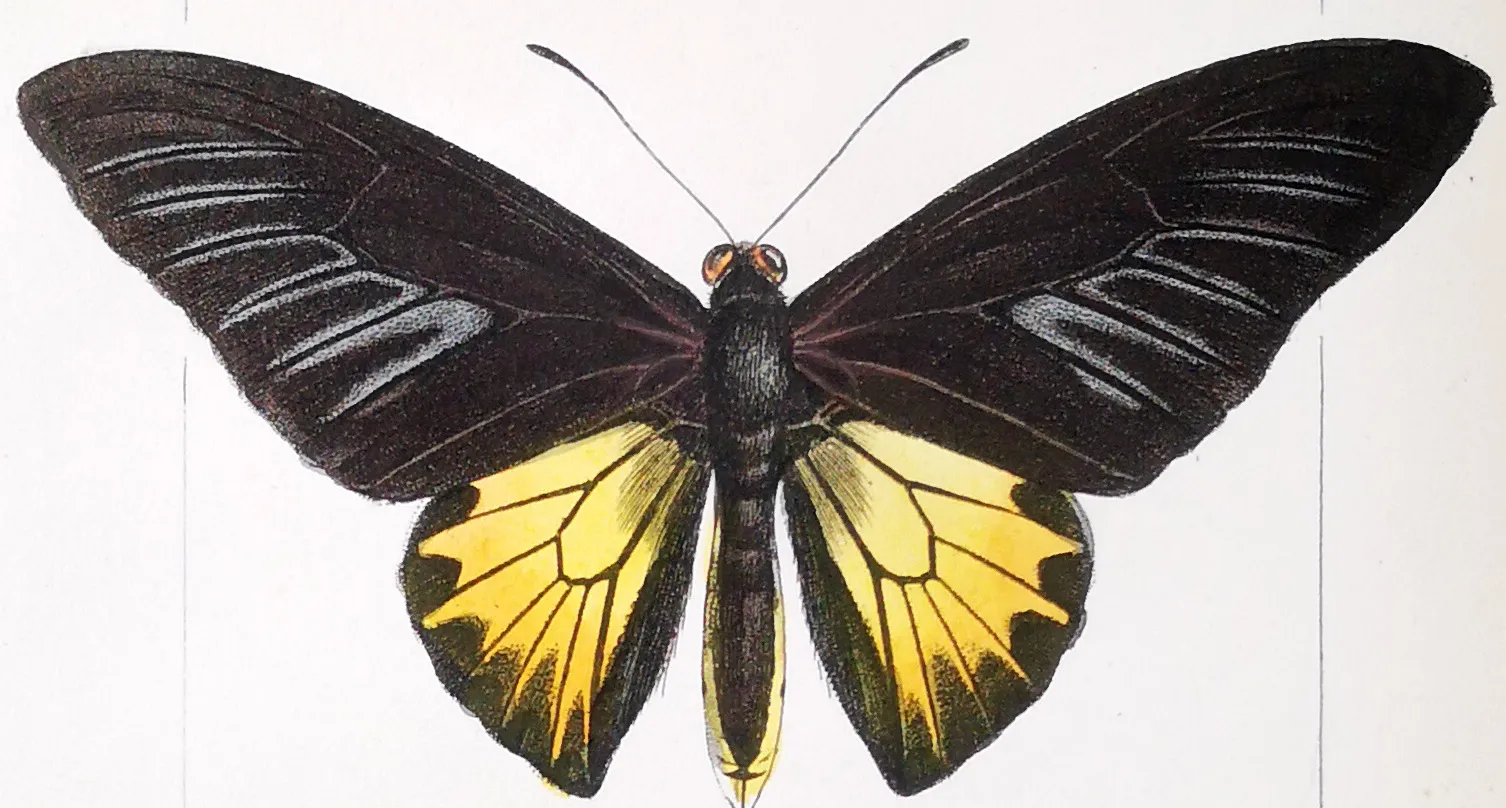
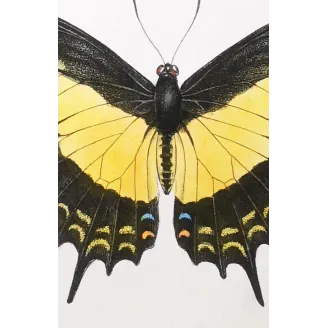
The composition presents two complementary interpretations of this iconic group. The upper butterfly introduces a bold, almost graphic contrast between deep black wings and luminous golden patches, while the lower specimen reveals the full elegance of the swallowtail form, with extended tails and subtle blue and orange accents enriching the lower wings.
The result is a visually powerful engraving that combines intensity and refinement. The saturated yellow tones against velvety black create a composition of immediate visual impact, making this piece an exceptional example of antique butterfly wall art and a highly decorative natural history engraving.
— • —
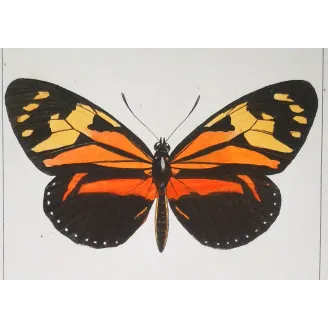
The upper specimen is defined by strong, almost architectural contrasts. Its black wings are interrupted by bold golden fields that create a dramatic and immediately recognizable silhouette. This visual clarity gives the butterfly a modern, graphic quality despite its nineteenth-century origin.
Below, the second butterfly introduces movement and ornamentation. The elongated tails, combined with delicate blue and orange markings near the edges, soften the composition and add depth. Together, the two specimens create a balanced dialogue between strength and elegance.
Golden Birdwing butterflies (Troides) are among the most iconic species of Southeast Asia, renowned for their impressive wingspan and vivid coloration. In the nineteenth century, they were considered rare and highly desirable specimens, often collected and studied as symbols of tropical richness.
Their brilliant yellow coloration serves as a warning signal to predators, indicating toxicity acquired during the larval stage. This biological strategy fascinated early naturalists, who saw in these butterflies an example of the complex relationships between colour, survival, and evolution.
Today, Birdwing butterflies remain among the most celebrated Lepidoptera, both scientifically and aesthetically. Engravings such as this one played a crucial role in introducing these remarkable species to European audiences, transforming them into enduring icons of antique butterfly engraving.
This engraving belongs to the refined series Lucas – Exotic Butterflies , published in 1835 during the golden age of illustrated natural history.
Discover more about this extraordinary work in our article: Hippolyte Lucas and Exotic Butterflies .
The engraving was executed by Pauquet, whose precision and clarity elevated scientific illustration into fine art: Pauquet, Master Engraver .
Very good antique condition. Fresh and vivid original hand-coloring with strong engraved impression. Printed on fine original nineteenth-century paper. Minor age toning consistent with the 1835 publication. Such well-preserved examples are increasingly difficult to find, especially with this level of color intensity and paper quality.
Specific References
A refined 19th-century hand-colored engraving depicting two elegant kite swallowtails: Eurytides protesilaus and Eurytides agapenor. Published in Hippolyte Lucas’s Exotic Butterflies (1835), the plate highlights their distinctive elongated tails and delicate translucent wings.
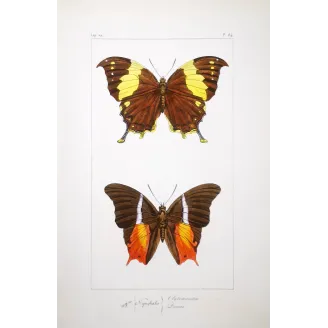
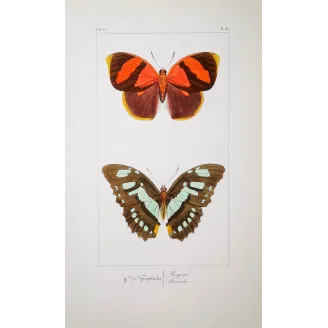
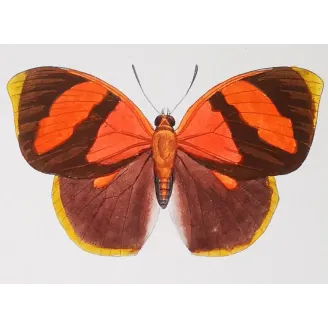
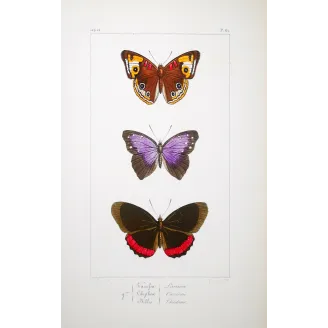
Tropical butterflies with warm amber, yellow and red tones on deep brown wings. A refined 1835 engraving, ideal as antique butterfly wall art.
Dramatic swallowtail butterflies including Papilio dardanus, featuring bold yellow, black, and red contrasts with iridescent accents. A striking 1835 engraving, ideal as antique butterfly wall art.
This vivid 1835 hand-colored engraving presents two striking tropical butterflies: the intensely colored Agrias rogeri, with its brilliant red and orange wings, and the elegant Adelpha stenele, known for its intricate pattern and pale blue markings. The strong chromatic contrast between the two species creates a visually compelling composition, making this piece a refined example of antique butterfly wall art and natural history illustration.
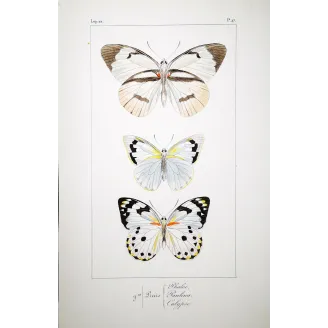
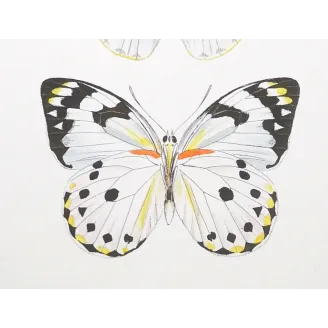
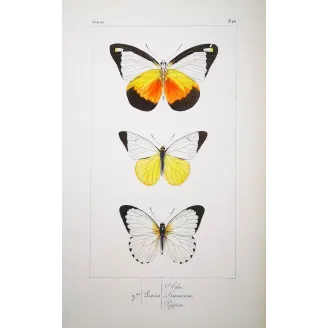
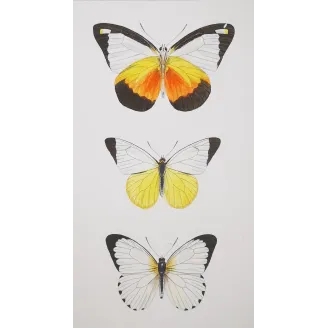
Delicate white butterflies with subtle yellow, orange, and black accents. A refined 1835 engraving with light and elegant decorative appeal.
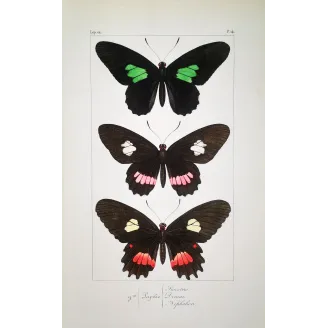
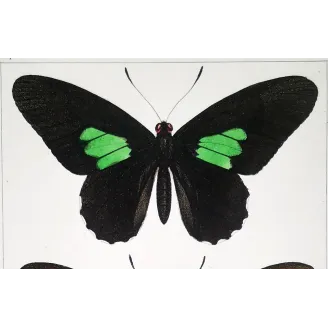
Striking black butterflies with vivid green, pink, and red accents. A dramatic 1835 engraving with strong contrast and bold decorative appeal.
Striking butterflies in deep red, violet, and dark tones with eye-like markings. A refined 1835 engraving with strong decorative character.
Striking black butterflies with vivid orange and yellow bands. A bold 1835 engraving with strong contrast and exceptional decorative impact.
Peacock Pansy (Junonia almana) and Grey Pansy (Junonia atlites) with distinctive eye-spots and soft tonal contrasts. A refined 1835 engraving, ideal as antique butterfly wall art.
Striking multicolored butterflies with deep black, orange, green, and iridescent tones. A bold 1835 engraving with exceptional decorative impact.
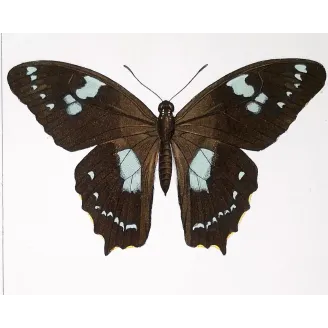
A refined 19th-century hand-colored engraving depicting two forms of the La Réunion Swallowtail (Papilio phorbanta). Published in Hippolyte Lucas’s Exotic Butterflies (1835), the plate captures the striking contrast between deep velvety wings and luminous pale blue markings characteristic of this Indian Ocean species.
Elegant white and yellow butterflies with a striking orange-accented specimen. A refined 1835 engraving with bright and balanced decorative appeal.
Elegant butterflies combining bright orange, yellow, and white tones. A refined 1835 engraving with strong visual contrast and balance.
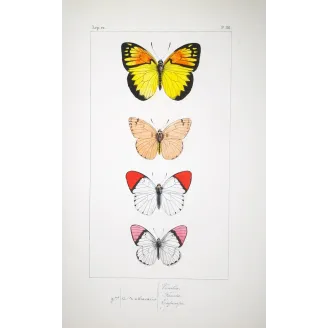
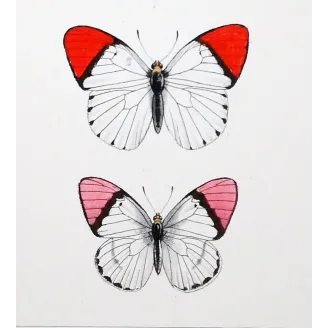
Bright yellow and white butterflies with vivid orange and pink tips. A refined 1835 engraving with strong decorative contrast.
Elegant yellow butterflies with soft brown and natural tones. A refined 1835 engraving with balanced and decorative appeal.
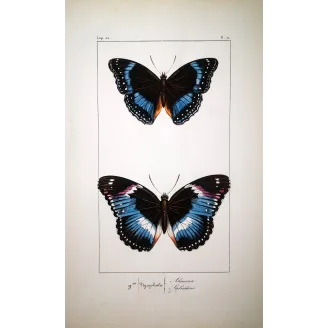
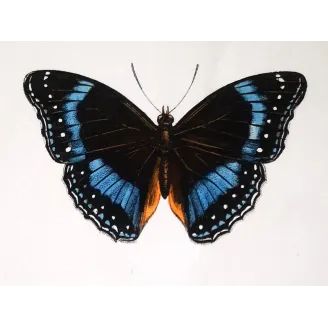
A vivid 19th-century hand-colored engraving depicting two striking tropical butterflies: the Blue-banded Eggfly (Hypolimnas alimena) and the Blue Diadem (Hypolimnas salmacis). Published in Hippolyte Lucas’s Exotic Butterflies (1835), the plate highlights their dramatic contrast of velvety black wings with electric blue bands and delicate white markings.
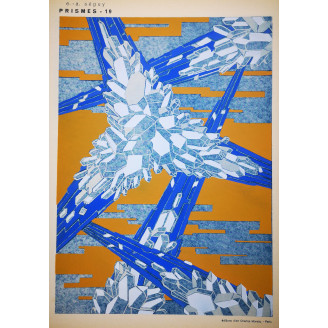
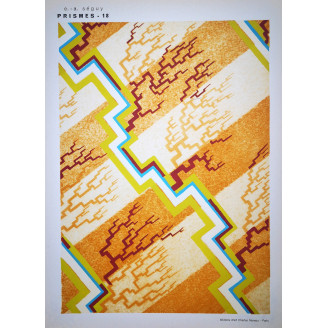
Original 1931 pochoir print by Émile-Allain Séguy. From the rare portfolio *Prismes*.
Original 1931 pochoir print by Émile-Allain Séguy. From the rare portfolio *Prismes*.
Golden Birdwing butterflies with bold yellow and black contrast and elegant swallowtail forms. A striking 1835 engraving, ideal as antique butterfly wall art.